
A ladder is a tool used for climbing up and down to reach higher places safely in homes, construction work, schools, and other daily tasks. In this blog post, you will learn the parts of a ladder, their functions, and a labeled diagram to understand how each part of a ladder works. From the rungs and side rails to the spreaders and feet, every part has a specific purpose that helps provide balance, support, and safety while climbing. Learning the names of ladder parts helps readers understand vocabulary related to tools, equipment, and workplace safety commonly used in technical and everyday situations.
What is a Ladder?
A ladder is a climbing tool made of metal, wood, or fiberglass. It has steps or rungs and is used to climb up or down. People use ladders to paint walls, clean windows, fix lights, or pick fruit.
Common Uses of a Ladder
- Reaching high shelves
- Painting walls or ceilings
- Repair work at home
- Cleaning roofs or gutters
- Construction and maintenance work
Main Parts of a Ladder and Their Functions
These are the basic parts found in most ladders.
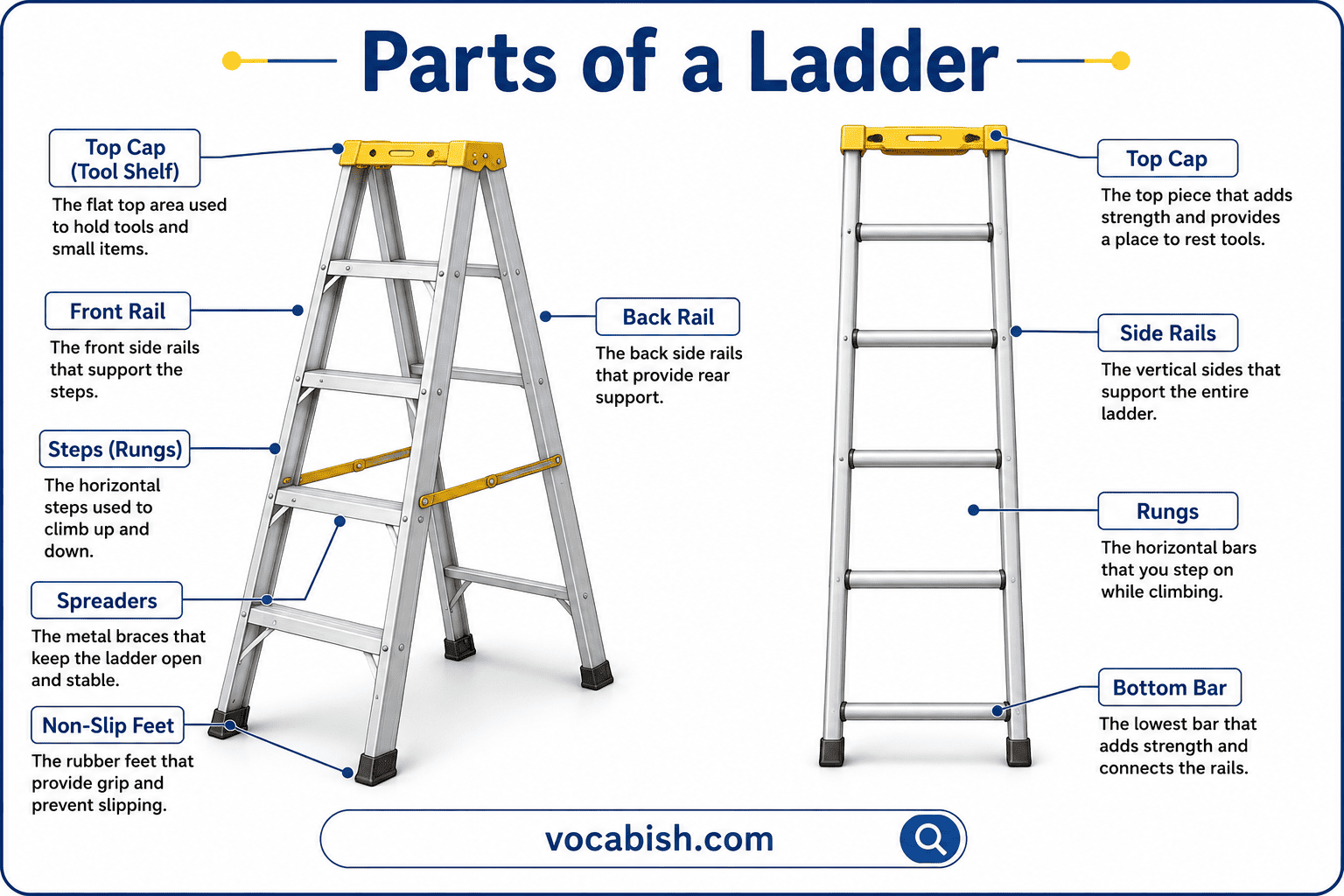
Side Rails
The long vertical parts on both sides of a ladder that hold it together.
Example: “He held the side rails while climbing the ladder.”
Rungs or Steps
The horizontal bars you step on to climb up or down.
Example: “She carefully stepped on each rung.”
Support and Safety Parts of a Ladder
These parts help keep the ladder stable and safe.
Feet or Shoes
The bottom parts of a ladder that touch the ground and prevent slipping.
Example: “The rubber feet kept the ladder steady.”
Base
The bottom support of the ladder that keeps it balanced.
Example: “Make sure the base is flat on the ground.”
Top Cap
The top platform or cover of the ladder for support or holding tools.
Example: “He placed his screwdriver on the top cap.”
Locking and Support Parts of a Ladder
These parts are found in folding or adjustable ladders.
Spreaders
Metal bars that keep a folding ladder open and stable.
Example: “The spreaders locked the ladder in place.”
Hinges
Joints that allow the ladder to fold or extend.
Example: “The hinges let the ladder fold easily.”
Locks
Safety parts that secure the ladder when it is extended or opened.
Example: “Always check the locks before climbing.”
Types of Ladders and Their Parts
Stepladder
A stepladder stands on its own.
Important parts:
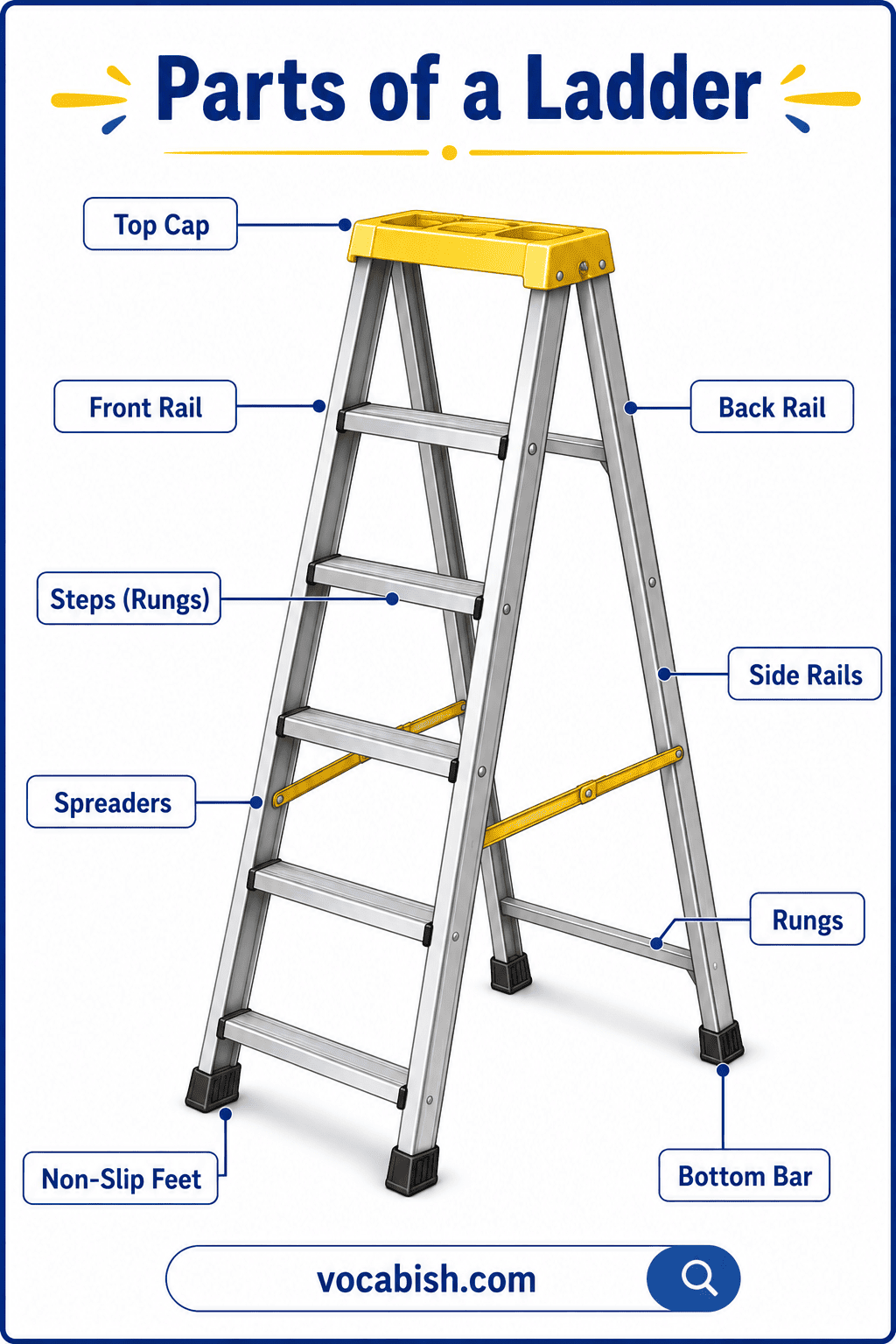
- Front rails: support climbing side
- Back rails: support balance
- Steps: flat climbing surfaces
- Top cap: tool support
- Spreaders: safety support
Extension Ladder
An extension ladder leans against a wall.
Important parts:
- Base section: bottom part
- Fly section: sliding upper part
- Rope and pulley: used to raise or lower the ladder
- Locks: hold height safely
Parts of a Ladder Diagram
Summary on Parts of a Ladder
Knowing the parts of a ladder and their functions helps you use it safely and correctly. Important ladder parts include side rails, rungs, feet, base, top cap, spreaders, hinges, and locks. Learning these words also improves English vocabulary for daily life, school, and work.
Frequently Asked Questions
The main parts of a ladder include side rails, rungs or steps, feet (shoes), base, and top cap. These parts work together to support weight and provide safe climbing.
Side rails are the long vertical parts that hold the ladder together and support the user’s weight while climbing.
Rungs or steps provide a safe place for your feet. They allow you to climb up and down the ladder in a balanced way.
Feet or shoes are placed at the bottom of the ladder to prevent slipping and improve grip on the ground.
The top cap is the flat top part of a step ladder. It can hold small tools and adds extra stability.
Spreaders are metal bars on step ladders that keep the ladder open and stop it from folding during use.
Locks hold the ladder sections firmly in place, keeping the ladder at the correct height for safe use.
Related Articles: