
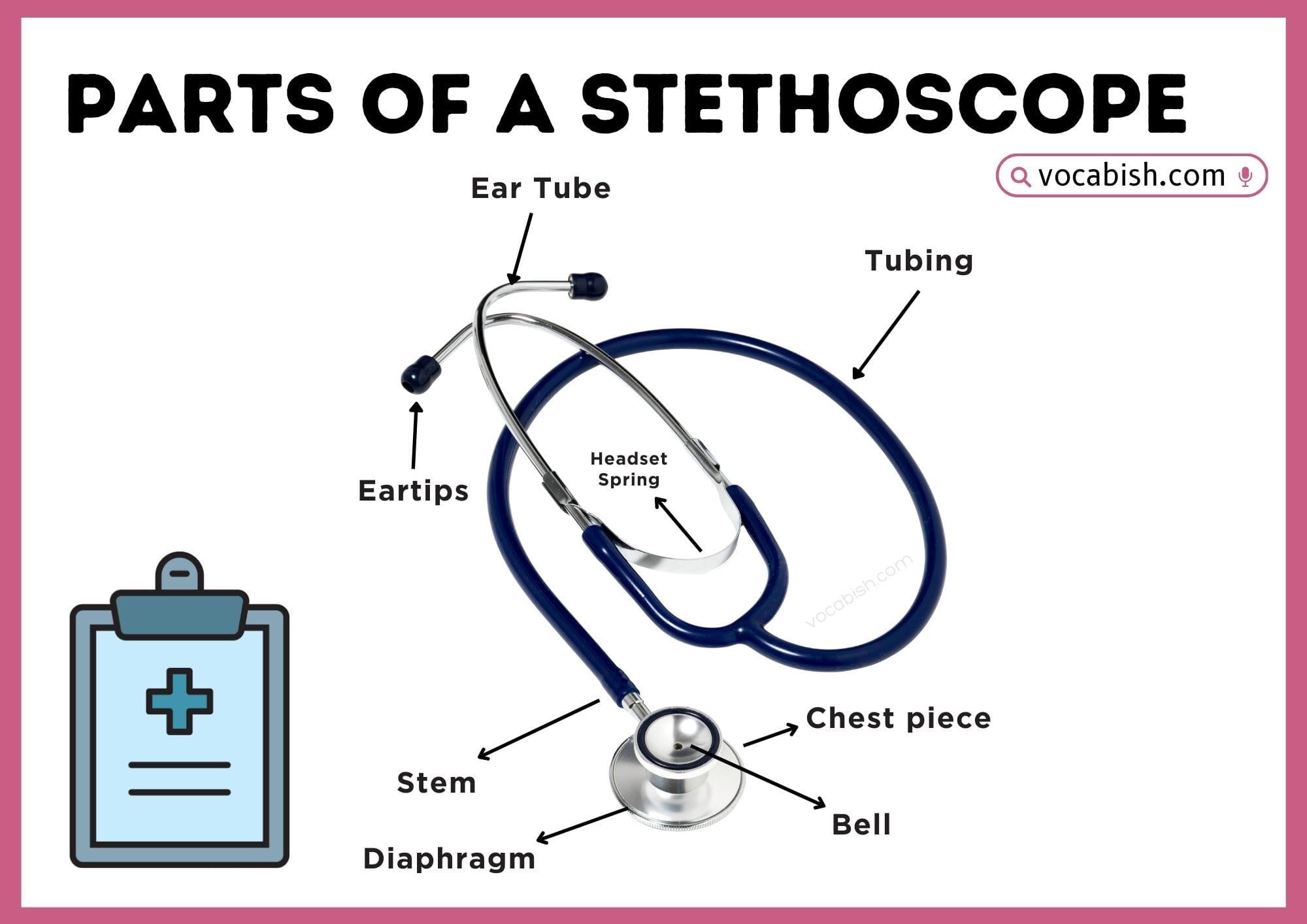
In this blog post, you will learn the different Parts of a Stethoscope, their Functions, and how they work together to help listen to sounds inside the body. Understanding these parts helps you use a stethoscope correctly in medical, nursing, or health-related settings. When you know how each part works, your practical skills improve, and your ability to check heartbeats, breathing, and other body sounds becomes more accurate. You also improve your reading and listening because you recognize these terms in instructions, guides, and medical conversations. Step by step, you will master the stethoscope and use it confidently.
What is a Stethoscope?
A stethoscope is a simple medical device used to listen to internal body sounds. These sounds include the heartbeat, lungs, and blood flow. A stethoscope helps in diagnosis, patient checks, and quick health assessment.
It works by collecting sound, sending it through tubing, and letting the listener hear it through the eartips.
Main Parts of a Stethoscope
1. Chestpiece (Head)
The chestpiece is the round part placed on the body. It contains the diaphragm and bell.
Function: Picks up body sounds.
2. Diaphragm
A flat, round disc on one side of the chestpiece.
Function:
- Listens to high-pitched sounds such as normal heartbeats and breathing.
- Used for general check-ups.
3. Bell
A smaller, bowl-shaped part on the other side of the chestpiece.
Function:
- Listens to low-pitched sounds, such as soft heart murmurs.
- Used on thin or small body areas.
4. Stem
The metal connector between the chestpiece and the tubing.
Function:
- Holds the chestpiece in place.
- Sends sound into the tubing.
5. Tubing
The long, flexible rubber or PVC tube.
Function:
- Carries sound from the chestpiece to the ears.
- Blocks outside noise for clear hearing.
6. Headset
The metal frame that connects the eartubes.
Function:
- Keeps the eartubes aligned.
- Helps fit the stethoscope comfortably.
7. Eartubes
Metal tubes that connect the headset to the eartips.
Function:
- Direct sound into the ears.
- Keep the device firmly positioned.
8. Eartips
Soft rubber ends that go into the ears.
Function:
- Provide comfort.
- Seal the ears to hear clear sound.
Additional and Optional Stethoscope Parts
Tunable Diaphragm
Allows switching between low and high sounds with light or firm pressure.
Adjustable Headset Spring
Lets users adjust tightness for comfort.
Non-chill rim
A soft edge around the diaphragm and bell.
Function: Makes it comfortable for patients.
Pediatric Chestpiece
Smaller chestpiece for children and babies.
Parts of a Stethoscope and Their Functions
| Part | Function |
|---|---|
| Chestpiece | Collects body sounds |
| Diaphragm | High-pitched sounds |
| Bell | Low-pitched sounds |
| Stem | Connects chestpiece to tubing |
| Tubing | Carries sound to ears |
| Headset | Holds eartubes in position |
| Eartubes | Direct sound to eartips |
| Eartips | Seal sound in ears |
| Non-chill Rim | Makes contact comfortable |
| Tunable Diaphragm | Switches sound types |
| Pediatric Chestpiece | Used for children |
Parts of a Stethoscope Diagram
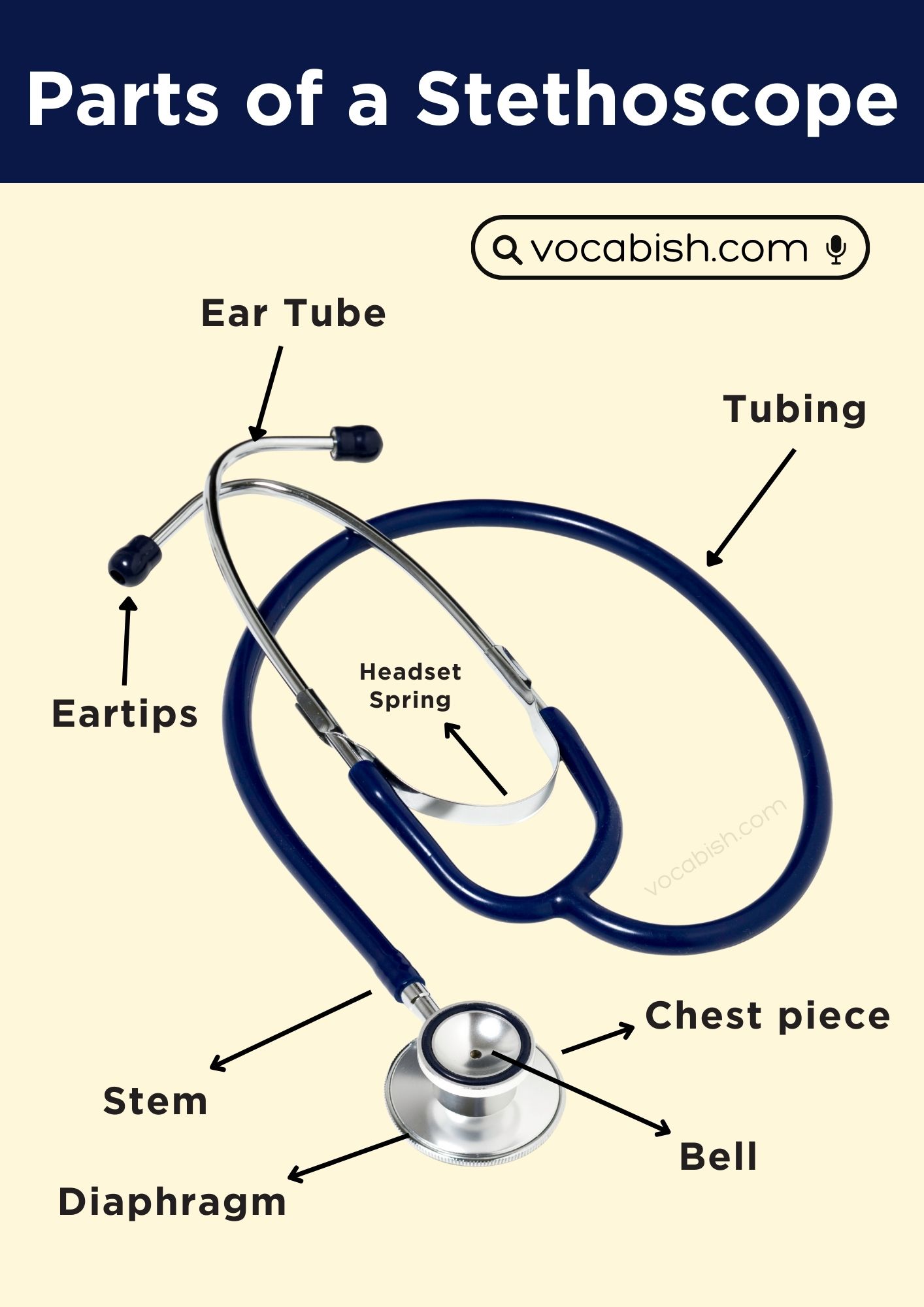
Examples of How Each Part Is Used
- The diaphragm checks regular breathing.
- The bell helps hear soft heart murmurs.
- The tubing blocks outside noise.
- The eartips help the listener hear clear sound.
- The non-chill rim keeps patients comfortable during check-ups.
FAQs
What are the main parts of a stethoscope?
The main parts are the chestpiece, diaphragm, bell, stem, tubing, headset, eartubes, and eartips.
What does the diaphragm of a stethoscope do?
It listens to high-pitched sounds like normal heartbeat and breathing.
What is the bell used for on a stethoscope?
The bell captures low-pitched sounds such as soft heart murmurs.
Why is the tubing important in a stethoscope?
It carries sound from the chestpiece to the ears without letting outside noise in.
What are eartips on a stethoscope?
Eartips are soft parts that fit inside the ears to make listening clear and comfortable.
What does the chestpiece of a stethoscope do?
It collects sounds from the body and sends them through the tubing.
What is the function of the stem in a stethoscope?
It connects the chestpiece to the tubing and helps move sound inside.
Why does a stethoscope have a non-chill rim?
It prevents cold metal from touching the skin, giving comfort during exams.
What is a tunable diaphragm?
It lets users shift between low and high sounds by changing pressure.
Why do some stethoscopes have a paediatric chestpiece?
It helps in examining children because smaller body areas need a smaller chestpiece.
Read More