
Prepositions are small words, but they play a very important role in English sentences. Two of the most common prepositions are “of” and “for.” These words connect ideas and help explain relationships between people, things, and actions.
Many English learners feel confused when choosing between of and for. Both words appear in daily conversations, but they express different meanings.
This blog post explains the meaning, rules, and examples of “of” and “for” in a sentence with easy wording. By the end of this article, learners will understand how to use these prepositions correctly in everyday communication.
What Are Prepositions in English?
A preposition is a word that shows the relationship between a noun or pronoun and another word in a sentence.
Common prepositions include:
- in
- on
- at
- to
- from
- of
- for
- with
Prepositions help explain time, place, direction, possession, purpose, and relationships.
For example:
- The color of the car is red.
- This gift is for you.
In these sentences, of and for connect ideas and give extra meaning.
Meaning of “Of” in English Sentences
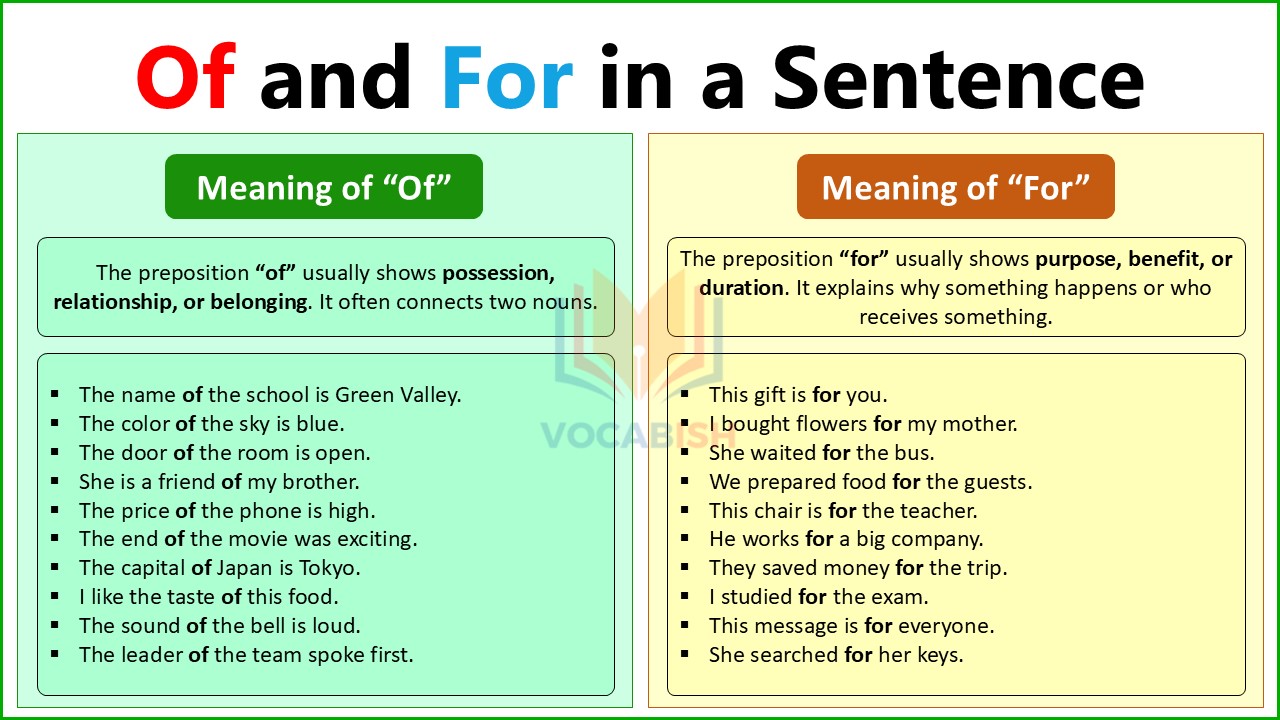
The preposition “of” usually shows possession, relationship, or belonging. It often connects two nouns.
Example meanings of of include:
- belonging to someone
- part of something
- describing a relationship
Examples:
- The cover of the book is blue.
- The capital of France is Paris.
- She is the daughter of my friend.
In each sentence, of connects two things and shows a relationship.
Meaning of “For” in English Sentences
The preposition “for” usually shows purpose, benefit, or duration. It explains why something happens or who receives something.
Common meanings of for include:
- intended for someone
- purpose of an action
- time duration
Examples:
- This gift is for you.
- I bought food for the children.
- She studied for two hours.
In these examples, for explains the reason or purpose.
Differences Between Of and For
Understanding the difference between of and for helps learners form correct sentences.
| Of | For |
|---|---|
| Shows possession or relationship | Shows purpose or benefit |
| Connects two nouns | Explains reason or intention |
| Example: The door of the house | Example: A gift for my friend |
Simple Tip
- Use of when something belongs to someone.
- Use for when something is intended for someone.
Examples of “Of” in a Sentence
Here are simple sentences using of.
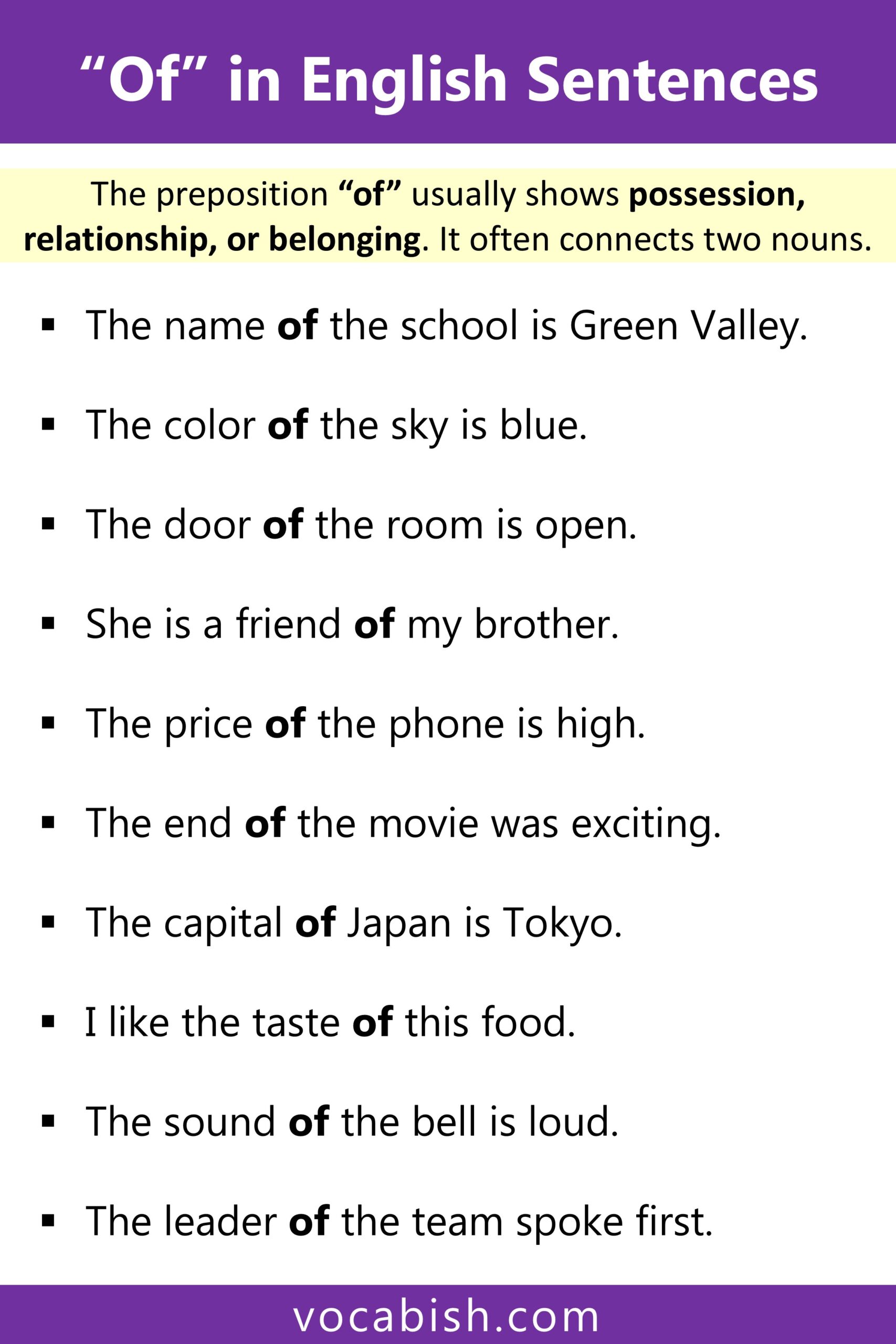
- The name of the school is Green Valley.
- The color of the sky is blue.
- The door of the room is open.
- She is a friend of my brother.
- The price of the phone is high.
- The end of the movie was exciting.
- The capital of Japan is Tokyo.
- I like the taste of this food.
- The sound of the bell is loud.
- The leader of the team spoke first.
These sentences show relationships or possession.
Examples of “For” in a Sentence
Below are examples using for.
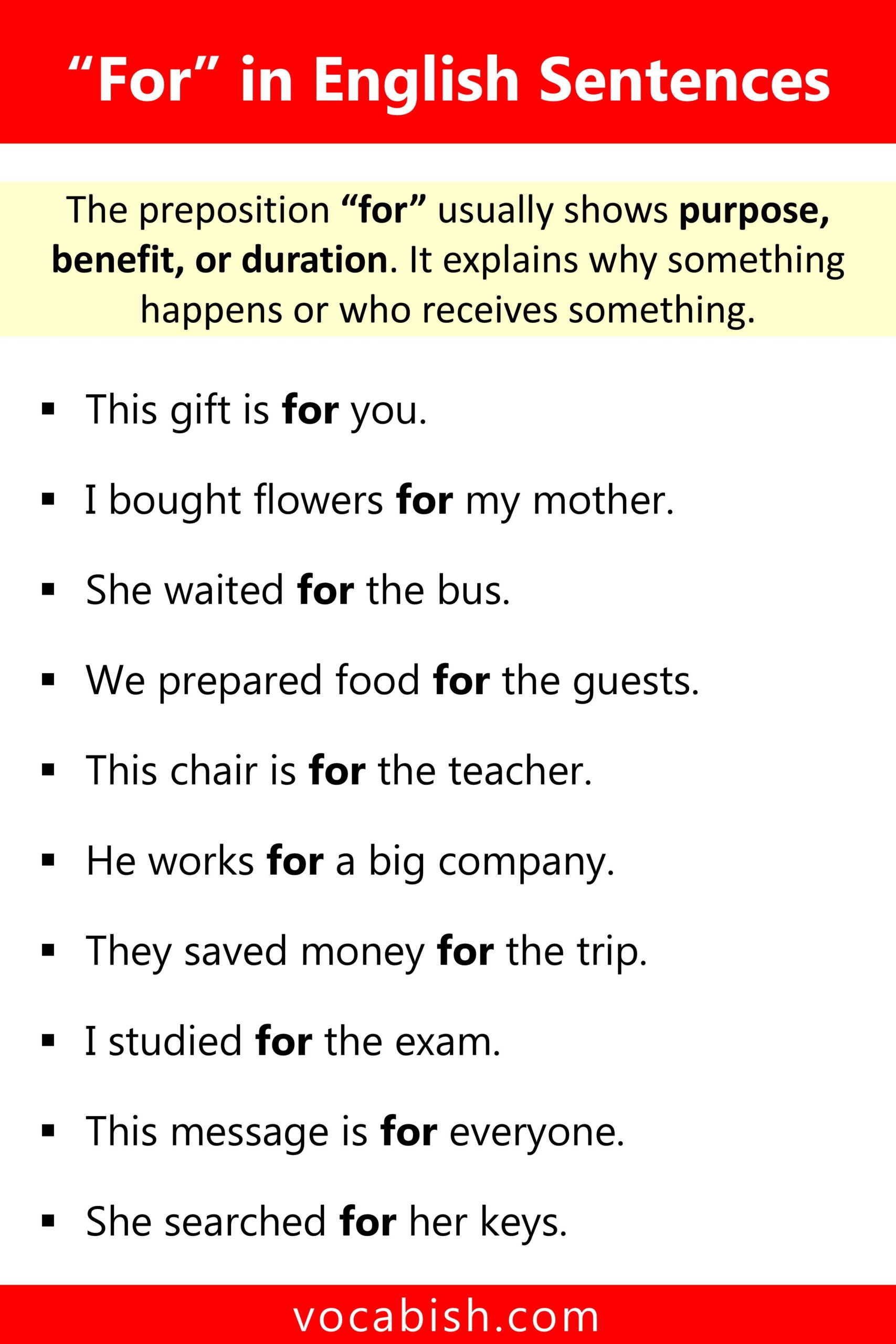
- This gift is for you.
- I bought flowers for my mother.
- She waited for the bus.
- We prepared food for the guests.
- This chair is for the teacher.
- He works for a big company.
- They saved money for the trip.
- I studied for the exam.
- This message is for everyone.
- She searched for her keys.
These sentences show purpose, benefit, or intention.
Common Mistakes with Of and For
Many learners confuse these two prepositions. Understanding common mistakes helps avoid errors.
Incorrect:
This book is of you.
Correct:
This book is for you.
Incorrect:
The gift for my brother is expensive.
Correct:
The gift of my brother is expensive. (rare)
Better: My brother’s gift is expensive.
Always consider the meaning of the sentence before choosing the preposition.
Tips to Learn Of and For Quickly
These simple strategies help learners master these prepositions.
Practice daily sentences
Read and repeat sentences using of and for.
Notice real conversations
Pay attention when people use these words in speaking.
Create your own sentences
Write five new sentences every day using both prepositions.
Read simple English texts
Books and articles help learners see natural usage.
Regular practice improves both accuracy and confidence.
Conclusion
The prepositions “of” and “for” are small but powerful words in English grammar. Of usually shows possession or relationship, while for explains purpose or benefit.
When learners understand these meanings and practice simple examples, they start using these prepositions correctly in daily conversations.
With regular practice, learners can build clearer sentences and improve their overall English communication skills.
FAQs
“Of” usually shows possession, connection, or belonging between two nouns. “For” shows purpose, benefit, or intention. For example, the cover of the book and a gift for my friend.
Use “of” to show a relationship between two nouns, such as possession, part, or description. Example: The color of the car is black. It connects two related things.
Use “for” to explain purpose, benefit, or reason. It tells who receives something or why an action happens. Example: This message is for you.
Use “of” when showing possession, part, or connection between things. Example: the door of the house. Use “for” when explaining purpose or benefit, such as a present for my sister.
Common examples include the name of the city, the cover of the book, a gift for you, and food for the children. These sentences appear frequently in everyday conversations.
Learners often confuse possession with purpose. For example, they may say this book is of you instead of this book is for you. Understanding meaning prevents this mistake.
Related Articles: