
English words do different jobs in a sentence. Some words name people or things, some describe them, some show actions, and some connect ideas. These word jobs are called parts of speech.
Learning the differences between parts of speech helps you understand how English sentences work. It also helps you write better sentences, choose the right words, and avoid common grammar mistakes.
The Main Parts of Speech
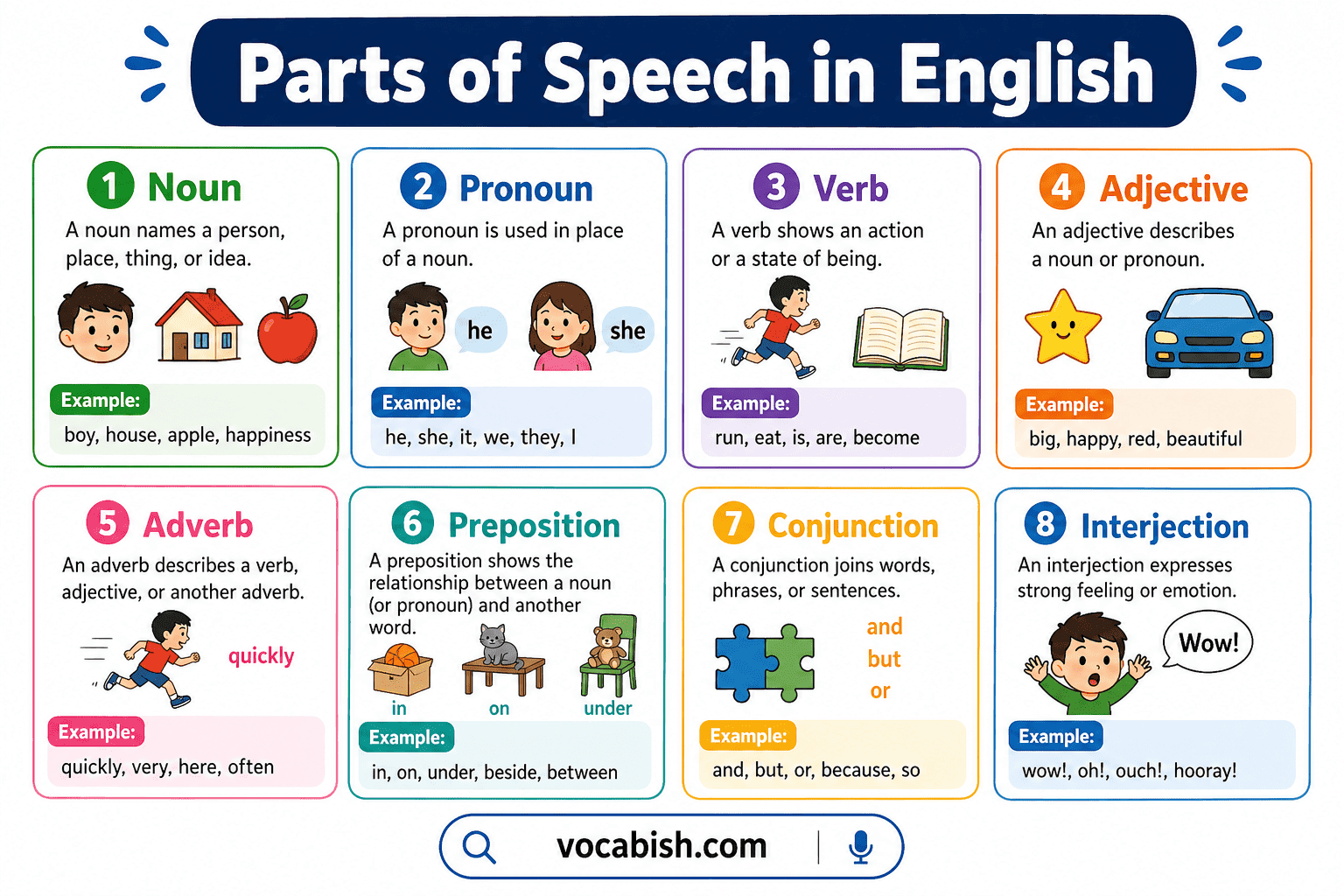
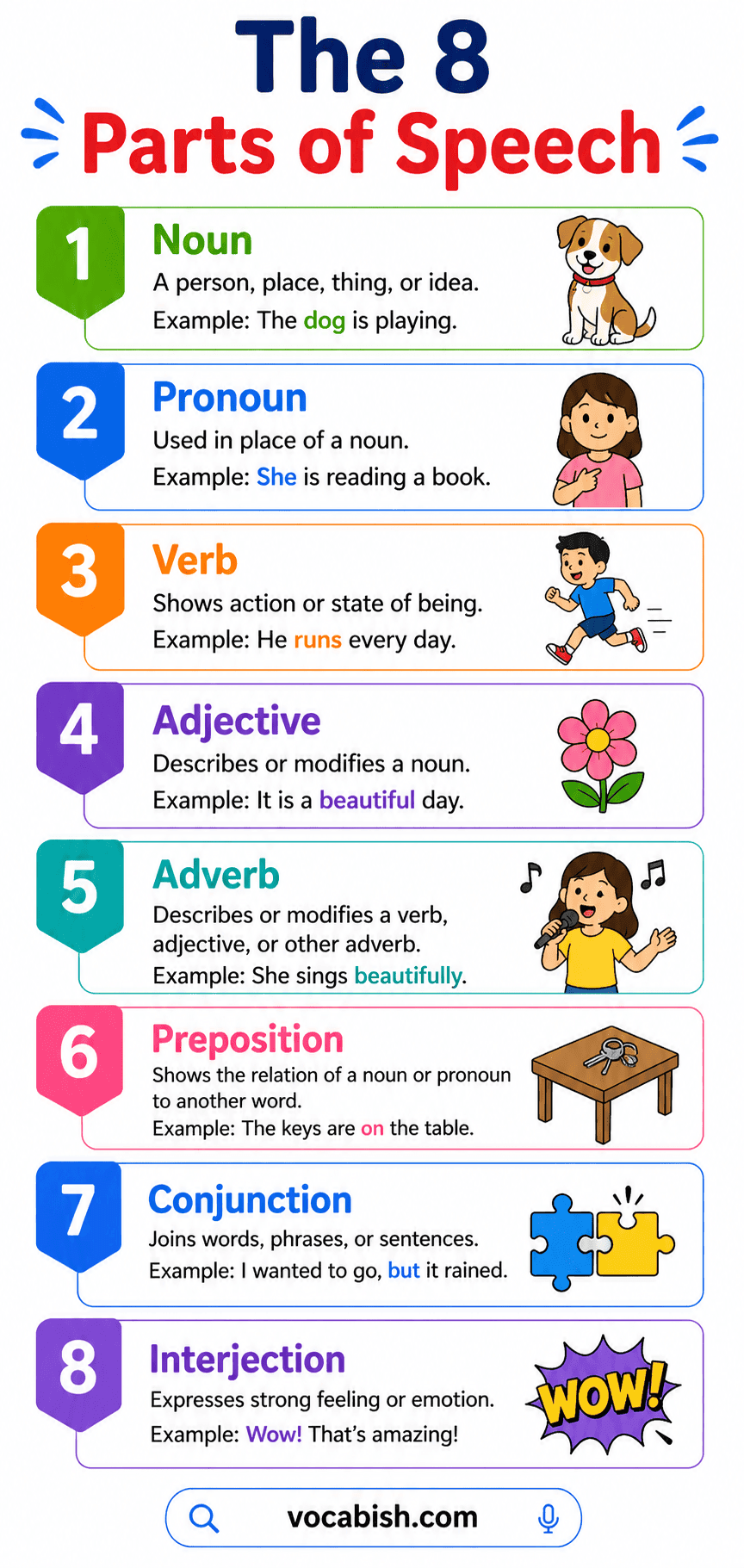
Nouns: Nouns are words that name people, places, things, animals, or ideas. They can work as the subject or object in a sentence. Examples include teacher, school, book, dog, and happiness.
Pronouns: Pronouns are words that replace nouns so we do not repeat the same names again and again. Examples include he, she, it, they, we, and you.
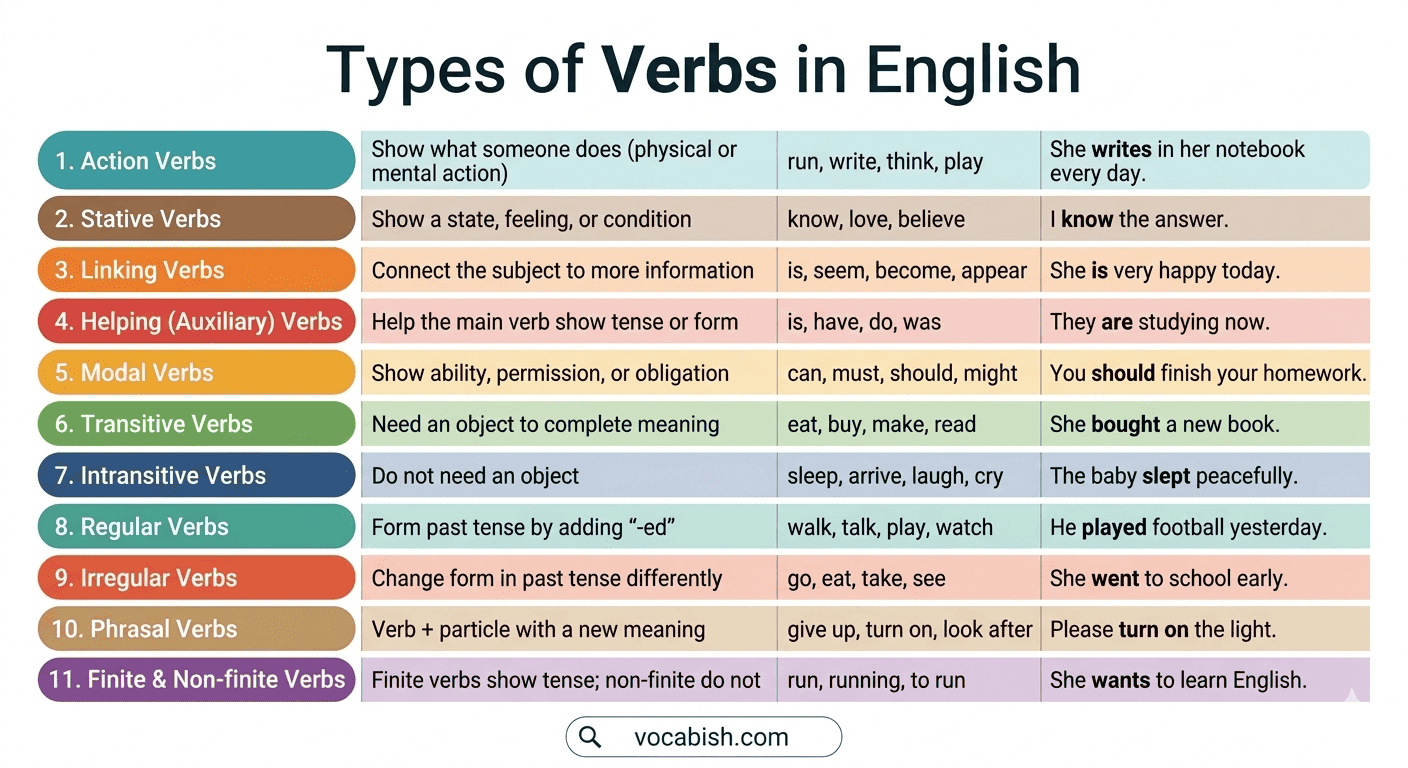
Verbs: Verbs are words that show actions, states, or conditions. They tell what someone does or what something is. Examples include run, eat, write, is, think, and become.
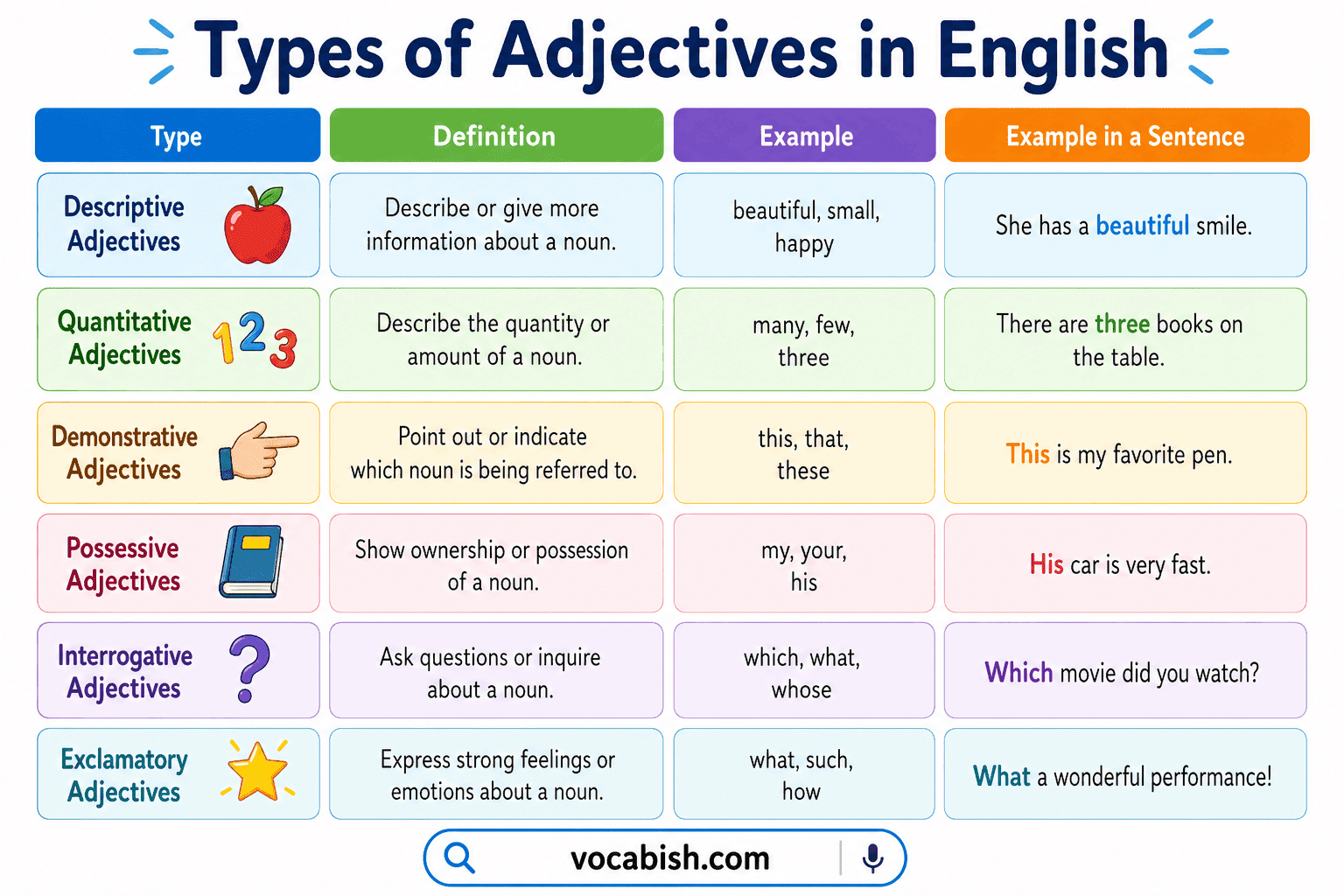
Adjectives: Adjectives describe nouns or pronouns and give more information about them. Examples include blue, tall, quick, beautiful, and happy.
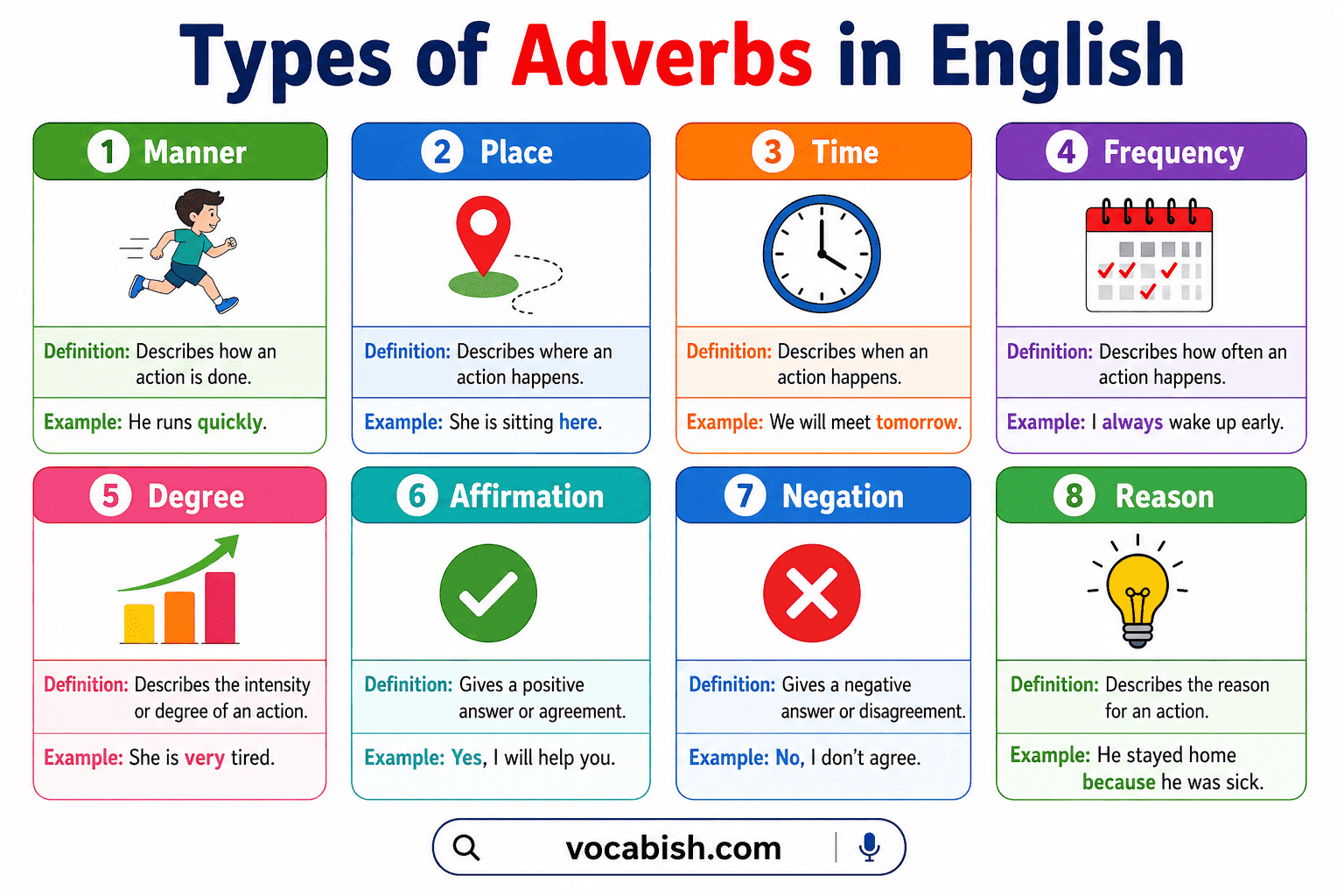
Adverbs: Adverbs describe verbs, adjectives, or other adverbs. They often tell how, when, where, or how much something happens. Examples include quickly, very, slowly, yesterday, and outside.
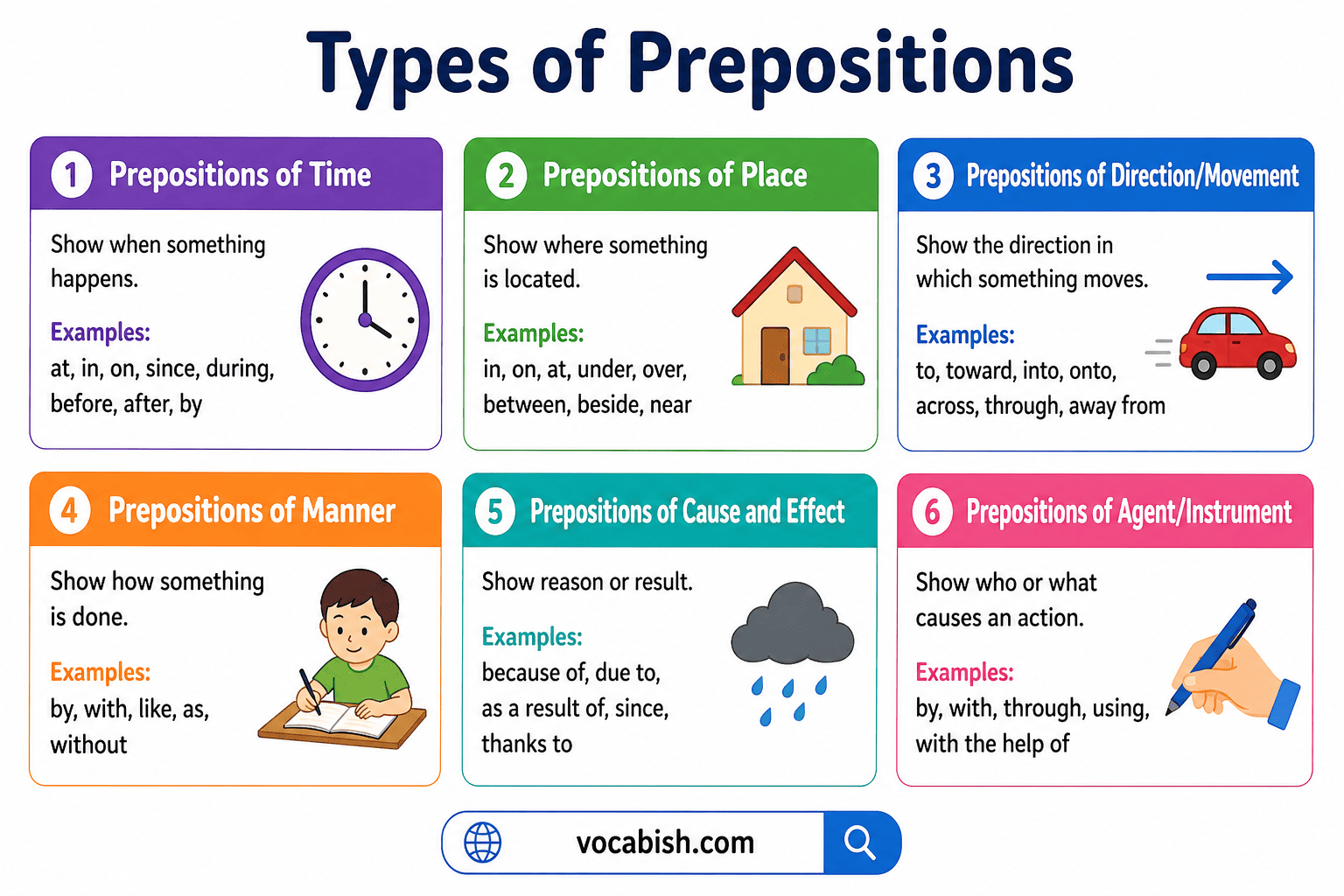
Prepositions: Prepositions show the relationship between a noun or pronoun and another word in the sentence. Examples include in, on, under, between, near, and with.
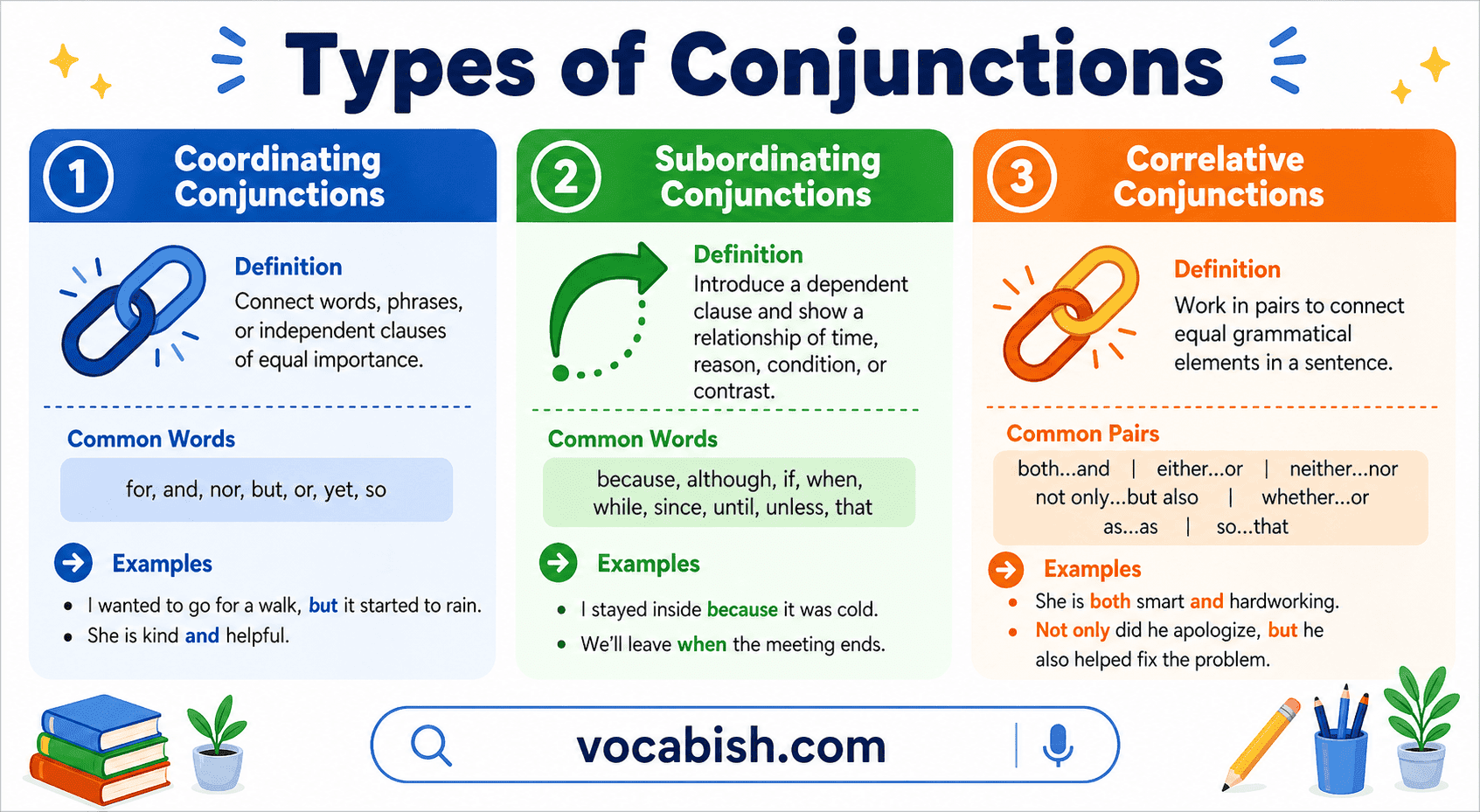
Conjunctions: Conjunctions connect words, phrases, or sentences. Examples include and, but, or, because, although, and so.
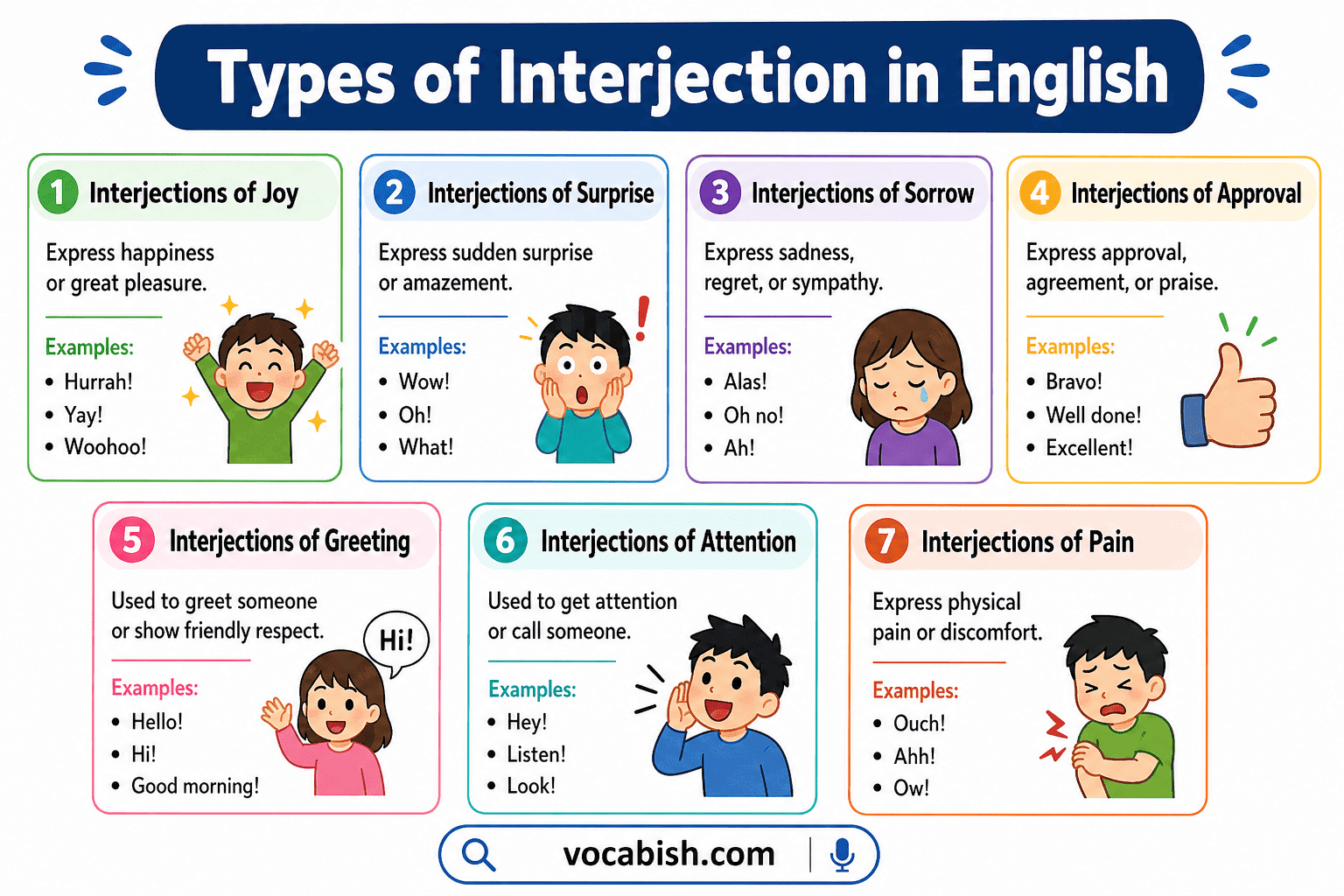
Interjections: Interjections are words or short expressions that show sudden feelings or reactions. Examples include Wow!, Oh!, Ouch!, Hey!, and Alas!
Determiners: Determiners come before nouns and help show which one, how many, or whose noun we are talking about. Examples include a, an, the, this, that, some, many, and my.
Noun vs. Pronoun
A noun names a person, place, thing, animal, or idea.
Examples:
- teacher
- school
- dog
- table
- happiness
A pronoun replaces a noun to avoid repeating the same word again and again.
Examples:
- he
- she
- it
- they
- we
- you
Compare:
- Ali is my friend. Ali is kind.
- Ali is my friend. He is kind.
The second sentence sounds better because he replaces Ali.
More examples:
- Maria is reading. She is reading.
- The dog is hungry. It is hungry.
- Students are ready. They are ready.
So, a noun gives a name, while a pronoun replaces that name.
Noun vs. Verb
A noun tells us who or what something is. A verb tells us what someone or something does.
Examples of nouns:
- boy
- car
- book
- city
Examples of verbs:
- run
- eat
- write
- drive
Compare:
- The boy runs fast.
- The boy runs fast.
Here, boy is a noun because it names a person. Runs is a verb because it shows an action.
More examples:
- The teacher explains the lesson.
- Birds fly in the sky.
- My brother plays football.
A simple way to remember this difference is: nouns name things, and verbs show actions or states.
Verb vs. Adjective
A verb shows an action, condition, or state. An adjective describes a noun or pronoun.
Examples:
- She smiles.
- She is happy.
In the first sentence, smiles is a verb because it shows an action. In the second sentence, happy is an adjective because it describes she.
Compare:
- The baby cries.
- The baby is tired.
- He runs.
- He is fast.
Verbs tell what happens. Adjectives tell what something or someone is like.
Adjective vs. Adverb
This is one of the most common areas of confusion for English learners.
An adjective describes a noun or pronoun.
An adverb usually describes a verb, adjective, or another adverb.
Compare:
- She is a careful driver.
- She drives carefully.
In the first sentence, careful describes the noun driver. So it is an adjective.
In the second sentence, carefully describes the verb drives. So it is an adverb.
More examples:
- He is a quick learner.
- He learns quickly.
- It was a bad mistake.
- He behaved badly.
Many adverbs end in -ly, but not all of them do. Words like fast, hard, and well can also work as adverbs.
Examples:
- She runs fast.
- He works hard.
- You did well.
Preposition vs. Conjunction
A preposition shows the relationship between a noun or pronoun and another word in the sentence.
Common prepositions:
- in
- on
- at
- under
- near
- before
- after
- with
Examples:
- The book is on the table.
- She lives in London.
- He sat under the tree.
A conjunction connects words, phrases, or clauses.
Common conjunctions:
- and
- but
- or
- because
- so
- although
Examples:
- I like tea and coffee.
- She was tired, but she continued working.
- He stayed home because he was sick.
The difference is simple: prepositions show relationships, while conjunctions connect ideas.
Article vs. Adjective
Articles are small words used before nouns. The main articles in English are:
- a
- an
- the
Examples:
- I saw a bird.
- She ate an apple.
- Please close the door.
An adjective gives more information about a noun.
Examples:
- I saw a small bird.
- She ate a red apple.
- Please close the wooden door.
Articles help introduce or identify nouns. Adjectives describe nouns.
Interjection vs. Other Parts of Speech
An interjection expresses a sudden feeling or reaction. It often stands alone or appears at the beginning of a sentence.
Examples:
- Wow!
- Oh!
- Ouch!
- Hey!
- Hurray!
Sentences:
- Wow! That dress is beautiful.
- Ouch! That hurt.
- Oh! I forgot my bag.
Interjections are different from other parts of speech because they do not usually play a main grammar role in the sentence. They mainly show emotion.
Same Word, Different Part of Speech
Some English words can belong to different parts of speech depending on how they are used.
1. Example: Light
- The light is bright.
Here, light is a noun. - This bag is light.
Here, light is an adjective.
2. Example: Run
- I run every morning.
Here, run is a verb. - She went for a run.
Here, run is a noun.
3. Example: Fast
- He is a fast runner.
Here, fast is an adjective. - He runs fast.
Here, fast is an adverb.
This is why you should not only memorize words. You should also look at how they are used in the sentence.
Comparison Chart of the Parts of Speech
Part of Speech | Main Job | Sentence |
|---|---|---|
Noun | Names something | The student is reading. |
Pronoun | Replaces a noun | She is reading. |
Verb | Shows action or state | They read books. |
Adjective | Describes a noun | He is a smart boy. |
Adverb | Describes a verb, adjective, or adverb | She walked slowly. |
Preposition | Shows relationship | The cat is under the table. |
Conjunction | Connects words or ideas | I was tired, but I studied. |
Interjection | Shows emotion | Wow! That is amazing. |
Points to a noun | The sun is bright. |
How to Identify Parts of Speech in a Sentence
To identify the part of speech, ask what the word is doing in the sentence.
Look at this sentence:
The young boy quickly opened the door because he heard a noise.
Now break it down:
- The = article
- young = adjective
- boy = noun
- quickly = adverb
- opened = verb
- door = noun
- because = conjunction
- he = pronoun
- heard = verb
- noise = noun
Instead of guessing, check the word’s function.
Common Mistakes To Avoid
1: Using an adjective instead of an adverb
Incorrect:
- She speaks English fluent.
Correct:
- She speaks English fluently.
Here, fluently describes the verb speaks, so we need an adverb.
2: Confusing nouns and verbs
Incorrect:
- I need to decision now.
Correct:
- I need to decide now.
- I need a decision now.
Decide is a verb. Decision is a noun.
3: Repeating nouns instead of using pronouns
Incorrect:
- Maria is my sister. Maria is a doctor. Maria works in a hospital.
Better:
- Maria is my sister. She is a doctor. She works in a hospital.
Pronouns make sentences smoother and less repetitive.
Practice Exercises of Parts of Speech
These exercises will help you check if you really understand how parts of speech work in real sentences. Try to answer on your own before checking the answers.
1. Identify the Correct Part of Speech
Read each sentence and identify the part of speech of the highlighted word.
- She is running fast.
- This is a big house.
- He and I are friends.
- They walked to the market.
- She spoke softly.
Answers:
- Adverb
- Adjective
- Noun
- Noun
- Adverb
2. Fill in the Blanks
Fill in the blanks with the correct word based on the part of speech given.
- She sings very ____. (Adverb)
- He is a ____ student. (Adjective)
- I ____ to school daily. (Verb)
- They live in a ____ house. (Adjective)
- She answered the question ____. (Adverb)
Answers:
- beautifully
- smart
- go
- big
- correctly
3. Multiple Choice Questions
Choose the correct answer.
- “Quickly” is a:
a) noun b) verb c) adverb - “Book” is a:
a) noun b) adjective c) adverb - “Happy” is a:
a) verb b) adjective c) noun - “Run” is a:
a) noun b) verb c) conjunction - “Very” is a:
a) adjective b) adverb c) noun
Answers:
- c) adverb
- a) noun
- b) adjective
- b) verb
- b) adverb
FAQs about Parts of Speech
The parts of speech are the main word groups in English grammar. They include nouns, pronouns, verbs, adjectives, adverbs, prepositions, conjunctions, interjections, and determiners. Each part of speech has a different job in a sentence.
Learning the differences between parts of speech helps you understand how sentences are built. It also helps you choose the right word, avoid grammar mistakes, and write clearer sentences in English.
A is an article, and articles are usually included under determiners in modern grammar. It comes before a singular countable noun, such as a book, a chair, or a student.
The is a definite article. It is also a type of determiner because it comes before a noun and shows that we are talking about something specific, such as the sun, the door, or the teacher.
Yes, the same word can belong to different parts of speech depending on how it is used. For example, in I run every morning, run is a verb. In I went for a run, run is a noun.
Quickly is an adverb. It describes how an action happens. For example, in the sentence She walked quickly, the word quickly describes the verb walked.
Final Thoughts
Understanding the differences between parts of speech in English makes grammar much easier. A word’s part of speech depends on its job in the sentence. Nouns name things, verbs show actions, adjectives describe nouns, adverbs describe actions, and other parts help connect or organize ideas.
When you read or write English, try to notice what each word is doing. This habit will help you build clearer, stronger, and more natural sentences.