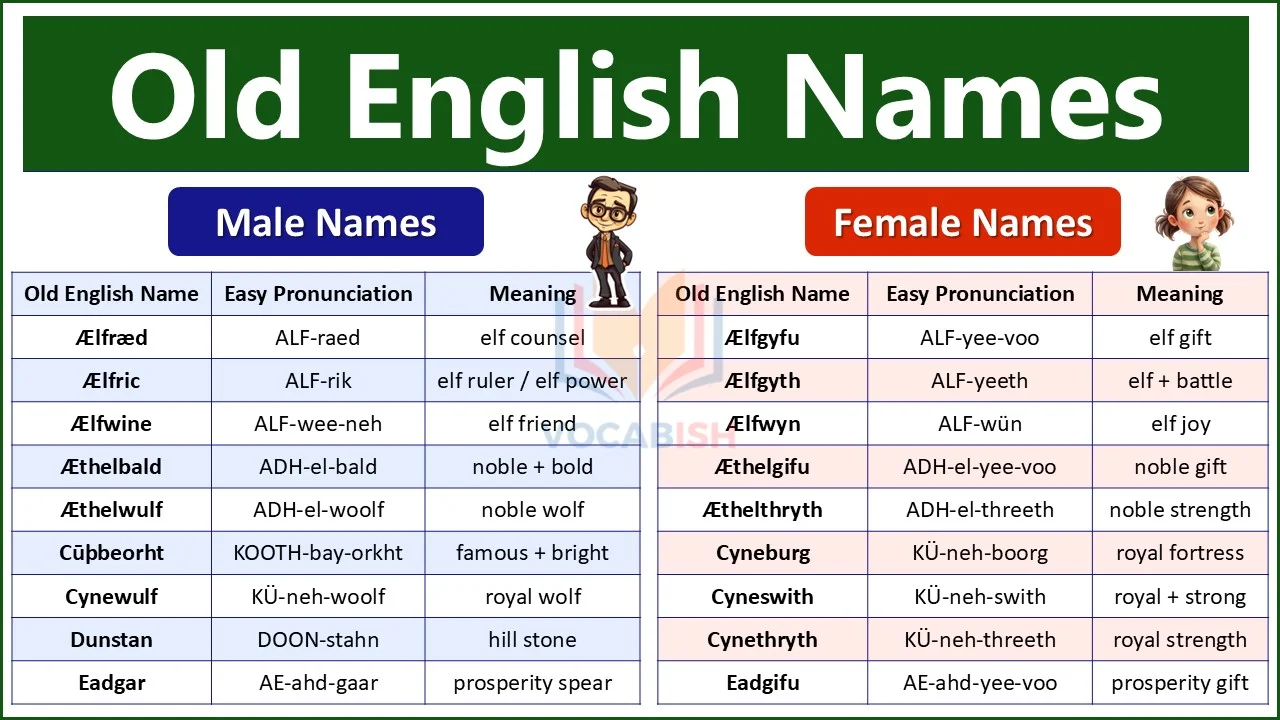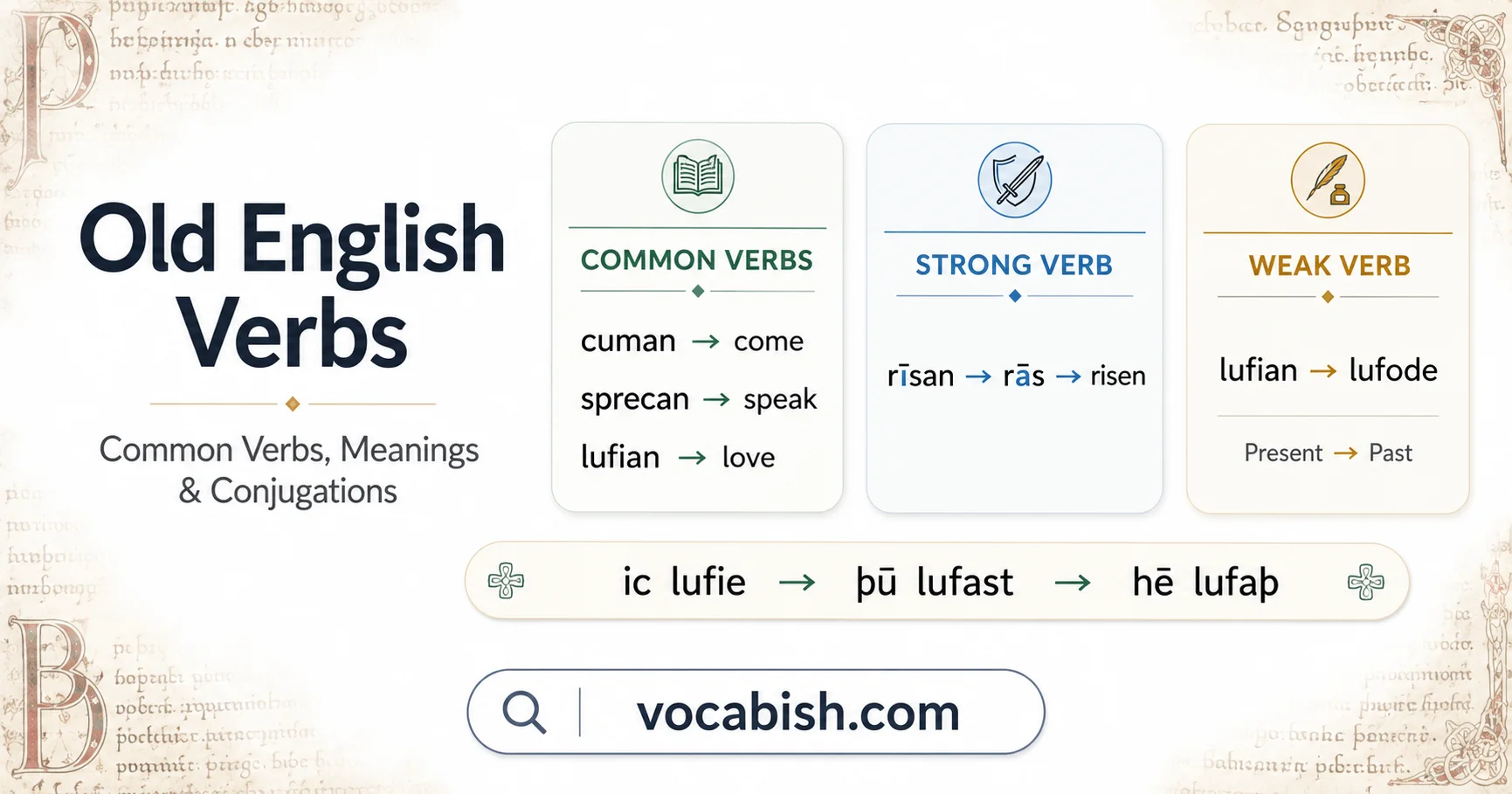
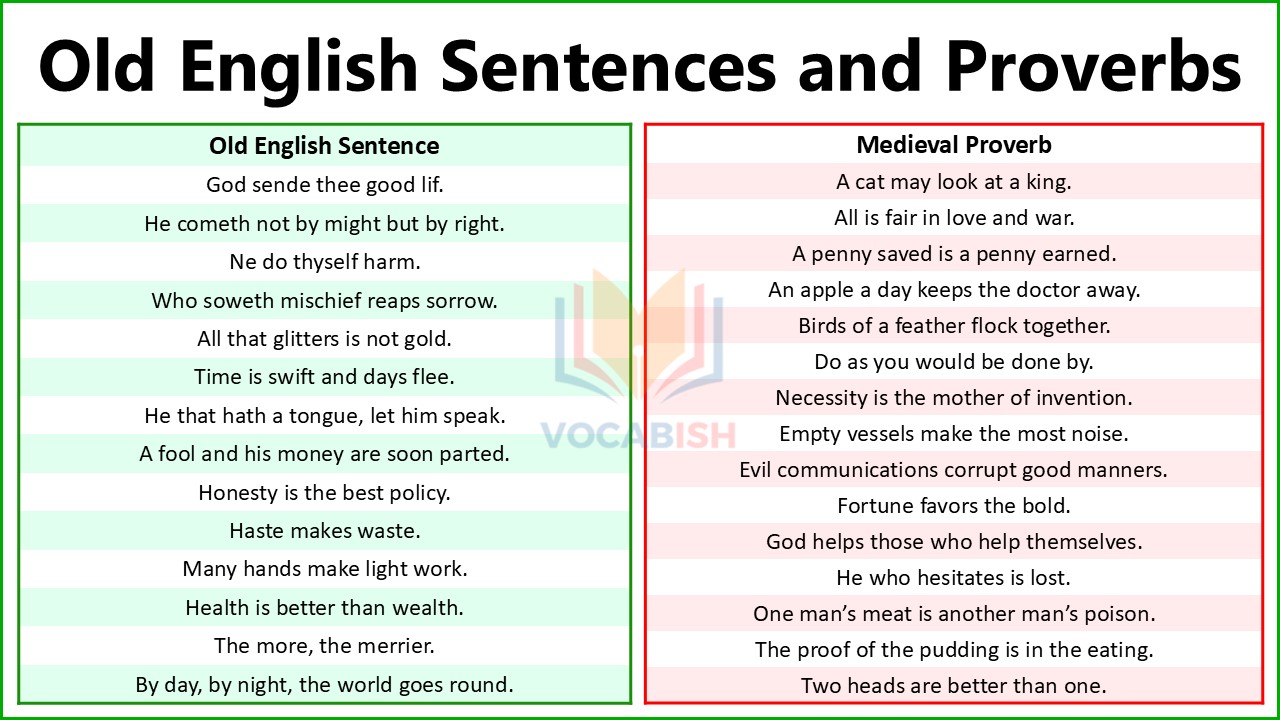

Old English sentences and medieval proverbs reflect how people in earlier times expressed ideas about life, wisdom, and daily living. These expressions are often simple in structure but carry strong meanings shaped by history, culture, and tradition.
This article shares 50 Old English sentences and medieval proverbs to help readers explore historical English usage. Each example is presented in a clear way so you can understand its meaning and see how language was used in older forms of English communication.
Why Learn Old English Sentences and Proverbs
Old English and medieval proverbs are windows into the past. They show how people spoke hundreds of years ago. Learning them helps you:
- Understand the roots of modern English words.
- Improve your vocabulary in a fun way.
- Use expressions with wisdom and clarity.
Even though the words are old, their meaning can guide daily life.
How Old English Words Help Modern Vocabulary
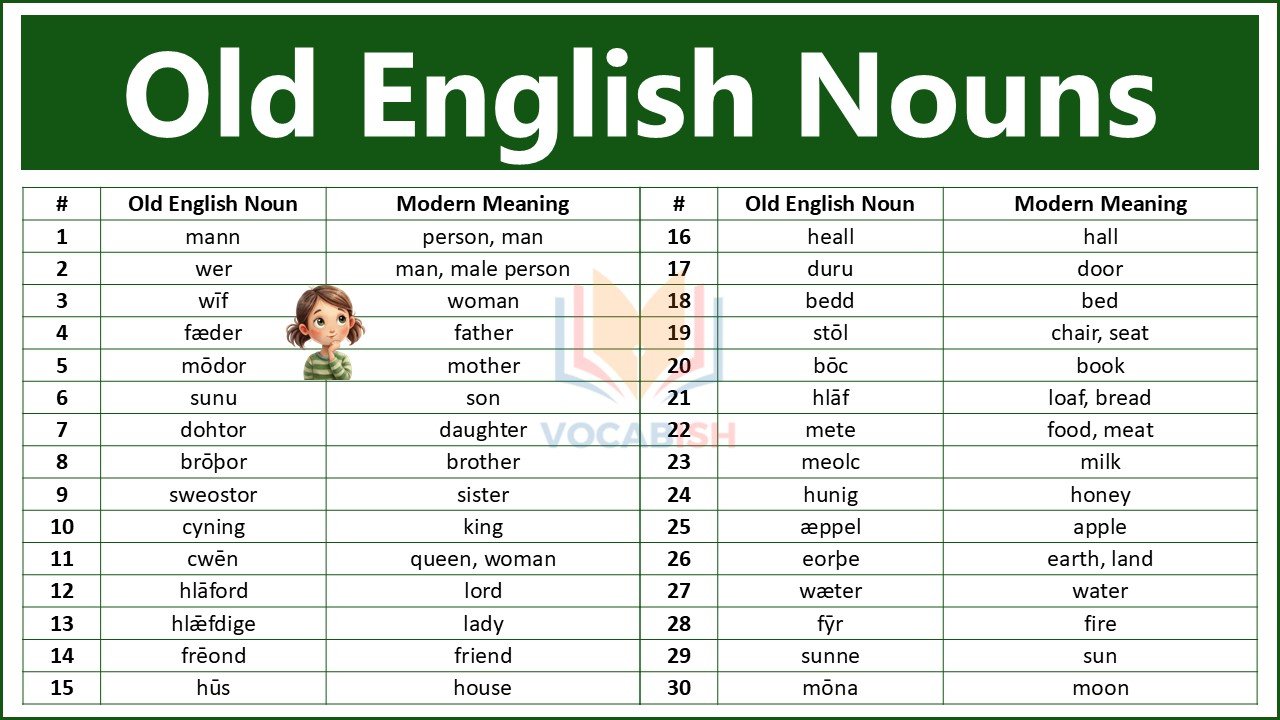
Many English words come from Old English. For example:
- “Housel” → now “house”
- “Wif” → now “wife”
- “Cyning” → now “king”
Learning these words helps you:
- Recognize modern words faster.
- Understand old literature or historic texts.
- Speak English more confidently.
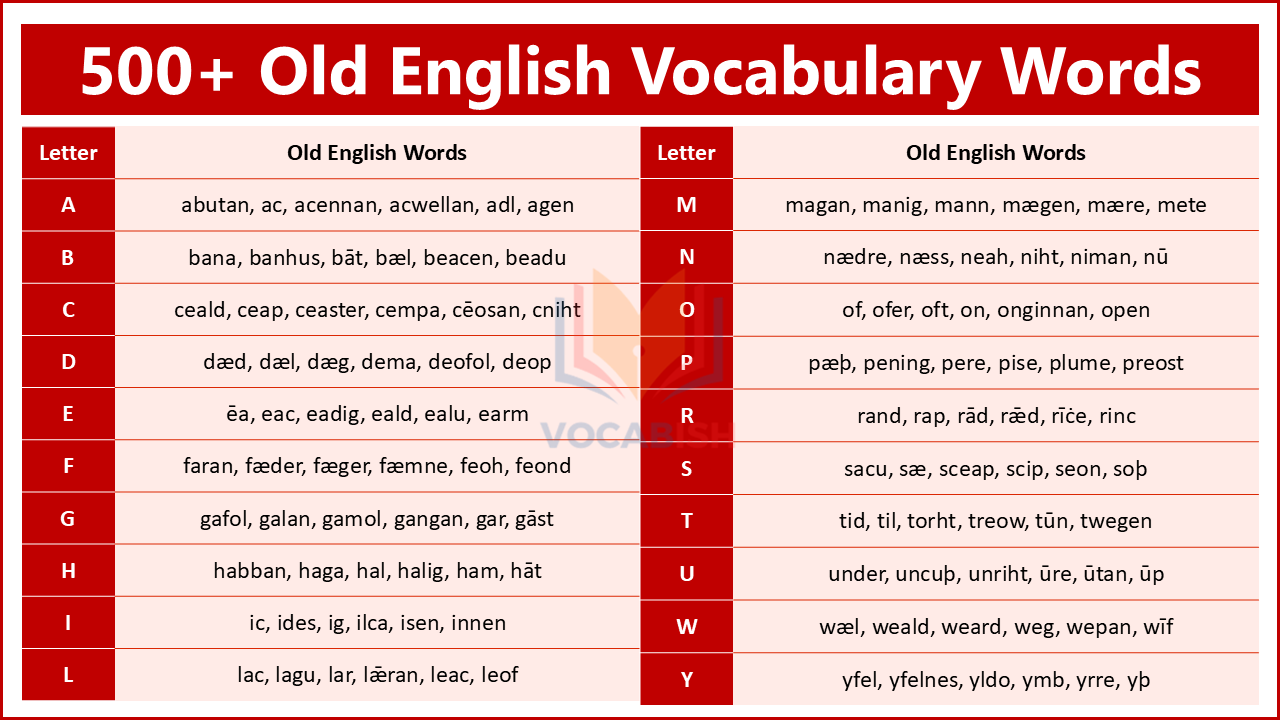
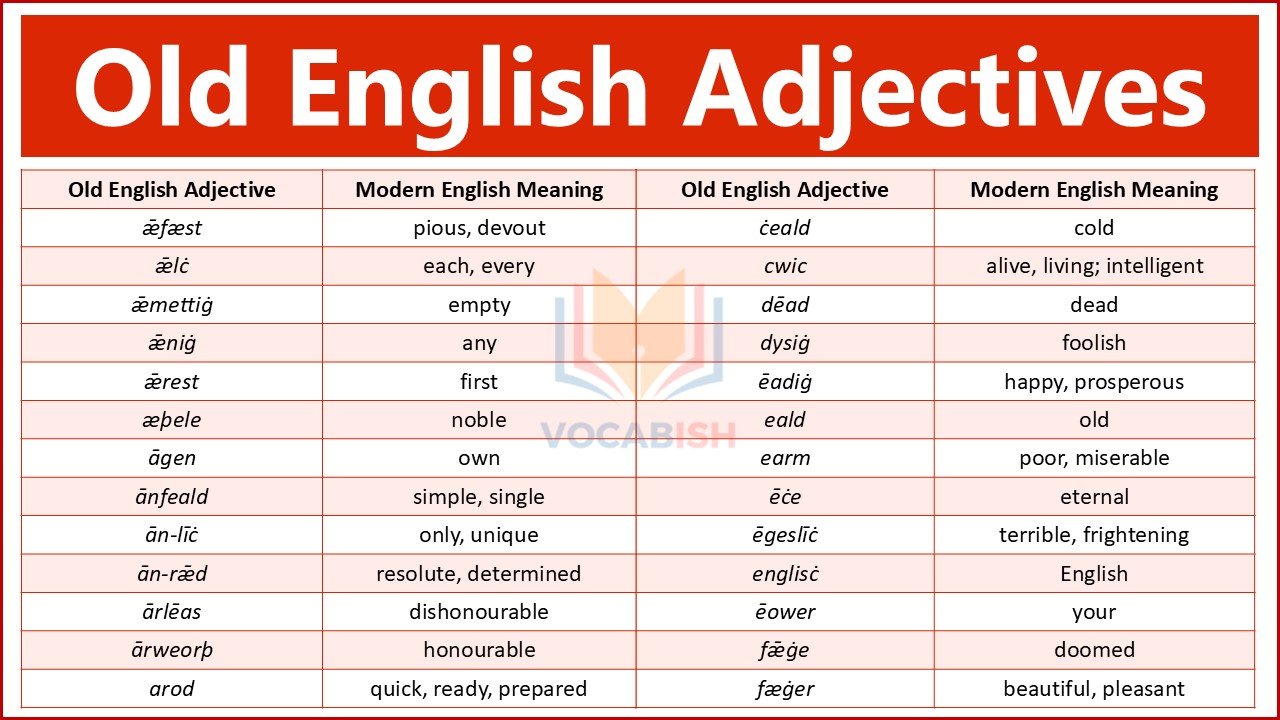
Here’s a complete guide on old English words with their meanings.
Common Old English Sentences You Can Use Today
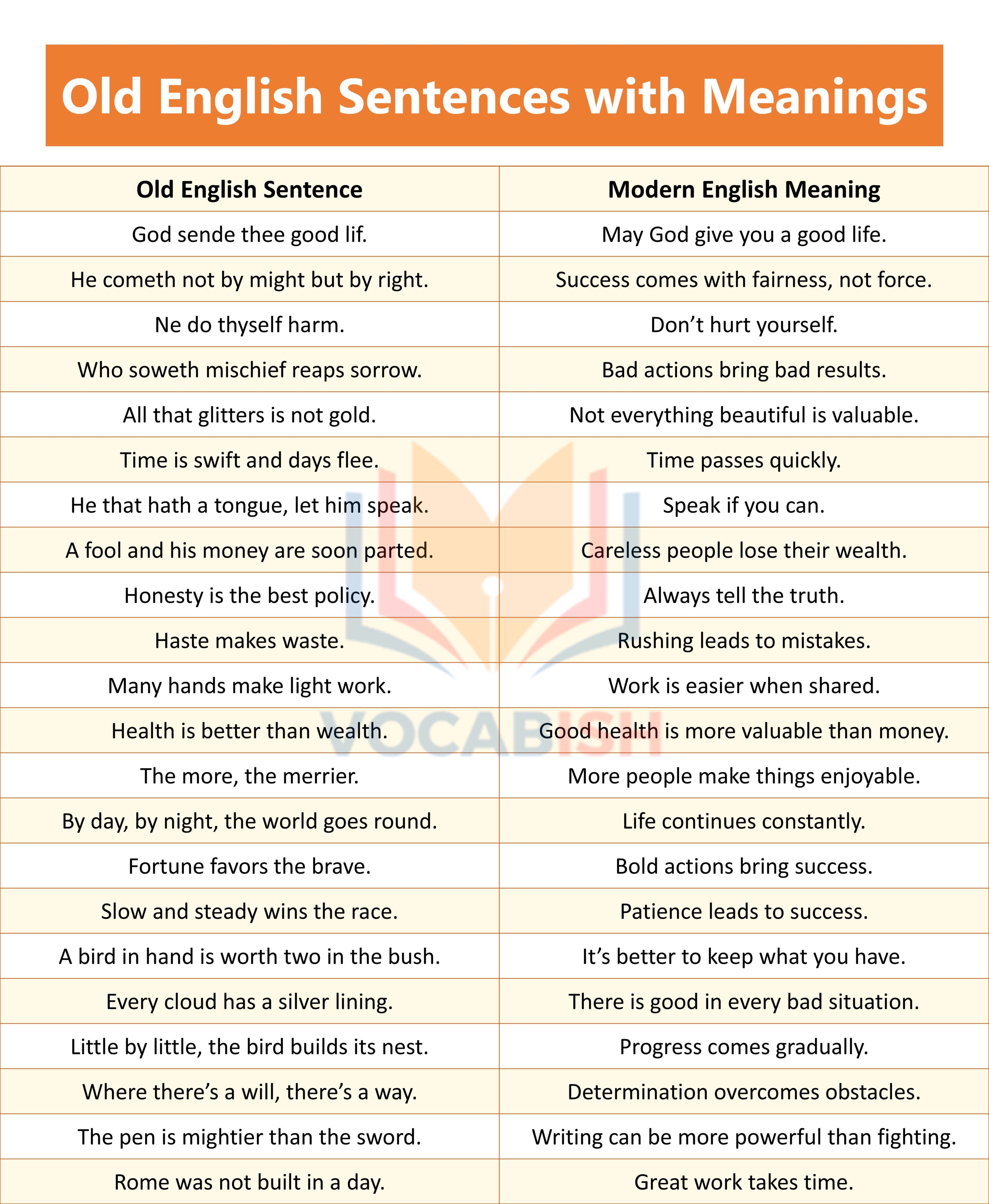
Here are 25 old English sentences with modern meanings:
Old English Sentence | Modern English Meaning |
|---|---|
God sende thee good lif. | May God give you a good life. |
He cometh not by might but by right. | Success comes with fairness, not force. |
Ne do thyself harm. | Don’t hurt yourself. |
Better is late than never. | It’s better to do something late than not at all. |
Who soweth mischief reaps sorrow. | Bad actions bring bad results. |
All that glitters is not gold. | Not everything beautiful is valuable. |
Time is swift and days flee. | Time passes quickly. |
He that hath a tongue, let him speak. | Speak if you can. |
A fool and his money are soon parted. | Careless people lose their wealth. |
Honesty is the best policy. | Always tell the truth. |
Haste makes waste. | Rushing leads to mistakes. |
Many hands make light work. | Work is easier when shared. |
Health is better than wealth. | Good health is more valuable than money. |
The more, the merrier. | More people make things enjoyable. |
A stitch in time saves nine. | Fix small problems quickly to avoid bigger ones. |
By day, by night, the world goes round. | Life continues constantly. |
Fortune favors the brave. | Bold actions bring success. |
Slow and steady wins the race. | Patience leads to success. |
A bird in hand is worth two in the bush. | It’s better to keep what you have. |
Every cloud has a silver lining. | There is good in every bad situation. |
Little by little, the bird builds its nest. | Progress comes gradually. |
Where there’s a will, there’s a way. | Determination overcomes obstacles. |
The pen is mightier than the sword. | Writing can be more powerful than fighting. |
Give a man a fish, and he eats for a day; teach him, and he eats for life. | Education lasts longer than temporary help. |
Rome was not built in a day. | Great work takes time. |
25 Medieval Proverbs and Their Meanings
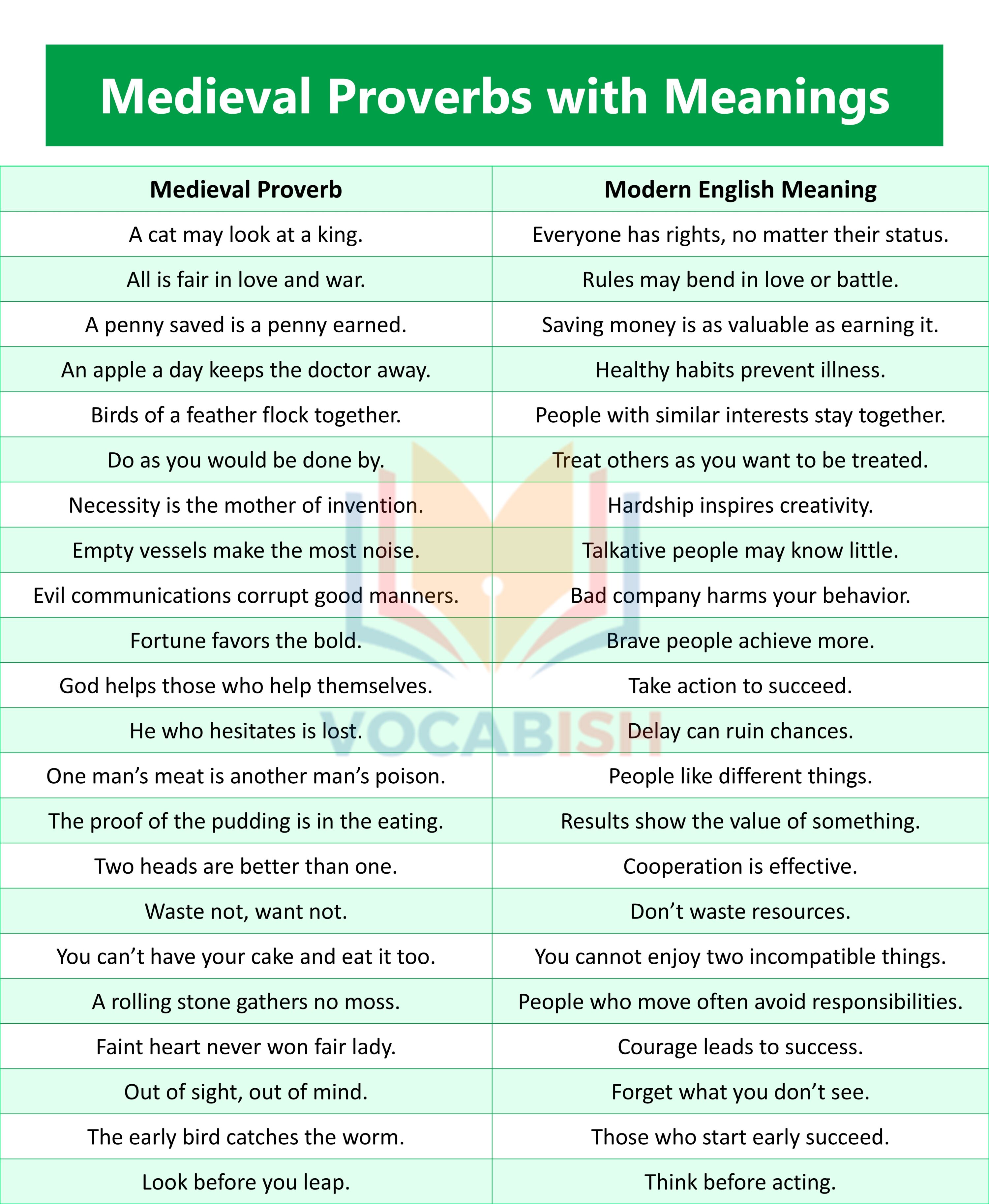
Here is a list of 25 classic medieval proverbs:
Medieval / Traditional Proverb | Modern English Meaning |
|---|---|
A cat may look at a king. | Everyone has basic rights, no matter their status. |
All is fair in love and war. | In love or conflict, normal rules may not always apply. |
A penny saved is a penny earned. | Saving money is as valuable as earning it. |
Birds of a feather flock together. | People with similar interests stay together. |
Do as you would be done by. | Treat others the way you want to be treated. |
Necessity is the mother of invention. | Problems lead to new ideas and solutions. |
Better the devil you know than the devil you don’t. | It is safer to deal with familiar problems than unknown risks. |
Empty vessels make the most noise. | People who talk the most often know the least. |
Fortune favors the bold. | Brave people are more likely to succeed. |
God helps those who help themselves. | You must take action to achieve success. |
He who hesitates is lost. | Delaying decisions can cause missed opportunities. |
One man’s meat is another man’s poison. | People have different tastes and preferences. |
The proof of the pudding is in the eating. | The true value of something is shown in results. |
Two heads are better than one. | Working together gives better results. |
Waste not, want not. | Do not waste things or you may need them later. |
You can’t have your cake and eat it too. | You cannot enjoy two opposite benefits at the same time. |
A rolling stone gathers no moss. | People who keep moving avoid responsibility or stagnation. |
The early bird catches the worm. | Those who start early get better opportunities. |
Look before you leap. | Think carefully before taking action. |
Jack of all trades, master of none. | A person skilled in many things may not excel in one. |
All that glitters is not gold. | Not everything that looks good is valuable. |
Actions speak louder than words. | What you do is more important than what you say. |
Time and tide wait for none. | Time does not stop for anyone. |
Honesty is the best policy. | Being honest is always the right choice. |
Slow and steady wins the race. | Consistent effort leads to success. |
Useful Everyday Phrases in Old English
- Gōd mǣrgen — Good morning
- Gōd æfen — Good evening
- Hū eart þū? — How are you?
- Ic eom gōd — I am good
- Gōd nīht — Good night
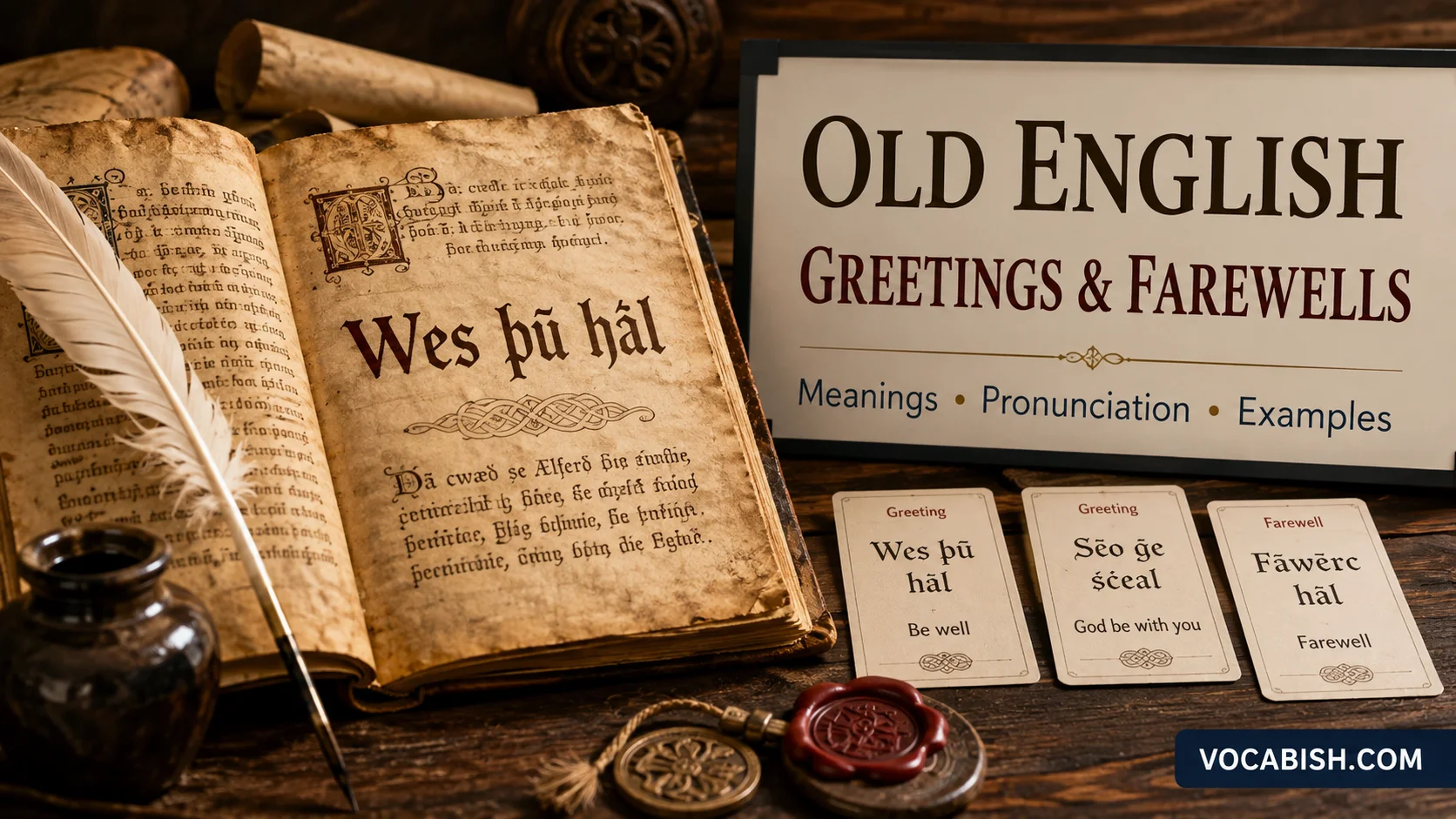
- Wes þū hāl — Be healthy / Stay well
- Ic þancie þē — I thank you
- Nǣs nā — No
- Ēala! — Hello / Hail
- Hū hatast þū? — What is your name?
- Mīn nama is… — My name is…
- Hwǣr eart þū? — Where are you?
- Ic ne hiểu — I don’t understand
- Spreoc slower — Speak slowly
- Cume hēr — Come here
- Gā gōd — Go well
- Sēo þanc — Thanks
- Hwæt? — What?
- Forþ gā — Go forward
- Stǣn stil — Stay still
Vocabulary List from Old English Sentences
Here are key words and their meanings:
- Glitter – Shine brightly
- Mischief – Trouble or harm
- Haste – Rushing or speed
- Fortune – Luck or wealth
- Brave – Courageous
- Steady – Firm or regular
- Wisdom – Good judgment
- Evil – Bad or harmful
- Necessity – Something needed
- Vessel – Container, often used for a person in speech
- Tongue – Language or speech
- Nest – Home for birds, symbol of safety
- Pudding – Can mean food or result in old proverbs
- Poison – Harmful substance or negative influence
- Moss – Small plant, symbol of stagnation in proverbs
Old English Sentences and Proverbs PDF
Tips to Remember and Use
- Repeat sentences aloud to improve memory.
- Write your own examples using old words.
- Link proverbs to daily life for better understanding.
- Teach someone else what you learned to strengthen knowledge.
FAQs About Old English Sentences
Old English sentences are phrases or expressions used in England from the 5th to 12th centuries. They show how people spoke, helping learners understand the roots of modern English.
Medieval proverbs are short, wise sayings from the Middle Ages. They teach lessons, morals, or practical advice and are still useful for learning English vocabulary and expression today.
Yes. Many old English sentences and medieval proverbs have meanings still relevant today. They help express ideas clearly and add wisdom to conversations.
Common old English sentences include “Better late than never” and “All that glitters is not gold.” These teach values, logic, and practical language use.
Yes. They offer practical advice, enrich vocabulary, and show how English evolved. Using them can improve communication and understanding of traditional expressions.
In Old English, a common greeting was “Hāl” (pronounced “haːl”), meaning “be well” or “healthy,” similar to saying “hello” today.
Examples of Old English include sentences like “God sende thee good lif” (May God give you a good life) and “Ne do thyself harm” (Do not hurt yourself).
You May Also Like
- List of Cool Phrases from Old English
- Examples of Multiple Questions
- Examples of Conditional Sentences
- Old English Alphabets A to Z with Pronunciation
- Old English Phrases and Their Modern Meanings
Conclusion
Old English sentences and medieval proverbs are more than history. They teach wisdom, vocabulary, and communication skills. Using them daily helps learners understand modern English better and speak with confidence. Start with a few sentences and grow your knowledge gradually.