
Outdoor games are activities children play in open places such as parks, playgrounds, fields, and school yards. These activities introduce useful vocabulary related to movement, teamwork, and play. Children often hear words like tag, hopscotch, or relay race during school activities or conversations with friends. When learners understand these words, they can talk about games, follow instructions, and describe actions correctly.
In this blog post, readers will learn the names of outdoor games that kids play in many countries. Knowing these words helps learners improve communication skills. They hear these terms while listening, read them in stories, write them in sentences, and use them during conversations about playground activities.
What Are Outdoor Games for Kids?
Outdoor games are physical activities played outside. Kids usually play them in open areas where they can run, jump, throw, or work with a team.
These games help children:
- build strong vocabulary related to play and movement
- understand instructions during activities
- practice teamwork and social interaction
- talk about real-life experiences in English
Learning outdoor game names also helps children describe their daily activities in school or at home.
Common Outdoor Games for Kids
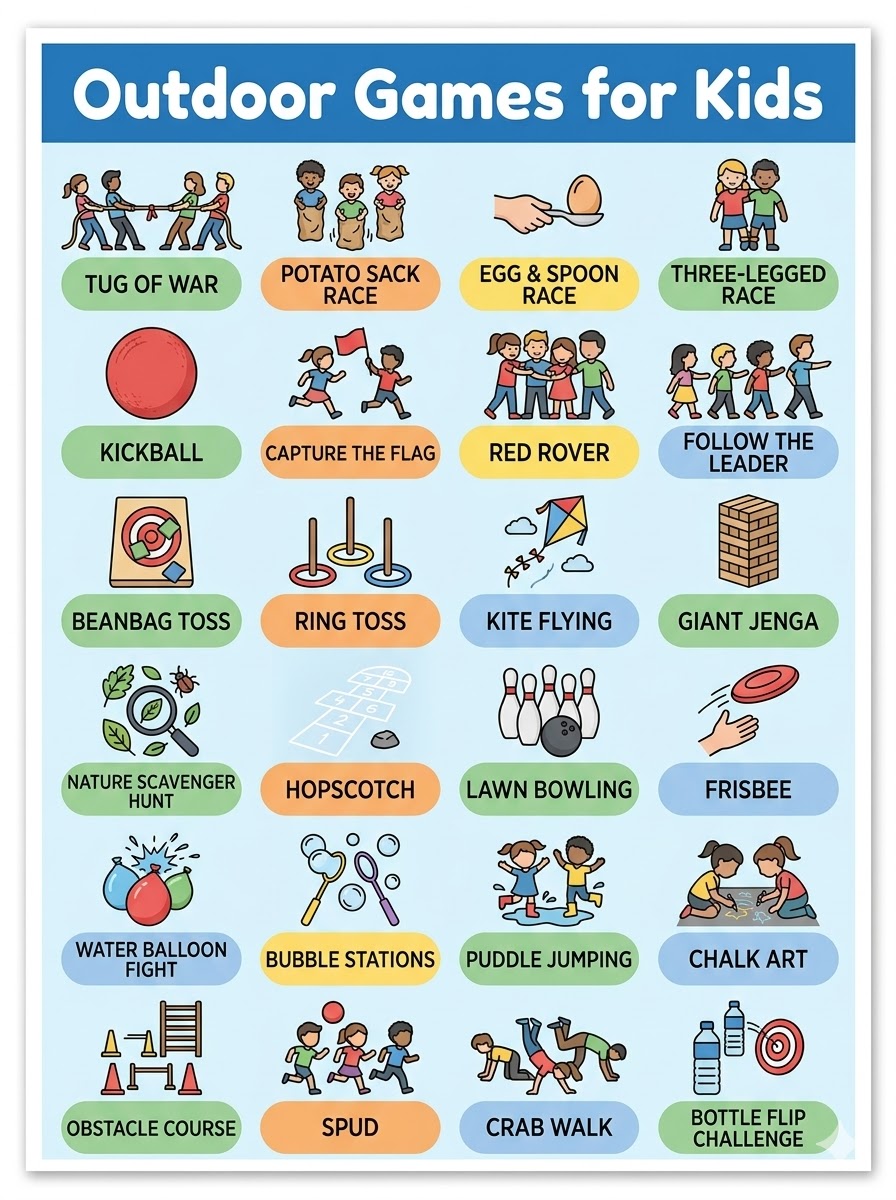
Here are common outdoor games children often play in parks, playgrounds, and school yards.
- Tag – One player chases others and touches them to make them “it.”
- Hide and Seek – One player counts while others hide in different places.
- Hopscotch – Players jump through numbered squares drawn on the ground.
- Kickball – A team game where players kick a ball and run to bases.
- Dodgeball – Players throw balls to tag opponents while avoiding hits.
- Red Light, Green Light – Players move forward when “green light” is called and stop at “red light.”
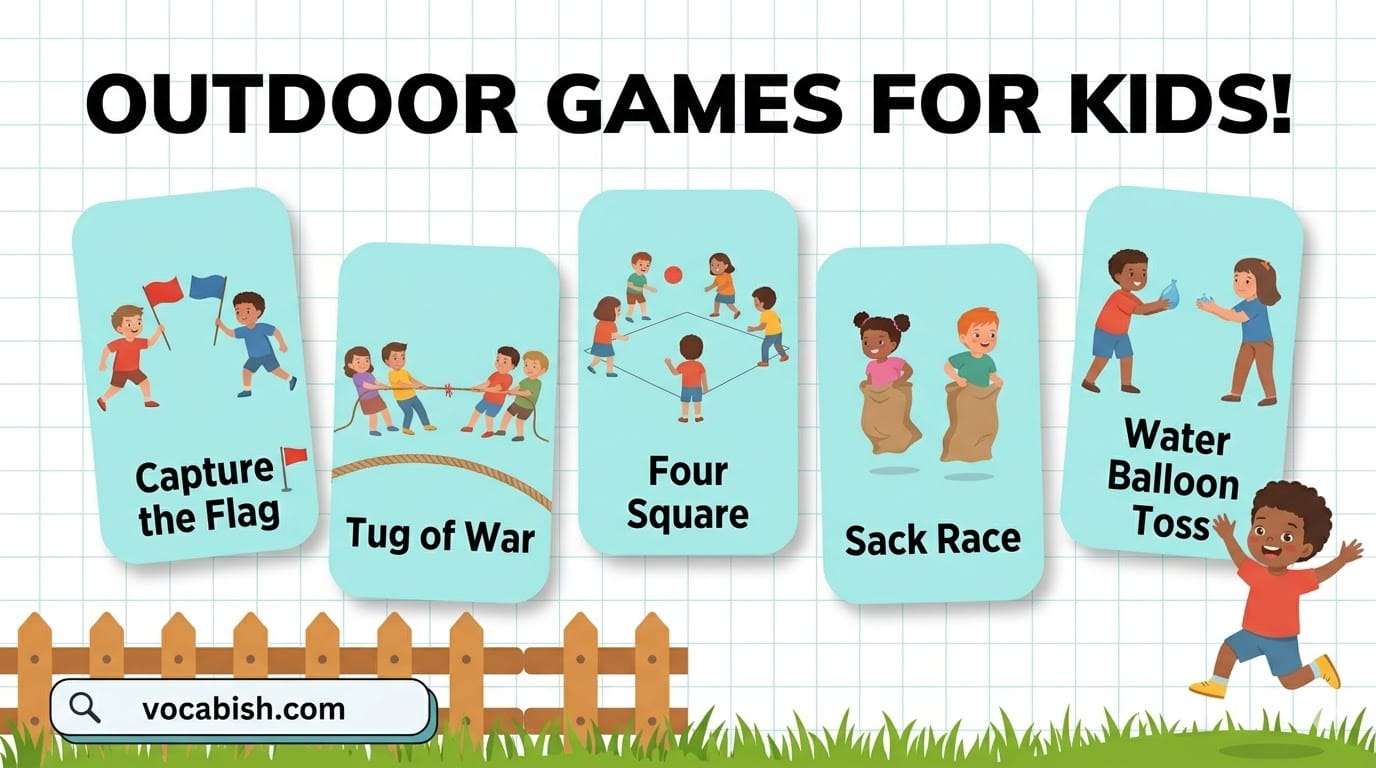
- Capture the Flag – Two teams try to take the opponent’s flag and bring it back safely.
- Relay Race – Team members run one after another to complete a race.
- Frisbee Toss – Players throw and catch a flying disc.
- Jump Rope – Players jump over a rope that swings around them.
- Tug of War – Two teams pull opposite ends of a rope to win.
- Sack Race – Players hop inside sacks to reach the finish line.
- Three-Legged Race – Two players tie one leg together and race as a team.
- Duck, Duck, Goose – Children sit in a circle while one player taps heads and runs.
- Marble Game – Players roll marbles to hit targets or other marbles.
- Ball Toss – Players throw and catch a ball with partners.
- Obstacle Course – Players move through a path with climbing, crawling, and jumping tasks.
- Four Square – A ball game played in four connected squares.
- Kick the Can – A chasing game where players try to kick a can without getting caught.
- Water Balloon Toss – Players toss balloons filled with water without dropping them.
Playground and Park Games
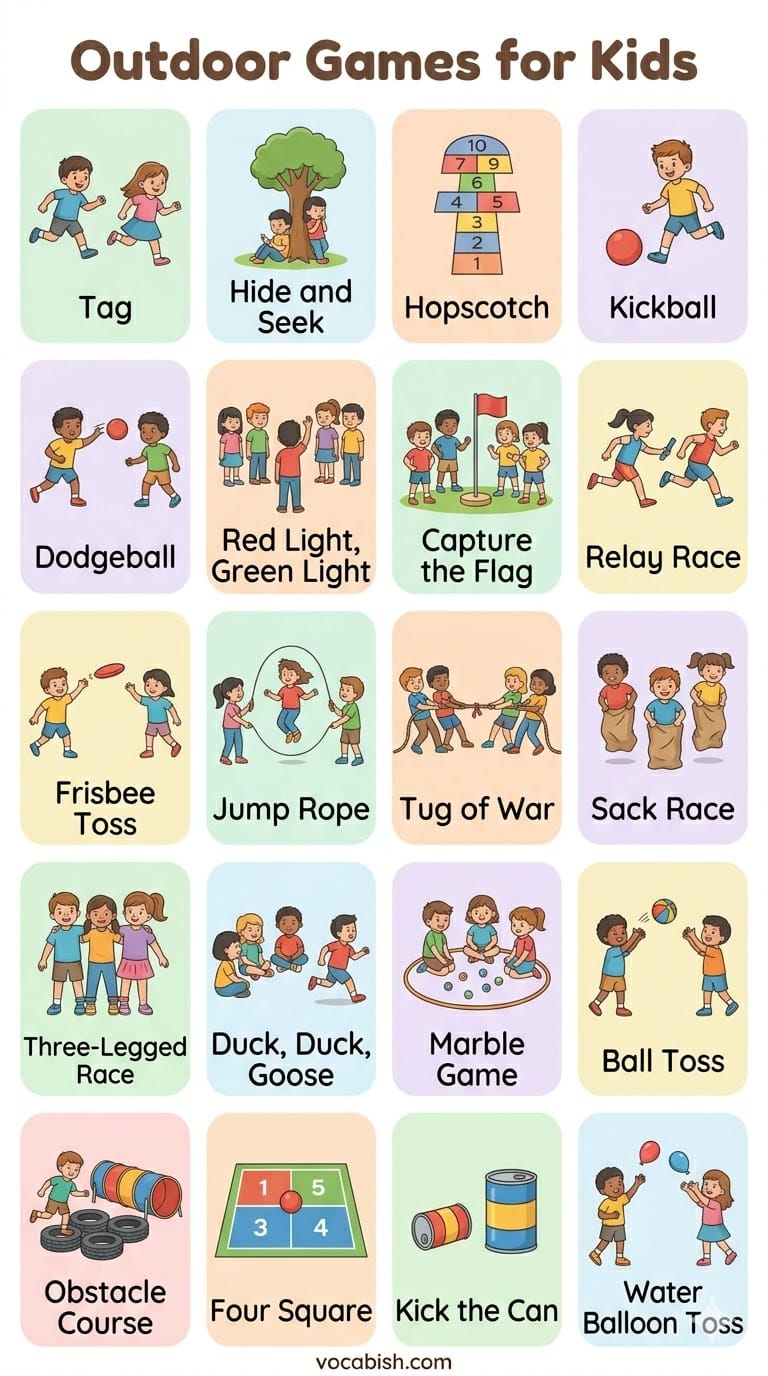
Many outdoor games happen in parks or playgrounds where children gather.
- Swing Challenge – Children compete to swing higher or longer.
- Slide Race – Kids climb and slide quickly to reach the bottom first.
- Climbing Frame Game – Children climb structures and complete small challenges.
- Treasure Hunt – Players search for hidden objects using clues.
- Nature Scavenger Hunt – Kids look for leaves, stones, or flowers on a list.
These games introduce vocabulary about outdoor objects and actions.
Outdoor Team Games for Kids
Team activities teach cooperation and communication.
- Soccer – Players kick a ball to score goals.
- Baseball – Players hit a ball and run around bases.
- Basketball – Players throw a ball into a hoop to score points.
- Volleyball – Teams hit a ball over a net without letting it touch the ground.
- Cricket – Players bat and bowl to score runs.
Children often hear these words during sports lessons and playground conversations.
Simple Running and Movement Games
Some outdoor games focus mainly on movement.
- Running Race – Players run to reach the finish line first.
- Chase Game – One player runs after others to tag them.
- Leapfrog – Players jump over a teammate who bends forward.
- Follow the Leader – Players copy the leader’s movements.
- Shadow Tag – Players step on another player’s shadow to tag them.
These games teach action words such as run, jump, chase, and catch.
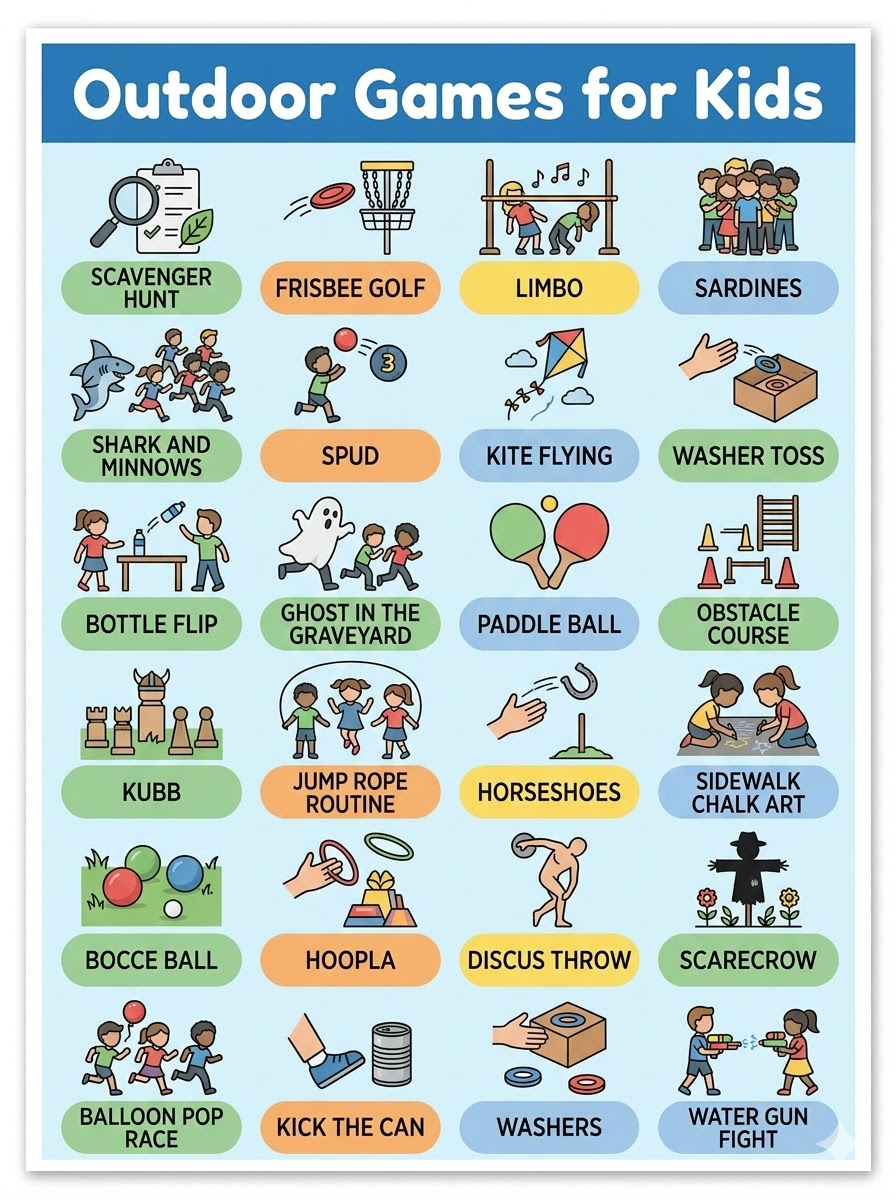
How Kids Use Outdoor Game Words in Daily English
Children can practice these words in sentences:
- “We played tag in the playground today.”
- “My team won the relay race.”
- “I like playing hopscotch with my friends.”
- “We threw a frisbee in the park.”
- “Our class played tug of war during sports day.”
Speaking these sentences helps learners remember both the word and its meaning.
Conclusion
Outdoor games give children many chances to move, cooperate, and interact with friends. At the same time, they introduce useful English vocabulary related to actions, sports, and playground activities. When learners recognize and practice these game names, they can describe daily experiences more confidently. Step by step, children learn how to talk about activities they play outside, and their communication skills grow stronger through listening, reading, writing, and speaking practice.
FAQs
Outdoor games for kids are physical activities played outside in parks, playgrounds, or school yards. Examples include tag, hopscotch, relay race, and hide and seek. These games build vocabulary and encourage teamwork.
Outdoor games help children develop physical strength, coordination, and social skills. They also introduce everyday English vocabulary related to movement, sports, and teamwork used in real-life conversations.
Popular outdoor games for kids include tag, hopscotch, hide and seek, relay race, tug of war, dodgeball, frisbee toss, and sack race. These activities are common in schools and playgrounds.
Kids often play outdoor games at school such as relay race, dodgeball, four square, tug of war, and kickball. These games encourage teamwork, communication, and understanding of instructions.
Easy outdoor games for kids include tag, hide and seek, jump rope, hopscotch, and frisbee toss. These games require simple rules and help children practice movement and basic English words.
Teachers can use outdoor games to teach vocabulary, directions, and action words. Activities like relay races or treasure hunts help students listen, follow instructions, and communicate with classmates.
Common equipment used in outdoor games includes balls, ropes, cones, frisbees, marbles, and chalk for hopscotch. These items help children practice game vocabulary and understand instructions during play.