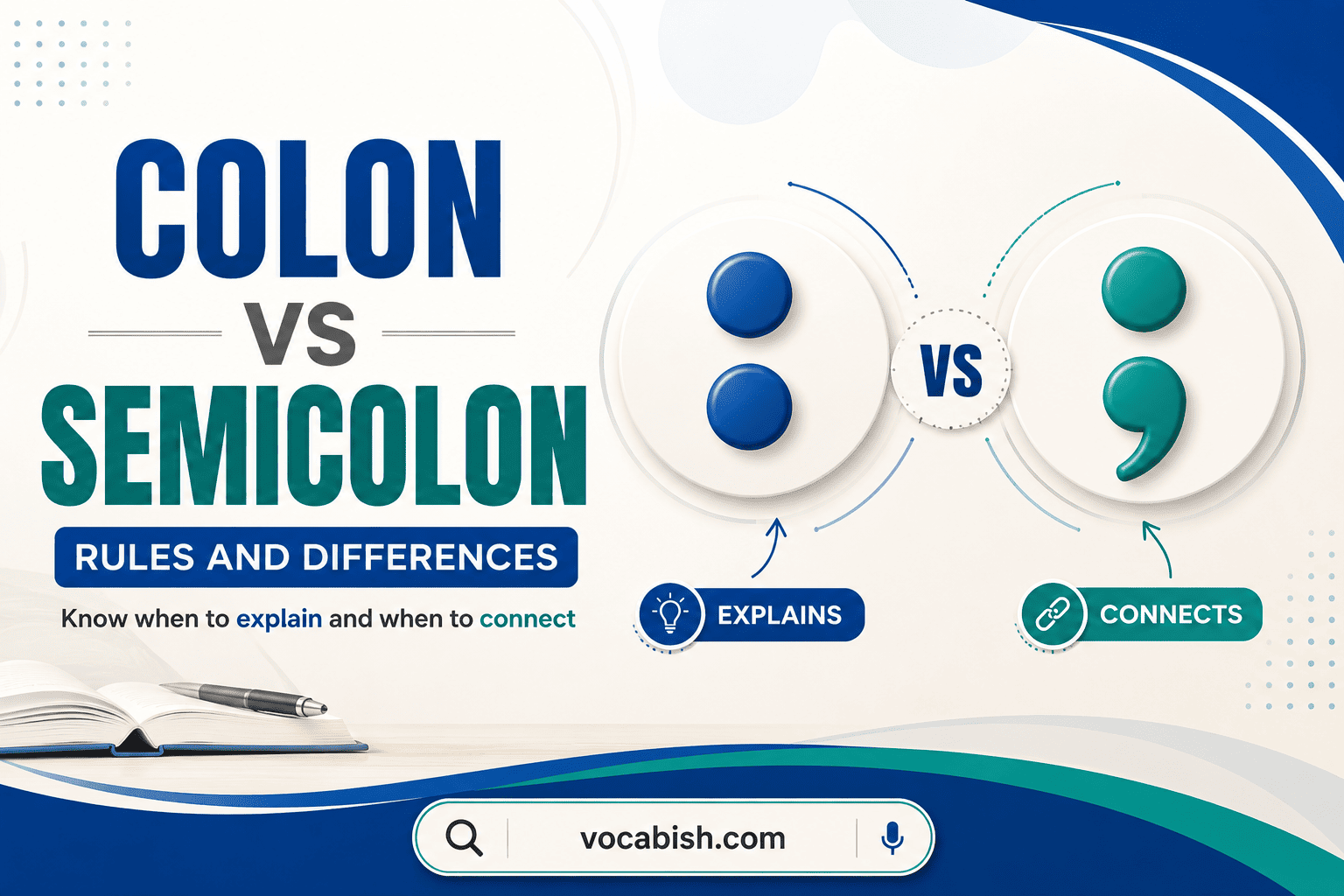
Colon vs Semicolon: Rules and Differences

Colon vs semicolon becomes much easier when you understand the job each mark performs. A colon introduces information that explains…
The Punctuation category explains the main punctuation marks and symbols used in English. It covers full stops, commas, question marks, colons, semicolons, apostrophes, quotation marks, dashes, brackets, braces, ellipses, asterisks, and more.
Each topic shows the meaning, rules, uses, and correct place of each mark with clear examples. You can also learn the difference between similar marks, such as comma vs. semicolon and colon vs. semicolon, and many more. This category helps students, teachers, writers, and English learners write clear and correct sentences.
Colon vs semicolon becomes much easier when you understand the job each mark performs. A colon introduces information that explains…

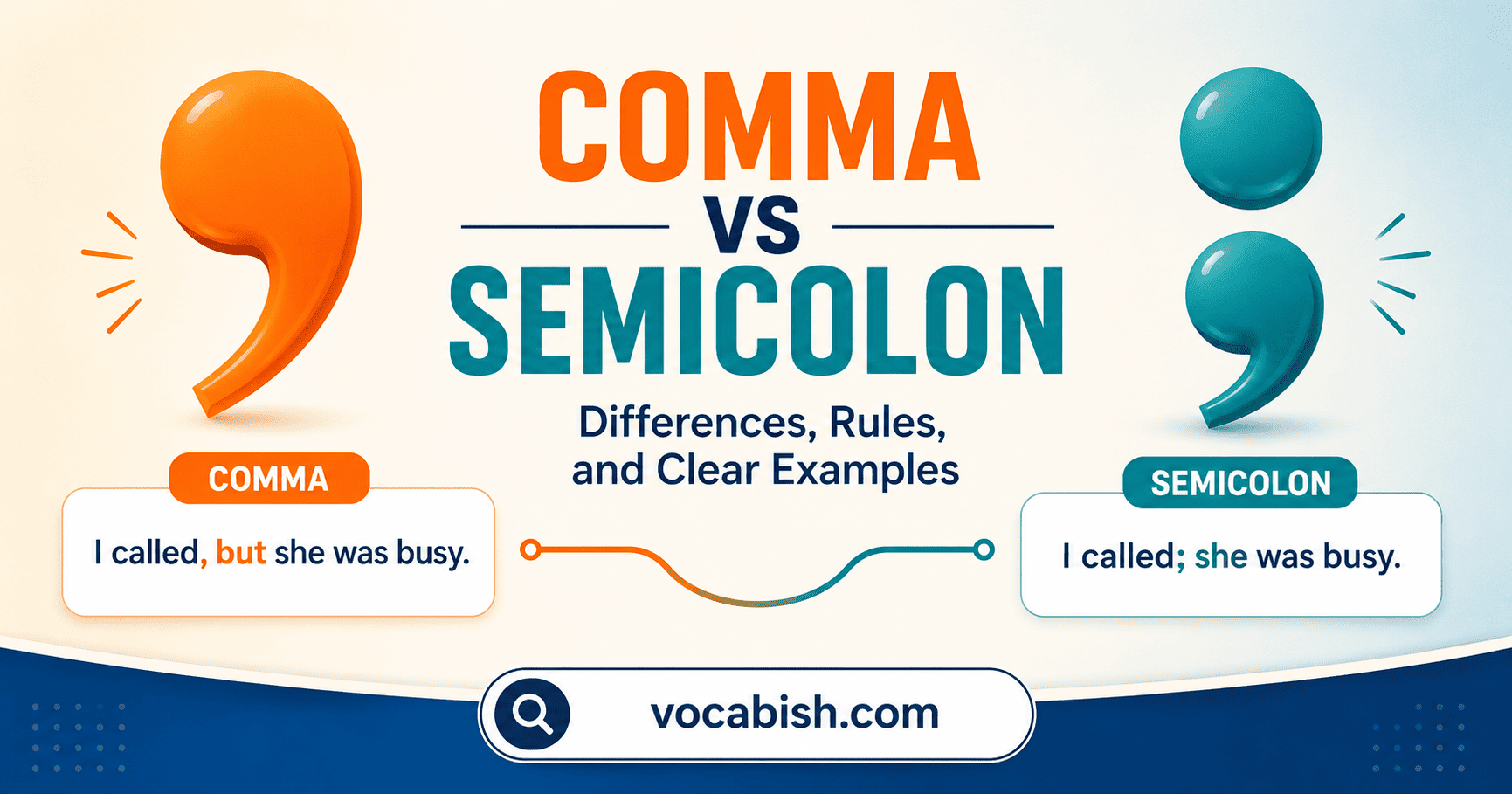
Comma vs semicolon: a comma separates sentence elements or joins complete clauses with a conjunction, while a semicolon connects closely…

Asterisk punctuation refers to the small star-shaped symbol (*), which directs readers to notes, marks corrections, hides letters, or labels…

Angle brackets are the paired marks < > or ⟨ ⟩ used mainly to enclose technical, linguistic, or digital information.…

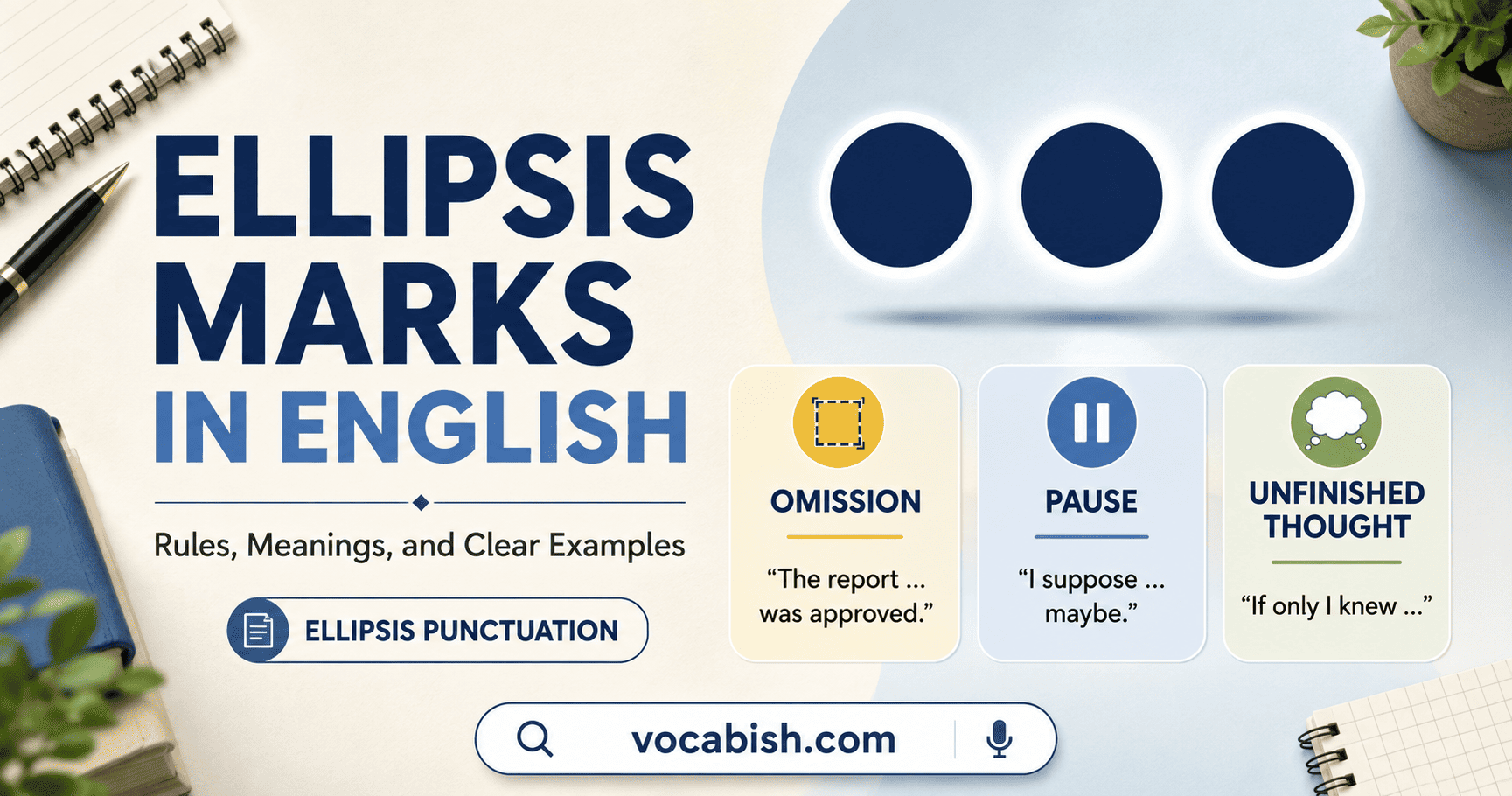
Ellipsis punctuation consists of three dots (…) used to show omitted words, a noticeable pause, or a thought that remains…

Braces punctuation marks look like this: { }. They are mainly used to group related items, represent mathematical sets, and…

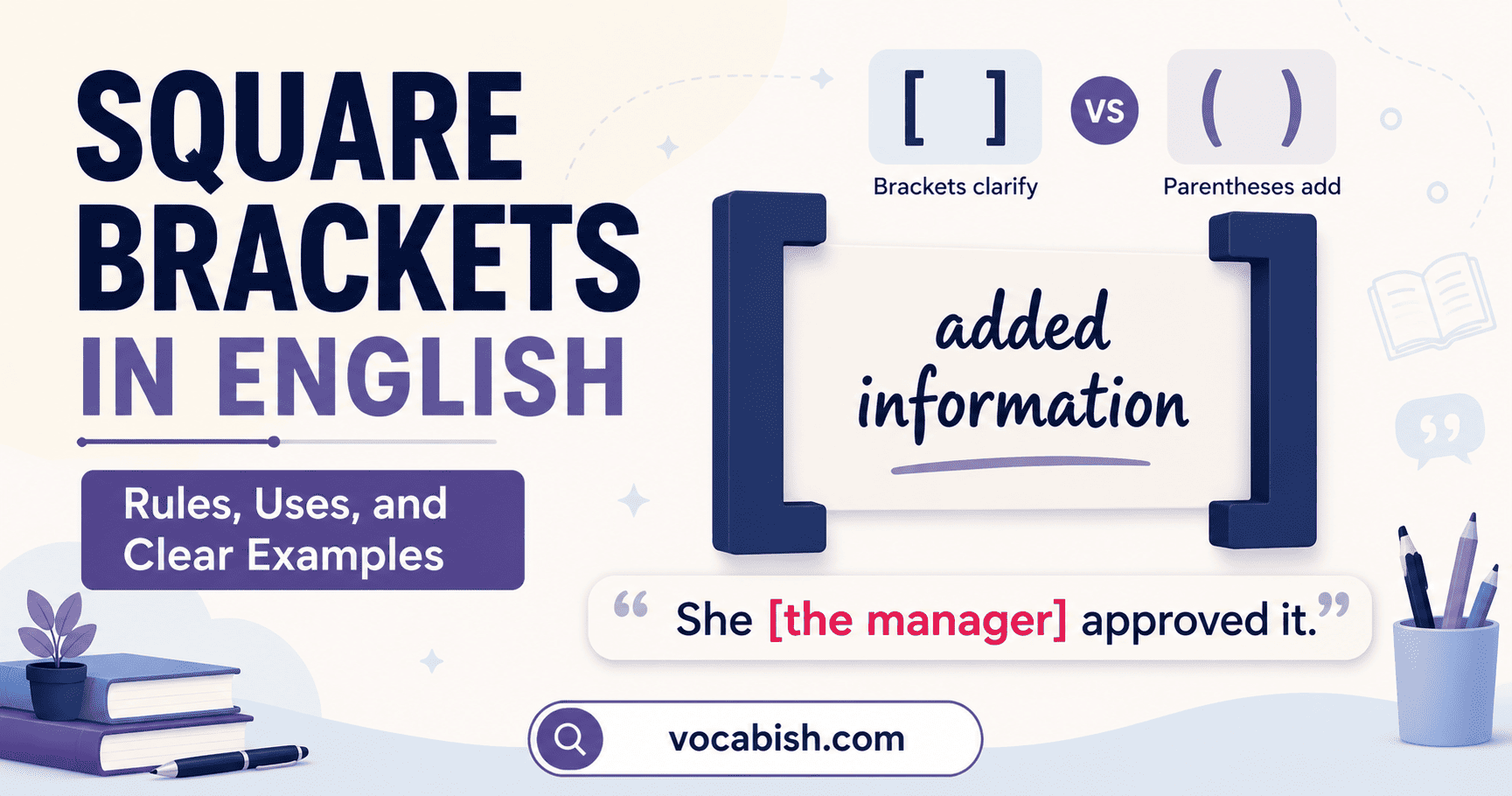
Square brackets punctuation marks added or changed information inside quoted material. They help writers clarify names, explain references, show editorial…

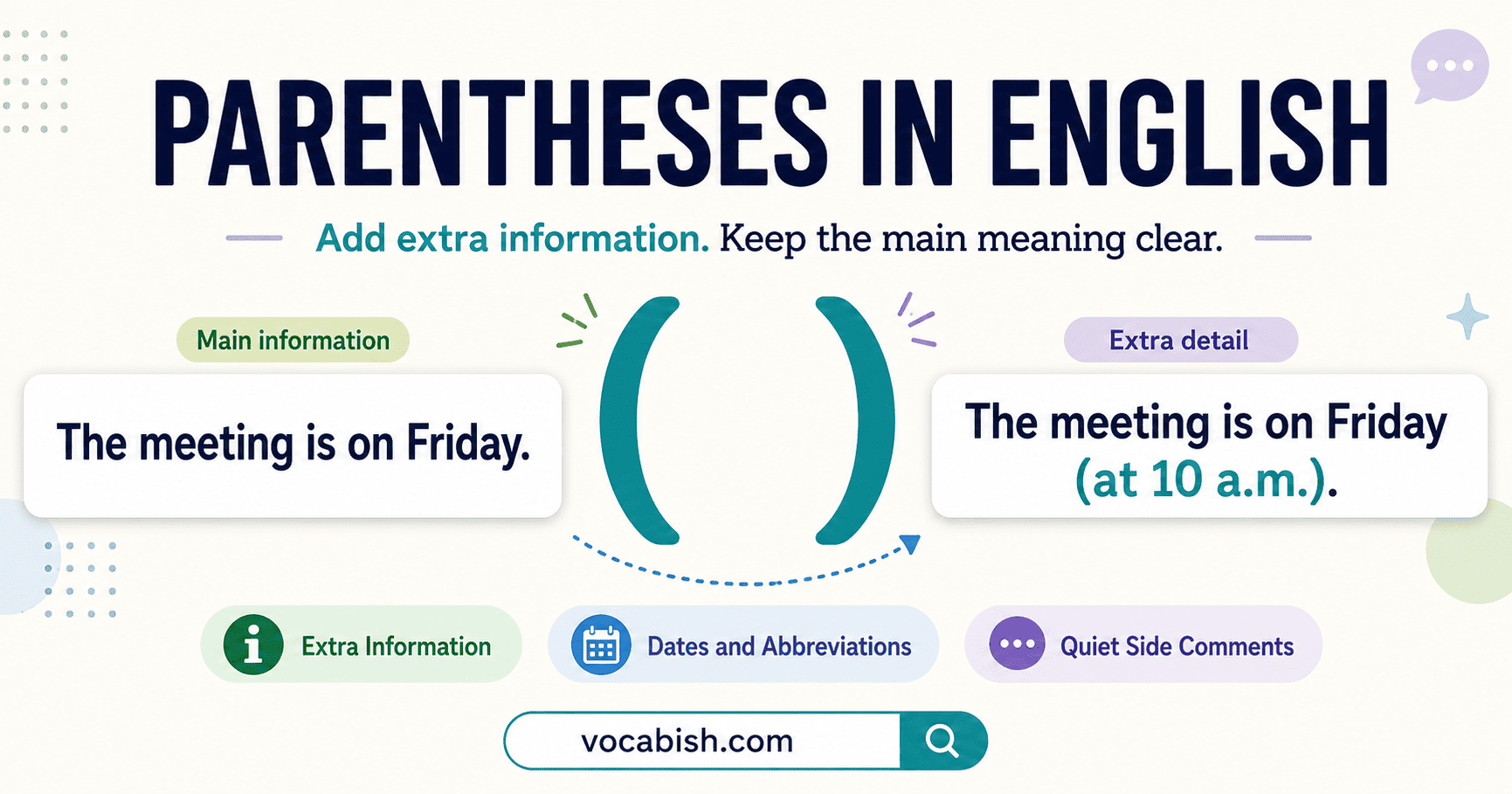
Parentheses ( ) are punctuation marks used to enclose additional information. In British English, they are also called round brackets.…

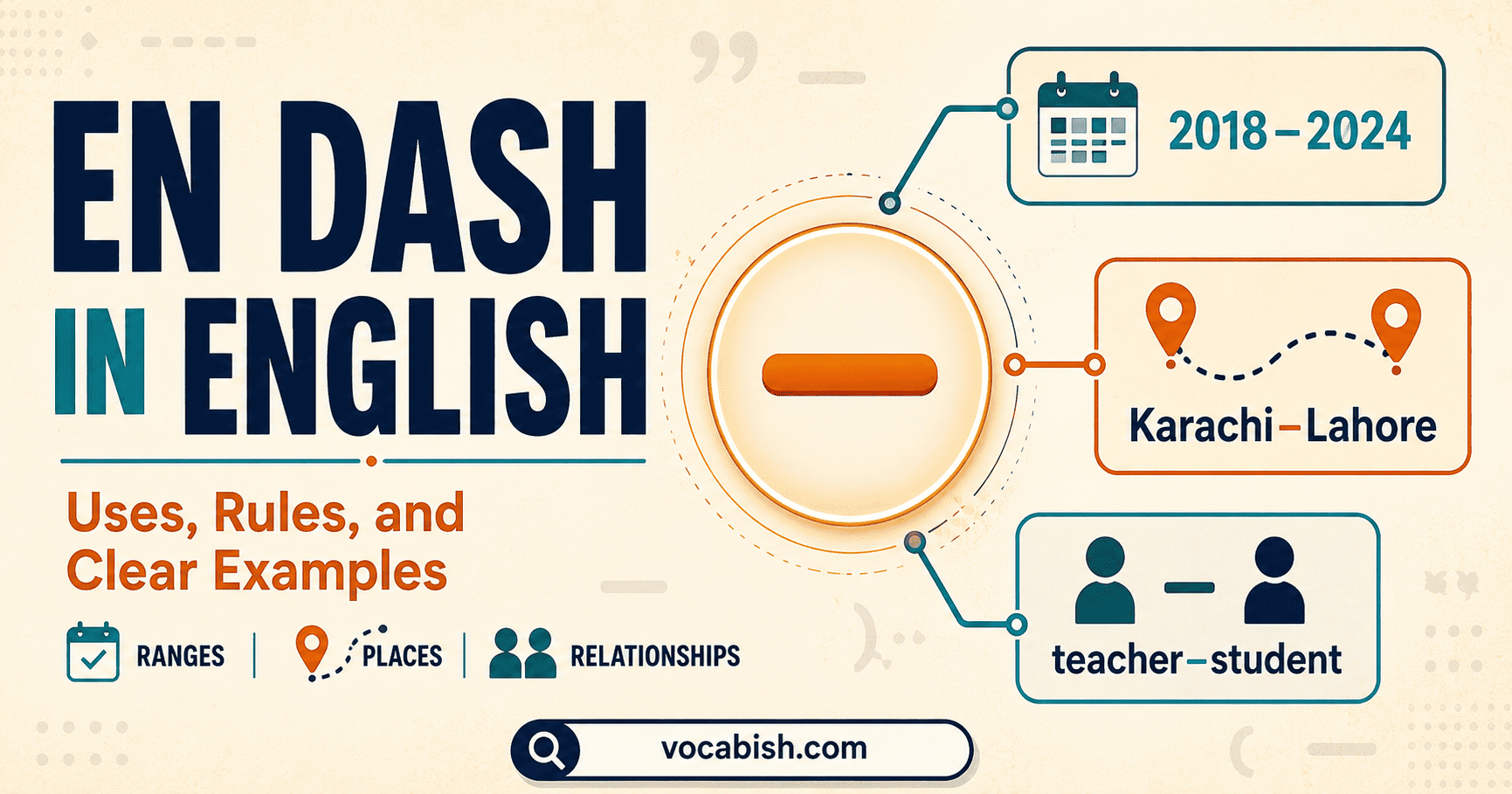
The en dash (–) is a punctuation mark used mainly to show ranges, connections, and relationships. It is longer than…

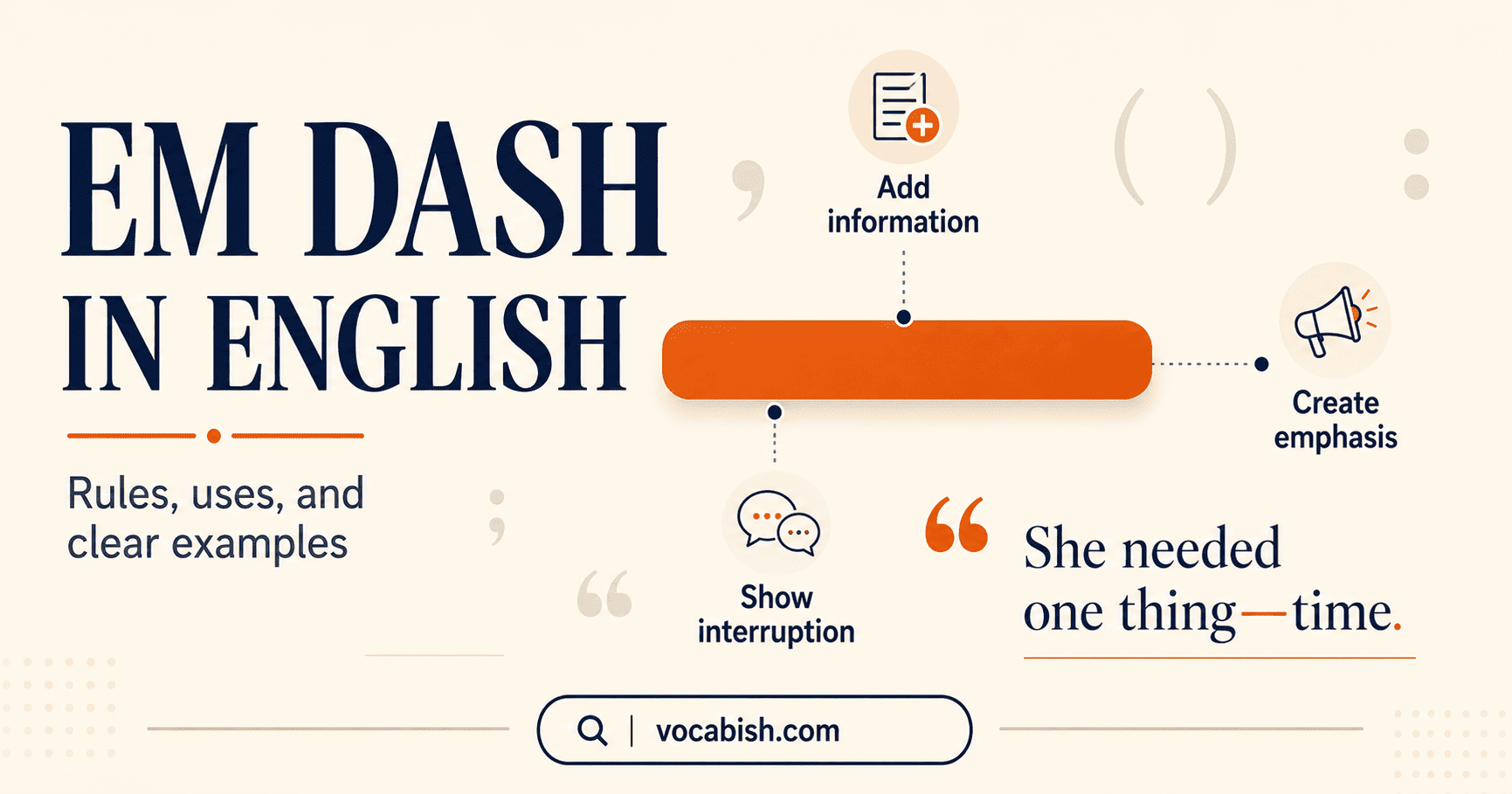
The em dash (—) is a long punctuation mark used to separate, interrupt, or emphasize information within a sentence. It…