Category - Parts of Speech
Parts of speech help you understand how English sentences work. They show how words connect and create meaning in everyday communication.
In this category, you’ll learn nouns, verbs, adjectives, adverbs, pronouns, prepositions, conjunctions, and interjections through clear explanations and practical examples. Each lesson focuses on how these words are used in real English.
By understanding parts of speech step by step, you can improve your grammar, write better sentences, speak more naturally, and understand English with greater confidence.
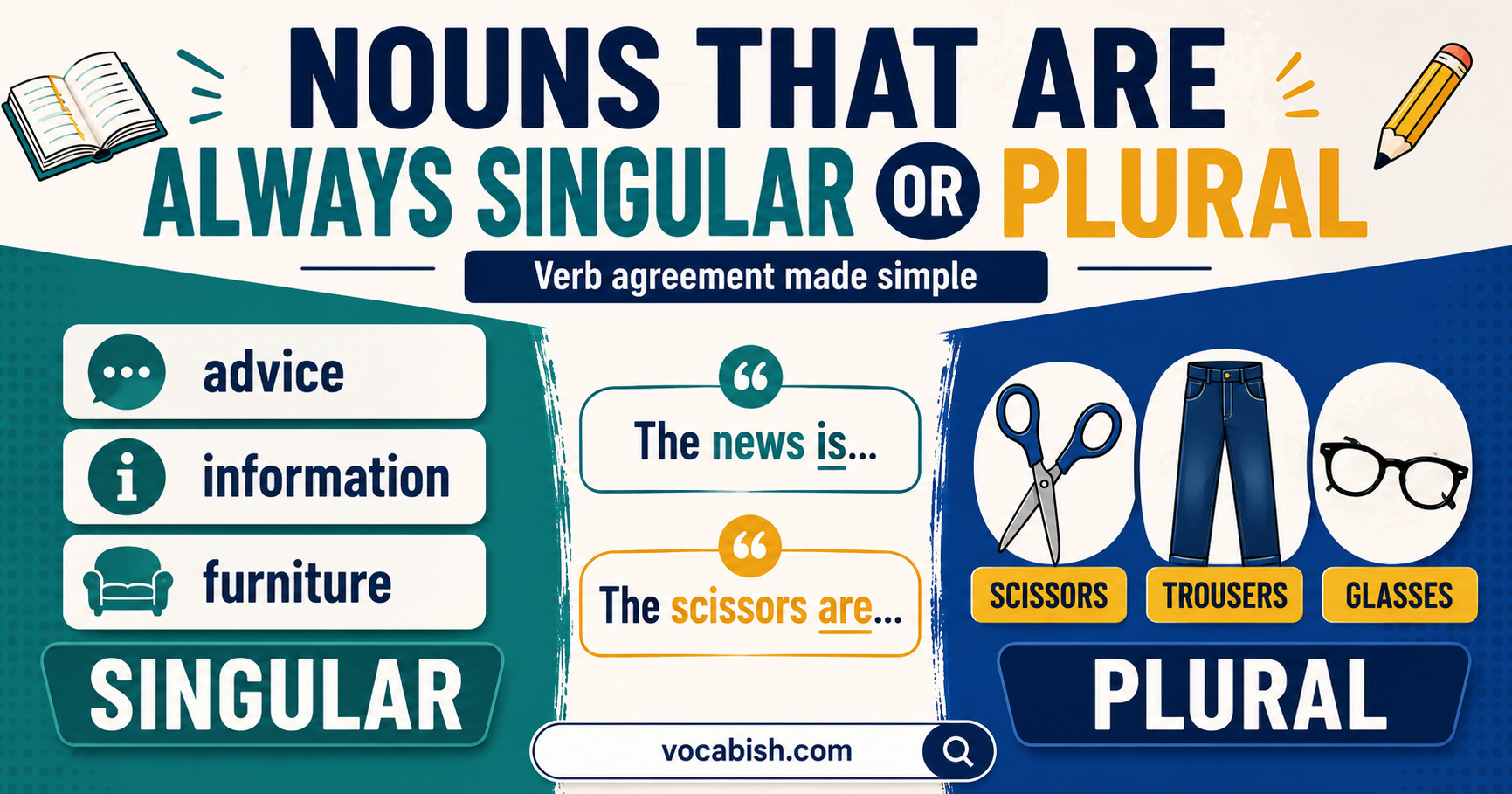
Nouns That Are Always Singular or Plural in English
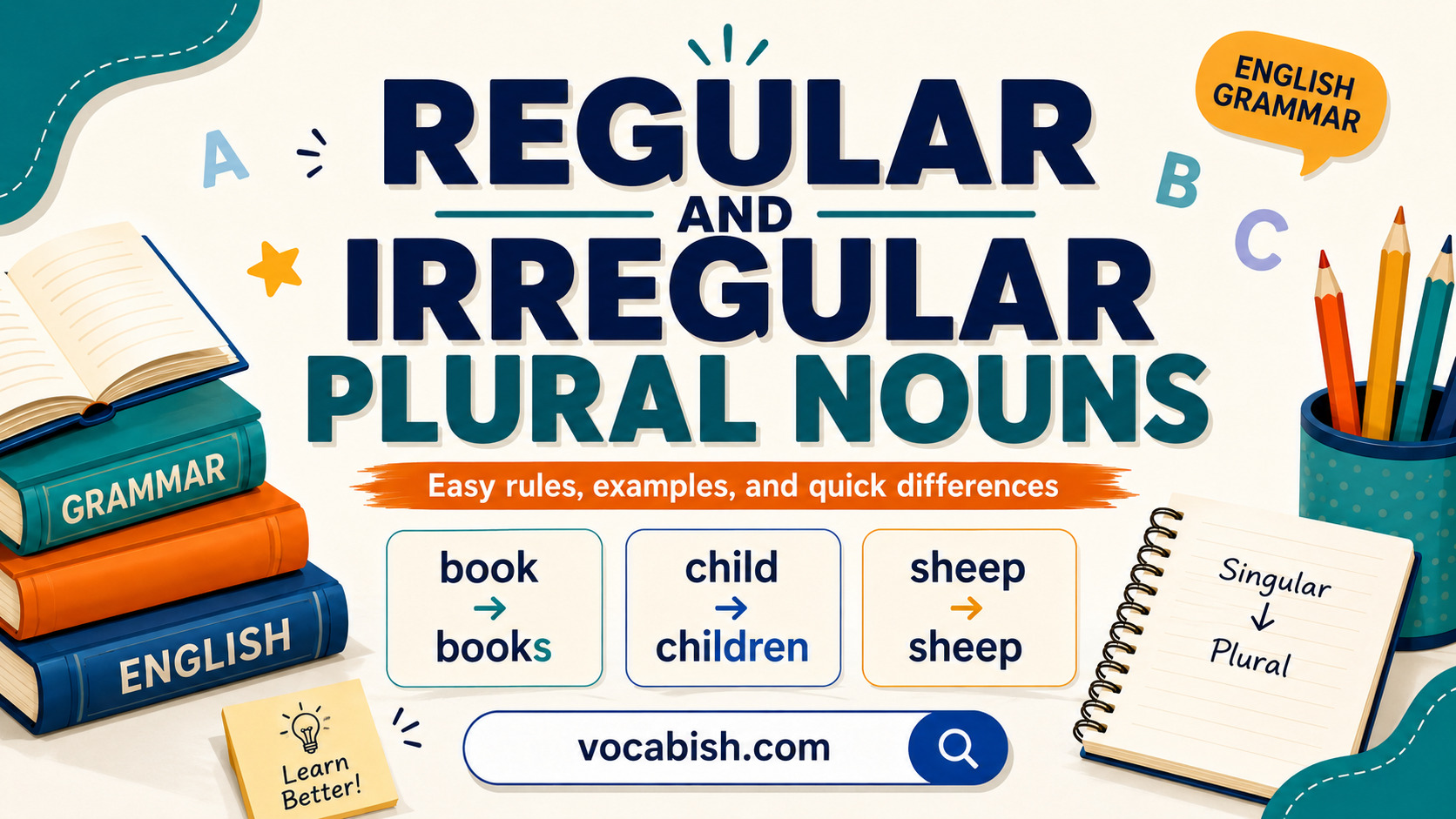
Regular and Irregular Plural Nouns in English: Rules and Examples
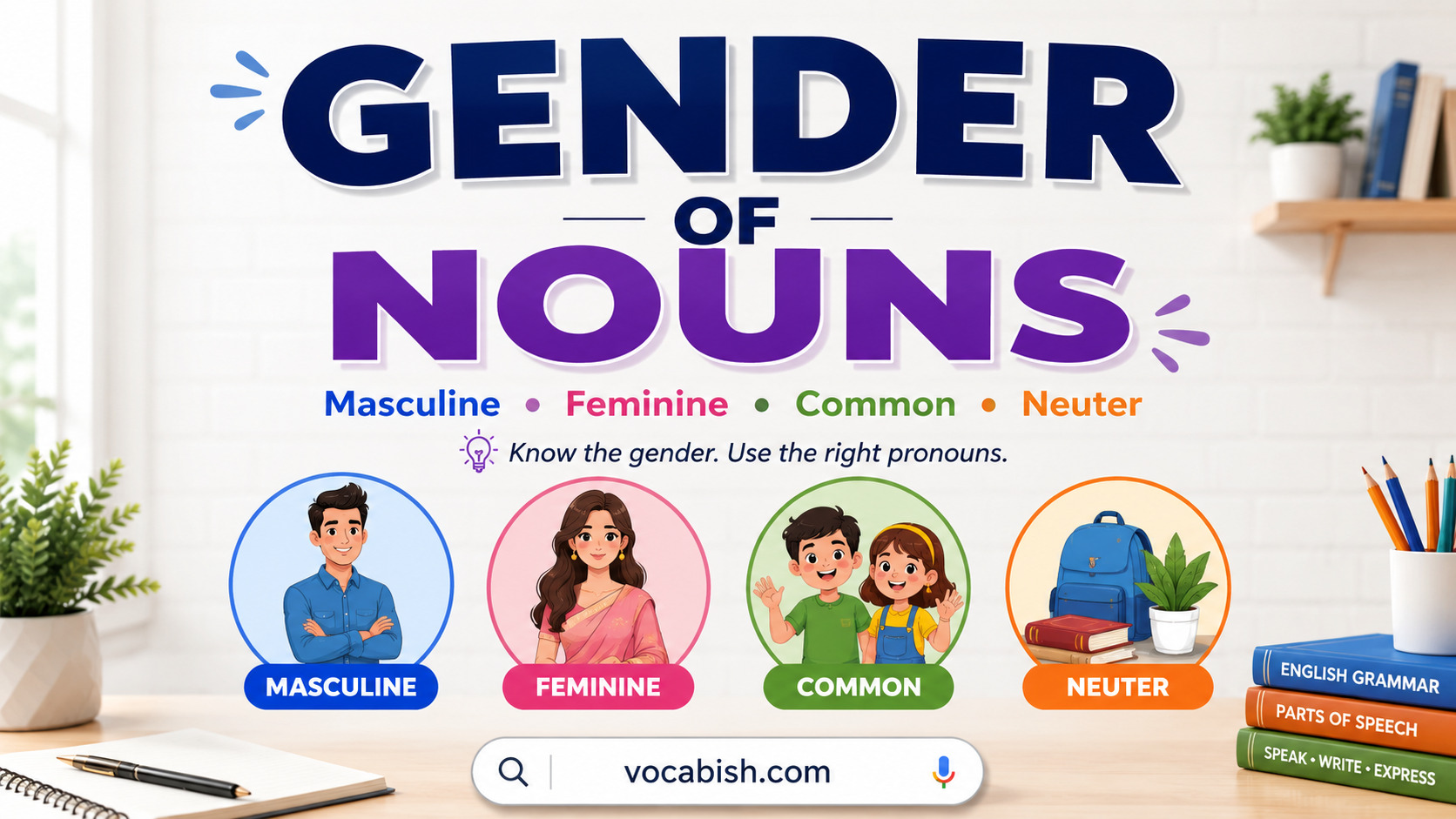
Gender of Nouns in English: Masculine, Feminine, and Neuter
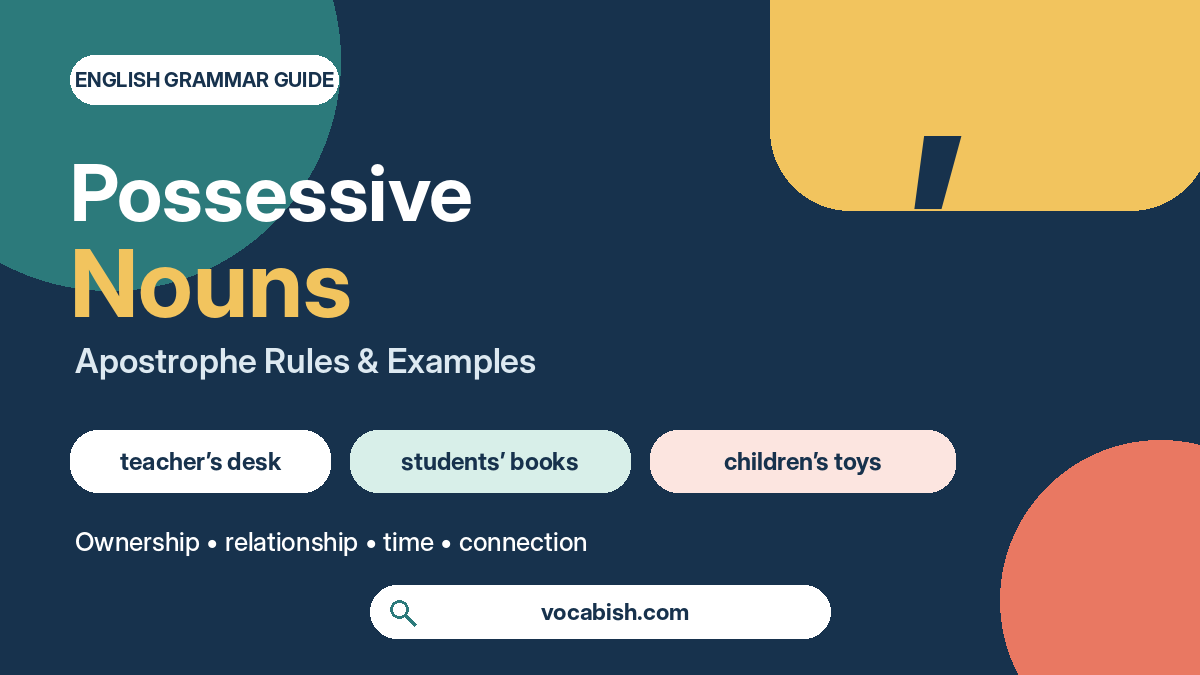
Possessive Nouns: Apostrophe Rules and Examples
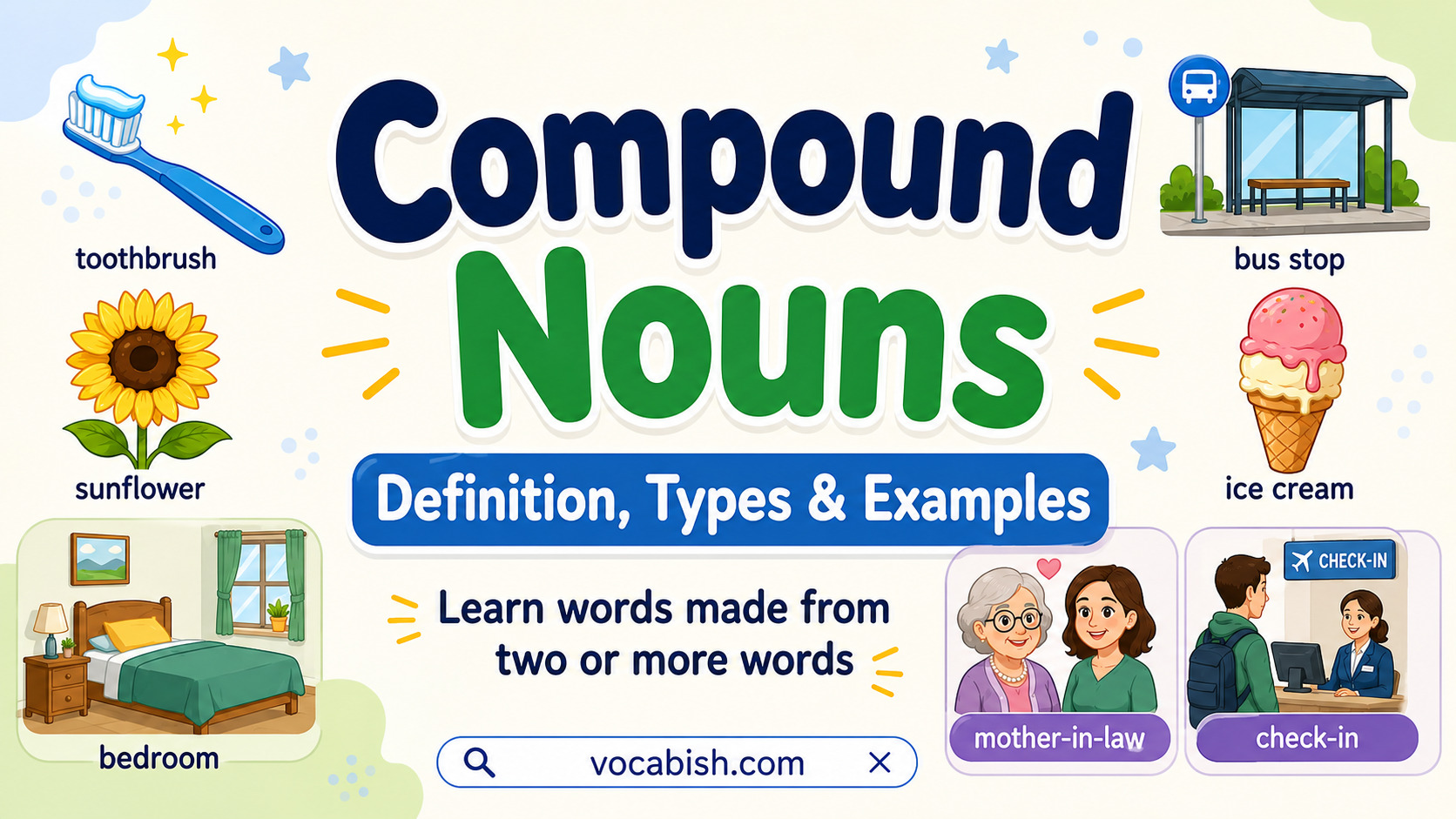
Compound Nouns in English: Types, Spelling, and Examples

Material Nouns in English: Definition, Uses, and Examples

Collective Nouns in English: Group Words and Examples
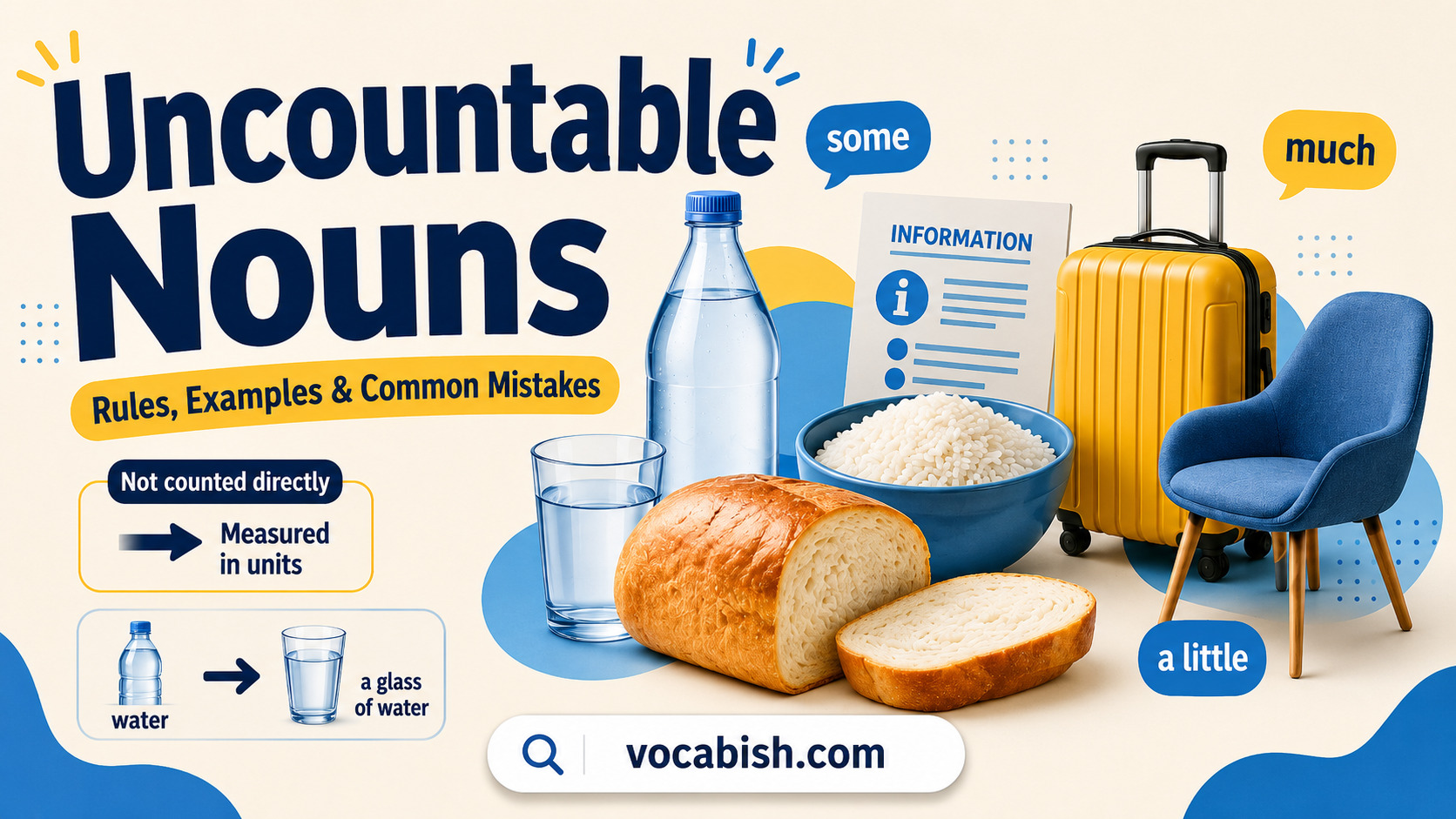
Uncountable Nouns in English: Definitions, Rules, and Examples