
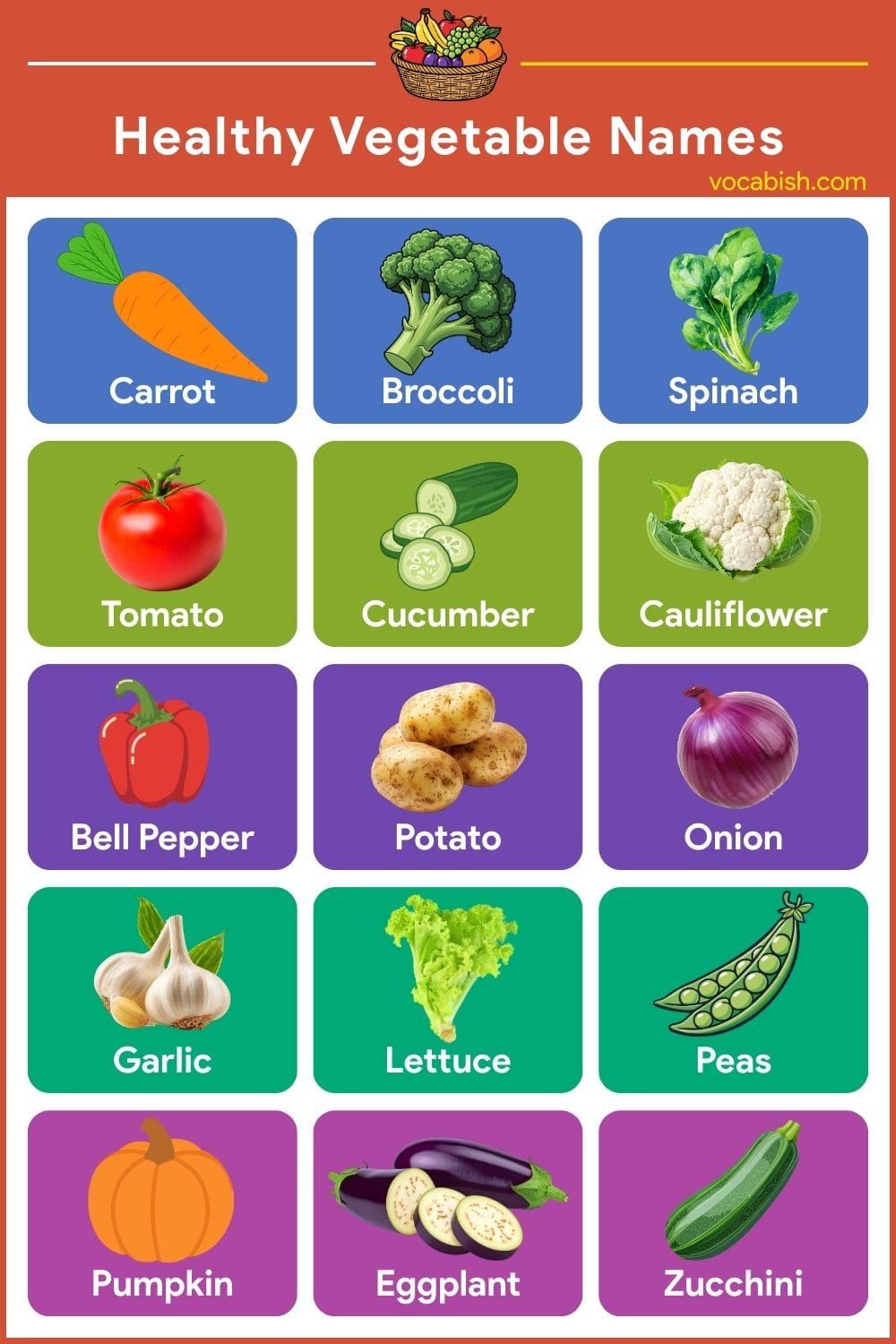
In this blog post, you will learn healthy vegetables, their names, and pictures to help you identify each one easily. This vocabulary is important for students, health-conscious learners, and English learners who want to talk about food and nutrition. When you know these words, you can speak confidently about vegetables, read recipes and nutrition guides with better understanding, write clear descriptions, and follow spoken instructions about cooking and diet more easily. Keep reading to build your knowledge and learn 35+ healthy vegetables in English.
Why Learn Vegetables with Health Benefits?
When you know what a vegetable does for your body, you can:
- Talk about healthy habits in English
- Understand food labels and menus
- Explain why a food is good for you
- Make better food choices
How to Use This Vocabulary in Real Life
You can say things like:
- Spinach is good for my blood.
- Carrots help my eyes.
- I eat vegetables to stay strong and healthy.
Daily Use Healthy Vegetables and Their Benefits
Potato
Gives energy and helps you feel full.
Onion
Supports the immune system and helps fight infections.
Tomato
Keeps the heart healthy and protects the skin.
Garlic
Helps control blood pressure and fights germs.
Ginger
Improves digestion and reduces nausea.
Chili
Boosts metabolism and helps burn calories.
Bell Pepper
Strengthens immunity and keeps skin healthy.
Cucumber
Keeps the body cool and hydrated.
Eggplant
Supports heart health and controls cholesterol.
Zucchini
Aids digestion and supports weight control.
Healthy Vegetables for a Strong Body
Spinach
Builds healthy blood and gives strength.
Lettuce
Helps digestion and keeps the stomach light.
Cabbage
Improves gut health and supports immunity.
Kale
Makes bones strong and protects the eyes.
Mustard Greens
Helps the liver and cleans the blood.
Fenugreek (Methi)
Controls blood sugar and improves digestion.
Arugula
Supports heart health and lowers inflammation.
Healthy Vegetables for Energy and Immunity
Carrot
Improves eyesight and boosts immunity.
Beetroot
Increases blood flow and gives energy.
Radish
Helps digestion and cleans the liver.
Turnip
Strengthens the immune system.
Sweet Potato
Supports brain health and keeps skin glowing.
Yam
Helps balance hormones and improve digestion.
Healthy Vegetables for Eyes and Skin
Broccoli
Protects the heart and strengthens immunity.
Cauliflower
Helps detox the body and improves digestion.
Green Beans
Supports bone strength and gut health.
Peas
Improve digestion and give plant protein.
Corn
Supports eye health and digestion.
Okra
Controls blood sugar and improves gut health.
Healthy Vegetables for Overall Wellness
Pumpkin
Boosts immunity and supports eye health.
Bottle Gourd
Keeps the body cool and supports heart health.
Bitter Gourd
Lowers blood sugar and improves liver health.
Drumstick (Moringa Pod)
Strengthens bones and boosts immunity.
Leek
Supports heart health and improves digestion.
Final Thoughts
Learning vegetable names with their health uses helps you speak English with purpose and confidence. You are not just learning words—you are learning how to talk about health, food, and good habits in real life.
Frequently Asked Questions
What are healthy vegetables?
Healthy vegetables are plant foods that give your body important vitamins, minerals, and fiber. They help you grow, stay strong, and fight sickness. Learning healthy vegetable names in English helps learners talk about food, health, and daily habits clearly and correctly in real-life situations.
What are the top 10 best vegetables to eat daily?
The top daily vegetables are spinach, broccoli, carrot, tomato, cucumber, bell pepper, cabbage, cauliflower, green beans, and sweet potato. These vegetables support immunity, digestion, heart health, and energy.
What are the top 5 healthiest vegetables?
The five healthiest vegetables are spinach, broccoli, kale, carrot, and sweet potato. They are rich in vitamins, antioxidants, and fiber.
What vitamins are found in vegetables?
Vegetables give vitamins A, C, E, K, and many B vitamins. Carrots provide vitamin A, tomatoes and bell peppers give vitamin C, leafy greens give vitamin K, and many vegetables offer B vitamins.
What is the healthiest vegetable?
Spinach is often called the most healthy vegetable because it has iron, vitamins, and antioxidants. It supports blood, bones, and immunity.
Read More