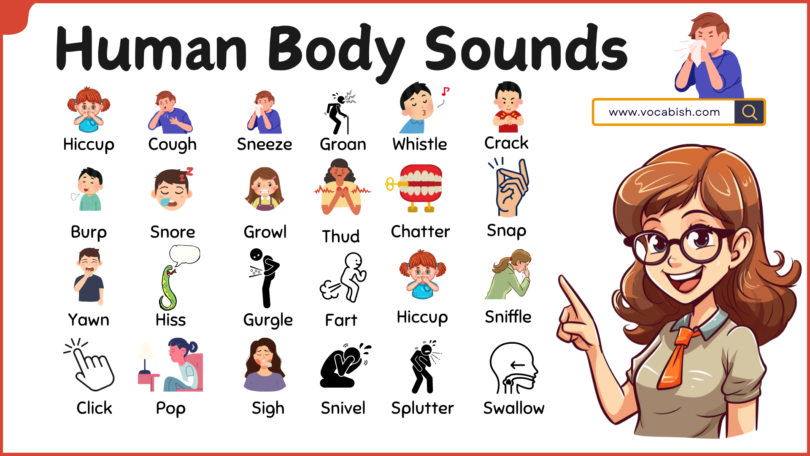

The human body makes many sounds every day, and knowing their names in English can help you understand health, communication, and everyday expressions better. Body sounds include noises like cough, sneeze, hiccup, burp, and snore, each with its own meaning. In this blog post, you will learn 40+ common human body sounds in English with pictures to make remembering easier. Studying these sounds helps improve your listening, speaking, and reading skills, and allows you to describe everyday situations more clearly, helping you gradually master practical vocabulary used in daily life.
What Are Human Body Sounds?
Human body sounds are noises produced by different parts of our body. These include sounds we make intentionally, like speaking or laughing, and involuntary sounds like sneezing, hiccuping, or burping. Learning these sounds in English helps you describe your experiences clearly and understand what others are saying about their bodies.
Why Learn Human Body Sounds in English?
- Better Communication: You can describe health symptoms, feelings, or funny moments more accurately.
- Improve Listening Skills: Understand conversations, videos, and stories where body sounds are mentioned.
- Expand Vocabulary: Adds variety and depth to your English.
- Cultural Understanding: Some sounds are commonly discussed in English expressions, idioms, or jokes.
List of Human Body Sounds
Here’s a detailed list of human body sounds divided by body parts. Each word includes a simple meaning, example sentence, and pronunciation tips.
Sounds from the Mouth
- Burp – A short release of air from the stomach through the mouth
Pronunciation: /bɜːrp/
Example: “After drinking soda, I burped loudly.” - Chew – The sound of biting and crushing food with teeth
Pronunciation: /tʃuː/
Example: “She chewed her sandwich slowly during lunch.” - Click (tongue) – A short sound made by the tongue
Pronunciation: /klɪk/
Example: “He clicked his tongue when he was unhappy with the results.” - Gulp – Swallowing quickly with a loud sound
Pronunciation: /ɡʌlp/
Example: “I gulped my water after running a long distance.” - Slurp – Drinking or eating noisily
Pronunciation: /slɜːrp/
Example: “She slurped her noodles during dinner.” - Lick – Moving the tongue over something
Pronunciation: /lɪk/
Example: “The dog licked my hand happily.” - Snarl – A growling sound while showing teeth
Pronunciation: /snɑːrl/
Example: “The dog snarled when a stranger approached.”
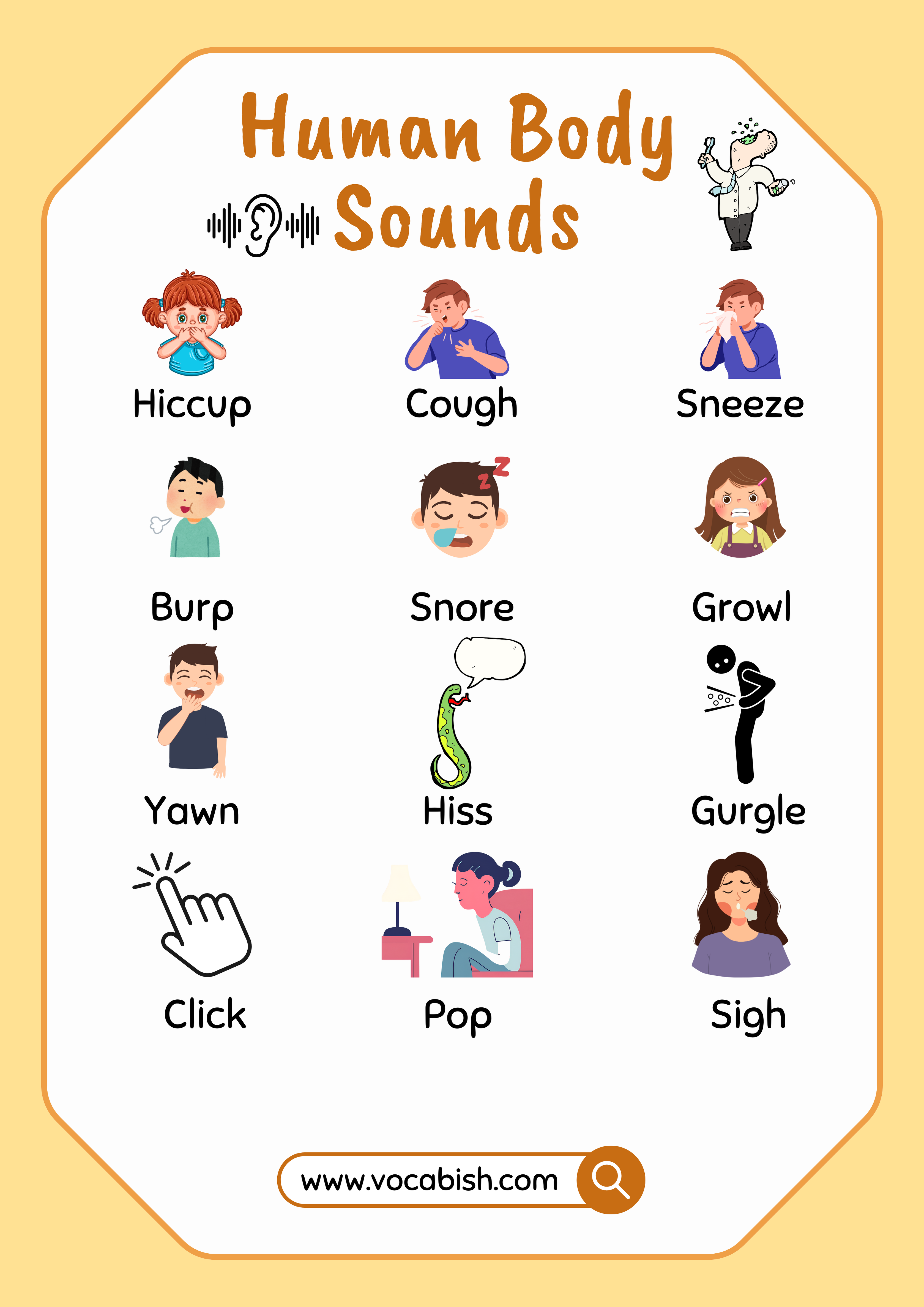
Sounds from the Respiratory System
- Cough – Sudden release of air from the lungs
Pronunciation: /kɔːf/
Example: “She coughed loudly during the class.” - Sneeze – Sudden air expelled through the nose
Pronunciation: /sniːz/
Example: “I sneeze whenever I’m near dust.” - Hiccup – Involuntary small noise from the diaphragm
Pronunciation: /ˈhɪkʌp/
Example: “I got a hiccup after drinking my soda too fast.” - Wheeze – Breathing with a high-pitched sound
Pronunciation: /wiːz/
Example: “He wheezed after running up the stairs.” - Pant – Breathing heavily after exercise
Pronunciation: /pænt/
Example: “The dog panted after chasing the ball in the park.”
Sounds from the Digestive System
- Growl – Stomach making noise when hungry
Pronunciation: /ɡraʊl/
Example: “My stomach growled during the long meeting.” - Burble – Soft bubbling noise in stomach or intestines
Pronunciation: /ˈbɜːrbəl/
Example: “I felt my stomach burble after eating too quickly.” - Gurgle – Water-like sound in the stomach
Pronunciation: /ˈɡɜːrɡəl/
Example: “My stomach gurgled while I waited for lunch.”
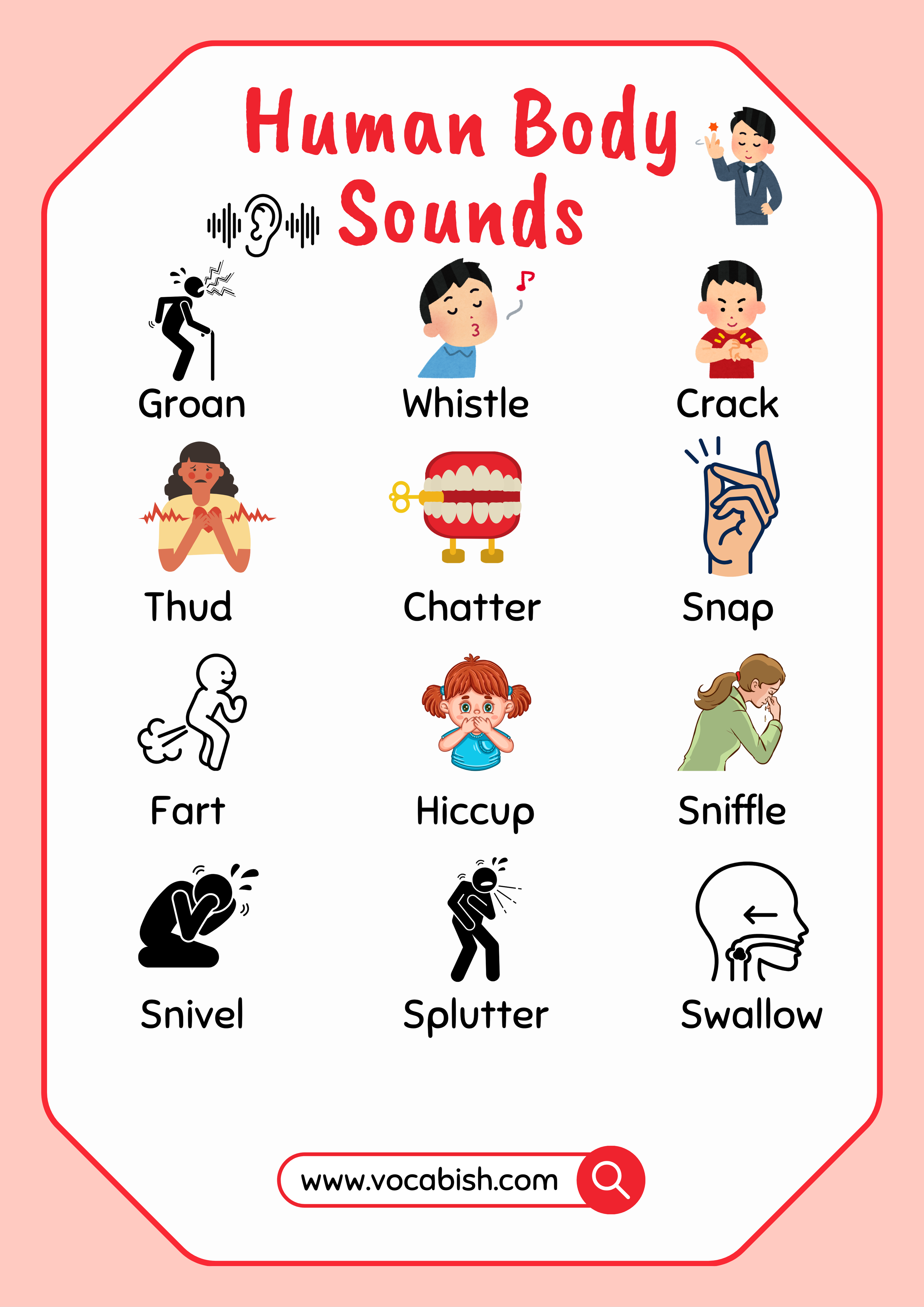
Sounds from the Ears and Head
- Buzz – Ringing sound in the ears
Pronunciation: /bʌz/
Example: “After the loud concert, I heard a buzz in my ears.” - Pop – Small sudden noise in the ear or joint
Pronunciation: /pɒp/
Example: “My ears popped when the airplane took off.” - Tick – Small clicking or ticking noise
Pronunciation: /tɪk/
Example: “I could hear a tick when my jaw moved.”
Other Body Sounds with Meanings
- Snap – A small cracking sound
Pronunciation: /snæp/
Example: “He snapped his fingers to get attention.” - Crack – Breaking or bending sound from joints
Pronunciation: /kræk/
Example: “My knuckles crack when I stretch my hands.” - Sigh – Exhaling audibly to show emotion
Pronunciation: /saɪ/
Example: “She sighed after finishing her homework.” - Shiver – Trembling sound from cold or fear
Pronunciation: /ˈʃɪvər/
Example: “I shivered when I went outside in the snow.” - Moan – Low sound of pain or pleasure
Pronunciation: /moʊn/
Example: “He moaned when he stubbed his toe.” - Groan – Low sound of discomfort
Pronunciation: /ɡroʊn/
Example: “She groaned when lifting the heavy box.” - Snore – Breathing loudly while sleeping
Pronunciation: /snɔːr/
Example: “My brother snores loudly every night.” - Whistle – High-pitched sound made by lips
Pronunciation: /ˈwɪsl/
Example: “He whistled a happy tune while walking.” - Yawn – Open mouth and breathe in when tired
Pronunciation: /jɔːn/
Example: “I yawned during the boring movie.” - Chatter – Teeth knocking when cold
Pronunciation: /ˈtʃætər/
Example: “My teeth chattered in the freezing wind.”
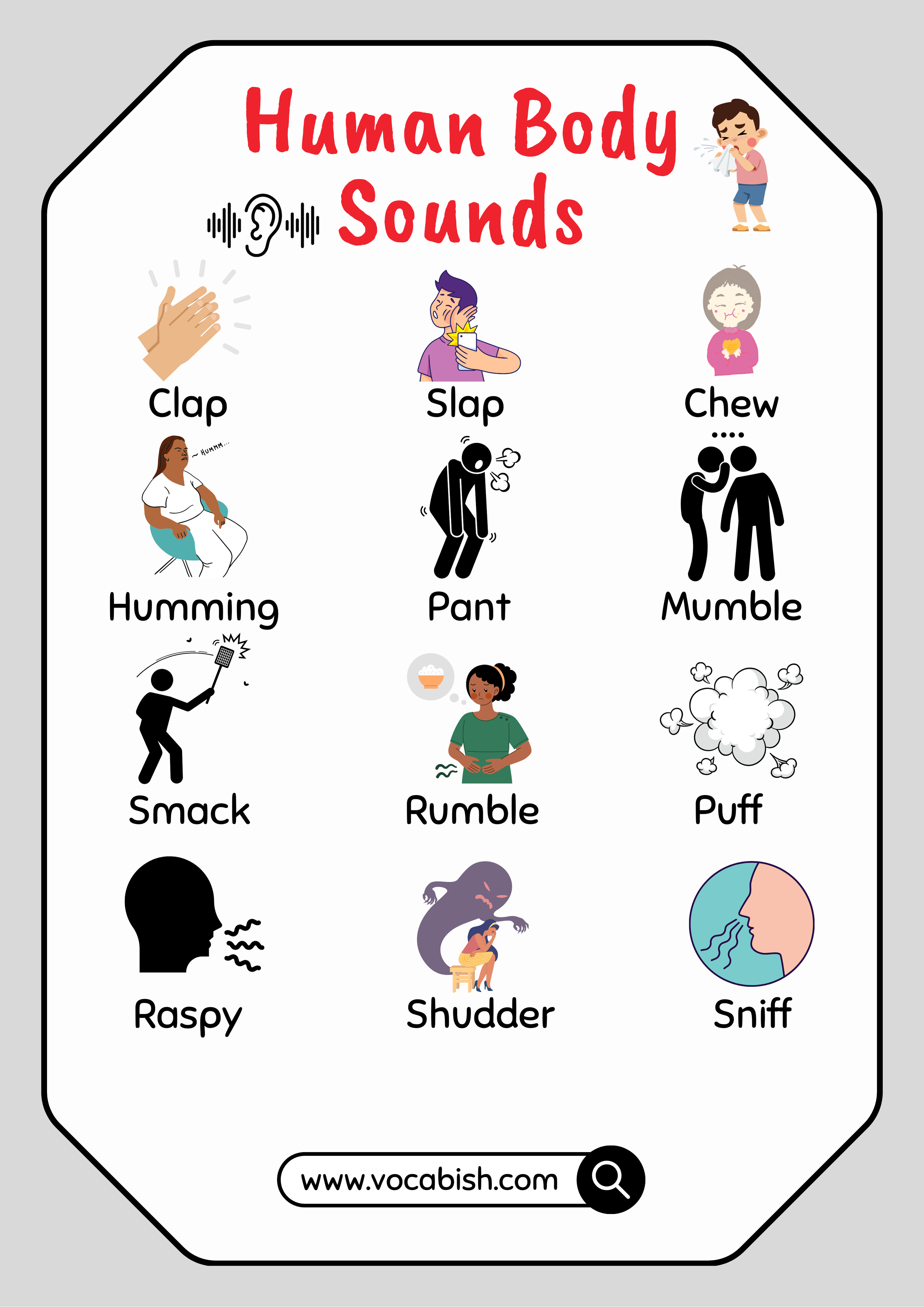
Use of Human Body Sounds
1. Daily Conversation
- “Excuse me, I sneezed. Do you have a tissue?”
- “My stomach is growling; I need lunch.”
2. Short Paragraph Example
- Yesterday, I was cold, so I shivered and my teeth chattered. After lunch, my stomach gurgled, and I burped quietly. At night, I snored while sleeping.
3. Email or Messaging Context
- “Hi John, I’m feeling unwell today. I keep coughing and sneezing, so I will work from home.”
Get a free PDF of these human body sounds:
FAQs about Body Sounds
Body sounds are noises our bodies make, like coughs, burps, or heartbeats. Learning them helps understand health, daily life, and improve English vocabulary naturally.
Stomach growls or gurgles happen when the stomach is empty or digesting food. These body sounds show hunger or movement of liquids and gas.
A “sound” of water is a large sea or ocean inlet between two land areas. Example: “Long Island Sound is a sound between Long Island and Connecticut.”
It means a healthy mind lives in a healthy body. Good physical health supports mental clarity and emotional well-being.
A sound mind and body refers to being mentally alert and physically healthy at the same time, balancing thinking, emotions, and fitness.
Body sounds from the mouth include burps, hiccups, yawns, slurps, coughs, sneezes, whistles, and moans. They express health, emotion, or digestion.
A hiccup is a small, involuntary noise caused by a spasm in the diaphragm. It usually happens after eating or drinking too quickly.
A burp is air released from the stomach through the mouth. A gulp is swallowing food or drink quickly, often making a loud sound.
Conclusion
Learning human body sounds in English is more than just memorizing words—it helps you communicate clearly, understand conversations, and describe experiences in everyday life. Practice regularly by listening, speaking, and using these words in real contexts. Over time, this vocabulary will make your English more natural, accurate, and expressive. Keep a notebook, do exercises, and try to notice body sounds around you—it’s a fun and practical way to improve your language skills!
Related Articles: