
Many English sentences become stronger and more natural when common words are replaced with more specific vocabulary instead of using “very” again and again. In this blog post, you will learn 100+ words to use instead of “very” in English with a PDF and understand how stronger words can express ideas more accurately in speaking and writing. From words like “exhausted” instead of “very tired” to “huge” instead of “very big,” each example helps learners use richer vocabulary in everyday English. Learning these word replacements helps you understand natural sentence patterns and use more effective English expressions in daily communication, writing, and classroom activities.
Words for Very
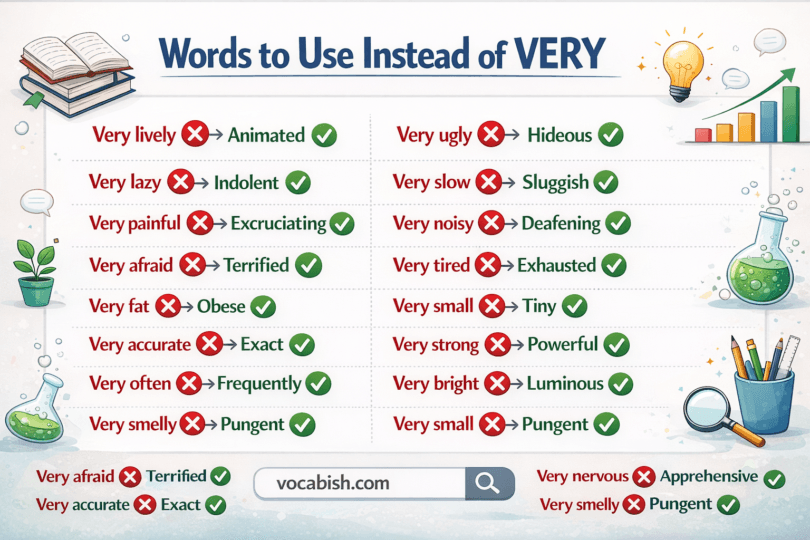
Here, we will learn the 100+ English words that start with Very and we are also going to learn which words can be replaced with these. Take a look at the below-listed words to use instead of very:
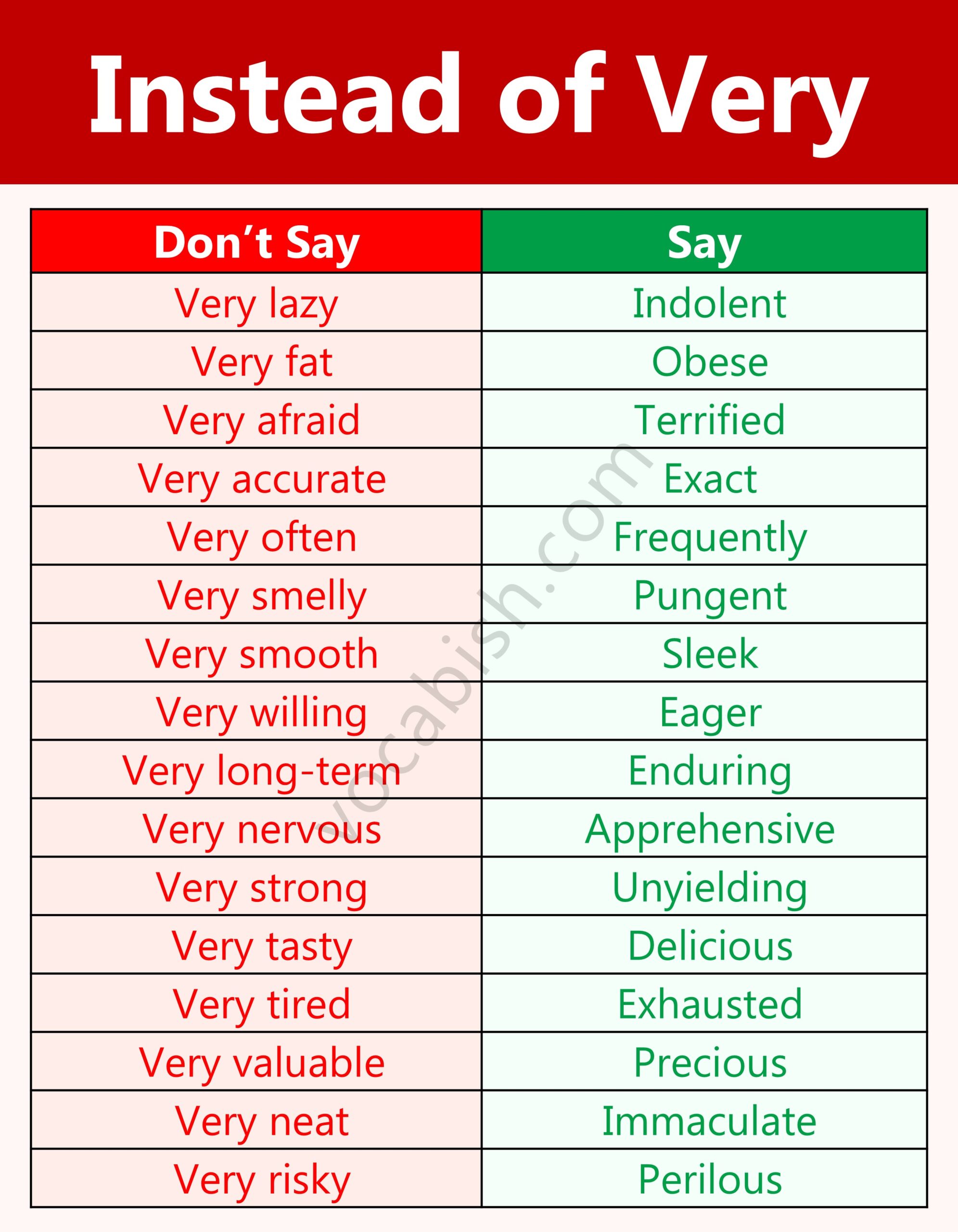
Don’t Say | Say |
Very lazy | Indolent |
Very fat | Obese |
Very afraid | Terrified |
Very accurate | Exact |
Very often | Frequently |
Very smelly | Pungent |
Very smooth | Sleek |
Very willing | Eager |
Very long-term | Enduring |
Very nervous | Apprehensive |
Very strong | Unyielding |
Very tasty | Delicious |
Very tired | Exhausted |
Very valuable | Precious |
Very neat | Immaculate |
Very risky | Perilous |
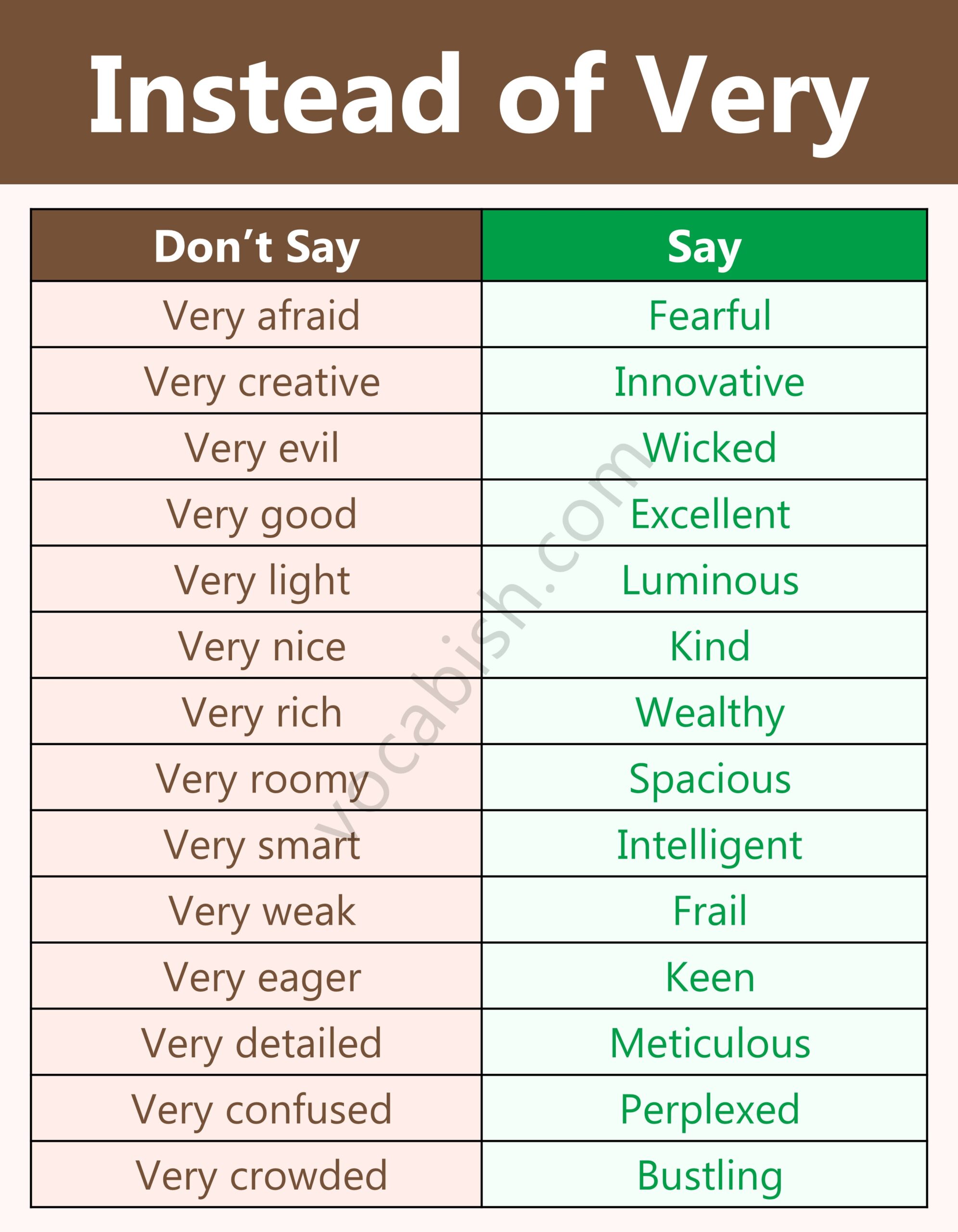
Very afraid | Fearful |
Very creative | Innovative |
Very evil | Wicked |
Very good | Excellent |
Very light | Luminous |
Very nice | Kind |
Very rich | Wealthy |
Very roomy | Spacious |
Very smart | Intelligent |
Very weak | Frail |
Very eager | Keen |
Very detailed | Meticulous |
Very confused | Perplexed |
Very crowded | Bustling |
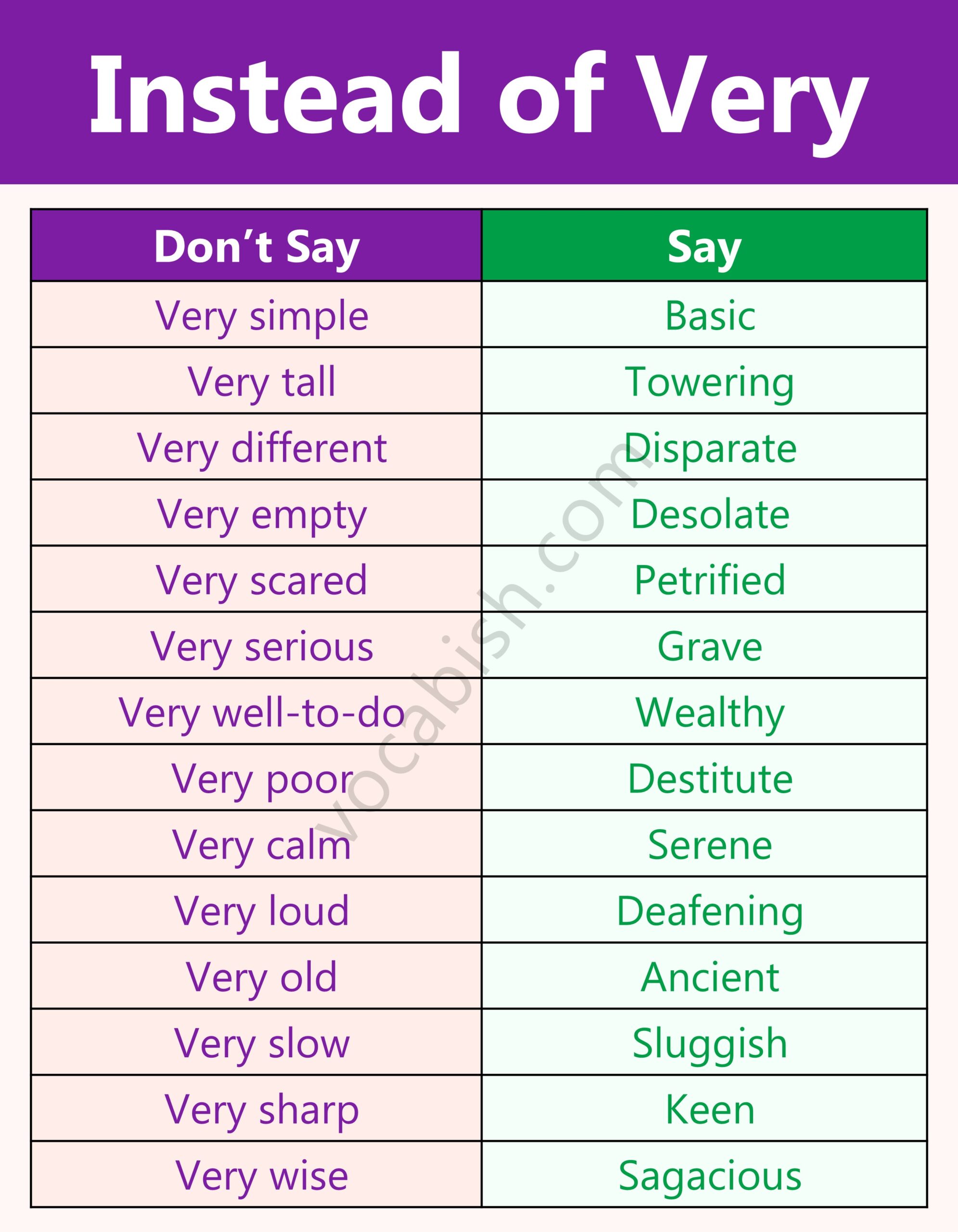
Very simple | Basic |
Very tall | Towering |
Very different | Disparate |
Very empty | Desolate |
Very scared | Petrified |
Very serious | Grave |
Very well-to-do | Wealthy |
Very poor | Destitute |
Very calm | Serene |
Very loud | Deafening |
Very old | Ancient |
Very slow | Sluggish |
Very sharp | Keen |
Very wise | Sagacious |
Words To Use Instead of Very
Don’t Say | Say |
Very careful | Cautious |
Very bright | Luminous |
Very boring | Dull |
Very nice | Kind |
Very skinny | Skeletal |
Very necessary | Essential |
Very noisy | Deafening |
Very dry | Parched |
Very cold | Freezing |
Very clever | Brilliant |
Very stupid | Idiotic |
Very thin | Gaunt |
Very ugly | Hideous |
Very wicked | Villainous |
Very quiet | Silent |
Very accurate | Exact |
Very clean | Spotless |
Very dear | Cherished |
Very happy | Ecstatic |
Very large | Huge |
Very little | Tiny |
Very powerful | Compelling |
Very risky | Perilous |
Very short | Brief |
Very worried | Distressed |
Very upset | Distraught |
Very glad | Overjoyed |
Very cute | Adorable |
Very colorful | Vibrant |
Very shy | Timid |
Very skinny | Skeletal |
Very dear | Cherished |
Very dull | Tedious |
Very painful | Excruciating |
Very shiny | Gleaming |
Very wise | Sage |
Very rainy | Pouring |
Very competitive | Cutthroat |
Very cheap | Stingy |
Very confused | Perplexed |
Very exciting | Exhilarating |
Very sleepy | Lethargic |
Very thin | Gaunt |
Very loved | Adored |
Instead of Very PDF
FAQs about Words for Very
You can use stronger or more precise words instead of very, such as extremely, highly, completely, absolutely, intensely, or remarkably, depending on the context.
Instead of very, try using descriptive adjectives or adverbs like enormous, excellent, beautiful, delightful, or exceptional to make your writing more vivid.
Better alternatives to very include words that show intensity without using filler, such as tremendous, incredible, remarkable, outstanding, or fantastic.
Avoid very by choosing precise adjectives or adverbs. For example, instead of “very happy,” use ecstatic or joyful; instead of “very big,” use huge or massive.
Ten strong alternatives are: extremely, highly, absolutely, completely, intensely, remarkably, exceptionally, enormously, wonderfully, and perfectly.
Overusing very can make writing weak or repetitive. Using precise and strong words makes sentences more engaging and professional.
Yes, replacing very with accurate and descriptive words enhances vocabulary, improves clarity, and makes your English more expressive and effective.
Read More