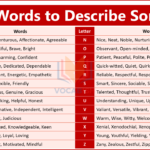

Choosing the right words to describe yourself for a job interview can be harder than answering technical questions. The best words show your personality, work habits, strengths, and attitude without sounding exaggerated.
Whether you need 3 words that describe me for a job, words for a CV, or a longer interview answer, this article gives you practical vocabulary and examples you can actually use.
Here’s a complete guide on: Job Interview Questions and Answers
What Are Good Words to Describe Yourself for a Job?
Good words for a job interview should describe qualities that are relevant to the position and that you can support with an example.
Instead of saying only “I am good,” choose a specific quality such as reliable, organized, adaptable, patient, proactive, responsible, creative, or hardworking.
Here are some useful choices:
- Reliable – someone people can trust to do what they promise and complete their responsibilities on time. – Example: “I’m reliable, so my manager knows she can count on me when we have an important deadline.”
- Responsible – willing to take care of duties and accept the results of your actions. – Example: “I’m responsible for checking the weekly reports before they are sent to clients.”
- Hardworking – putting consistent effort into your work and not giving up easily. – Example: “I’m hardworking, and I usually stay focused until I finish an important task.”
- Organized – able to arrange tasks, information, and time in an efficient way. – Example: “I’m organized, so I make a task list every morning.”
- Adaptable – able to adjust comfortably when situations, tasks, or plans change. – Example: “I’m adaptable and quickly learned the new software after our company changed systems.”
- Proactive – taking action before someone tells you what to do. – Example: “I’m proactive, so I contacted the customer before the problem became more serious.”
- Patient – able to remain calm when something takes time or becomes difficult. – Example: “I’m patient when helping new employees learn unfamiliar procedures.”
- Positive – having an optimistic and constructive attitude toward work and problems. – Example: “I try to stay positive when the team faces a difficult deadline.”
- Motivated – having a strong desire to achieve something or do your work well. – Example: “I’m motivated by challenging goals because they encourage me to improve.”
- Dedicated – giving serious effort, time, and attention to a responsibility or goal. – Example: “I’m dedicated to providing good service to every customer.”
Best Words to Describe Yourself for a Job Interview
The best words to describe yourself for a job interview depend on the position. A teacher may want to emphasize patience and communication, while a manager may highlight leadership and decision-making.
Use words that honestly match your behavior.
- Confident – believing in your abilities without being unnecessarily arrogant. – Example: “I’m confident when presenting ideas, but I’m also open to feedback.”
- Creative – able to produce new ideas or find different ways to solve problems. – Example: “I’m creative and often look for new ways to make our presentations more engaging.”
- Analytical – good at examining information carefully and using facts to reach conclusions. – Example: “I’m analytical, so I usually review the data before making a decision.”
- Efficient – able to complete work well without wasting time, effort, or resources. – Example: “I’m efficient and use software tools to reduce repetitive work.”
- Flexible – willing and able to change your approach when circumstances require it. – Example: “I’m flexible when priorities change during a busy week.”
- Focused – able to concentrate on an important task without easily becoming distracted. – Example: “I stay focused when I have a tight deadline.”
- Detail-oriented – careful about small details and likely to notice mistakes or inconsistencies. – Example: “I’m detail-oriented, especially when reviewing financial documents.”
- Resourceful – able to find practical solutions when you do not have everything you need. – Example: “I’m resourceful and usually find another solution when our usual process doesn’t work.”
- Dependable – consistently trustworthy and able to be relied upon. – Example: “My colleagues consider me dependable because I always complete my assigned work.”
- Professional – behaving in a responsible, respectful, and appropriate way at work. – Example: “I maintain a professional attitude even when dealing with difficult customers.”
Positive Words to Describe Yourself for a Job
Using positive words to describe yourself for a job can help communicate your strengths, but avoid choosing impressive-sounding words that you cannot prove.
These are especially useful when answering “Tell me about yourself.”
- Ambitious – strongly motivated to achieve goals and make progress. – Example: “I’m ambitious and want to develop my skills while taking on greater responsibilities.”
- Enthusiastic – showing strong interest, energy, and excitement about something. – Example: “I’m enthusiastic about learning new technology.”
- Helpful – willing to assist other people when they need support. – Example: “I’m always willing to be helpful when a colleague needs assistance.”
- Friendly – pleasant, approachable, and easy to communicate with. – Example: “I’m friendly, which helps me build good relationships with customers.”
- Honest – truthful and unwilling to deceive others. – Example: “I’m honest about mistakes because I believe problems are easier to solve when we discuss them openly.”
- Respectful – treating other people politely and valuing their opinions and rights. – Example: “I’m respectful of different opinions during team discussions.”
- Cooperative – willing to work effectively with other people. – Example: “I’m cooperative and enjoy working toward shared team goals.”
- Compassionate – showing care and understanding toward people who may be experiencing difficulties. – Example: “I’m compassionate when customers are frustrated and try to understand their concerns.”
- Optimistic – expecting or looking for positive possibilities even when situations are difficult. – Example: “I’m optimistic, so I usually focus on possible solutions instead of only discussing the problem.”
- Determined – continuing to work toward a goal despite difficulties or setbacks. – Example: “I’m determined, so I kept working on the project until we found a solution.”
Words to Describe Your Work Style
Your work style tells an employer how you approach tasks, deadlines, teamwork, and problems.
- Punctual – arriving or completing something at the expected time. – Example: “I’m punctual and always try to arrive at work a few minutes early.”
- Consistent – performing at a steady and dependable level over time. – Example: “I’m consistent with my work, even when the workload increases.”
- Disciplined – able to control your actions and stay committed to responsibilities. – Example: “I’m disciplined about following my daily schedule.”
- Thorough – careful and complete, without ignoring important details. – Example: “I’m thorough when checking documents before submission.”
- Practical – focused on realistic solutions that can actually work. – Example: “I take a practical approach when solving workplace problems.”
- Productive – able to achieve useful results within the available time. – Example: “I’m most productive when I plan my priorities before starting work.”
- Self-motivated – able to work with energy and purpose without needing constant supervision. – Example: “I’m self-motivated and can manage my responsibilities independently.”
- Goal-oriented – focused on achieving specific results or objectives. – Example: “I’m goal-oriented and like to measure my progress against clear targets.”
- Methodical – working in an orderly way by following a logical process. – Example: “I’m methodical when handling large amounts of information.”
- Diligent – showing careful and persistent effort in your work. – Example: “I’m diligent about checking my work before sending it to a client.”
Words to Describe Your Personality
Personality words can make your answer more natural, especially when an interviewer asks about your character.
- Calm – able to remain relaxed and controlled in stressful situations. – Example: “I’m calm under pressure and try to think clearly before responding.”
- Patient – able to wait or deal with difficulties without becoming easily annoyed. – Example: “I’m patient when training people who are new to the team.”
- Curious – interested in learning, discovering, and understanding new things. – Example: “I’m curious, so I often ask questions when I want to understand a process better.”
- Open-minded – willing to consider different ideas and opinions. – Example: “I’m open-minded and listen carefully before deciding whether an idea will work.”
- Mature – showing responsible judgment and sensible behavior. – Example: “I try to handle disagreements in a mature and respectful way.”
- Polite – behaving with good manners and respect toward others. – Example: “I remain polite and professional even during difficult conversations.”
- Sociable – comfortable communicating and interacting with other people. – Example: “I’m sociable and enjoy meeting new clients.”
- Thoughtful – careful about other people’s needs, feelings, or opinions. – Example: “I’m thoughtful about how my decisions affect the rest of the team.”
- Positive-minded – generally focusing on constructive possibilities and solutions. – Example: “I’m positive-minded and try to encourage my colleagues during challenging projects.”
- Trustworthy – deserving confidence because you are honest and dependable. – Example: “I’m trustworthy, and my previous manager often asked me to handle confidential information.”
Words to Describe Your Communication Skills
Strong communication vocabulary is useful for customer service, teaching, sales, management, office, and team-based positions.
- Articulate – able to express ideas clearly and effectively. – Example: “I’m articulate and can explain complex information in a way that customers understand.”
- Clear – easy to understand because ideas are expressed directly and logically. – Example: “I try to give clear instructions so everyone knows what to do.”
- Attentive – giving careful attention to what someone says or does. – Example: “I’m attentive when customers explain their concerns.”
- Persuasive – able to influence people through convincing communication. – Example: “I’m persuasive when presenting a product that genuinely solves a customer’s problem.”
- Diplomatic – able to handle sensitive situations without unnecessarily upsetting people. – Example: “I’m diplomatic when discussing disagreements with colleagues.”
- Approachable – friendly and easy for other people to talk to. – Example: “I’m approachable, so new employees often feel comfortable asking me questions.”
- Collaborative – willing to communicate and work closely with others. – Example: “I have a collaborative communication style and enjoy sharing ideas with my team.”
Words to Describe Your Leadership Skills
If you are applying for a leadership position, select words that demonstrate responsibility rather than simply saying “I am a good leader.”
- Decisive – able to make decisions confidently after considering the available information. – Example: “I’m decisive when the team needs a quick and well-informed solution.”
- Supportive – willing to help other people succeed and overcome difficulties. – Example: “I’m supportive of team members who need extra guidance.”
- Accountable – willing to accept responsibility for your actions and results. – Example: “I’m accountable for my decisions and take responsibility when something goes wrong.”
- Inspirational – able to encourage people to feel motivated and committed to a goal. – Example: “I try to be inspirational by recognizing my team’s progress.”
- Fair – treating people equally and making decisions without unreasonable favoritism. – Example: “I’m fair when assigning responsibilities to team members.”
- Strategic – able to plan actions with long-term goals in mind. – Example: “I’m strategic when planning projects because I consider both immediate and future needs.”
- Delegating – able to give appropriate tasks and responsibilities to other people. – Example: “I’m comfortable delegating tasks according to each team member’s strengths.”
3 Words to Describe Yourself for a Job
If an interviewer asks for 3 words to describe myself for a job, do not simply list three adjectives and stop.
A stronger answer gives the three words and briefly explains how they describe your behavior.
Example 1: Office Job
Reliable, organized, adaptable – “I would describe myself as reliable, organized, and adaptable. I complete my work on time, keep my tasks organized, and adjust quickly when priorities change.”
Example 2: Customer Service Job
Patient, friendly, helpful – “I’d say I’m patient, friendly, and helpful. I enjoy listening to customers and finding practical solutions to their concerns.”
Example 3: Teaching Job
Patient, creative, responsible – “I’m patient, creative, and responsible. I enjoy finding different ways to explain difficult ideas, and I take my responsibilities seriously.”
Example 4: Management Position
Decisive, supportive, organized – “I would describe myself as decisive, supportive, and organized. I can make decisions when necessary while helping my team stay focused on its goals.”
Example 5: First Job
Motivated, hardworking, curious – “I’m motivated, hardworking, and curious. I’m eager to learn, willing to put in the effort, and interested in developing new skills.”
How to Choose the Right Words
The strongest answer connects your personal qualities to the job requirements.
Before your interview, look at the job description and identify the qualities the employer appears to value.
For example:
- Customer service: patient, friendly, helpful, empathetic, approachable
- Teaching: patient, organized, creative, supportive, communicative
- Management: decisive, strategic, responsible, supportive, confident
- Sales: persuasive, enthusiastic, confident, ambitious, sociable
- Office administration: organized, reliable, punctual, detail-oriented, efficient
- Technology: analytical, curious, adaptable, logical, problem-solving
- Healthcare support: compassionate, patient, attentive, responsible, calm
- Retail: friendly, helpful, energetic, dependable, communicative
A useful formula is:
Word + short explanation + evidence
For example:
“I’m organized. I keep a clear task list and prioritize urgent work first. In my previous position, this helped me consistently meet weekly deadlines.”
This sounds stronger than:
“I’m organized, hardworking, friendly, and good.”
How to Describe Yourself in 100 Words for a Job Interview
When someone asks you to describe yourself in 100 words for a job interview, focus on your professional identity rather than listing every personality trait.
Here is a sample answer:
Example:
“I’m a hardworking, reliable, and motivated person who enjoys learning new skills and taking on new challenges. I’m organized and manage my time carefully so I can meet deadlines without sacrificing quality. I work well independently, but I also enjoy collaborating with a team and listening to different ideas. I’m adaptable when plans change and remain calm when dealing with pressure. I consider myself honest, respectful, and responsible, and I take feedback seriously because it helps me improve. In my next role, I hope to contribute my skills, learn from experienced colleagues, and grow into a dependable member of the organization.”
Describing Words for Job Application
A job application often requires short descriptions of your strengths. Choose professional adjectives that fit the position rather than filling the application with general praise.
Useful describing words for job application writing include:
- Experienced – having knowledge or skill gained through previous work or practice. – Example: “I am an experienced customer service assistant with strong communication skills.”
- Skilled – having the ability to perform a particular task well. – Example: “I am skilled in managing customer inquiries and resolving routine problems.”
- Qualified – having the education, training, or experience required for a position. – Example: “I am qualified for this role because I have the required training and practical experience.”
- Committed – strongly dedicated to a responsibility, organization, or goal. – Example: “I am committed to providing accurate and timely work.”
- Versatile – able to perform different tasks or adapt to different situations. – Example: “I’m a versatile employee who can handle administrative and customer-facing tasks.”
- Conscientious – careful to do your work properly and responsibly. – Example: “I’m conscientious and check important details before completing an assignment.”
- Innovative – introducing new ideas or methods to improve something. – Example: “I’m innovative and enjoy finding better ways to organize repetitive tasks.”
- Observant – good at noticing details, changes, or problems. – Example: “I’m observant and often notice small errors during quality checks.”
Good Words to Describe Someone for a Job
Sometimes you may need to recommend a colleague, write a reference, or describe another candidate. In that situation, good words to describe someone for a job should focus on observable qualities.
- Dependable – someone you can trust to complete responsibilities properly. – Example: “Maria is dependable and always completes her assigned tasks.”
- Professional – someone who behaves responsibly and appropriately at work. – Example: “James is professional when communicating with clients.”
- Cooperative – someone who works willingly and effectively with others. – Example: “Ahmed is cooperative and always supports his teammates.”
- Responsible – someone who takes duties seriously and accepts accountability. – Example: “Sara is responsible and rarely needs reminders about deadlines.”
- Hardworking – someone who consistently puts effort into their work. – Example: “David is hardworking and always puts strong effort into difficult projects.”
- Trustworthy – someone who can be trusted to act honestly and responsibly. – Example: “She is trustworthy and handles sensitive information carefully.”
- Efficient – someone who completes tasks effectively without unnecessary waste. – Example: “He is efficient and can manage several routine tasks without losing focus.”
- Supportive – someone who helps colleagues and encourages their progress. – Example: “She is supportive and often helps new employees understand the process.”
These are also useful positive words to describe someone for a job when writing a professional recommendation.
Positive Words to Describe Someone for a Job
When describing another person professionally, choose words that can be supported by examples.
Good options include:
- Ambitious – strongly motivated to achieve professional goals. – Example: “He is ambitious and actively looks for opportunities to develop his skills.”
- Reliable – consistently does what they are expected to do. – Example: “She is reliable and can be trusted with important assignments.”
- Creative – produces useful new ideas or approaches. – Example: “He is creative and often suggests fresh solutions to team problems.”
- Dedicated – gives serious effort to responsibilities. – Example: “She is dedicated and takes pride in producing high-quality work.”
- Adaptable – adjusts effectively to new situations. – Example: “He is adaptable and handled the new working system very well.”
- Respectful – treats colleagues and customers with consideration. – Example: “She is respectful and listens carefully to different viewpoints.”
- Proactive – acts without waiting to be told what needs to be done. – Example: “He is proactive and identifies potential problems before they affect the project.”
- Conscientious – careful, responsible, and attentive to duties. – Example: “She is conscientious and checks her work carefully.”
What Makes a Job Interview Description Strong?
A good self-description should be specific, relevant, believable, and supported by evidence.
Compare these two answers:
Weak:
“I’m amazing, hardworking, intelligent, perfect, and the best person for this job.”
Stronger:
“I’m organized, dependable, and adaptable. In my previous role, I managed several weekly deadlines and adjusted quickly when urgent tasks were added.”
The second answer sounds more professional because the qualities are connected to actual behavior.
Common Mistakes and Confusing Words
Avoid these common problems when choosing words to describe yourself professionally:
- Confident vs. arrogant – confident means you believe in your abilities; arrogant suggests you believe you are better than others.
- Hardworking vs. productive – hardworking describes effort, while productive focuses more on useful results.
- Friendly vs. professional – friendly describes your social manner; professional describes appropriate workplace behavior.
- Flexible vs. adaptable – both relate to change, but adaptable often emphasizes successfully adjusting to new circumstances.
- Ambitious vs. greedy – ambitious means strongly motivated to achieve goals; greedy suggests wanting more than is reasonable or fair.
Practice: Choose the Best Word
Try completing each sentence with the most suitable word.
- “I always arrive on time and never ignore important deadlines. I’m very ______.”
- “When our company introduced new software, I learned how to use it quickly. I’m ______.”
- “I enjoy finding new solutions when the usual approach does not work. I’m ______.”
- “I listen carefully to customers before responding to their concerns. I’m ______.”
- “I keep track of my tasks and plan my day carefully. I’m ______.”
- “I take action without waiting for my manager to tell me what needs to be done. I’m ______.”
Answers:
- Punctual – you arrive at the expected time.
- Adaptable – you adjust successfully to change.
- Creative or resourceful – you find new or practical solutions.
- Attentive – you listen carefully and give proper attention.
- Organized – you manage tasks and time systematically.
- Proactive – you act before being asked.
A Useful Formula for Your Interview Answer
If you struggle to create your own response, use this structure:
“I would describe myself as [Word 1], [Word 2], and [Word 3]. I’m [short explanation]. For example, [specific work or study example].”
Example:
“I would describe myself as reliable, adaptable, and proactive. I take my responsibilities seriously and adjust quickly when priorities change. In my previous job, I noticed a recurring customer issue and suggested a change that helped the team handle those requests more efficiently.”
This structure works for students, graduates, experienced workers, and people changing careers.
Best Words to Describe Yourself for a Job
If you need a fast vocabulary list before an interview, consider these:
- Reliable – trustworthy and dependable.
- Responsible – serious about duties and accountability.
- Hardworking – willing to put in consistent effort.
- Organized – good at managing tasks and information.
- Adaptable – able to adjust to change.
- Proactive – takes action without waiting for instructions.
- Motivated – strongly willing to achieve goals.
- Confident – believes in personal abilities.
- Creative – produces new ideas.
- Analytical – examines information carefully.
- Patient – stays calm when things take time.
- Professional – behaves appropriately at work.
- Efficient – works effectively without wasting resources.
- Focused – concentrates on important tasks.
- Resourceful – finds practical solutions.
- Dependable – consistently reliable.
- Dedicated – strongly committed to responsibilities.
- Positive – maintains a constructive attitude.
- Communicative – able to exchange ideas clearly.
- Collaborative – works effectively with others.
- Detail-oriented – pays close attention to details.
- Determined – continues working toward a goal.
- Punctual – arrives or completes work on time.
- Diplomatic – handles sensitive situations tactfully.
- Supportive – helps other people succeed.
Frequently Asked Questions
Choose three words that match your actual strengths and the position, such as organized, hardworking, and communicative.
Three strong choices are reliable, adaptable, and motivated because they show dependability, flexibility, and willingness to achieve professional goals.
The best words depend on the role, but reliable, adaptable, proactive, responsible, organized, and motivated work well across many professions.
Useful choices include qualified, experienced, dependable, skilled, conscientious, adaptable, professional, and committed.
Focus on your strongest professional qualities, work habits, communication style, experience, and career goals instead of listing many unrelated personality traits.
Good professional descriptions include reliable, responsible, hardworking, cooperative, trustworthy, efficient, supportive, adaptable, and professional.
Yes, but choose positive qualities you can demonstrate with specific examples rather than making broad claims about your personality.
If asked for three words, give three relevant adjectives and briefly explain each one with evidence or a short example from work, study, or experience.
Conclusion
The right words to describe yourself for a job interview can make your answer clearer, more confident, and more relevant to the position. You do not need complicated vocabulary or impressive-sounding adjectives.
Choose three or four qualities that genuinely describe you, connect them to the job, and support them with a short example. Words such as reliable, organized, adaptable, proactive, responsible, motivated, and communicative are useful starting points, but the strongest answer is always the one that sounds like you and matches the role you want.
Explore More Related Articles