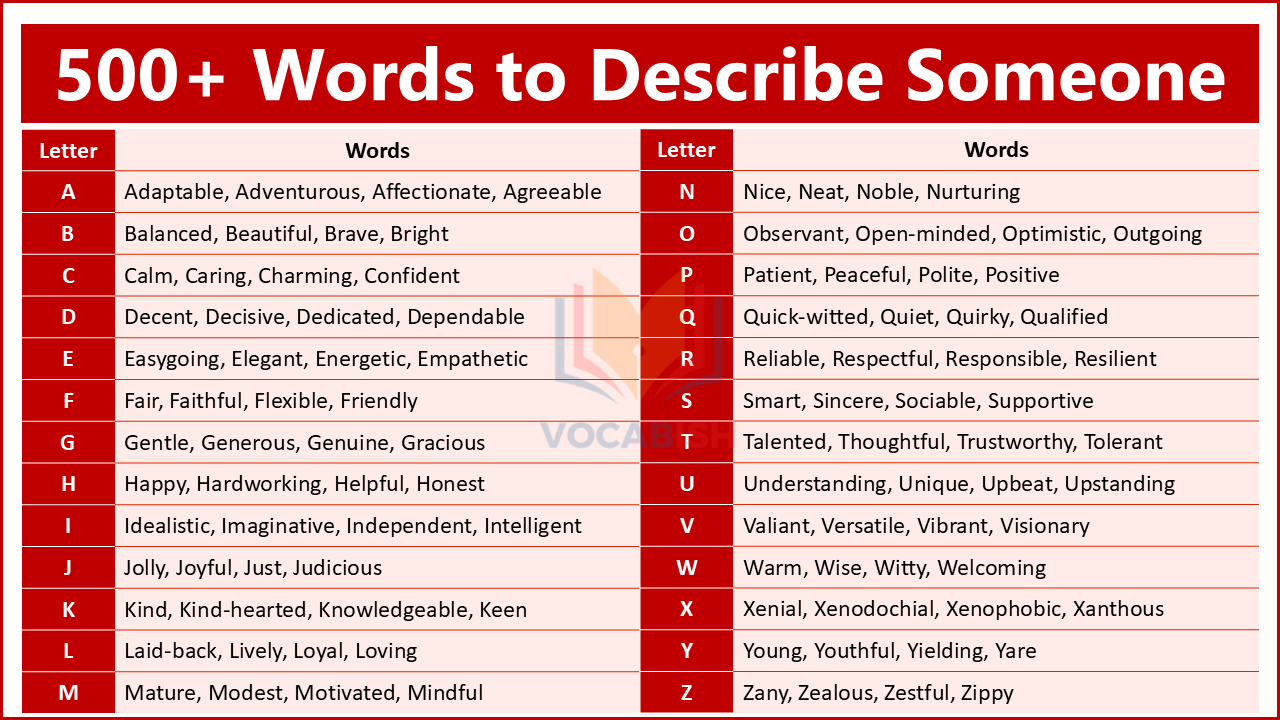
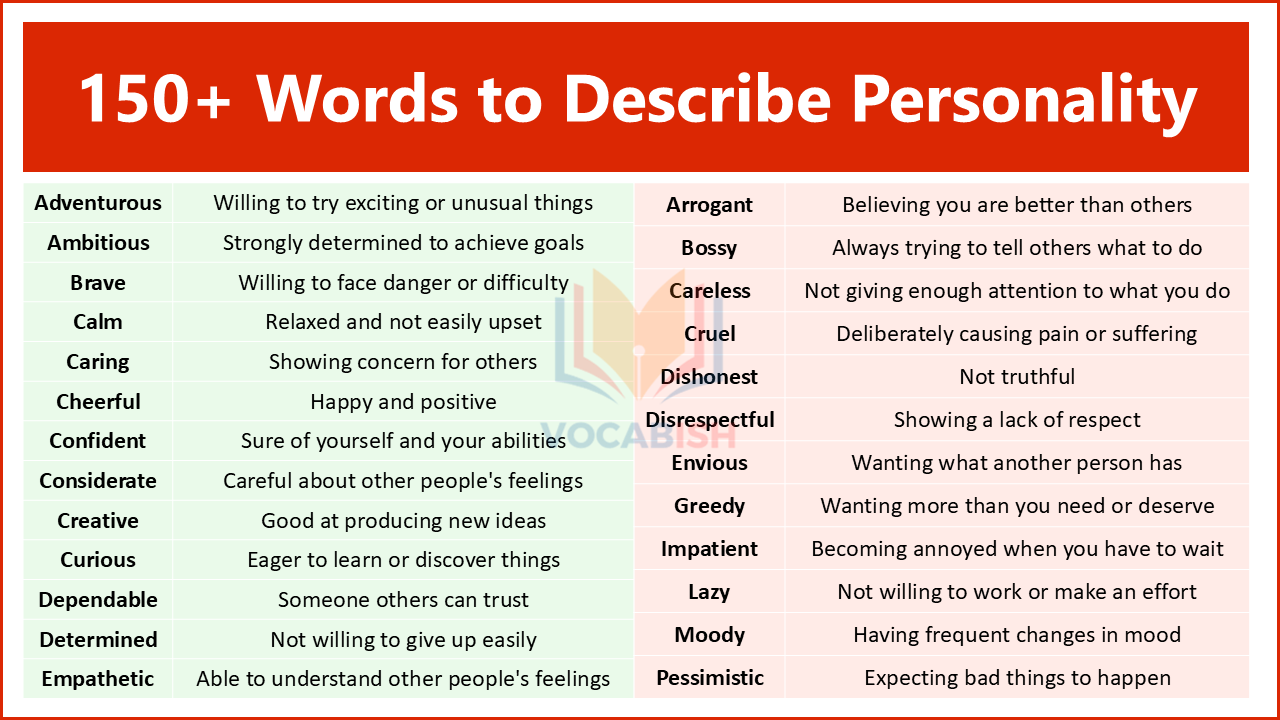

A person’s personality can be friendly, confident, honest, shy, generous, stubborn, or thoughtful. The right Words to Describe Personality help you explain how someone usually thinks, feels, behaves, and interacts with others.
Whether you are writing about a friend, describing a character, speaking English, or completing a school assignment, learning personality adjectives gives you more precise vocabulary.
Here’s a complete guide to 1000+ Descriptive Words in English.
What Are Words to Describe Personality?
Words to describe personality are usually adjectives that tell us about a person’s character, behavior, attitudes, and typical way of responding to situations.
For example:
- Kind – caring and helpful toward others
- Confident – believing in your abilities
- Patient – able to wait without becoming annoyed
- Honest – telling the truth
- Shy – uncomfortable around unfamiliar people
- Stubborn – unwilling to change an opinion or decision
Below are words that describe personality in positive traits, negative traits, or neutral characteristics.
Personality vs. Appearance
Personality describes how someone tends to think and behave, while appearance describes how someone looks.
Personality | Appearance |
|---|---|
Friendly | Tall |
Honest | Beautiful |
Confident | Slim |
Patient | Young |
Generous | Attractive |
Shy | Short |
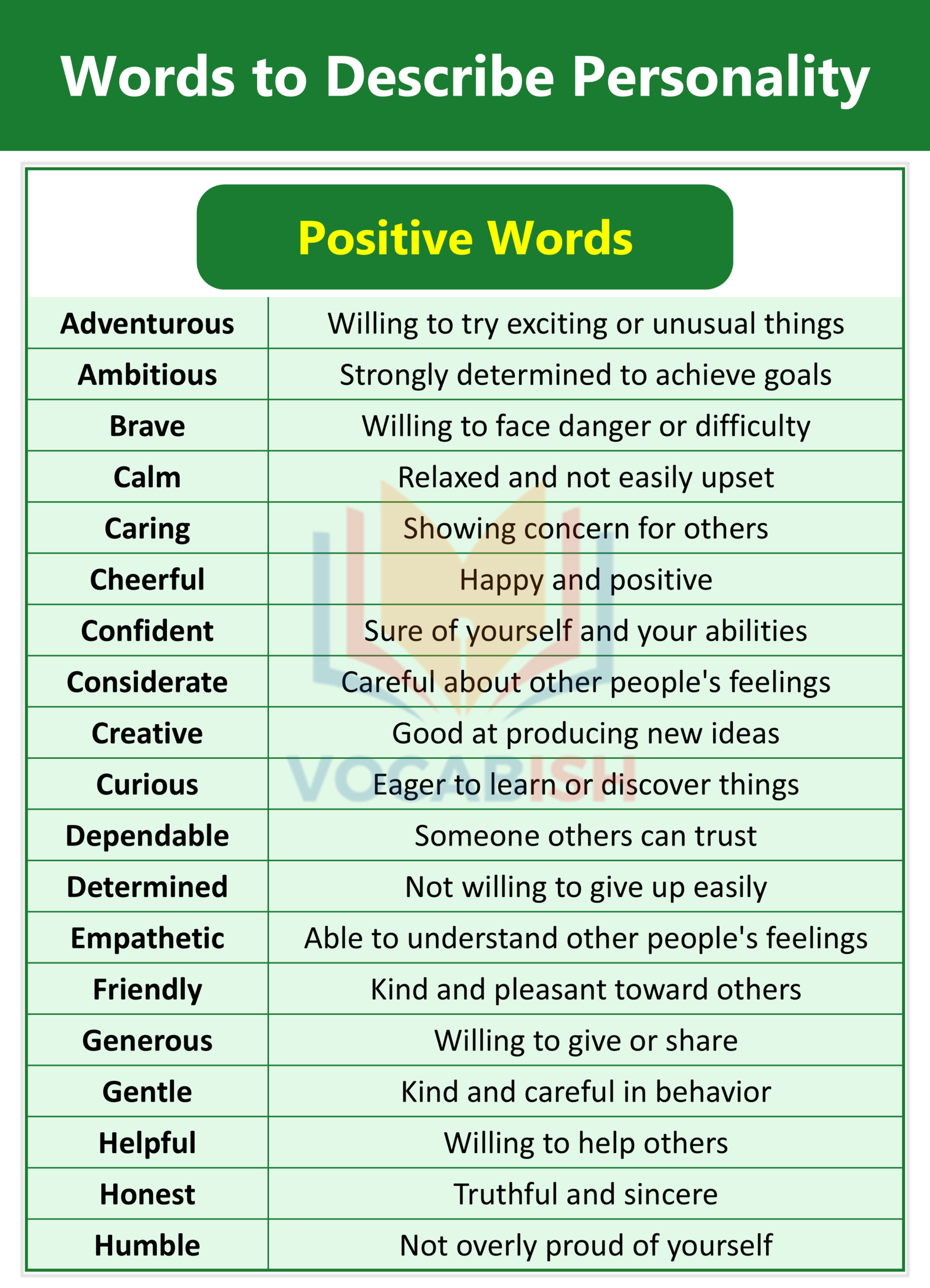
List of Positive Words to Describe Personality
Positive personality adjectives describe qualities that people generally admire, such as kindness, honesty, confidence, patience, and reliability.
Here are useful Positive Words to Describe Personality with their meanings and examples.
Word | Meaning | Example |
|---|---|---|
Adventurous | Willing to try exciting or unusual things | Sara is adventurous and loves exploring new places. |
Ambitious | Strongly determined to achieve goals | He is ambitious and works hard for his goals. |
Brave | Willing to face danger or difficulty | The brave student spoke in front of the whole class. |
Calm | Relaxed and not easily upset | She stays calm during difficult situations. |
Caring | Showing concern for others | My sister is very caring toward her friends. |
Cheerful | Happy and positive | He has a cheerful personality. |
Confident | Sure of yourself and your abilities | Nadia is confident when she gives presentations. |
Considerate | Careful about other people’s feelings | He is considerate of everyone’s needs. |
Creative | Good at producing new ideas | Maria is creative and enjoys writing stories. |
Curious | Eager to learn or discover things | The curious child asked many questions. |
Dependable | Someone others can trust | Tom is dependable and always keeps his promises. |
Determined | Not willing to give up easily | She is determined to succeed. |
Empathetic | Able to understand other people’s feelings | He is empathetic when his friends have problems. |
Friendly | Kind and pleasant toward others | Our new neighbor is very friendly. |
Generous | Willing to give or share | She is generous with her time. |
Gentle | Kind and careful in behavior | He has a gentle personality. |
Helpful | Willing to help others | Ali is always helpful at school. |
Honest | Truthful and sincere | An honest person tells the truth. |
Humble | Not overly proud of yourself | Despite his success, he remains humble. |
Independent | Able to act without relying heavily on others | She is independent and solves problems herself. |
Kind | Caring and thoughtful toward others | He is kind to everyone. |
Loyal | Showing continued support | A loyal friend stays with you during hard times. |
Mature | Behaving in a sensible way | She is mature for her age. |
Optimistic | Expecting good things to happen | He is optimistic about the future. |
Patient | Able to wait calmly | Our teacher is patient with students. |
Polite | Having good manners | The children were polite to their guests. |
Reliable | Can be trusted to do what is expected | She is reliable and always arrives on time. |
Respectful | Showing respect for others | He is respectful toward his teachers. |
Responsible | Taking duties seriously | Emma is responsible and completes her work. |
Sincere | Genuine and honest in feelings | His apology sounded sincere. |
Supportive | Giving encouragement or help | My parents are very supportive. |
Thoughtful | Showing care by considering others | That was a thoughtful gift. |
Understanding | Sympathetic toward other people’s feelings | She is understanding when people make mistakes. |
Wise | Showing good judgment and knowledge | My grandfather is a wise man. |
Witty | Clever and amusing | He is known for his witty comments. |
List of Negative Words to Describe Personality
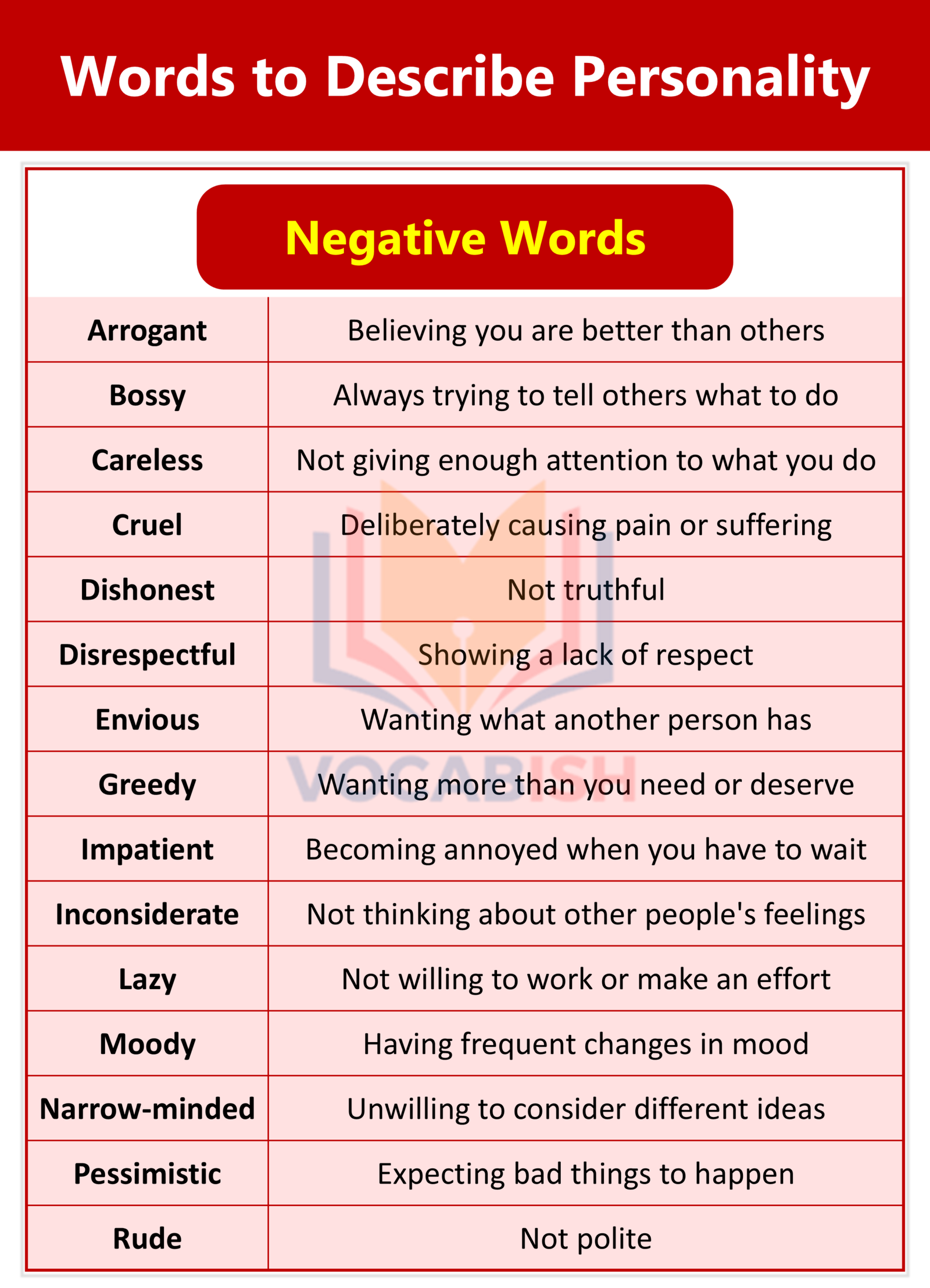
Negative personality adjectives describe traits that can create problems in relationships, communication, school, or work.
Here are common Negative Words to Describe Personality.
Word | Meaning | Example |
|---|---|---|
Arrogant | Believing you are better than others | His arrogant attitude upset his teammates. |
Bossy | Always trying to tell others what to do | She can be bossy with her younger brother. |
Careless | Not giving enough attention to what you do | He is careless with important documents. |
Cruel | Deliberately causing pain or suffering | It was cruel to make fun of someone. |
Dishonest | Not truthful | A dishonest person may lie to others. |
Disrespectful | Showing a lack of respect | His disrespectful behavior caused an argument. |
Envious | Wanting what another person has | He became envious of his friend’s success. |
Greedy | Wanting more than you need or deserve | The greedy man refused to share. |
Impatient | Becoming annoyed when you have to wait | She gets impatient in long lines. |
Inconsiderate | Not thinking about other people’s feelings | His inconsiderate comments hurt her feelings. |
Jealous | Feeling threatened by someone else’s attention or relationship | He became jealous when his friend made a new friend. |
Lazy | Not willing to work or make an effort | He is too lazy to finish his homework. |
Moody | Having frequent changes in mood | My brother can be moody after a tiring day. |
Narrow-minded | Unwilling to consider different ideas | A narrow-minded attitude can prevent learning. |
Pessimistic | Expecting bad things to happen | She is pessimistic about the result. |
Rude | Not polite | It was rude to interrupt the speaker. |
Selfish | Caring mainly about yourself | It was selfish not to share the food. |
Stubborn | Unwilling to change your mind | He is stubborn about his decisions. |
Thoughtless | Showing little concern for others | His thoughtless action caused a problem. |
Unreliable | Not dependable | He is unreliable and often forgets appointments. |
Personality Words for Different Traits
Different personality words focus on different parts of a person’s character. Choosing the exact adjective makes your description clearer.
Words for Kindness and Caring
Use these adjectives when someone treats others with care and compassion:
- Caring
- Compassionate
- Kind
- Gentle
- Generous
- Helpful
- Considerate
- Thoughtful
- Supportive
- Understanding
- Selfless
- Warm-hearted
Example:
Maria is compassionate and always tries to help people who are struggling.
Words for Confidence
These words describe people who believe in themselves or express themselves strongly:
- Confident
- Assertive
- Bold
- Courageous
- Fearless
- Self-assured
- Outgoing
- Determined
Example:
James is confident enough to share his ideas during meetings.
Words for Intelligence and Thinking
These adjectives describe how someone thinks, learns, or solves problems:
- Intelligent
- Clever
- Bright
- Wise
- Logical
- Observant
- Analytical
- Creative
- Curious
- Thoughtful
Example:
The observant student quickly noticed the mistake.
Words for Sociability
These personality adjectives describe how comfortable someone is around other people:
- Friendly
- Sociable
- Outgoing
- Talkative
- Cheerful
- Approachable
- Extroverted
- Reserved
- Shy
- Introverted
Example:
David is outgoing and enjoys meeting new people.
Personality Words for Social Behavior
The way someone interacts with other people can reveal important personality traits.
Personality Word | What It Describes |
|---|---|
Approachable | Easy and pleasant to talk to |
Cooperative | Willing to work with others |
Diplomatic | Good at handling sensitive situations |
Friendly | Pleasant and welcoming |
Generous | Willing to give or share |
Outgoing | Comfortable meeting and talking to people |
Polite | Well-mannered |
Respectful | Showing consideration for others |
Sociable | Enjoying the company of others |
Talkative | Talking frequently |
Reserved | Quiet and not likely to share personal feelings |
Rude | Lacking good manners |
Talkative vs. Sociable:
These words are related but do not mean exactly the same thing.
- Talkative means someone talks a lot.
- Sociable means someone enjoys spending time with other people.
A person can be sociable but not very talkative.
Personality Words for Emotional Characteristics
Some adjectives describe how people usually manage or express their emotions.
- Calm – not easily upset
- Cheerful – generally happy and positive
- Emotional – showing feelings strongly
- Patient – able to remain calm while waiting
- Sensitive – easily affected by feelings or criticism
- Serious – not usually playful or joking
- Optimistic – expecting positive results
- Pessimistic – expecting negative results
- Moody – experiencing frequent changes in mood
- Resilient – able to recover from difficulties
Example:
Although the project failed, Lina remained resilient and tried again.
Personality Words for Work and Study
Certain personality traits are especially useful when describing a student, employee, colleague, or leader.
Positive Trait | Meaning |
|---|---|
Diligent | Works carefully and consistently |
Organized | Keeps things planned and orderly |
Punctual | Arrives or finishes on time |
Responsible | Takes duties seriously |
Reliable | Can be trusted |
Focused | Gives strong attention to a task |
Disciplined | Controls behavior to reach a goal |
Ambitious | Wants to achieve success |
Adaptable | Can adjust to changes |
Cooperative | Works well with others |
Example:
Ahmed is a reliable and organized student who always completes his assignments.
Strong Personality Words
Some adjectives describe personality more strongly than common words such as nice, good, or bad.
Strong Positive Personality Adjectives
- Compassionate
- Courageous
- Determined
- Exceptional
- Generous
- Inspirational
- Resilient
- Selfless
- Trustworthy
- Versatile
Strong Negative Personality Adjectives
- Arrogant
- Manipulative
- Selfish
- Deceitful
- Aggressive
- Insensitive
- Irresponsible
- Untrustworthy
- Controlling
- Dishonest
Use strong words carefully. For example, rude and cruel are not interchangeable. Cruel suggests a much more serious lack of concern for another person’s suffering.
Personality Words: Positive, Negative, and Neutral
Not every personality adjective is clearly good or bad. Some depend on the situation.
Neutral/Context-Dependent Word | Possible Meaning |
|---|---|
Quiet | Talks little |
Serious | Usually focused rather than playful |
Reserved | Does not easily share thoughts or feelings |
Independent | Prefers doing things alone |
Competitive | Strongly wants to win |
Direct | Communicates opinions clearly |
Emotional | Shows feelings strongly |
Curious | Wants to know or discover more |
Ambitious | Strongly wants to achieve goals |
Stubborn | Does not easily change an opinion |
For instance, being competitive can be positive in sports but unpleasant if someone becomes obsessed with winning.
How to Describe Someone’s Personality
A good personality description usually combines an adjective with a short explanation or example.
Basic Pattern
Subject + be + personality adjective
- Sara is friendly.
- John is patient.
- My teacher is strict.
- Ali is hardworking.
Add a Reason
Subject + be + adjective + because…
- Sara is generous because she often helps others.
- John is reliable because he always keeps his promises.
Give More Than One Trait
Use two or three compatible adjectives to create a fuller description.
My best friend is kind, honest, and dependable.
Avoid filling one sentence with too many adjectives. A few accurate words are usually stronger than a long list.
Personality Words for Character Descriptions
Writers often use personality adjectives to make fictional or real people easier to understand.
For example:
Maya is a curious, confident, and adventurous girl. She enjoys meeting new people and is never afraid to ask questions.
This description tells the reader both what Maya is like and how those traits appear in her behavior.
Useful character traits include:
- Brave
- Curious
- Honest
- Loyal
- Mysterious
- Kind
- Ambitious
- Stubborn
- Generous
- Nervous
- Confident
- Creative
- Serious
- Playful
- Patient
Common Mistakes and Confusions
Personality vocabulary becomes easier when you understand the differences between similar words.
- Jealous vs. envious: Jealous often relates to fear of losing someone’s attention or affection; envious usually means wanting what another person has.
- Confident vs. arrogant: Confidence means believing in yourself; arrogance suggests believing you are superior to others.
- Shy vs. quiet: A shy person may feel nervous around people, while a quiet person simply may not talk much.
- Sensitive vs. emotional: A sensitive person is easily affected by feelings or criticism, while an emotional person tends to show strong feelings.
- Reliable vs. responsible: A responsible person takes duties seriously; a reliable person can be trusted to do what they promise.
Practice: Choose the Right Personality Word
Choose the best adjective for each sentence.
- Maria always tells the truth, even when it is difficult. She is ________.
- Ahmed never gives up when a task becomes difficult. He is ________.
- Tom always wants everything for himself and refuses to share. He is ________.
- Sara enjoys meeting new people and making friends. She is ________.
- Jack becomes angry when he has to wait for a few minutes. He is ________.
- Emma always finishes her work on time and can be trusted. She is ________.
- David believes he is better than everyone else. He is ________.
- Lina thinks about other people’s feelings before she acts. She is ________.
Answers:
- Honest
- Determined
- Selfish
- Sociable
- Impatient
- Reliable
- Arrogant
- Considerate
FAQs About Words to Describe Personality
Words to describe personality are adjectives that explain someone’s character, behavior, attitudes, emotions, and typical way of interacting with others.
Five common positive personality words are kind, honest, friendly, confident, and reliable. They describe qualities people generally value.
Five common negative personality words are selfish, rude, arrogant, dishonest, and stubborn. Their meaning can vary slightly depending on context.
Words such as caring, honest, respectful, generous, patient, loyal, thoughtful, and trustworthy can describe a good personality.
Use personality adjectives with be, then add a reason or example, such as “She is friendly because she enjoys helping people.”
Personality refers to typical patterns of behavior and emotional responses, while character often focuses more on moral qualities such as honesty and integrity.
Neutral or context-dependent words include quiet, serious, reserved, independent, competitive, emotional, curious, and direct.
Learn adjectives in groups, compare similar words, study example sentences, and practice describing people using two or three precise traits.
Conclusion
The best Words to Describe Personality do more than label someone as good or bad. Words such as kind, confident, reliable, reserved, stubborn, ambitious, and compassionate help you explain a person’s character with greater accuracy.
For stronger English, learn personality adjectives in groups, notice the differences between similar words, and use each word in a complete sentence. Over time, this vocabulary will make your speaking, writing, character descriptions, and everyday conversations much more precise.
Explore More Related Articles