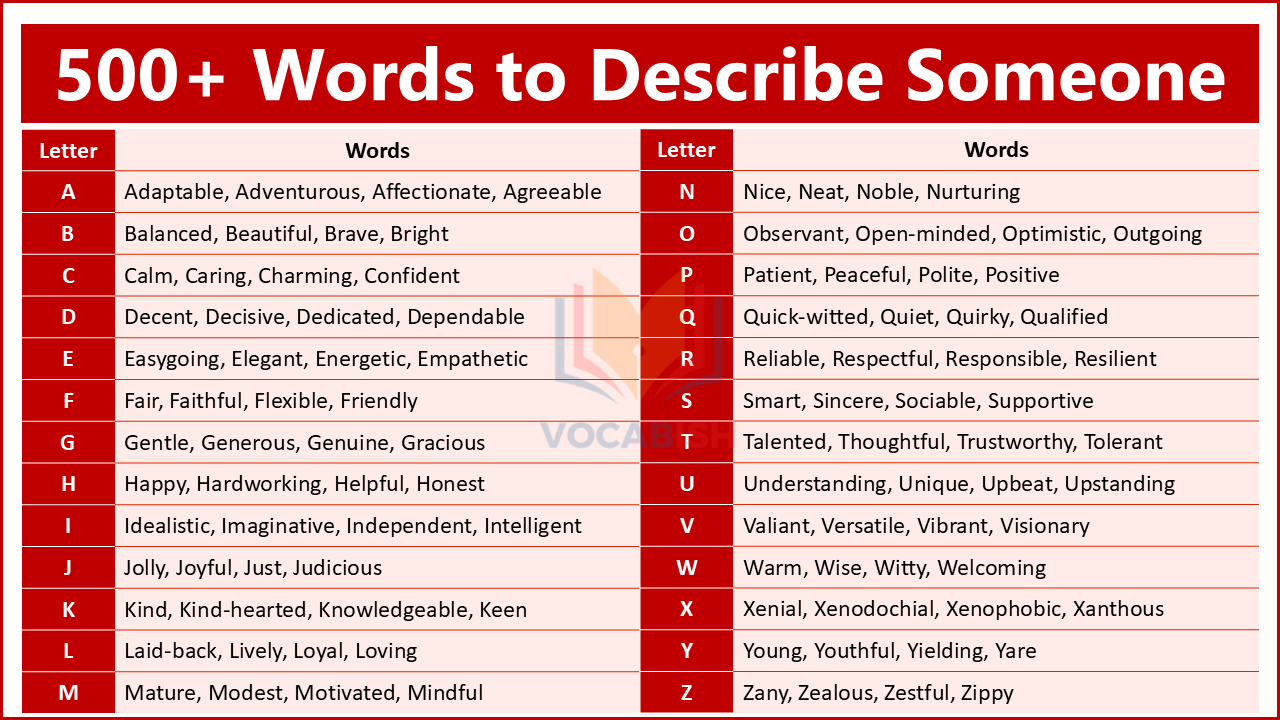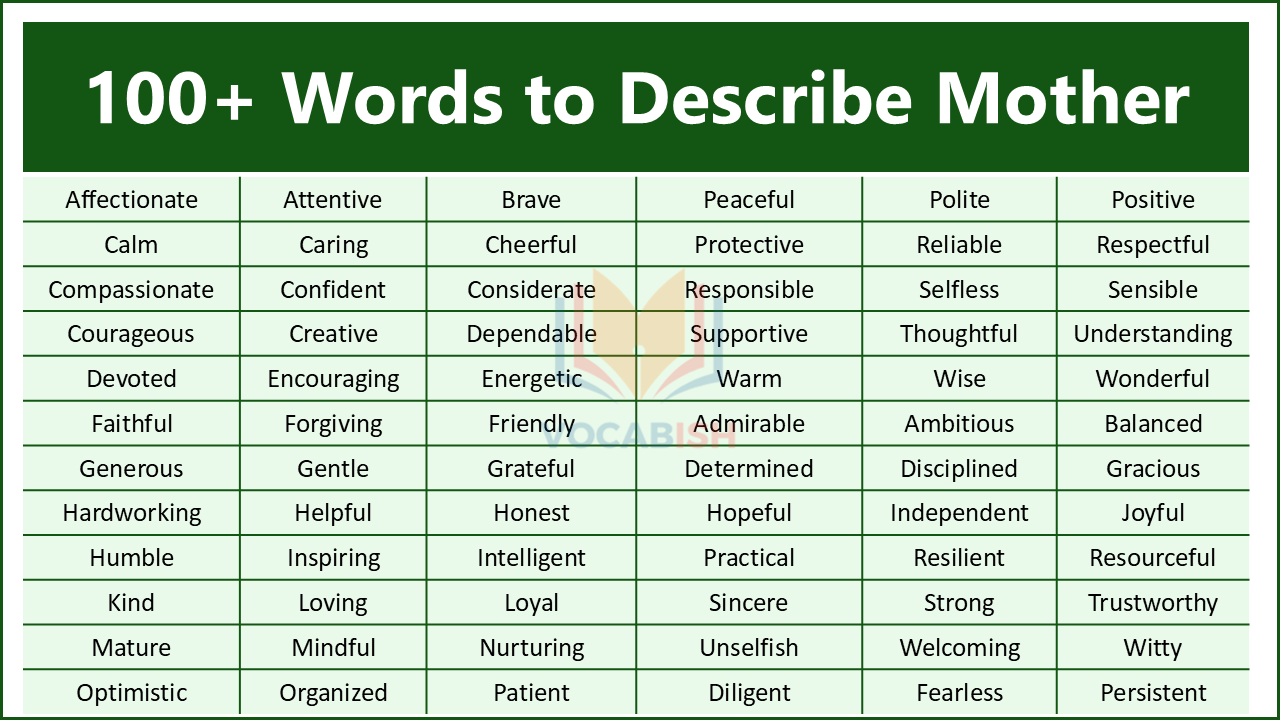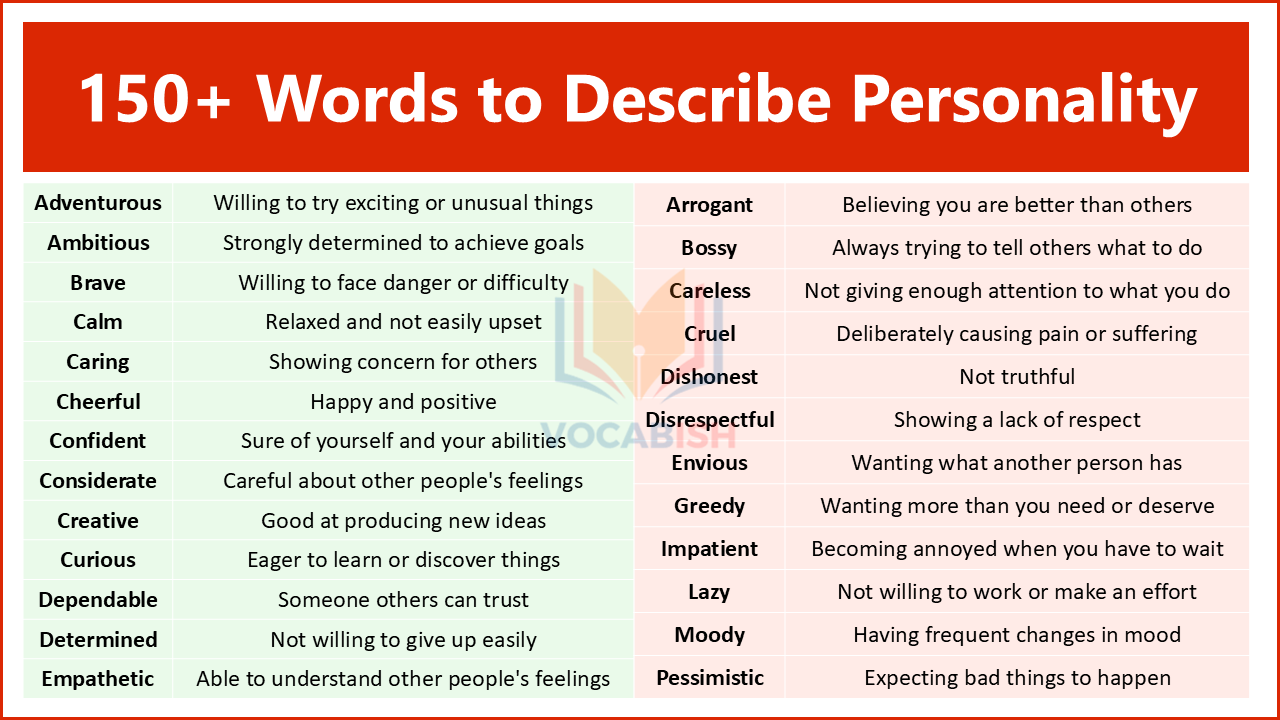
Have you ever wanted to describe someone clearly without using the same words like excellent, energetic, or easygoing again and again? Describing Words that Start with E for a Person give English learners a useful collection of adjectives for personality, behavior, appearance, emotions, intelligence, social skills, and character.
Whether you need E describing words for a person or positive and negative adjectives for speaking and writing, the right word depends on the situation. For example, empathetic describes someone who understands other people’s feelings, while egotistical describes someone who thinks too highly of themselves.
This list focuses on natural English that learners can actually use in conversations, school writing, interviews, descriptions, and everyday communication.
What Are Describing Words for a Person?
Describing words are usually adjectives that tell us about someone’s personality, behavior, appearance, abilities, feelings, or character. They make sentences more precise and help listeners understand the person being discussed.
For example:
- Energetic – having a lot of energy and enthusiasm.
“My little brother is so energetic that he never seems to get tired.” - Elegant – attractive, graceful, and stylish in appearance or manner.
“She looked elegant at the wedding.” - Empathetic – able to understand and respond to another person’s feelings.
“Our teacher is very empathetic when students are having a difficult day.”
The meaning of an adjective can also change depending on context. A word such as eccentric may describe someone positively as interesting and unusual, or negatively as strange.
Positive Describing Words That Start with E for a Person
These are useful when you want to praise someone’s personality, behavior, skills, attitude, or character. They work well in conversations, essays, recommendation letters, interviews, and compliments.
E Describing Words for a Person: Positive Personality Traits
- Earnest – sincere, serious, and genuinely committed to what someone says or does.
“He was earnest when he promised to help us finish the project.” - Easygoing – relaxed, calm, and not easily upset by problems or changes.
“Sara is very easygoing, so she never complains when our plans change.” - Empathetic – understanding and sensitive to other people’s emotions and experiences.
“She is empathetic and always listens when her friends need support.” - Encouraging – giving people confidence, hope, or motivation.
“Our coach is encouraging and always reminds us that we can improve.” - Enthusiastic – showing strong excitement, interest, and eagerness.
“Ali is enthusiastic about learning English and practices every evening.” - Energetic – active, lively, and full of physical or mental energy.
“The new employee is energetic and brings a lot of energy to the team.” - Enterprising – showing initiative and willingness to start or develop new projects.
“She is enterprising and started a small online business while studying.” - Entrepreneurial – having the confidence and qualities needed to create and manage business opportunities.
“His entrepreneurial mindset helped him turn his idea into a successful company.” - Excellent – extremely good or of very high quality.
“Mina is an excellent student who always completes her work carefully.” - Exceptional – unusually good and considerably better than average.
“He is an exceptional athlete with impressive discipline.” - Exemplary – worthy of being copied because it is an excellent example of good behavior or performance.
“Her exemplary work ethic makes her a respected member of the team.” - Expert – highly skilled or knowledgeable in a particular area.
“Dr. Khan is an expert in computer security.” - Experienced – having gained knowledge or skill through doing something for a long time.
“We hired an experienced designer for the project.” - Efficient – able to work well without wasting time, effort, or resources.
“James is efficient and usually finishes his assignments before the deadline.” - Effective – successful in producing the intended result.
“She is an effective leader because she knows how to organize the team.” - Eloquent – able to express ideas clearly, confidently, and persuasively.
“He gave an eloquent speech at the school event.” - Educated – having received a good level of formal education or knowledge.
“She is highly educated and enjoys discussing history and literature.” - Enlightened – showing broad understanding, wisdom, and a willingness to consider different ideas.
“He has an enlightened attitude toward people from different backgrounds.” - Ethical – guided by strong principles about what is right and fair.
“Our manager is ethical and refuses to treat employees unfairly.” - Even-tempered – calm and emotionally steady, especially during difficult situations.
“My father is even-tempered and rarely loses his patience.” - Expressive – able to show thoughts, feelings, or ideas clearly.
“She has an expressive face, so you always know how she feels.” - Extroverted – outgoing, sociable, and comfortable interacting with many people.
“Tom is extroverted and loves meeting new people at social events.” - Engaging – pleasant, interesting, and able to hold people’s attention.
“The speaker was engaging, so everyone stayed focused during the presentation.” - Enquiring – interested in learning more by asking thoughtful questions.
“She has an enquiring mind and often asks questions in class.” - Erudite – highly knowledgeable, especially because of extensive reading or study.
“Our professor is erudite but explains difficult ideas in an approachable way.” - Empowered – confident and capable of taking control of one’s choices and actions.
“After the training, she felt empowered to apply for leadership positions.” - Esteemed – greatly respected and admired.
“Professor Ahmed is an esteemed member of the university.” - Endearing – causing affection or liking because of an appealing quality.
“The child’s endearing smile made everyone laugh.” - Elegant – graceful, refined, and tasteful.
“She has an elegant style that always looks polished.” - Enchanting – extremely charming or delightful.
“The little girl has an enchanting personality.” - Effusive – expressing feelings of praise, gratitude, or affection openly and enthusiastically.
“He was effusive in his thanks after receiving the award.” - Exuberant – full of energy, excitement, and happiness.
“The exuberant child ran around the garden laughing.” - Elated – extremely happy and excited.
“She was elated when she learned that she had passed the exam.” - Empirical – relying on observation, evidence, or practical experience rather than only theory.
“He has an empirical approach and prefers to test an idea before accepting it.” - Exacting – having very high standards and paying close attention to details.
“Our editor is exacting, but her careful work improves every article.” - Earned – deserved because of a person’s actions, effort, or achievements.
“Her reputation as a reliable manager is well earned.” - Enduring – lasting for a long time.
“Their enduring friendship has continued since childhood.” - Esteemable – deserving respect or admiration.
“His honesty and dedication make him an esteemable colleague.”
Positive E Words for Intelligence and Ability
- Educable – capable of learning through teaching or training.
“The child is highly educable and quickly understands new concepts.” - Erudite – deeply learned and well informed.
“She is an erudite speaker with a strong background in philosophy.” - Expert – highly skilled or knowledgeable in a specific subject.
“You should ask Daniel because he is an expert in this software.” - Experienced – skilled because of previous work or practice.
“We need an experienced technician to solve this problem.” - Exceptional – remarkably talented, capable, or successful.
“The young pianist showed exceptional talent.” - Eloquent – skilled at expressing ideas effectively in speech or writing.
“She is eloquent and can explain complicated ideas clearly.” - Enquiring – naturally curious and eager to discover information.
“His enquiring nature helps him learn quickly.” - Enterprising – resourceful and willing to take initiative.
“She is enterprising and always finds creative ways to solve problems.”
Negative Describing Words That Start with E for a Person
Not every E word is flattering. These adjectives can describe difficult behavior, unpleasant personality traits, poor habits, or unhealthy attitudes. Use them carefully because some are quite strong.
Common Negative E Words:
- Egotistical – thinking you are more important, talented, or intelligent than other people.
“He is so egotistical that he rarely asks anyone else for an opinion.” - Egotistic – overly focused on yourself and your own importance.
“Her egotistic attitude makes teamwork difficult.” - Egoistic – excessively concerned with your own interests.
“His egoistic behavior often causes arguments with his friends.” - Envious – unhappy because another person has something you want.
“She felt envious when her colleague received the promotion.” - Envious-hearted – strongly affected by jealousy or resentment toward another person’s success.
“His envious attitude made it difficult for him to celebrate his friend’s achievement.” - Excessive – greater than what is reasonable or necessary.
“His excessive confidence sometimes makes him underestimate problems.” - Exploitative – unfairly using another person for personal benefit.
“The manager was criticized for his exploitative treatment of temporary workers.” - Erratic – unpredictable and inconsistent in behavior or performance.
“His erratic behavior makes it hard to know how he will react.” - Evasive – avoiding a direct answer or refusing to deal openly with a question or problem.
“The politician was evasive when reporters asked about the decision.” - Exasperating – extremely annoying or frustrating to deal with.
“His constant interruptions can be exasperating during meetings.” - Egotistical – excessively proud of yourself and your abilities.
“I like confidence, but I find his egotistical behavior difficult.” - Enervated – lacking energy or feeling drained and weak.
“After working all night, he looked completely enervated.” - Embarrassing – causing someone to feel awkward, ashamed, or self-conscious.
“His embarrassing comments made the whole group uncomfortable.” - Enraged – extremely angry.
“The customer became enraged when the company refused to refund the money.” - Embittered – angry and resentful because of painful or unfair experiences.
“Years of workplace conflict left him embittered.” - Enigmatic – difficult to understand or mysterious in a way that may create uncertainty.
“His enigmatic personality makes it difficult to know what he is thinking.” - Elusive – difficult to understand, identify, reach, or get close to.
“She remained elusive and gave very little information about herself.” - Emotionless – showing little or no emotion.
“He sounded emotionless when he announced the decision.” - Exploited – treated unfairly for someone else’s advantage.
“The workers felt exploited after receiving very little pay for long hours.” - Entitled – believing you deserve special treatment without necessarily earning it.
“His entitled attitude annoyed everyone in the office.” - Extravagant – spending or behaving in a way that is excessively expensive, elaborate, or showy.
“Her extravagant lifestyle attracted a lot of attention.” - Extravagantly (adverb, not an adjective) – in an excessively expensive or elaborate way.
“He dresses extravagantly for every event.” - Extremely stubborn – unwilling to change your opinion or behavior even when there are good reasons to do so.
“He is extremely stubborn and refuses to consider another solution.” - Exhausting – causing a person to become very tired.
“Working with an exhausting schedule left her drained by Friday.” - Expedient – choosing what is convenient or useful rather than what is morally right; often negative depending on context.
“His expedient decision solved the immediate problem but created a bigger one later.” - Excessively critical – judging people or things too harshly or too often.
“She can be excessively critical of her coworkers.” - Explosive – likely to become angry suddenly and intensely.
“His explosive temper makes tense conversations difficult.”
Neutral and Context-Dependent E Words
Some describing words beginning with E are not automatically positive or negative. Their meaning depends heavily on context, tone, and the person’s behavior.
- Eccentric – unusual or unconventional in behavior, appearance, or ideas.
“Our eccentric neighbor wears bright clothes and collects unusual antiques.” - Emotional – strongly affected by feelings or showing feelings openly.
“He became emotional when he talked about his childhood.” - Enigmatic – mysterious or difficult to understand.
“She has an enigmatic smile that makes people curious about her.” - Extroverted – naturally outgoing and comfortable around people.
“My sister is extroverted, while I prefer quieter environments.” - Entertaining – amusing or enjoyable to spend time with.
“Nadia is entertaining and always has a funny story to tell.” - Experimental – willing to try new methods, ideas, or approaches.
“He has an experimental approach to cooking and likes creating new recipes.” - Exuberant – extremely energetic and enthusiastic.
“The exuberant crowd welcomed the players after the match.” - Exacting – expecting a very high level of quality or precision.
“She is an exacting teacher who notices even small mistakes.” - Elusive – difficult to understand or approach.
“He is friendly but somewhat elusive and rarely talks about his private life.” - Engaging – attractive or interesting enough to hold attention.
“The new teacher has an engaging personality.”
Unique Words That Start with E for Describing a Person
These less common adjectives can make your vocabulary more precise. Some are more suitable for advanced writing than casual conversation.
- Ebullient – extremely cheerful, lively, and enthusiastic.
“Her ebullient personality makes every team meeting more energetic.” - Effervescent – lively, bubbly, and full of positive energy.
“His effervescent personality made him popular at social gatherings.” - Enigmatic – mysterious and not easy to understand.
“The artist is an enigmatic figure who rarely gives interviews.” - Enthralling – extremely fascinating or captivating.
“Her enthralling storytelling kept everyone quiet during dinner.” - Erudite – highly educated and knowledgeable.
“The erudite professor could discuss literature, history, and philosophy with ease.” - Esoteric – understood or appreciated by only a small, specialized group.
“He has esoteric knowledge of ancient languages.” - Euphoric – experiencing an intense feeling of happiness or excitement.
“The players were euphoric after winning the final.” - Exuberant – exceptionally energetic and enthusiastic.
“The exuberant child greeted every guest with a huge smile.” - Exemplary – serving as an excellent model of behavior or performance.
“Her exemplary conduct earned her the school’s leadership award.” - Expansive – broad-minded, open, or willing to discuss many ideas; context determines the exact sense.
“He has an expansive mind and enjoys hearing different opinions.” - Equable – calm, balanced, and not easily disturbed.
“Her equable temperament helps her stay calm in difficult situations.” - Equanimous – remaining calm and composed, especially under pressure.
“The captain remained equanimous even after the team fell behind.” - Exultant – extremely joyful because of a victory or major success.
“The exultant students celebrated after hearing the final results.” - Euphonious – pleasant-sounding, usually referring to a voice or speech.
“She has a euphonious voice that is relaxing to listen to.” - Evocative – bringing strong memories, images, or emotions to mind.
“His evocative storytelling reminded everyone of their childhood.” - Enigmatical – mysterious or difficult to understand; a less common form of enigmatic.
“The writer created an enigmatical character whose motives were never fully explained.”
E Words for Different Parts of a Person’s Character
Choosing the right adjective becomes easier when you decide what exactly you want to describe.
To Describe Personality
- Easygoing – relaxed and calm.
“Omar is easygoing and gets along with everyone.” - Enthusiastic – excited and eager.
“She is enthusiastic about her new course.” - Empathetic – understanding other people’s feelings.
“He is empathetic when his friends are struggling.” - Extroverted – outgoing and sociable.
“My cousin is extroverted and enjoys large parties.” - Even-tempered – calm and emotionally steady.
“She is even-tempered and rarely gets angry.” - Eccentric – unusually different from what is considered normal.
“The professor is eccentric but very entertaining.”
To Describe Intelligence
- Educated – having a good level of education.
“She is educated and well informed about current affairs.” - Erudite – deeply knowledgeable.
“The erudite writer often refers to classical literature.” - Expert – highly skilled in a subject.
“He’s an expert programmer.” - Enquiring – curious and eager to learn.
“Her enquiring mind leads her to ask useful questions.” - Eloquent – able to communicate ideas very effectively.
“He is eloquent when explaining difficult topics.”
Describe Work Habits
- Efficient – productive without wasting time.
“Nora is efficient and completes her tasks ahead of schedule.” - Enterprising – willing to take initiative.
“He is enterprising and always looks for new opportunities.” - Experienced – skilled through previous practice or work.
“We chose an experienced engineer for the project.” - Exacting – demanding high standards.
“She is exacting and checks every document carefully.” - Effective – successful at producing results.
“He is an effective manager who keeps the team organized.”
To Describe Social Skills
- Engaging – naturally interesting and pleasant to interact with.
“She’s an engaging speaker who makes everyone feel involved.” - Entertaining – funny, enjoyable, or interesting.
“He’s entertaining and never runs out of stories.” - Extroverted – comfortable in social situations.
“Maria is extroverted and quickly makes new friends.” - Encouraging – supportive and motivating toward others.
“Our team leader is encouraging when someone makes a mistake.” - Empathetic – sensitive to other people’s emotions.
“A good counselor should be empathetic.”
To Describe Appearance or Style
- Elegant – graceful and stylish.
“She looked elegant in her black dress.” - Eye-catching – attractive enough to immediately get attention.
“He has an eye-catching haircut.” - Expressive – showing feelings clearly, especially through the face or eyes.
“The actor has very expressive eyes.” - Exquisite – extremely beautiful or refined; usually used for appearance, clothing, or artistic qualities rather than a person’s whole character.
“She wore an exquisite embroidered dress.”
E Describing Words for a Person in Everyday Conversation
Knowing a definition is useful, but knowing how a word sounds in ordinary speech is even more important for learners.
Here are natural conversation examples:
Easygoing
“Is your new roommate difficult?”
“No, she’s very easygoing. We get along really well.”
Energetic
“Why does your son wake up so early?”
“He’s incredibly energetic in the morning.”
Enthusiastic
“Did Ahmed enjoy the course?”
“Yes. He was really enthusiastic about every lesson.”
Empathetic
“Why do people trust her so much?”
“She is empathetic and always listens without judging.”
Eccentric
“Who’s that man wearing the bright purple hat?”
“That’s our eccentric neighbor. He’s actually very friendly.”
Eloquent
“How was the guest speaker?”
“Excellent. She was very eloquent and explained everything clearly.”
Efficient
“Has Maya finished the report?”
“Already. She’s incredibly efficient.”
Envious
“Why doesn’t Sam look happy about his friend’s promotion?”
“I think he’s a little envious.”
Egotistical
“Would you enjoy working with him?”
“Not really. He’s too egotistical and always talks about himself.”
Even-tempered
“Does your manager get angry under pressure?”
“Not often. She’s very even-tempered.”
E Words for Job Interviews and Professional English
Some E adjectives are especially useful when describing yourself professionally. Choose words that can be supported by actual examples rather than simply listing impressive adjectives.
Strong Professional Choices:
- Efficient – able to complete work productively and on time.
“I am efficient and organize my workload according to deadlines.” - Effective – successful at achieving results.
“I am an effective communicator who keeps clients informed.” - Enthusiastic – genuinely excited about work and learning.
“I am enthusiastic about developing new skills.” - Experienced – already skilled through previous work or practice.
“I am experienced in customer service and team coordination.” - Enterprising – willing to take initiative and find opportunities.
“I consider myself enterprising because I often look for better ways to solve problems.” - Empathetic – understanding people’s needs and feelings.
“I am empathetic, which helps me communicate well with customers.” - Ethical – guided by honesty and fairness.
“I take an ethical approach to professional decisions.” - Eloquent – able to communicate ideas clearly and confidently.
“I am comfortable giving presentations and expressing ideas clearly.” - Exacting – careful and demanding about quality.
“I am exacting when checking reports because accuracy matters.” - Even-tempered – calm when handling pressure or disagreement.
“I am even-tempered and try to remain calm during difficult conversations.”
A Natural Interview Answer
Instead of saying:
“I am efficient, excellent, enthusiastic, energetic, ethical, and experienced.”
A more convincing answer is:
“I would describe myself as efficient, empathetic, and enterprising. I manage deadlines carefully, understand customers’ concerns, and like finding practical ways to improve my work.”
This sounds more natural because each adjective connects to a behavior.
E Words for School and Creative Writing
Students often need adjectives for essays, stories, character descriptions, book reviews, and classroom assignments.
Character Description Examples:
- Eager – very willing and excited to do something.
“The eager student raised his hand before the teacher finished asking the question.” - Earnest – sincere and serious.
“The earnest young man wanted to prove that he could be trusted.” - Energetic – active and lively.
“The energetic child raced across the playground.” - Enigmatic – mysterious and difficult to understand.
“The enigmatic stranger never explained where he came from.” - Empathetic – understanding another person’s feelings.
“The empathetic nurse noticed that the patient was frightened.” - Elegant – graceful and refined.
“The elegant woman walked quietly into the room.” - Eccentric – unusually different.
“The eccentric inventor filled his house with strange machines.” - Exuberant – very lively and joyful.
“The exuberant children celebrated in the street.” - Evasive – avoiding direct answers.
“The evasive witness refused to explain what had happened.” - Explosive – likely to become suddenly and intensely angry.
“The character’s explosive temper caused problems for everyone around him.”
Words That Start with E to Describe Someone by Meaning
Sometimes you know the quality you want to express but cannot remember the exact word. Use these groups to find a suitable adjective.
Someone who is very excited
- Eager – very willing and interested.
- Enthusiastic – openly excited and interested.
- Ebullient – extremely cheerful and lively.
- Exuberant – overflowing with energy and excitement.
- Elated – extremely happy.
Someone who understands others
- Empathetic – understands other people’s emotions.
- Encouraging – gives confidence and support.
- Emotionally intelligent – understands and manages emotions effectively.
Someone who works well
- Efficient – works productively.
- Effective – gets good results.
- Experienced – has relevant knowledge from practice.
- Enterprising – takes initiative.
- Exacting – pays close attention to standards and quality.
Someone who is confident socially
- Extroverted – outgoing and sociable.
- Engaging – interesting and pleasant to interact with.
- Eloquent – communicates confidently and effectively.
- Entertaining – enjoyable to be around.
Someone who behaves badly
- Egotistical – overly focused on personal importance.
- Envious – jealous of another person’s advantages.
- Entitled – expects special treatment.
- Evasive – avoids direct answers.
- Erratic – behaves unpredictably.
- Exploitative – takes unfair advantage of others.
- Explosive – becomes angry suddenly.
- Embittered – resentful because of negative experiences.
Useful E Words for Specific Situations
The best adjective depends on what you are describing.
Describing a friend
Good choices include:
- Easygoing – relaxed.
- Empathetic – understanding.
- Energetic – lively.
- Entertaining – fun to be around.
- Encouraging – supportive.
- Enthusiastic – excited about things.
Example:
“My best friend is easygoing, empathetic, and always encouraging when I have a problem.”
Describing a teacher
Useful choices include:
- Effective – teaches successfully.
- Encouraging – motivates students.
- Eloquent – explains ideas clearly.
- Enquiring – curious and open to questions.
- Experienced – has strong teaching experience.
- Exacting – expects high standards.
Example:
“Our teacher is experienced and encouraging, but also exacting when it comes to written work.”
Describing a leader
Useful choices include:
- Ethical – fair and principled.
- Effective – achieves results.
- Enterprising – takes initiative.
- Empathetic – understands team members.
- Eloquent – communicates clearly.
- Even-tempered – stays calm under pressure.
Example:
“She is an ethical and effective leader who listens to everyone before making a decision.”
Describing a child
Useful choices include:
- Energetic – full of energy.
- Eager – excited to learn or participate.
- Enthusiastic – very interested.
- Expressive – openly shows feelings.
- Endearing – naturally lovable.
- Exuberant – very lively.
Example:
“The little boy is energetic, eager to learn, and extremely expressive.”
E Adjectives: Easy, Intermediate, and Advanced Vocabulary
English learners do not need to use the most difficult word available. The best adjective is the one that accurately expresses your meaning.
More common E words
- Eager
- Easygoing
- Energetic
- Enthusiastic
- Empathetic
- Emotional
- Elegant
- Experienced
- Efficient
- Excellent
- Effective
- Envious
- Egotistical
- Extroverted
More advanced E words
- Ebullient
- Effervescent
- Erudite
- Equanimous
- Equable
- Esoteric
- Exultant
- Euphoric
- Enigmatic
- Eloquent
- Exemplary
- Enterprising
For everyday conversation, words such as eager, easygoing, energetic, empathetic, enthusiastic, efficient, and experienced are generally more useful than very rare adjectives.
Common Confusions and Mistakes
- Eager vs. Enthusiastic – Eager usually emphasizes strong willingness or desire; enthusiastic emphasizes excitement and interest.
- Empathetic vs. Sympathetic – Empathetic means understanding another person’s feelings; sympathetic means showing concern or support.
- Egotistical vs. Egocentric – both involve excessive self-focus, but egotistical often stresses excessive pride and self-importance.
- Envious vs. Jealous – envious commonly means wanting what another person has; jealous can also involve fear of losing someone’s attention or affection.
- Eccentric is not always negative – an eccentric person is unusual or unconventional, but the word can be neutral, amusing, or even complimentary depending on context.
Quick Practice: Choose the Right E Word
Choose the best adjective for each sentence.
- Nadia always understands how her friends feel and knows how to comfort them. She is ________.
- Omar stays calm even when customers are angry. He is ________.
- Sara finishes her work quickly without wasting time. She is ________.
- My cousin loves meeting new people and starting conversations. He is ________.
- The manager expects very high standards from everyone. She is ________.
- David is extremely proud of himself and talks about his achievements constantly. He is ________.
- The child was very excited to join the school competition. He was ________.
- Professor Ahmed knows a great deal about literature and history. He is ________.
- The woman avoids answering direct questions. She is ________.
- The young entrepreneur is always ready to start new projects. She is ________.
Answers:
- Empathetic – she understands other people’s feelings.
- Even-tempered – he remains calm under pressure.
- Efficient – she works productively without wasting time.
- Extroverted – he is comfortable meeting and talking to people.
- Exacting – she expects a high level of quality.
- Egotistical – he is excessively focused on his own importance.
- Eager – he is very willing and excited to participate.
- Erudite – he is highly knowledgeable and well educated.
- Evasive – she avoids giving a direct answer.
- Enterprising – she takes initiative and seeks new opportunities.
How to Use E Describing Words Naturally
A common mistake among English learners is trying to put too many adjectives into one sentence. Native-like English usually sounds better when one or two precise words do the work.
Instead of:
“She is excellent, exceptional, energetic, enthusiastic, elegant, expressive, and eloquent.”
Try:
“She is an energetic and eloquent speaker.”
Or:
“She is enthusiastic, but she can also be very exacting about details.”
Another useful technique is to match the adjective with a specific noun:
- an energetic child
- an empathetic friend
- an experienced teacher
- an effective leader
- an elegant woman
- an eccentric artist
- an eloquent speaker
- an enterprising student
- an ethical manager
- an even-tempered person
You can also use these adjectives after linking verbs:
- “She is empathetic.”
- “He seems eager.”
- “They look exhausted.”
- “She became emotional.”
- “He remained even-tempered.”
A Quick Guide to Choosing the Right E Word
- When you want to describe someone’s energy, use words such as energetic, exuberant, ebullient, or effervescent.
- When you want to describe someone’s attitude toward others, consider empathetic, encouraging, easygoing, or ethical.
- When you want to describe someone’s intelligence, use educated, erudite, expert, or enquiring.
- When you want to describe someone’s work style, use efficient, effective, experienced, enterprising, or exacting.
- When you want to describe someone’s social personality, use extroverted, engaging, eloquent, or entertaining.
- When you want to describe difficult behavior, consider egotistical, envious, entitled, evasive, erratic, exploitative, or explosive.
More Useful E Words for Describing a Person
- Eager – very willing or excited to do something.
“The eager student volunteered first.” - Earnest – serious and sincere.
“He made an earnest attempt to improve.” - Easygoing – relaxed and tolerant.
“She’s easygoing and rarely complains.” - Eclectic – choosing ideas, styles, or interests from many different sources.
“He has an eclectic personality and enjoys many different hobbies.” - Educated – having substantial education or knowledge.
“She is highly educated and well informed.” - Efficient – working well without unnecessary waste.
“He is efficient with his time.” - Eloquent – expressing ideas effectively and clearly.
“She is an eloquent presenter.” - Empathetic – understanding other people’s feelings.
“He is empathetic toward nervous students.” - Emotional – strongly affected by feelings.
“She became emotional while telling the story.” - Encouraging – giving confidence and hope.
“His encouraging words helped me continue.” - Energetic – full of energy.
“The energetic puppy ran around the yard.” - Engaging – interesting and pleasant.
“He has an engaging personality.” - Enigmatic – mysterious and difficult to understand.
“The enigmatic artist rarely speaks publicly.” - Enthusiastic – very interested and excited.
“She is enthusiastic about her new job.” - Entrepreneurial – showing business initiative and creativity.
“His entrepreneurial attitude helped the company grow.” - Equable – calm and steady in mood.
“Her equable nature helps during stressful situations.” - Equanimous – calm and composed under pressure.
“He remained equanimous during the argument.” - Erratic – unpredictable or inconsistent.
“His erratic behavior worried his coworkers.” - Ethical – guided by moral principles.
“She is an ethical professional.” - Exemplary – an excellent model for others.
“His exemplary behavior impressed the teachers.” - Expert – highly skilled or knowledgeable.
“She is an expert in digital marketing.” - Exuberant – extremely lively and joyful.
“His exuberant personality lights up the room.” - Euphoric – intensely happy and excited.
“The team felt euphoric after the victory.” - Evasive – avoiding a direct answer.
“His evasive reply made people suspicious.” - Explosive – likely to become suddenly angry.
“He has an explosive temper.” - Exacting – demanding very high standards.
“She is exacting but fair.”
FAQs About E Describing Words
Positive E words include empathetic, energetic, enthusiastic, easygoing, encouraging, efficient, effective, elegant, eloquent, experienced, and ethical.
Negative E adjectives include egotistical, envious, entitled, evasive, erratic, exploitative, explosive, embittered, and exasperating.
Empathetic is an excellent E word for a kind person because it describes someone who understands and responds sensitively to others’ feelings.
Energetic describes someone full of energy, while exuberant, ebullient, and effervescent can suggest unusually lively enthusiasm.
Extroverted describes someone who is outgoing and comfortable around people, while engaging describes someone pleasant and interesting to interact with.
Erudite describes someone with extensive knowledge, while expert describes someone highly skilled or knowledgeable in a particular subject.
Ebullient, effervescent, equanimous, and erudite are less common E adjectives that can make descriptions more precise.
Eccentric is usually context-dependent. It means unusually different, and it can sound positive, neutral, humorous, or negative depending on context.
Conclusion
Describing Words that Start with E for a Person give English learners many ways to talk about personality, behavior, ability, appearance, emotions, and character.
Common choices such as eager, easygoing, energetic, empathetic, enthusiastic, efficient, and experienced are useful in everyday conversation. More advanced words such as ebullient, effervescent, erudite, equanimous, and exemplary can add variety to formal and creative writing.
The most important point is to choose the adjective that matches your exact meaning. A strong vocabulary is not about using the biggest word; it is about using the right word naturally and accurately.
Explore More Describing Words