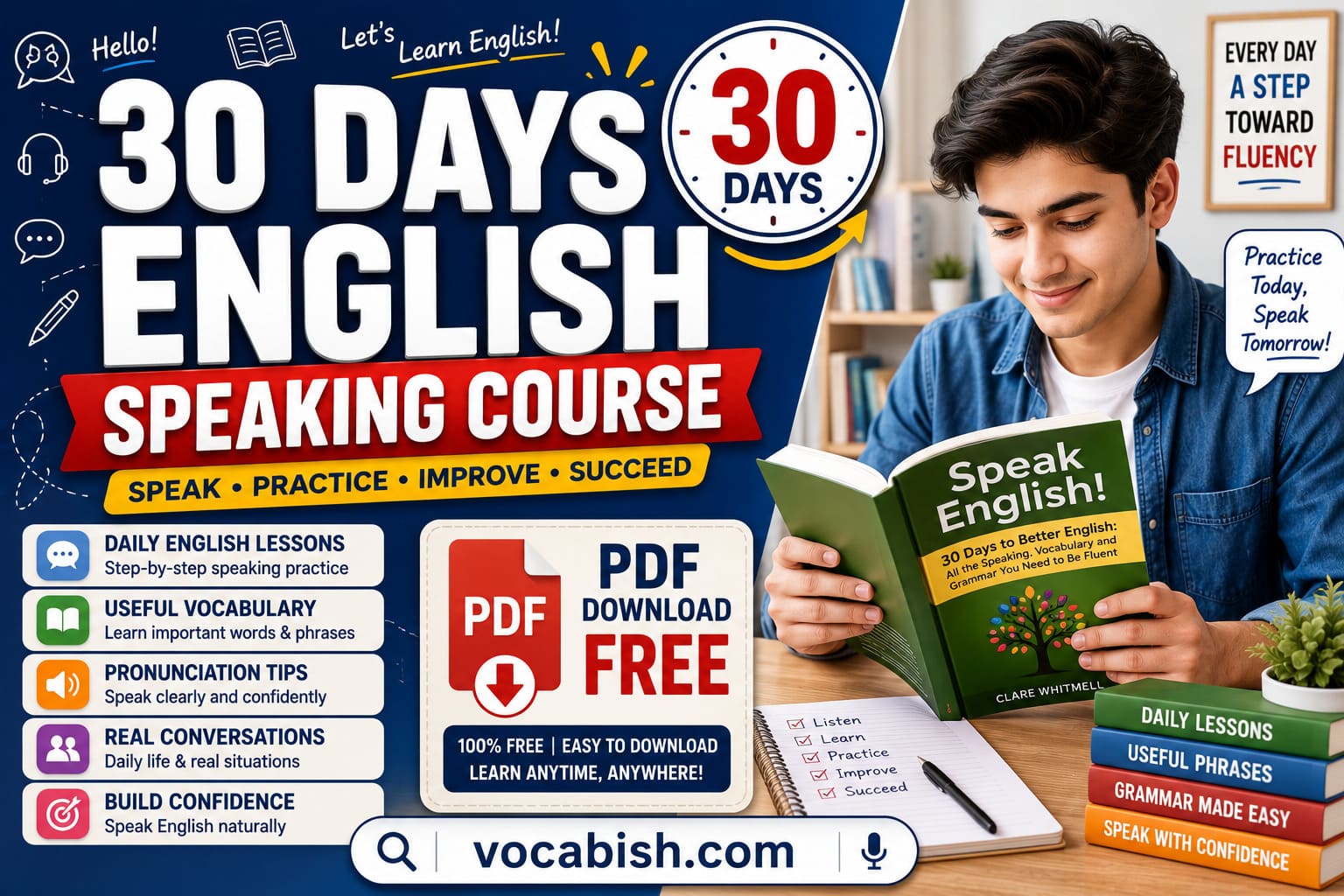

Speaking English confidently is an important skill in education, communication, and professional life. Many learners understand English grammar and vocabulary but feel nervous while speaking. “30 Days English Speaking Course” is designed to help learners improve their spoken English step by step through simple lessons, daily practice, and practical conversations. The book focuses on real-life communication and helps learners develop fluency, pronunciation, vocabulary, and confidence in speaking English naturally. By following the daily lessons regularly, students can improve their communication skills in an easy and effective way.
About the Book
“30 Days English Speaking Course” is a practical and beginner-friendly book designed to improve spoken English in a short period of time. The book follows a step-by-step learning method that helps students develop confidence in speaking English through daily lessons, conversations, grammar practice, and vocabulary building.
This book is specially created for students, beginners, and English learners who want to speak English fluently in daily life, classrooms, interviews, offices, and social situations. The lessons are organized day by day so learners can improve their speaking skills gradually and effectively.
Disclaimer: This PDF book is shared only for educational and learning purposes to help English learners improve their language skills. We do not claim ownership of this book or its content. If you are the copyright owner or have any issue regarding this PDF, please contact us for removal or necessary action.
Features of the Book
- 30-day learning plan
- Simple and easy English lessons
- Daily conversation practice
- Grammar and speaking combined together
- Useful vocabulary for communication
- Beginner-friendly explanations
- Practice exercises and activities
- Self-study and classroom suitable
Main Topics Covered in the Book
The PDF book covers many practical English topics. Some important areas include:
Topic | What Learners Practice |
|---|---|
Greetings | Saying hello and introducing yourself |
Personal information | Name, age, nationality, spelling |
Family | Talking about family members |
Descriptions | Describing people and things |
Daily routine | Talking about jobs, habits, and time |
Hobbies | Saying what you like and dislike |
Home and town | Describing where you live |
Shopping | Buying clothes and asking prices |
Food and restaurants | Ordering meals and paying |
Travel | Buying tickets and asking directions |
Phone calls | Making simple phone conversations |
Opinions | Saying what you think politely |
Essential English-Speaking Vocabulary
Here are some useful words from everyday English-speaking topics.
Word | Simple Meaning | Example Sentence |
|---|---|---|
Hello | a greeting | Hello, my name is Ali. |
Introduce | to tell someone your name | Let me introduce myself. |
Nationality | the country someone belongs to | My nationality is Pakistani. |
Family | people related to you | I live with my family. |
Colleague | a person you work with | Sara is my colleague. |
Routine | things you do every day | My morning routine starts at 7 a.m. |
Hobby | an activity you enjoy | Reading is my favorite hobby. |
Address | where someone lives | Please write your address here. |
Polite | showing good manners | It is polite to say “please.” |
Opinion | what you think | In my opinion, English is useful. |
Pronunciation Tips
- Hello: say “he-LOH,” with stress on the second part.
- Colleague: sounds like “KOL-leeg.”
- Routine: can sound like “roo-TEEN.”
- Comfortable: often sounds like “KUMF-tuh-bul.”
Useful Daily Conversation Phrases
Phrase | Use | Example |
|---|---|---|
How are you? | greeting | Hi, how are you? |
Nice to meet you. | first meeting | Nice to meet you, Ahmed. |
Where are you from? | asking country/city | Where are you from? |
Could you help me, please? | asking for help | Could you help me, please? |
I’d like… | polite request | I’d like a cup of tea, please. |
How much is this? | asking price | How much is this shirt? |
What do you do? | asking about job | What do you do? |
What about you? | returning a question | I like football. What about you? |
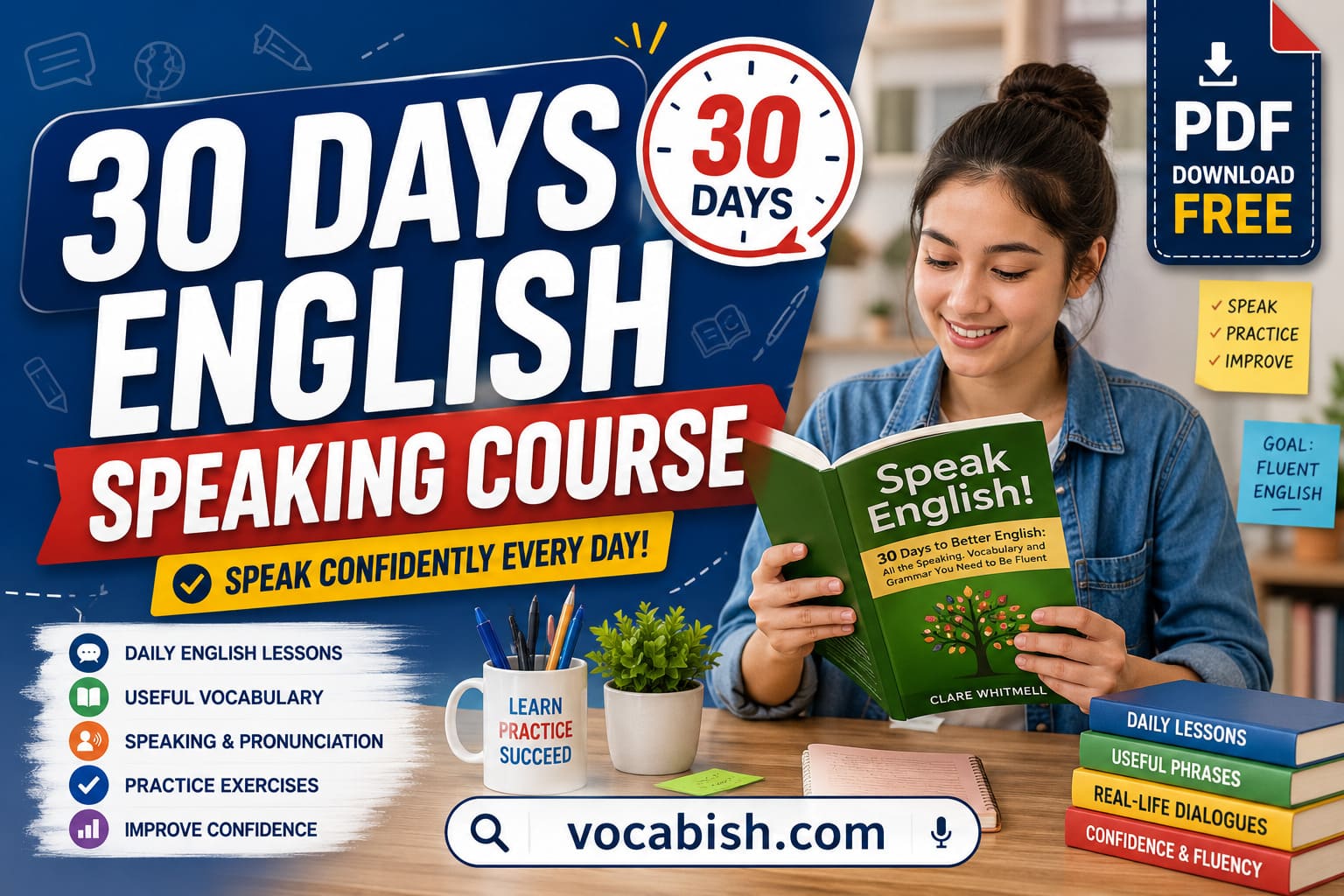
30 Days English Speaking Course Book PDF Free Download
Disclaimer: This PDF book is shared only for educational and learning purposes to help English learners improve their language skills. We do not claim ownership of this book or its content. If you are the copyright owner or have any issue regarding this PDF, please contact us for removal or necessary action.
Tips to Use This PDF Book Effectively
- Study one lesson every day.
- Read the example sentences aloud.
- Write five new sentences daily.
- Practice conversations with a friend.
- Listen to English audio and repeat.
- Review old vocabulary every week.
- Do not worry about mistakes; speaking improves with practice.
Bottom Lines…
The 30 Days English Speaking Course PDF Book is a helpful resource for learners who want to build practical English speaking skills. It teaches useful vocabulary, simple grammar, real conversation phrases, and daily English expressions in a clear step-by-step way. By studying regularly, practicing aloud, and using the words in real situations, learners can improve their confidence and communicate more naturally in English. Keep practicing every day, and your English will become stronger, clearer, and more fluent.
Get More PDF Books:
FAQs about 30 Days English Course Book
The 30 Days English Speaking Course PDF Book is a beginner-friendly English learning guide that teaches daily speaking, vocabulary, grammar, and conversation skills step by step.
Yes, the 30 Days English Speaking Course PDF Book is suitable for beginners because it uses simple English, daily conversations, easy grammar, and practical speaking exercises.
You can improve spoken English in 30 days by practicing daily conversations, learning common vocabulary, reading aloud, listening carefully, and speaking English every day.
The book covers greetings, introductions, family, hobbies, shopping, travel, food, daily routines, phone calls, grammar, and real-life English conversations.
Yes, you can learn English speaking at home with a PDF book by following daily lessons, practicing sentences, repeating dialogues, and reviewing vocabulary regularly.
The 30 Days English Speaking Course PDF is popular because it teaches practical English, improves confidence, and helps learners speak naturally in daily situations.
Yes, the book improves vocabulary by teaching useful daily words, meanings, example sentences, pronunciation tips, and practical usage for conversations.
The best way is to study one lesson daily, practice speaking aloud, revise old lessons, learn new vocabulary, and use English in real conversations regularly.

Hello, I am very interested in those books. How can I have them? Thanks
Hello! Thank you for your interest in the books. You can download and read them for free from our website. Please check the links provided in the post, and let me know if you need any help finding a book. Happy reading!