
Even in the age of instant messaging and rapid emails, knowing how to write a letter remains a highly valuable skill. Whether you are applying for a job, complaining to a business, or writing to an old friend, a well-structured letter shows respect and intention. Getting the layout right is about making your message clear and easy to read. Let us walk through the exact steps, structures, and examples you need to draft accurate and correct letters for any situation.
Steps You Should Know While Writing a Letter
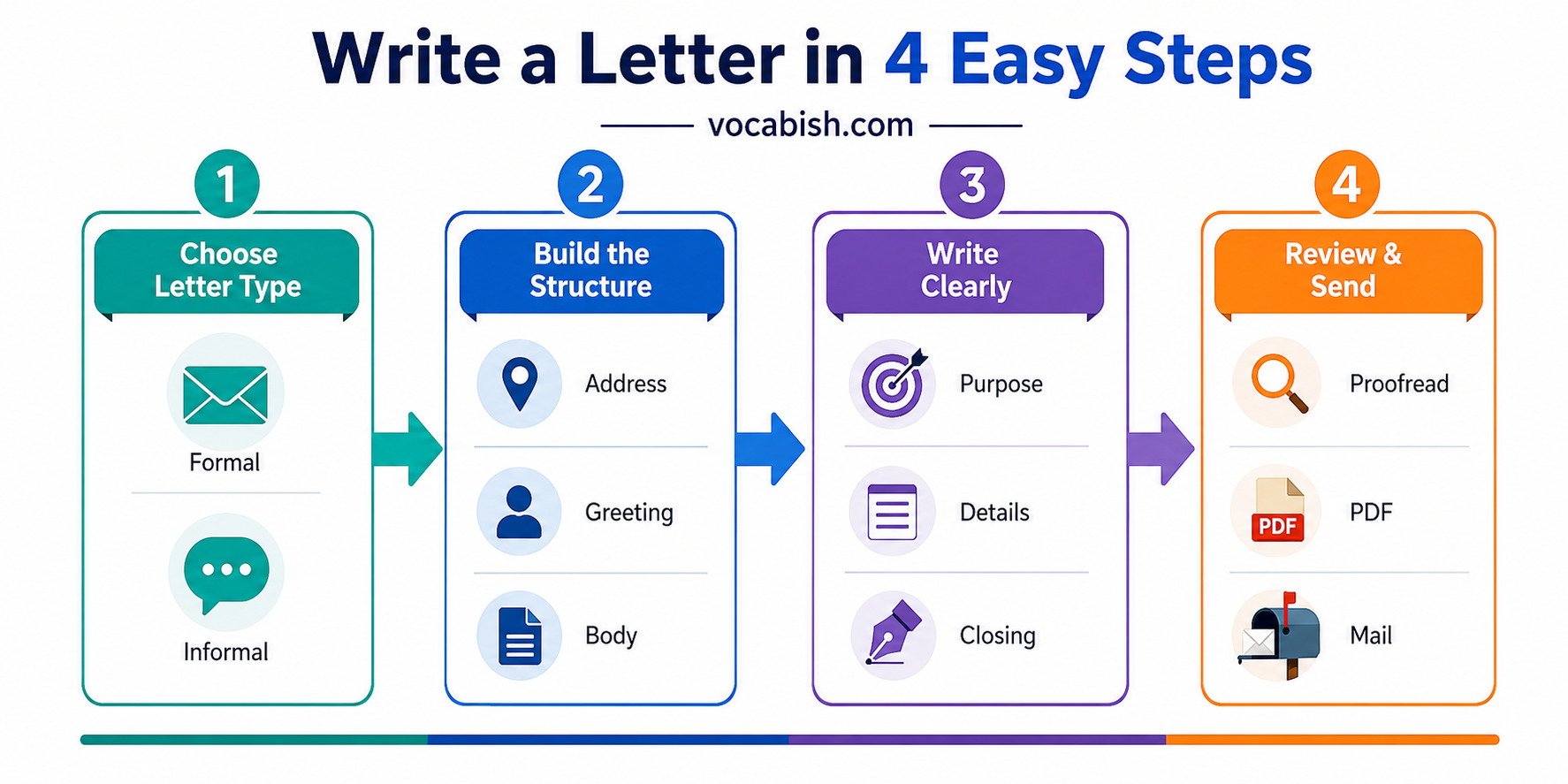
1: Type of Letter
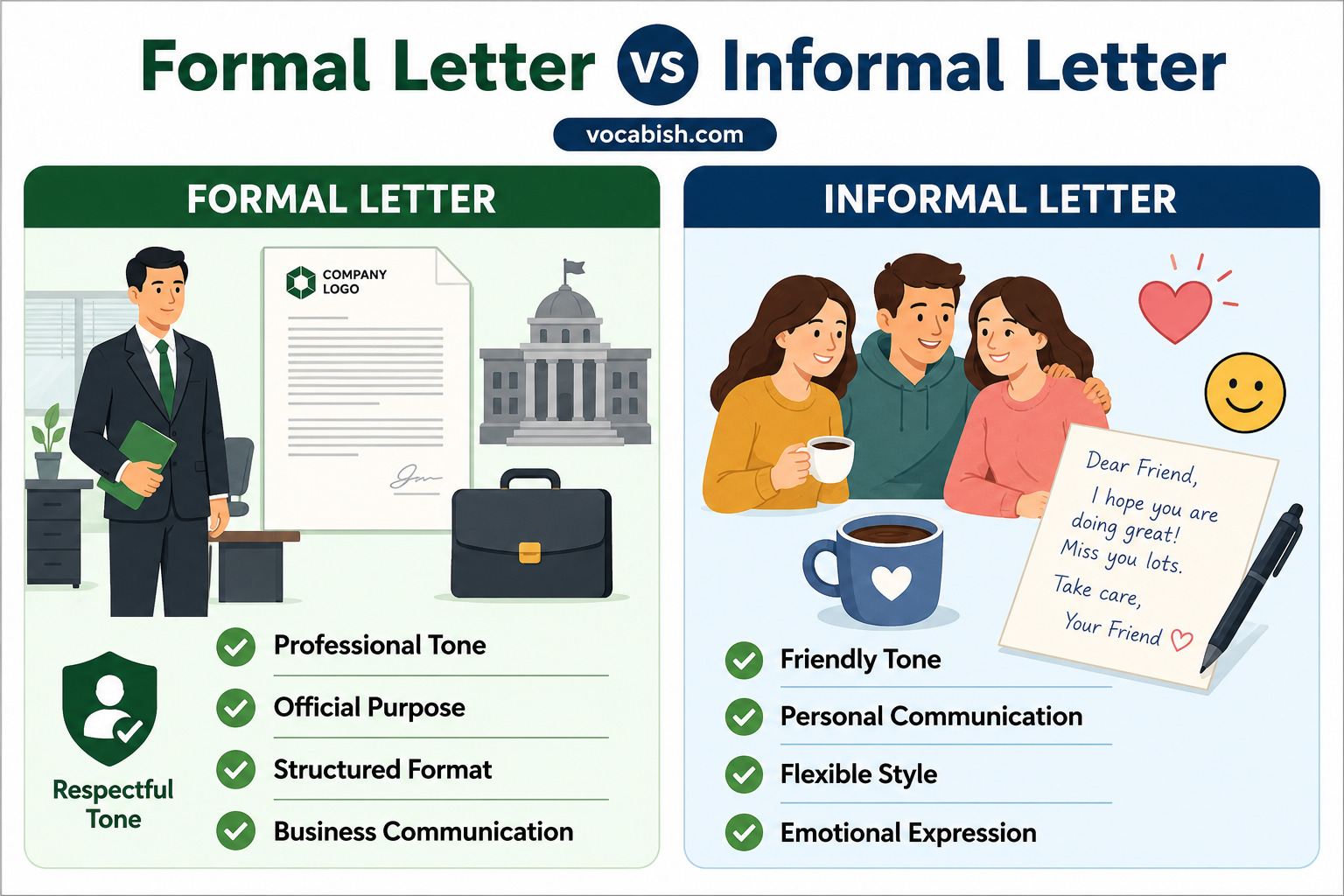
Before you write a single word, you must decide who you are writing to. This single decision changes your tone, your vocabulary, and your entire layout. We divide letters into two main categories: formal and informal.
Formal Letters
You write formal letters to people you do not know well or to people in positions of authority. This includes business owners, government officials, hiring managers, or school principals. The tone must remain objective, respectful, and highly direct.
Informal Letters
You write informal letters to friends, family members, or close acquaintances. The tone is warm, conversational, and relaxed. You can use slang, abbreviations, and emotional language that you would never use in a business setting.
2: Format and Layout
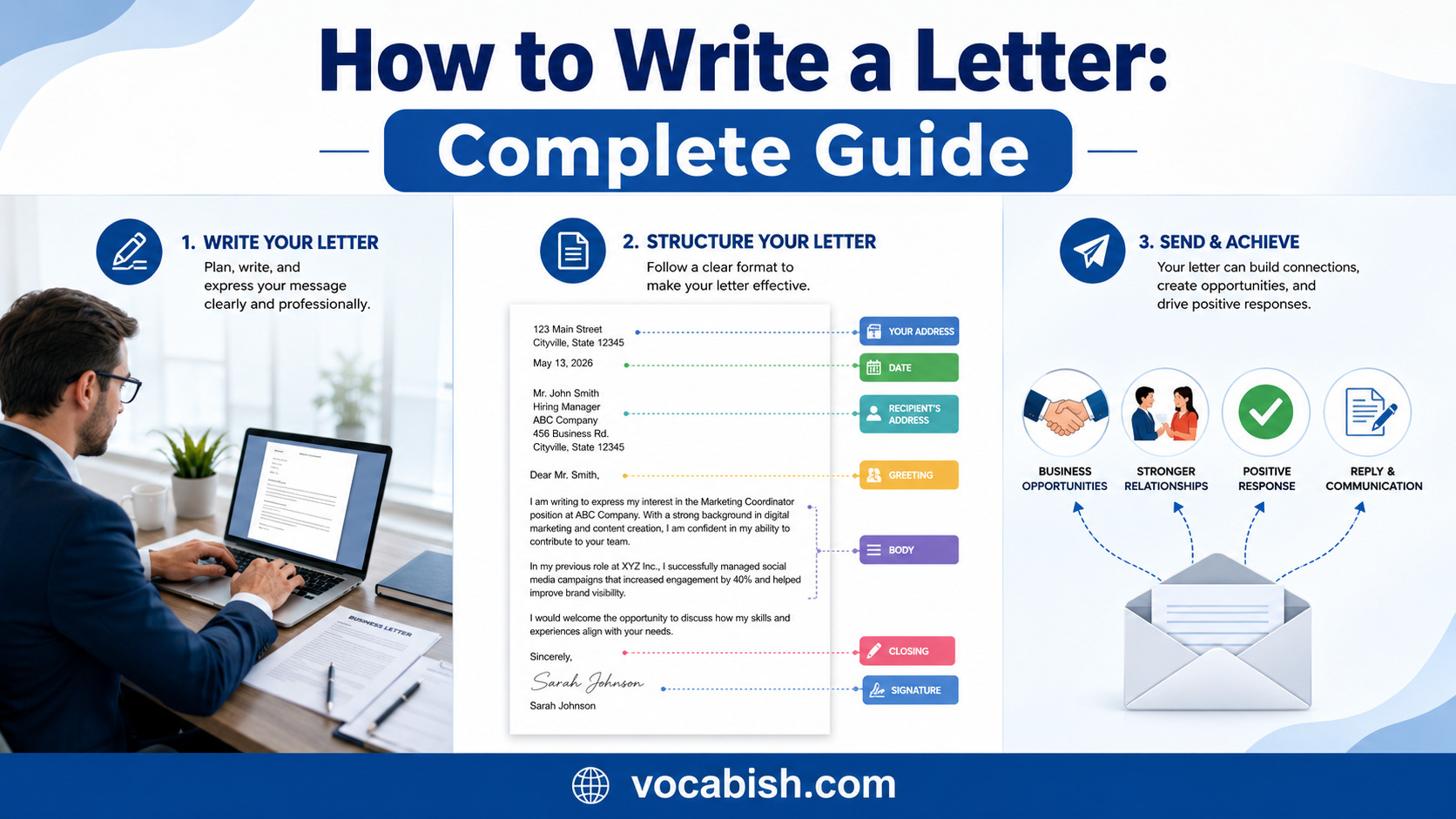
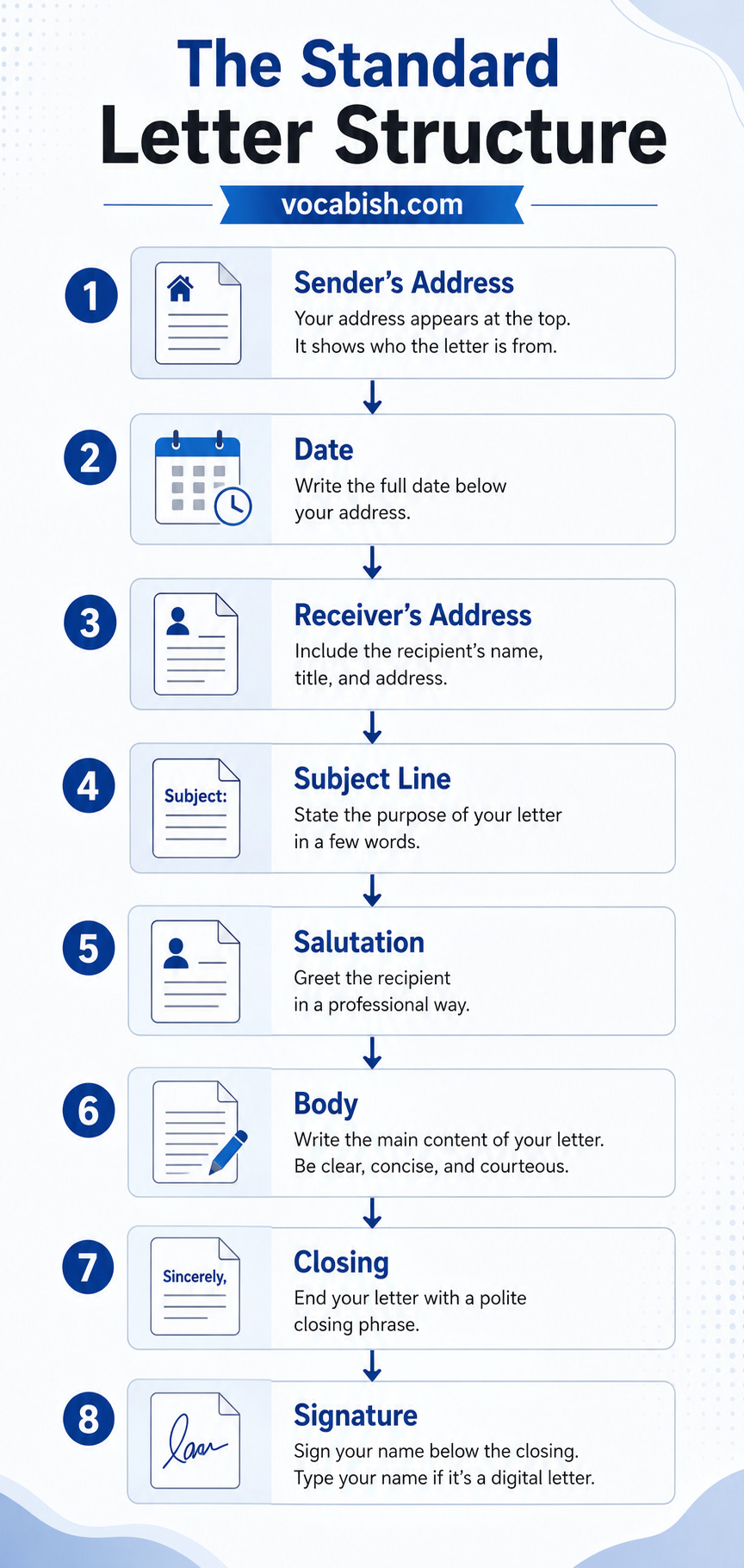
A structured layout tells the reader exactly where to look for important information. Here is the exact order of elements you should use.
The Standard Letter Structure
Element | Formal Letter | Informal Letter |
Sender’s Address | Top right or top left corner. | Top right or top left corner. |
Date | Below the sender’s address. | Below the sender’s address. |
Receiver’s Address | Below the date, on the left side. | Not required. |
Subject Line | Below the receiver’s address. | Not required. |
Salutation | Dear Mr./Ms. [Last Name] or Dear Sir/Madam. | Dear [First Name]. |
Body Paragraphs | 2 to 3 concise paragraphs. | Flexible length. |
Sign-off | Yours sincerely, Yours faithfully. | Best wishes, Warmly, Love. |
Signature | Hand-signed, followed by printed name. | First name only. |
3: Writing the Body
The body contains your actual message. Breaking it down into three specific sections keeps your thoughts organized and prevents rambling.
The Opening
Always start by stating your purpose immediately. Do not make the reader guess why you are writing. If you are replying to a previous communication, mention it right here.
- Example: “I am writing to request a copy of my academic transcripts.”
The Main Content
This is where you provide the details. Use short paragraphs. If you have a lot of information, use bullet points to make it easy to scan. Stick strictly to the facts if the context is professional.
The Closing Action
End your text by telling the recipient exactly what you want them to do next. Do you need a reply? Do you want a refund? State your expectations politely but clearly.
- Example: “I look forward to receiving the documents by next Friday. Please let me know if you need any further information.”
4: Review and Presentation
A great message loses its impact if it looks messy or contains errors. Your final step ensures your communication is perfectly polished.
Proofreading for Accuracy
Read your text out loud. This forces your brain to slow down and catch missing words or awkward phrasing. Check that you spelled the recipient’s name correctly. Verify all dates, numbers, and addresses.
Formatting the Page
If you are typing the document, use a standard, readable font like Arial, Times New Roman, or Calibri in size 11 or 12. Keep your margins at one inch on all sides. If you are sending it digitally, always save the document as a PDF to preserve your formatting across different devices.
How to Write a Formal Letter
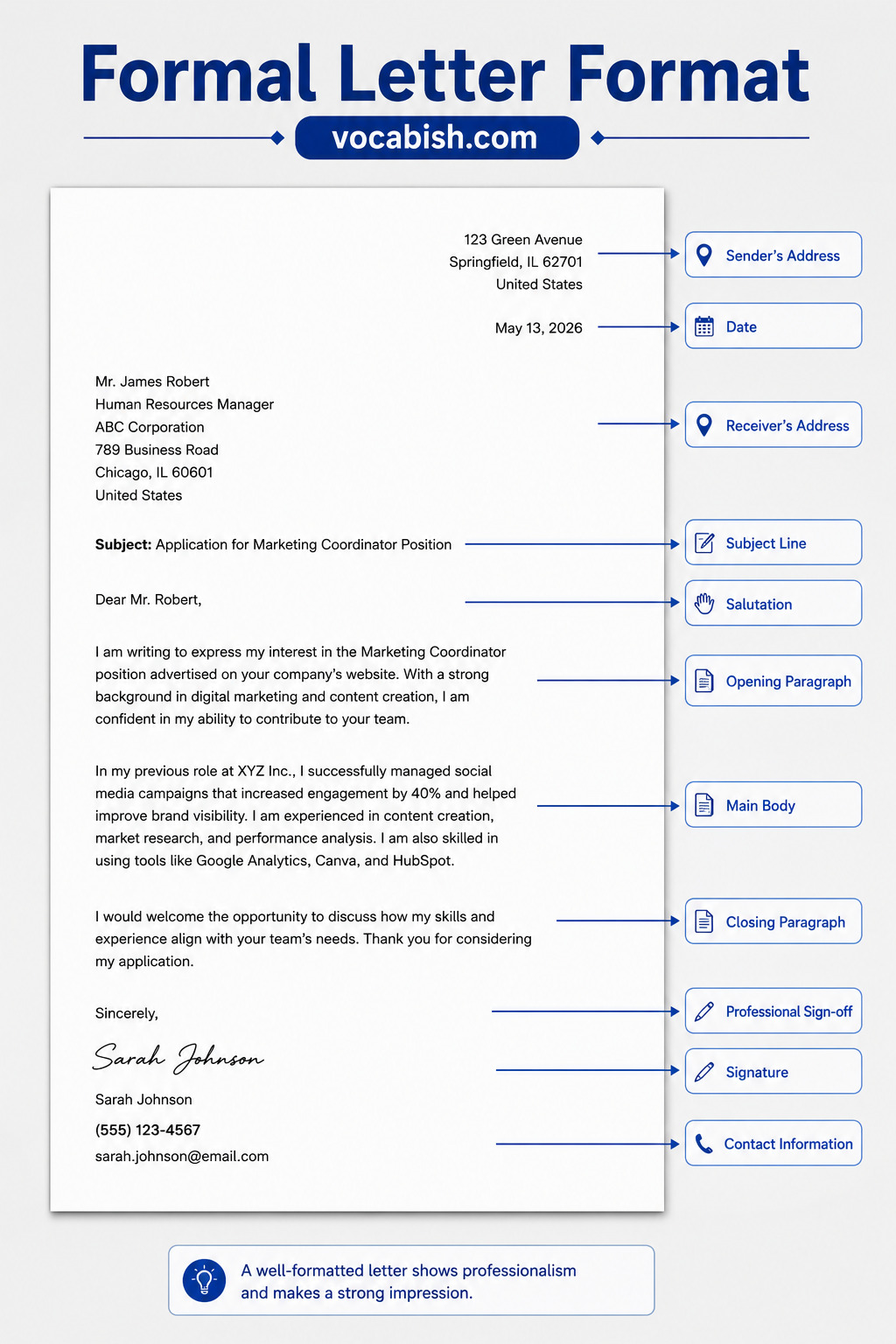
When people ask how to write a formal letter, they are usually worried about sounding unprofessional. Mastering the formal tone requires following a few strict rules.
Use Direct and Objective Language
Avoid emotional words. Instead of saying, “I am incredibly angry about your terrible service,” say, “I am writing to report an issue with the service I received on Tuesday.” Be polite, but get straight to the point.
Avoid Contractions and Slang
Write out all your words fully. Use “do not” instead of “don’t,” and “I am” instead of “I’m.” Never use text-speak or casual slang.
Perfect Your Salutation and Sign-off
If you know the person’s name, start with “Dear Mr. Smith,” and end with “Yours sincerely.” If you do not know their name, start with “Dear Sir/Madam,” and end with “Yours faithfully.” Always include your full name and contact information at the very bottom.
Professional and Personal Letter Examples
Here are complete examples showing exactly how to apply the structures we just discussed.
Example 1: Formal Request Letter
Use this format when asking a company or institution for information or action.
Sender:
John Doe
123 Maple Street
Springfield, IL 62704
Date: October 12, 2023
Recipient:
Customer Service Department
TechSolutions Inc.
456 Innovation Way
Seattle, WA 98109
Subject: Request for Warranty Repair – Order #98765
Dear Customer Service Team,
I am writing to request a warranty repair for the laptop I purchased from your online store on August 15, 2023 (Order #98765).
The device recently stopped charging, despite using the original power cable. I have followed the troubleshooting steps outlined in the manual, but the issue persists. Since the product is still under the one-year warranty, I would like to arrange for a repair or replacement.
Please let me know the process for returning the defective unit and any forms I need to complete.
I look forward to your prompt response.
Yours faithfully,
[Signature]
John Doe
Phone: (555) 123-4567
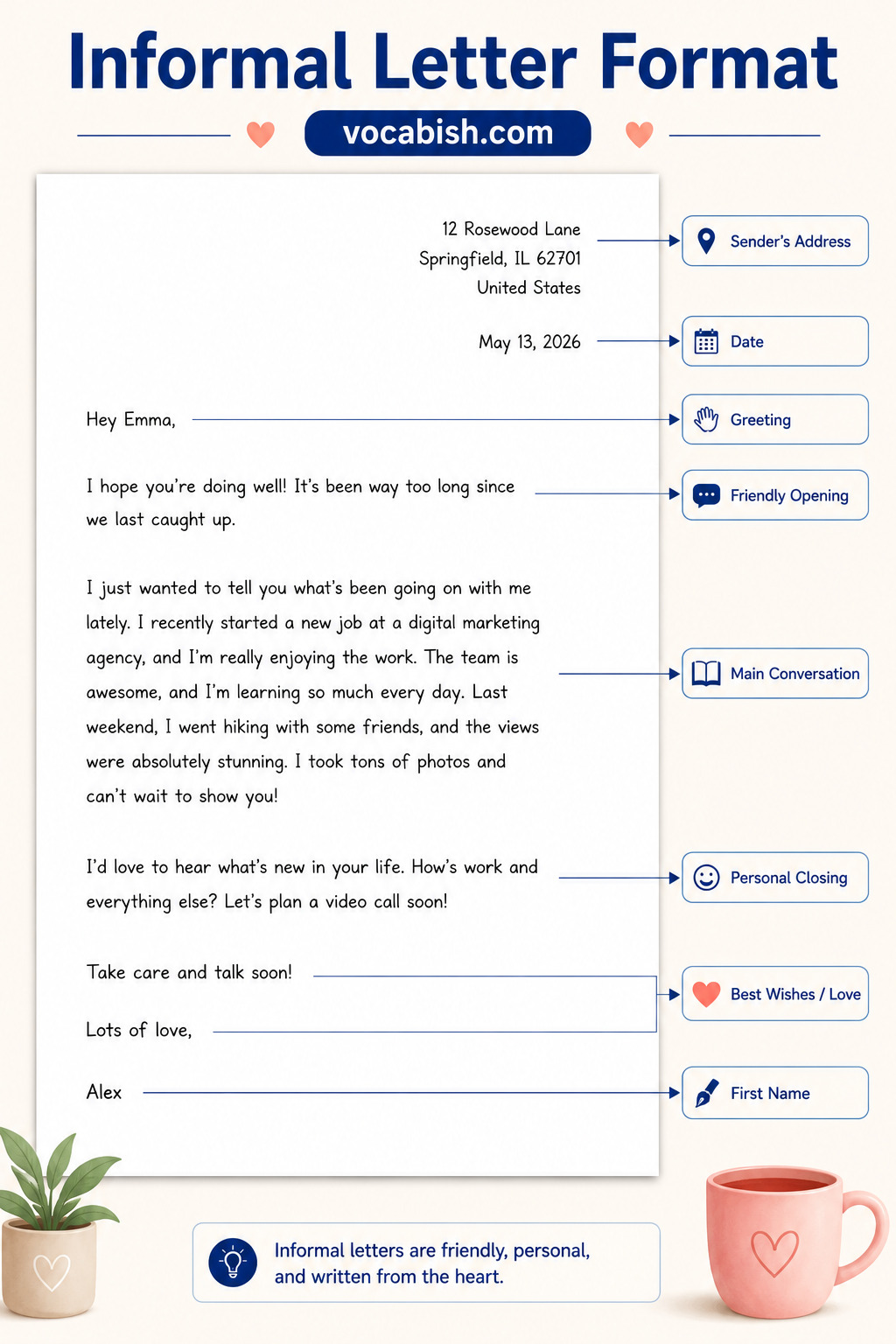
Example 2: Informal Letter to a Friend
Use this format for catching up with people you know well. Notice the relaxed tone and missing formal elements.
Sender:
Sarah Jenkins
789 Oak Avenue
Austin, TX 78701
Date: October 12, 2023
Dear Emily,
It feels like forever since we last caught up! How have you been? I hope everything is going well with your new job in Denver.
I am writing because I am actually planning a trip to Colorado next month. I will be in your area from the 15th to the 20th. It would be absolutely wonderful to meet up for coffee or dinner if you have some free time. I would love to hear all about your new apartment and the city.
Let me know what your schedule looks like, and we can plan something fun.
Best wishes,
Sarah
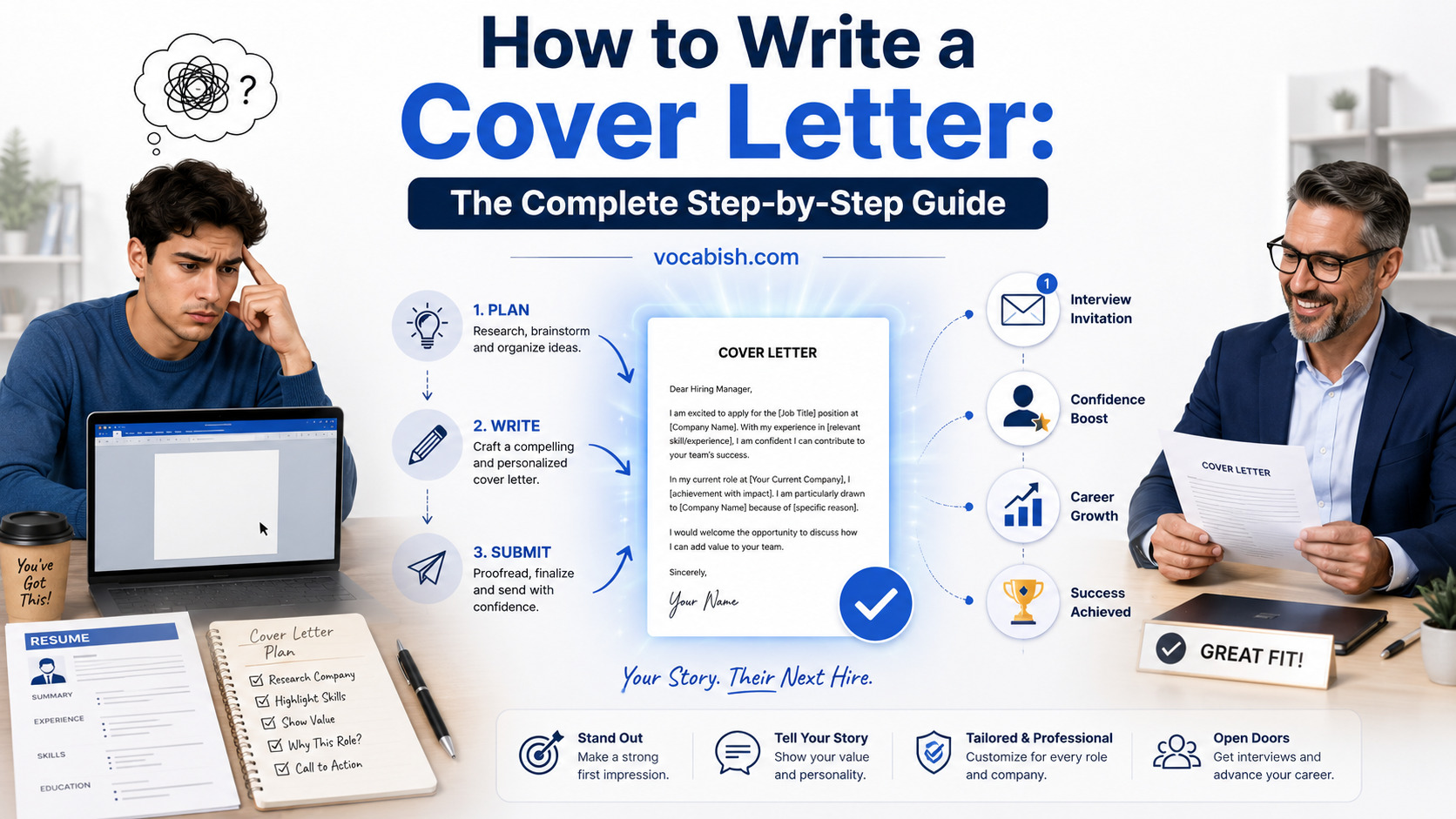
Example 3: Formal Business Cover Letter
Use this format when applying for jobs or sending professional proposals.
Sender:
Michael Chang
321 Pine Road
Chicago, IL 60601
m.chang@email.com
Date: October 12, 2023
Recipient:
Ms. Linda Green
Director of Human Resources
Bright Future Marketing
888 Corporate Blvd
New York, NY 10001
Subject: Application for Senior Analyst Position
Dear Ms. Green,
I am writing to express my interest in the Senior Analyst position at Bright Future Marketing, as advertised on your company website.
In my previous role at DataCorp, I managed a team of five analysts and successfully reduced quarterly reporting times by 20%. I have extensive experience with market trend analysis and financial forecasting. I am highly impressed by your recent expansion into the European market, and I believe my background in international data compliance makes me a strong fit for your team.
I have attached my resume for your review. I would welcome the opportunity to discuss how my skills can contribute to your ongoing success.
Thank you for your time and consideration.
Yours sincerely,
[Signature]
Michael Chang
Frequently Asked Questions (FAQs)
Use “Dear Sir/Madam” or address it to the specific department, such as “Dear Human Resources Team” or “Dear Customer Service.”
Use “Yours sincerely” when you address the person by their specific name. Use “Yours faithfully” when you start with “Dear Sir/Madam.”
Place the date one line below your sender address at the top of the page, regardless of whether it is on the left or right side.
Always type formal letters for business, official requests, or job applications to ensure maximum readability and professionalism.
No, informal letters to friends or family do not require a subject line or the recipient’s physical address at the top.
Get straight to the point. Begin with “I am writing to…” followed immediately by the main purpose of your communication.