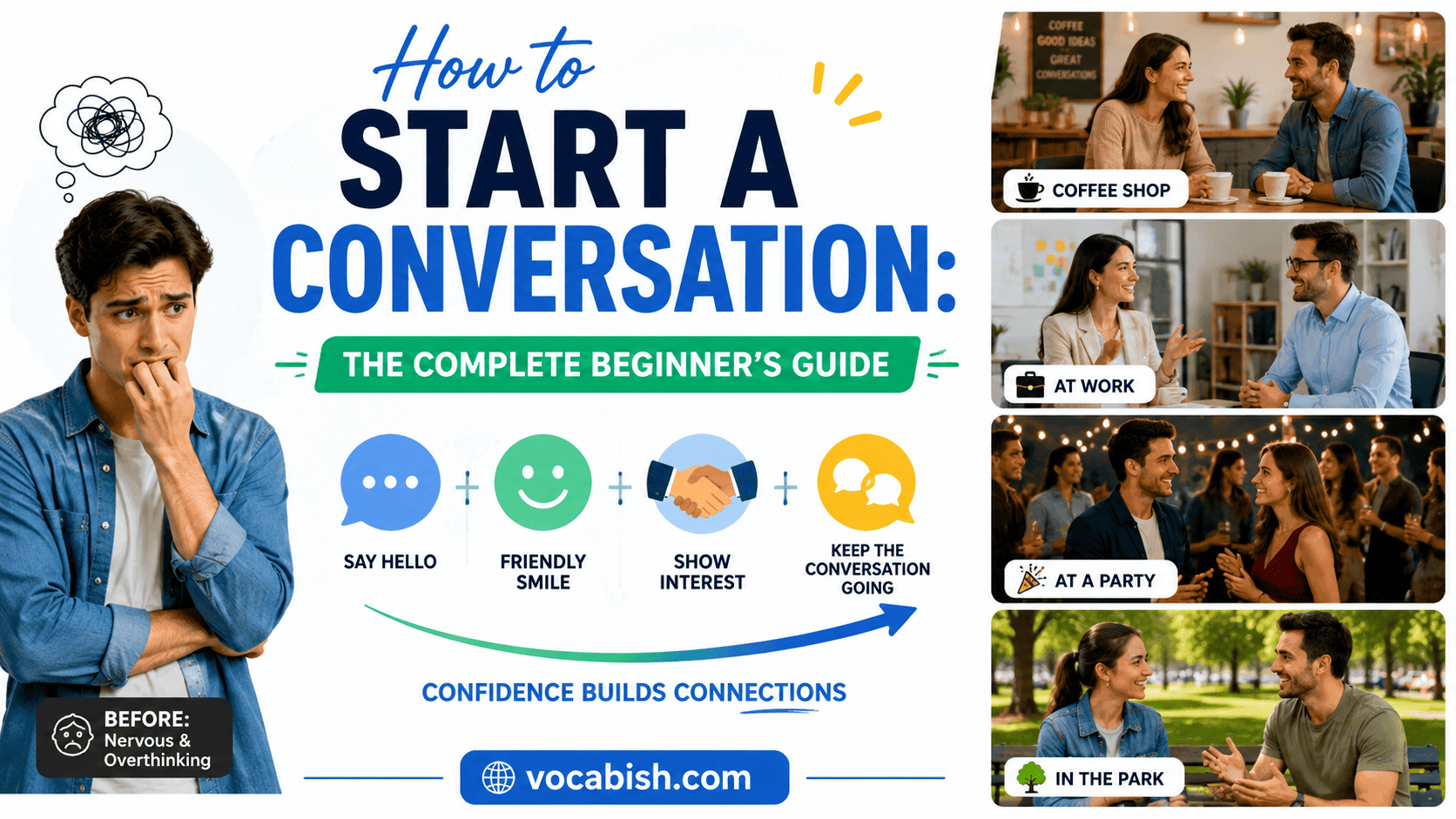

Starting a conversation with someone new often feels like standing on the edge of a diving board. You want to jump in, but the fear of a cold, awkward silence holds you back. The truth is, connecting with others does not require a quick wit or rehearsed lines. It is about understanding your environment, reading basic body language, and showing genuine interest. Whether you want to talk to a coworker in the breakroom or strike up a chat with your crush, learning how to start a conversation is a skill you can master with a few simple techniques. Let us explore the easiest ways to break the ice naturally.
The IFR Method: Keeping Conversations Balanced
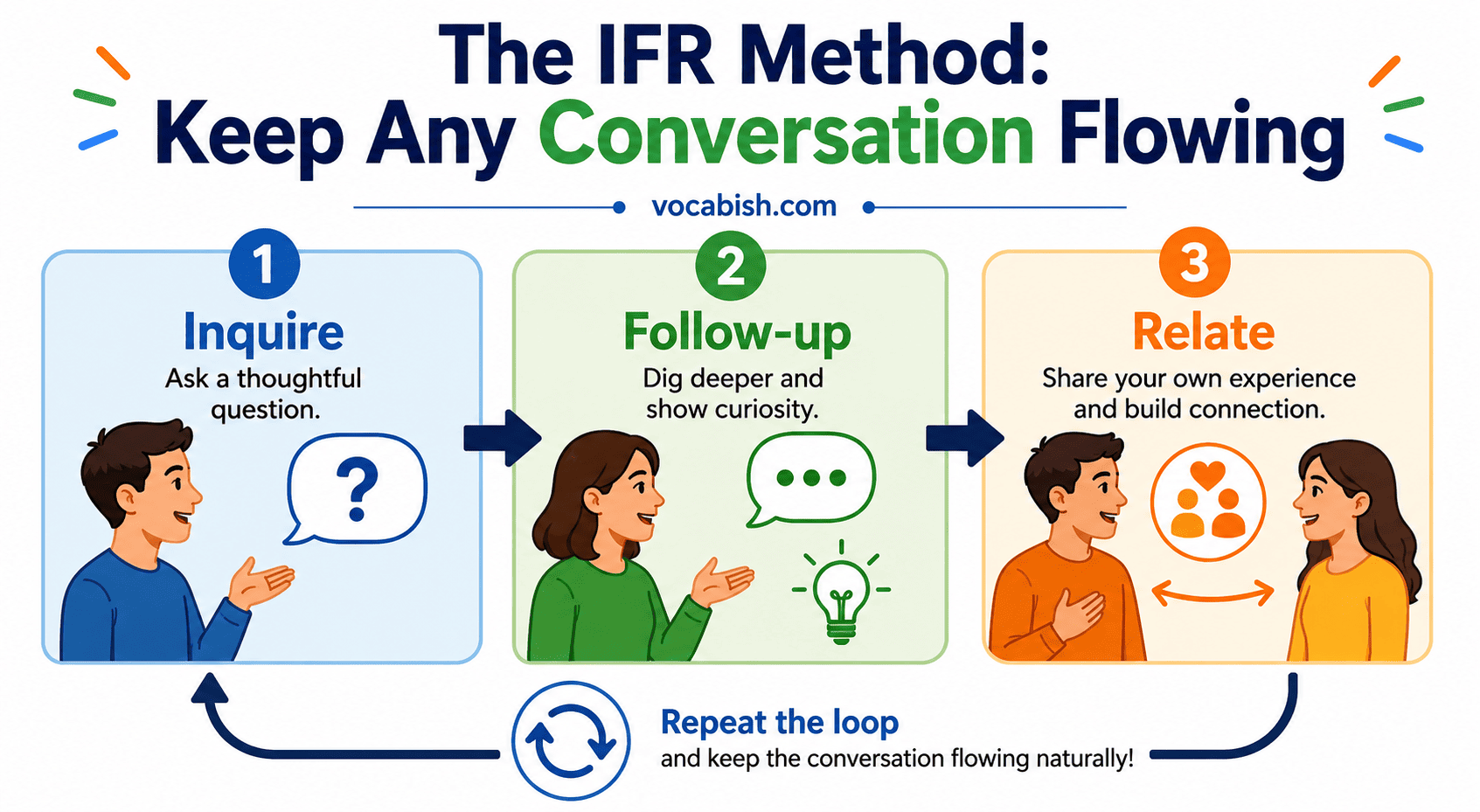
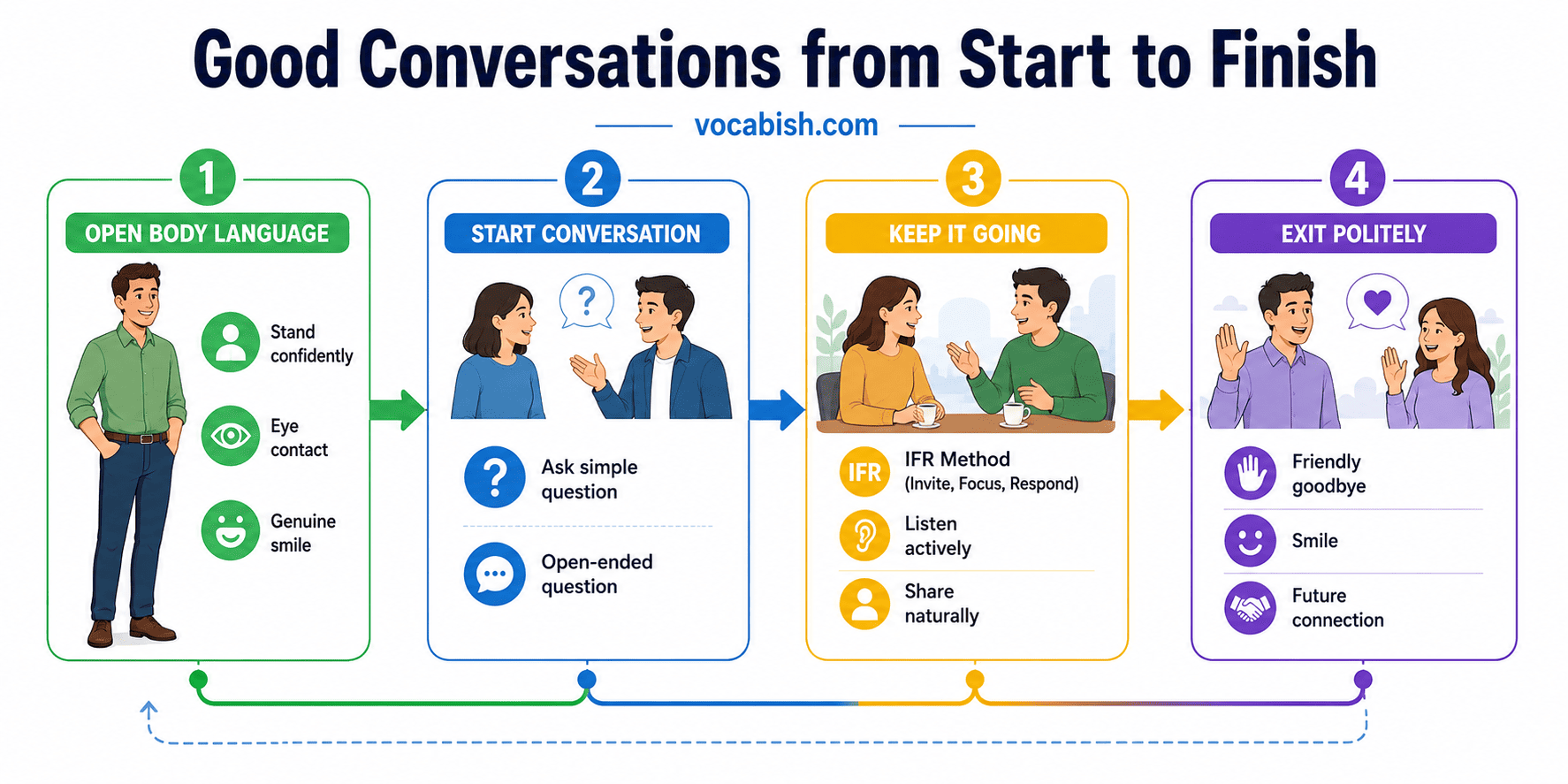
The biggest fear when starting a conversation is running out of things to say. To prevent awkward silences and avoid sounding like an interrogator, use the IFR method: Inquire, Follow-up, Relate.
- Inquire: Start with a genuine question. (e.g., “What kind of projects are you working on right now?”)
- Follow-up: Ask another question based on their answer to dig a little deeper. (e.g., “Oh, interesting. What’s your biggest takeaway from that project so far?”)
- Relate: Share a brief piece of information about yourself that connects to what they just said. (e.g., “I noticed something similar when I was working on…”)
After relating, you repeat the cycle by inquiring again. This creates a natural back-and-forth flow. They talk a little, you talk a little, and the conversation stays balanced.
How to Start a Conversation in Day-to-Day Life
You cannot walk up to a stranger in a coffee shop and loudly ask, “What are your hopes and dreams?” You need a softer approach. The easiest way to initiate a conversation is to draw inspiration from your surroundings.
Ask About the Situation
Ask a simple question about the situation rather than the other person. This gives you a natural reason to speak without being overly direct. For example, if you are sitting next to someone on a train, you might ask, “Excuse me, do you know if they serve snacks here?”. This is low-pressure because it is relevant to the shared environment.
Use Open-Ended Questions
An open-ended question requires more than a simple “yes” or “no”. Instead of asking a closed question like, “Did you like school?” ask, “What was school like for you?”. Open-ended questions encourage the other person to give a longer answer and provide you with more material for follow-up questions.
Read Their Body Language
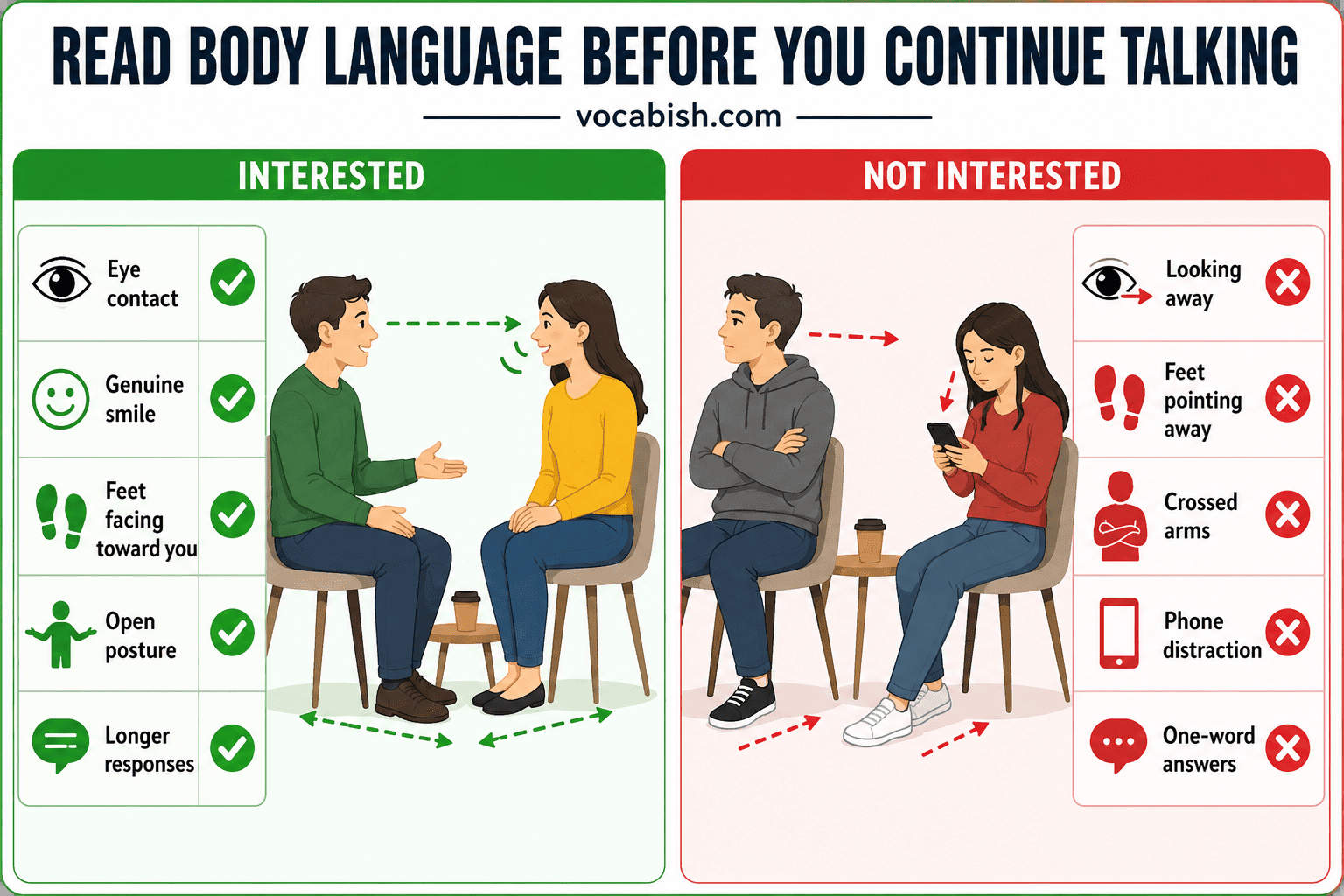
Before you try to keep the conversation going, look at the direction of their feet and gaze. If they point their feet away from you or frequently look away, it is a strong signal they want to end the interaction. If you receive short, one-word answers to your follow-up questions, it is best to politely say, “Nice chatting with you,” and move on. Do not take it personally; they might just not be in the mood to socialize.
Conversation Starters for Specific Settings
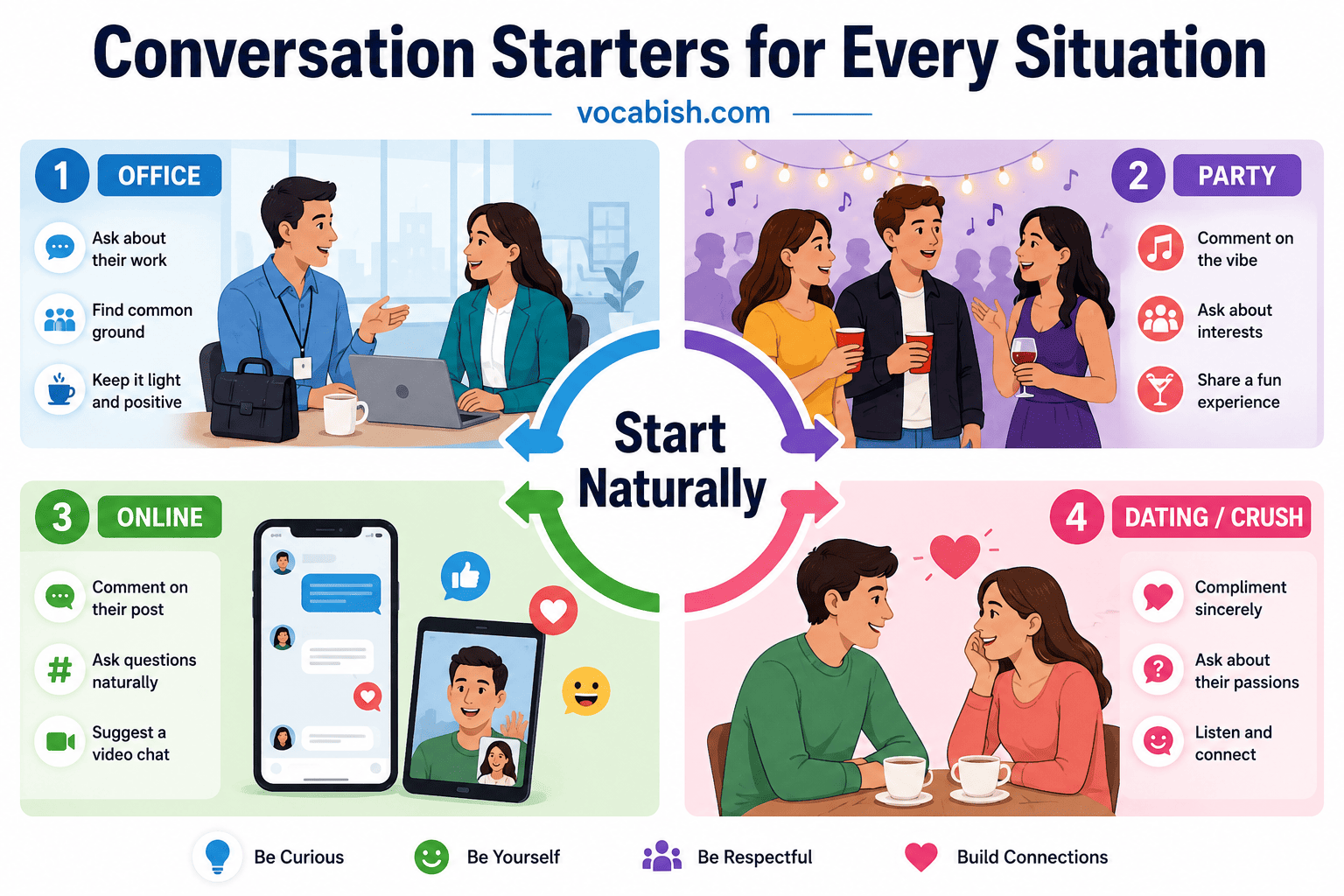
Having a few situational openers ready can ease your anxiety. Here are examples of how to start a conversation in different environments:
Work Conversation Starters
- “What department do you work in?”
- “What projects have you been working on recently?”
- “Where did you work before you started this job?”
- “How do you handle stress when work gets busy?”
Party Conversation Starters
- “How do you know people here?”
- “What brought you here?”
- “I like your [part of their outfit], where did you get it?”
- “Hello, my name is [name]. What’s your name?”
Group Conversation Starters
When joining a group, avoid rehearsed lines. Listen to what people are already discussing and contribute. If the topic dies, you can try:
- “Have you heard the news about [news story]?”
- “What does everyone think of the latest episode of [popular TV show]?”
- “What’s everyone’s dream vacation?”
How to Start a Conversation With a Guy or Girl
When you want to know how to start a conversation with a girl or how to start a conversation with a guy, the goal is to move past boring small talk and discover their personality. Ask questions that allow them to share their interests and values.
- “What’s your favorite thing to do when you have a day off work?”
- “Do you have any cool hidden talents?”
- “When you and your best friend hang out, what do you like to do?”
- “Do you have a bucket list? What’s on it?”
How to Start a Conversation With Your Crush
Learning how to start a conversation with your crush often feels the most intimidating. The pressure is high. Remember that what you actually ask isn’t incredibly important. You don’t need to ask a deep or meaningful question right away.
The key is that your tone is more important than your words. Focus on speaking in a friendly, relaxed tone of voice. If your tone is warm, simple questions will sound natural. Make sure your body language is open: maintain good eye contact, stand with your feet shoulder-width apart, and use a genuine smile.
How to Deal With Nerves and Overthinking
Many people stay silent because they feel they have to be clever or unique. You don’t have to try to come off as unique or smart in your first interaction. Asking a simple question is simply a way to signal that you’re friendly and open to social interaction. Small talk is often mundane, and people accept that. It is just the necessary warm-up for a deeper connection. If you are nervous, practice talking to yourself in the mirror so a friendly tone feels natural to you.
How to Start an Online Conversation
When you are not face-to-face, you cannot rely on body language or shared physical surroundings to break the ice. Starting a chat over text, social media, or a dating app requires a slightly different approach.
On Social Media and Dating Apps
Skip the standard “Hey” or “How are you?” because they force the other person to do all the heavy lifting. Instead, look at their profile for clues. If they have a picture with a dog, ask, “What kind of dog is that? He looks full of energy.” Commenting on a specific detail shows you took the time to notice them as an individual and gives them an easy topic to talk about.
On Professional Networks
For platforms like LinkedIn, state your intention clearly but politely. You might say, “I really enjoyed your recent post about team management. How long have you been working in that industry?” Keep it professional, respectful of their time, and conversational.
Conversation Starters for Friends
Sometimes, talking to friends you haven’t seen in a while feels surprisingly difficult. You do not need rehearsed lines for people you already know. The goal here is to reconnect and show that you value their presence in your life.
- Check on Past Topics: If they previously mentioned a struggle or a goal, follow up on it. Ask, “How is it going with that new workout routine you started last month?” This proves you listen and care about their daily life.
- Explore Big Ideas: Ask thought-provoking questions like, “Do you ever think about what you’ll do when you retire?” or “Would you ever like to be famous? What for?”
- Use Shared Memories: Bring up a past shared experience. You could ask, “What is your favorite memory from that road trip we took?”
Mastering Open Body Language
Your physical presence speaks loudly before you even say your first word. People naturally gravitate toward those who look approachable. Your body language must signal that you are trustworthy and happy to chat.
The Posture of Confidence
Stand or sit up straight without stiffening your back. Push your chest out slightly and keep your head up. This posture signals quiet confidence. Avoid rocking, swaying, or crossing your arms, as these movements make you appear nervous or closed off. Stand with your feet shoulder-width apart to ground yourself.
Eye Contact and Smiling
Maintain steady eye contact, but do not stare aggressively. Look away briefly every few seconds to keep the interaction comfortable. When you smile, make sure it is genuine. A natural smile causes your eyes to crease slightly at the corners. You can practice this in a mirror until it feels completely natural.
What to Do When the Conversation Dies
Every interaction hits a lull at some point. A moment of silence is a completely normal part of human communication, so do not panic or force words out rapidly.
Acknowledge and Pivot
If a topic naturally ends, use a transitional question to pivot smoothly. You can say, “By the way, I meant to ask you…” or “That reminds me of…” to introduce a fresh subject. You do not need a perfect transition; a gentle shift is enough.
Return to the Surroundings
Just like you did at the beginning of the interaction, you can look around for new inspiration. Comment on the music playing, the food, or an event happening nearby to spark a new train of thought without feeling abrupt.
How to Exit a Conversation Gracefully
Knowing how to leave a chat politely is just as valuable as knowing how to start one. You want to leave a positive, lasting impression rather than awkwardly backing away.
The Positive Sign-Off
Give a clear, polite reason for leaving. You can say, “It was so great catching up, but I need to go grab a drink,” or “I won’t keep you any longer, but I loved hearing about your new job.”
The Future Connection
If you want to speak to them again, establish a future connection as you leave. Say, “I have to run, but let me get your number so we can finish this story later.” Always end with a warm smile and a clear closing statement like, “Enjoy the rest of your evening.”
Frequently Asked Questions (FAQs)
Start by asking a simple question about your shared surroundings or the current situation, then use the IFR method (Inquire, Follow-up, Relate) to keep the chat balanced.
Look at their feet and gaze; if they are pointing away or giving short answers, politely end the chat by saying “Nice talking to you”.
Ask a specific question about something they mentioned recently or share a relevant observation about a shared interest to spark their curiosity.
Use a friendly, relaxed tone of voice. Your delivery is more important than finding the perfect words, so focus on open body language and genuine smiles.
Questions like “What was school like for you?” or “What sort of things do you do at work?” require more than a “yes” or “no” answer.
Ask about her interests, such as “What’s your favorite thing to do when you have a day off work?” to encourage her to share her passions.
Remember that you don’t need to be clever. Small talk is usually mundane, and simply asking a question signals that you are friendly and open.