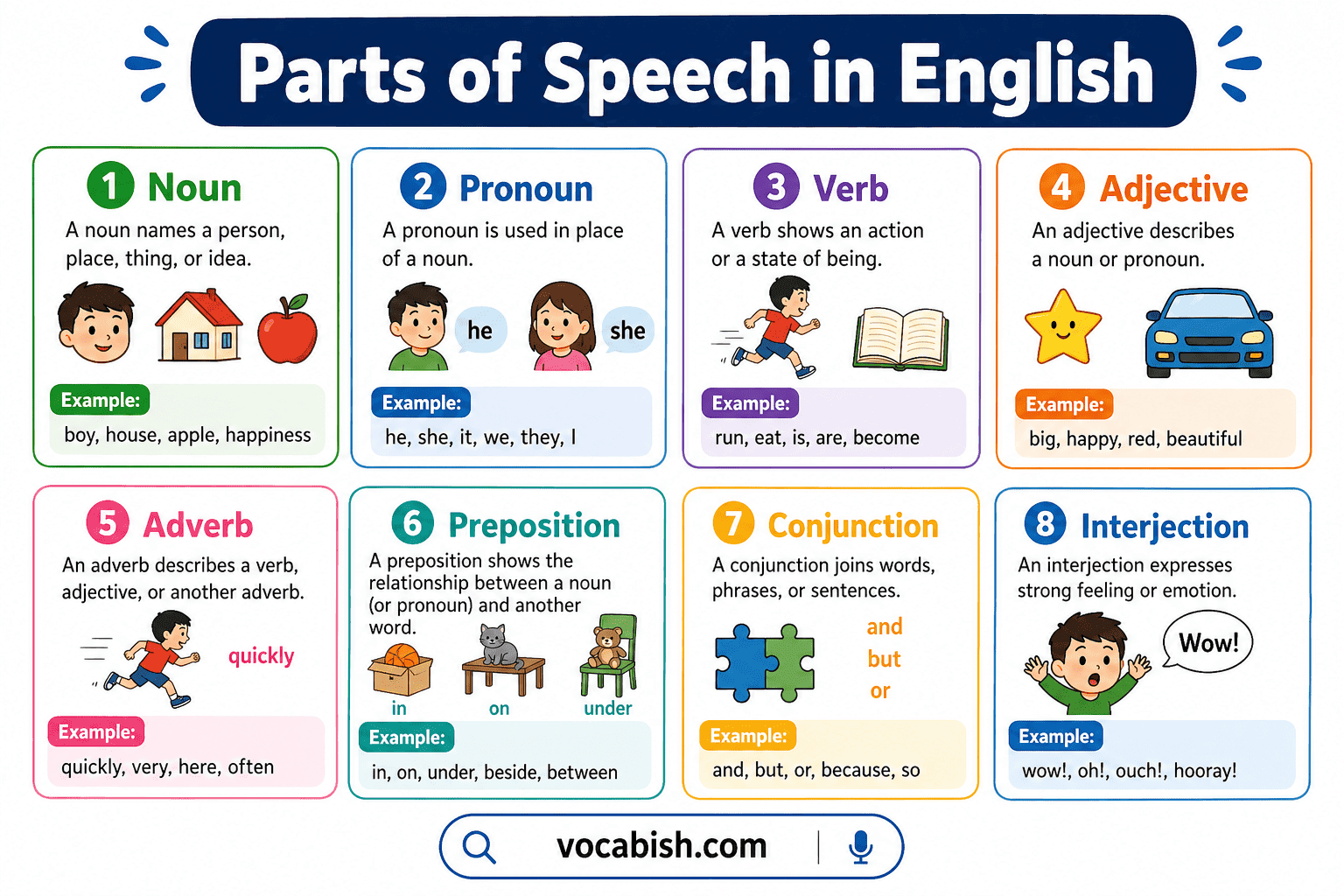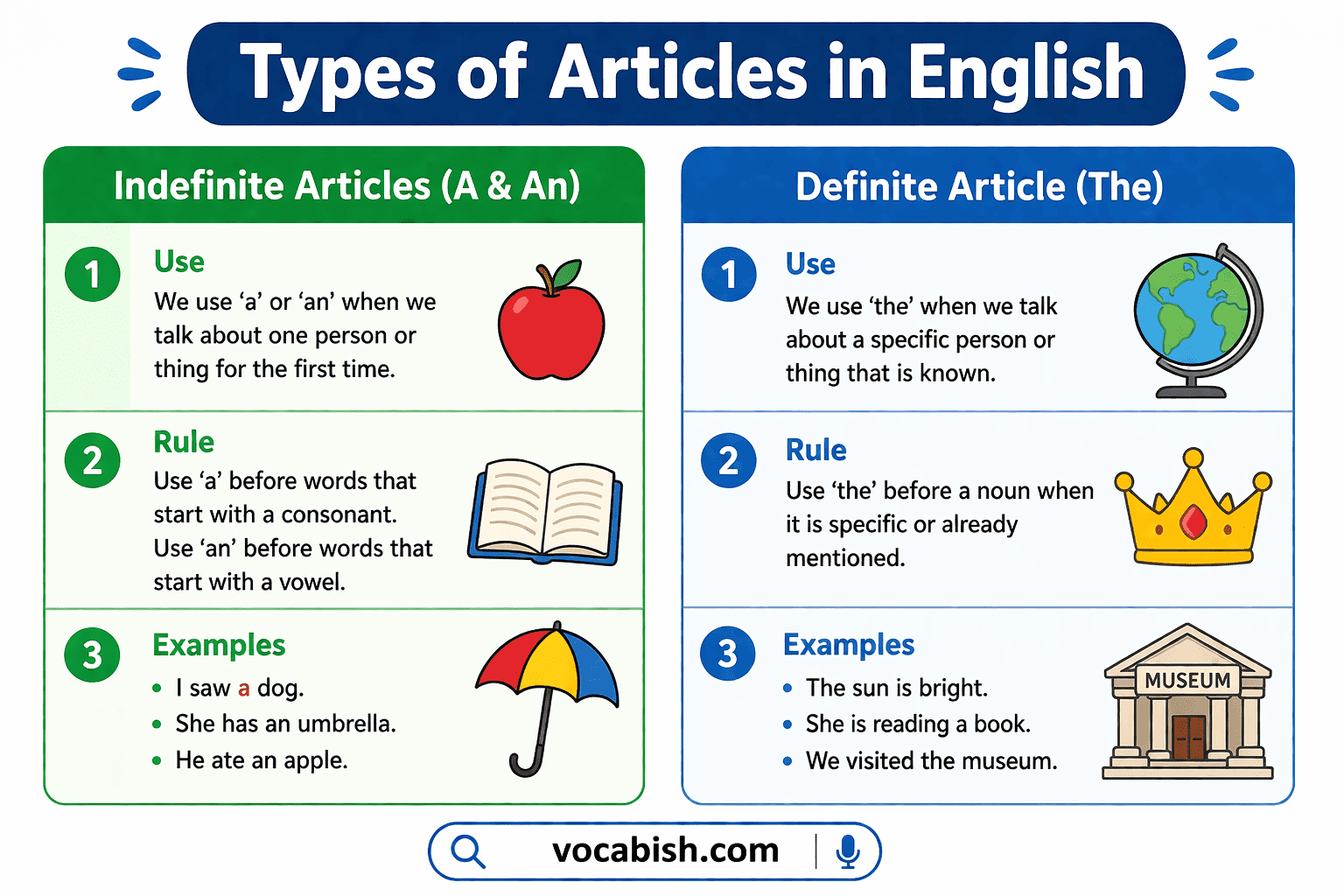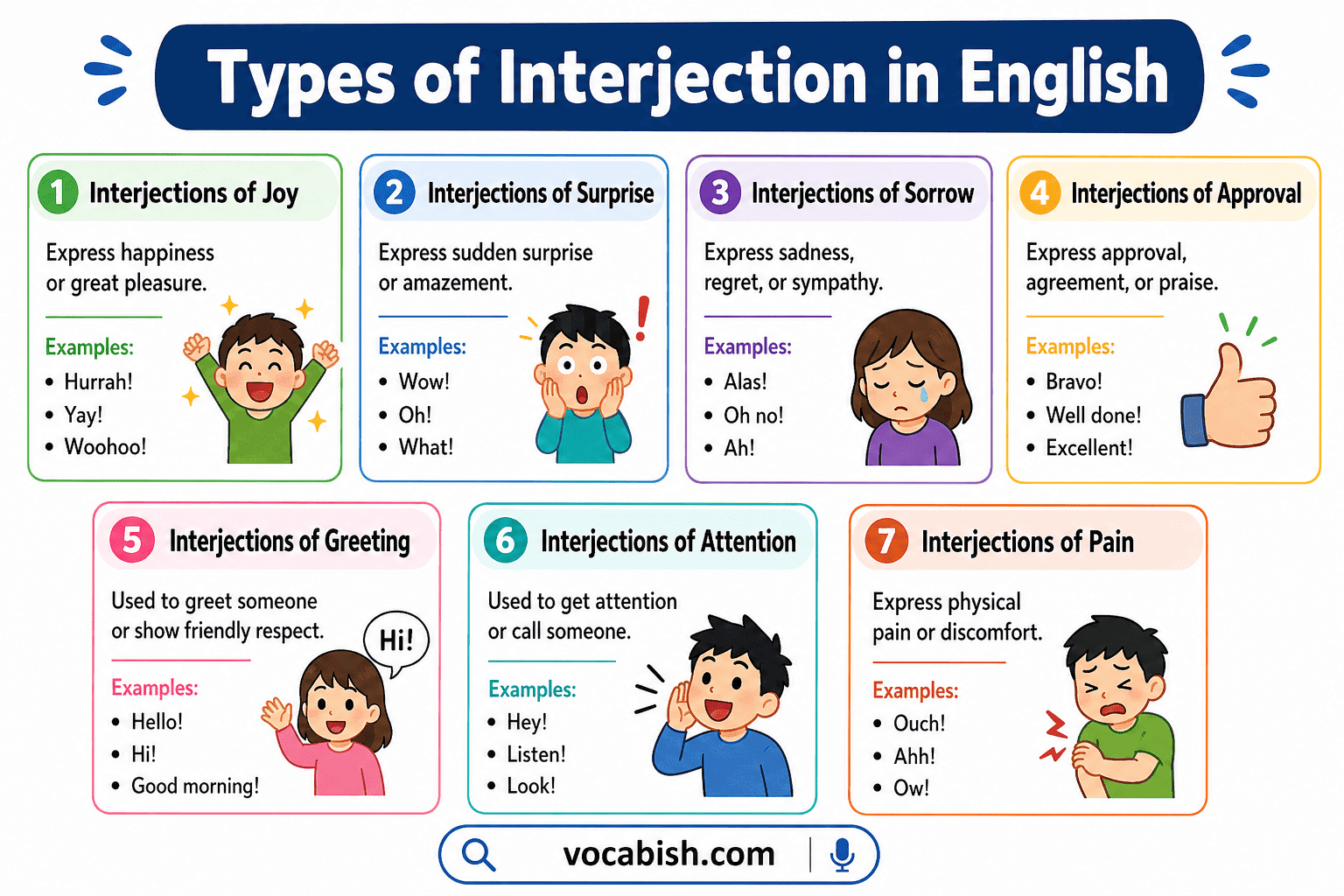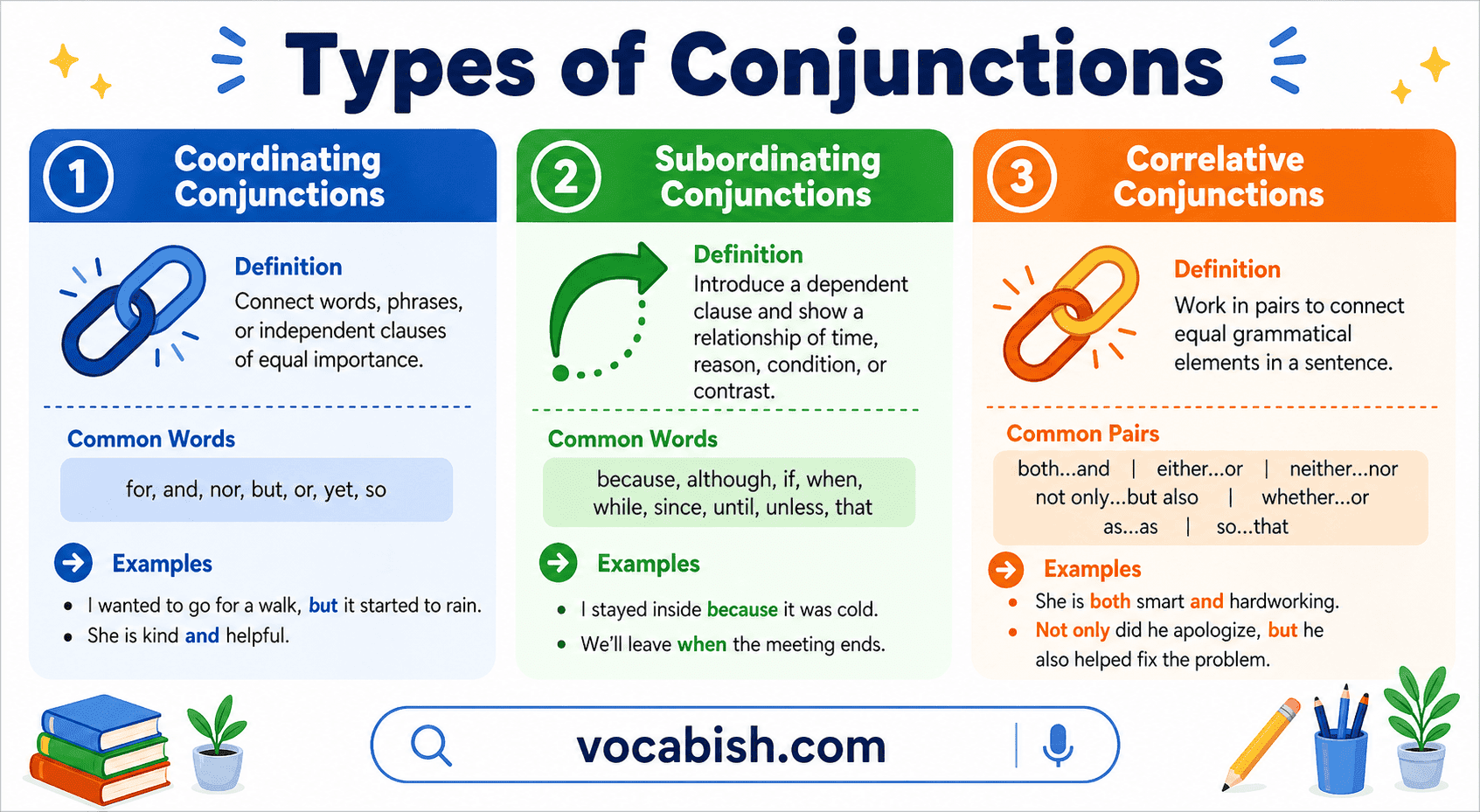

In this blog post, you will learn about adverbs. Adverbs are words that give more information about actions and help explain how, when, where, or how often something happens. They make your English more complete and natural. Many learners get confused about adverb placement, but once you learn the basic patterns, they become easy to use. When you understand adverbs and their types, your speaking becomes clearer, your writing becomes more accurate, and your reading and listening skills also improve in real situations.
If you want to build strong grammar foundations, read our step-by-step English word function guide.
What is an Adverb? (Definition and Examples)
An adverb is a word that modifies (describes or gives more detail about):
It answers questions like,
- How?
- When?
- Where?
- How often?
- To what degree?
Examples:
- She speaks clearly. (How does she speak?)
- I arrived early. (When did I arrive?)
- They looked everywhere. (Where did they look?)
- He is very tall. (To what degree is he tall?)
Why Adverbs are Important in English
Adverbs help you express meaning more precisely. Without them, communication becomes flat and sometimes confusing.
What does an Adverb do
- Add detail to actions
- Clarify time and frequency
- Show intensity or attitude
- Improve fluency in speaking and writing
Examples:
- He answered quickly. (efficient action)
- She rarely eats fast food. (frequency)
- They are extremely happy. (degree)
- Honestly, I don’t agree. (speaker attitude)
Functions of Adverbs in Sentences
Adverbs can function in different ways depending on what they modify.
1. Modifying verbs
- She runs quickly.
- He spoke softly.
- They worked hard.
2. Modifying adjectives
- The movie was very interesting.
- She is extremely kind.
- It’s too expensive.
3. Modifying other adverbs
- He runs very fast.
- She speaks quite clearly.
- They arrived too late.
4. Modifying whole sentences
- Fortunately, we caught the train.
- Honestly, I don’t like it.
- Surprisingly, he agreed.
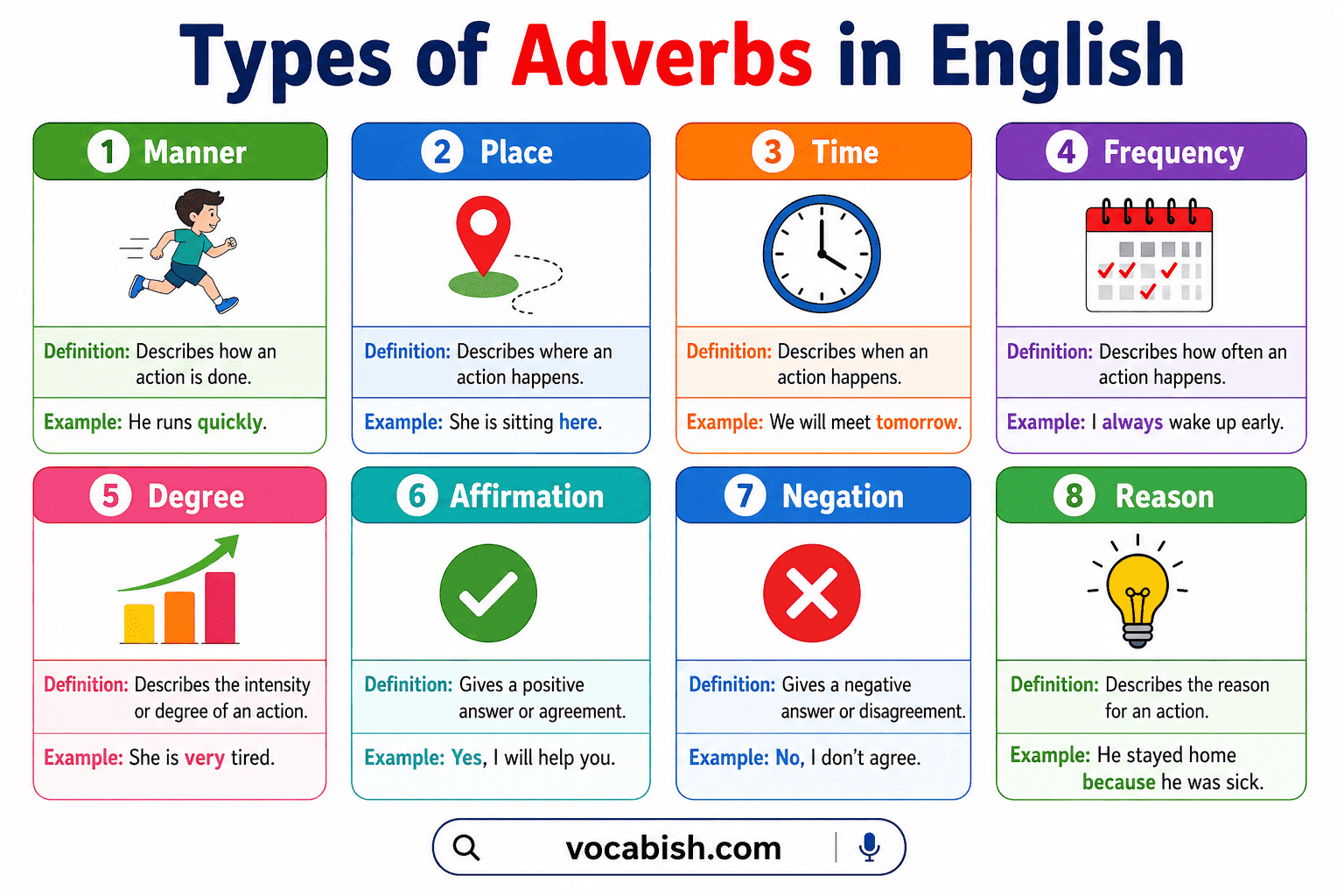
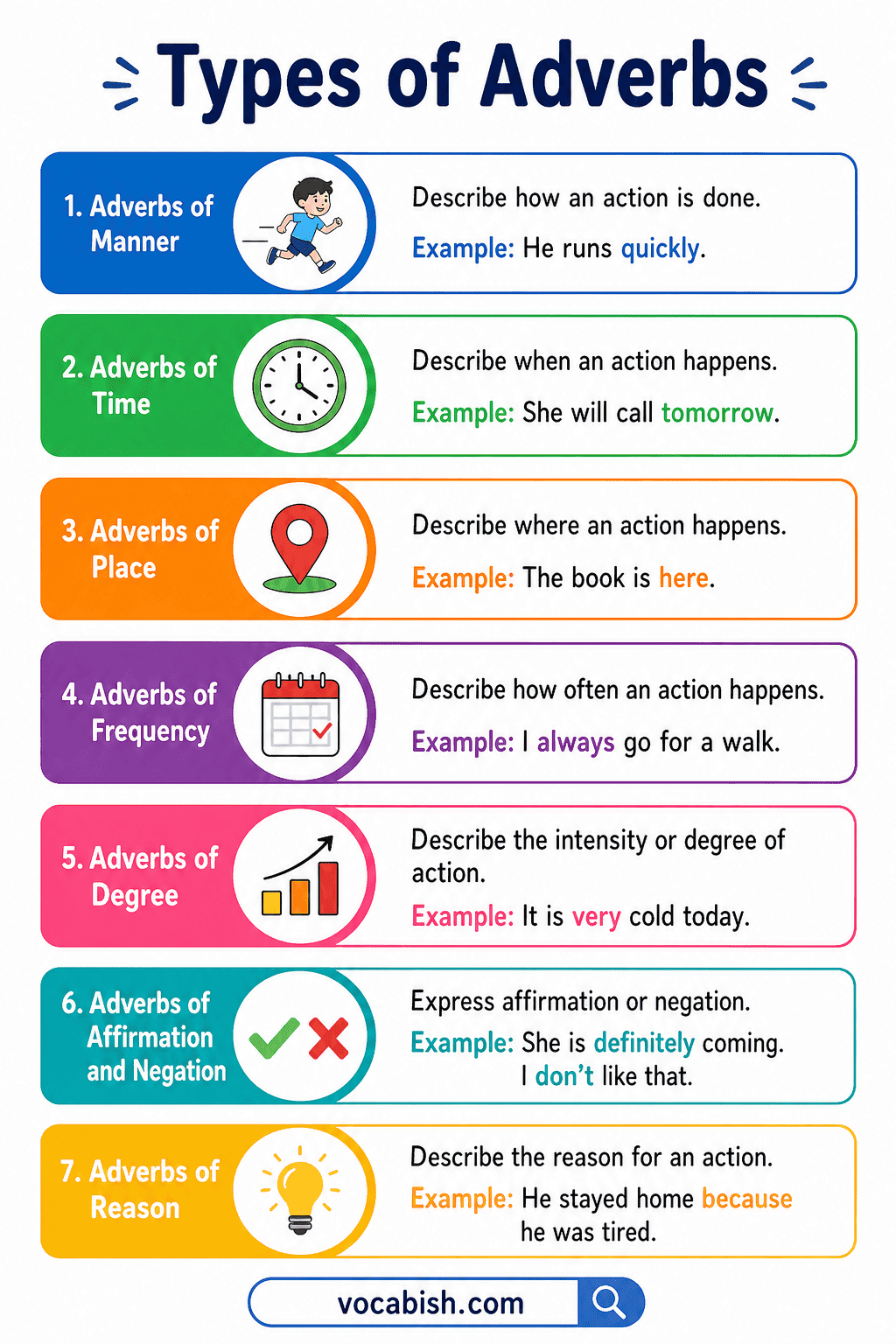
Types of Adverbs with Definition and Examples
1. Adverbs of Manner
These describe how something happens.
Rule:
They usually come after the verb or object.
Examples:
- She sings beautifully.
- He drives carefully.
- They worked hard.
- The baby slept peacefully.
2. Adverbs of Place
These tell you where something happens.
Examples:
- They looked everywhere.
- Come here.
- She went outside.
- The dog is nearby.
3. Adverbs of Time
These answer when something happens.
Examples:
- I will call you tomorrow.
- She arrived early.
- We met yesterday.
- He is leaving now.
4. Adverbs of Frequency
These show how often something happens.
Common ones:
- always
- usually
- often
- sometimes
- rarely
- never
Examples:
- I always wake up early.
- She usually drinks coffee.
- They rarely go out.
- He never lies.
Position rule:
They usually come before the main verb, but after “be”.
Structure | Example |
|---|---|
Before main verb | She often studies. |
After “be” | She is always late. |
5. Adverbs of Degree
These show how much or to what extent.
Examples:
- She is very happy.
- It’s too hot.
- He almost finished.
- I completely agree.
6. Interrogative Adverbs
Used to ask questions.
Examples:
- When will you arrive?
- Where do you live?
- Why are you late?
- How did you do that?
7. Relative Adverbs
These connect clauses and refer to time, place, or reason.
Examples:
- This is the place where we met.
- I remember the day when we met.
- That’s the reason why I left.
8. Conjunctive Adverbs
These connect ideas between sentences.
Examples:
- However, I disagree.
- Therefore, we decided to leave.
- Meanwhile, she was waiting.
- Moreover, it’s affordable.
Formation of Adverbs
1. Adding “-ly” to Adjectives
Most adverbs are formed by adding -ly.
Adjective | Adverb |
|---|---|
quick | quickly |
happy | happily |
slow | slowly |
Examples:
- She speaks quickly.
- He smiled happily.
- They moved slowly.
Spelling changes:
- happy → happily (y → i + ly)
2. Irregular Adverbs
Some adverbs don’t follow the “-ly” rule.
Adjective | Adverb |
|---|---|
good | well |
fast | fast |
hard | hard |
Examples:
- She sings well.
- He runs fast.
- They work hard.
3. Adjectives vs Adverbs
Some words look the same as adjectives and adverbs.
Examples:
- He runs fast. (adverb)
- He is fast. (adjective)
Position of Adverbs in Sentences
Adverb placement can change meaning or make a sentence sound unnatural.
Position | Example |
|---|---|
Beginning | Yesterday, I met her. |
Middle | She always arrives late. |
End | He spoke softly. |
Key rules:
- Frequency adverbs → before main verb
- Manner adverbs → after verb
- Time adverbs → often at the end
Examples:
- I always drink coffee in the morning.
- She finished the work quickly.
- We will meet tomorrow.
How to Identify an Adverb in a Sentence
A simple method:
- Find the verb
- Ask:
- How?
- When?
- Where?
- How often?
- The answer is often the adverb
Examples:
- She spoke softly. → How? → softly
- We met yesterday. → When? → yesterday
- He is very tall. → How much? → very
Comparison of Adverbs
1. Positive Degree
The basic form.
- She runs fast.
- He works hard.
2. Comparative Degree
Used to compare two actions.
Rule:
Add -er or use more
- She runs faster than me.
- He works harder than before.
- She speaks more clearly now.
3. Superlative Degree
Used to compare three or more.
Rule:
Add -est or use most
- She runs the fastest in the team.
- He works the hardest.
- She speaks the most clearly.
Common Mistakes with Adverbs
1. Using adjectives instead of adverbs
- Wrong: He speaks slow.
- Correct: He speaks slowly.
- Why: You need an adverb to describe the verb.
2. Confusing “good” and “well”
- Wrong: She sings good.
- Correct: She sings well.
- Why: “Well” is the adverb form.
3. Incorrect word order
- Wrong: She eats often late.
- Correct: She often eats late.
- Why: Frequency adverbs go before the main verb.
4. Overusing “very”
- Weak: Very very good
- Better: Extremely good
- Why: Use stronger adverbs for precision.
5. Misplacing adverbs
- Wrong: He almost drove for five hours.
- Correct: He drove for almost five hours.
- Why: Placement changes meaning.
Adverb Exercises
1. Identify the Adverb
Find the adverb:
- She sings beautifully.
- They arrived early.
- He runs fast.
- I always study at night.
Answers:
- beautifully
- early
- fast
- always
2. Fill in the Blanks
Choose the correct adverb:
- She speaks ______ (clear/clearly).
- He runs ______ (quick/quickly).
- They are ______ happy (very/veryly).
- I ______ go to the gym (often/oftenly).
Answers:
- clearly
- quickly
- very
- often
3. Multiple Choice Questions
- Which is correct?
a) She sings good
b) She sings well - Choose the correct sentence:
a) He always is late
b) He is always late - Identify the adverb:
She almost finished the race.
a) finished
b) almost
Answers:
- b
- b
- b
FAQs about Adverbs
An adverb is a word that describes a verb, adjective, or another adverb. It tells how, when, where, or how often something happens, adding clear detail to your sentence.
The main types include adverbs of manner, time, place, frequency, and degree. Each type answers a specific question, such as how, when, where, or how often something happens.
Most adverbs are formed by adding “-ly” to adjectives, like quick → quickly. However, some are irregular, such as good → well, and must be learned separately.
Adverb placement depends on the type. Manner adverbs usually come after the verb, frequency adverbs go before the main verb, and time adverbs often appear at the end.
Adjectives describe nouns, while adverbs describe verbs, adjectives, or other adverbs. For example, “quick” is an adjective, while “quickly” is an adverb describing an action.
Yes, a sentence can include multiple adverbs. For example, “She quickly finished her work yesterday” uses adverbs of manner and time together correctly.
The eight types of adverbs are: manner, place, time, frequency, degree, interrogative, relative, and conjunctive. Each type answers a specific question like how, where, when, or why.
The royal order of adverbs is: manner, place, then time (MPT). It means you usually say how something happens, where it happens, and then when it happens.
Conclusion
Adverbs are essential for adding clarity and detail to your English. Once you understand their types, forms, and positions, your sentences become more natural and precise.
Focus on using them correctly rather than using too many. Start noticing adverbs in real conversations and writing—that’s where the learning really sticks.
You May Also Like: