Pasta comes in hundreds of shapes, but choosing the right one does not need to feel complicated. This practical guide covers popular types of pasta, from familiar spaghetti and penne to regional shapes such as fregola and trofie. You will learn what each pasta looks like, where it traditionally comes from, how it is commonly used, and which sauces suit it best.
Introduction
Pasta shapes are not created only for appearance. Their thickness, width, ridges, curves, and hollow centres all affect how they carry sauce and other ingredients.
Thin strands work well with smooth, delicate sauces because heavy ingredients can overwhelm them. Wide ribbons provide more surface area for creamy sauces and slow-cooked meat. Tubes collect sauce, cheese, and vegetables inside their openings, while twists and folds trap herbs and small pieces of food in their grooves.
Even the texture matters. A ridged pasta holds thick sauce more effectively than a smooth one, while large pasta sheets and tubes are strong enough for baking.
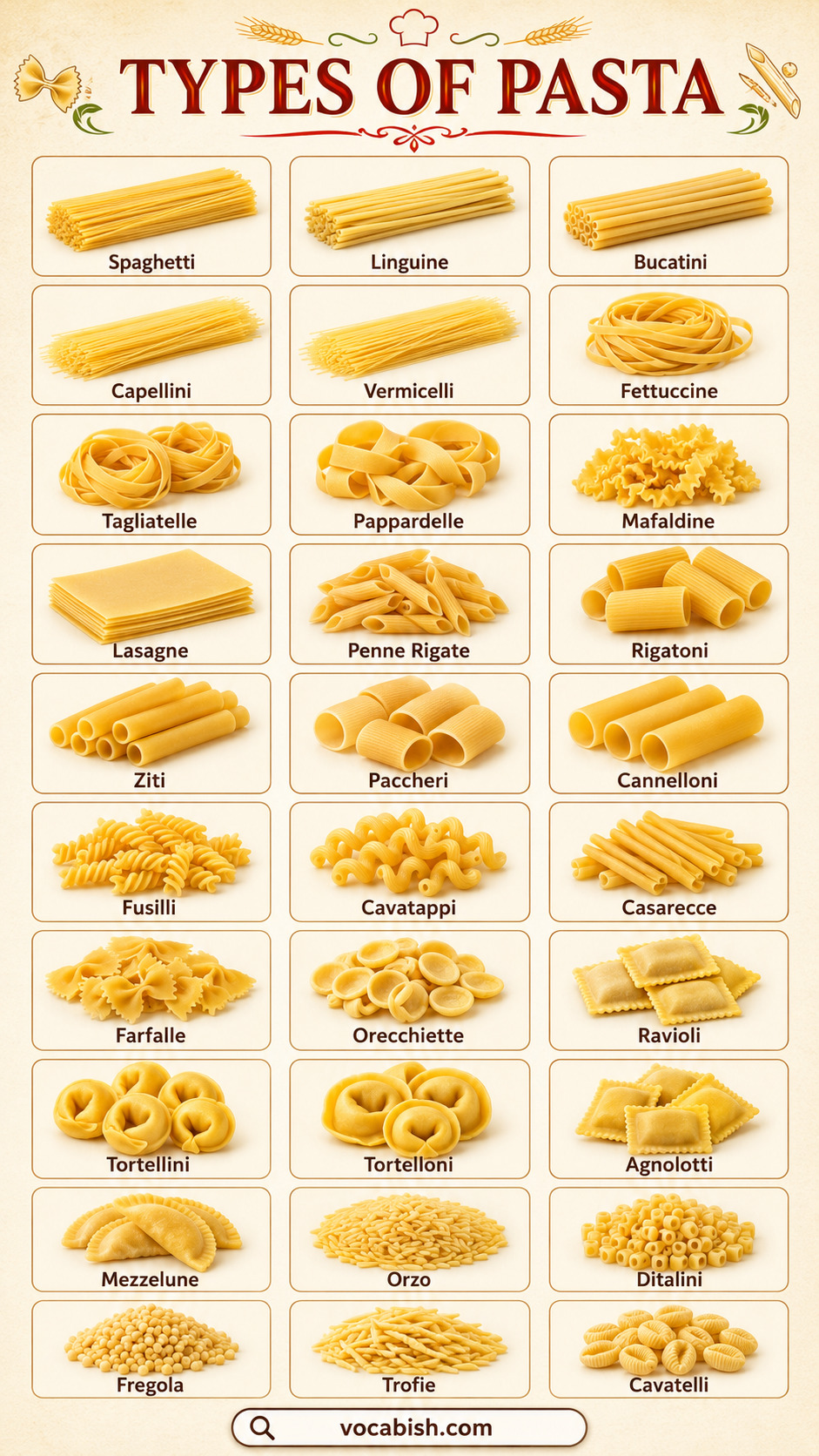
To make the differences easier to understand, the 30 types of pasta in this guide are divided into six simple categories: long pasta, ribbon pasta, tubular pasta, shaped pasta, stuffed pasta, and small or regional pasta.
List of All Types of Pastas (A-Z)
Acini di pepe | Agnolini | Agnolotti |
Alfabeto | Anchellini | Anelli |
Anellini | Anelloni | Anolini |
Armonie | Barbine | Bavette |
Bavettine | Bigoli | Blecs |
Boccoli | Bombardoni | Bucatini |
Busiate | Caccavelle | Calamarata |
Campanelle | Canederli | Cannelloni |
Capellini | Cappellacci | Cappelletti |
Cappelli da chef | Capunti | Caramelle |
Casarecce | Cascatelli | Casoncelli |
Castellane | Casunziei | Cavatappi |
Cavatelli | Cavatieddi | Cecatelli |
Cencioni | Chifferi | Cicatelli |
Cicioneddos | Cjarsons | Conchiglie |
Conchigliette | Conchiglioni | Coralli |
Corallini | Corzetti | Creste di gallo |
Crozets | Culurgioni | Cuscussu |
Ditali | Ditalini | Donderet |
Fagioloni | Fagottini | Fainelle |
Farfalle | Farfalline | Farfalloni |
Fazzoletti | Fedelini | Ferrazzuoli |
Festoni | Fettuccine | Fileja |
Fiorentine | Fiori | Foglie d’ulivo |
Fregola | Fusilli | Fusilli bucati |
Fusilli lunghi | Garganelli | Gemelli |
Gigli | Gnocchetti | Gnocchi |
Gomiti | Gramigna | Grattini |
Grattoni | Lagane | Lanterne |
Lasagne | Lasagnette | Lasagnotte |
Linguettine | Linguine | Lorighittas |
Lumache | Lumaconi | Macaroni |
Maccheroncini | Maccheroncini di Campofilone | Maccheroni alla molinara |
Mafalde | Mafaldine | Malloreddus |
Maltagliati | Mandala | Manicotti |
Margheritine | Marille | Marubini |
Matriciani | Merletti | Mezzani |
Mezze maniche | Mezze penne | Mezze ziti |
Mezzelune | Mezzi bombardoni | Midolline |
Mostaccioli | ’Ndunderi | Nuvole |
Occhi di lupo | Occhi di passero | Occhi di pernice |
Orecchiette | Orzo | Paccheri |
Pansotti | Pappardelle | Passatelli |
Pasta al ceppo | Pastina | Patacucci |
Pavese agnolotti | Penne | Penne lisce |
Penne ricce | Penne rigate | Pennette |
Pennoni | Perciatelli | Picagge |
Picchiarelli | Pici | Pillus |
Piombi | Pipe rigate | Pizzoccheri |
Ptitim | Puntine | Quadrefiore |
Quadrettini | Radiatori | Raschiatelli |
Ravioli | Raviolini | Ravioloni |
Riccioli | Ricciolini | Ricciutelle |
Rigatoncini | Rigatoni | Risoni |
Rombi | Rotelle | Rotini |
Rotolo ripieno | Sacchettoni | Sagnarelli |
Sagne ’ncannulate | Sagnette | Scialatelli |
Sedani | Sedanini | Sorprese |
Spaghetti | Spaghetti alla chitarra | Spaghettini |
Spaghettoni | Spirali | Spiralini |
Stelle | Stelline | Stortini |
Strapponi | Strascinati | Stringozzi |
Stroncatura | Strozzapreti | Su Filindeu |
Taccozze | Tagliatelle | Taglierini |
Tagliolini | Tajarin | Testaroli |
Torchietti | Tortelli | Tortellini |
Tortelloni | Tortiglioni | Treccioni |
Trenette | Trenne | Tria |
Tripoline | Tripolini | Troccoli |
Trofie | Trottole | Tubetti |
Tubettini | Tuffoli | Tufoli |
Umbricelli | Vermicelli | Vesuvio |
Ziti | Ziti candelati | Zitoni |
Types of Long Pasta
Long pasta includes thin strands, medium-thick noodles, and hollow varieties. Delicate strands generally suit olive oil, butter, seafood, and smooth sauces. Thicker strands can support richer tomato sauces, creamier preparations, and meat-based dishes without becoming lost beneath the sauce.
1. Spaghetti
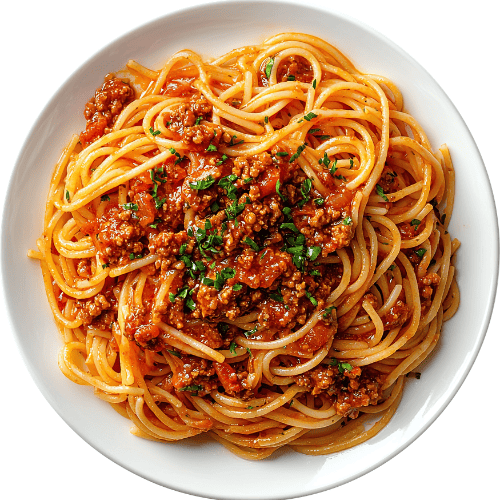
Spaghetti consists of long, round strands with a medium thickness. It is one of the most widely recognised pasta shapes and works with many different ingredients.
Its smooth surface suits simple tomato sauce, garlic and olive oil, seafood, carbonara, and finely textured meat sauces. Spaghetti and meatballs is especially popular in Italian-American cooking, although smaller pieces of meat usually mix more evenly with the strands.
Because spaghetti is neither extremely thin nor especially thick, it is a useful all-purpose choice for everyday pasta dishes.
2. Linguine
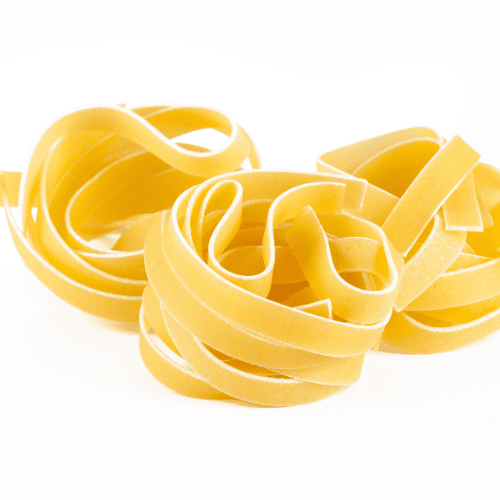
Linguine is long and narrow like spaghetti, but its strands are slightly flattened rather than completely round. Its name is often translated as “little tongues.”
The flat surface gives sauces more space to cling to, while the pasta remains light enough for seafood and fresh ingredients. Linguine pairs particularly well with clams, prawns, pesto, lemon, garlic, olive oil, and light cream sauces.
It is traditionally associated with Liguria, a coastal region of northwestern Italy known for pesto and seafood. Linguine is a good choice when you want something more substantial than spaghetti without using a wide ribbon pasta.
3. Bucatini
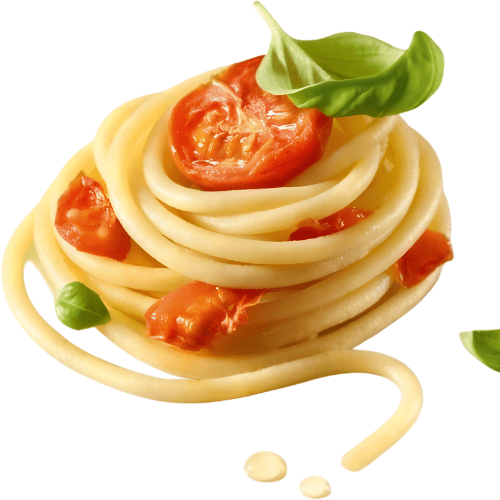
Bucatini looks like thick spaghetti, but each strand has a narrow hollow centre. The name comes from the Italian word buco, meaning “hole.”
Its unusual structure allows sauce to coat the outside and enter the centre of the pasta. This creates a rich, satisfying bite, especially with smooth but strongly flavoured sauces.
Bucatini is famously served with amatriciana, a Roman-style sauce made with tomato, cured pork, cheese, and chilli. It also works with carbonara, buttery sauces, and rich tomato preparations. The strands can be slightly challenging to twirl, but their texture makes them worth trying.
4. Capellini
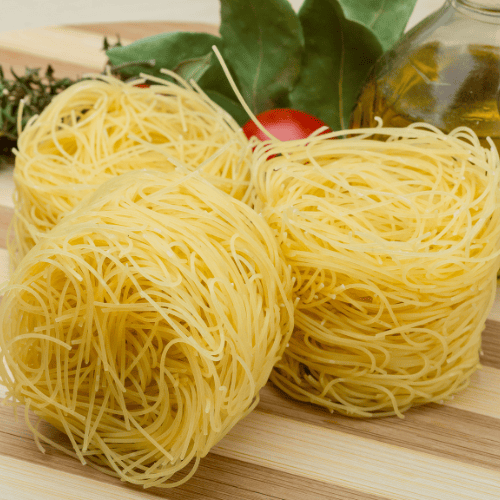
Capellini is an extremely thin, delicate pasta. It is sometimes called angel hair pasta, although exact naming and thickness can vary between producers.
Because the strands cook very quickly, capellini is best paired with light sauces that will not crush or overpower it. Suitable options include fresh tomato sauce, melted butter, olive oil, lemon, herbs, and finely chopped seafood.
Heavy meat sauces and thick cheese sauces are usually poor choices because they can make the strands clump together or break. Capellini should also be watched carefully during cooking, as it can become soft within only a few minutes.
5. Vermicelli
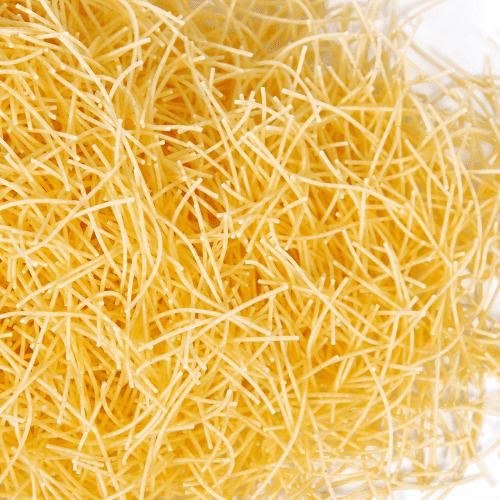
Vermicelli consists of long, thin strands, but its exact thickness differs between countries. In Italy, it may be slightly thicker than spaghetti, while the English name is often used for very fine noodles.
Italian vermicelli can be served with light tomato sauces, olive oil, garlic, seafood, and herbs. Broken pieces may also be added to soups and broths.
The word is also used for several Asian rice and wheat noodles, so it is important to check the package when following a recipe. For Italian dishes, choose wheat-based vermicelli and cook it according to the producer’s instructions.
Types of Ribbon and Flat Pasta
Ribbon pasta has a broad, flat surface that carries rich sauces effectively. These shapes work especially well with butter, cream, cheese, mushrooms, and slowly cooked meat. Wider ribbons can support heavier ingredients that would overwhelm delicate pasta strands.
6. Fettuccine
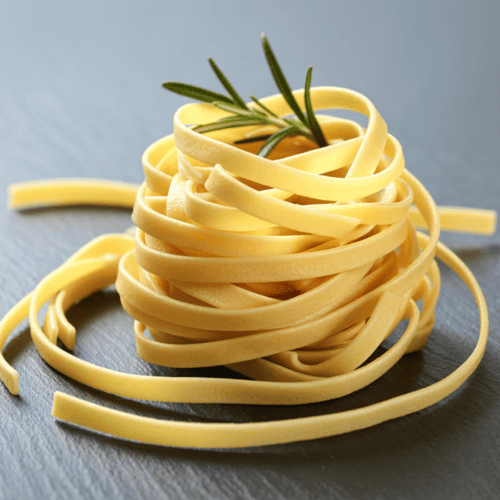
Fettuccine is made from long, flat ribbons of medium width. It is wider than linguine but narrower than pappardelle.
The broad surface works well with smooth, creamy sauces because each ribbon receives an even coating. Fettuccine Alfredo is its best-known preparation, particularly outside Italy, but the pasta is also suitable for mushrooms, chicken, prawns, salmon, and creamy vegetable sauces.
Fresh egg fettuccine has a soft but substantial texture. To prevent a heavy result, use enough sauce to coat the ribbons without leaving them swimming in cream.
7. Tagliatelle
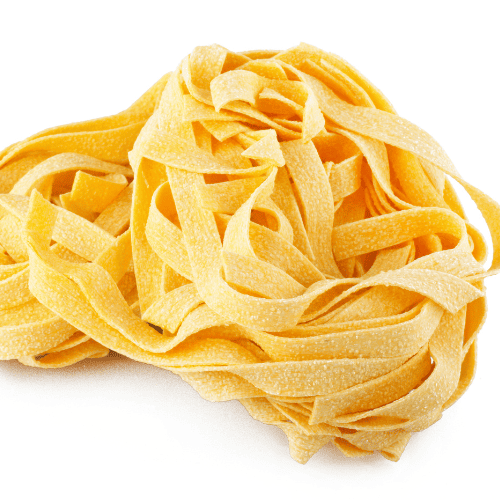
Tagliatelle is a traditional ribbon pasta strongly connected to Emilia-Romagna in northern Italy. It is usually made with eggs and wheat flour, then cut into long, flat strips.
Its width and slightly porous texture make it an excellent match for ragù, particularly the slow-cooked meat sauce associated with Bologna. The sauce clings to the ribbons instead of falling to the bottom of the plate.
Tagliatelle also works with mushrooms, butter, cream, sausage, and finely chopped vegetables. Although it resembles fettuccine, tagliatelle is often slightly narrower and is closely tied to northern Italian cooking traditions.
8. Pappardelle
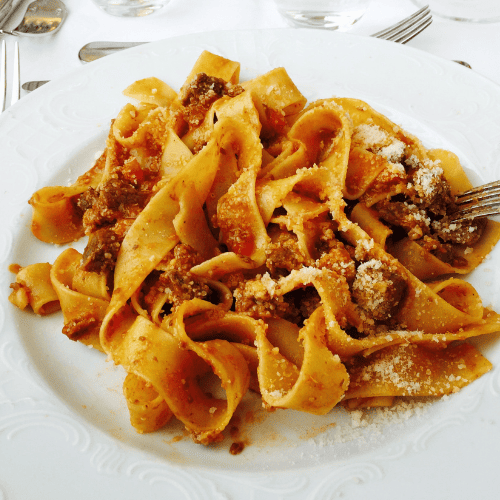
Pappardelle consists of very wide, flat ribbons. Its large surface and sturdy texture make it suitable for thick sauces containing substantial pieces of meat or vegetables.
Traditional pairings include slow-cooked beef, lamb, wild boar, duck, rabbit, and game sauces. It also works well with mushrooms, especially when they are cooked with butter, herbs, or cream.
Pappardelle is often made as a fresh egg pasta, giving it a tender texture that still stands up to long-cooked sauces. For the best balance, cut meat and vegetables into pieces that can sit comfortably on the broad ribbons.
9. Mafaldine
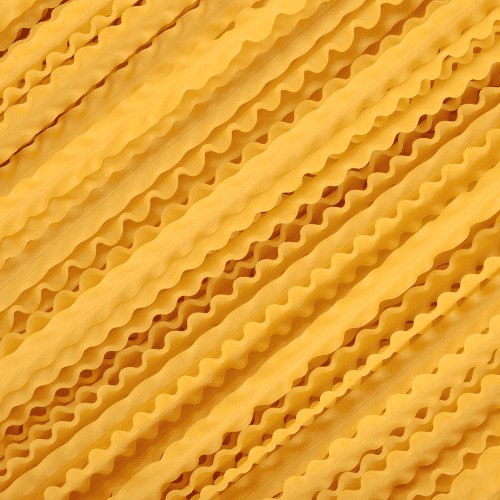
Mafaldine is a long ribbon pasta with decorative ruffled edges. It is also known by names such as mafalda or reginette, depending on the producer and region.
The flat centre carries smooth sauce, while the curled edges catch cheese, herbs, minced meat, and small vegetable pieces. Mafaldine works well with creamy mushroom sauce, tomato sauce, cheese-based preparations, sausage, and slow-cooked meat.
Its shape remains visually interesting after cooking, making it a useful choice for dishes where presentation matters. The ruffled edges also provide more texture than completely flat ribbon pasta.
10. Lasagne
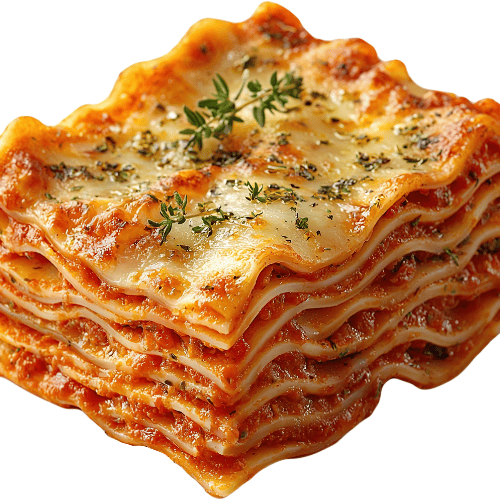
Lasagne refers both to broad pasta sheets and to the layered dish made with those sheets. The pasta may be flat or slightly ruffled along the edges.
For the baked dish, the sheets are layered with sauce, cheese, vegetables, or meat. Popular versions include beef ragù with béchamel, ricotta and tomato sauce, spinach and cheese, roasted vegetables, mushrooms, and seafood.
Some sheets require boiling before assembly, while others are designed to cook directly in the baking dish. Enough liquid must be included so the pasta becomes tender without drying out. The plural form lasagne is traditionally used in Italian, while lasagna is common in American English.
Types of Tubular Pasta
Tubular pasta catches sauce inside each piece, creating a fuller bite. Tubes with ridged surfaces are particularly effective with chunky tomato sauces, cheese, minced meat, sausage, and vegetables. Many tubular shapes are also strong enough for baked pasta dishes.
11. Penne Rigate
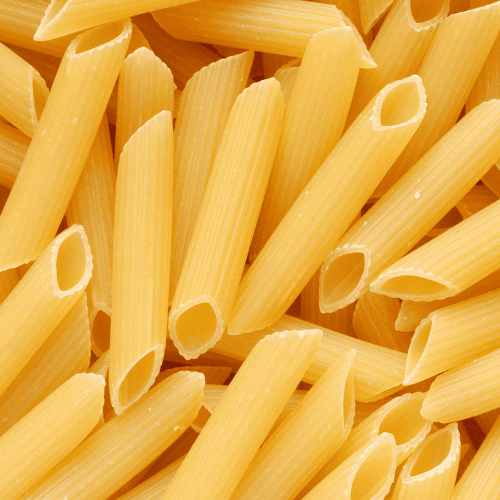
Penne rigate consists of short tubes with diagonal ends and a ridged exterior. The angled cut gives the pasta its pen-like appearance, while rigate means “ridged.”
The grooves hold sauce on the outside, and the hollow centre collects it inside. Penne rigate works with tomato sauce, pesto, cream, minced meat, chicken, roasted vegetables, and cheese.
It is also a reliable choice for pasta salads because the pieces are easy to mix and eat. Penne lisce is the smooth version, but penne rigate generally holds thick or chunky sauces more effectively.
12. Rigatoni
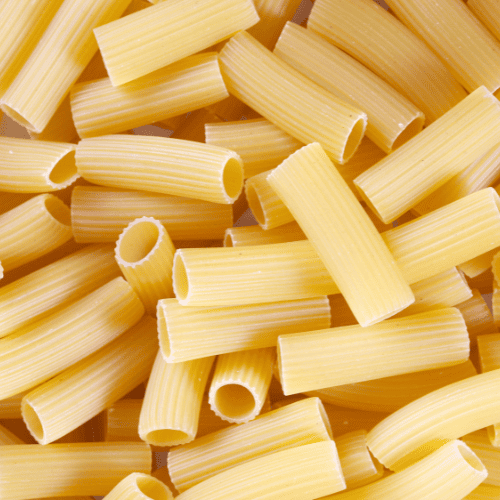
Rigatoni is a large, straight tube pasta with deep ridges and wide openings. It is shorter and broader than penne, and its ends are usually cut straight rather than diagonally.
The large centre can hold minced meat, melted cheese, sausage, and pieces of vegetables. Rigatoni is especially good with thick ragù, spicy tomato sauce, aubergine, mushrooms, and creamy cheese sauces.
Its strong structure also makes it suitable for baking. When used in baked pasta, rigatoni remains firm enough to hold its shape beneath layers of sauce and cheese.
13. Ziti
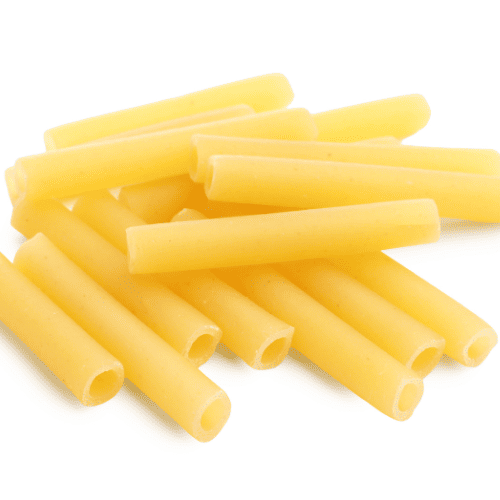
Ziti is a smooth, straight tube pasta traditionally associated with southern Italy. It is usually longer than penne when dried, although it is often broken into shorter pieces before cooking.
Ziti is best known for baked dishes. It is commonly combined with tomato sauce, ricotta, mozzarella, minced beef, sausage, or meatballs, then cooked until the cheese melts and the edges become lightly browned.
Its hollow shape allows sauce and cheese to enter each piece. Ziti can also be served without baking, but its smooth surface generally suits thick sauces that can fill the tube.
14. Paccheri
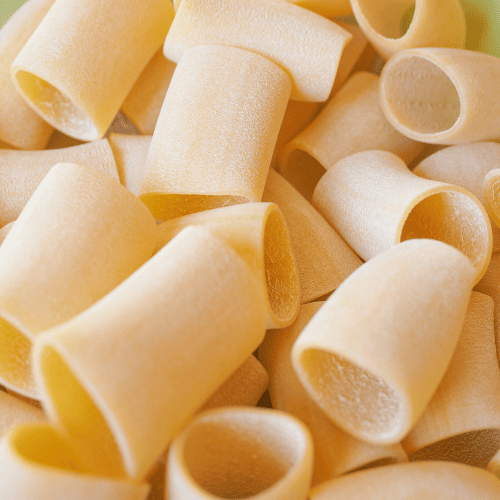
Paccheri consists of very large, wide tubes. The shape originated in Campania and is often used in southern Italian cooking.
Its broad opening makes it suitable for thick seafood sauces, ragù, tomato sauce, and large pieces of vegetables. Paccheri can also be filled with ricotta, meat, fish, mushrooms, or spinach and baked in sauce.
Because the pieces are large, a smaller serving can still feel substantial. Cook paccheri carefully and stir gently, as the tubes may split if they become too soft or are handled roughly.
15. Cannelloni
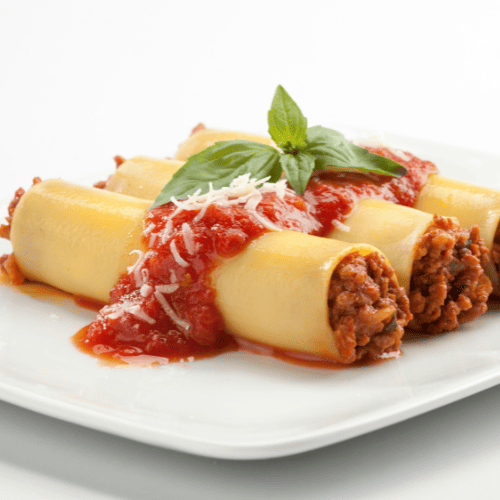
Cannelloni consists of large pasta tubes designed specifically for filling and baking. Unlike smaller tubular pasta, the pieces are usually stuffed before being covered with sauce.
Common fillings include ricotta and spinach, minced beef, chicken, mushrooms, pumpkin, and mixed vegetables. The filled tubes are placed in a baking dish, covered with tomato sauce, béchamel, or both, and finished with cheese.
Some cannelloni tubes need to be boiled first, while oven-ready versions soften during baking. The sauce should contain enough moisture to cook the pasta evenly and prevent the exposed edges from becoming dry.
Types of Twisted, Curved, and Shaped Pasta
Twisted and curved pasta is designed to catch ingredients. Grooves, folds, pockets, and pinched centres hold herbs, grated cheese, minced meat, vegetables, and small pieces of sauce, making these shapes useful for both hot meals and pasta salads.
16. Fusilli
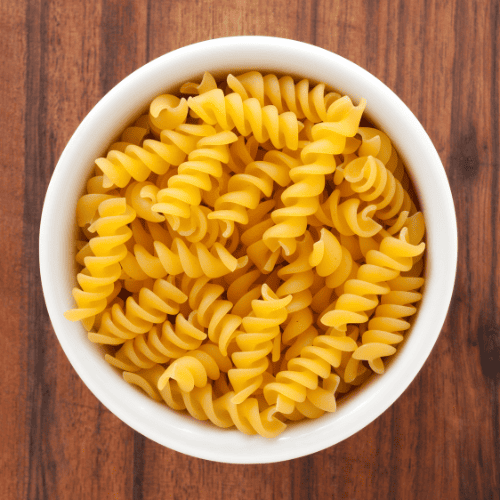
Fusilli has a short corkscrew or spiral shape. Its curves provide several surfaces where sauce and small ingredients can collect.
It works particularly well with pesto because the twisted shape traps herbs, cheese, nuts, and olive oil. Fusilli is also suitable for tomato sauce, cream sauce, roasted vegetables, tuna, chicken, and sausage.
Because the spirals remain easy to eat when cold, fusilli is a popular choice for pasta salads. It performs best with sauces containing small pieces rather than very large chunks that cannot enter the curves.
17. Cavatappi
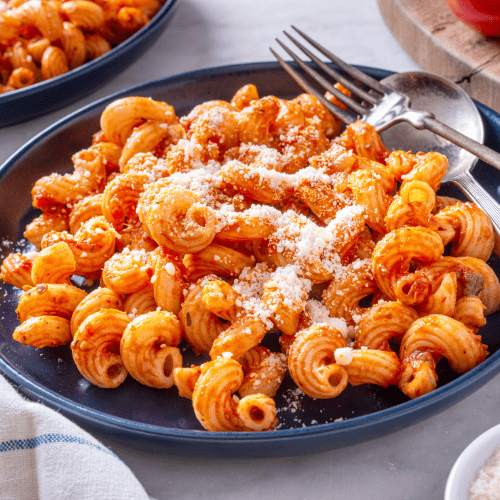
Cavatappi is a hollow pasta shaped like a curved corkscrew. Its name means “corkscrew” in Italian.
The combination of a tube and a spiral gives it strong sauce-holding ability. Cheese sauce can enter the centre while also coating the curved exterior, making cavatappi a popular option for macaroni and cheese.
It also works with creamy chicken dishes, tomato sauce, baked pasta, vegetables, and cold salads. Its firm, playful shape tends to remain intact during mixing and baking, provided it is not overcooked.
18. Casarecce
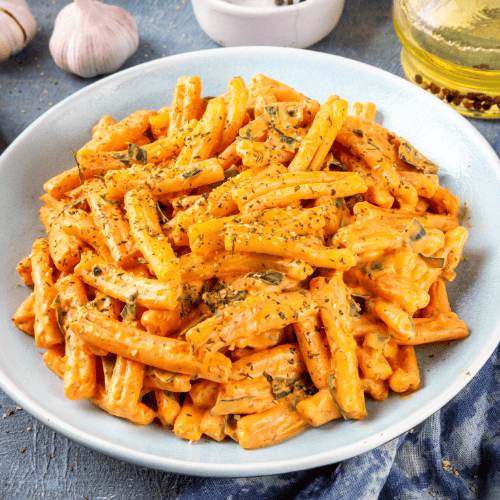
Casarecce is a short pasta with a loosely rolled, twisted shape. It often looks like a small scroll with curved edges and a narrow opening through the centre.
The pasta is strongly associated with Sicily, although it is now used throughout Italy and beyond. Its shape catches pesto, chopped vegetables, crumbled sausage, tomato sauce, ricotta, and finely grated cheese.
Casarecce is especially suitable for rustic sauces containing small ingredients. Its folds hold the sauce while maintaining a pleasantly firm texture.
19. Farfalle
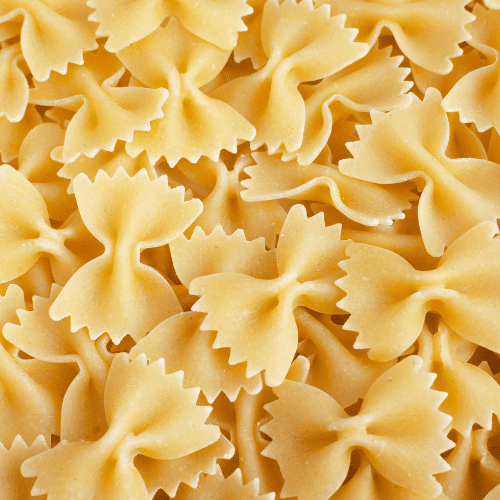
Farfalle is shaped like a bow tie or butterfly. Each piece has wide, flat sides and a tightly pinched centre.
The outer edges become tender during cooking, while the thicker centre usually remains slightly firmer. This contrast gives farfalle a distinctive texture.
It pairs well with light cream sauces, peas, mushrooms, chicken, smoked salmon, and roasted vegetables. Farfalle is also widely used in pasta salads because it holds its shape and looks attractive when mixed with colourful ingredients. Avoid very heavy sauces that may cover the shape completely.
20. Orecchiette
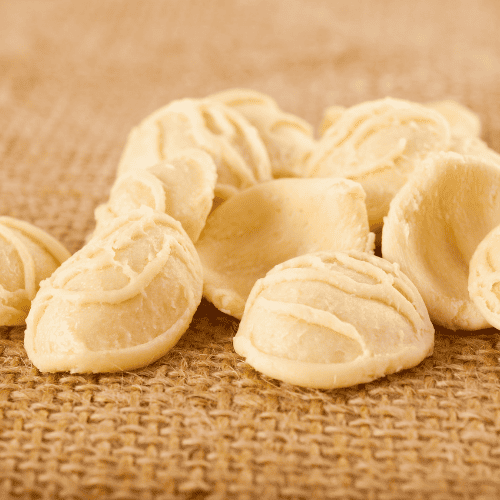
Orecchiette means “little ears,” a name inspired by the pasta’s small, rounded, bowl-like shape. It is traditionally associated with Puglia in southern Italy.
The shallow centre catches small pieces of meat, vegetables, cheese, and sauce. One of the best-known pairings combines orecchiette with broccoli rabe, garlic, chilli, and sometimes sausage.
It also works with peas, tomatoes, leafy greens, breadcrumbs, and grated cheese. The pasta’s slightly thick texture gives it a satisfying chew, especially when made by hand.
Types of Stuffed Pasta
Stuffed pasta contains cheese, meat, seafood, herbs, or vegetables inside a pasta wrapper. Because the filling already provides strong flavour, simple sauces are usually the best choice. Butter, broth, sage, light tomato sauce, or a small amount of cream can complement the filling without hiding it.
21. Ravioli
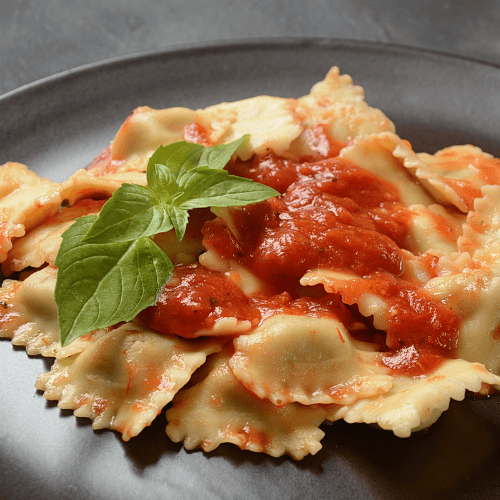
Ravioli consists of small pasta parcels that may be square, round, rectangular, or decorative. Two layers of thin pasta enclose a filling before the edges are sealed.
Popular fillings include ricotta and spinach, beef, mushrooms, pumpkin, lobster, crab, and cheese. The best sauce depends on what is inside.
Cheese or pumpkin ravioli works well with butter and sage, while meat ravioli can be served with light tomato sauce or roasting juices. Seafood ravioli often suits lemon, butter, or a delicate cream sauce. Heavy sauces may make the filling difficult to taste.
22. Tortellini
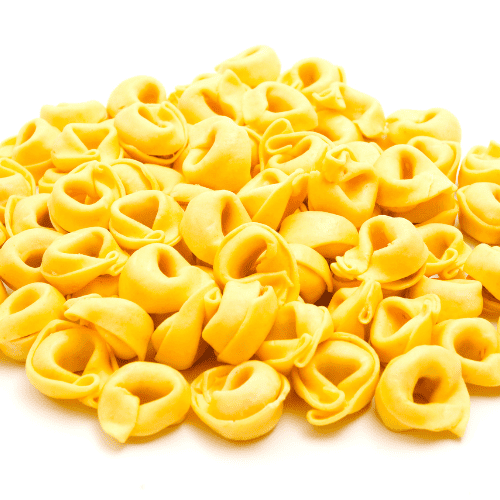
Tortellini is a small ring-shaped stuffed pasta traditionally linked to Emilia-Romagna. The pasta is folded around a filling and joined at the ends to create its recognisable shape.
Traditional fillings may include pork, cured meat, cheese, or a mixture of meat and Parmigiano Reggiano. Cheese-filled versions are also widely available.
Tortellini is traditionally served in broth, which allows the filling to remain the focus. It can also be paired with butter, light cream sauce, tomato sauce, or a simple cheese sauce.
23. Tortelloni
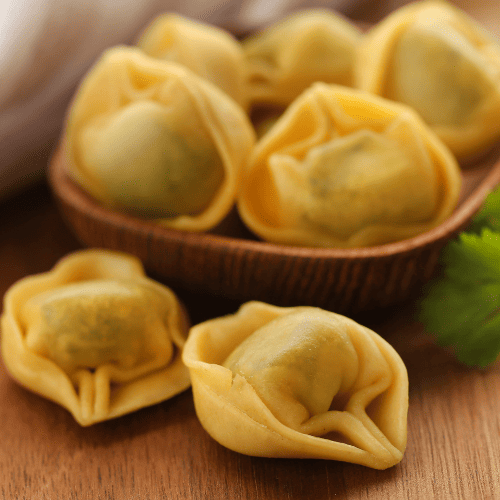
Tortelloni has a shape similar to tortellini but is noticeably larger. The extra space allows it to hold softer and more generous fillings.
Common fillings include ricotta and spinach, pumpkin, herbs, mushrooms, potato, and other vegetables. Meat fillings are possible, but vegetable and cheese combinations are especially common.
Because tortelloni is larger, only a few pieces may be needed for one serving. It pairs well with melted butter, sage, light tomato sauce, grated cheese, or a delicate cream sauce that complements rather than covers the filling.
24. Agnolotti
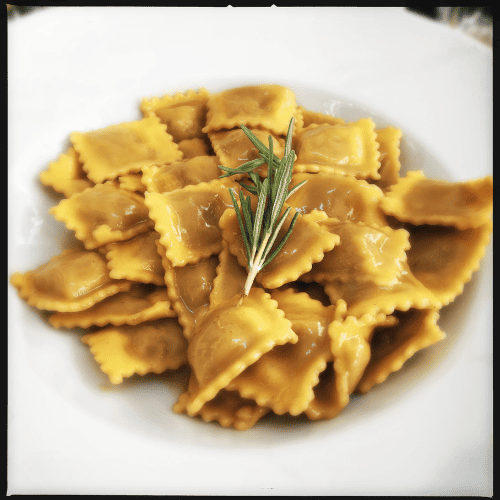
Agnolotti is a stuffed pasta from Piedmont in northwestern Italy. It is commonly formed into small rectangles or folded pockets with sealed edges.
Traditional fillings often use roasted or braised meat, making agnolotti a practical way to turn cooked meat into a new dish. Modern versions may contain cheese, vegetables, spinach, or pumpkin.
Agnolotti is usually served with butter, sage, roasting juices, meat reduction, or a light sauce. These simple pairings highlight the filling and the delicate pasta wrapper without adding unnecessary weight.
25. Mezzelune
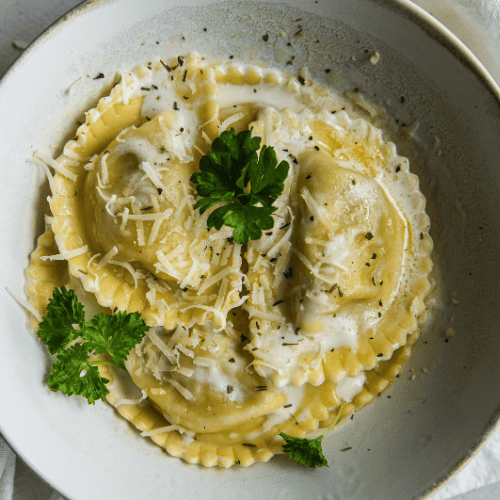
Mezzelune means “half-moons,” describing the pasta’s curved shape. A round piece of pasta is folded over a filling and sealed along the rounded edge.
Typical fillings include ricotta, herbs, pumpkin, mushrooms, spinach, beetroot, and other vegetables. Some versions also contain meat or seafood.
Mezzelune pairs well with butter and herbs, light cream sauce, smooth tomato sauce, or a small amount of grated cheese. The sauce should match the filling: earthy mushroom parcels suit butter, while cheese and herb versions work well with tomato or sage.
Types of Small and Regional Pasta
Small and regional pasta varieties often reflect local ingredients and cooking traditions. Some are made for soups and broths, while others are shaped by hand and served with sauces closely connected to a particular Italian region.
26. Orzo
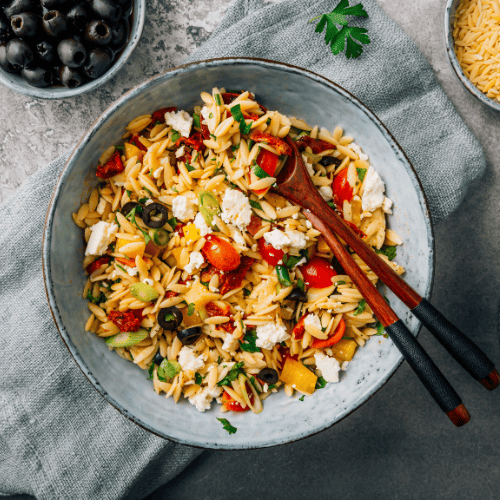
Orzo is a small, rice-shaped pasta made from wheat. Despite its appearance, it is pasta rather than rice.
Its small size makes it useful in soups, salads, baked dishes, and one-pot meals. It can be cooked in broth like risotto, mixed with roasted vegetables, or served cold with herbs, cheese, and a simple dressing.
Orzo also works as a side dish for chicken, fish, or grilled vegetables. Because the pieces are small, they can become soft quickly, so check the texture before the recommended cooking time ends.
27. Ditalini
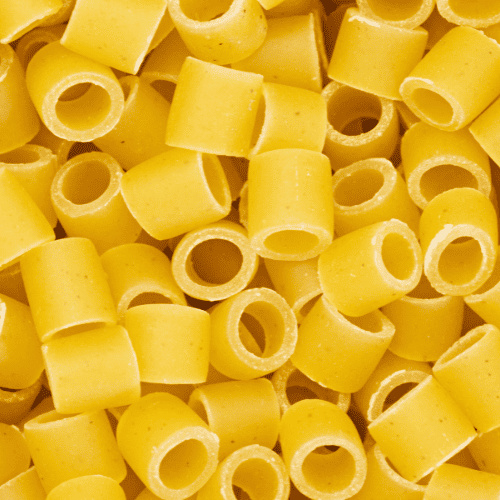
Ditalini is a tiny tube pasta whose name means “little thimbles.” The pieces are small enough to fit easily onto a spoon, making them ideal for soups and bean dishes.
It is commonly used in minestrone, pasta e fagioli, lentil soup, and vegetable broth. The hollow centre absorbs flavour while giving the soup more body.
Ditalini can also be added to simple pasta salads or served with peas and cheese. In soups, cook it only until tender so it does not become swollen or overly soft.
28. Fregola
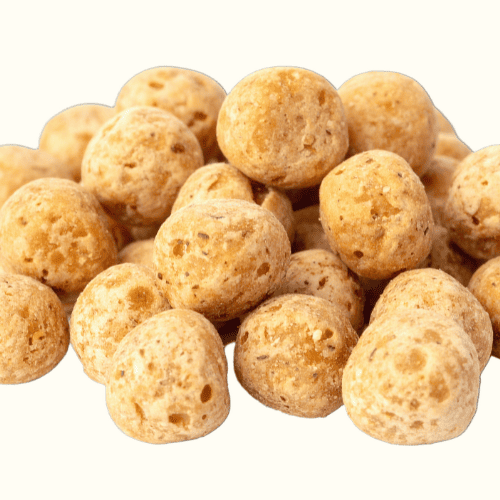
Fregola, also called fregula, is a traditional Sardinian pasta made into small, irregular beads. The pieces are toasted, giving them a golden colour and a slightly nutty flavour.
Fregola is often cooked in broth and served with clams, mussels, prawns, tomatoes, or vegetables. Its texture falls somewhere between small pasta and a grain, making it suitable for soups, warm salads, and one-pot meals.
Because the beads vary slightly in size, handmade fregola has a rustic texture. It can absorb plenty of flavour while still remaining pleasantly chewy.
29. Trofie
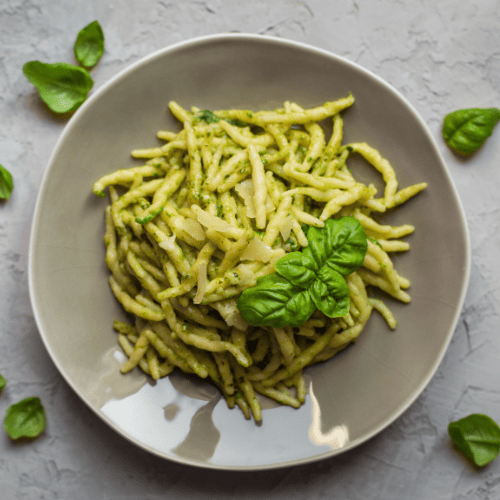
Trofie is a short, hand-twisted pasta from Liguria in northwestern Italy. Each piece has a narrow, tapered shape formed by rolling and twisting the dough.
Its traditional partner is Genovese pesto. The curves collect the basil, pine nuts, garlic, cheese, and olive oil, helping the sauce coat every piece.
Trofie al pesto is often prepared with boiled potatoes and green beans in the same dish. The mild pasta allows the fresh pesto to remain the main flavour while its firm texture supports the vegetables.
30. Cavatelli
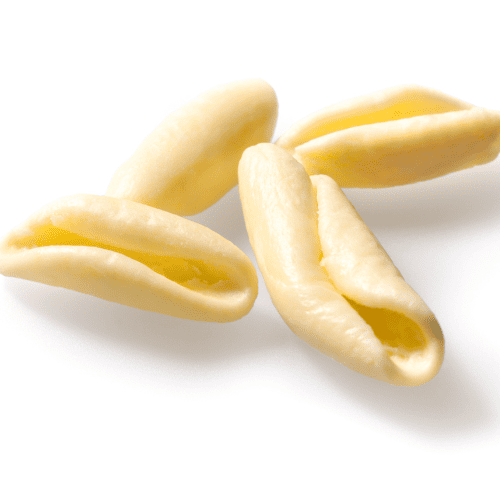
Cavatelli is a small pasta with a hollowed or curled centre. It is common in several southern Italian regions, where it may be made by pressing small pieces of dough with the fingers or a tool.
The central hollow catches tomato sauce, crumbled sausage, ricotta, breadcrumbs, and chopped vegetables. Cavatelli works especially well with broccoli, leafy greens, mushrooms, and beans.
Some versions are made with ricotta in the dough, producing a softer texture. Its simple handmade shape makes it well suited to rustic, home-style dishes.
Quick Pasta and Sauce Pairing Guide
Instead of memorising every pasta name, look at its basic shape and texture. The table below shows how different pasta structures interact with sauces and cooking methods.
Pasta shape or texture | Best sauce type | Recommended pasta examples | Best cooking method |
|---|---|---|---|
Thin strands | Olive oil, butter, seafood, smooth tomato, lemon | Capellini, vermicelli | Boil briefly and toss gently with sauce |
Thick strands | Tomato, carbonara, seafood, smooth meat sauces | Spaghetti, bucatini | Boil until al dente and finish in the sauce |
Wide ribbons | Cream, butter, mushrooms, ragù, slow-cooked meat | Fettuccine, tagliatelle, pappardelle | Toss with sauce while hot |
Ridged tubes | Chunky tomato, sausage, cheese, meat, vegetables | Penne rigate, rigatoni | Boil, combine with sauce, or bake |
Twisted shapes | Pesto, chopped vegetables, cheese, creamy sauces | Fusilli, cavatappi, casarecce | Toss thoroughly so sauce enters the grooves |
Stuffed pasta | Butter, broth, sage, light cream, simple tomato | Ravioli, tortellini, agnolotti | Simmer gently and serve with a light sauce |
Tiny soup pasta | Broth, beans, lentils, light vegetables | Orzo, ditalini, fregola | Cook directly in soup or broth |
Large pasta for baking | Tomato, béchamel, cheese, meat, vegetable fillings | Lasagne, cannelloni, paccheri | Layer or fill, cover with sauce, and bake |
How to Choose the Right Pasta Shape
Choosing pasta becomes easier when you focus on the sauce rather than the name printed on the package. Start by considering the sauce’s thickness. A light sauce made with olive oil, butter, or seafood needs a delicate pasta that will not dominate it. A thick meat or cheese sauce requires a stronger shape.
Next, look at the size of the ingredients. Small pieces of minced meat, herbs, peas, or chopped vegetables fit naturally inside tubes and grooves. Large pieces of beef, mushrooms, or seafood need broad pasta with enough surface area to carry them.
The pasta’s exterior also matters. Smooth shapes work well with silky sauces, while ridged surfaces create friction that helps thicker sauces cling. Openings and hollow centres collect melted cheese, tomato, and small ingredients inside each bite.
Finally, consider the cooking method. Pasta used in baked dishes needs enough structure to survive boiling, mixing, and oven cooking. Large tubes, broad sheets, and sturdy ridged shapes are usually the most reliable choices.
Choose Thin Pasta for Light Sauces
Thin pasta works best when the sauce is smooth, delicate, and easy to distribute. Olive oil, melted butter, lemon, seafood, fresh herbs, and smooth tomato sauces can coat fine strands without weighing them down.
Capellini and vermicelli are especially delicate, while spaghetti offers slightly more strength. Avoid combining very thin pasta with large meat pieces or thick cheese sauces, as the strands may break, stick together, or disappear beneath the other ingredients.
Choose Ribbons for Rich Sauces
Wide pasta ribbons provide a large surface for carrying cream, butter, cheese, mushrooms, and slow-cooked meat.
Fettuccine works well with smooth cream sauces, while tagliatelle and pappardelle can handle ragù and substantial pieces of meat. The wider the ribbon, the stronger the sauce can usually be. However, the sauce should still coat the pasta rather than forming a separate layer at the bottom of the plate.
Choose Tubes for Chunky Sauces
Tubular pasta is ideal when a sauce contains minced meat, cheese, beans, sausage, or chopped vegetables. These ingredients enter the hollow centre and become part of each bite.
Ridged tubes such as penne rigate and rigatoni provide even more grip. Large tubes, including paccheri and cannelloni, can hold fillings or remain firm during baking. Smooth tubes such as ziti are also effective when surrounded by melted cheese and thick tomato sauce.
Choose Twisted Pasta for Pesto and Vegetables
Twisted pasta has curves, folds, and grooves that collect pesto, grated cheese, herbs, and finely chopped vegetables.
Fusilli and casarecce are excellent for pesto because their shapes prevent the sauce from sliding away. Cavatappi combines a spiral exterior with a hollow centre, making it especially useful for creamy cheese sauce. These shapes also work well in pasta salads because they hold dressings and small ingredients evenly.
Keep Stuffed Pasta Pairings Simple
Stuffed pasta already contains its main flavour, so the sauce should support the filling rather than compete with it.
Butter and sage complement pumpkin or cheese fillings, while broth is traditional for tortellini. Light cream can work with mushrooms or seafood, and a simple tomato sauce suits many cheese and meat fillings. Avoid adding too many strong ingredients at once, or the flavour inside the pasta may become difficult to recognise.
FAQs About Types of Pasta
There is no official total, but hundreds of pasta shapes exist worldwide, including regional variations, alternative names, filled types, and handmade forms.
Spaghetti is generally considered the most popular pasta worldwide because it is widely available, versatile, affordable, and suitable for many familiar sauces.
Deeply ridged, hollow, twisted, and cupped shapes hold the most sauce, especially rigatoni, fusilli, cavatappi, shells, and bowl-shaped orecchiette pasta.
Fettuccine, tagliatelle, mafaldine, rigatoni, and cavatappi work best with creamy sauces because their broad surfaces, ridges, or hollow centres capture sauce.
Lasagne, ziti, rigatoni, cannelloni, and paccheri are excellent for baked dishes because they stay firm and hold sauce, cheese, and fillings.
Yes, pasta shapes can be substituted when they have similar size, thickness, texture, and sauce-holding ability, especially within the same pasta category.
Final Thoughts
Pasta shapes are functional, not simply decorative. Every ridge, curve, opening, and flat surface changes how the pasta interacts with sauce.
Delicate strands suit olive oil, seafood, butter, and smooth tomato sauces. Wide ribbons support cream, mushrooms, and slow-cooked meat, while tubes and twists catch cheese, vegetables, and chunky ingredients. Stuffed pasta usually tastes best with a simple sauce that allows its filling to remain noticeable.
You do not need to memorise every variety. Look at the shape, consider the sauce, and choose a pasta that can carry the ingredients comfortably. The right pairing makes the entire dish easier to eat and more enjoyable.