
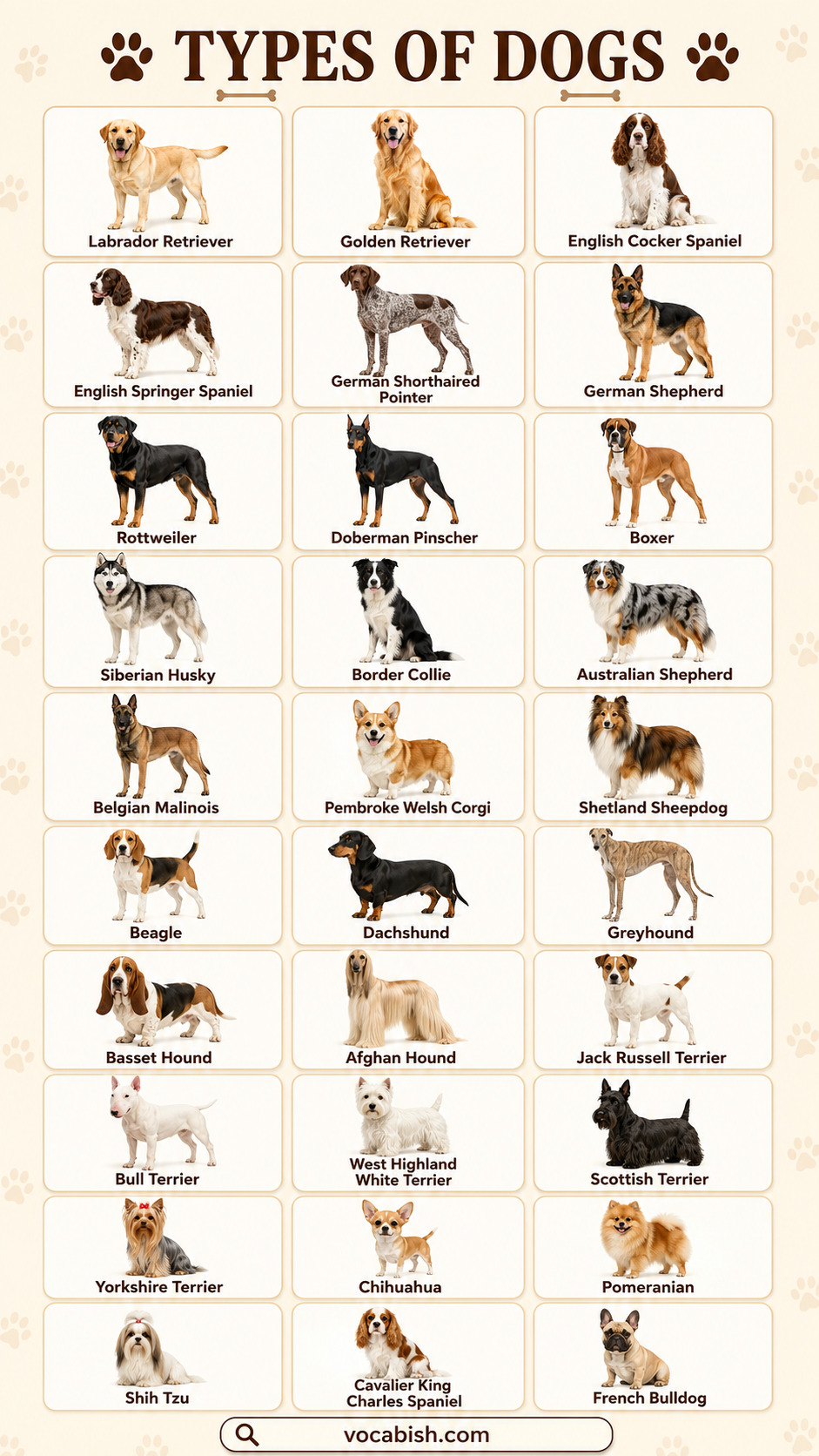
Dogs come in an extraordinary range of sizes, appearances, and personalities. Some breeds were developed to retrieve game, guard property, herd livestock, or pull sleds, while others were bred mainly to live closely with people.
This practical guide introduces 30 popular dog breeds and explains their appearance, temperament, activity level, grooming needs, trainability, and ideal living environment. It can help prospective owners compare breeds and understand which characteristics may suit their lifestyle.
Introduction
Dogs vary greatly in size, coat type, temperament, energy level, and original purpose. A Chihuahua may weigh only a few kilograms, while a Rottweiler or German Shepherd has a much larger and more powerful build. Some dogs need hours of daily activity, while others are comfortable with shorter walks and indoor companionship.
Coats also affect care. Short-haired dogs may need little trimming but can still shed heavily. Long-haired and double-coated breeds usually require more frequent brushing.
Temperament is equally important. Some dogs are highly social and easy to train, while others are independent, protective, vocal, or strongly driven to chase moving animals.
To make comparison easier, the 200+ breeds in this guide are divided into sporting, working, herding, hound, terrier, and companion categories. Each section highlights the breeds’ main traits and the homes they generally suit best.
What Is the Difference Between Dog Types and Dog Breeds?
A dog type is a broad category based on a dog’s purpose, size, appearance, or working style. Sporting dogs, herding dogs, terriers, guard dogs, and companion dogs are examples of dog types.
A breed is a more clearly defined group with shared ancestry and predictable physical and behavioural characteristics. Labrador Retrievers, Beagles, German Shepherds, and Chihuahuas are individual breeds.
Dogs within one type can still look and behave very differently. For example, both Greyhounds and Beagles belong to the hound category, but one was developed to hunt mainly by sight and the other primarily by scent.
Breed traits provide useful guidance, but every dog remains an individual shaped by genetics, training, health, socialisation, and environment.
List of All Dog Breeds (A-Z)
Affenpinscher | Afghan Hound | Airedale Terrier |
Akita | Alaskan Klee Kai | Alaskan Malamute |
American Bulldog | American English Coonhound | American Eskimo Dog |
American Foxhound | American Hairless Terrier | American Leopard Hound |
American Staffordshire Terrier | American Water Spaniel | Anatolian Shepherd Dog |
Appenzeller Sennenhund | Australian Cattle Dog | Australian Kelpie |
Australian Shepherd | Australian Stumpy Tail Cattle Dog | Australian Terrier |
Azawakh | Barbet | Basenji |
Basset Fauve de Bretagne | Basset Hound | Bavarian Mountain Scent Hound |
Beagle | Bearded Collie | Beauceron |
Bedlington Terrier | Belgian Laekenois | Belgian Malinois |
Belgian Sheepdog | Belgian Tervuren | Bergamasco Sheepdog |
Berger Picard | Bernese Mountain Dog | Bichon Frise |
Biewer Terrier | Black and Tan Coonhound | Black Russian Terrier |
Bloodhound | Blue Picardy Spaniel | Bluetick Coonhound |
Boerboel | Bohemian Shepherd | Bolognese |
Border Collie | Border Terrier | Borzoi |
Boston Terrier | Bouvier des Ardennes | Bouvier des Flandres |
Boxer | Boykin Spaniel | Bracco Italiano |
Braque du Bourbonnais | Braque Francais Pyrenean | Braque Saint-Germain |
Brazilian Terrier | Briard | Brittany |
Broholmer | Brussels Griffon | Bull Terrier |
Bulldog | Bullmastiff | Cairn Terrier |
Canaan Dog | Canadian Eskimo Dog | Cane Corso |
Cardigan Welsh Corgi | Carolina Dog | Catahoula Leopard Dog |
Caucasian Shepherd Dog | Cavalier King Charles Spaniel | Central Asian Shepherd Dog |
Cesky Terrier | Chesapeake Bay Retriever | Chihuahua |
Chinese Crested | Chinese Shar-Pei | Chinook |
Chow Chow | Cirneco dell’Etna | Clumber Spaniel |
Cocker Spaniel | Collie | Coton de Tulear |
Croatian Sheepdog | Curly-Coated Retriever | Czechoslovakian Vlciak |
Dachshund | Dalmatian | Dandie Dinmont Terrier |
Danish-Swedish Farmdog | Deutscher Wachtelhund | Doberman Pinscher |
Dogo Argentino | Dogue de Bordeaux | Drentsche Patrijshond |
Drever | Dutch Shepherd | English Cocker Spaniel |
English Foxhound | English Setter | English Springer Spaniel |
English Toy Spaniel | Entlebucher Mountain Dog | Estrela Mountain Dog |
Eurasier | Field Spaniel | Finnish Lapphund |
Finnish Spitz | Flat-Coated Retriever | French Bulldog |
French Spaniel | German Longhaired Pointer | German Pinscher |
German Shepherd Dog | German Shorthaired Pointer | German Spitz |
German Wirehaired Pointer | Giant Schnauzer | Glen of Imaal Terrier |
Golden Retriever | Gordon Setter | Grand Basset Griffon Vendéen |
Great Dane | Great Pyrenees | Greater Swiss Mountain Dog |
Greyhound | Hamiltonstovare | Hanoverian Scenthound |
Harrier | Havanese | Hokkaido |
Hovawart | Ibizan Hound | Icelandic Sheepdog |
Irish Red and White Setter | Irish Setter | Irish Terrier |
Irish Water Spaniel | Irish Wolfhound | Italian Greyhound |
Jagdterrier | Japanese Akitainu | Japanese Chin |
Japanese Spitz | Japanese Terrier | Kai Ken |
Karelian Bear Dog | Keeshond | Kerry Blue Terrier |
Kishu Ken | Komondor | Korean Jindo Dog |
Kromfohrlander | Kuvasz | Labrador Retriever |
Lagotto Romagnolo | Lakeland Terrier | Lancashire Heeler |
Lapponian Herder | Large Munsterlander | Leonberger |
Lhasa Apso | Löwchen | Maltese |
Manchester Terrier | Mastiff | Miniature American Shepherd |
Miniature Bull Terrier | Miniature Pinscher | Miniature Schnauzer |
Mountain Cur | Mudi | Neapolitan Mastiff |
Nederlandse Kooikerhondje | Newfoundland | Norfolk Terrier |
Norrbottenspets | Norwegian Buhund | Norwegian Elkhound |
Norwegian Lundehund | Norwich Terrier | Nova Scotia Duck Tolling Retriever |
Old English Sheepdog | Otterhound | Papillon |
Parson Russell Terrier | Pekingese | Pembroke Welsh Corgi |
Peruvian Inca Orchid | Petit Basset Griffon Vendéen | Pharaoh Hound |
Plott Hound | Pointer | Polish Lowland Sheepdog |
Pomeranian | Poodle | Portuguese Water Dog |
Types of Sporting and Retrieving Dogs
Sporting dogs were traditionally developed to help hunters locate, flush, point at, or retrieve game. They are generally active, trainable, social, and eager to work with people. Most need regular outdoor exercise and are best suited to owners who enjoy walking, training, swimming, or other physical activities.
1. Labrador Retriever
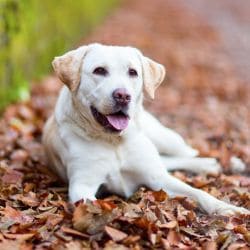
The Labrador Retriever is a medium-to-large dog with a strong body, broad head, short water-resistant coat, and thick tail. Common coat colours include black, yellow, and chocolate.
Labradors are known for being friendly, sociable, intelligent, and highly trainable. They often enjoy retrieving, swimming, walking, and interactive games. Most need substantial daily exercise to prevent boredom and unwanted behaviour.
Their gentle and adaptable nature makes them popular with families, active owners, and service-dog organisations. They usually respond well to reward-based training but can become excitable without consistent guidance.
Their short coat is easy to maintain, although Labradors can shed considerably throughout the year.
2. Golden Retriever
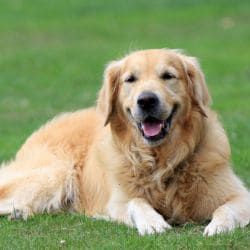
The Golden Retriever is a medium-to-large dog with a balanced build, feathered tail, and long golden or cream-coloured coat.
Golden Retrievers are usually gentle, affectionate, intelligent, and eager to please. These qualities have made them popular family companions, therapy dogs, assistance dogs, and search-and-rescue workers.
They need regular walking, play, training, and opportunities to interact with people. Many enjoy swimming and retrieving games. Their social nature means they may struggle when left alone for very long periods.
The coat requires frequent brushing to remove loose hair and prevent tangles, particularly around the ears, legs, chest, and tail. They suit families and owners who can provide exercise, companionship, and regular grooming.
3. English Cocker Spaniel
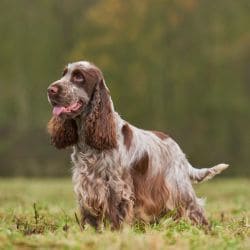
The English Cocker Spaniel has a compact, athletic body, long hanging ears, expressive eyes, and a silky coat. It comes in many solid and mixed colours.
This breed is usually cheerful, affectionate, curious, and energetic. English Cocker Spaniels enjoy walks, scent games, retrieving, and family activities. Their sporting background gives them more stamina than their smaller appearance may suggest.
Their long ears and feathered coat need regular cleaning and brushing. Professional trimming may also be required to keep the coat manageable.
They can suit active families, couples, and individuals who want a friendly medium-sized dog. Consistent training is important because their excitement and strong interest in scents can sometimes distract them.
4. English Springer Spaniel
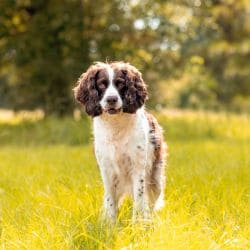
The English Springer Spaniel is a medium-sized, athletic dog with long ears, a feathered coat, and a strong but agile body.
Originally developed to locate and flush game, this breed has considerable energy, endurance, and scenting ability. English Springer Spaniels are usually affectionate, responsive, and enthusiastic about working with their owners.
They need daily physical exercise combined with training, scent work, retrieving, or problem-solving activities. Short walks alone may not provide enough stimulation for an active individual.
Their feathered coat requires regular brushing, especially after outdoor adventures. They are best suited to active households that can provide companionship, structured exercise, and consistent training.
5. German Shorthaired Pointer
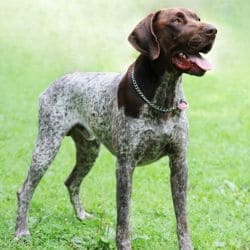
The German Shorthaired Pointer has a lean, muscular body, long legs, hanging ears, and a short coat that commonly appears in liver, white, or patterned combinations.
This breed was developed as a versatile hunting dog and has excellent stamina, intelligence, speed, and scenting ability. It usually forms a close relationship with its family and enjoys participating in outdoor activities.
German Shorthaired Pointers require considerable daily exercise and mental stimulation. Running, hiking, retrieving, scent work, and advanced training can help satisfy their strong work drive.
Their short coat needs limited grooming, but their exercise and training needs are demanding. They suit active, experienced owners rather than people seeking a relaxed companion.
Types of Working and Guardian Dogs
Working dogs were developed for tasks such as guarding, pulling sleds, protecting livestock, rescuing people, or assisting on farms. Many are powerful, intelligent, loyal, and naturally alert. Responsible training, early socialisation, secure handling, and sufficient exercise are particularly important for these breeds.
6. German Shepherd
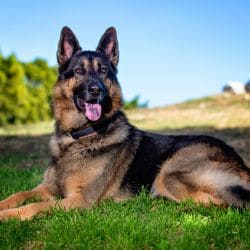
The German Shepherd is a large, athletic dog with upright ears, a long muzzle, and a dense coat. Its confident movement and alert expression reflect its working background.
German Shepherds are intelligent, loyal, responsive, and often naturally protective. They are widely used in police work, military service, search and rescue, assistance work, and security roles.
They need structured training, early socialisation, daily exercise, and regular mental challenges. Without enough activity or guidance, they may become restless or overly watchful.
Their double coat sheds throughout the year and more heavily during seasonal changes. They suit committed owners who can provide leadership, training, exercise, and meaningful interaction.
7. Rottweiler
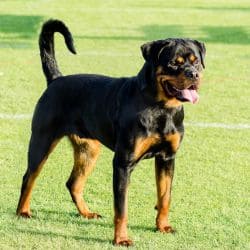
The Rottweiler is a large, muscular dog with a broad head, strong body, and short black coat marked with rust or tan colouring.
Rottweilers are often calm, confident, loyal, and highly devoted to their families. Their history includes livestock driving, farm work, cart pulling, and property protection.
Because they are powerful and naturally watchful, early socialisation and consistent training are essential. They should learn calm behaviour around visitors, children, other animals, and unfamiliar environments.
Rottweilers need regular walks, training, and controlled physical activity. Their short coat is relatively easy to maintain. They are generally best suited to responsible owners who understand powerful working breeds.
8. Doberman Pinscher
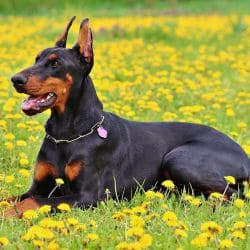
The Doberman Pinscher has a sleek, muscular body, long legs, a narrow head, and a short coat. It is known for its speed, alertness, and elegant appearance.
Dobermans are usually intelligent, loyal, energetic, and strongly attached to their owners. Their protective nature makes early socialisation important, especially around unfamiliar people and animals.
They learn quickly and often enjoy obedience, tracking, agility, and other structured activities. Daily exercise and mental stimulation help them remain settled and responsive.
Their short coat requires little grooming, but they may be sensitive to cold conditions. Dobermans suit active owners who can provide close companionship, clear boundaries, and consistent reward-based training.
9. Boxer
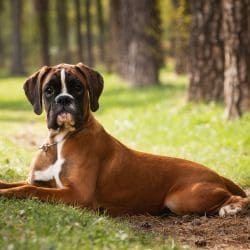
The Boxer is a medium-to-large dog with a muscular body, square muzzle, short coat, and highly expressive face.
Boxers are usually playful, affectionate, energetic, and enthusiastic. Many remain puppy-like well into adulthood and enjoy games, training, and family interaction.
They require daily exercise but should not be pushed too hard in very hot weather. Their short muzzle can make temperature management especially important. Their short coat also provides limited protection in cold conditions.
Boxers are often friendly with families but can be strong and excitable. Early training helps them learn polite greetings and controlled play. They suit active homes that enjoy an energetic, people-focused companion.
10. Siberian Husky
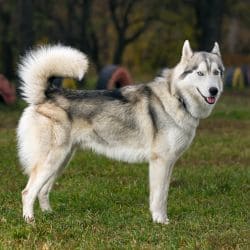
The Siberian Husky is a medium-sized working dog with a thick double coat, upright ears, and a bushy tail. Its eyes may be blue, brown, or different colours.
Huskies were developed to pull sleds over long distances, giving them exceptional stamina and a strong desire to run. They are generally social, independent, intelligent, and sometimes challenging to train.
They require considerable exercise, secure outdoor areas, and careful supervision. Their prey drive and independent nature can make off-lead reliability difficult.
The double coat sheds heavily, particularly during seasonal coat changes. Siberian Huskies are best suited to active owners who understand their exercise, grooming, training, and containment needs.
Types of Herding Dogs
Herding breeds were developed to control and move livestock. They are often highly intelligent, responsive, energetic, and sensitive to movement. These dogs are happiest when given regular exercise, clear training, and tasks that challenge both their bodies and minds.
11. Border Collie
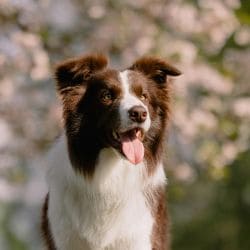
The Border Collie is a medium-sized, agile dog with an intense expression and a smooth or moderately long coat. Black and white is common, but many other colours exist.
Border Collies are widely recognised for their intelligence, concentration, responsiveness, and strong herding instinct. They learn commands quickly and often excel in obedience, agility, scent work, and dog sports.
Their mental and physical needs are extremely high. A few short walks usually cannot satisfy them. They need structured training, active play, and meaningful tasks.
This breed is best suited to experienced, highly active owners. Without suitable stimulation, a Border Collie may develop repetitive or destructive behaviours.
12. Australian Shepherd
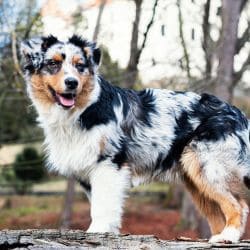
The Australian Shepherd is a medium-sized herding dog with an athletic body, expressive eyes, and a medium-length coat. Common colours include black, red, blue merle, and red merle.
Australian Shepherds are intelligent, energetic, loyal, and highly trainable. Many have strong herding instincts and may attempt to control children, pets, or moving objects.
They require daily exercise, advanced training, problem-solving games, and opportunities to work. They often excel in agility, obedience, and herding activities.
Their double coat needs regular brushing and sheds seasonally. They suit active owners who enjoy training and can provide consistent mental stimulation rather than exercise alone.
13. Belgian Malinois
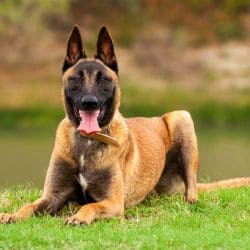
The Belgian Malinois is a medium-to-large dog with a lean, athletic body, upright ears, short coat, and alert expression.
This breed has an exceptionally strong work drive, fast reactions, and high intelligence. Belgian Malinois are frequently used in police, military, detection, protection, and search work.
They require advanced training, intensive daily exercise, careful socialisation, and regular mental challenges. Their speed, strength, sensitivity, and protective tendencies can be difficult for inexperienced owners to manage.
The coat is easy to maintain but sheds regularly. A Belgian Malinois is generally best suited to experienced handlers who can provide structured work, controlled outlets, and consistent training.
14. Pembroke Welsh Corgi
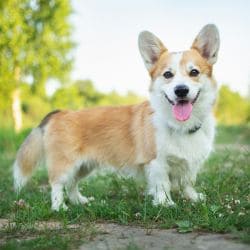
The Pembroke Welsh Corgi has short legs, a long body, upright ears, and a fox-like face. Despite its small height, it is a sturdy and active herding breed.
Corgis are usually intelligent, bold, alert, and affectionate. Their herding background can make them responsive to movement, and some may nip at heels without proper guidance.
They need daily walks, play, and training to manage their energy and weight. Their long back also makes careful handling and controlled jumping important.
The thick double coat sheds heavily. Pembroke Welsh Corgis can suit active families and smaller homes when their exercise, training, and grooming needs are met.
15. Shetland Sheepdog
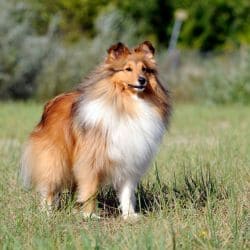
The Shetland Sheepdog, commonly called the Sheltie, is a small-to-medium herding dog with a long double coat, narrow face, and bright expression.
Shelties are intelligent, affectionate, responsive, and highly trainable. They often excel in obedience and agility and usually form close relationships with their families.
Many Shelties are naturally vocal and may bark at visitors, movement, or unfamiliar sounds. Training can help manage excessive alert barking.
Their long coat needs frequent brushing to prevent tangles and control shedding. They suit owners who want an attentive, active companion and can provide regular exercise, training, and grooming.
Types of Hound Dogs
Hounds were traditionally bred to locate and pursue animals using scent or sight. Some are energetic and independent, while others are calm and affectionate indoors. Many have strong hunting instincts and may become distracted when they detect an interesting scent or movement.
16. Beagle
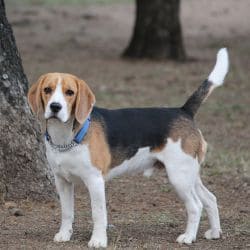
The Beagle is a small-to-medium hound with a compact body, long ears, short coat, and friendly expression.
Beagles have an exceptionally strong sense of smell and were developed to track animals in groups. They are usually sociable, curious, cheerful, and good-natured.
Their scenting instinct can make them difficult to recall when they follow an interesting trail. Secure gardens and lead control are therefore important.
Beagles can be vocal and may howl, bark, or bay. They need daily exercise, scent games, and consistent training. Their short coat is easy to maintain, although it sheds regularly.
17. Dachshund
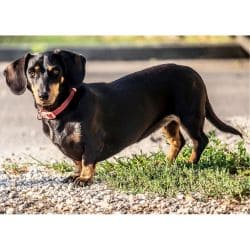
The Dachshund has a long body, short legs, deep chest, and bold expression. It is available in standard and miniature sizes with smooth, long, or wire-haired coats.
Originally bred to hunt animals underground, Dachshunds are often courageous, curious, independent, and determined. They may be small, but they can have a surprisingly strong personality.
Their long spine requires thoughtful care. Excessive jumping, uncontrolled stairs, rough handling, and excess weight can place unnecessary strain on the body.
Dachshunds need regular but suitable exercise, patient training, and socialisation. Grooming requirements depend on the coat variety.
18. Greyhound
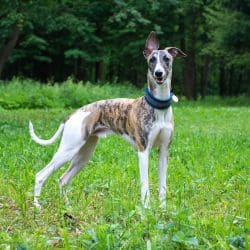
The Greyhound is a tall, slim sight hound with long legs, a deep chest, narrow waist, and short coat. It is one of the fastest dog breeds.
Despite its athletic appearance, many adult Greyhounds have moderate energy indoors and enjoy long periods of rest. They usually need daily walks and safe opportunities for controlled exercise rather than constant activity.
Greyhounds are often gentle, quiet, sensitive, and affectionate. Their prey drive can vary, so introductions to smaller animals require care.
Their thin coat and low body fat make them sensitive to cold weather. They can adapt well to calm homes and apartments.
19. Basset Hound
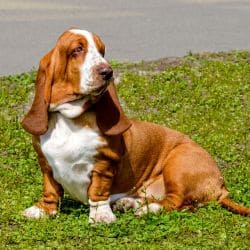
The Basset Hound has a long body, short legs, loose skin, heavy ears, and a powerful nose. Its appearance is distinctive and immediately recognisable.
Basset Hounds were developed to follow scent slowly enough for people to keep pace on foot. They are generally calm, affectionate, patient, and independent.
Their strong scenting instinct can lead them away from their owners, so secure areas and lead walking are important. They may also be vocal and stubborn during training.
Basset Hounds need moderate daily exercise and careful weight management. Their ears, skin folds, drooling, and short coat require regular care.
20. Afghan Hound
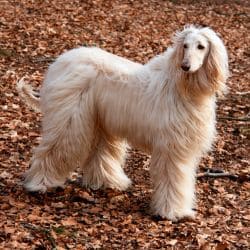
The Afghan Hound is a tall, elegant sight hound with a narrow head, long legs, and a distinctive flowing coat.
It was developed to pursue animals across challenging landscapes using speed and vision. Afghan Hounds are often independent, sensitive, dignified, and reserved around unfamiliar people.
They require regular exercise and secure spaces because their sight-hound instincts may encourage them to chase moving animals. Training requires patience because they may not respond with the eagerness of highly cooperative breeds.
Their long coat has demanding grooming needs and requires frequent brushing and careful maintenance. They suit owners prepared for both independence and intensive coat care.
Types of Terrier Dogs
Terriers were developed to chase rats, foxes, and other small animals. They are often energetic, confident, curious, vocal, and determined. Their small size does not necessarily mean they are easy to manage, as many have strong prey drives and independent personalities.
21. Jack Russell Terrier
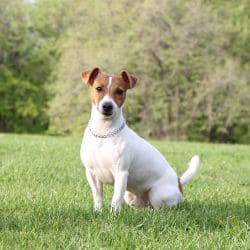
The Jack Russell Terrier is a small, athletic dog with a compact body and smooth, rough, or broken coat.
Jack Russells are energetic, intelligent, bold, curious, and highly determined. Their terrier background gives them a strong prey drive and a natural interest in digging, chasing, and exploring.
They need more exercise and mental stimulation than many other small breeds. Training, scent games, active play, and secure walking areas are important.
Their coat is generally easy to maintain, although rough-coated dogs may need additional grooming. They suit active owners who appreciate a lively, confident dog and can provide consistent training.
22. Bull Terrier
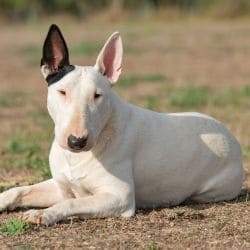
The Bull Terrier is a muscular, medium-sized dog with a distinctive egg-shaped head, small triangular eyes, and short coat.
Bull Terriers are usually playful, energetic, affectionate, and strong-willed. They often enjoy close involvement with their families and may become bored when left without activity.
Their physical strength and enthusiastic play make early training and socialisation important. They need daily walks, games, and controlled mental challenges.
The short coat requires little grooming, but the breed still sheds. Bull Terriers are best suited to owners who can provide clear boundaries, patient training, and responsible supervision around children and other animals.
23. West Highland White Terrier
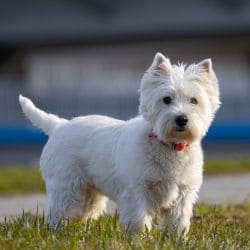
The West Highland White Terrier, or Westie, is a small dog with a white coat, upright ears, dark eyes, and a confident expression.
Westies are generally cheerful, alert, curious, and independent. They enjoy walks, play, and exploring but can adapt to smaller homes when exercised regularly.
Their terrier instincts may encourage chasing, digging, and barking. Early training and socialisation help develop manageable behaviour.
The rough outer coat requires frequent brushing and occasional professional grooming or hand stripping. Westies suit individuals and families who want a lively small dog and can provide regular coat care and activity.
24. Scottish Terrier
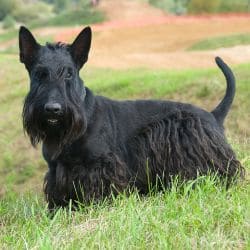
The Scottish Terrier is a small, sturdy dog with short legs, a long head, upright ears, a wiry coat, and a distinctive beard.
Scotties are usually independent, loyal, confident, and reserved. They often form strong bonds with their household but may not seek constant attention from unfamiliar people.
Their exercise needs are moderate, although daily walks and play remain important. Their terrier background can produce strong chasing and digging instincts.
The wiry coat requires brushing and professional trimming or hand stripping. Scottish Terriers suit owners who appreciate an independent companion and can provide calm, consistent training.
25. Yorkshire Terrier
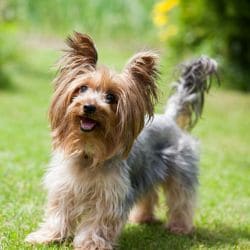
The Yorkshire Terrier is a tiny companion dog with a fine, long, silky coat. Traditional colouring combines dark steel blue with golden tan.
Yorkshire Terriers are confident, alert, affectionate, and often unaware of their small size. They may bark readily and can become protective of their owners without suitable socialisation.
They need daily walks, play, and training despite their miniature build. Their small size makes them suitable for apartments, but they should be handled carefully.
The coat requires frequent brushing and regular trimming. Owners who prefer easier maintenance may keep it in a shorter style.
Types of Toy and Companion Dogs
Companion breeds were mainly developed to live closely with people rather than perform demanding physical work. Most are small, but they still need training, socialisation, exercise, and appropriate care. Small size alone does not guarantee low energy or easy behaviour.
26. Chihuahua
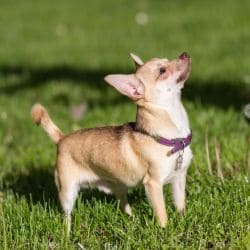
The Chihuahua is one of the smallest dog breeds. It has a compact body, large ears, expressive eyes, and either a smooth or long coat.
Chihuahuas are often bold, alert, loyal, and strongly attached to one or more people. Without careful socialisation, they may become nervous or defensive around unfamiliar people and dogs.
Their small size makes them suitable for apartments, but they still need walks, play, and training. Gentle handling is essential because their bodies are delicate.
Chihuahuas are sensitive to cold weather and often need additional warmth. Coat care depends on whether the dog is smooth or long-haired.
27. Pomeranian
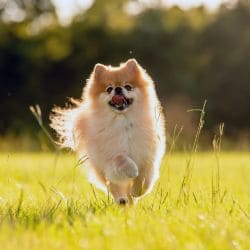
The Pomeranian is a small companion dog with a thick double coat, fox-like face, upright ears, and heavily plumed tail.
Pomeranians are usually lively, confident, curious, and alert. They may be tiny, but many behave like much larger dogs and readily investigate unfamiliar situations.
They need daily play, short walks, training, and mental stimulation. Early socialisation can help manage barking and overconfidence around larger animals.
Their dense coat sheds and requires frequent brushing, particularly during seasonal coat changes. Pomeranians suit owners who want an energetic small companion and can commit to regular grooming.
28. Shih Tzu
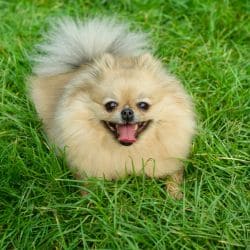
The Shih Tzu is a small companion breed with a sturdy body, short muzzle, large eyes, and long flowing coat.
Shih Tzus are generally affectionate, sociable, calm, and people-focused. They usually enjoy indoor companionship and moderate daily activity rather than intense exercise.
Their long coat requires daily brushing, regular bathing, and professional trimming. Many owners choose a shorter coat for easier maintenance. The face and eye area also need routine cleaning.
Because of their short muzzle, Shih Tzus can be sensitive to heat and strenuous exercise. They suit indoor households that can provide companionship, gentle activity, and consistent grooming.
29. Cavalier King Charles Spaniel
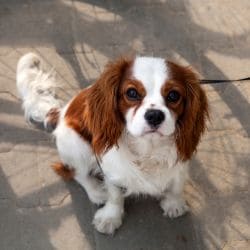
The Cavalier King Charles Spaniel is a small companion dog with a silky coat, feathered ears, and large expressive eyes.
Cavaliers are usually gentle, affectionate, sociable, and adaptable. They often enjoy meeting people and can live comfortably with families, couples, or older owners.
Their exercise needs are moderate. Daily walks and play are important, but they do not usually require the demanding activity of working breeds.
The coat needs regular brushing, especially around the ears and feathered areas. Cavaliers enjoy close companionship and may dislike being left alone for extended periods.
30. French Bulldog
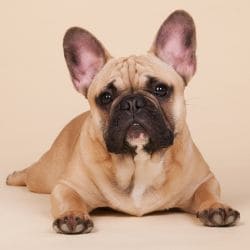
The French Bulldog is a small, compact dog with a muscular body, short coat, broad head, and distinctive bat-like ears.
French Bulldogs are generally playful, affectionate, adaptable, and entertaining. Their low-to-moderate exercise needs can suit apartments and less active households, although daily walks and play remain necessary.
Their short muzzle makes them sensitive to heat, strenuous exercise, and breathing difficulties. Owners should avoid intense activity during warm weather and maintain a healthy body condition.
The short coat is easy to brush, but facial folds need regular care. French Bulldogs suit attentive owners who understand their temperature and health-related needs.
Dog Breed Comparison Chart
Dog breed | Size | Energy level | Coat type | Grooming needs | Temperament |
|---|---|---|---|---|---|
Labrador Retriever | Medium–large | High | Short, double | Moderate | Friendly, trainable |
Golden Retriever | Medium–large | High | Long, feathered | High | Gentle, sociable |
English Cocker Spaniel | Medium | High | Silky, feathered | High | Cheerful, affectionate |
English Springer Spaniel | Medium | High | Medium, feathered | Moderate–high | Energetic, responsive |
German Shorthaired Pointer | Large | Very high | Short | Low | Intelligent, driven |
German Shepherd | Large | High | Double coat | Moderate–high | Loyal, protective |
Rottweiler | Large | Moderate–high | Short | Low | Calm, confident |
Doberman Pinscher | Large | High | Short | Low | Alert, loyal |
Boxer | Medium–large | High | Short | Low | Playful, affectionate |
Siberian Husky | Medium | Very high | Thick double coat | High | Social, independent |
Border Collie | Medium | Very high | Smooth or medium | Moderate | Focused, intelligent |
Australian Shepherd | Medium | Very high | Medium double coat | Moderate–high | Energetic, responsive |
Belgian Malinois | Medium–large | Very high | Short double coat | Moderate | Intense, alert |
Pembroke Welsh Corgi | Small–medium | High | Double coat | High | Bold, affectionate |
Shetland Sheepdog | Small–medium | High | Long double coat | High | Intelligent, vocal |
Beagle | Small–medium | Moderate–high | Short | Low | Friendly, curious |
Dachshund | Small | Moderate | Three coat varieties | Low–moderate | Bold, independent |
Greyhound | Large | Moderate | Short | Low | Gentle, quiet |
Basset Hound | Medium | Moderate | Short | Moderate | Calm, independent |
Afghan Hound | Large | High | Long, flowing | Very high | Reserved, independent |
Jack Russell Terrier | Small | Very high | Smooth or rough | Low–moderate | Bold, energetic |
Bull Terrier | Medium | High | Short | Low | Playful, strong-willed |
West Highland White Terrier | Small | Moderate–high | Wiry | High | Cheerful, alert |
Scottish Terrier | Small | Moderate | Wiry | High | Loyal, reserved |
Yorkshire Terrier | Toy | Moderate | Long, silky | High | Confident, vocal |
Chihuahua | Toy | Moderate | Smooth or long | Low–moderate | Bold, attached |
Pomeranian | Toy | Moderate–high | Thick double coat | High | Lively, confident |
Shih Tzu | Toy | Low–moderate | Long | Very high | Affectionate, calm |
Cavalier King Charles Spaniel | Small | Moderate | Silky, feathered | Moderate | Gentle, sociable |
French Bulldog | Small | Low–moderate | Short | Low | Playful, adaptable |
Types of Dogs by Size
A dog’s size affects living space, food costs, transport, handling, exercise, and some care considerations. However, energy level and temperament can be just as important as physical measurements.
Small Dog Breeds
Small breeds include Chihuahuas, Yorkshire Terriers, Pomeranians, Shih Tzus, Dachshunds, and Jack Russell Terriers.
They generally need less physical space and consume less food than large dogs, but they still require daily exercise, training, socialisation, and veterinary care. Some small breeds are highly energetic, vocal, or fragile, so owners should not assume that every small dog is easy to manage.
Medium Dog Breeds
Medium breeds include Beagles, Border Collies, English Cocker Spaniels, Australian Shepherds, and English Springer Spaniels.
These dogs can offer a balance between manageable size and physical ability. Many medium breeds are highly active and need considerable outdoor exercise, training, and mental stimulation. Their food, grooming, and space requirements vary widely according to coat type and working background.
Large Dog Breeds
Large breeds include Labrador Retrievers, Golden Retrievers, German Shepherds, Rottweilers, Doberman Pinschers, and Siberian Huskies.
They need sufficient space for comfortable movement, larger quantities of food, strong equipment, and responsible handling. Some are calm indoors, while others need demanding daily exercise. Training should begin early because unwanted behaviour becomes harder to manage as a powerful dog matures.
Types of Dogs by Coat
Coat length and texture affect shedding, brushing, bathing, drying, trimming, and professional grooming requirements. Owners should consider both the time and cost involved before choosing a breed.
Short-Haired Dogs
Short-haired breeds include Boxers, Beagles, Doberman Pinschers, Rottweilers, and German Shorthaired Pointers.
Their coats usually need simple brushing and occasional bathing rather than regular trimming. However, short coats can still shed heavily, and loose hair may be noticeable on furniture and clothing. Short-haired dogs may also need additional protection during cold weather.
Long-Haired Dogs
Long-haired breeds include Afghan Hounds, Golden Retrievers, Shih Tzus, Yorkshire Terriers, and Shetland Sheepdogs.
These dogs generally need frequent brushing to prevent tangles, mats, trapped dirt, and loose hair. Some require professional trimming, bathing, drying, or coat shaping. Long coats also need extra attention after wet walks, muddy play, or outdoor activities.
Double-Coated Dogs
Double-coated breeds include Siberian Huskies, German Shepherds, Pomeranians, Australian Shepherds, and Pembroke Welsh Corgis.
Their coats contain a softer insulating undercoat beneath a protective outer layer. They often shed heavily during seasonal coat changes. Regular brushing removes loose hair and prevents compacted undercoat. Shaving is generally not a routine solution for controlling normal shedding.
How to Choose the Right Type of Dog
Choosing a dog should begin with honest lifestyle assessment rather than appearance alone. Consider how much time, space, money, training, exercise, and companionship you can provide throughout the dog’s life.
Consider the Dog’s Energy Level
Active breeds need more than quick bathroom walks. They may require long walks, running, training, scent work, retrieving, or dog sports.
Low-to-moderate-energy companion breeds still need daily movement, but their routines may be easier for less active owners. Choose an activity level you can maintain consistently.
Think About Available Space
Large dogs need room to move comfortably, but size does not always predict apartment suitability. A calm Greyhound may adapt better than a highly energetic small terrier.
Consider access to outdoor areas, noise tolerance, stairs, building rules, nearby walking routes, and the dog’s actual activity level.
Check Grooming Requirements
Grooming may include brushing, bathing, coat trimming, ear cleaning, nail care, dental care, and managing seasonal shedding.
Long-haired, curly-coated, and double-coated breeds usually require more time and may need professional services. Include grooming costs in your long-term budget before choosing a breed.
Consider Training and Experience
Highly driven, independent, protective, or powerful dogs can challenge inexperienced owners. They may need advanced training, controlled socialisation, and careful management.
First-time owners often benefit from choosing a sociable, responsive breed whose energy and strength match their abilities. Every dog still needs clear, consistent, reward-based training.
Think About Children and Other Pets
Breed tendencies can influence sociability, prey drive, play style, and tolerance, but individual behaviour varies.
Dogs and children should always interact respectfully under adult supervision. Consider the children’s ages, the dog’s size, previous experiences, socialisation, and ability to live safely with cats or smaller pets.
Consider Health and Long-Term Costs
Dog ownership involves food, vaccinations, veterinary visits, parasite prevention, grooming, training, equipment, boarding, and possible insurance.
Some breeds may also have inherited or structure-related health risks. Research the breed carefully, choose responsible sources, and make sure you can manage unexpected expenses throughout the dog’s life.
Best Types of Dogs for Different Lifestyles
These recommendations describe common breed tendencies rather than guarantees. Personality, health, age, training, socialisation, and previous experiences can differ significantly between individual dogs of the same breed.
Best Dogs for Families
Labrador Retrievers, Golden Retrievers, Boxers, Beagles, and Cavalier King Charles Spaniels are often considered family-friendly because they are generally sociable and affectionate.
Labradors, Goldens, and Boxers suit active families, while Cavaliers may fit calmer households. Beagles are friendly but can be vocal and easily distracted by scents. Supervision and training remain essential with every breed.
Best Dogs for Apartments
French Bulldogs, Shih Tzus, Chihuahuas, Yorkshire Terriers, and Greyhounds can adapt to apartments when their needs are met.
Greyhounds are large but often calm indoors. Small companion dogs need less physical space but may bark frequently. Apartment dogs still require daily walks, toilet breaks, training, play, and opportunities to explore outside.
Best Dogs for Active Owners
Border Collies, Siberian Huskies, Australian Shepherds, German Shorthaired Pointers, and Belgian Malinois suit highly active owners.
These breeds need substantial exercise, training, and mental stimulation. They are not ideal simply because someone enjoys occasional weekend walks. Owners must provide demanding activity consistently throughout the week.
Best Dogs for First-Time Owners
Labrador Retrievers, Golden Retrievers, Cavalier King Charles Spaniels, Poodles, and Shih Tzus are often recommended because they are generally sociable, adaptable, or responsive to training.
However, their care needs still differ. Labradors and Goldens need considerable exercise, Poodles need coat maintenance, and Shih Tzus require regular grooming and careful heat management.
Best Guard and Protection Dogs
German Shepherds, Rottweilers, Doberman Pinschers, and Belgian Malinois have strong working abilities and protective tendencies.
These dogs require responsible ownership, early socialisation, controlled training, secure management, and experienced handling. Protection behaviour should never be encouraged casually. A stable, well-managed dog is safer and more reliable than an uncontrolled aggressive one.
FAQs About Types of Dogs
Hundreds of dog breeds are recognised worldwide, but the exact total differs because kennel organisations use different standards, naming systems, and registration rules across different countries.
Dog popularity changes by country and year. Labrador Retrievers, Golden Retrievers, French Bulldogs, German Shepherds, and similar family-friendly breeds often rank highly in national registration statistics.
Labrador Retrievers and Golden Retrievers are common family choices, but the best dog depends on household activity, children’s ages, available space, and long-term care capacity.
Apartment-friendly dogs have manageable energy, moderate noise, adaptable temperaments, and realistic exercise needs. Size matters, but daily behaviour and owner commitment matter more than body size.
Border Collies, Belgian Malinois, Siberian Huskies, Australian Shepherds, and German Shorthaired Pointers need substantial daily exercise, structured training, and regular mental challenges to remain settled.
Yes. Mixed-breed dogs have ancestry from two or more breeds, so their size, coat, temperament, energy level, and care requirements can vary widely between individual dogs.
Afghan Hounds, Shih Tzus, Pomeranians, Shetland Sheepdogs, and other long-haired or double-coated breeds require frequent brushing, coat care, and sometimes professional grooming throughout the year.
No. Breed can influence behavioural tendencies, but socialisation, training, health, environment, past experiences, and individual personality strongly affect how a dog behaves in everyday situations.
Final Thoughts
The best dog is not automatically the smallest, cutest, strongest, or most popular breed. A suitable match depends on whether the dog’s energy, temperament, size, grooming needs, and training requirements fit the owner’s lifestyle.
Active working and herding breeds need substantial exercise and mental stimulation. Long-haired dogs require regular grooming, while powerful guardian breeds need experienced handling and responsible socialisation. Small companion dogs may need less space but still require training and daily activity.
Before choosing a dog, consider your routine, home, budget, experience, and long-term ability to provide care. A thoughtful match creates a safer and more rewarding relationship.