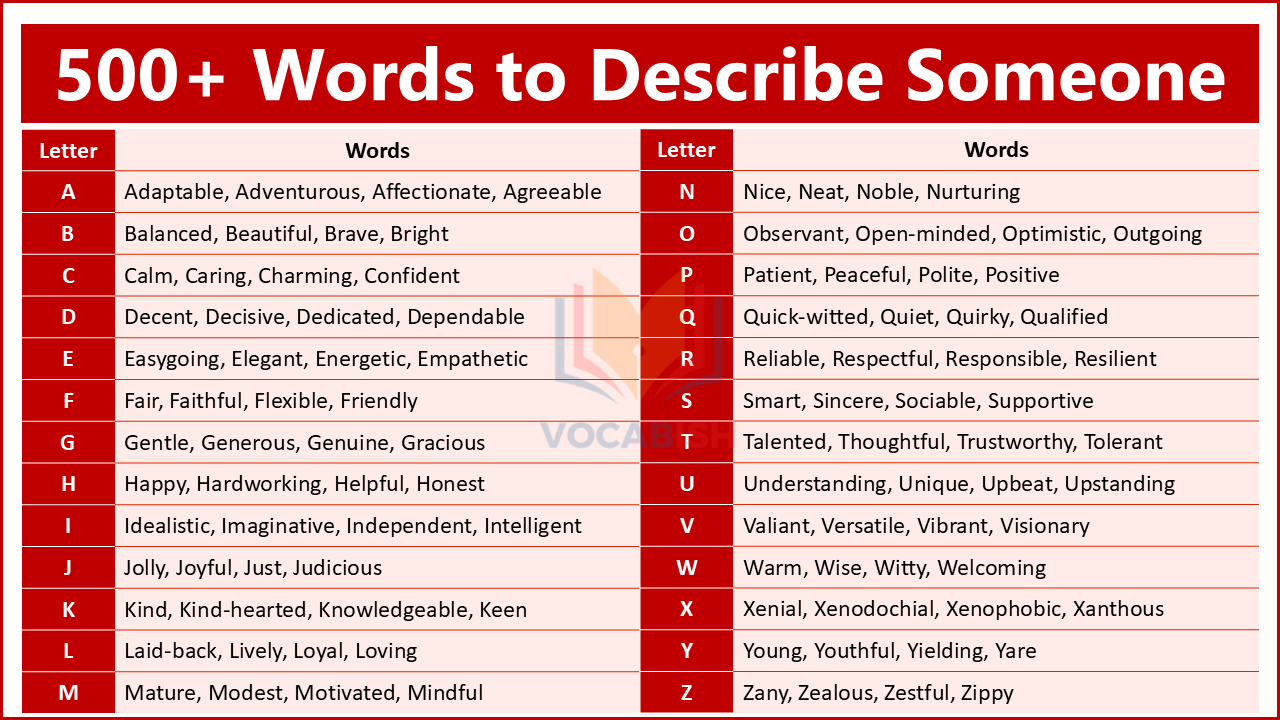

Finding the right words to describe someone can make your English more precise and natural. Instead of saying someone is simply “nice” or “bad,” you can describe their personality, behavior, appearance, attitude, or character with words such as caring, confident, honest, generous, impatient, reliable, shy, or thoughtful.
This A–Z vocabulary list gives you more than 500 useful adjectives and descriptive words, with clear meanings and everyday conversation examples. It is designed for English learners, ESL students, and anyone who wants to speak or write about people more accurately.
How to Choose the Right Words to Describe Someone
A good description depends on what you want to describe. Personality words describe character and habits, appearance words describe how someone looks, and attitude words describe how someone behaves or responds.
For example, friendly usually describes how someone treats others, while confident describes how someone feels about their abilities. Reliable means you can depend on someone, while responsible means they take their duties seriously.
Choose the word that matches the exact quality you want to communicate.
A Words to Describe Someone
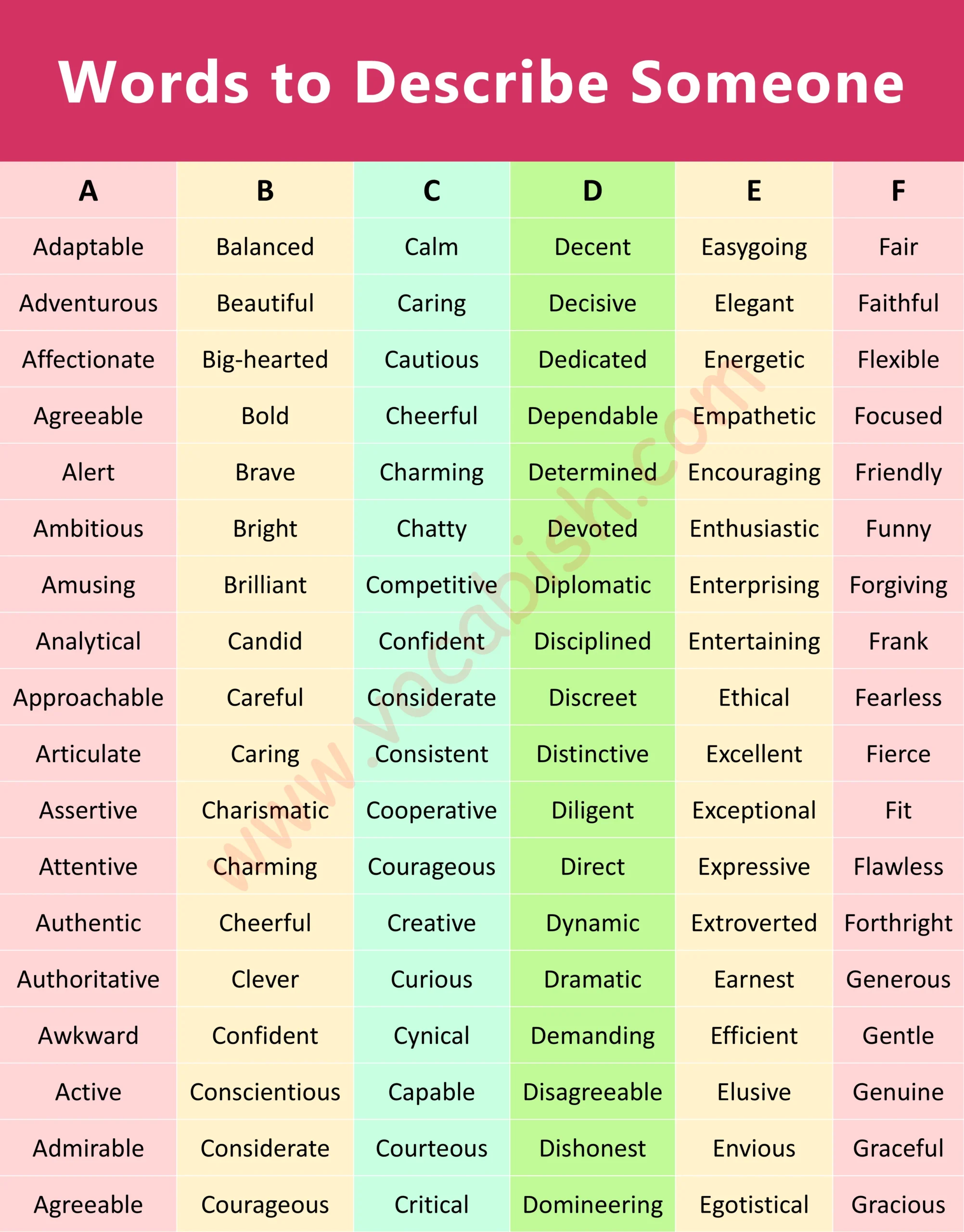
Here are useful A words to describe someone, covering personality, behavior, attitude, and appearance.
- Adaptable – able to adjust easily to new situations. – Example: “Sara is very adaptable; she settled into her new school quickly.”
- Adventurous – willing to try exciting or unfamiliar things. – Example: “My brother is adventurous and loves traveling alone.”
- Affectionate – showing love and warmth toward others. – Example: “My grandmother is very affectionate with her grandchildren.”
- Agreeable – pleasant and willing to cooperate. – Example: “Ali is agreeable, so working with him is easy.”
- Alert – quick to notice what is happening. – Example: “The security guard was alert throughout the night.”
- Ambitious – strongly motivated to achieve success. – Example: “Mina is ambitious and wants to become a doctor.”
- Amusing – funny or entertaining. – Example: “Your cousin is really amusing; everyone enjoys talking to him.”
- Analytical – good at examining information carefully. – Example: “James has an analytical mind and checks every detail.”
- Approachable – friendly and easy to talk to. – Example: “Our new teacher is very approachable.”
- Articulate – able to express ideas clearly. – Example: “She is articulate and explains difficult topics well.”
- Assertive – confident in expressing opinions without being aggressive. – Example: “Nadia is assertive when discussing her ideas.”
- Attentive – careful to notice and listen to others. – Example: “The waiter was attentive and quickly noticed our needs.”
- Authentic – genuine and true to their personality. – Example: “He is authentic and never pretends to be someone else.”
- Authoritative – confident and knowledgeable when giving direction. – Example: “The manager has an authoritative voice during meetings.”
- Awkward – uncomfortable or lacking social ease. – Example: “I felt awkward when everyone suddenly became quiet.”
- Accommodating – willing to adjust to other people’s needs. – Example: “Our host was accommodating and changed the meeting time.”
- Active – energetic and physically engaged. – Example: “My grandfather is still very active.”
- Admirable – deserving respect or approval. – Example: “Her honesty in that situation was admirable.”
- Agreeable – pleasant and easy to deal with. – Example: “He has an agreeable personality.”
- Absent-minded – often forgetting things or losing focus. – Example: “Tom is absent-minded and sometimes forgets his keys.”
B Words to Describe Someone
These B words to describe someone include positive qualities, social behavior, and difficult personality traits.
- Balanced – emotionally and mentally steady. – Example: “She has a balanced personality and rarely overreacts.”
- Beautiful – very attractive in appearance. – Example: “Everyone thought the bride looked beautiful.”
- Big-hearted – very generous and caring. – Example: “Mr. Khan is big-hearted and always helps struggling families.”
- Bold – confident and willing to take risks. – Example: “She made a bold decision to start her own business.”
- Brave – willing to face danger or difficulty. – Example: “The firefighter was brave during the rescue.”
- Bright – intelligent and quick to learn. – Example: “Ahmed is a bright student.”
- Brilliant – extremely intelligent or talented. – Example: “She is brilliant at solving mathematical problems.”
- Calm – peaceful and not easily upset. – Example: “He stayed calm during the argument.”
- Candid – honest and direct when expressing opinions. – Example: “I appreciate how candid she is with me.”
- Careful – paying attention to avoid mistakes or danger. – Example: “Be careful; Omar always checks his work twice.”
- Caring – showing concern for other people. – Example: “She is a caring friend.”
- Charismatic – naturally attractive and able to influence others. – Example: “The speaker was charismatic and quickly won the audience.”
- Charming – pleasant and attractive in a way people enjoy. – Example: “Your new neighbor is very charming.”
- Cheerful – happy and positive. – Example: “Maria is cheerful even on difficult days.”
- Clever – intelligent and good at solving problems. – Example: “That was a clever solution.”
- Compassionate – deeply concerned about other people’s suffering. – Example: “The nurse was compassionate toward every patient.”
- Confident – believing in your abilities. – Example: “He sounded confident during his presentation.”
- Conscientious – careful, responsible, and hardworking. – Example: “She is a conscientious employee.”
- Considerate – thoughtful about other people’s feelings and needs. – Example: “It was considerate of you to call first.”
- Courageous – showing great courage. – Example: “The courageous woman spoke up for her friend.”
C Words to Describe Someone
Use these C words to describe someone when talking about character, communication, emotions, or social behavior.
- Calm – relaxed and emotionally controlled. – Example: “Dad remained calm when the car broke down.”
- Caring – kind and concerned about others. – Example: “She is caring toward her younger brothers.”
- Cautious – careful about possible risks. – Example: “He is cautious when making financial decisions.”
- Cheerful – noticeably happy and positive. – Example: “Our cheerful receptionist always smiles.”
- Charming – pleasant and attractive. – Example: “He has a charming personality.”
- Chatty – talking a lot in a friendly way. – Example: “My aunt is very chatty on the phone.”
- Compassionate – showing sympathy and concern for others. – Example: “She is compassionate toward people in need.”
- Competitive – strongly wanting to win or succeed. – Example: “Leo is very competitive during sports.”
- Confident – sure of yourself and your abilities. – Example: “She is confident when speaking English.”
- Considerate – careful about other people’s comfort. – Example: “He is considerate and never interrupts.”
- Consistent – behaving or performing reliably over time. – Example: “Her work is consistent and dependable.”
- Cooperative – willing to work with others. – Example: “The students were cooperative during the project.”
- Courageous – brave when facing difficulty. – Example: “He was courageous enough to admit his mistake.”
- Creative – able to produce original ideas. – Example: “Maya is creative and loves designing posters.”
- Curious – eager to learn or know more. – Example: “Young children are naturally curious.”
- Cynical – believing that people are often selfish or dishonest. – Example: “He is cynical about promises from politicians.”
- Capable – able to do something successfully. – Example: “She is capable of handling the whole project.”
- Courteous – polite and respectful. – Example: “The receptionist was courteous to every visitor.”
- Critical – inclined to point out faults or problems. – Example: “He is often critical of other people’s work.”
- Careless – not paying enough attention. – Example: “He is careless with his belongings.”
D Words to Describe Someone
These D words to describe someone can describe discipline, personality, emotions, and habits.
- Decent – morally good and respectable. – Example: “He is a decent person who treats everyone fairly.”
- Decisive – able to make decisions quickly and confidently. – Example: “Our manager is decisive during emergencies.”
- Dedicated – strongly committed to a task or goal. – Example: “She is dedicated to helping her students.”
- Dependable – reliable and trustworthy. – Example: “You can count on David because he is dependable.”
- Determined – firmly focused on achieving something. – Example: “She is determined to pass the exam.”
- Devoted – deeply loyal or committed. – Example: “He is devoted to his family.”
- Diplomatic – skilled at dealing with sensitive situations politely. – Example: “She was diplomatic when discussing the disagreement.”
- Disciplined – able to control behavior and follow rules or plans. – Example: “He is disciplined about his study schedule.”
- Discreet – careful not to reveal private information. – Example: “She is discreet and keeps personal matters private.”
- Distinctive – noticeably different from others. – Example: “He has a distinctive voice.”
- Diligent – hardworking and careful. – Example: “The diligent student reviews her notes every evening.”
- Direct – saying what you mean clearly. – Example: “He is direct, so you always know his opinion.”
- Down-to-earth – practical, relaxed, and unpretentious. – Example: “Despite his success, he is very down-to-earth.”
- Dynamic – energetic and full of ideas or activity. – Example: “She is a dynamic leader.”
- Dramatic – reacting in an exaggerated emotional way. – Example: “Don’t be so dramatic about a small mistake.”
- Demanding – expecting a lot from others. – Example: “Our boss is demanding but fair.”
- Disagreeable – unpleasant or difficult to deal with. – Example: “The customer became disagreeable after the delay.”
- Dishonest – not truthful. – Example: “He was dishonest about where the money went.”
- Domineering – trying to control other people. – Example: “Her domineering attitude makes teamwork difficult.”
- Doubtful – uncertain or lacking confidence. – Example: “He looked doubtful about the plan.”
E Words to Describe Someone
Here are useful E words to describe someone in everyday English.
- Easygoing – relaxed and not easily annoyed. – Example: “My brother is easygoing and rarely gets stressed.”
- Elegant – graceful and stylish in appearance or manner. – Example: “She looked elegant at the wedding.”
- Energetic – full of physical or mental energy. – Example: “The children are energetic after breakfast.”
- Empathetic – able to understand other people’s feelings. – Example: “She is empathetic and listens without judging.”
- Encouraging – giving support and confidence to others. – Example: “My teacher is always encouraging.”
- Enthusiastic – showing strong excitement and interest. – Example: “He is enthusiastic about learning English.”
- Enterprising – willing to take initiative and create opportunities. – Example: “She is enterprising and started a small business.”
- Entertaining – amusing or enjoyable to spend time with. – Example: “Our host was entertaining throughout dinner.”
- Ethical – guided by strong moral principles. – Example: “He is ethical and refuses to cheat.”
- Excellent – extremely good. – Example: “She is an excellent communicator.”
- Exceptional – unusually good or impressive. – Example: “His leadership skills are exceptional.”
- Expressive – showing feelings and ideas clearly. – Example: “She has an expressive face.”
- Experienced – having learned through practice or time. – Example: “Our trainer is highly experienced.”
- Extroverted – outgoing and energized by social interaction. – Example: “Sam is extroverted and loves meeting new people.”
- Earnest – sincere and serious about something. – Example: “He made an earnest effort to apologize.”
- Efficient – able to complete tasks well without wasting time. – Example: “She is efficient and organized at work.”
- Elusive – difficult to understand, find, or define. – Example: “His true intentions remain elusive.”
- Envious – unhappy because someone has something you want. – Example: “He felt envious of his friend’s success.”
- Egotistical – overly focused on your own importance. – Example: “His egotistical behavior annoys his coworkers.”
- Erratic – behaving unpredictably. – Example: “Her mood has been erratic lately.”
F Words to Describe Someone
These F words to describe someone are useful for talking about personality, relationships, and behavior.
- Fair – treating people equally and reasonably. – Example: “Our teacher is fair to every student.”
- Faithful – loyal and dependable. – Example: “He has been a faithful friend for years.”
- Flexible – willing to change plans or ideas. – Example: “My manager is flexible about working hours.”
- Focused – giving full attention to a task or goal. – Example: “She is focused on improving her English.”
- Friendly – kind and pleasant toward others. – Example: “Our new neighbor is very friendly.”
- Funny – making people laugh. – Example: “Your brother is really funny.”
- Forgiving – willing to stop being angry about a mistake. – Example: “She is forgiving when people make honest mistakes.”
- Frank – honest and direct. – Example: “He was frank about his concerns.”
- Fearless – not easily frightened. – Example: “The fearless climber continued despite the difficult weather.”
- Fierce – strong, intense, or determined. – Example: “She is a fierce competitor.”
- Fit – healthy and physically strong. – Example: “He stays fit by exercising regularly.”
- Flawless – without noticeable faults or mistakes. – Example: “Her performance was flawless.”
- Forthright – open and honest in communication. – Example: “I like her because she is forthright.”
- Generous – willing to give or share. – Example: “He is generous with his time.”
- Gentle – kind, calm, and not rough. – Example: “She has a gentle way of speaking.”
- Genuine – sincere and authentic. – Example: “His apology sounded genuine.”
- Graceful – moving or behaving elegantly. – Example: “She remained graceful under pressure.”
- Gracious – polite, kind, and pleasant. – Example: “The host was gracious to every guest.”
- Greedy – wanting more than you need or deserve. – Example: “He is greedy and never seems satisfied.”
- Grumpy – easily annoyed and in a bad mood. – Example: “Dad is grumpy before his morning coffee.”
G Words to Describe Someone
Use these G words to describe someone for positive qualities, emotions, appearance, and behavior.
- Gentle – calm, kind, and careful. – Example: “He is gentle with small children.”
- Generous – happy to give or share. – Example: “She is generous with her advice.”
- Genuine – honest and sincere. – Example: “He gave me a genuine smile.”
- Gracious – courteous and warm toward others. – Example: “She was gracious when receiving criticism.”
- Good-natured – naturally friendly and pleasant. – Example: “Tom is good-natured and rarely argues.”
- Goal-oriented – strongly focused on achieving goals. – Example: “She is goal-oriented and plans every step carefully.”
- Gifted – naturally talented. – Example: “My sister is gifted at music.”
- Glamorous – attractive, stylish, and exciting. – Example: “The actress looked glamorous on the red carpet.”
- Gregarious – sociable and fond of company. – Example: “He is gregarious and knows everyone at work.”
- Grounded – sensible and emotionally stable. – Example: “Despite his fame, he remains grounded.”
- Grateful – thankful for what someone has done. – Example: “I am grateful for your help.”
- Gutsy – brave and willing to take risks. – Example: “That was a gutsy decision.”
- Gracious-hearted – kind and generous in spirit. – Example: “She is gracious-hearted toward people who need help.”
- Growing – developing or improving over time. – Example: “He is a growing young professional.”
- Gruff – rough or unfriendly in manner, though not always unkind. – Example: “The old mechanic sounds gruff but is helpful.”
- Guarded – careful about revealing feelings or information. – Example: “He is guarded when talking about his past.”
- Gloomy – often appearing sad or pessimistic. – Example: “She seemed gloomy after hearing the news.”
- Gossipy – inclined to talk about other people’s private affairs. – Example: “He can be a bit gossipy at work.”
- Greedy – unwilling to share or stop wanting more. – Example: “The greedy manager wanted all the credit.”
- Gracious – showing kindness, good manners, and respect. – Example: “He was gracious even after losing the competition.”
H Words to Describe Someone
These H words to describe someone work well for personality, social behavior, appearance, and emotional qualities.
- Happy – feeling or showing pleasure. – Example: “She looks happy today.”
- Hardworking – putting a lot of effort into work. – Example: “Ali is one of the most hardworking students in class.”
- Helpful – willing to give assistance. – Example: “Our neighbor is always helpful.”
- Honest – truthful and sincere. – Example: “I trust her because she is honest.”
- Humble – not believing you are better than others. – Example: “He is humble despite his success.”
- Humorous – naturally funny or amusing. – Example: “She has a humorous personality.”
- Hopeful – believing something good may happen. – Example: “He remains hopeful about the future.”
- Hospitable – welcoming and generous toward guests. – Example: “Our hosts were warm and hospitable.”
- Harmonious – peaceful and cooperative. – Example: “They have a harmonious relationship.”
- Heartfelt – sincere and deeply emotional. – Example: “She gave a heartfelt apology.”
- Heartwarming – causing warm, happy feelings. – Example: “His kindness toward the child was heartwarming.”
- Headstrong – determined to do what you want, sometimes stubbornly. – Example: “She is headstrong but very capable.”
- Helpful-minded – naturally ready to assist others. – Example: “He is helpful-minded whenever someone has a problem.”
- Heroic – showing exceptional courage. – Example: “The man’s heroic actions saved several people.”
- Highly-strung – easily worried, nervous, or stressed. – Example: “She is highly-strung before important exams.”
- Harsh – severe or unkind in manner. – Example: “His harsh words hurt her feelings.”
- Hateful – showing intense dislike or hostility. – Example: “His hateful comments were inappropriate.”
- Hypocritical – pretending to have values you do not actually follow. – Example: “It is hypocritical to demand honesty while constantly lying.”
- Hesitant – uncertain or slow to act. – Example: “He was hesitant to accept the offer.”
- Hostile – unfriendly or aggressive. – Example: “The customer became hostile after the complaint.”
I Words to Describe Someone
Here are useful I words to describe someone for intelligence, personality, attitude, and behavior.
- Idealistic – guided by high hopes or ideals. – Example: “She is idealistic and believes people can change.”
- Imaginative – able to create original ideas or pictures in the mind. – Example: “The child is very imaginative.”
- Impartial – fair and not taking sides. – Example: “A good judge must be impartial.”
- Impatient – unable to wait calmly. – Example: “He becomes impatient when the bus is late.”
- Independent – able to act without relying heavily on others. – Example: “She is independent and manages everything herself.”
- Intelligent – good at learning, understanding, and thinking. – Example: “He is intelligent and learns quickly.”
- Intentional – done or expressed deliberately. – Example: “Her kindness was intentional, not accidental.”
- Interesting – enjoyable or stimulating to talk to or know. – Example: “He is an interesting person.”
- Inventive – skilled at creating new ideas or solutions. – Example: “She is inventive when solving problems.”
- Insightful – showing deep understanding. – Example: “His comments during the meeting were insightful.”
- Inspiring – encouraging others to feel motivated. – Example: “Her story is inspiring.”
- Inquisitive – eager to ask questions and learn. – Example: “Our inquisitive student always asks thoughtful questions.”
- Intuitive – able to understand something instinctively. – Example: “She is intuitive and quickly notices when someone is upset.”
- Introverted – usually preferring quiet settings or limited social interaction. – Example: “He is introverted but enjoys close friendships.”
- Irresponsible – not taking duties seriously. – Example: “Leaving work unfinished was irresponsible.”
- Inconsiderate – not thinking about other people’s feelings or needs. – Example: “It was inconsiderate to interrupt her.”
- Insecure – lacking confidence in yourself. – Example: “He feels insecure about his English pronunciation.”
- Insincere – not genuine or honest. – Example: “Her apology sounded insincere.”
- Inflexible – unwilling to change plans or opinions. – Example: “The manager is inflexible about deadlines.”
- Irritable – becoming annoyed easily. – Example: “He gets irritable when he is tired.”
J Words to Describe Someone
The following J words to describe someone are useful, although some are less common in everyday speech.
- Jolly – cheerful and happy. – Example: “Our grandfather is a jolly man.”
- Joyful – feeling or expressing great happiness. – Example: “She was joyful when she heard the good news.”
- Just – fair and morally right. – Example: “People respect him because he is just.”
- Judicious – showing good judgment. – Example: “She is judicious when spending money.”
- Jovial – cheerful and friendly. – Example: “The jovial host made everyone feel welcome.”
- Jaunty – lively, confident, and cheerful in manner. – Example: “He walked into the room with a jaunty smile.”
- Jealous – unhappy because someone has an advantage or receives attention you want. – Example: “He felt jealous when his friend got the promotion.”
- Judgmental – too quick to criticize others. – Example: “Try not to be judgmental about her choices.”
- Jittery – nervous and unable to stay calm. – Example: “I felt jittery before my interview.”
- Jaded – tired or less enthusiastic after too much experience. – Example: “After years in the industry, he became jaded.”
- Joyous – full of happiness. – Example: “The family had a joyous celebration.”
- Jesting – speaking or behaving in a playful, joking way. – Example: “He was only jesting when he made that comment.”
- Jeering – mocking or insulting someone. – Example: “The jeering crowd made the player uncomfortable.”
- Jaded – emotionally tired or no longer excited. – Example: “She felt jaded after months of stressful work.”
- Justifiable – having a reasonable explanation or defense. – Example: “His anger was understandable and justifiable.”
- Jealous-minded – often envious of other people’s success or attention. – Example: “He can be jealous-minded around successful coworkers.”
- Jovial – warmly cheerful and sociable. – Example: “His jovial nature makes him popular.”
- Judgmental – likely to form negative opinions about others. – Example: “She is less judgmental than she used to be.”
- Joy-bringing – likely to make others feel happy. – Example: “Her joy-bringing personality brightens the office.”
- Journalistic – observant and inclined to ask detailed questions. – Example: “He has a journalistic curiosity about people’s stories.”
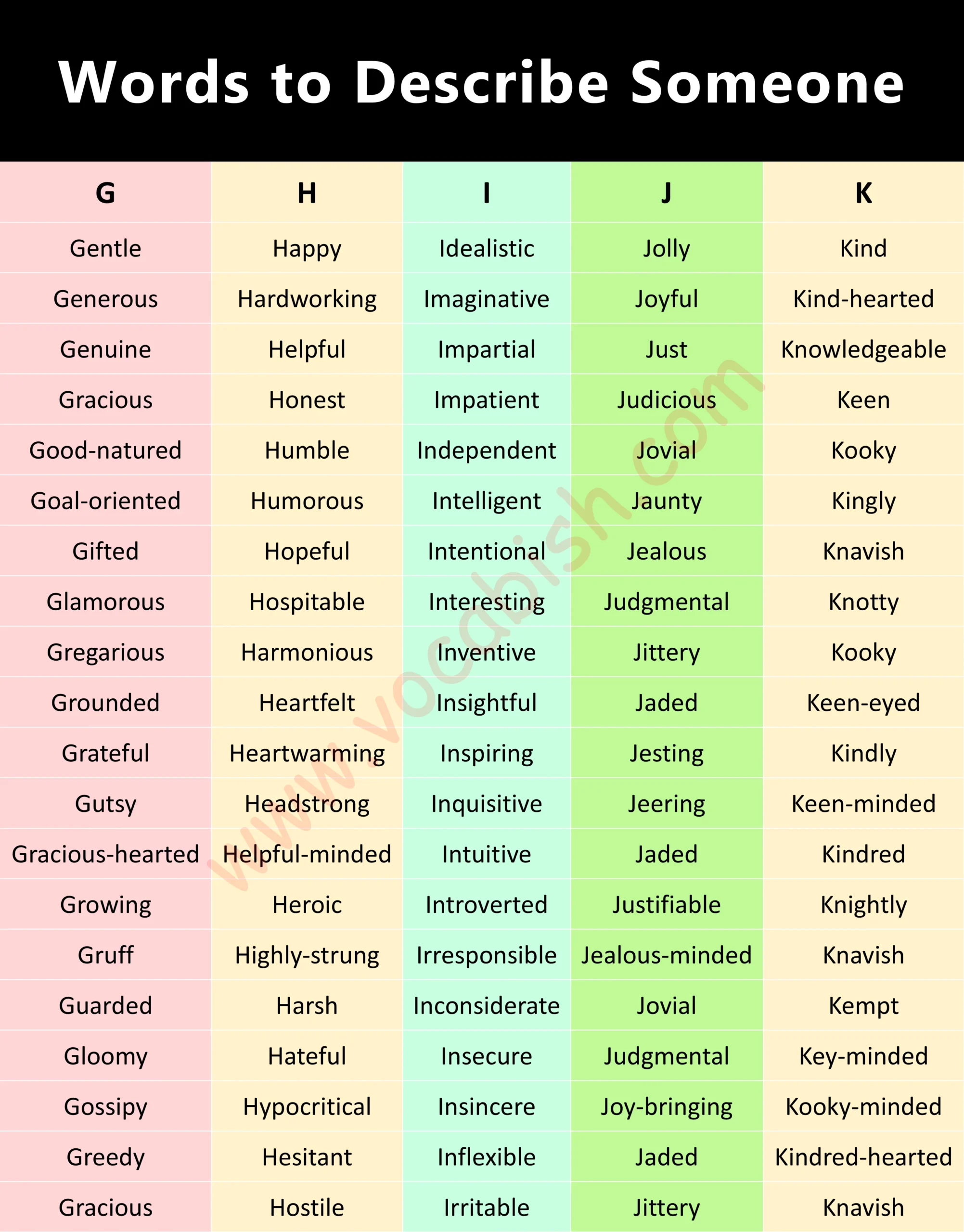
K Words to Describe Someone
Some K words to describe someone are less common, but they can still expand your vocabulary.
- Kind – caring, helpful, and considerate. – Example: “She is kind to everyone.”
- Kind-hearted – naturally caring and compassionate. – Example: “He is kind-hearted and always helps animals.”
- Knowledgeable – having a lot of knowledge. – Example: “Our guide is knowledgeable about local history.”
- Keen – enthusiastic, interested, or eager. – Example: “She is keen to learn new skills.”
- Kooky – unusual in a funny or interesting way. – Example: “Our neighbor is a little kooky but very friendly.”
- Kingly – dignified or majestic in manner. – Example: “He carried himself in a kingly way.”
- Knavish – dishonest or morally bad. – Example: “The character is clever but knavish.”
- Knotty – difficult to understand or deal with. – Example: “He has a knotty personality that is hard to read.”
- Kinetic – full of movement and energy. – Example: “The dancer has a kinetic stage presence.”
- Kooky – eccentric or strangely amusing. – Example: “She has a kooky sense of humor.”
- Keen-eyed – very observant. – Example: “The keen-eyed detective noticed the small clue.”
- Kindly – gentle, caring, and pleasant. – Example: “Our kindly neighbor brought us some food.”
- Keen-minded – mentally sharp and perceptive. – Example: “He is keen-minded and notices details quickly.”
- Kindred – similar in interests or character. – Example: “We became friends because we are kindred spirits.”
- Knightly – brave, honorable, or courteous in an old-fashioned sense. – Example: “His knightly behavior impressed everyone.”
- Knavish – showing dishonest or untrustworthy behavior. – Example: “The knavish salesman tried to deceive customers.”
- Kempt – neat and well-groomed. – Example: “He always looks kempt and professional.”
- Key-minded – focused on important issues or details. – Example: “She is key-minded when planning large projects.”
- Kooky-minded – unusually imaginative or eccentric. – Example: “His kooky-minded ideas often make people laugh.”
- Kindred-hearted – sharing a similar warm or caring nature. – Example: “We are kindred-hearted people who enjoy helping others.”
L Words to Describe Someone
These L words to describe someone are especially useful for relationships and personality descriptions.
- Laid-back – relaxed and not easily stressed. – Example: “My brother is very laid-back.”
- Lively – energetic and full of enthusiasm. – Example: “She is lively and keeps the conversation going.”
- Loyal – faithful to people or groups. – Example: “He is a loyal friend.”
- Loving – showing strong affection and care. – Example: “They are loving parents.”
- Likable – easy to like. – Example: “Our new colleague is very likable.”
- Logical – using clear and sensible reasoning. – Example: “She is logical when solving problems.”
- Level-headed – calm and sensible in difficult situations. – Example: “He is level-headed during emergencies.”
- Listener-friendly – easy and pleasant to communicate with. – Example: “She has a listener-friendly way of explaining things.”
- Likely – having a tendency to behave in a certain way. – Example: “He is likely to help when someone asks.”
- Luminous – bright or radiant in appearance or expression. – Example: “She has a luminous smile.”
- Lean – having a slim body with relatively little body fat. – Example: “He has a lean athletic build.”
- Leader-like – showing qualities associated with leadership. – Example: “Her leader-like confidence stood out.”
- Learned – highly educated or knowledgeable. – Example: “He is a learned professor.”
- Lenient – not strict when enforcing rules. – Example: “Our teacher is fairly lenient about homework.”
- Liberal-minded – open to different ideas and ways of living. – Example: “She is liberal-minded and respects different opinions.”
- Lighthearted – cheerful and not overly serious. – Example: “He has a lighthearted personality.”
- Loyal-minded – strongly committed to people or causes. – Example: “She is loyal-minded and stands by her friends.”
- Lustrous – shiny or radiant, often describing hair or appearance. – Example: “She has lustrous black hair.”
- Loud – speaking or making sounds at high volume. – Example: “He is friendly but sometimes very loud.”
- Lonely – feeling sad because of a lack of companionship. – Example: “She felt lonely after moving to a new city.”
M Words to Describe Someone
Use these M words to describe someone to talk about character, intelligence, emotions, and habits.
- Mature – behaving in a sensible and responsible way. – Example: “She is mature for her age.”
- Modest – not boasting about abilities or achievements. – Example: “He is very modest despite his success.”
- Motivated – strongly willing to achieve something. – Example: “The team is motivated to win.”
- Mindful – aware and considerate of people or situations. – Example: “She is mindful of other people’s feelings.”
- Merciful – showing forgiveness or compassion. – Example: “The judge was merciful toward the young offender.”
- Meticulous – extremely careful about details. – Example: “He is meticulous with his work.”
- Methodical – organized and systematic. – Example: “She takes a methodical approach to studying.”
- Mature-minded – showing sensible judgment. – Example: “He is mature-minded and handles disagreements well.”
- Magnetic – naturally attracting people’s attention or interest. – Example: “The speaker has a magnetic personality.”
- Mannerly – polite and well-behaved. – Example: “The children were very mannerly.”
- Meaningful – having emotional or personal importance. – Example: “She is meaningful to many people in the community.”
- Mercurial – changing moods or opinions quickly. – Example: “His mercurial personality can be difficult to understand.”
- Messy – untidy or disorganized. – Example: “He is messy but very creative.”
- Mischievous – playful in a way that causes minor trouble. – Example: “The mischievous boy hid his sister’s shoes.”
- Moody – experiencing frequent changes in mood. – Example: “She can be moody when she is stressed.”
- Moral – guided by ideas of right and wrong. – Example: “He is a moral person who dislikes dishonesty.”
- Motherly – caring and protective in a way associated with a mother. – Example: “She has a motherly nature.”
- Mysterious – difficult to understand or explain. – Example: “He is quiet and somewhat mysterious.”
- Manipulative – trying to control people unfairly. – Example: “His manipulative behavior caused problems.”
- Mean – unkind or unpleasant toward others. – Example: “It was mean to laugh at someone’s mistake.”
N Words to Describe Someone
These N words to describe someone can describe positive qualities, habits, and negative behavior.
- Nice – pleasant, kind, or friendly. – Example: “Your new teacher is really nice.”
- Neat – tidy and well-organized. – Example: “She keeps her desk neat.”
- Noble – having high moral qualities. – Example: “Helping strangers was a noble thing to do.”
- Nurturing – caring and encouraging growth. – Example: “She has a nurturing personality.”
- Natural – behaving in a relaxed and genuine way. – Example: “He feels natural when speaking in public.”
- Notable – worthy of attention or respect. – Example: “She is a notable leader in her field.”
- Neighborly – friendly and helpful toward people nearby. – Example: “Our neighbor is very neighborly.”
- Nonchalant – appearing calm and unconcerned. – Example: “He seemed nonchalant about the criticism.”
- Nervous – worried, anxious, or uneasy. – Example: “I was nervous before my interview.”
- Naive – lacking experience or worldly knowledge. – Example: “He was naive about how competitive the industry could be.”
- Narrow-minded – unwilling to consider different ideas. – Example: “Don’t be narrow-minded about other cultures.”
- Nosy – too interested in other people’s private matters. – Example: “Our neighbor is a little nosy.”
- Neurotic – often excessively worried or anxious. – Example: “He can become neurotic about small problems.”
- Notorious – famous for something negative. – Example: “The area is notorious for traffic jams.”
- Nonjudgmental – accepting others without quickly criticizing them. – Example: “She is a nonjudgmental listener.”
- Noble-hearted – morally good and generous. – Example: “He is a noble-hearted man.”
- Nimble – quick and light in movement or thinking. – Example: “She is nimble and reacts quickly.”
- Nifty – clever, useful, or skillful in an informal sense. – Example: “He has a nifty way of fixing things.”
- Nutty – slightly crazy or eccentric, usually informally. – Example: “My uncle is a little nutty but harmless.”
- Nonconformist – someone who does not follow usual ideas or behavior. – Example: “She is a nonconformist who likes doing things differently.”
O Words to Describe Someone
Here are useful O words to describe someone for personality, behavior, and appearance.
- Observant – good at noticing details. – Example: “She is observant and quickly spots mistakes.”
- Open-minded – willing to consider different ideas. – Example: “He is open-minded about other cultures.”
- Optimistic – expecting good things to happen. – Example: “She remains optimistic during difficult times.”
- Outgoing – friendly and comfortable around people. – Example: “My cousin is outgoing and loves parties.”
- Organized – arranging things efficiently and neatly. – Example: “He is very organized at work.”
- Original – creative and unlike others. – Example: “She has an original way of solving problems.”
- Orderly – neat and well arranged. – Example: “His workspace is always orderly.”
- Objective – fair and based on facts rather than feelings. – Example: “The manager tried to remain objective.”
- Obedient – willing to follow rules or instructions. – Example: “The child is obedient at school.”
- Obliging – willing to help or accommodate others. – Example: “The receptionist was very obliging.”
- Opinionated – having strong opinions and expressing them often. – Example: “He is opinionated but usually well informed.”
- Overconfident – more confident than the situation justifies. – Example: “She became overconfident after winning two matches.”
- Overprotective – protecting someone too much. – Example: “His parents are overprotective.”
- Overly-sensitive – easily affected by criticism or comments. – Example: “He is overly-sensitive about his appearance.”
- Overbearing – too controlling or forceful. – Example: “Her overbearing manner makes people uncomfortable.”
- Odd – unusual or strange. – Example: “He has an odd sense of humor.”
- Offbeat – unusual and different from what is normal. – Example: “She has an offbeat personality.”
- Open-hearted – emotionally open, generous, and sincere. – Example: “He is open-hearted and easy to trust.”
- Outstanding – exceptionally good. – Example: “She is an outstanding student.”
- Obnoxious – extremely unpleasant or annoying. – Example: “His obnoxious behavior upset everyone.”
P Words to Describe Someone
These P words to describe someone cover many common personality and behavior traits.
- Patient – able to wait calmly. – Example: “She is patient with young learners.”
- Peaceful – calm and not aggressive. – Example: “He has a peaceful personality.”
- Polite – showing good manners. – Example: “The new student is very polite.”
- Positive – focusing on good possibilities and attitudes. – Example: “She has a positive outlook.”
- Practical – focused on realistic solutions. – Example: “He is practical and thinks before acting.”
- Passionate – showing strong enthusiasm or emotion. – Example: “She is passionate about teaching.”
- Persistent – continuing despite difficulty. – Example: “He is persistent and never gives up easily.”
- Perceptive – quick to understand people or situations. – Example: “She is very perceptive and noticed that I was upset.”
- Persuasive – good at convincing people. – Example: “He is persuasive during negotiations.”
- Playful – cheerful and fond of fun. – Example: “The puppy has a playful personality.”
- Pleasant – friendly and enjoyable to be around. – Example: “She has a pleasant manner.”
- Protective – wanting to keep others safe. – Example: “He is protective of his younger sister.”
- Punctual – arriving or acting at the expected time. – Example: “Our teacher is always punctual.”
- Purposeful – acting with a clear aim. – Example: “She is purposeful and focused.”
- Proud – feeling pleased about achievements or qualities. – Example: “He is proud of his daughter.”
- Precise – accurate and exact. – Example: “She is precise when explaining instructions.”
- Professional – behaving suitably and competently at work. – Example: “He is always professional with clients.”
- Principled – guided by strong moral beliefs. – Example: “She is principled and refuses to lie.”
- Pessimistic – expecting negative results. – Example: “He is pessimistic about the economy.”
- Petty – caring too much about small or unimportant matters. – Example: “Don’t be petty about such a small issue.”
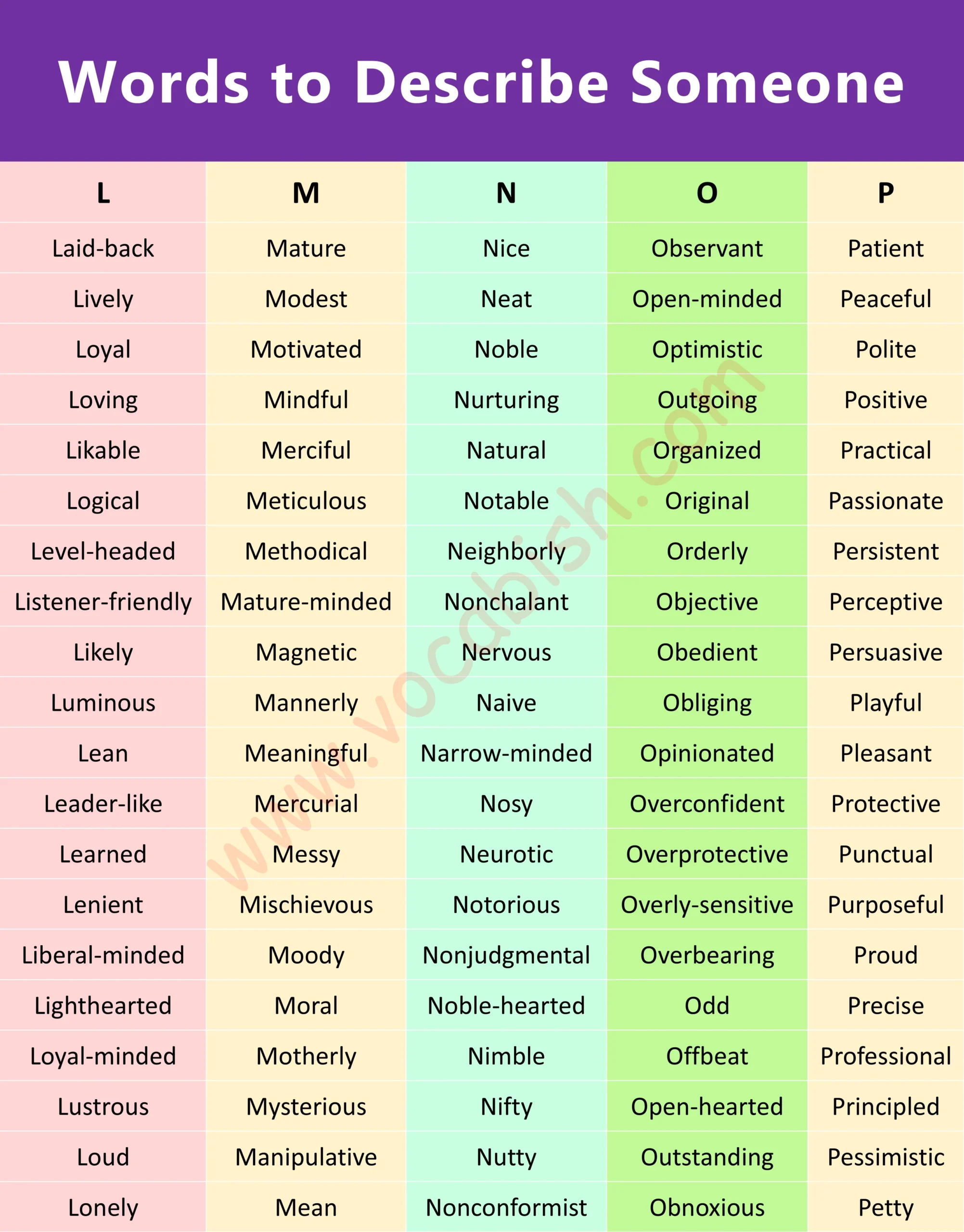
Q Words to Describe Someone
There are fewer common English adjectives beginning with Q, so some of these are less frequently used.
- Quick-witted – able to think and respond quickly. – Example: “She is quick-witted and always has a clever reply.”
- Quiet – speaking little or making little noise. – Example: “He is quiet around strangers.”
- Quirky – unusual in an interesting or amusing way. – Example: “She has a quirky sense of humor.”
- Quick-thinking – able to make decisions rapidly. – Example: “His quick-thinking response prevented a bigger problem.”
- Qualified – having the necessary training or skills. – Example: “She is highly qualified for the position.”
- Questioning – inclined to ask questions or challenge ideas. – Example: “He has a questioning mind.”
- Quotable – likely to say things people remember or repeat. – Example: “She is extremely quotable during interviews.”
- Queenly – dignified, graceful, or majestic. – Example: “She has a queenly presence.”
- Quixotic – idealistic in an unrealistic or impractical way. – Example: “His quixotic plans were exciting but difficult to achieve.”
- Quarrelsome – often arguing or looking for reasons to fight. – Example: “The quarrelsome neighbor complains about everything.”
- Querulous – frequently complaining in an annoyed voice. – Example: “He became querulous whenever the service was slow.”
- Quick – able to understand or react rapidly. – Example: “She is quick to notice changes.”
- Quick-tempered – becoming angry very easily. – Example: “He is quick-tempered when stressed.”
- Quiet-spoken – speaking softly and calmly. – Example: “Our manager is quiet-spoken but very confident.”
- Quality-minded – strongly concerned with doing things well. – Example: “She is quality-minded and checks every product.”
- Quizzical – showing confusion or curiosity. – Example: “He gave me a quizzical look.”
- Quiescent – quiet and inactive for a period. – Example: “He remained quiescent during the heated discussion.”
- Quintessential – representing the most typical or perfect example of something. – Example: “She is the quintessential professional.”
- Quick-tempered – easily irritated or angered. – Example: “He can be quick-tempered after a stressful day.”
- Quintessentially kind – especially representative of genuine kindness. – Example: “She is quintessentially kind and thoughtful toward others.”
R Words to Describe Someone
These R words to describe someone are useful for relationships, work, communication, and character.
- Reliable – able to be trusted to do what is expected. – Example: “Sara is reliable and always keeps her promises.”
- Respectful – showing consideration and respect. – Example: “He is respectful toward his teachers.”
- Responsible – dependable and willing to handle duties. – Example: “She is responsible with her work.”
- Resilient – able to recover from difficulties. – Example: “He is resilient and keeps moving forward.”
- Resourceful – good at finding solutions with what is available. – Example: “She is resourceful when problems arise.”
- Rational – thinking logically rather than emotionally. – Example: “He remained rational during the disagreement.”
- Realistic – seeing situations as they really are. – Example: “She has realistic expectations.”
- Reserved – quiet and not quick to express feelings. – Example: “He is reserved around new people.”
- Radiant – looking especially happy, healthy, or bright. – Example: “She looked radiant on her wedding day.”
- Reassuring – making others feel calmer or safer. – Example: “His reassuring voice helped me relax.”
- Reflective – thoughtful and inclined to consider experiences carefully. – Example: “She is reflective after difficult conversations.”
- Relaxed – calm and free from tension. – Example: “He is relaxed even before big presentations.”
- Remarkable – unusually impressive or noteworthy. – Example: “She has remarkable leadership skills.”
- Respectable – deserving respect or approval. – Example: “He has a respectable career.”
- Responsible-minded – strongly focused on duties and obligations. – Example: “She is responsible-minded and dependable.”
- Rigid – unwilling to change ideas or rules. – Example: “He is too rigid about minor procedures.”
- Rude – lacking good manners. – Example: “It was rude to leave without saying goodbye.”
- Reckless – taking unnecessary risks without considering consequences. – Example: “His reckless driving worried everyone.”
- Resentful – continuing to feel angry about unfair treatment. – Example: “She became resentful after being ignored for months.”
- Restless – unable to relax or stay still. – Example: “The children became restless during the long meeting.”
S Words to Describe Someone
These S words to describe someone are among the most useful for everyday English.
- Smart – intelligent or well presented. – Example: “He is smart and learns quickly.”
- Sincere – honest and genuine. – Example: “Her apology sounded sincere.”
- Sociable – enjoying spending time with others. – Example: “My sister is sociable and makes friends easily.”
- Supportive – giving emotional or practical help. – Example: “My family is very supportive.”
- Sensitive – easily aware of or affected by feelings. – Example: “She is sensitive to other people’s emotions.”
- Selfless – caring more about others than yourself. – Example: “His selfless actions inspired everyone.”
- Self-confident – having confidence in your own abilities. – Example: “She became more self-confident after practicing.”
- Sensible – showing good practical judgment. – Example: “He made a sensible decision.”
- Serious – thoughtful and not playful about something. – Example: “She is serious about her career.”
- Sincere-hearted – genuinely honest and warm. – Example: “He is a sincere-hearted person.”
- Skilled – having good ability in a particular area. – Example: “She is skilled at communication.”
- Steady – calm, reliable, and consistent. – Example: “He has a steady personality.”
- Strong-willed – determined and difficult to persuade. – Example: “She is strong-willed and independent.”
- Stylish – fashionable and attractive in appearance. – Example: “He is always stylish.”
- Sympathetic – showing understanding and concern. – Example: “She was sympathetic when I told her my problem.”
- Spontaneous – acting naturally without much planning. – Example: “He is spontaneous and loves surprise trips.”
- Straightforward – clear, honest, and uncomplicated. – Example: “Her communication style is straightforward.”
- Stubborn – unwilling to change your opinion or behavior. – Example: “He is stubborn when he thinks he is right.”
- Selfish – caring mainly about your own needs. – Example: “It was selfish to take everything for yourself.”
- Sarcastic – using irony to mock or criticize. – Example: “He can be sarcastic when he is annoyed.”
T Words to Describe Someone
Use these T words to describe someone when discussing character, behavior, appearance, and emotional qualities.
- Talented – naturally good at something. – Example: “She is talented at drawing.”
- Thoughtful – considerate and careful about others’ feelings. – Example: “That was a thoughtful gift.”
- Trustworthy – deserving trust. – Example: “He is trustworthy with confidential information.”
- Tolerant – accepting differences and opinions. – Example: “She is tolerant of people with different views.”
- Truthful – honest and accurate. – Example: “He is truthful even when the truth is uncomfortable.”
- Tidy – neat and organized. – Example: “Her room is always tidy.”
- Tough – strong and able to handle difficulty. – Example: “She is tough and rarely gives up.”
- Tender – gentle, caring, and affectionate. – Example: “He has a tender heart.”
- Tenacious – determined and unwilling to give up. – Example: “She is tenacious when solving difficult problems.”
- Tactful – careful not to offend people. – Example: “He was tactful when giving criticism.”
- Team-oriented – willing to cooperate with a group. – Example: “She is team-oriented and enjoys collaboration.”
- Temperamental – likely to change mood unexpectedly. – Example: “He can be temperamental under pressure.”
- Talkative – talking a lot. – Example: “My little sister is very talkative.”
- Teachable – willing and able to learn. – Example: “He is teachable and accepts useful feedback.”
- Thrifty – careful about spending money. – Example: “She is thrifty and avoids unnecessary purchases.”
- Timid – lacking confidence around people or new situations. – Example: “He was timid during his first week at school.”
- Tolerant-minded – willing to accept differences. – Example: “She is tolerant-minded and respects different lifestyles.”
- Toxic – emotionally harmful or unhealthy in relationships. – Example: “His toxic behavior made the workplace stressful.”
- Tricky – difficult to understand or deal with. – Example: “He can be tricky to work with.”
- Touchy – easily upset or offended. – Example: “She is touchy about criticism.”
U Words to Describe Someone
There are fewer everyday adjectives beginning with U, but these can add variety to your vocabulary.
- Understanding – showing sympathy and awareness of another person’s feelings. – Example: “My teacher is understanding when students make mistakes.”
- Unique – unlike anyone or anything else. – Example: “She has a unique personality.”
- Upbeat – cheerful and positive. – Example: “He always sounds upbeat in the morning.”
- Upstanding – honest, respectable, and morally good. – Example: “She is an upstanding member of the community.”
- Unassuming – modest and not trying to attract attention. – Example: “Despite his success, he is very unassuming.”
- Unbiased – fair and not influenced by personal preferences. – Example: “A referee should be unbiased.”
- Unselfish – willing to put others’ needs before your own. – Example: “Her unselfish behavior impressed me.”
- Unpredictable – difficult to know how someone will behave. – Example: “His mood can be unpredictable.”
- Unreliable – not dependable. – Example: “He is unreliable and often arrives late.”
- Unfriendly – not warm or pleasant toward others. – Example: “The receptionist seemed unfriendly.”
- Unkind – lacking kindness or consideration. – Example: “That comment was unkind.”
- Understanding-minded – especially willing to listen and appreciate another viewpoint. – Example: “She is understanding-minded when people explain their problems.”
- Unassuming – quiet and modest. – Example: “He is an unassuming man with impressive skills.”
- Unconventional – different from normal or traditional behavior. – Example: “She has an unconventional approach to education.”
- Unassuming-looking – appearing ordinary or modest. – Example: “He is unassuming-looking but very intelligent.”
- Untidy – not neat or organized. – Example: “His desk is usually untidy.”
- Upright – honest and morally respectable. – Example: “She is known as an upright person.”
- Urgent – requiring immediate action; sometimes describing a person’s manner. – Example: “His urgent tone made us pay attention.”
- Uncompromising – unwilling to change a position or standard. – Example: “He is uncompromising about safety.”
- Unflappable – remaining calm in difficult situations. – Example: “She is unflappable during emergencies.”
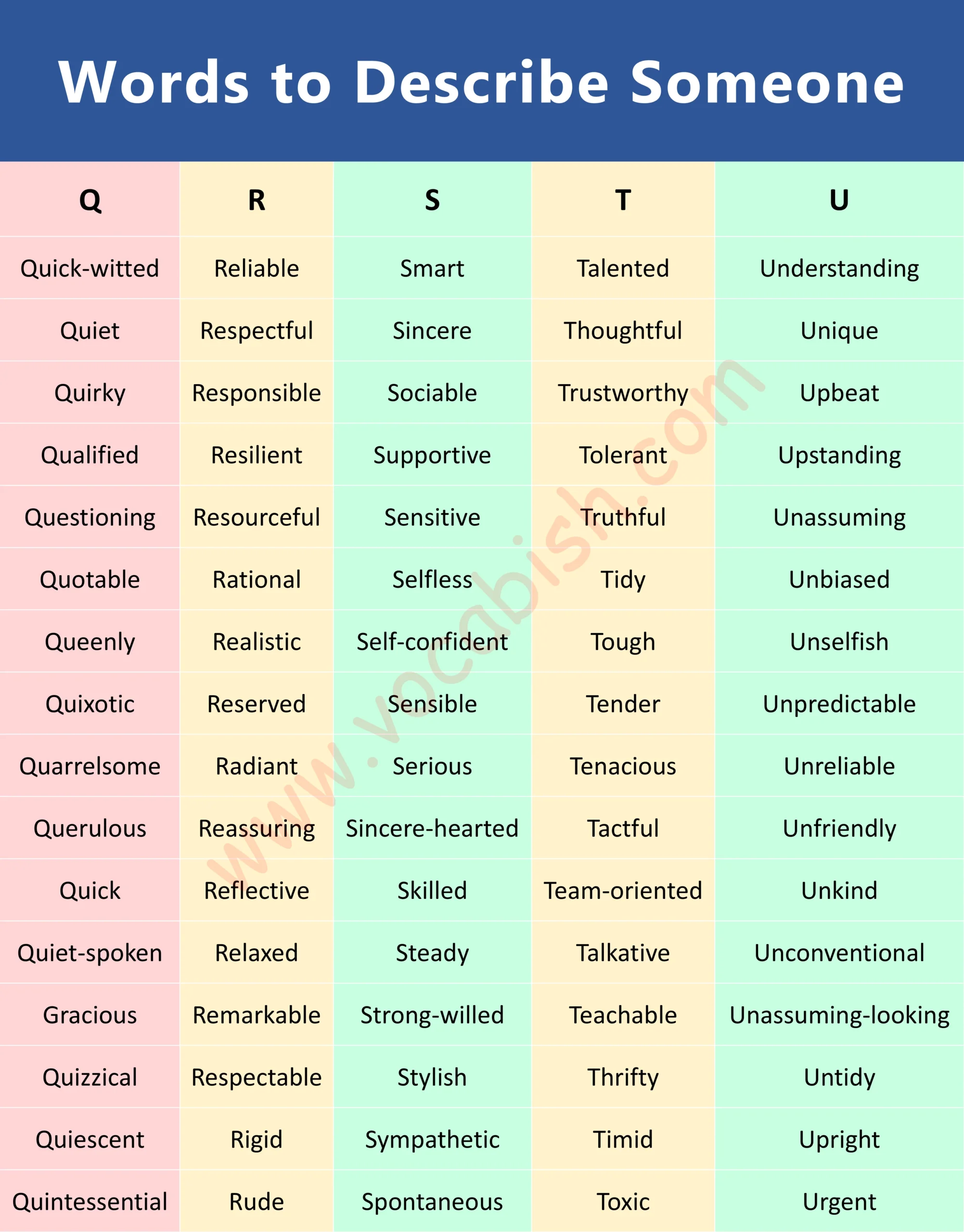
V Words to Describe Someone
These V words to describe someone are useful for discussing values, personality, communication, and behavior.
- Valiant – very brave, especially in a difficult situation. – Example: “The valiant firefighter kept working under pressure.”
- Versatile – able to do many different things well. – Example: “She is a versatile employee.”
- Vibrant – lively, energetic, and full of life. – Example: “He has a vibrant personality.”
- Vigorous – energetic and physically strong. – Example: “She is vigorous and active even in her seventies.”
- Vigilant – watchful and alert to danger or problems. – Example: “The guard remained vigilant.”
- Virtuous – showing high moral standards. – Example: “She is known as a virtuous person.”
- Visionary – having original ideas about the future. – Example: “The founder is a visionary leader.”
- Vivacious – lively, confident, and attractive. – Example: “She has a vivacious personality.”
- Voluntary – acting by free choice rather than force. – Example: “He was a voluntary helper at the event.”
- Vulnerable – easily hurt physically or emotionally. – Example: “He felt vulnerable after sharing his personal story.”
- Vain – overly proud of appearance or abilities. – Example: “He is vain about his hairstyle.”
- Vindictive – wanting revenge after being hurt. – Example: “She can become vindictive after a serious conflict.”
- Volatile – likely to change suddenly, especially emotionally. – Example: “His temper is volatile.”
- Verbose – using more words than necessary. – Example: “He is intelligent but sometimes too verbose.”
- Vivacious – cheerful, lively, and energetic. – Example: “The vivacious presenter kept everyone engaged.”
- Valued – respected or appreciated by others. – Example: “She is a valued member of the team.”
- Vocal – openly expressing opinions or feelings. – Example: “He is vocal about workplace safety.”
- Vigilant-minded – naturally attentive to possible problems. – Example: “She is vigilant-minded when checking important documents.”
- Virtuous-minded – strongly guided by moral principles. – Example: “He is virtuous-minded and cares deeply about fairness.”
- Versatile-minded – able to think and work in different ways. – Example: “She is versatile-minded and adapts to many roles.”
W Words to Describe Someone
These W words to describe someone include common personality, social, emotional, and appearance terms.
- Warm – friendly, kind, and welcoming. – Example: “She has a warm personality.”
- Wise – showing good judgment and experience. – Example: “My grandfather is wise and gives excellent advice.”
- Witty – clever and funny with words. – Example: “He is witty and makes everyone laugh.”
- Well-mannered – polite and respectful. – Example: “The children were very well-mannered.”
- Well-spoken – speaking clearly and effectively. – Example: “She is well-spoken and confident.”
- Welcoming – making people feel comfortable and accepted. – Example: “Our new teacher is very welcoming.”
- Willful – determined to do what you want, sometimes stubbornly. – Example: “The willful child refused to follow instructions.”
- Willing – ready to do something. – Example: “He is willing to help us.”
- Wholehearted – completely sincere and enthusiastic. – Example: “She gave the project her wholehearted support.”
- Wholesome – morally good, healthy, or positive. – Example: “He has a wholesome personality.”
- Watchful – paying close attention. – Example: “The parent was watchful while the children played.”
- Wealthy – having a lot of money or valuable possessions. – Example: “He comes from a wealthy family.”
- Wise-hearted – kind and guided by good judgment. – Example: “She is a wise-hearted person.”
- Withdrawn – quiet and socially distant. – Example: “He became withdrawn after the stressful experience.”
- Wary – cautious because you do not fully trust something. – Example: “She is wary of strangers.”
- Weak-willed – lacking determination or firmness. – Example: “He is too weak-willed to say no.”
- Whiny – complaining in an irritating, high-pitched way. – Example: “The child became whiny when he got tired.”
- Wild – uncontrolled, energetic, or unconventional. – Example: “My cousin has a wild sense of humor.”
- Worldly – experienced and knowledgeable about life and different cultures. – Example: “She is worldly and has traveled extensively.”
- Workaholic – someone who works excessively. – Example: “He is a workaholic and rarely takes weekends off.”
X Words to Describe Someone
Words beginning with X are rare in everyday English. They are useful mainly for advanced vocabulary, culture, personality, or precise description.
- Xenial – friendly and hospitable toward guests or strangers. – Example: “Our host was remarkably xenial to everyone.”
- Xenodochial – welcoming and friendly toward strangers. – Example: “The small town was known for its xenodochial residents.”
- Xenophobic – showing fear or dislike of foreigners or people from other countries. – Example: “His xenophobic comments were offensive.”
- Xanthous – yellowish or golden in color, usually describing hair or appearance. – Example: “The character had xanthous hair.”
- Xeric – adapted to very dry conditions; mainly used in scientific descriptions. – Example: “The xeric-looking traveler had spent months in desert regions.”
- Xenogenic – originating outside an organism or coming from another species or source. – Example: “The scientific description referred to a xenogenic material.”
- Xenodochial-minded – especially welcoming toward unfamiliar people. – Example: “She has a xenodochial-minded attitude toward visitors.”
- Xenial-hearted – exceptionally friendly toward guests. – Example: “He is xenial-hearted whenever relatives visit.”
- Xenophobic-minded – showing negative attitudes toward foreigners. – Example: “The speaker was criticized for being xenophobic-minded.”
- X-factored – informally described as having a special quality that attracts attention. – Example: “She has that X-factored presence people remember.”
- Xenophile – a person who is strongly interested in foreign cultures and people. – Example: “He is a xenophile who loves learning about other cultures.”
- Xenophilic – showing strong interest in foreign cultures or people. – Example: “Her xenophilic personality makes international travel exciting.”
- Xenocentric – judging one’s own culture by comparison with foreign cultures, often favorably toward the foreign. – Example: “His xenocentric attitude made him dismiss local traditions.”
- Xerothermic – relating to very hot and dry conditions; mainly descriptive rather than conversational. – Example: “The expedition leader was experienced in xerothermic environments.”
- Xenodochy – hospitality toward strangers; used mainly as a noun. – Example: “Her xenodochy made visitors feel instantly comfortable.”
- Xylophagous – feeding on wood; normally used for animals rather than people. – Example: “The term xylophagous is normally used for insects, not people.”
- Xyloid – resembling or relating to wood; generally not a personality word. – Example: “Xyloid is a technical appearance descriptor rather than an everyday personality adjective.”
- Xanthic – yellowish in color. – Example: “The artist described the character’s xanthic hair.”
- Xerophilic – adapted to dry conditions; mainly scientific. – Example: “Xerophilic is usually used for organisms rather than people’s personalities.”
- Xenocultural – related to an unfamiliar or foreign culture. – Example: “Her xenocultural interests led her to study languages.”
Y Words to Describe Someone
These Y words to describe someone include both common and less common descriptive terms.
- Young – having lived for relatively few years. – Example: “She is still young but very responsible.”
- Youthful – looking or behaving as if younger than one’s age. – Example: “He has a youthful appearance.”
- Young-at-heart – maintaining an energetic or playful attitude regardless of age. – Example: “My grandmother is young-at-heart.”
- Yummy – attractive or appealing, usually describing food rather than people. – Example: “The word yummy is usually used for food, not personality.”
- Yielding – willing to give way or accept another person’s wishes. – Example: “She is yielding when compromise is needed.”
- Yearning – strongly longing for something. – Example: “He looked yearningly at the old family home.”
- Yare – ready, quick, or agile; an old-fashioned word. – Example: “The yare young sailor moved quickly across the deck.”
- Yappy – talking excessively or making frequent loud sounds; informal. – Example: “That little dog is yappy, but very friendly.”
- Yokel-like – resembling someone seen as unsophisticated or from the countryside; can be insulting. – Example: “Calling someone yokel-like can sound disrespectful.”
- Yonder-looking – appearing to look toward something in the distance; poetic rather than everyday. – Example: “The yonder-looking traveler seemed lost in thought.”
- Youth-oriented – focused on the interests of young people. – Example: “She has a youth-oriented approach to teaching.”
- Youthful-looking – appearing younger than one’s actual age. – Example: “He is remarkably youthful-looking.”
- Yielding-hearted – gentle and willing to compromise. – Example: “She is yielding-hearted when disagreements arise.”
- Yearning-hearted – strongly longing for something emotionally. – Example: “He is yearning-hearted when talking about home.”
- Yare-minded – quick and ready to act; uncommon. – Example: “The yare-minded worker responded immediately.”
- Yummy-looking – attractive in appearance, usually used informally for food. – Example: “The dessert looked yummy.”
- Yammering – talking or complaining continuously and noisily. – Example: “The yammering customer would not stop complaining.”
- Yawning – appearing tired or showing boredom. – Example: “The students were yawning during the long lecture.”
- Yoked – physically strong or muscular; uncommon in general conversation. – Example: “The athlete looked strongly yoked after years of training.”
- Yuppie – associated with a young, ambitious urban professional; informal and sometimes dated. – Example: “The novel features a wealthy yuppie character.”
Z Words to Describe Someone
There are relatively few common Z adjectives used for people, but these are useful additions to advanced vocabulary.
- Zany – amusingly strange or unconventional. – Example: “My uncle has a zany sense of humor.”
- Zealous – extremely enthusiastic about a cause or activity. – Example: “She is zealous about protecting the environment.”
- Zestful – full of energy and enthusiasm. – Example: “He has a zestful personality.”
- Zesty – lively, energetic, and full of enthusiasm. – Example: “She brings a zesty attitude to every project.”
- Zen – calm, peaceful, and mentally balanced; informal use. – Example: “He has a very Zen approach to stressful situations.”
- Zippy – energetic, lively, or fast-moving. – Example: “She has a zippy personality.”
- Zingy – lively, exciting, or energetic. – Example: “His zingy personality makes meetings more enjoyable.”
- Zonal – relating to a particular area or zone; rarely a personal descriptor. – Example: “Zonal is usually used for places or systems, not personality.”
- Zany-minded – unusually imaginative or eccentric. – Example: “His zany-minded ideas often surprise the team.”
- Zealous-hearted – deeply enthusiastic and committed. – Example: “She is zealous-hearted about helping students.”
- Zestful-hearted – lively, energetic, and positive. – Example: “He is zestful-hearted and brings enthusiasm to the group.”
- Zippy-minded – mentally quick and energetic; informal. – Example: “She is zippy-minded and thinks quickly.”
- Zonked – extremely tired; informal. – Example: “I was completely zonked after the long journey.”
- Zombielike – appearing extremely tired or lacking energy. – Example: “He looked zombielike after working all night.”
- Zonal-minded – focused strongly on a specific area or category; uncommon. – Example: “The planner is zonal-minded when organizing departments.”
- Zesty-hearted – lively, enthusiastic, and spirited. – Example: “Her zesty-hearted personality keeps the team motivated.”
- Zappy – energetic, lively, and exciting; informal. – Example: “He has a zappy style of presenting.”
- Zen-like – extremely calm and peaceful. – Example: “Her Zen-like attitude helps everyone relax.”
- Zealful – full of zeal or enthusiasm; uncommon. – Example: “He is zealful about learning new skills.”
- Zingy – lively and full of energy. – Example: “She has a zingy personality that stands out.”
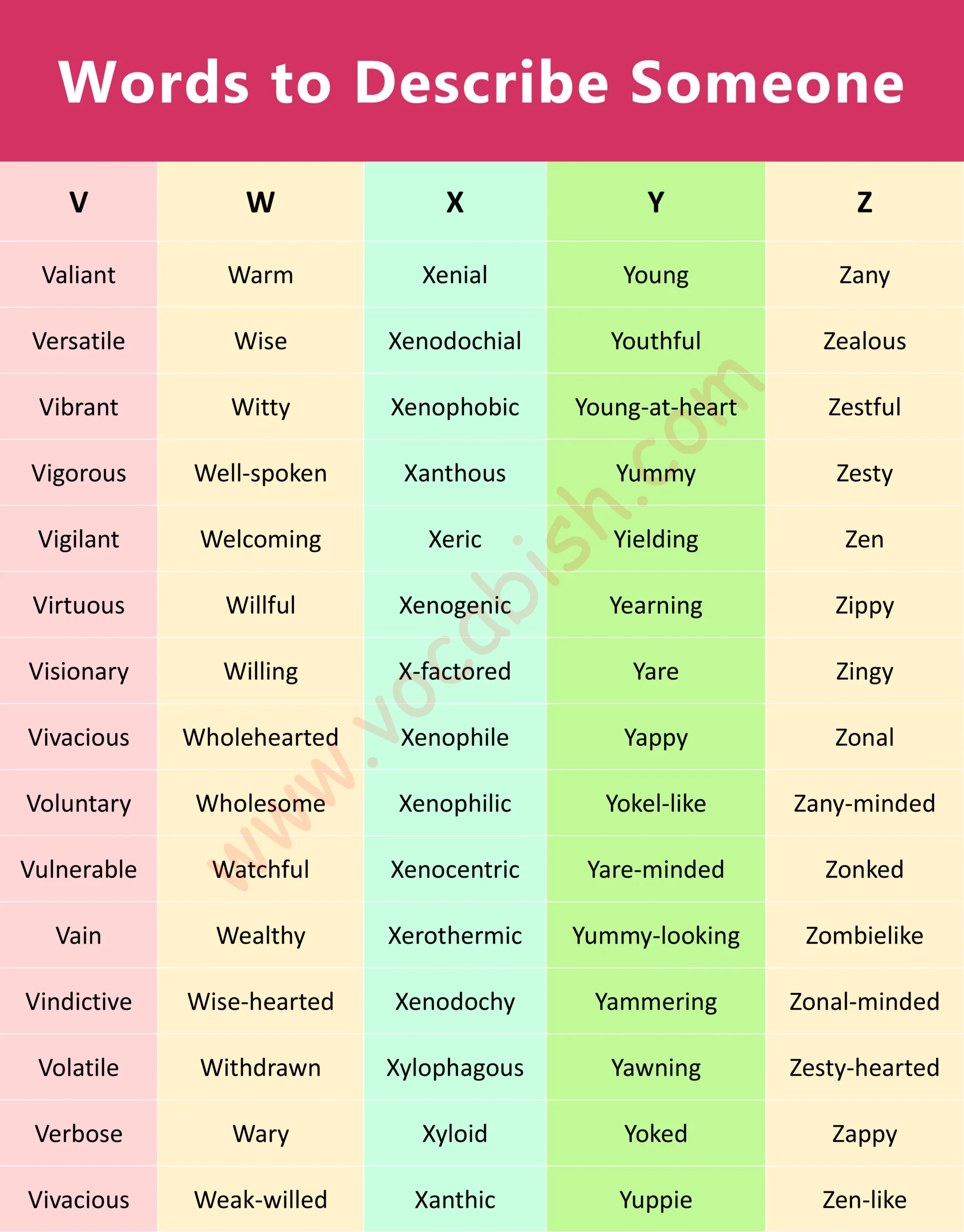
Positive Words to Describe Someone
When you want to praise someone’s character, focus on words that describe how they treat people, handle problems, and contribute to relationships.
Useful positive choices include:
- Kind – caring and helpful.
- Caring – concerned about others.
- Honest – truthful and sincere.
- Reliable – dependable and trustworthy.
- Generous – willing to give and share.
- Patient – able to remain calm while waiting or helping.
- Confident – secure in one’s abilities.
- Compassionate – deeply caring about others’ difficulties.
- Thoughtful – considerate of other people’s feelings.
- Supportive – ready to provide help and encouragement.
- Responsible – dependable about duties.
- Loyal – faithful to people or groups.
- Creative – able to develop original ideas.
- Hardworking – willing to put in consistent effort.
- Respectful – treating others with consideration.
- Humble – not overly proud of achievements.
- Optimistic – expecting positive outcomes.
- Friendly – pleasant and approachable.
- Resilient – able to recover from difficulties.
- Open-minded – willing to consider different ideas.
Negative Words to Describe Someone
Negative adjectives should be chosen carefully because some words can sound strong or offensive. Use them when the behavior clearly matches the meaning.
Common examples include:
- Rude – lacking good manners.
- Selfish – mainly concerned with personal needs.
- Dishonest – not truthful.
- Lazy – unwilling to work or make an effort.
- Arrogant – believing you are better than others.
- Stubborn – unwilling to change your mind.
- Impatient – easily frustrated while waiting.
- Jealous – unhappy about another person’s advantage or attention.
- Greedy – wanting more than you need.
- Careless – not paying enough attention.
- Unreliable – not dependable.
- Narrow-minded – unwilling to accept different ideas.
- Manipulative – unfairly controlling others.
- Judgmental – too quick to criticize people.
- Aggressive – behaving in a forceful or threatening way.
- Pessimistic – expecting bad outcomes.
- Moody – experiencing frequent mood changes.
- Nosy – too interested in other people’s private matters.
- Vindictive – wanting revenge.
- Toxic – emotionally harmful or unhealthy in a relationship.
Words to Describe Someone by Category
Choosing vocabulary by category can make your descriptions more precise.
Personality
Use words such as kind, confident, shy, outgoing, patient, honest, ambitious, cheerful, stubborn, and independent.
Behavior
Useful choices include helpful, considerate, rude, careless, respectful, aggressive, polite, cooperative, and responsible.
Appearance
For physical description, you can use tall, short, slim, muscular, elegant, attractive, youthful, stylish, handsome, beautiful, and radiant.
Intelligence and Ability
Use intelligent, clever, bright, brilliant, knowledgeable, skilled, talented, capable, analytical, and creative.
Emotions and Attitude
Good choices include happy, nervous, hopeful, optimistic, pessimistic, confident, insecure, grateful, resentful, and enthusiastic.
Social Personality
Words such as friendly, sociable, outgoing, approachable, chatty, reserved, introverted, extroverted, welcoming, and gregarious are useful.
Common Mistakes When Describing People
- “He is very agree.” → Say “He is very agreeable.”
- “She is confidence.” → Say “She is confident.” “Confidence” is a noun; “confident” is an adjective.
- “He is kindness.” → Say “He is kind.” “Kindness” is the noun.
- “She is sympathy.” → Say “She is sympathetic.” “Sympathy” is a noun.
- “He is success.” → Say “He is successful.” “Success” is a noun.
Practice: Choose the Right Word
Choose the best descriptive word for each sentence.
- Sara always tells the truth, even when the truth is difficult. She is __________.
- Ahmed never gives up when a task becomes difficult. He is __________.
- Maria talks easily to strangers and enjoys social events. She is __________.
- Tom often forgets appointments and loses his belongings. He is __________.
- My teacher understands when students need extra time. She is __________.
- James always arrives on time and completes his work. He is __________.
- Lucy expects good things to happen even during difficult periods. She is __________.
- David becomes angry very quickly when things go wrong. He is __________.
- Nina carefully thinks about how her actions affect others. She is __________.
- Omar refuses to consider opinions that differ from his own. He is __________.
Answers:
- Honest
- Persistent or determined
- Outgoing or sociable
- Careless or absent-minded
- Understanding
- Reliable or responsible
- Optimistic
- Quick-tempered
- Considerate
- Narrow-minded
How to Use These Words Naturally
A descriptive adjective usually comes before a noun or after a linking verb such as be, seem, look, feel, or become.
For example:
- “She is confident.”
- “He seems friendly.”
- “They are reliable employees.”
- “My teacher looks tired.”
- “She became more patient with experience.”
You can also combine two or more adjectives when each word adds a different detail:
- “She is kind, patient, and reliable.”
- “He is quiet but confident.”
- “My brother is friendly, funny, and outgoing.”
- “The manager is strict but fair.”
Avoid adding several adjectives that mean almost exactly the same thing. Choose words that give the listener new information.
FAQs About Words to Describe Someone
Some of the most useful words are kind, friendly, honest, confident, caring, reliable, hardworking, patient, generous, and respectful.
Positive words include compassionate, thoughtful, loyal, dependable, cheerful, intelligent, supportive, courageous, humble, and optimistic.
Common negative descriptions include rude, selfish, dishonest, lazy, arrogant, stubborn, careless, impatient, jealous, and unreliable.
Use personality adjectives such as friendly, shy, confident, outgoing, calm, funny, serious, thoughtful, ambitious, or easygoing.
Use words for height, build, hair, clothing, and overall appearance, such as tall, slim, muscular, elegant, stylish, handsome, or beautiful.
Kind emphasizes caring or helpful behavior, while nice is broader and usually means pleasant, friendly, or agreeable.
Confident means believing in your abilities, while arrogant suggests believing you are better or more important than others.
Useful choices include loyal, supportive, trustworthy, caring, funny, understanding, dependable, honest, thoughtful, and kind.
Conclusion
The right words to describe someone help you communicate much more clearly than using basic words such as “good,” “bad,” or “nice” repeatedly. A strong vocabulary lets you explain a person’s personality, behavior, appearance, attitude, emotions, strengths, and weaknesses with greater accuracy.
Start with common words such as kind, honest, friendly, confident, patient, reliable, and thoughtful, then gradually add more precise vocabulary such as empathetic, perceptive, resilient, diplomatic, charismatic, and meticulous. The more you use these adjectives in everyday sentences, the more naturally they will become part of your English.
Explore More Related Articles
- 150+ Positive and Negative Words for Personality
- 100+ Adjectives to Describe Someone in English
- 200+ Words that Describe Colors in English
- 200+ Adjectives to Describe People