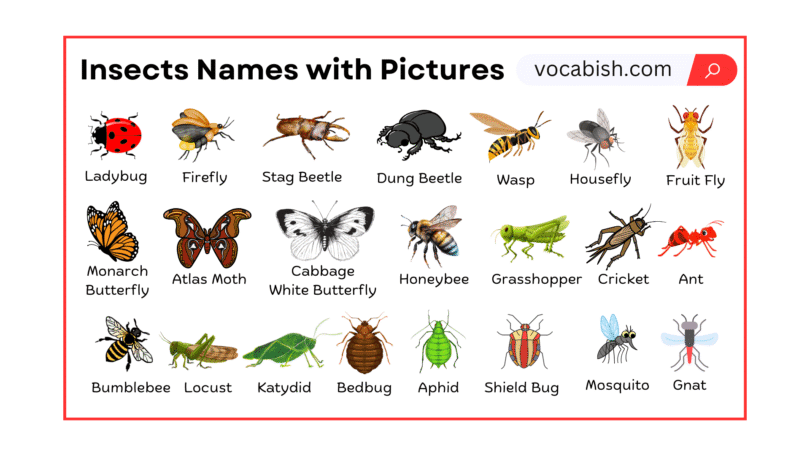

Have you ever seen a tiny bug in your garden and wondered what it is called in English? Learning insects names helps you talk about nature, animals, outdoor activities, and everyday observations with confidence.
From butterflies and bees to ants and dragonflies, insect vocabulary appears in school lessons, storybooks, science classes, and daily conversations. Knowing these words can improve your English vocabulary while helping you describe the world around you more accurately.
In each section below, we will learn the new names for each insect with descriptions according to their appearance, behavior, and identifying traits.
What Are Insects?
Insects are small creatures that can crawl, jump, fly, or hide in different places. They come in many colors, shapes, and sizes.
Some insects live on plants, some stay underground, while others fly through the air. Because they are so common, their names often appear in everyday English.
Why Learn Insect Names in English?
Learning insect vocabulary helps you describe animals, nature, gardens, and outdoor activities more confidently.
These words also appear in school books, stories, documentaries, and daily conversations. The more insect names you know, the easier it becomes to understand and use English naturally.
Common Insects Names in English
These are some of the most common insect names in English and their pictures learners should know.
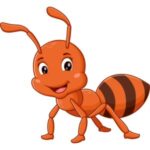
Ant
Tiny colony insects often carrying food above ground.
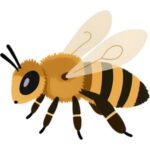
Bee
A fuzzy striped insect commonly seen around flowers.

Butterfly
A colorful winged insect is flying between blooming plants.

Ladybug
Round red insect covered with black spots.
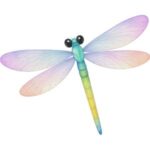
Dragonfly
Long-bodied insect featuring large transparent wings.
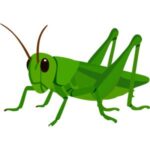
Grasshopper
A strong jumping insect usually found among grasses.
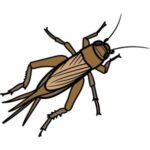
Cricket
Brown insect recognized by its chirping sounds.
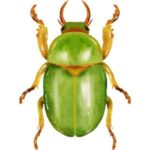
Beetle
Hard-shelled insect appearing in countless varieties worldwide.
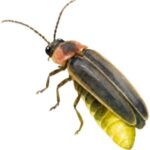
Firefly
Glowing insects are visible during warm summer evenings.
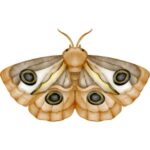
Moth
Soft-winged insects are frequently attracted to bright lights.
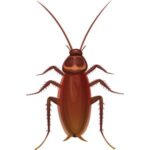
Cockroach
A fast-running insect commonly hiding in dark spaces.
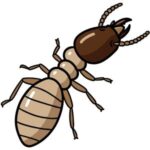
Termite
Pale insects living inside wooden structures and furniture.
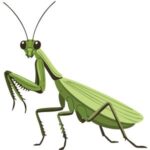
Praying Mantis
Long-legged insect holding folded front legs upward.
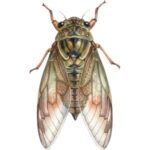
Cicada
Large-winged insect famous for loud seasonal buzzing.
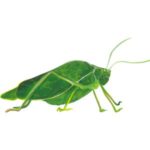
Katydid
A green leaf-like insect active during nighttime hours.
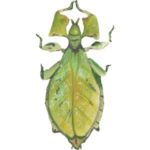
Leaf Insect
Camouflaged insect closely resembling a green leaf.
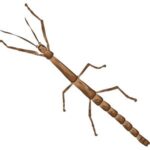
Stick Insect
Thin insects looking remarkably similar to twigs.
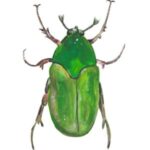
June Beetle
Brown beetles are often attracted to outdoor lights.
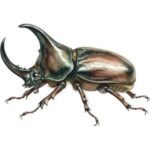
Rhinoceros Beetle
Large beetle carrying a horn-like head structure.
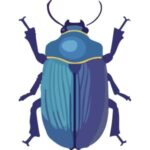
Jewel Beetle
Metallic-colored insect displaying bright, shiny patterns.
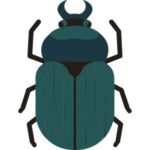
Scarab Beetle
Oval beetle known for its smooth shell.
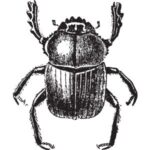
Dung Beetle
Rounded beetles often roll balls across the ground.
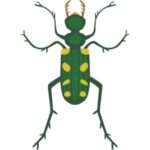
Tiger Beetle
Fast-running beetle marked with striking body patterns.
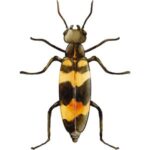
Blister Beetle
Soft-bodied beetle recognized by its narrow shape.
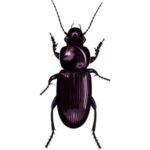
Ground Beetle
A dark-colored insect frequently moving across soil.

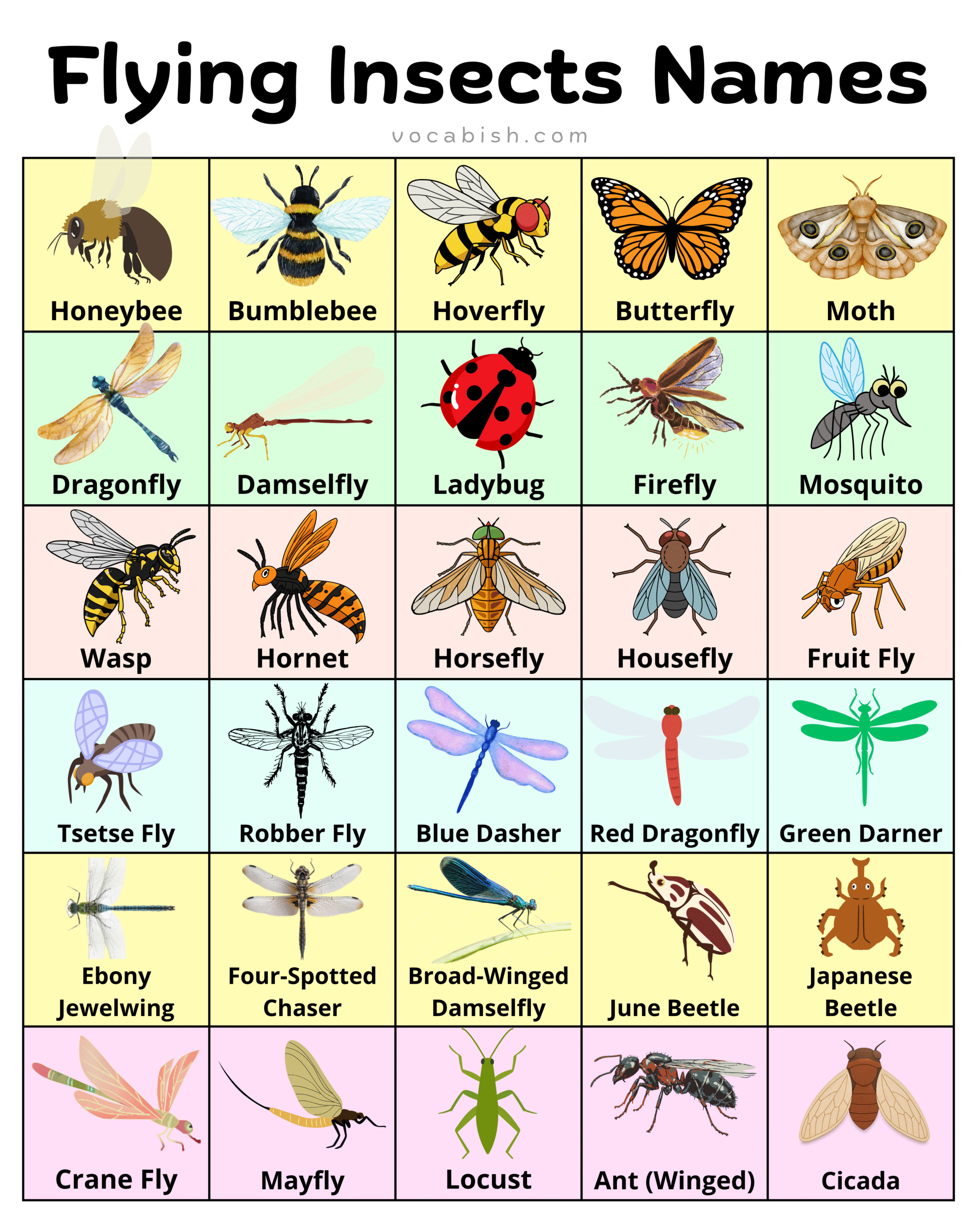
Flying Insects You May See Every Day
Flying insects are often easier to notice because they move around gardens, trees, parks, flowers, and lights.
Hoverfly
A bee-like flyer often hovering above colorful flowers.
Mayfly
Delicate winged insect usually found near water.
Damselfly
Slender insects resting quietly beside streams and ponds.
Lacewing
Pale green insect with delicate net-like wings.
Fruit Fly
Tiny flying insect attracted to ripe fruits.
Gnat
Very small flying insect commonly seen outdoors.
Horsefly
Large, fast flyer known for painful bites.
Crane Fly
Long-legged insects often mistaken for giant mosquitoes.
Whitefly
A tiny white insect frequently found on plants.
Alderfly
A dark-winged insect usually living near rivers.
Dobsonfly
Large insect recognized by its impressive jaws.
Caddisfly
A hairy-winged insect commonly found near freshwater habitats.
Robber Fly
Predatory insect catching other insects during flight.
Bee Fly
Fuzzy insect resembling a small bee.
Dance Fly
Slender flying insects, often moving in groups.
March Fly
Dark-bodied insect commonly active during warmer months.
Fungus Gnat
Tiny black flyer found around damp soil.
Midge
Small, delicate insect often appearing near water.
Sawfly
Wasp-like insect lacking the narrow wasp waist.
Skipper
A fast-flying butterfly with a short, stout body.
Crawling Insects Commonly Found on Land
Many insects spend most of their time crawling across soil, rocks, tree bark, leaves, and garden paths. Learning these names helps you describe insects you commonly see outdoors.
Earwig
Slender insect carrying small pincers at its rear.
Silverfish
Shiny, wingless insect moving quickly across surfaces.
Weevil
A long-snouted insect commonly found around grains and seeds.
Rove Beetle
Short-winged beetle with an elongated, flexible body.
Darkling Beetle
Black beetles are often seen in dry environments.
Click Beetle
Narrow insect capable of flipping into the air.
Bark Beetle
Small beetle living beneath tree bark layers.
Leaf Beetle
Bright-colored insect feeding on plant leaves.
Carpet Beetle
Patterned household insect damaging fabrics and clothing.
Wireworm
Thin larval insect resembling a small wire.
Stag Beetle
Large beetle recognized by antler-like jaws.
Longhorn Beetle
Beetle featuring exceptionally long curved antennae.
Woodlouse Hunter
Fast-moving insect searching beneath stones and logs.
Whirligig Beetle
A shiny beetle moving rapidly across water surfaces.
Tortoise Beetle
Rounded beetle protected by a transparent shell.
Mealworm Beetle
A dark insect commonly associated with stored grains.
Seed Bug
A small insect frequently found around flowering plants.
Shield Bug
Flat-bodied insect releasing odor when disturbed.
Assassin Bug
Long-legged insect with a distinctive curved mouthpart.
Velvet Ant
Fuzzy wingless insect covered in bright colors.

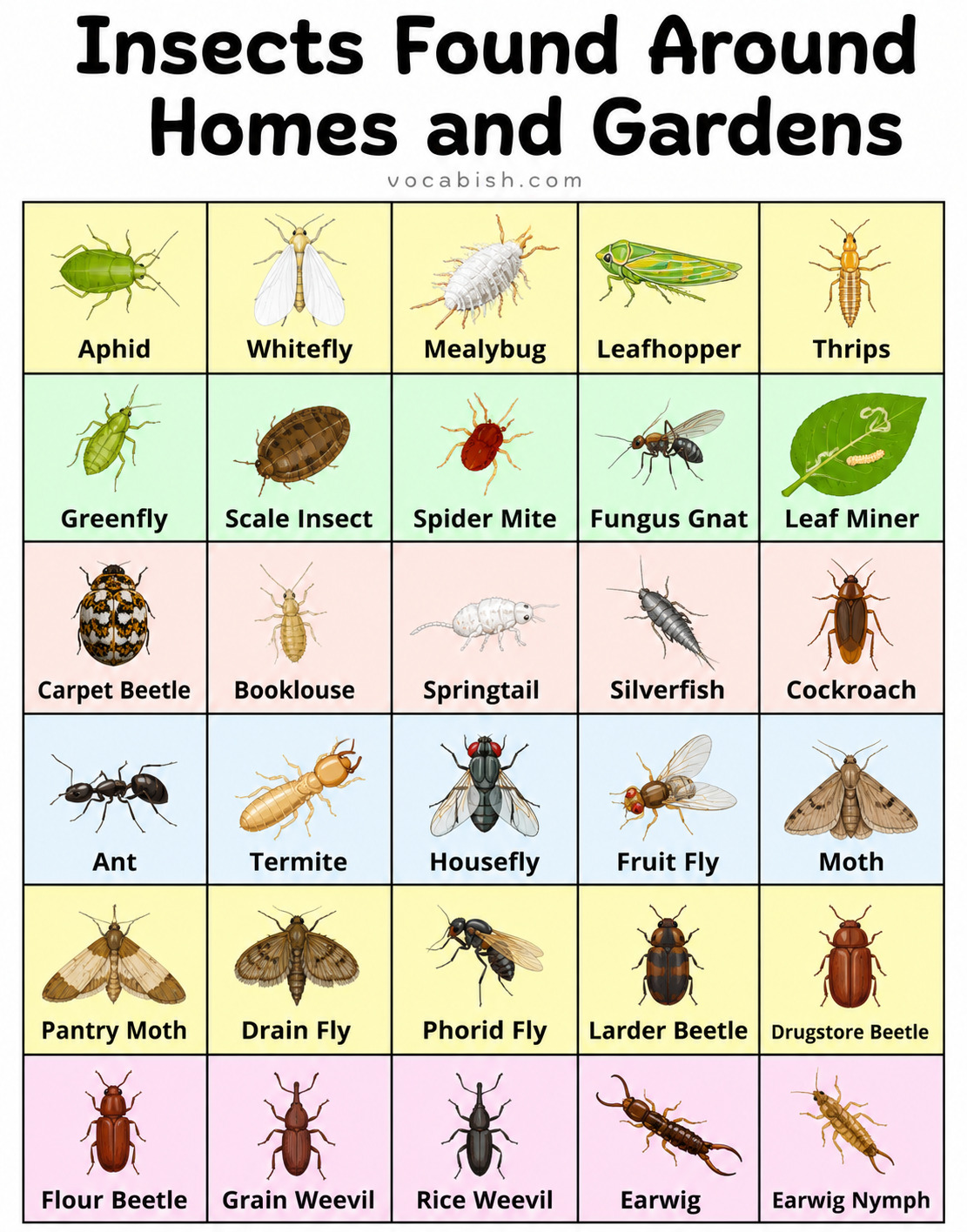
Insects Found Around Homes and Gardens
Homes and gardens attract many insects throughout the year. Some appear near plants, while others hide inside walls, furniture, or storage areas.
Garden Insects
Aphid
Tiny pear-shaped insect clustering on young plants.
Leafhopper
A quick-jumping insect usually hides among green foliage.
Mealybug
White cotton-like insect attached to plant stems.
Thrips
Slender insect feeding on flowers and leaves.
Greenfly
Soft-bodied insect commonly covering garden plants.
Treehopper
Odd-shaped insect resembling small plant thorns.
Spittlebug
Small insects are often hidden inside foamy bubbles.
Planthopper
Wedge-shaped insect capable of impressive jumps.
Flea Beetle
Tiny beetle making holes in plant leaves.
Rose Chafer
A metallic beetle is frequently visiting flowering plants.
Leaf Miner
Small insect creating tunnels inside leaves.
Bumble Flower Beetle
Hairy beetle commonly seen on blossoms.
Red Lily Beetle
A bright red insect was found around lily plants.
Green Dock Beetle
Metallic insect feeding on broad green leaves.
Woolly Aphid
White fluffy insects are gathering on branches.
Household Insects
Booklouse
Tiny pale insect found near old books.
Springtail
Minute jumping insect, usually appearing in damp areas.
Powderpost Beetle
Wood-boring insect leaving fine powder behind.
Larder Beetle
Dark household insects are attracted to stored foods.
Drugstore Beetle
Small brown insect infesting packaged products.
Cigarette Beetle
Tiny insect damaging dried food materials.
Psocid
Soft-bodied indoor insect preferring humid environments.
Flour Beetle
Reddish-brown insect found in kitchen storage.
Grain Weevil
Small pantry insect feeding on stored grains.
Rice Weevil
A dark insect commonly discovered inside rice containers.
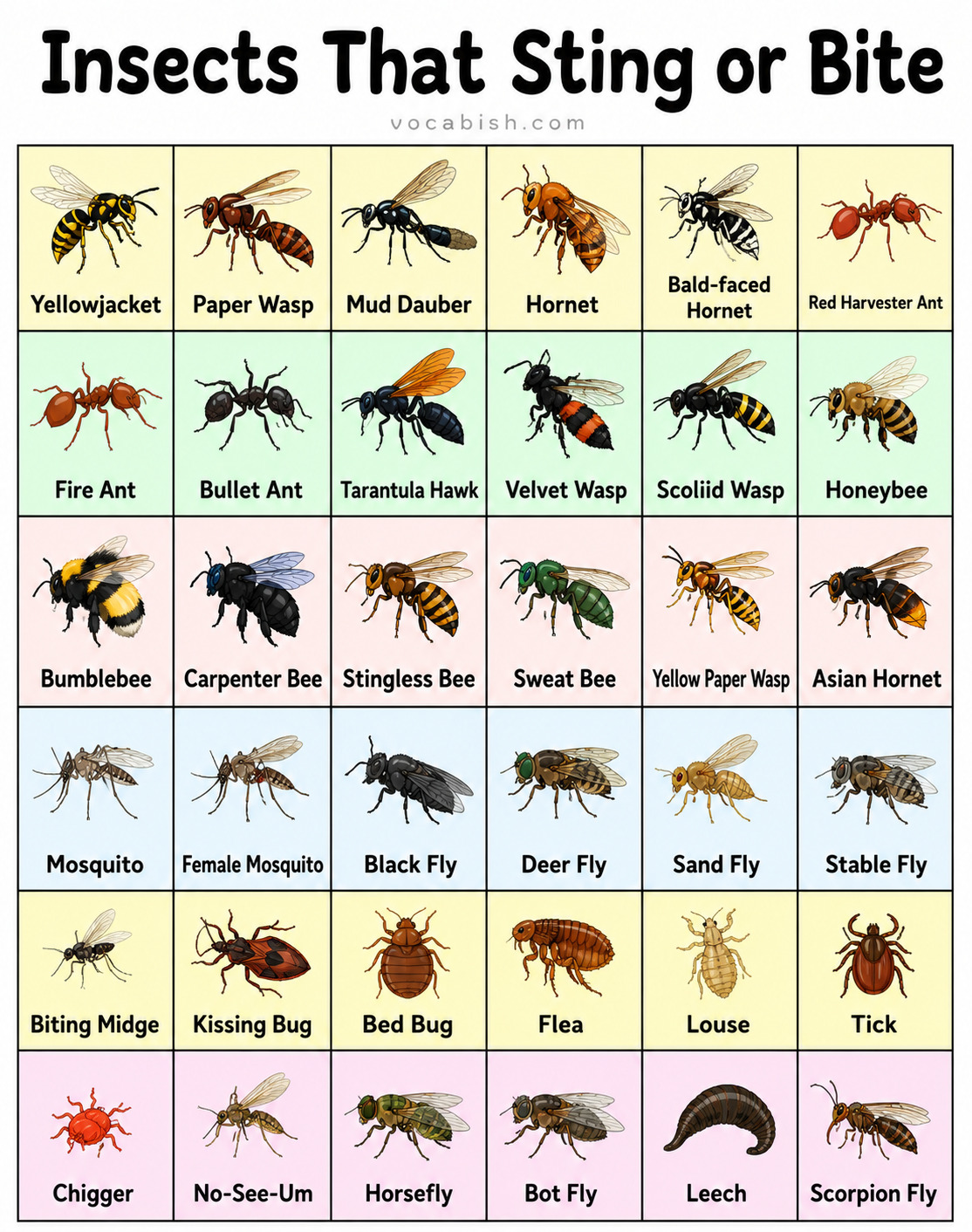
Insects That Sting or Bite
Some insects are known for stinging or biting. These names often appear in health, travel, and outdoor vocabulary.
Stinging Insects
Yellowjacket
A bright yellow insect frequently attracted to sweet foods.
Paper Wasp
Long-legged wasp building umbrella-shaped paper nests.
Mud Dauber
Slender wasp constructing nests from wet mud.
European Hornet
Large brown hornet producing a loud buzz.
Baldfaced Hornet
Black-and-white insect building hanging nests.
Red Harvester Ant
Reddish ants are known for painful stings.
Bullet Ant
Tropical ants are famous for extremely painful stings.
Tarantula Hawk
Giant wasp recognized by vivid orange wings.
Velvet Wasp
Brightly colored insect covered with dense hairs.
Scoliid Wasp
Large black wasp marked with yellow spots.
Biting Insects
Bed Bug
Flat brown insect hiding in mattresses.
Flea
Tiny jumper commonly found on household pets.
Black Fly
Small dark insect often found near rivers.
Deer Fly
Yellow-eyed insect known for sharp bites.
Sand Fly
Tiny biting insect active during warm evenings.
Stable Fly
Housefly relative that feeds on animal blood.
Biting Midge
Extremely small insect causing itchy skin irritation.
Kissing Bug
Dark insects are usually active during nighttime hours.
Louse
Wingless insect living among hair or feathers.
Sheep Ked
A flat parasite commonly found on sheep wool.
Scientific Names for Popular Insects
Scientific names help identify insects accurately across different languages and regions. Below are the scientific names of some of the most well-known insects commonly found around homes, gardens, and outdoor environments.
- Ant — Formicidae
- Honeybee — Apis mellifera
- Bumblebee — Bombus terrestris
- Butterfly (Monarch) — Danaus plexippus
- Ladybug — Coccinella septempunctata
- Mosquito — Aedes aegypti
- Dragonfly — Anax junius
- Damselfly — Calopteryx splendens
- Housefly — Musca domestica
- Fruit Fly — Drosophila melanogaster
- Cockroach — Periplaneta americana
- Termite — Reticulitermes flavipes
- Cricket — Acheta domesticus
- Grasshopper — Melanoplus differentialis
- Praying Mantis — Mantis religiosa
- Firefly — Photinus pyralis
- Moth (Luna Moth) — Actias luna
- Wasp — Vespula vulgaris
- Hornet — Vespa crabro
- Cicada — Magicicada septendecim
Note: The scientific name of insects as a group is Insecta, which is the biological class that includes all insect species.
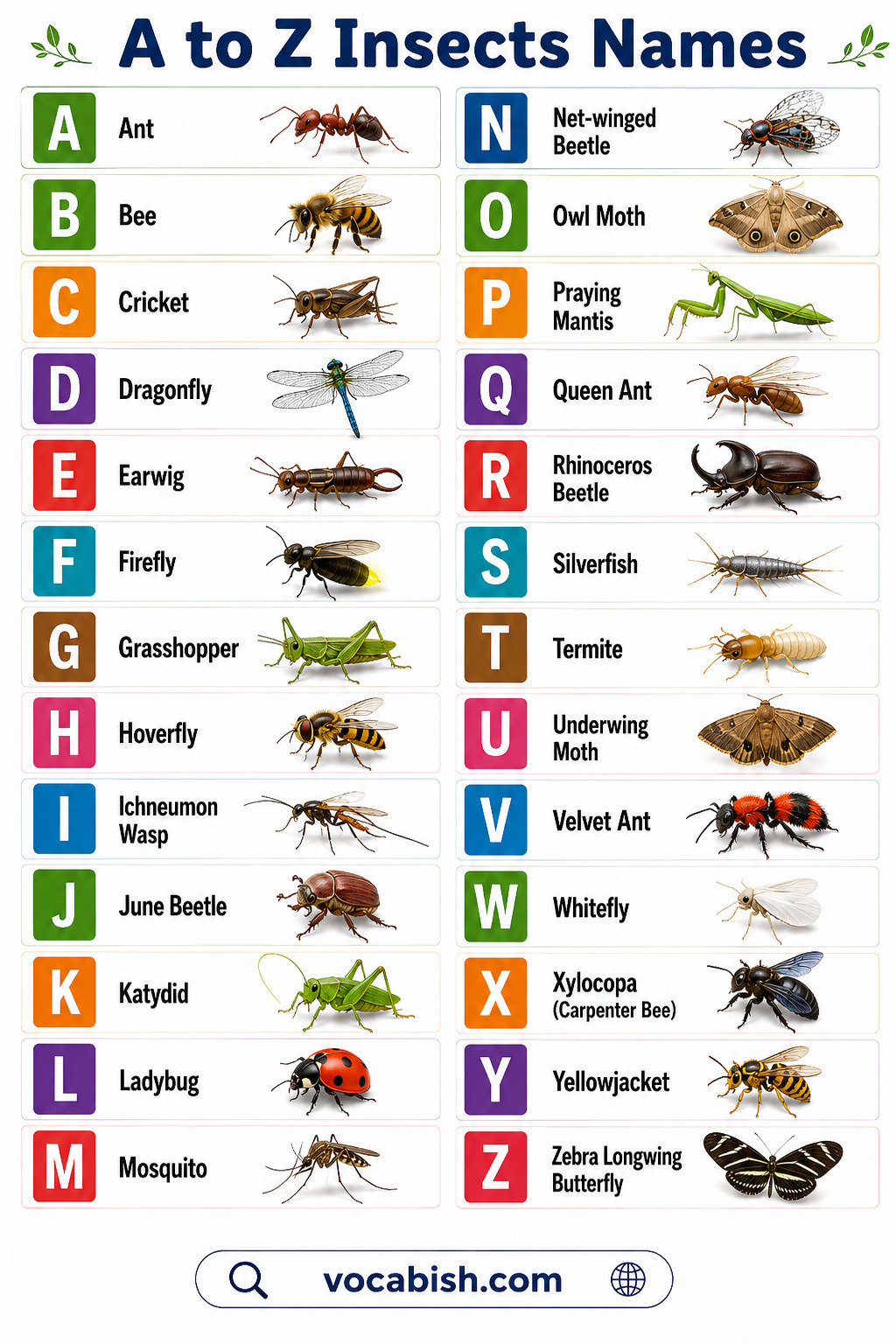
A to Z Insects Name in English
An alphabetical list makes insect vocabulary easier to review and remember. Here is an A to Z list of insects:
- A → Ant, Aphid, Atlas Moth
- B → Bedbug, Bumblebee, Beetle, Butterfly
- C → Cricket, Cicada, Caterpillar, Cockroach
- D → Dragonfly, Dung Beetle, Damselfly
- E → Earwig, Emerald Ash Borer
- F → Fly, Firefly, Flea, Fruit Fly
- G → Grasshopper, Gnat, Ground Beetle
- H → Honeybee, Horsefly, Head Louse
- I → Ichneumon Wasp, Inchworm
- J → Jewel Beetle, June Bug
- K → Katydid, Kissing Bug
- L → Ladybug, Locust, Leaf Insect, Louse
- M → Mosquito, Moth, Mealworm, Mantid (Praying Mantis)
- N → Net-winged Beetle, Nymph (immature insect stage)
- O → Owl Butterfly
- P → Praying Mantis, Potato Beetle, Paper Wasp
- Q → Queen Ant, Queen Bee
- R → Roach, Robber Fly, Rice Weevil
- S → Stick Insect, Stag Beetle, Shield Bug, Silk Moth
- T → Termite, Tsetse Fly, Tiger Moth
- U → Underwing Moth
- V → Viceroy Butterfly, Velvet Ant
- W → Wasp, Walking Stick, Weevil, Whitefly
- X → Xylocopa (Carpenter Bee)
- Y → Yellow Jacket (Wasp), Yucca Moth
- Z → Zebra Butterfly, Zorapteran (tiny insect order)
All Types of Insects with Examples
Type of Insect | Examples |
|---|---|
Flying Insects | Butterfly, Bee, Dragonfly, Moth |
Crawling Insects | Ant, Beetle, Earwig, Silverfish |
Jumping Insects | Grasshopper, Cricket, Katydid, Flea |
Stinging Insects | Wasp, Hornet, Yellowjacket, Honeybee |
Biting Insects | Mosquito, Bed Bug, Black Fly, Deer Fly |
Garden Insects | Ladybug, Aphid, Leafhopper, Thrips |
Household Insects | Cockroach, Termite, Housefly, Booklouse |
Wood-Boring Insects | Termite, Powderpost Beetle, Bark Beetle |
Beetles | June Beetle, Rhinoceros Beetle, Carpet Beetle |
Moths | Owl Moth, Underwing Moth, Pantry Moth |
Flies | Housefly, Fruit Fly, Crane Fly, Hoverfly |
Wasps | Paper Wasp, Mud Dauber, Scoliid Wasp |
Bees | Honeybee, Bumblebee, Carpenter Bee |
True Bugs | Shield Bug, Assassin Bug, Kissing Bug |
Plant Pests | Whitefly, Mealybug, Greenfly, Leaf Miner |
Water-Related Insects | Damselfly, Mayfly, Caddisfly, Alderfly |
Camouflaged Insects | Stick Insect, Leaf Insect, Katydid |
Nocturnal Insects | Firefly, Moth, Cicada, Earwig |
Social Insects | Ant, Termite, Honeybee, Hornet |
Beneficial Insects | Ladybug, Lacewing, Hoverfly, Dragonfly |
Insect Names Used in Sentences
Seeing vocabulary in context helps you understand how insect names are used in everyday conversation.
- An ant carried a crumb across the kitchen floor.
- A bee landed gently on the yellow flower.
- The butterfly rested on a bright red rose.
- We watched a dragonfly flying above the pond.
- A grasshopper jumped into the tall green grass.
- The cricket chirped throughout the quiet evening.
- A firefly glowed brightly in the dark garden.
- The beetle crawled slowly across the tree bark.
- A moth circled around the porch light.
- The ladybug rested quietly on a green leaf.
- A hoverfly hovered above the flower bed.
- The earwig disappeared beneath a garden stone.
- We found a stick insect on the tree branch.
- A flea jumped from the dog’s blanket.
- The yellowjacket flew around the picnic table.
Practice Insect Vocabulary with Our Insect Name Generator
Use this tool to generate random insect names by category and practice new vocabulary in English.
Insect Name Generator
Generate insect names by category for vocabulary practice.
- Click the button to generate insect names.
Useful for ESL students, kids, vocabulary lessons, and worksheets.
Tips to Remember Insect Names
Learning insect vocabulary becomes easier with regular practice and visual learning.
- Study with pictures to connect names with appearances.
- Group insects by category, such as flying or crawling insects.
- Use flashcards for quick vocabulary revision.
- Make short sentences using newly learned insect names.
- Watch educational videos to hear correct pronunciation.
- Review words regularly to improve long-term memory.
You May Also Like:
FAQs about Insects
Insects are small creatures that crawl, jump, or fly. They are commonly found in homes, gardens, forests, parks, and fields.
Common insect names include ant, bee, butterfly, dragonfly, beetle, grasshopper, cricket, moth, ladybug, mosquito, and firefly.
No. A spider is not an insect. Spiders belong to a different animal group and have eight legs instead of six.
The scientific name for insects is Insecta. Insects belong to the class Insecta, which includes millions of species found in different habitats around the world.
Learning insect names expands vocabulary and helps learners describe animals, nature, gardens, and outdoor environments more confidently.
Butterflies, aphids, ladybugs, leafhoppers, bumble flower beetles, and grasshoppers are often seen around plants and flowers.
Cockroaches, silverfish, booklice, flour beetles, grain weevils, and moths are among the insects frequently found indoors.
A bee has a fuzzy striped body, while a butterfly has colorful wings and a slimmer appearance.
Children can learn faster through pictures, flashcards, short sentences, vocabulary games, and regular review sessions.
Conclusion
Learning insects names in English is a practical way to build everyday vocabulary. These words appear in books, conversations, school lessons, and nature-related topics, making them useful for learners of all ages.
From ants and beetles to dragonflies and yellowjackets, each insect has a unique name and appearance. By learning them in categories and practicing regularly, you can remember new vocabulary more easily and use it confidently in English conversations.