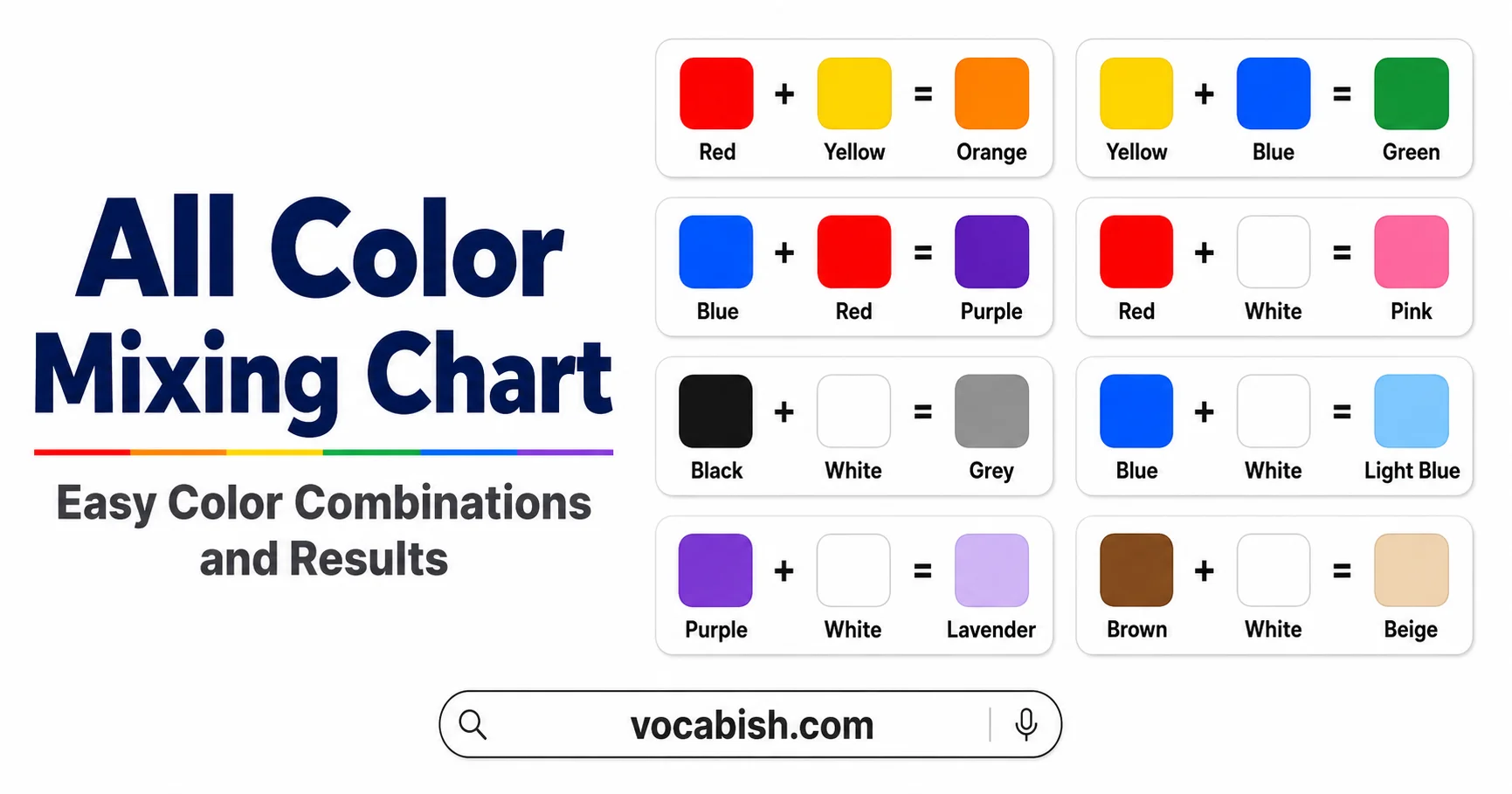

Color mixing is the process of combining two or more colors to create a new color. It helps learners understand how primary colors, secondary colors, shades, tints, and tones are formed. A color mixing chart makes these combinations easier to learn and remember. For example, red and yellow make orange, while blue and yellow make green. By learning the basic rules of color blending, you can create many different colors for painting, art, crafts, and school projects.
What Is Color Mixing?
Color mixing is the process of combining two or more colors to produce another color. The result depends on the colors you choose, their proportions, and whether you are mixing paint, ink, or colored light.
For example:
- Red + Yellow = Orange
- Yellow + Blue = Green
- Red + Blue = Purple
- Red + White = Pink
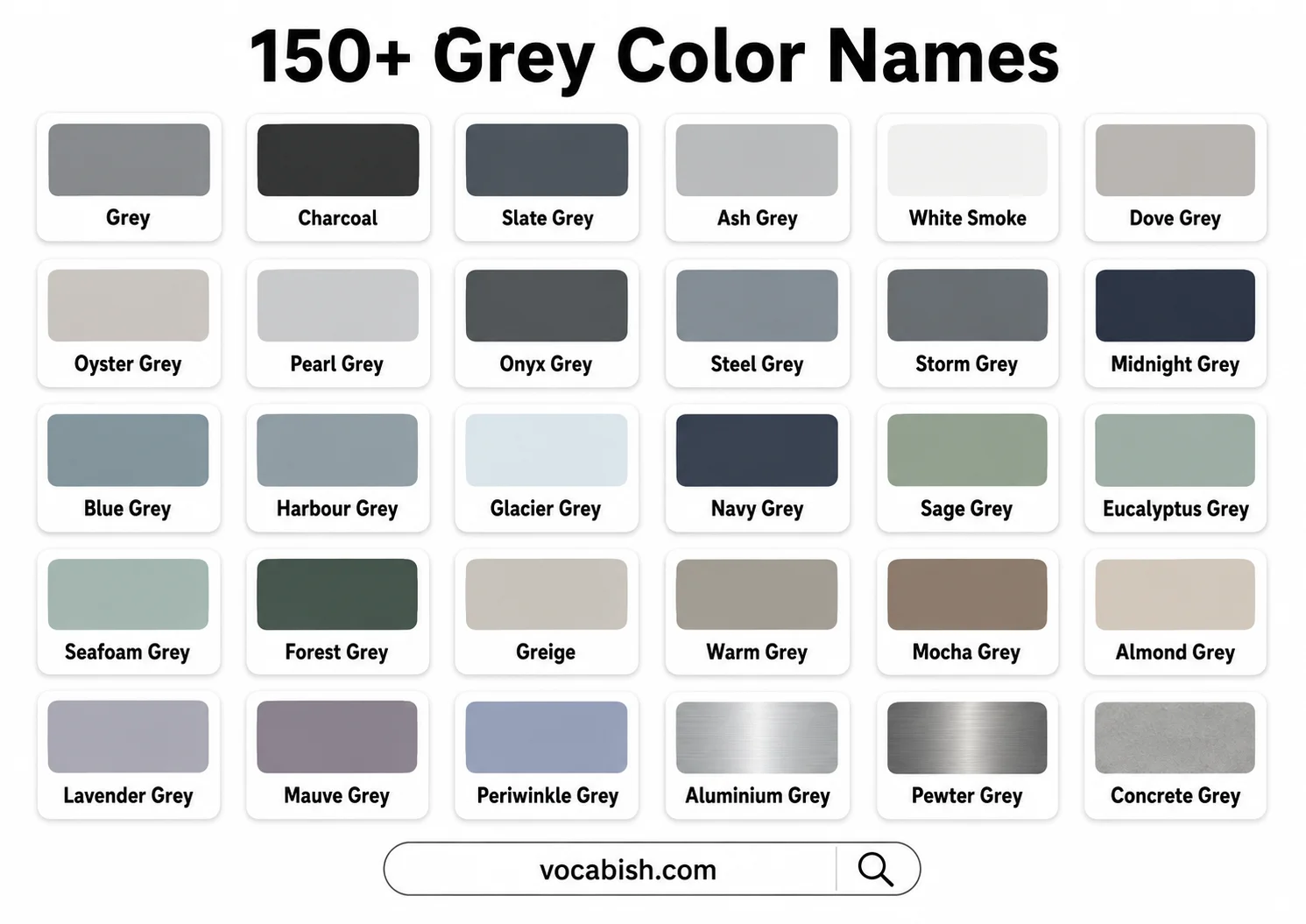
- Black + White = Grey
When working with paint, adding different amounts of each color can create many variations.
A small amount of blue added to yellow may create a yellow-green. More blue can turn the mixture into a deeper green.
Basic Color Mixing Chart
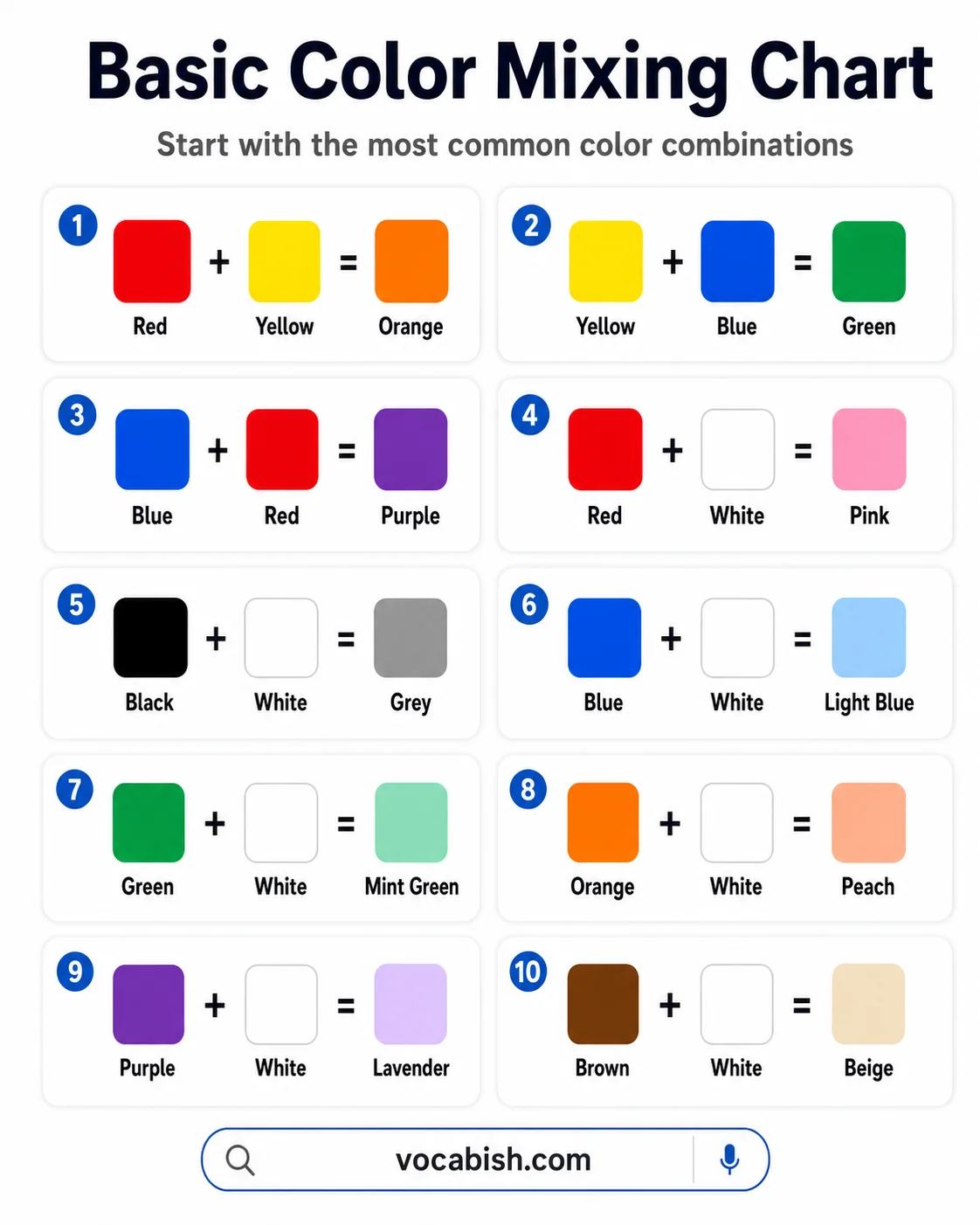
The following chart gives some of the most useful paint combinations to learn first.
Color 1 | Color 2 | Result |
|---|---|---|
Red | Yellow | Orange |
Yellow | Blue | Green |
Blue | Red | Purple |
Red | White | Pink |
Blue | White | Light Blue |
Yellow | White | Pale Yellow |
Green | White | Mint Green |
Purple | White | Lavender |
Orange | White | Peach |
Black | White | Grey |
Red | Green | Muted Brown |
Blue | Orange | Brown or Grey-Brown |
Yellow | Purple | Brown or Neutral |
Red | Yellow + Blue | Brown |
Brown | White | Beige or Tan |
These results are general references. The exact shade changes according to the pigments and quantities used.
Primary Colors and Their Role
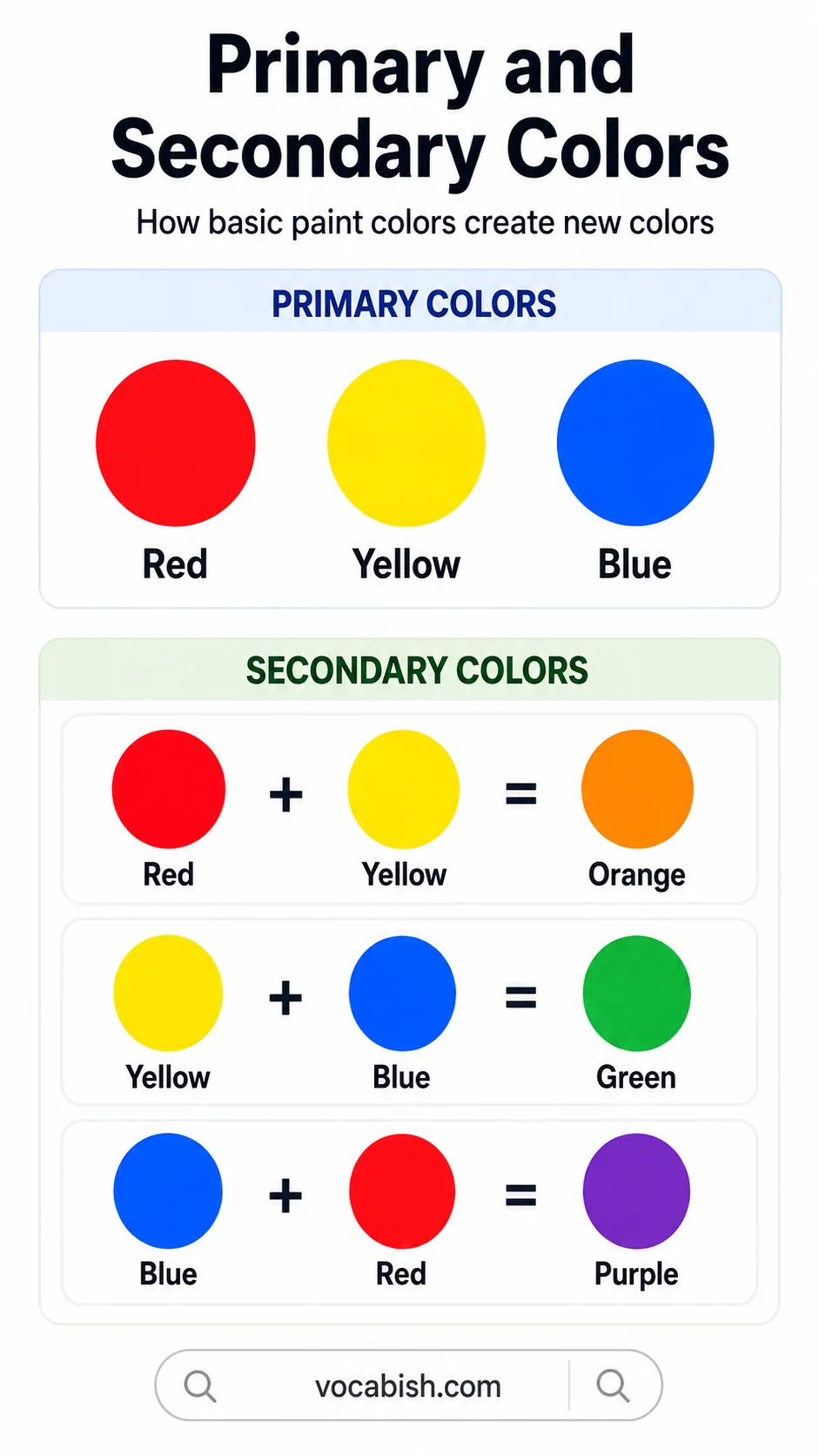
Primary colors are starting colors used to create many other colors. In traditional school-level paint mixing, the three primary colors are red, yellow, and blue.
They cannot be produced reliably by mixing the other traditional primary colors together.
Primary Color | Common Description |
|---|---|
Red | Warm, strong color |
Yellow | Bright, warm color |
Blue | Cool, deep color |
Mixing pairs of these colors creates the three traditional secondary colors:
Red + Yellow → Orange
Yellow + Blue → Green
Blue + Red → Purple
This traditional system is commonly called the RYB color model.
Secondary Color Mixing Chart
Secondary colors are made by combining two traditional primary colors. Orange, green, and purple are the main secondary colors in basic paint theory.
The proportions used can change the appearance of each result.
Primary Color 1 | Primary Color 2 | Secondary Color |
|---|---|---|
Red | Yellow | Orange |
Yellow | Blue | Green |
Blue | Red | Purple |
Red + Yellow = Orange
Equal amounts usually create a balanced orange.
Add more red for a red-orange.
Add more yellow for a yellow-orange.
Yellow + Blue = Green
Mixing yellow and blue produces green.
More yellow creates a warmer, lighter-looking green. More blue produces a cooler, deeper green.
Blue + Red = Purple
Blue and red traditionally produce purple.
A red-heavy mixture may look warmer or closer to magenta-purple, while extra blue produces a cooler violet-like result.
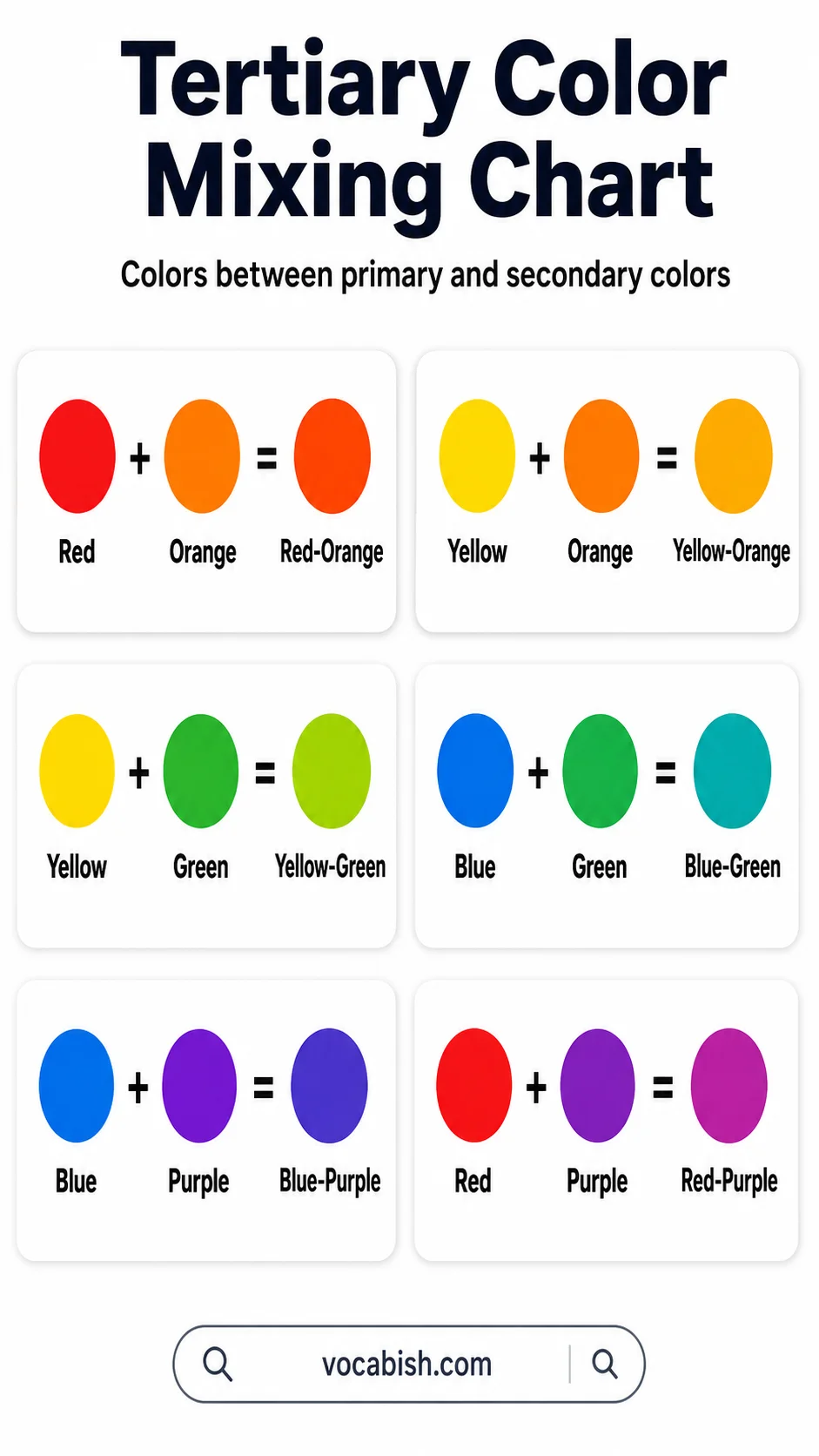
Tertiary Color Mixing Chart
Tertiary colors are often described in traditional color theory as mixtures between a primary color and a neighboring secondary color.
They help fill the spaces between major colors on the color wheel.
Primary Color | Secondary Color | Common Result |
|---|---|---|
Red | Orange | Red-Orange |
Yellow | Orange | Yellow-Orange |
Yellow | Green | Yellow-Green |
Blue | Green | Blue-Green |
Blue | Purple | Blue-Purple |
Red | Purple | Red-Purple |
These intermediate colors provide more variety than the six basic primary and secondary colors.
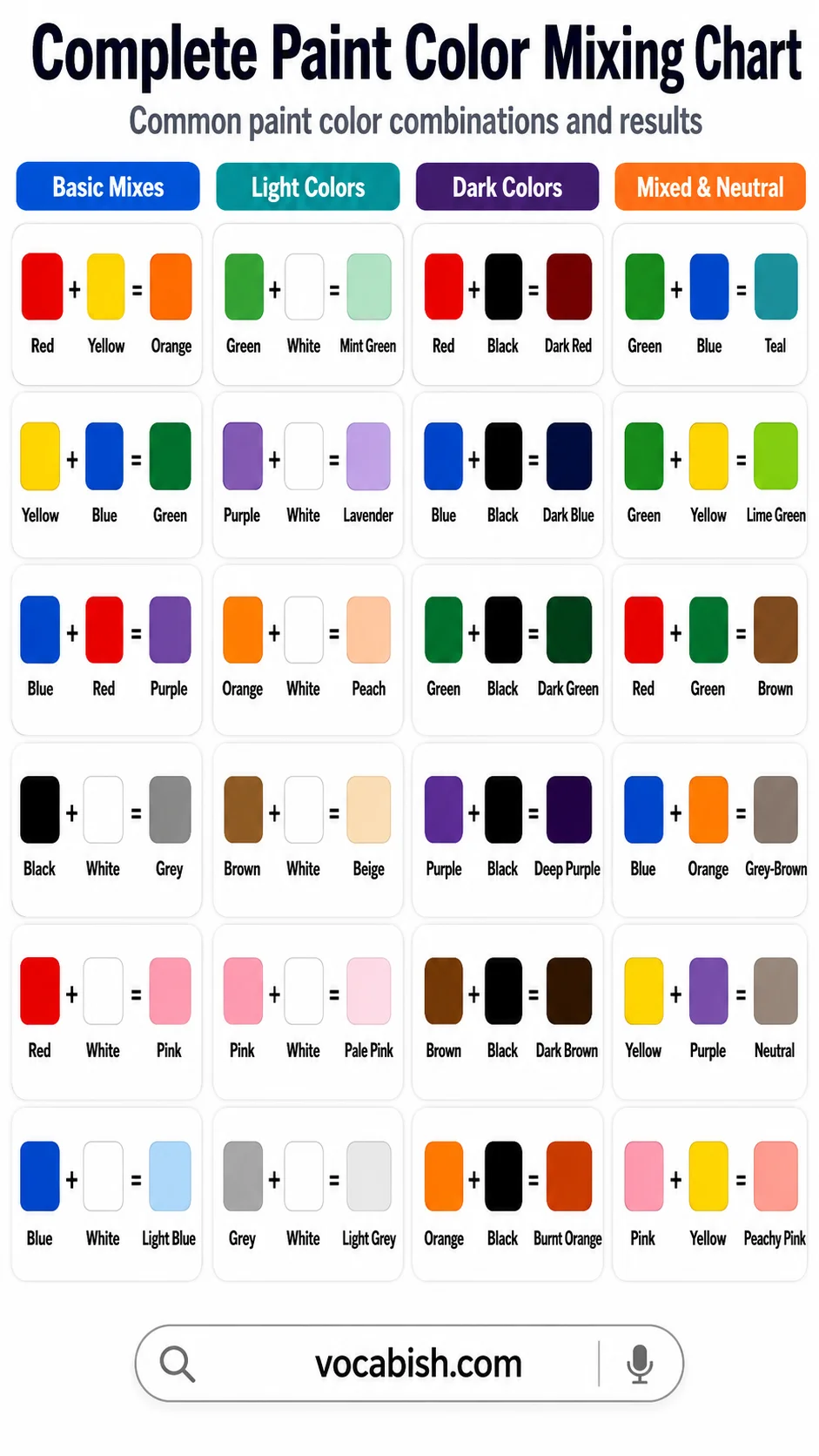
Complete Paint Color Mixing Chart
A larger color mixing chart is useful when you want to create common shades without buying every paint color separately.
Colors Mixed | Typical Result |
|---|---|
Red + Yellow | Orange |
Red + Blue | Purple |
Yellow + Blue | Green |
Red + White | Pink |
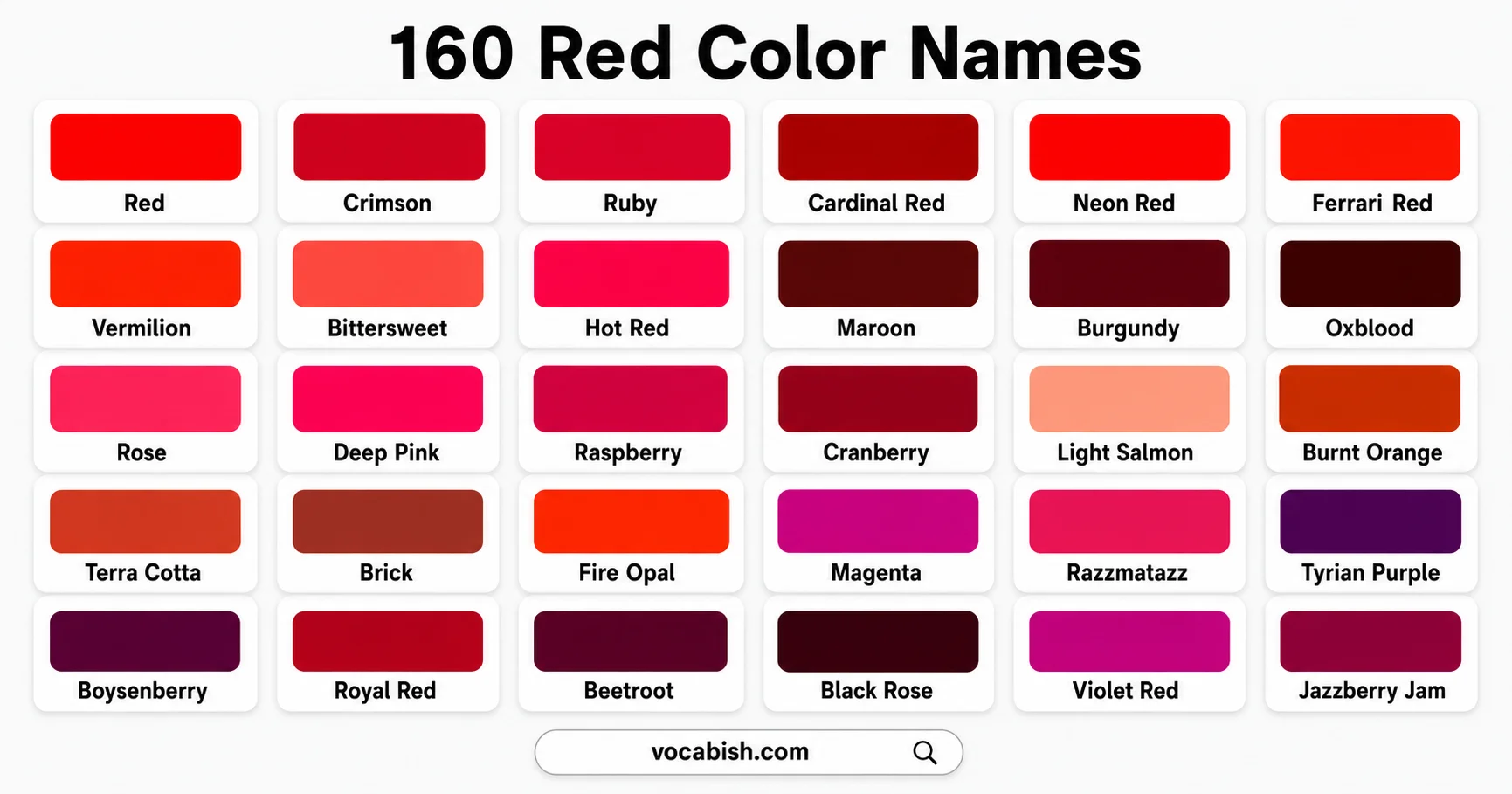
Red + Black | Dark Red |
Red + Brown | Brick Red |
Red + Orange | Red-Orange |
Red + Purple | Red-Purple |
Yellow + White | Creamy Yellow |
Yellow + Orange | Golden Orange |
Yellow + Green | Yellow-Green |
Yellow + Brown | Mustard |
Yellow + Black | Olive-like Dark Yellow |
Blue + White | Light Blue |
Blue + Black | Very Dark Blue |
Blue + Green | Teal or Blue-Green |
Blue + Purple | Blue-Violet |
Blue + Brown | Muted Blue-Grey |
Green + White | Mint Green |
Green + Yellow | Lime or Yellow-Green |
Green + Blue | Teal |
Green + Brown | Earthy Green |
Green + Black | Dark Green |
Orange + White | Peach |
Orange + Brown | Burnt Orange |
Orange + Red | Vermilion-like Orange-Red |
Orange + Black | Dark Burnt Orange |
Purple + White | Lavender |
Purple + Red | Magenta-like Purple |
Purple + Blue | Violet-Blue |
Purple + Black | Deep Purple |
Brown + White | Beige |
Brown + Yellow | Golden Brown |
Brown + Red | Reddish Brown |
Brown + Black | Dark Brown |
Black + White | Grey |
Grey + White | Light Grey |
Grey + Black | Dark Grey |
Pink + White | Pale Pink |
Pink + Yellow | Peachy Pink |
Pink + Purple | Mauve-like Pink |
Green + Red | Brown or Muted Neutral |
Orange + Blue | Brown or Neutral Grey |
Purple + Yellow | Brown or Muted Neutral |
Pigments do not always behave identically. Two paints labelled “red,” for example, may contain different undertones and produce different mixtures.
How to Make Light and Dark Colors
You do not always need another bright color to change a mixture. White, black, and darker neighboring colors can adjust its lightness.
Making Colors Lighter
White is commonly added to paint to create a lighter version.
Base Color | Add | Result |
|---|---|---|
Red | White | Pink |
Blue | White | Light Blue |
Green | White | Mint |
Purple | White | Lavender |
Orange | White | Peach |
Brown | White | Beige |
Black | White | Grey |
Add white gradually. A small quantity can change some pigments quickly.
Making Colors Darker
Black can darken paint, but it should usually be added in very small amounts.
Base Color | Add | Possible Result |
|---|---|---|
Red | Black | Deep Red |
Blue | Black | Navy-like Dark Blue |
Green | Black | Forest-like Green |
Purple | Black | Deep Purple |
Orange | Black | Burnt Orange |
Brown | Black | Dark Brown |
You can also darken colors with a related dark color. For example, adding dark blue to green may produce a richer dark green without making it look as dull as black sometimes can.
Tints, Shades, and Tones
Artists use the words tint, shade, and tone to describe different ways of changing a color. These terms are useful when learning paint vocabulary.
Term | How It Is Made | Example |
|---|---|---|
Tint | Color + White | Red + White = Pink |
Shade | Color + Black | Red + Black = Dark Red |
Tone | Color + Grey | Red + Grey = Muted Red |
Tint
A tint is created by adding white to a color.
Blue + White → Light Blue
Purple + White → Lavender
Shade
A shade is created by adding black to a color.
Green + Black → Dark Green
Brown + Black → Dark Brown
Tone
A tone is commonly created by adding grey to a color.
Blue + Grey → Muted Blue
Green + Grey → Muted Green
Tones are usually less vivid than the original color.
How to Mix Brown Colors
Brown can be produced in several ways because it is often created by reducing the intensity of warm colors or combining colors from different parts of the color wheel.
Try these common combinations:
Colors | Possible Brown Result |
|---|---|
Red + Yellow + Blue | Basic Brown |
Orange + Blue | Neutral Brown |
Red + Green | Reddish or Muted Brown |
Yellow + Purple | Warm Brown |
Orange + Black | Deep Brown-Orange |
Red + Blue + Yellow, with extra red | Warm Brown |
Red + Blue + Yellow, with extra blue | Cool Brown |
Making Light Brown
Add white to brown.
Brown + White → Light Brown or Beige
For warmer light brown, introduce a little yellow or orange.
Making Dark Brown
Add a small amount of black or dark blue.
Brown + Black → Dark Brown
Brown + Dark Blue → Cooler Dark Brown
How to Mix Grey and Neutral Colors
Grey can be produced with black and white, but colorful greys can also come from complementary mixtures.
The second method often produces more natural-looking neutral colors in painting.
Colors Mixed | Result |
|---|---|
Black + White | Neutral Grey |
Blue + Orange | Blue-Grey or Brown-Grey |
Red + Green | Warm Grey-Brown |
Purple + Yellow | Muted Grey-Brown |
Grey + Blue | Cool Grey |
Grey + Brown | Warm Grey |
Grey + White | Pale Grey |
The exact outcome depends heavily on the strength and undertone of each pigment.
Warm and Cool Color Mixing
Colors are often grouped as warm or cool according to how they appear visually.
Warm colors commonly include:
- Red
- Orange
- Yellow
- Red-Orange
- Yellow-Orange
Cool colors commonly include:
- Blue
- Green
- Blue-Green
- Blue-Purple
- Violet
Mixing warm and cool colors can change the temperature of a shade.
For example:
Green + Yellow → Warmer Green
Green + Blue → Cooler Green
Purple + Red → Warmer Purple
Purple + Blue → Cooler Purple
This is useful when creating natural objects such as leaves, skies, shadows, flowers, and landscapes.
Complementary Color Mixing
Complementary colors sit opposite one another on a traditional color wheel. Mixing them usually lowers their intensity and can produce brown, grey, or another neutral color.
Common complementary pairs include:
Color | Complement |
|---|---|
Red | Green |
Blue | Orange |
Yellow | Purple |
Red and Green
Red + Green → Brownish or muted neutral
Blue and Orange
Blue + Orange → Brown, grey-brown, or muted blue
Yellow and Purple
Yellow + Purple → Brownish or muted neutral
The exact result changes with the pigments and proportions.
Complementary colors are especially useful when a paint color looks too bright and you want to make it less intense.
Mixing Different Shades of Green
Green has one of the widest ranges of useful mixtures. Start with yellow and blue, then adjust the proportions or add another color.
Colors Mixed | Possible Result |
|---|---|
Yellow + Blue | Green |
More Yellow + Less Blue | Yellow-Green |
More Blue + Less Yellow | Blue-Green |
Green + White | Mint Green |
Green + Yellow | Lime Green |
Green + Blue | Teal |
Green + Brown | Olive or Earthy Green |
Green + Black | Dark Green |
Green + Grey | Muted Green |
Green + Yellow + Brown | Olive Green |
For a bright green, use clean yellow and blue pigments. Adding brown, red, or grey reduces the brightness.
Mixing Different Shades of Orange
Orange begins with red and yellow in traditional paint mixing. Changing their ratio creates warmer or more yellow-looking variations.
Colors Mixed | Possible Result |
|---|---|
Red + Yellow | Orange |
Orange + Red | Red-Orange |
Orange + Yellow | Yellow-Orange |
Orange + White | Peach |
Orange + Brown | Burnt Orange |
Orange + Black | Deep Orange |
Orange + Grey | Muted Orange |
Orange + Blue | Brownish Neutral |
For a brighter orange, use a warm red and a clean yellow.
Mixing Different Shades of Purple
Purple is traditionally produced by mixing red with blue. However, purple mixtures are particularly sensitive to the type of red and blue pigments used.
Colors Mixed | Possible Result |
|---|---|
Red + Blue | Purple |
Purple + Blue | Blue-Purple |
Purple + Red | Red-Purple |
Purple + White | Lavender |
Purple + Black | Deep Purple |
Purple + Grey | Dusty Purple |
Purple + Pink | Soft Magenta-Purple |
Purple + Brown | Muted Plum |
A cool red and a purple-leaning blue often create a cleaner purple than an orange-leaning red mixed with a green-leaning blue.
Mixing Pink, Peach, and Coral
Pink is usually created by lightening red with white. From there, small additions of yellow, orange, or purple can produce many related colors.
Colors Mixed | Possible Result |
|---|---|
Red + White | Pink |
Pink + More White | Pale Pink |
Pink + Yellow | Warm Peachy Pink |
Orange + White | Peach |
Red + Orange + White | Coral |
Pink + Orange | Coral Pink |
Pink + Purple | Mauve Pink |
Red + White + Small Yellow | Warm Pink |
Pink + Brown | Dusty Rose |
Add stronger colors gradually because red, orange, and purple can quickly dominate pale mixtures.
RGB and Light Color Mixing
Paint mixing and light mixing do not follow exactly the same rules. Screens, televisions, phones, and digital displays normally create colors using the RGB color model.
RGB stands for:
- R = Red
- G = Green
- B = Blue
These are the primary colors of additive light mixing.
Light Colors Mixed | Result |
|---|---|
Red + Green | Yellow |
Green + Blue | Cyan |
Blue + Red | Magenta |
Red + Green + Blue | White |
No RGB Light | Black |
This may seem surprising if you have learned paint mixing.
In paint:
Red + Yellow → Orange
But in light:
Red + Green → Yellow
The difference exists because pigments absorb light, while digital displays produce light.
Paint Mixing vs. Light Mixing
Understanding the difference between pigment and light prevents one of the most common color-learning confusions.
Feature | Paint/Pigment Mixing | Light Mixing |
|---|---|---|
Common Model | RYB in basic art; CMY in color science/printing | RGB |
Main Use | Painting, art, pigments | Screens, LEDs, digital displays |
Traditional Primary Colors | Red, Yellow, Blue | Red, Green, Blue |
Red + Green | Usually muted/brownish | Yellow |
Blue + Red | Purple | Magenta |
All Main Colors Together | Often dark or muddy | White |
Professional printing usually uses CMYK rather than the traditional RYB system.
CMYK stands for:
- Cyan
- Magenta
- Yellow
- Key/Black
Cyan, magenta, and yellow provide a more scientifically accurate subtractive color model than traditional red, yellow, and blue.
Color Mixing by Ratio
Changing the ratio of two paints lets you create many colors from the same pair.
Consider yellow and blue:
Approximate Ratio | Likely Appearance |
|---|---|
3 parts Yellow + 1 part Blue | Yellow-Green |
2 parts Yellow + 1 part Blue | Warm Green |
1 part Yellow + 1 part Blue | Balanced Green |
1 part Yellow + 2 parts Blue | Cool Green |
1 part Yellow + 3 parts Blue | Deep Blue-Green |
Ratios are only approximate. Different paint brands and pigments have different strengths.
A strong blue may overpower yellow even when you use less blue.
Quick Color Mixing Reference
What colors make orange?
Red + Yellow
What colors make green?
Yellow + Blue
What colors make purple?
Red + Blue
What colors make pink?
Red + White
What colors make grey?
Black + White
What colors make brown?
Red + Yellow + Blue, or complementary colors
What colors make peach?
Orange + White
What colors make lavender?
Purple + White
What colors make mint?
Green + White
What colors make teal?
Blue + Green
What colors make beige?
Brown + White
What colors make olive green?
Green + Brown or yellow-green + a small amount of brown
What colors make coral?
Red + Orange + White
Tips for Better Color Mixing
Good color mixing depends on control as much as knowing which colors to combine. Small changes can produce noticeably different results.
Keep these practices in mind:
- Start with the lighter color and gradually add the darker color.
- Mix small amounts before preparing a large quantity.
- Clean brushes and palette knives between mixtures.
- Test the color on scrap paper or another sample surface.
- Allow paint to dry before judging its final appearance.
- Record useful mixtures and approximate ratios.
- Use white carefully because too much can make a color look chalky.
- Add black slowly because it can overpower lighter colors.
- Study the undertone of your red, yellow, and blue pigments.
- Compare wet and dry paint because some paints change slightly as they dry.
Common Color Mixing Mistakes
Most unexpected mixtures come from pigment choice, proportions, or accidentally introducing another color.
- Adding too much black: It can quickly make a color dull or extremely dark.
- Mixing too many colors: Multiple pigments may produce muddy brown or grey.
- Using a dirty brush: Leftover paint can alter the new mixture.
- Expecting every red or blue to behave alike: Different pigments have different undertones.
- Ignoring ratios: Red + yellow can create several oranges depending on how much of each paint you use.
FAQs About Color Mixing
Traditional school-level paint mixing uses red, yellow, and blue as primary colors. Mixing them in pairs creates orange, green, and purple.
Yellow and blue traditionally make green paint. More yellow creates a warmer green, while more blue creates a cooler, deeper green.
Red and blue traditionally make purple. The exact result depends on the pigments, proportions, and warm or cool undertones of each paint.
Brown can be made by mixing red, yellow, and blue or by combining complementary colors such as blue and orange.
Add white paint gradually to create a tint. For example, white added to red creates pink, while white added to purple creates lavender.
A tint is made by adding white to a color. A shade is made by adding black, producing a darker version.
Paint can look muddy when too many pigments are combined or complementary colors neutralize one another more than intended.
No. RGB mixes colored light and uses red, green, and blue. Traditional paint mixing uses pigments and follows different mixing behavior.
Conclusion
Learning color mixing makes it easier to predict, create, and adjust colors instead of relying on guesswork. Start with primary and secondary colors, then experiment with different ratios, tints, shades, tones, complementary pairs, and neutral mixtures.
A good color mixing chart gives you a useful starting point, but actual paint results may vary because pigments differ. Test small amounts, make gradual adjustments, and record mixtures that work well. With practice, a few basic paints can produce an impressive range of colors.