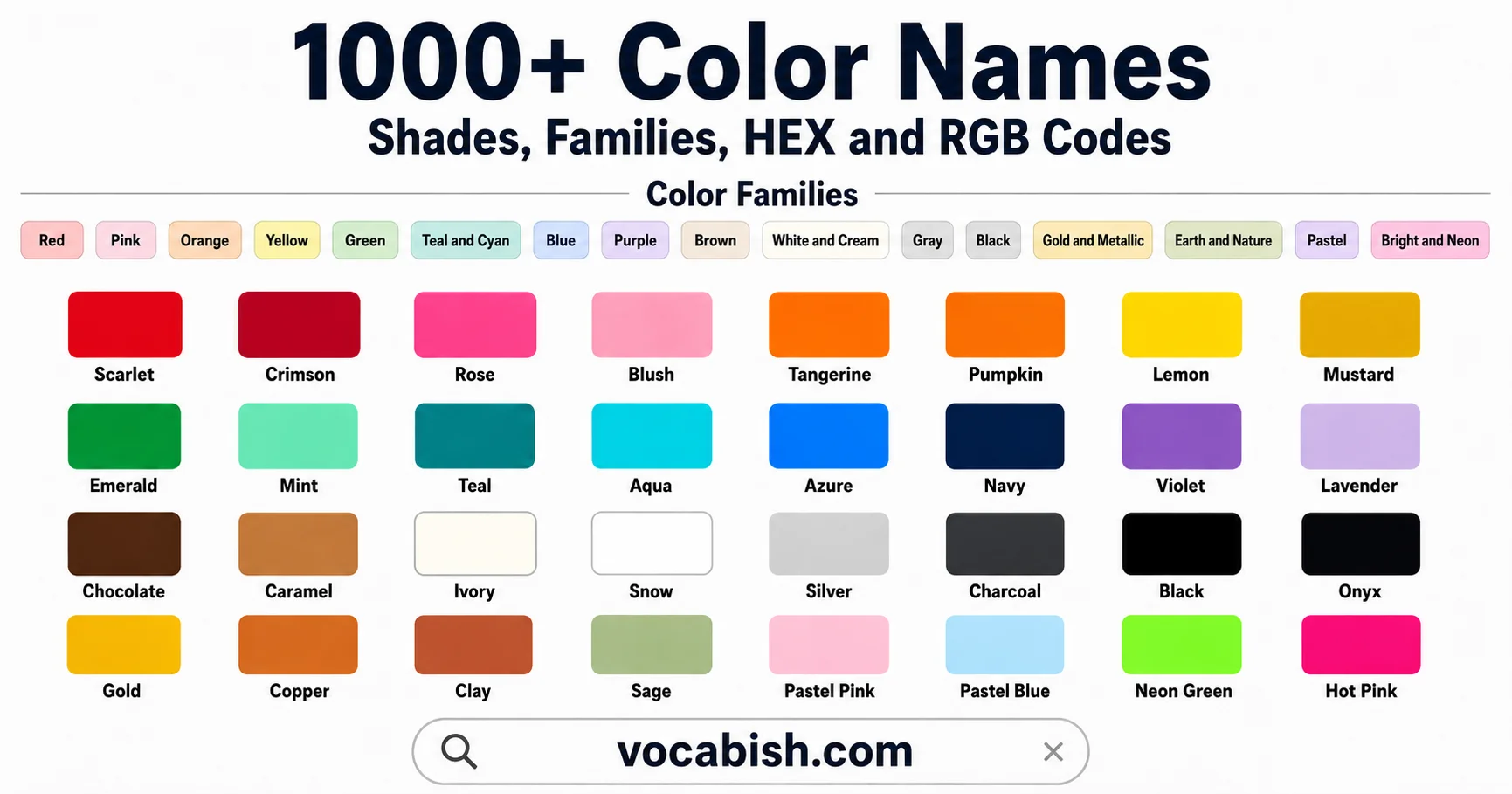
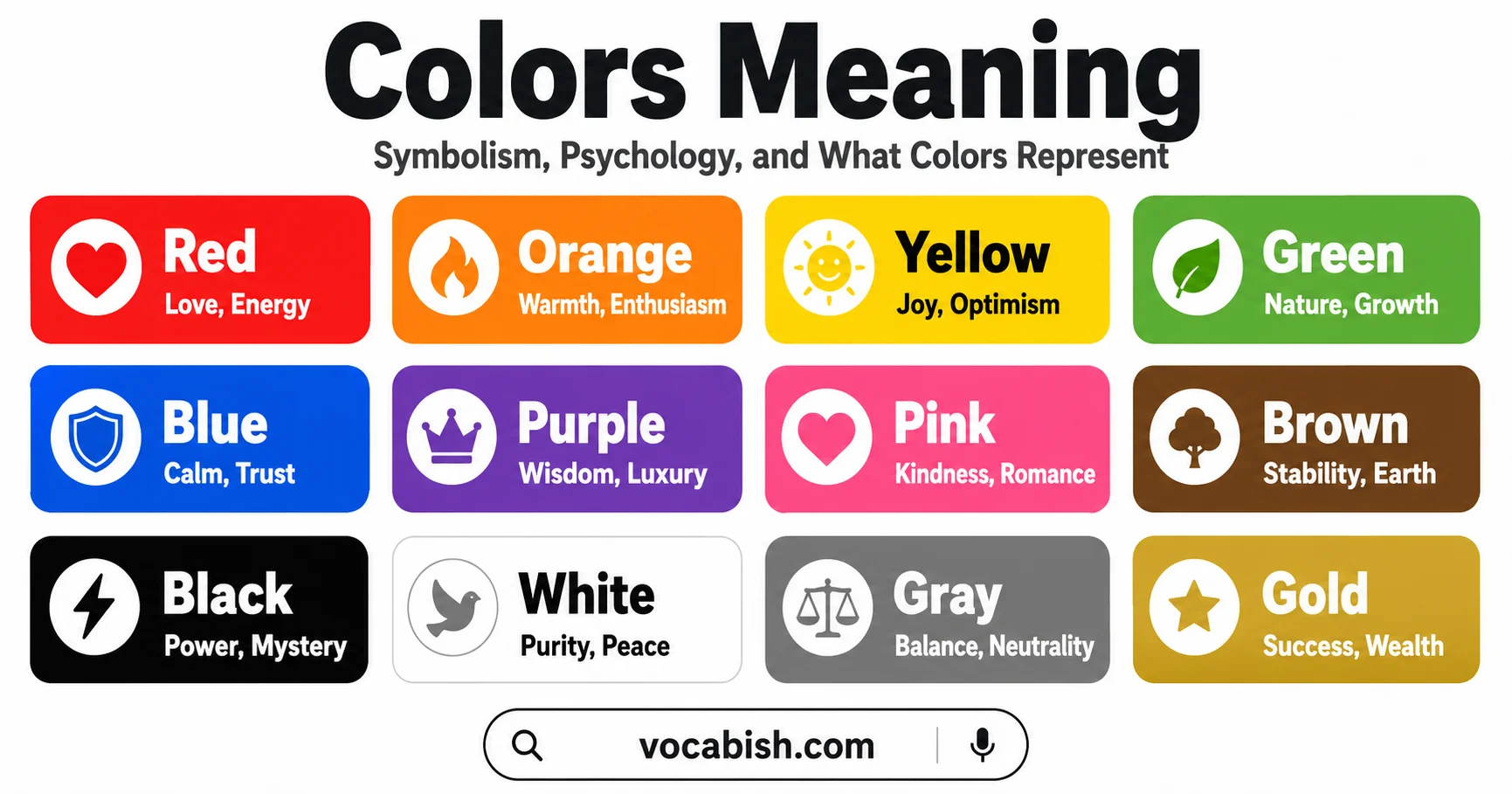

Understanding Colors Meaning helps us see how different shades can communicate emotions, ideas, moods, and cultural messages without words. This connection between color symbolism, color psychology, emotions, and human perception appears in clothing, art, brands, homes, signs, celebrations, and everyday communication.
However, a color does not always have one fixed meaning. Its message can change depending on the culture, situation, shade, personal experience, and the colors around it.
Colors Meaning: What Does It Really Mean?
Colors meaning refers to the ideas, emotions, qualities, or cultural messages people connect with different colors. For example, red may suggest love or danger, while blue may represent calmness or trust.
These associations come from several sources, including nature, language, tradition, religion, social customs, advertising, and personal experience.
In short: Color meaning is the symbolic or emotional message that a color can communicate in a particular context.
Color meaning and color psychology are closely related, but they are not exactly the same.
Term | Easy Meaning | Example |
|---|---|---|
Color meaning | What a color represents | White can represent purity |
Color symbolism | An idea culturally connected with a color | Red can symbolize love |
Color psychology | How color may influence feelings or behavior | Soft blue may feel calming |
Color association | A thought or memory connected with a color | Green may remind someone of nature |
Color perception | How people visually experience color | Bright yellow appears energetic |
Color associations are not universal rules. Two people can see the same color and react differently.
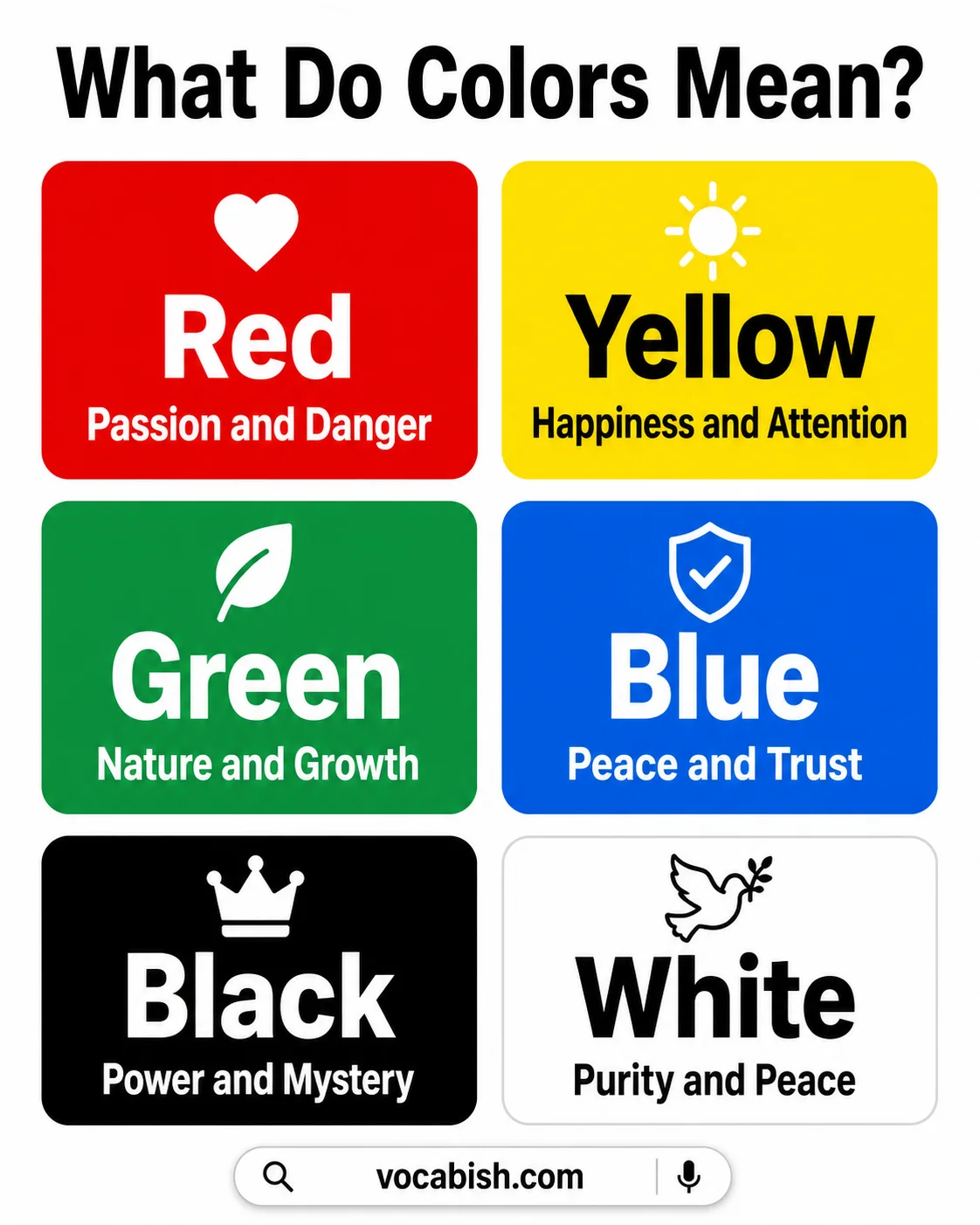
Quick Meanings of Colors Chart
Each color can communicate several ideas at the same time. The following chart gives common meanings found in everyday English, design, culture, and communication.
Color | Common Positive Meanings | Other Common Associations |
|---|---|---|
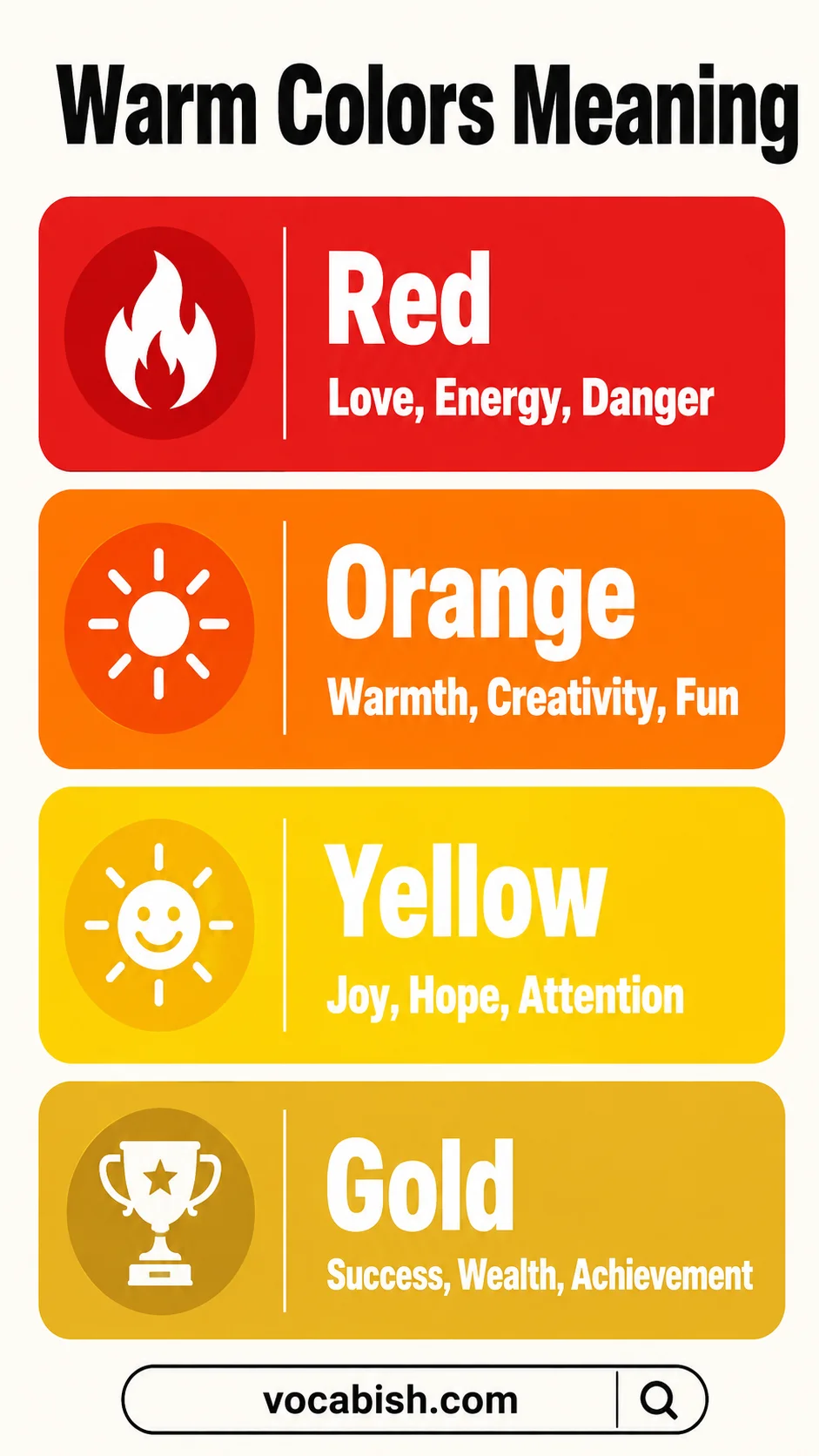
Red | Love, passion, energy, courage | Danger, anger, urgency |
Orange | Warmth, enthusiasm, creativity | Attention, excitement |
Yellow | Happiness, hope, optimism | Warning, caution, jealousy |
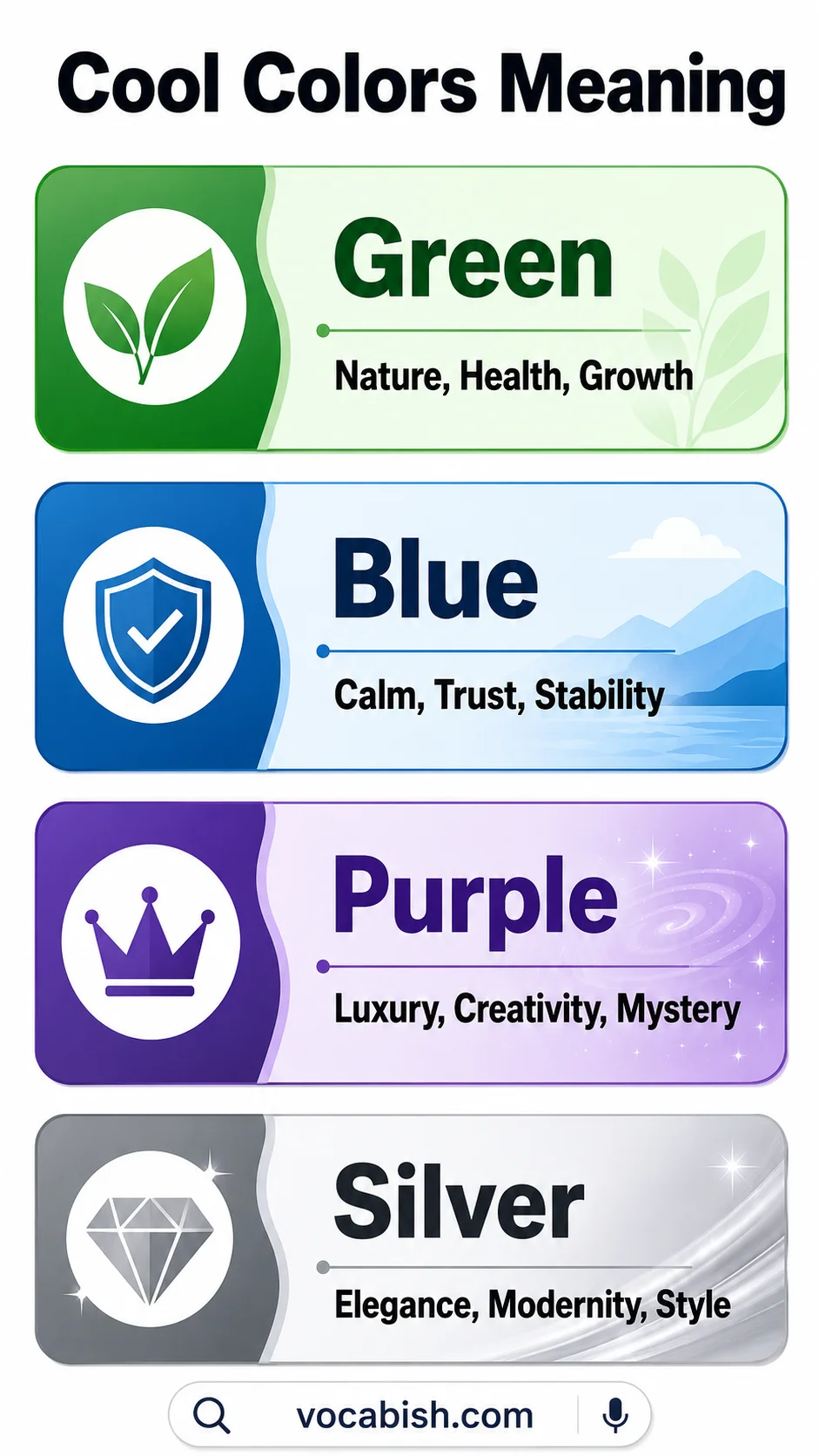
Green | Nature, growth, health, renewal | Envy, inexperience |
Blue | Calm, trust, stability, peace | Sadness, coldness |
Purple | Luxury, imagination, spirituality | Mystery, mourning in some cultures |
Pink | Affection, kindness, softness | Romance, femininity |
Brown | Stability, earth, comfort | Plainness, dullness |
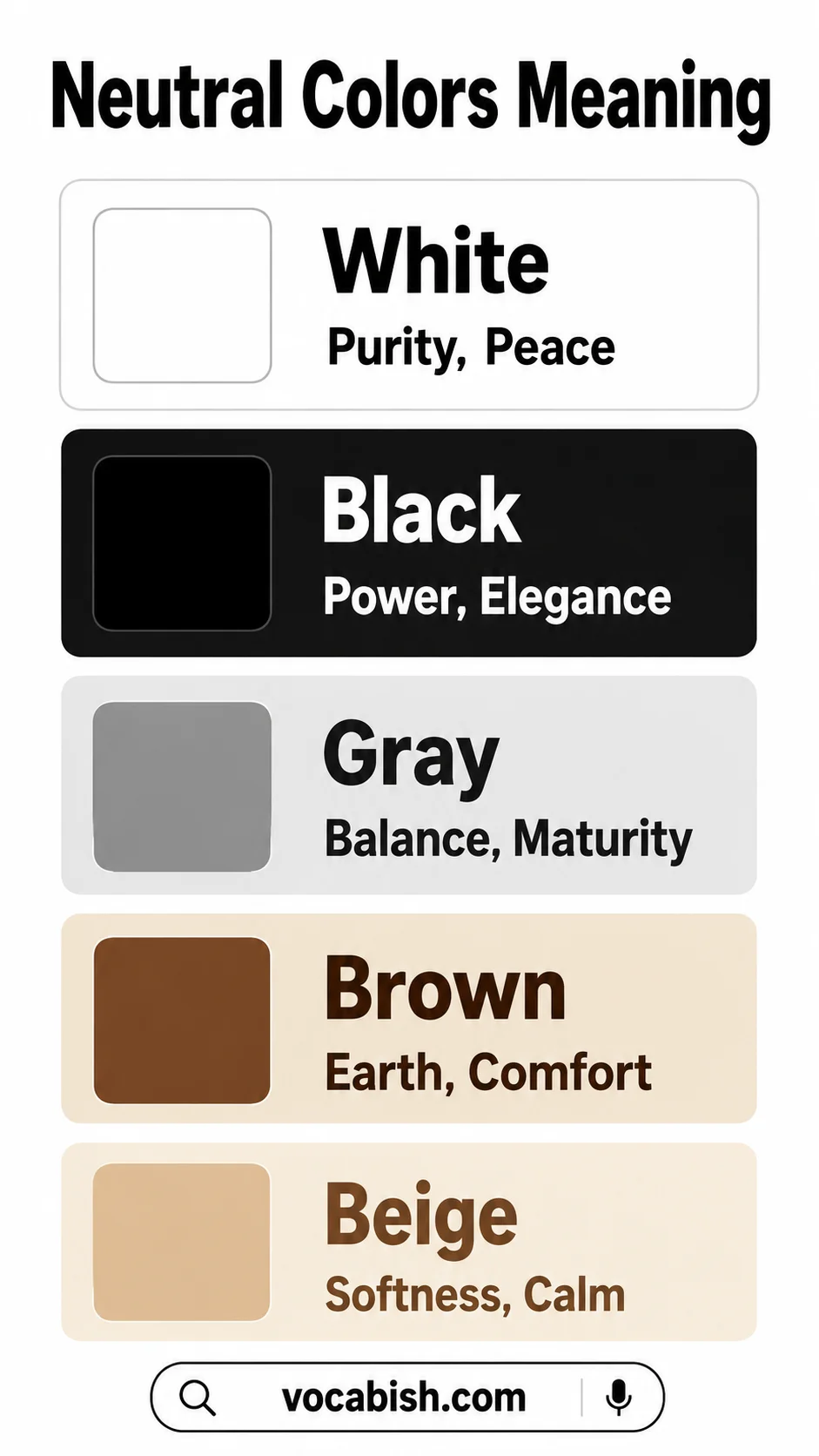
Black | Power, elegance, formality | Death, grief, fear |
White | Purity, peace, cleanliness | Emptiness, mourning in some cultures |
Gray/Grey | Balance, neutrality, maturity | Boredom, uncertainty |
Gold | Success, wealth, achievement | Excess, materialism |
Silver | Modernity, elegance, sophistication | Coldness, distance |
These meanings are useful starting points rather than strict definitions.
Why Do Colors Have Meanings?
Humans often connect colors with things they repeatedly see in nature and society. Over time, those connections can become emotional, linguistic, or symbolic associations.
Several influences shape the meanings of colors.
Nature
Some associations come from the natural world.
Green appears strongly in plants, grass, and forests, so people often connect it with growth and nature. Red can remind us of fire, heat, blood, ripe fruit, and other visually powerful things.
Culture and tradition
Societies give colors meanings through ceremonies, clothing, religion, holidays, flags, art, and social customs.
That is why the same color can communicate very different messages in different countries.
Language
Color appears in many English expressions.
For example:
- feel blue = feel sad
- green with envy = very jealous
- red flag = a warning sign
- golden opportunity = an excellent opportunity
- white lie = a small lie told to avoid hurting someone
These phrases can strengthen particular color associations.
Personal experience
A person’s memories can affect how a color feels.
Someone may love yellow because it reminds them of a happy childhood home. Another person may dislike the same shade because of an unpleasant memory.
Social communication
Businesses, governments, schools, sports teams, fashion brands, and media repeatedly use certain colors for particular purposes.
For example, red is often used to attract attention, while blue frequently appears in professional or institutional designs.
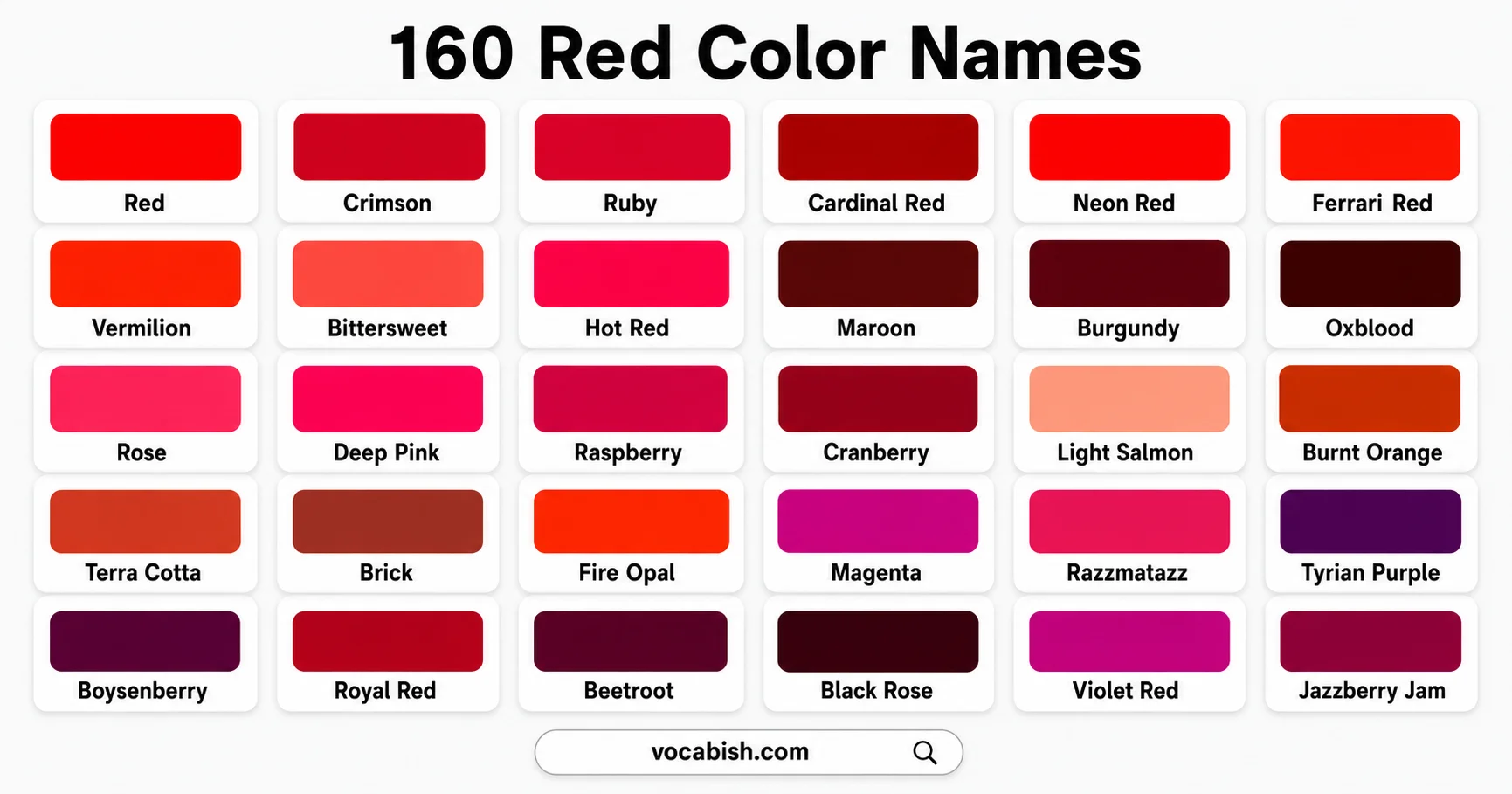
Red Color Meaning
Red is one of the most visually powerful colors. It is commonly linked with strong emotions, action, attraction, heat, and urgency.
Red commonly represents:
- love
- passion
- energy
- courage
- strength
- excitement
- danger
- anger
- urgency
A red rose, for example, often communicates romantic love. A red warning sign uses the same color for a very different purpose: immediate attention or danger.
That contrast shows why context matters.
In everyday English, people may describe something as red-hot when it is extremely popular, exciting, or intense.
Orange Color Meaning
Orange combines some of the visual energy of red with the brightness of yellow. It often feels friendly, active, warm, and informal.
Orange may symbolize:
- enthusiasm
- creativity
- warmth
- friendliness
- adventure
- confidence
- fun
Because orange is noticeable, it is also used for safety clothing, road equipment, and warning signs in some places.
Natural associations include oranges, autumn leaves, sunsets, firelight, and pumpkins.
Bright orange can feel energetic, while softer burnt orange may feel earthy, warm, and mature.
Yellow Color Meaning
Yellow is strongly associated with sunlight, brightness, warmth, and visibility. It can create a cheerful feeling, although its meaning changes with context.
Common yellow meanings include:
- happiness
- optimism
- hope
- energy
- friendliness
- creativity
- caution
- attention
Sunflowers and sunshine often give yellow a positive image.
However, yellow also appears on warning signs because it is highly noticeable. In some expressions and cultural traditions, yellow can carry meanings connected with jealousy, cowardice, or illness.
A soft pastel yellow usually creates a very different mood from bright neon yellow.
Read more about the shades of yellow color with names.
Green Color Meaning
Green has one of the strongest connections with the natural environment because it is the color of many plants, leaves, and landscapes.
The green color often represents:
- nature
- growth
- renewal
- freshness
- health
- balance
- life
- environmental awareness
- prosperity
Green can also represent permission or safety. A green traffic light, for instance, tells drivers that they may proceed.
However, English also connects green with envy through the phrase green with envy.
Calling someone green can sometimes mean that the person is inexperienced or new to something.
Dark forest green may feel traditional and stable, while light green often feels fresh and youthful.
Blue Color Meaning
Blue commonly represents calmness, reliability, peace, and trust. Its associations often come from the sky and water.
Common blue meanings include:
- peace
- trust
- loyalty
- stability
- calmness
- intelligence
- confidence
- security
For this reason, blue is frequently used in professional communication and branding.
But blue also has a connection with sadness in English. If someone says, “I’m feeling blue,” they mean they feel unhappy.
Shade makes a difference as well.
Light blue can feel soft, peaceful, and open. Navy blue often appears more serious, traditional, and professional.
Purple Color Meaning
Purple has long been associated with richness, status, spirituality, imagination, and creativity in various cultural settings.
It commonly represents:
- luxury
- royalty
- creativity
- imagination
- mystery
- spirituality
- wisdom
- individuality
Deep purple can feel rich and dramatic, while lavender often appears softer, calmer, and more romantic.
Purple does not have the same meaning everywhere. In some cultures or religious traditions, particular purple shades can also be connected with mourning or ceremonial occasions.
Pink Color Meaning
Pink is often associated with tenderness, affection, sweetness, care, and romantic feelings.
Common meanings include:
- love
- affection
- kindness
- softness
- compassion
- playfulness
- romance
- youthfulness
The emotional effect changes greatly according to the shade.
Pale pink may feel gentle and peaceful. Hot pink can appear energetic, bold, modern, or playful.
Modern associations between pink and gender are influenced heavily by culture and history rather than being universal or natural rules.
Brown Color Meaning
Brown is closely connected with soil, wood, trees, leather, coffee, and other natural materials.
It often symbolizes:
- stability
- earth
- reliability
- comfort
- warmth
- simplicity
- honesty
- practicality
Because of its natural associations, brown frequently appears in rustic, traditional, outdoor, food, and environmentally inspired designs.
Dark brown can feel strong and dependable. Lighter shades such as tan or beige can feel softer and calmer.
Brown can sometimes appear plain or dull when used without enough contrast.
Black Color Meaning
Black has many strong and sometimes opposite meanings. It can look elegant and sophisticated in one situation but serious or threatening in another.
Black commonly represents:
- power
- elegance
- authority
- sophistication
- mystery
- seriousness
- formality
- grief
- death
A black evening suit may suggest elegance and formality. A dark scene in a film may use black to create fear or mystery.
Black is also widely used in luxury branding because of its strong, clean appearance.
Its connection with mourning is common in many Western cultures, although funeral colors differ around the world.
Read More: Black Colors Name and Charts
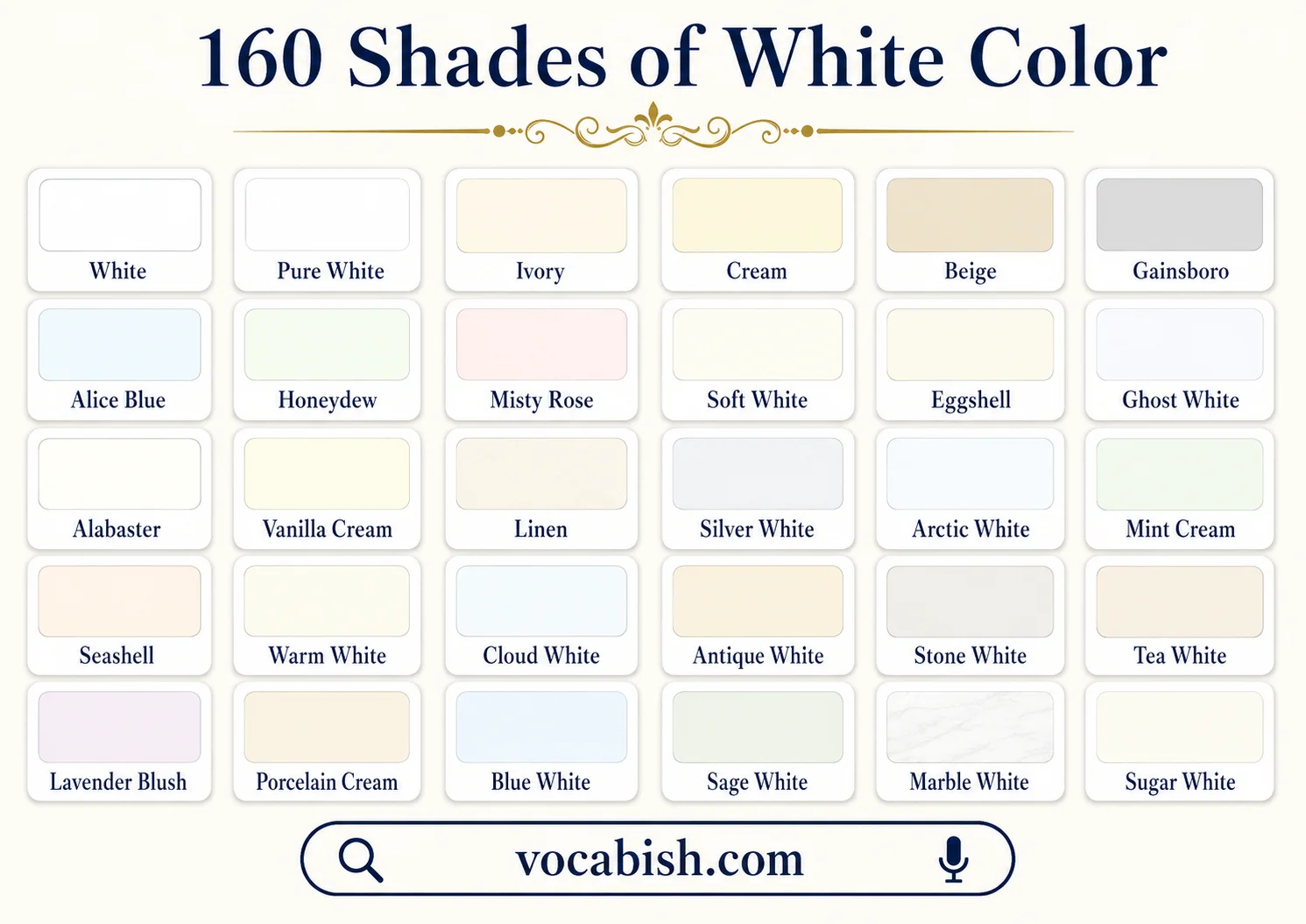
White Color Meaning
White often creates an impression of cleanliness, openness, calmness, and simplicity.
Common white meanings include:
- purity
- peace
- innocence
- cleanliness
- freshness
- simplicity
- new beginnings
White wedding clothing is associated with marriage in many Western societies.
In other parts of the world, however, white can be strongly associated with funerals, grief, and mourning.
This is a clear example of why color symbolism should always be understood in cultural context.
Related Resources: 150+ White Color Shades
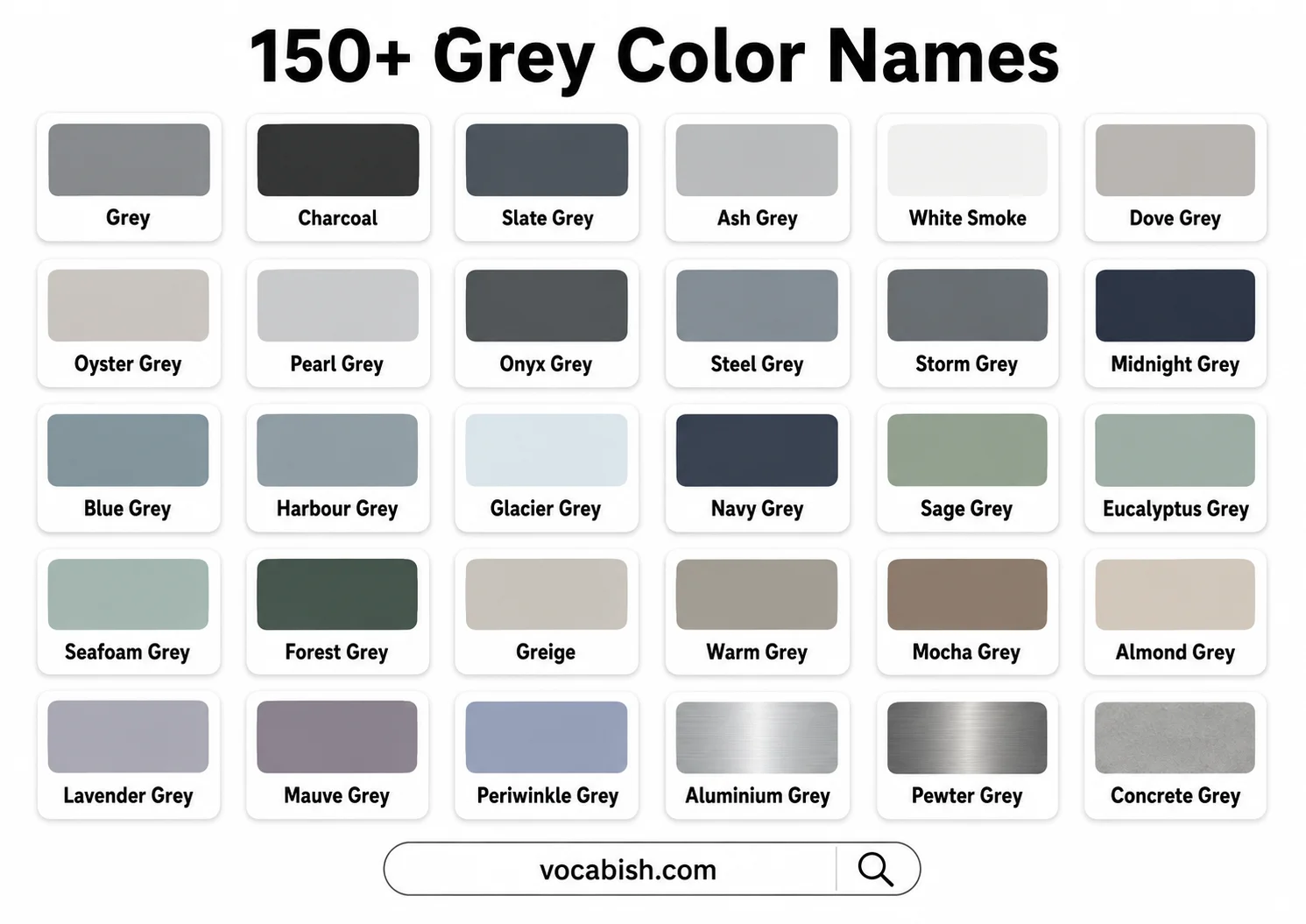
Gray or Grey Color Meaning
“Grey” and “gray” are two spellings of the same color. Gray is more common in American English, while grey is more common in British English.
Here’ a complete guide on 150+ shades of grey colors.
The color often represents:
- neutrality
- balance
- maturity
- professionalism
- practicality
- calmness
- seriousness
Gray sits between black and white, which helps explain its association with neutrality.
However, too much gray can also suggest boredom, uncertainty, dullness, or sadness.
Light gray often feels modern and clean, while charcoal gray can appear formal and powerful.
Gold and Silver Color Meaning
Metallic colors often communicate ideas connected with wealth, achievement, technology, or high status.
Gold commonly represents success, victory, luxury, wealth, celebration, and excellence. Gold medals are an obvious example of its connection with winning.
Silver often represents sophistication, modern technology, elegance, precision, and second-place achievement.
The two colors can create different impressions:
Color | Common Impression |
|---|---|
Gold | Warm, rich, luxurious, celebratory |
Silver | Cool, modern, technological, polished |
Their meanings depend heavily on how they are used.
Warm, Cool, and Neutral Colors Meaning
Colors are often grouped into warm, cool, and neutral families. These categories help people describe the general visual mood of a room, image, outfit, artwork, or design.
Color Group | Common Examples | Typical Associations |
|---|---|---|
Warm colors | Red, orange, yellow | Energy, warmth, activity, excitement |
Cool colors | Blue, green, purple | Calmness, nature, relaxation, distance |
Neutral colors | Black, white, gray, brown, beige | Balance, simplicity, stability, formality |
Warm colors may appear visually energetic or close, while cool colors can sometimes feel peaceful or spacious.
These effects are not automatic. Brightness, saturation, shade, surrounding colors, and personal preference also affect perception.
For example, a bright electric blue can feel more energetic than a soft dusty orange.
Positive and Negative Meanings of Colors
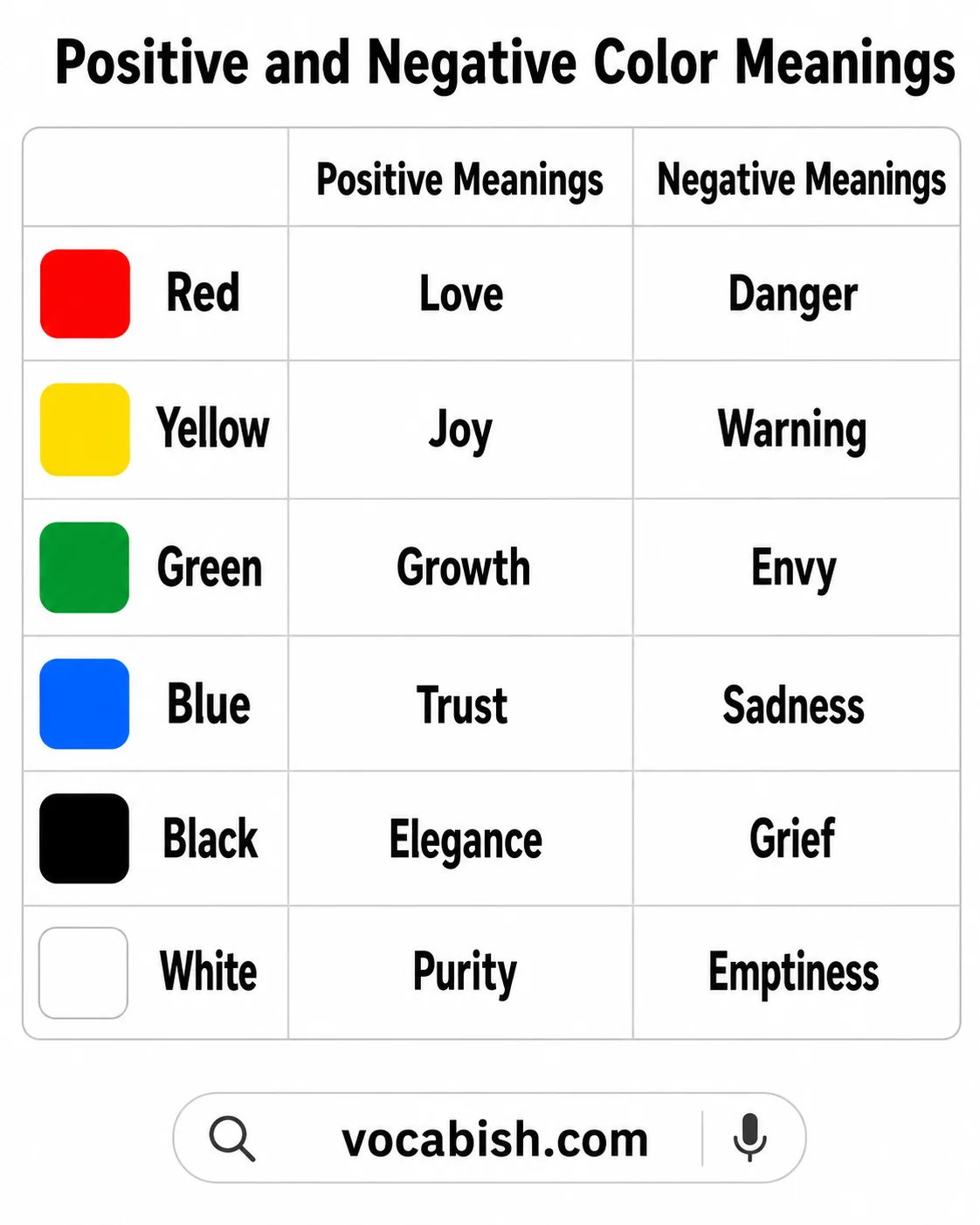
Many colors have both positive and negative associations. This is why saying that one color “means” only one thing can be misleading.
Color | Positive Association | Possible Negative Association |
|---|---|---|
Red | Love, courage | Anger, danger |
Orange | Creativity, enthusiasm | Loudness, warning |
Yellow | Joy, hope | Caution, jealousy |
Green | Growth, health | Envy, inexperience |
Blue | Trust, peace | Sadness, coldness |
Purple | Luxury, creativity | Excess, mystery |
Pink | Affection, care | Immaturity in some contexts |
Brown | Stability, comfort | Dullness |
Black | Elegance, strength | Grief, fear |
White | Purity, peace | Emptiness, mourning |
Gray | Balance, maturity | Boredom, uncertainty |
The surrounding situation usually tells us which meaning is intended.
A red heart and a red alarm button are both red, yet their messages are completely different.
How Culture Changes the Meaning of Colors
Color symbolism is strongly influenced by cultural traditions. A meaning that feels obvious in one country may not have the same meaning somewhere else.
Wedding and funeral traditions provide clear examples.
White is associated with weddings and bridal clothing in many Western cultures. In several Asian traditions, white also has strong associations with death and mourning.
Red may communicate danger or warning in some contexts, yet it can also represent celebration, prosperity, happiness, or good fortune in other cultural settings.
Black is a common mourning color in many Western societies, but it does not serve that role everywhere.
Because traditions vary between communities, religions, countries, and historical periods, it is better to say:
“Red can symbolize…”
rather than:
“Red always means…”
This wording is both more accurate and more natural.
How Color Psychology Works in Daily Life
Color psychology studies how colors may relate to human feelings, thoughts, attention, and behavior. It is often discussed in design, marketing, education, fashion, and environmental psychology.
However, people do not react to color in exactly the same way.
The effect of a color may depend on:
- cultural background
- personal experience
- age
- surroundings
- lighting
- shade and brightness
- expectations
- purpose of the space or object
A quiet blue bedroom may feel relaxing because of its soft shade, lighting, furniture, and overall setting—not simply because “blue equals calm.”
Similarly, a bright blue sports car could create excitement rather than relaxation.
Color psychology is therefore best understood as a study of patterns and associations, not a list of guaranteed emotional reactions.
Color Meanings in Branding and Communication
Colors can help a business, organization, or product communicate a particular personality before people even read the words.
For example, brands may choose:
- Blue when they want to appear reliable, professional, secure, or calm.
- Green when they want connections with nature, health, freshness, sustainability, or growth.
- Red when they want strong visibility, energy, excitement, speed, or urgency.
- Black when they want a premium, powerful, elegant, or minimalist appearance.
- Yellow or orange when they want to appear cheerful, energetic, friendly, or highly visible.
Still, color alone cannot create trust, excitement, or quality. Words, images, typography, product experience, and cultural context work together.
This is why two brands can use the same color and still communicate completely different personalities.
How to Talk About Color Meanings in English
English learners can use several natural sentence patterns when explaining what colors represent.
Sentence Pattern | Example |
|---|---|
___ symbolizes… | Red symbolizes passion and energy. |
___ represents… | Green often represents growth and nature. |
___ is associated with… | Blue is associated with calmness and trust. |
___ can suggest… | Black can suggest elegance or seriousness. |
___ is often linked with… | Yellow is often linked with happiness. |
___ gives a feeling of… | Light blue gives a feeling of calmness. |
___ can communicate… | Orange can communicate warmth and enthusiasm. |
Notice the words often, can, and may.
These words are useful because color meanings are not absolute.
Instead of saying:
“Purple means luxury.”
A more accurate sentence is:
“Purple is often associated with luxury and creativity.”
Useful Color Psychology Vocabulary
- Symbolism — the use of something to represent an idea.
- Association — a mental connection between two things.
- Perception — the way a person sees, understands, or experiences something.
- Hue — a basic color family, such as red, blue, or green.
- Shade — a darker version of a color, usually created by adding black.
- Tint — a lighter version of a color, usually created by adding white.
- Saturation — how strong, pure, or intense a color appears.
- Tone — a version of a color changed by adding gray or reducing its intensity.
These differences matter because navy blue and baby blue may communicate very different moods even though both belong to the blue family.
Common Color Meaning Confusions
Color symbolism becomes easier to understand when you avoid a few common mistakes.
- A color does not have one universal meaning. Culture and context can change its message.
- Shade matters. Pale pink and neon pink can create very different impressions.
- Psychology is not a fixed formula. A color cannot guarantee one emotional reaction.
- Personal experience matters. People may associate the same color with different memories.
- Symbolic meaning and literal color are different. “Feeling blue” describes sadness, not someone’s physical color.
FAQs About Colors Meaning
Colors can symbolize emotions, values, ideas, traditions, or social messages. Their meanings depend on culture, context, shade, history, and personal experience.
Red most commonly represents romantic love, passion, and attraction. Pink can also represent affection, tenderness, care, friendship, and softer forms of love.
Yellow commonly represents happiness, sunshine, optimism, and positive energy. Bright orange can also communicate cheerfulness, friendliness, enthusiasm, and a lively mood.
White often symbolizes peace, purity, and harmony, while light blue can suggest calmness and tranquility. Cultural traditions can influence both associations.
Blue is often associated with calmness, trust, stability, security, and professionalism. In some situations, however, blue can also communicate sadness or emotional distance.
Green commonly symbolizes nature, growth, renewal, health, freshness, and balance. It may also represent prosperity, environmental awareness, envy, or inexperience.
No. Color meanings differ across cultures, religions, communities, and historical periods. A color associated with celebration somewhere may represent mourning elsewhere.
Colors may influence attention, mood, and perception, but responses vary. Context, culture, memories, lighting, shade, and personal preference also affect emotional reactions.
Conclusion
Understanding Colors Meaning is about more than memorizing that red means love or blue means calmness. Colors communicate through symbolism, psychology, culture, language, personal experience, and context.
The meanings of colors can be positive, negative, emotional, practical, or cultural at the same time. Red may express love or danger, green may suggest growth or envy, and white may represent celebration in one culture but mourning in another.
For English learners, the safest and most natural approach is to use expressions such as “can symbolize,” “often represents,” and “is associated with.” These phrases help you describe colors accurately while remembering the most important idea: a color’s meaning depends on where, how, and why it is being used.
Explore More Color-Related Guides