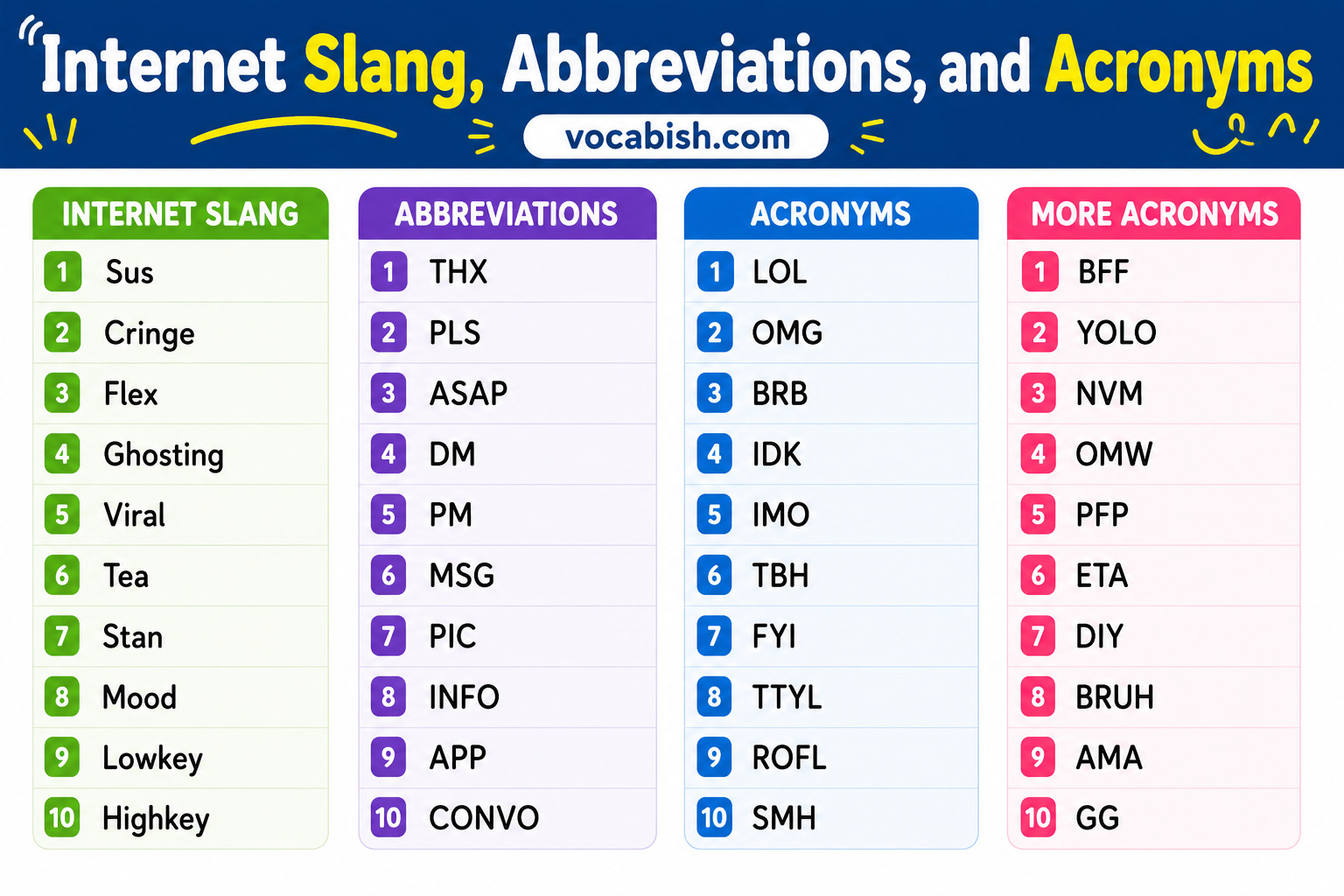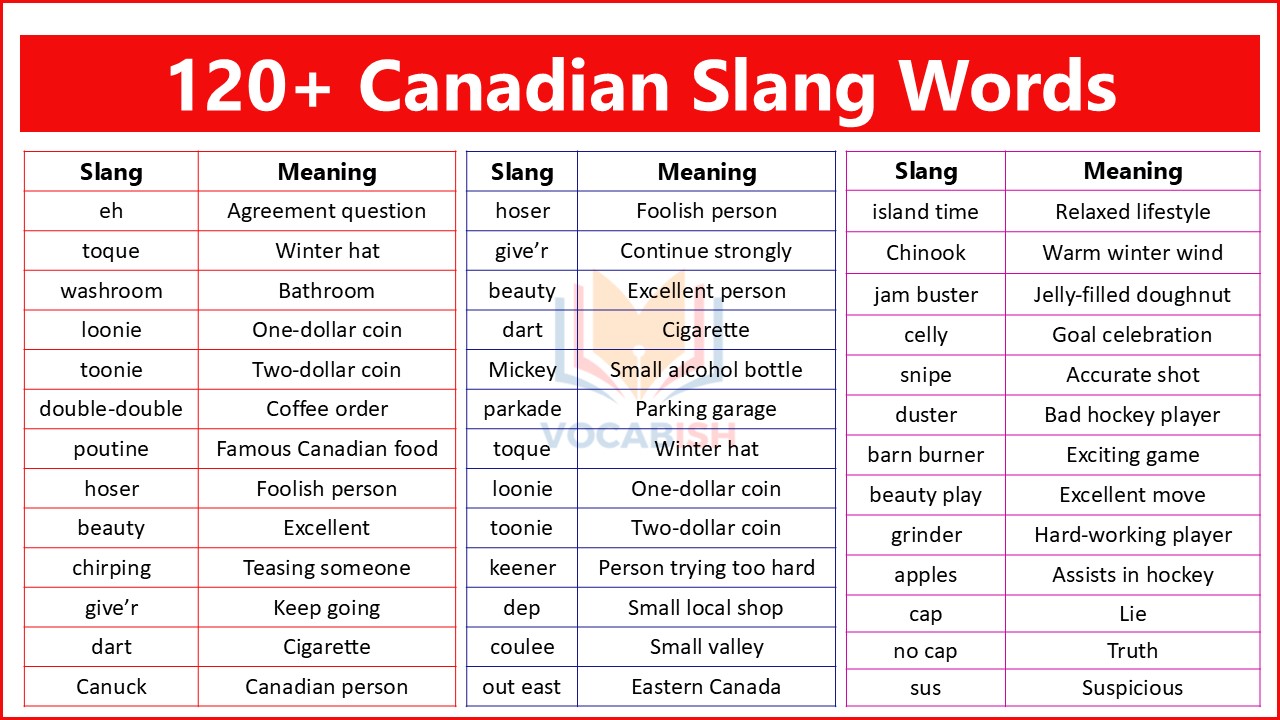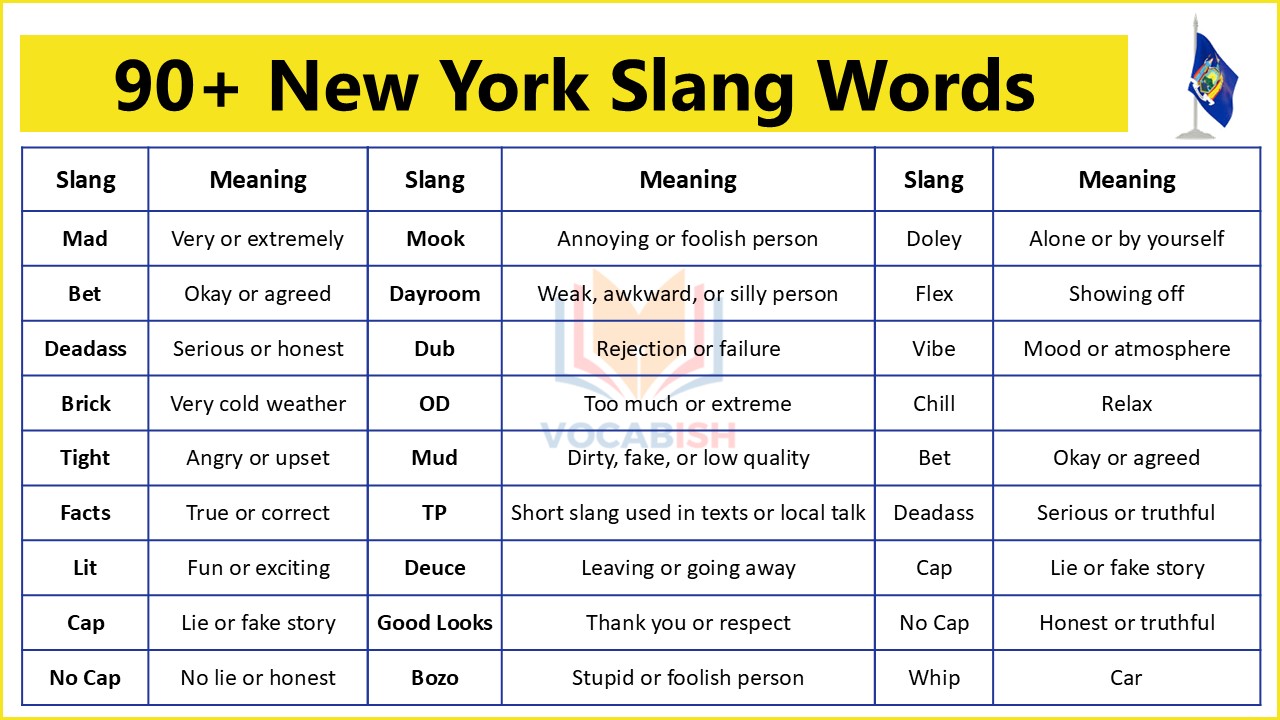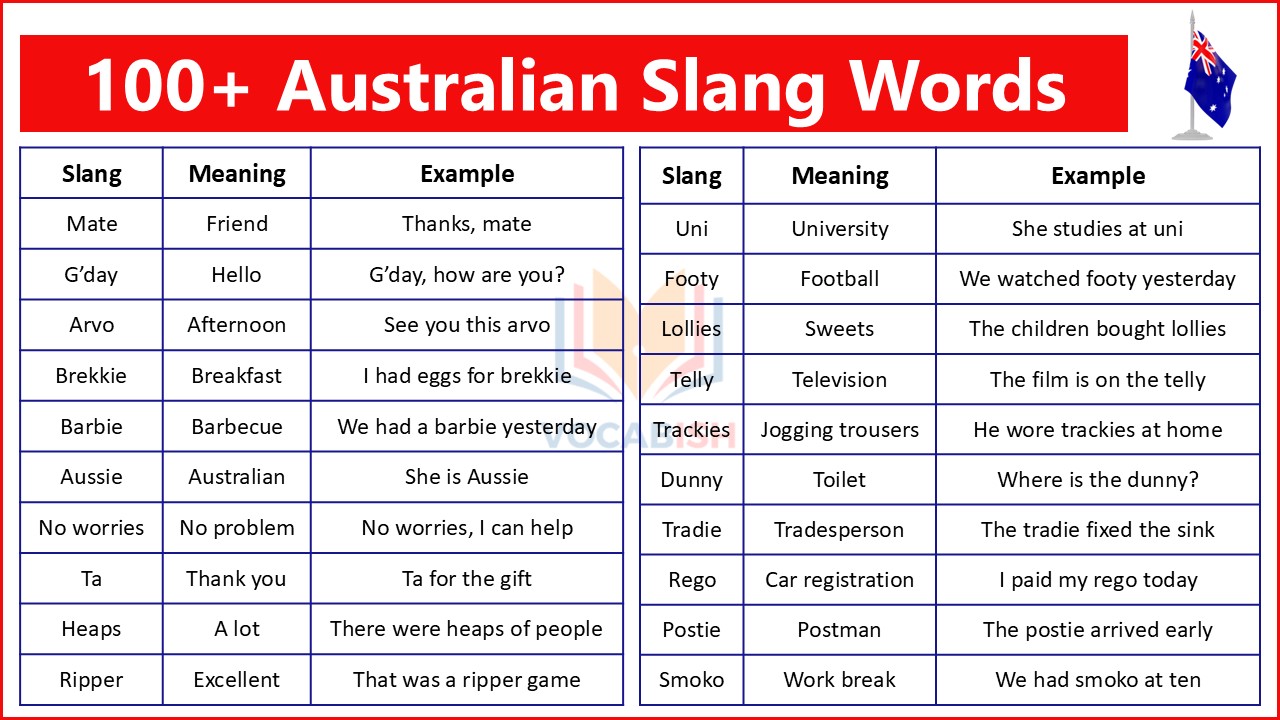
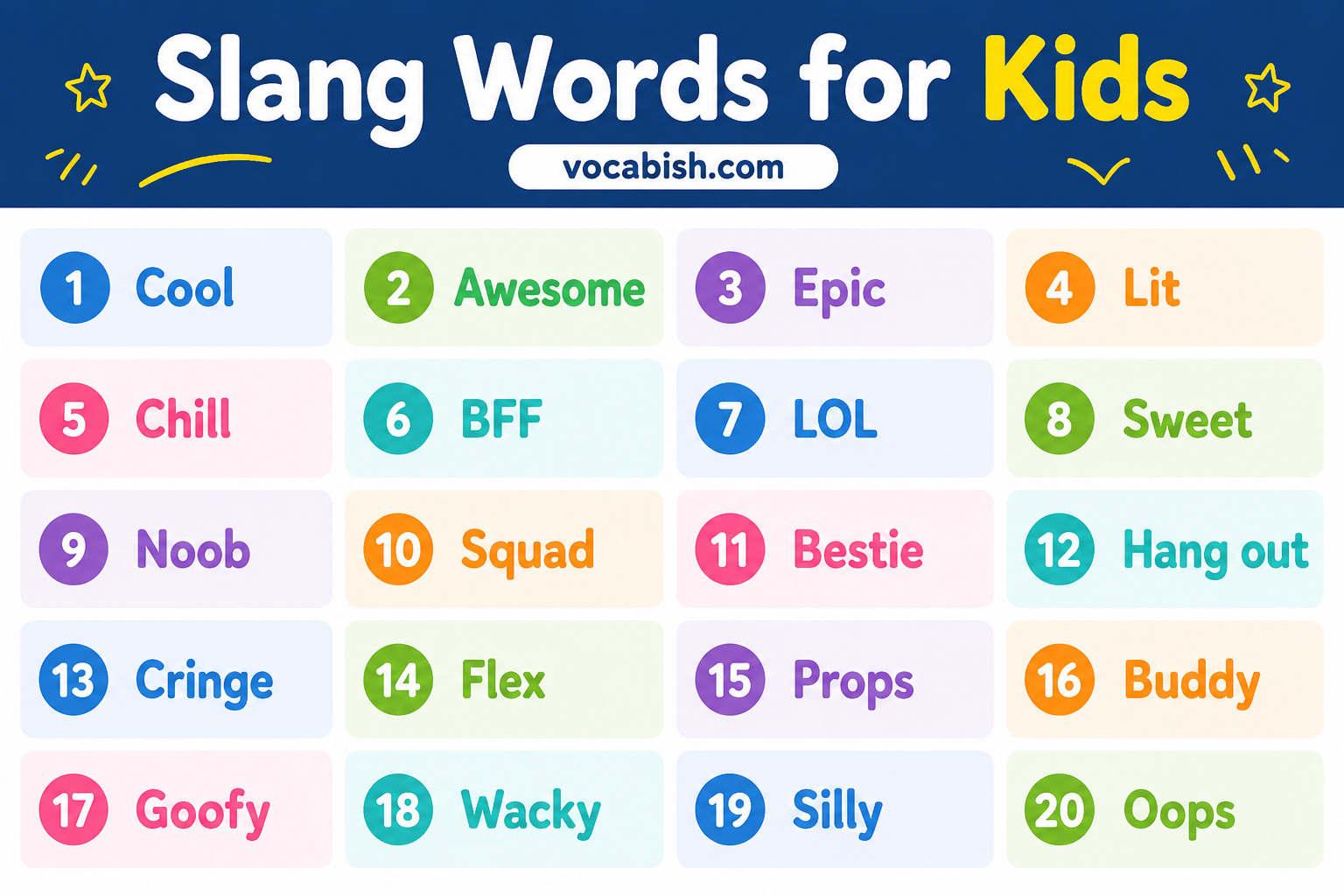

Kids often use slang words when talking with friends, at school, online, or while playing games. These informal words and expressions can make conversations sound more natural and fun, but their meanings are not always obvious to parents, teachers, or English learners. In this article, you’ll learn common slang words for kids, along with their meanings and example sentences. Understanding these terms can help you follow everyday conversations and recognize how modern informal English is used.
If you are interested in learning more slang words and phrases, then visit our Slang Words Category.
Slang Words for Kids
Slang words for kids are informal words and phrases commonly used by children and teenagers in conversations. They often appear at school, on social media, during games, and while chatting with friends.
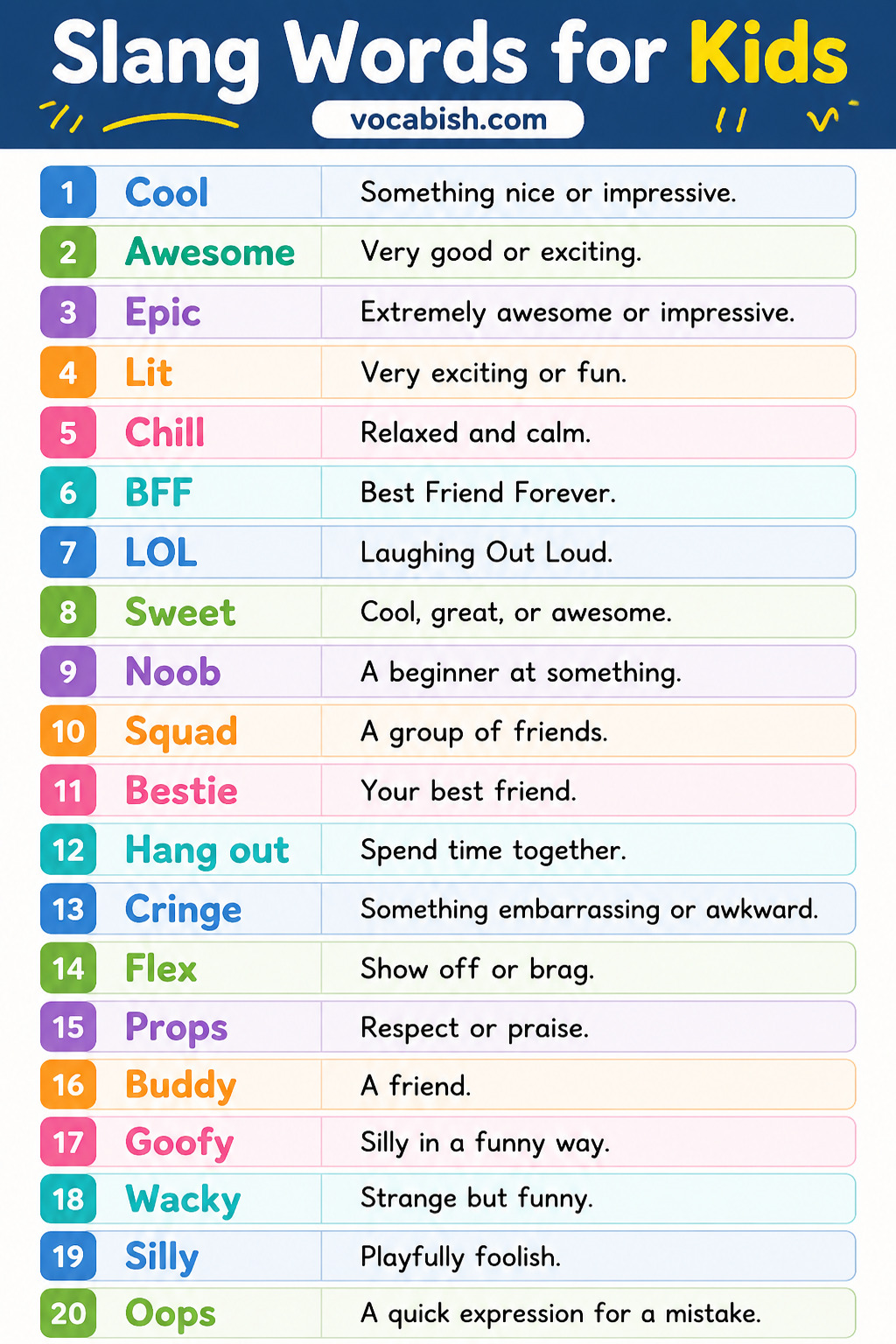
Unlike formal English, slang is casual and often reflects current trends, interests, and youth culture.
Quick Definition:
Term | Meaning |
|---|---|
Slang | Informal words used in casual conversation |
Kids’ Slang | Popular expressions used by children and young teens |
Standard English | Formal language used in schools, writing, and professional settings |
Example:
- Standard English: That movie was very good.
- Kid Slang: That movie was awesome!
Why Do Kids Use Slang?
Children use slang to connect with friends, express emotions, and make conversations more fun. Slang can also help them feel part of a group.
Some common reasons include:
- Expressing excitement
- Showing approval
- Making conversations more relaxed
- Following popular trends
- Creating a sense of belonging among friends
Because slang changes quickly, new words appear every year while older expressions become less common.
Common Slang Words for Kids with Meanings
Many slang words used by kids have positive, funny, or expressive meanings. Understanding them can make conversations much easier to follow.
Slang Word | Meaning | Example Sentence |
|---|---|---|
Cool | Nice or impressive | Your new bike is cool. |
Awesome | Very good or exciting | That game was awesome. |
Epic | Extremely impressive | We had an epic soccer match today. |
Lit | Very exciting or fun | The birthday party was lit. |
Chill | Relaxed or calm | Let’s chill after school. |
BFF | Best Friend Forever | Sarah is my BFF. |
LOL | Laughing Out Loud | LOL, that joke was funny. |
Sweet | Great or nice | Sweet! We won the competition. |
Noob | Someone new at something | I’m a noob at chess. |
Squad | Group of friends | My squad is coming over later. |
Example Conversation:
- Emma: Did you see Jake’s new skateboard?
- Liam: Yeah, it’s so cool!
- Emma: Our skate session yesterday was epic.
- Liam: Totally. The whole park was lit.
Popular School and Playground Slang
School environments often create their own informal language. These words are commonly heard among classmates and friends.
Slang | Meaning | Example |
|---|---|---|
Bestie | Best friend | My bestie sits next to me. |
Hang out | Spend time together | We hang out after school. |
Cringe | Embarrassing or awkward | That joke was cringe. |
Flex | Show off | He likes to flex his new shoes. |
Props | Respect or praise | Props to you for winning. |
Buddy | Friend | My buddy helped me today. |
Common Playground Phrases:
- That’s awesome!
- Good job!
- No way!
- You rock!
- That’s wild!
Positive Slang Words Kids Commonly Use
Many slang expressions are used to compliment others, celebrate success, or show excitement.
Words for Praise:
Slang | Meaning |
|---|---|
Amazing | Extremely good |
Awesome | Excellent |
Epic | Outstanding |
Sweet | Great |
Cool | Impressive |
Examples:
- Your drawing is amazing.
- That goal was epic.
- Cool backpack!
- Sweet, we finished early.
Funny Slang Words Used by Kids
Kids enjoy playful language that makes conversations entertaining and memorable.
Slang | Meaning | Example |
|---|---|---|
Goofy | Silly in a fun way | My brother is goofy. |
Wacky | Strange but funny | That story was wacky. |
Silly | Playfully foolish | Stop making silly faces. |
LOL | Laughing out loud | LOL, that’s hilarious. |
Oops | Expression for a mistake | Oops, I dropped my pencil. |
Mini Example:
- Mia: Why are you wearing sunglasses indoors?
- Alex: Just being goofy.
- Mia: That’s pretty funny!
Slang Words Parents and Teachers Should Know
Understanding children’s slang can help adults communicate more effectively and avoid confusion.
Here are some common terms adults may hear:
Word | Meaning |
|---|---|
BFF | Best friend forever |
Cringe | Embarrassing |
Lit | Very exciting |
Flex | Show off |
Squad | Group of friends |
Chill | Relax |
Noob | Beginner |
Bestie | Close friend |
Knowing these words can make conversations with children feel more natural and easier to understand.
Kid Slang vs Standard English
Slang is useful in casual conversations, but it may not be suitable in formal writing or school assignments.
Kid Slang | Standard English |
|---|---|
Cool | Good |
Lit | Exciting |
Bestie | Best friend |
Noob | Beginner |
Chill | Relax |
Cringe | Embarrassing |
Squad | Group of friends |
Example:
- Casual: That concert was lit.
- Formal: That concert was very exciting.
Learning both forms helps students communicate effectively in different situations.
Tips for Learning and Using Kids’ Slang
Slang can be fun, but it works best when used naturally and in the right setting.
Helpful Tips:
- Learn meanings from context.
- Listen to how native speakers use slang.
- Avoid using every slang word at once.
- Use standard English in formal writing.
- Ask questions if you hear unfamiliar expressions.
- Keep up with new trends because slang changes over time.
For ESL Learners:
Try writing short dialogues using new slang words. This helps you remember meanings and understand when people use them.
You May Also Like:
- 150+ Slang Words in English
- 100+ Italian Slang Words
- 100+ Australian Slang Words
- 90+ New York Slang Words
- 120+ Canadian Slangs Words
FAQs about Slang Words for Kids
Slang words for kids are informal expressions commonly used by children and young teens during casual conversations with friends and classmates.
Children use slang to express emotions, communicate quickly, follow trends, and feel connected to their peer groups.
Generally, no. Formal writing usually requires standard English, while slang is more suitable for casual conversations.
“Lit” means exciting, entertaining, or very enjoyable. Kids often use it to describe parties, events, or activities.
“Cringe” describes something embarrassing, awkward, or uncomfortable to watch or experience.
Yes. Understanding slang helps learners follow everyday conversations, social interactions, videos, and online content more easily.
Kids’ slang changes frequently. Some words stay popular for years, while others disappear quickly as new trends emerge.
Yes. Understanding common slang can help parents communicate better with children and understand modern conversations more clearly.