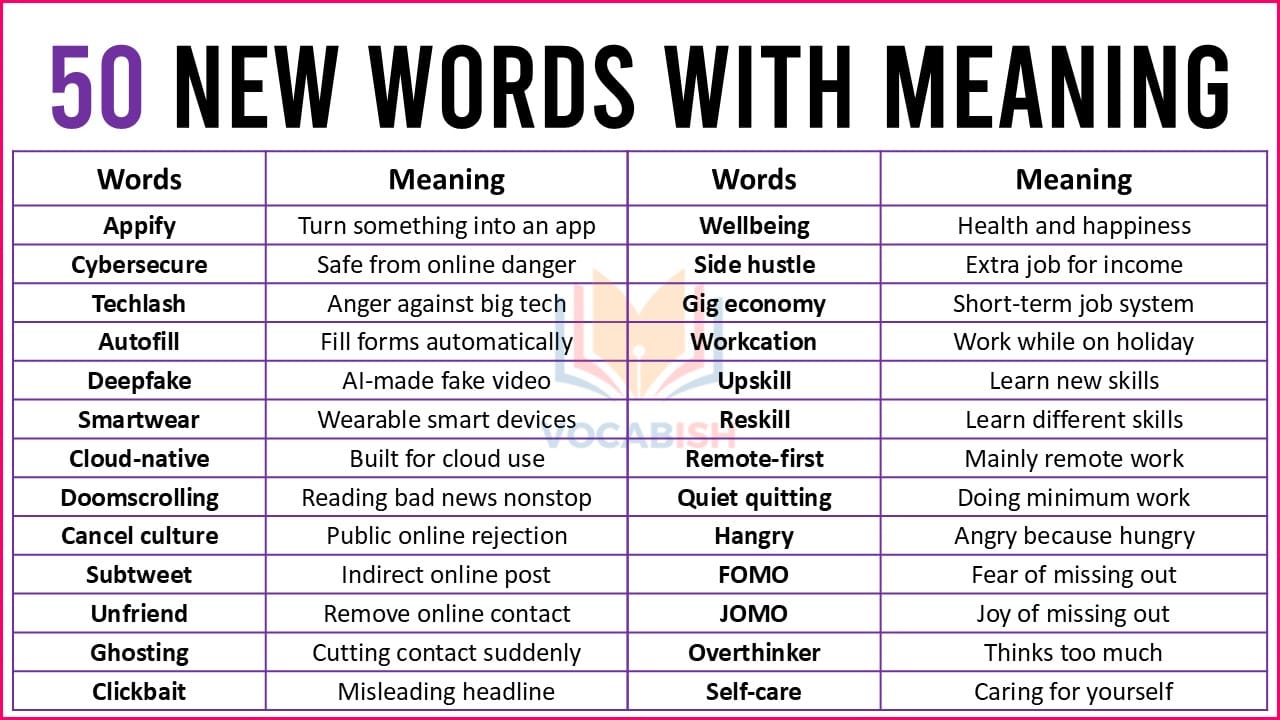

Want to understand the English words people use today? From technology and social media to education, work, and everyday conversations, modern English includes many words that learners may not find in older textbooks. In this article, you’ll learn 50 new words with meaning and examples in sentences, organized by category for easier learning. Understanding these words will help you follow conversations, improve your vocabulary, and use English more naturally in daily life.
What Are New Words?
New words (also called vocabulary words) are words that you may not use often or are new to your knowledge. These words can come from modern trends, technology, or everyday life. Learning new vocabulary helps you expand your English and express ideas in better ways.
Example:
Word: Empathy
- Meaning: understanding others’ feelings
- Sentence: She showed empathy for her friend’s sadness.
50 New Words With Meanings
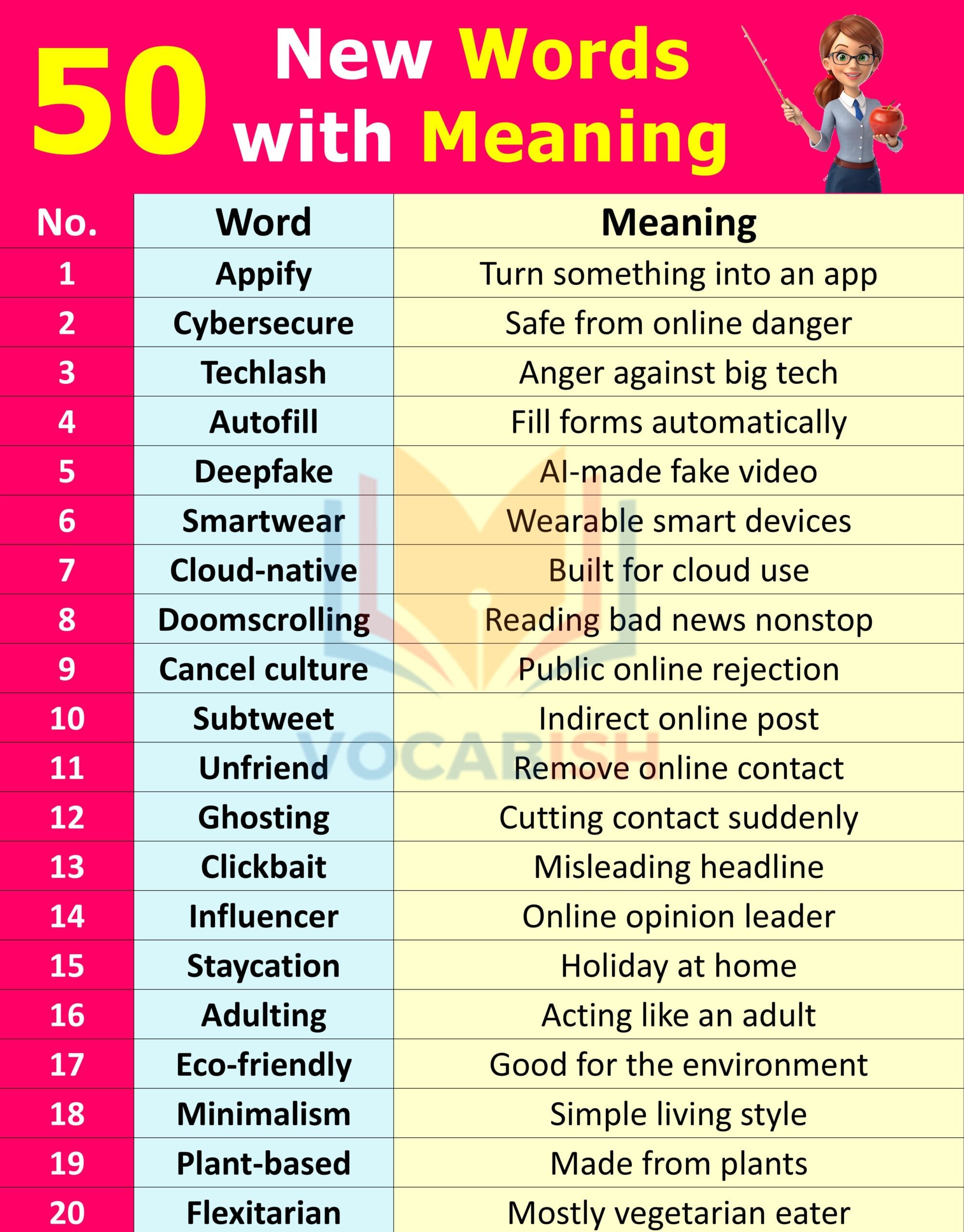
Below is a collection of useful modern English words that are commonly seen in conversations, articles, workplaces, and online communication.
New Technology Words With Meaning
Technology has introduced many new words in English that people use every day. These terms often appear in apps, websites, social media, and online communication.
- Algorithm — A set of rules or instructions that a computer follows to solve a problem.
Example: The YouTube algorithm suggested videos based on my interests. - Blockchain — A digital system that stores information securely across many computers.
Example: Many cryptocurrencies use blockchain technology for secure transactions. - Cybersecurity — The practice of protecting computers, networks, and data from attacks.
Example: Strong passwords are important for cybersecurity. - Digital Footprint — The record of your activities and information online.
Example: Everything you post online becomes part of your digital footprint. - Smart Device — An electronic device connected to the internet that can perform advanced tasks.
Example: My smart device allows me to control the lights with my phone. - Virtual — Existing or happening online rather than in a physical space.
Example: We attended a virtual conference from different countries. - Analytics — Data collected and studied to understand performance or behavior.
Example: The marketing team reviewed website analytics every week. - Automate — To make a process operate automatically with little human effort.
Example: The company used software to automate routine tasks. - Podcast — A digital audio program that people can listen to online.
Example: I listen to an English-learning podcast every morning. - Hackathon — An event where people work together to create technology projects.
Example: Our school organized a hackathon for young programmers.
New Social Media Words and Meanings
Social media has created many new words and meanings that are now part of everyday English. These words are especially useful for understanding online conversations and digital culture.
- Influencer — A person who can affect others’ opinions through social media.
Example: The influencer shared a review of a new smartphone. - Content Creator — Someone who creates videos, articles, or other online content.
Example: She works as a content creator on Instagram. - Viral — Becoming extremely popular online in a short time.
Example: His funny video went viral overnight. - Trendsetter — A person who starts trends that others follow.
Example: Many fashion lovers consider her a trendsetter. - Personalized — Designed to match a person’s preferences or needs.
Example: The app offers personalized recommendations. - Interactive — Allowing users to actively participate.
Example: The website includes interactive learning activities. - Authentic — Genuine and honest.
Example: People trust brands that share authentic stories. - User-Friendly — Easy to use and understand.
Example: The new application has a user-friendly interface. - Engagement — The interaction people have with online content.
Example: The post received high engagement from followers. - Livestream — A live video broadcast over the internet.
Example: Thousands of viewers watched the livestream event.
New Workplace and Career Vocabulary Words
Many new vocabulary words come from modern workplaces and professional communication. Learning these terms can help students and professionals understand today’s work environment.
- Entrepreneur — A person who starts and manages a business.
Example: She became a successful entrepreneur at the age of twenty-five. - Freelance — Working independently rather than for one company.
Example: He works freelance as a graphic designer. - Networking — Building professional relationships for career growth.
Example: Networking helped her discover new job opportunities. - Productivity — The ability to complete tasks efficiently.
Example: Good planning improves productivity. - Workflow — The sequence of steps used to complete work.
Example: The new software improved the team’s workflow. - Upskill — To learn additional skills for career development.
Example: Many employees upskill through online training programs. - Hybrid — Combining remote work and office work.
Example: The company follows a hybrid work model. - Collaborate — To work together toward a common goal.
Example: Students collaborate on group assignments. - Benchmark — A standard used for comparison.
Example: This result became the benchmark for future projects. - Data-Driven — Based on facts, statistics, and analysis.
Example: The manager made a data-driven decision.
New Education Words With Meaning
Education continues to introduce new words and examples in sentences that learners encounter in classrooms, online courses, and personal development programs.
- Adaptable — Able to adjust easily to new situations.
Example: Adaptable students learn new skills quickly. - Mindset — A person’s way of thinking or attitude.
Example: A positive mindset supports learning. - Self-Paced — Allowing learners to study at their own speed.
Example: The course is completely self-paced. - Innovative — Introducing fresh ideas or methods.
Example: The teacher used innovative learning techniques. - Flexible — Able to change according to different situations.
Example: Flexible study schedules help busy students. - Optimize — To make something work more effectively.
Example: She optimized her study routine before exams. - Boost — To improve or increase something.
Example: Reading daily can boost vocabulary skills. - Critical Thinking — The ability to analyze information carefully.
Example: Critical thinking helps students solve problems. - Microlearning — Learning through short lessons or activities.
Example: Many language apps use microlearning methods. - Skillset — A person’s collection of skills and abilities.
Example: Employers value a strong communication skillset.
List of Modern New English Words
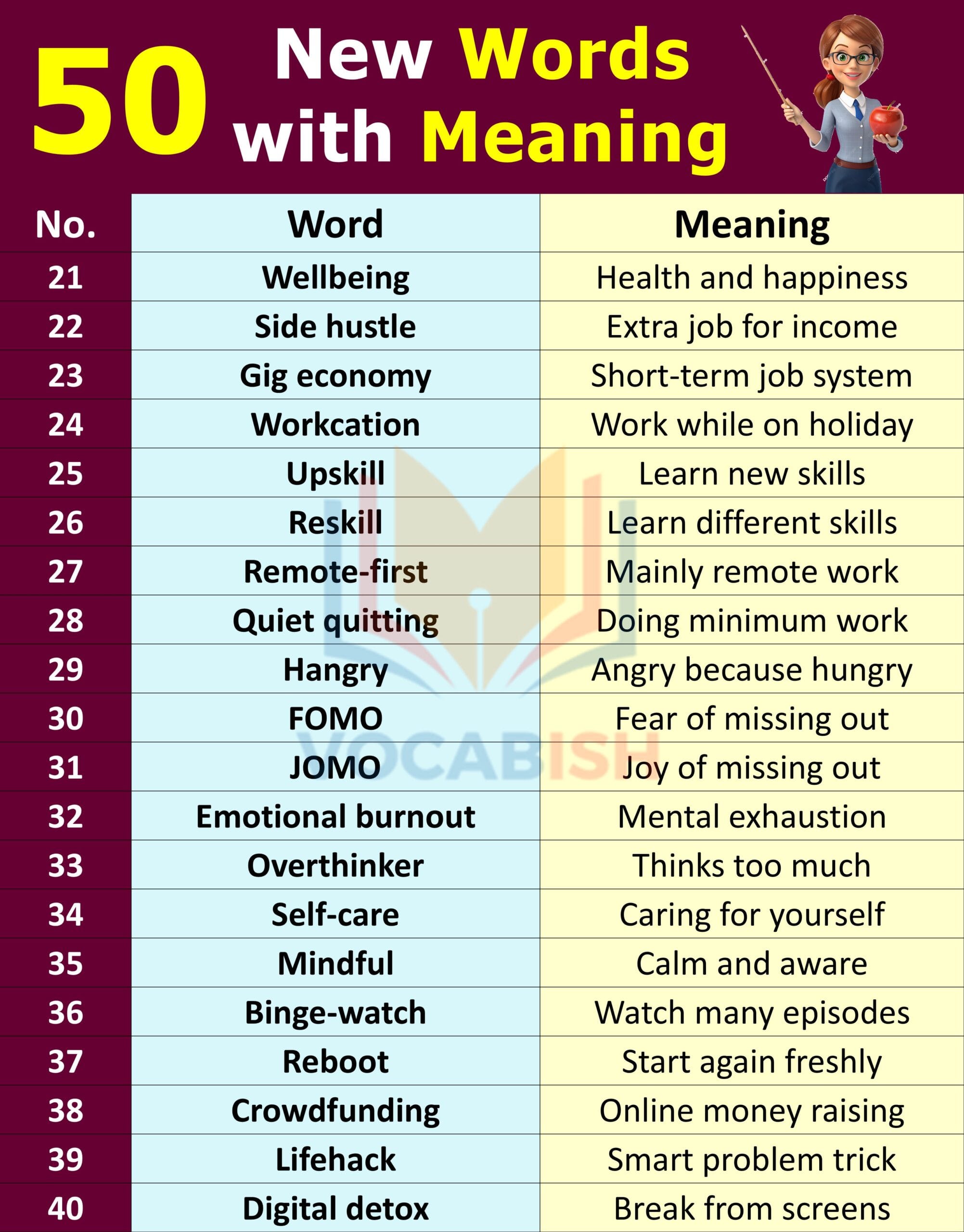
Many modern English words are now common in everyday conversations. These words help you discuss lifestyle, health, society, and current trends more naturally.
- Wellness — The state of being healthy in body and mind.
Example: Regular exercise supports overall wellness. - Minimalist — Focused on keeping things clean and uncomplicated.
Example: She prefers a minimalist home design. - Empathy — The ability to understand another person’s feelings.
Example: Good leaders show empathy toward their teams. - Resilient — Able to recover quickly from difficulties.
Example: Resilient people stay positive during challenges. - Inclusive — Welcoming and respecting all people.
Example: The school promotes an inclusive environment. - Sustainable — Able to continue without harming resources or nature.
Example: Many companies use sustainable business practices. - Eco-Friendly — Not harmful to the environment.
Example: We use eco-friendly shopping bags. - Remote — Done from a different location using technology.
Example: She works remotely from home. - Workspace — An area where work is completed.
Example: A clean workspace helps people stay organized. - Scam — A dishonest attempt to trick people.
Example: He avoided an online scam by checking the website carefully.
How To Use New Words in Different Situations
Learning new vocabulary is useful, but knowing when and where to use new words makes a bigger difference. Below are common situations where you can naturally use these words in everyday English.
1. In School or College:
Use words related to learning, projects, and personal growth.
- Mindset — A positive mindset helped me stay focused during exams.
- Collaborate — Our teacher asked us to collaborate on a science project.
- Adaptable — Adaptable students can handle changes in class schedules.
2. At Work:
Professional vocabulary helps you communicate more clearly in meetings and workplace discussions.
- Productivity — Listening to music improves my productivity while working.
- Workflow — We changed our workflow to finish tasks faster.
- Upskill — I joined an online course to upskill this year.
3. On Social Media:
Many modern words are commonly used when talking about online content.
- Influencer — My favorite influencer shares travel tips.
- Viral — That funny video went viral in just two days.
- Content Creator — She wants to become a content creator after graduation.
4. During Technology Conversations:
These words are useful when discussing apps, websites, or digital tools.
- Algorithm — The algorithm suggested new songs based on my listening history.
- Cybersecurity — Companies invest heavily in cybersecurity.
- Smart Device — I control my smart device using a mobile app.
5. In Daily Life:
Many modern English words fit naturally into everyday conversations.
- Wellness — Walking every morning improves my wellness.
- Minimalist — I prefer a minimalist style when decorating my room.
- Resilient — She remained resilient after facing several challenges.
6. When Talking About the Environment:
These words help you discuss sustainability and environmental topics.
- Eco-Friendly — Many people now choose eco-friendly products.
- Sustainable — The company follows sustainable business practices.
- Biodiversity — The national park protects local biodiversity.
You May Also Like:
Tips to Remember New Words
- Read daily: Read short stories or articles.
- Use in sentences: Make your own examples.
- Write in a notebook: Keep a word diary.
- Revise often: Review your list every week.
FAQs about New English Words
New English words like adapt, empathy, thrive, and unique help you improve your vocabulary and express ideas more clearly in daily conversation.
Social media words reflect modern online behavior, content creation, internet trends, and digital interactions that were uncommon in older English usage.
A digital footprint is the information you leave online through searches, social media activity, comments, emails, and website visits.
Modern vocabulary helps students understand current articles, online content, classroom discussions, technology topics, and professional communication more effectively.
Mindset, adaptable, resilient, wellness, empathy, and flexible are commonly used when discussing growth, learning, and self-improvement.
Algorithm, cybersecurity, blockchain, virtual, and digital footprint are widely used in technology discussions, online platforms, workplaces, and digital communication.
Write the words in a notebook, use them in short sentences every day, and review them regularly to strengthen your memory and understanding.
Conclusion
Learning new words with meaning helps you understand modern English more clearly and communicate with greater confidence. The 50 words covered in this article include vocabulary used in technology, social media, education, workplaces, and daily conversations.
Focus on learning a few words at a time, understand their meanings, and use them in your own sentences. Regular practice will help these new English words become a natural part of your vocabulary and improve your reading, writing, speaking, and listening skills over time.