
In this blog post, you will learn blue fruits names in English with pictures and a helpful PDF. Blue fruits are fruits that appear blue or dark blue when they are ripe, such as blueberry, bilberry, and blue grapes. Knowing these fruit names helps English learners build useful food vocabulary that people use in daily life, markets, cooking, and school lessons. When you study these words, you also improve your ability to speak about food, read recipes and articles, write correct fruit names, and listen more easily when others talk about fruits. By the end of the article, you will know many blue fruit names, their meanings, and how they are used in everyday English conversations.
What Are Blue Fruits?
Blue fruits are fruits that naturally appear in blue, dark blue, or blue-purple colors when they are ripe. The color usually comes from natural pigments called anthocyanins, which also provide many health benefits.
These fruits grow in different environments such as forests, gardens, farms, and tropical regions. Some are common in supermarkets, while others are rare and mainly found in specific climates.
Blue fruits are often valued because they are:
- Rich in vitamins
- Full of antioxidants
- Sweet or slightly tart
They are commonly used in desserts, juices, jams, and fresh fruit dishes.
Common Blue Fruits with Names and Pictures
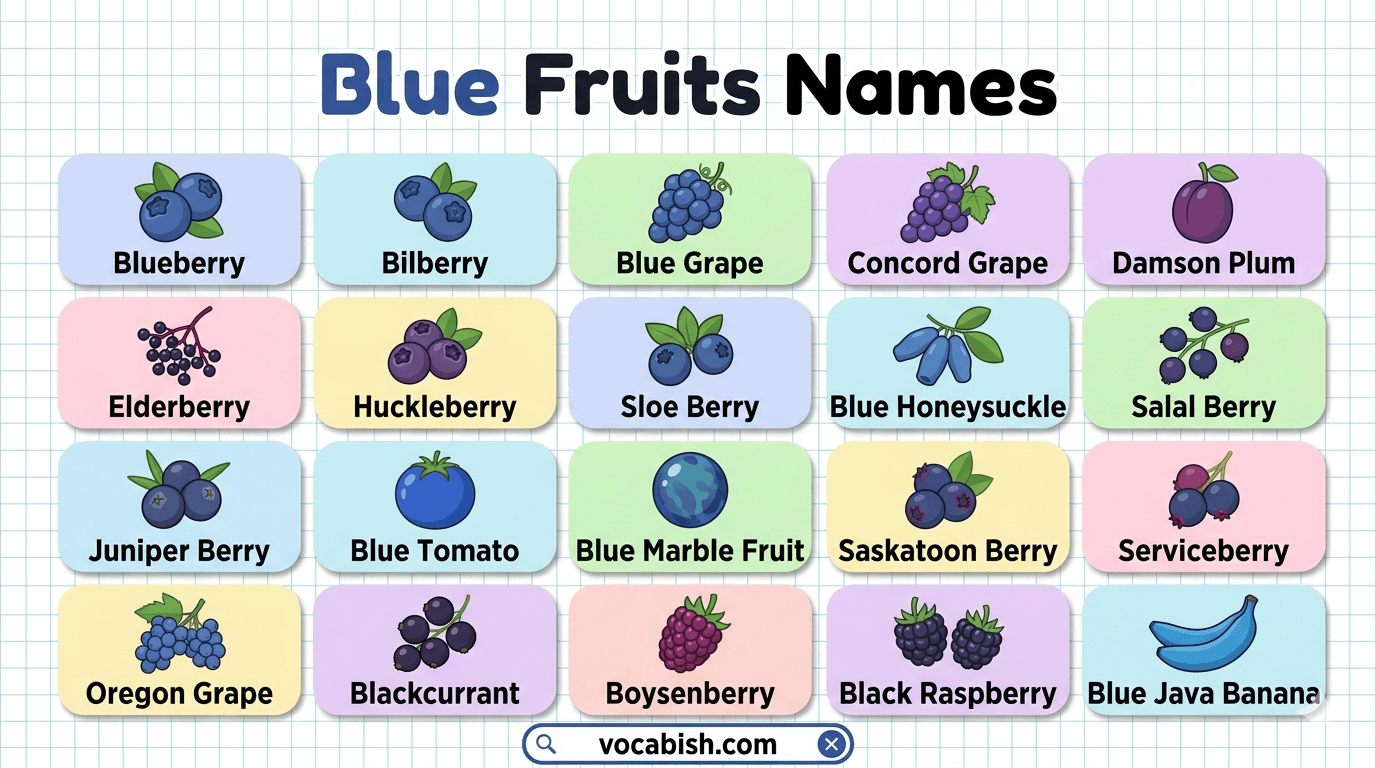
Here are some of the most common blue fruits known in English.
- Blueberry
- Bilberry
- Blue Grape
- Concord Grape
- Damson Plum
- Elderberry
- Huckleberry
- Sloe Berry
- Blue Honeysuckle (Haskap)
- Salal Berry
- Juniper Berry
- Blue Tomato
- Blue Marble Fruit
- Saskatoon Berry
- Serviceberry
- Oregon Grape
- Blackcurrant
- Boysenberry
- Black Raspberry
- Blue Java Banana
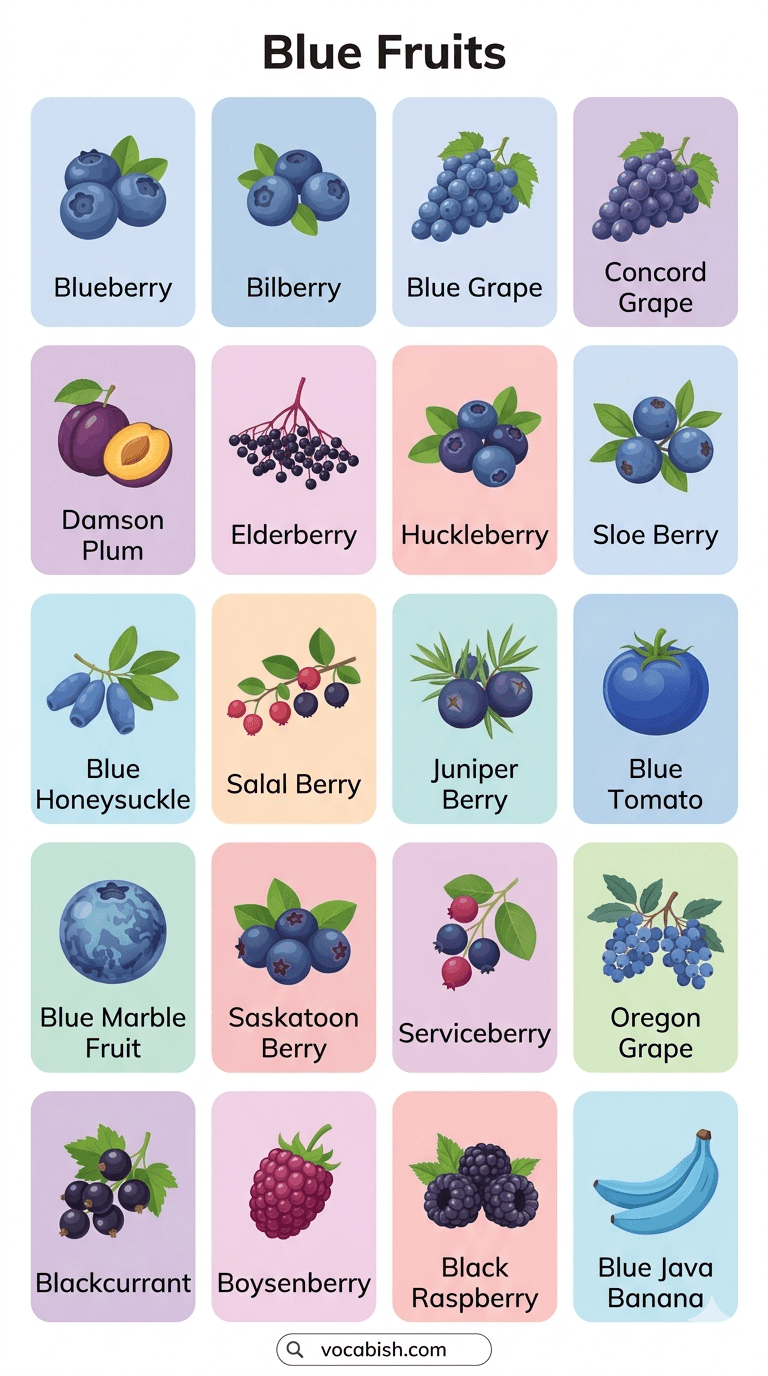
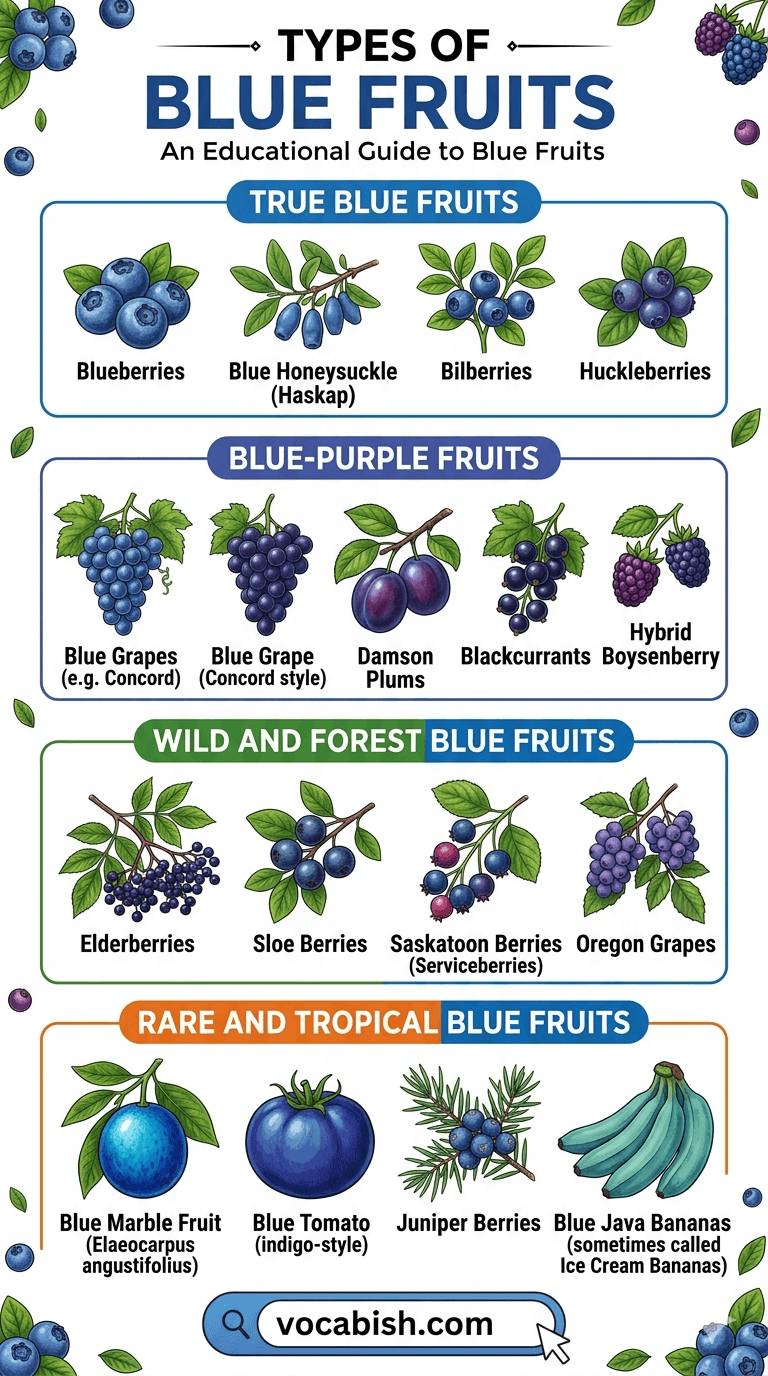
Different Types of Blue Fruits with Information
True Blue Fruits
These fruits naturally develop a clear blue or deep blue color when they ripen.
- Blueberry: small round fruit with sweet taste, widely used in desserts and breakfast dishes.
- Bilberry: wild berry similar to blueberry, darker color and stronger flavor.
- Blue Honeysuckle (Haskap): oval blue berry with sweet-tart taste and soft skin.
- Huckleberry: forest berry closely related to blueberry with slightly tart flavor.
- Salal Berry: dark blue berry growing in coastal forests and woodland areas.
- Blue Marble Fruit: tropical fruit with bright metallic blue skin and decorative appearance.
Blue-Purple Fruits Often Called Blue
These fruits look blue-purple or dark violet, but they are commonly described as blue fruits.
- Blue Grape: common grape variety with dark blue skin and sweet juice.
- Concord Grape: popular grape used for grape juice, jelly, and desserts.
- Damson Plum: small plum with strong flavor used for jams and baking.
- Blackcurrant: small dark fruit used in syrups, drinks, and desserts.
- Black Raspberry: berry with deep purple-blue color and rich flavor.
- Boysenberry: large berry with dark blue-purple color and juicy texture.
Rare and Tropical Blue Fruits
Some blue fruits are rare and mainly found in tropical climates or special farms.
- Blue Tomato: special tomato variety that develops dark blue skin due to anthocyanins.
- Blue Marble Fruit: tropical fruit known for its bright shiny blue surface.
- Juniper Berry: small blue cone-like fruit used as spice and flavoring in cooking.
- Blue Java Banana: banana variety known for its bluish skin before ripening.
Wild and Forest Blue Fruits
These fruits mostly grow in natural forests, mountains, or wild landscapes.
- Elderberry: small berries growing in clusters, commonly used for syrups and drinks.
- Sloe Berry: tiny fruit from blackthorn shrubs, often used in traditional beverages.
- Saskatoon Berry: sweet berry similar to blueberry, common in northern regions.
- Serviceberry: small blue fruit that grows on shrubs and small trees.
- Oregon Grape: dark blue berry growing on evergreen shrubs in woodland areas.
- Huckleberry: wild berry often found in mountain forests.
Nutritional Benefits of Blue Fruits
Blue fruits are known for their nutritional value and health-supporting compounds.
- Rich in Antioxidants: help protect body cells from damage.
- High in Vitamin C: supports the immune system and body defense.
- Good Source of Fiber: improves digestion and gut health.
- Supports Heart Health: natural compounds may help healthy blood circulation.
- Contains Vitamin K: helps maintain strong bones and proper blood clotting.
- Low in Calories: many blue fruits provide nutrients without excess calories.
Culinary Uses of Blue Fruits
Blue fruits are widely used in cooking because of their sweet flavor, rich color, and pleasant taste.
- Desserts: blueberries and berries used in pies, cakes, muffins, and pastries.
- Smoothies and Juices: berries and grapes blended into refreshing drinks.
- Jams and Preserves: bilberries and damson plums ideal for fruit spreads.
- Breakfast Foods: blueberries added to yogurt, cereal, and oatmeal.
- Sauces and Toppings: berry sauces used on pancakes and desserts.
- Beverages: grapes and elderberries used in juices and traditional drinks.
Blue Fruits in Everyday Usage
The names of blue fruits appear in many daily language situations, especially in food and cooking contexts.
Food and Cooking
People often mention blue fruits when talking about desserts or snacks.
Examples:
- Blueberry pie is a popular dessert.
- Grape juice is made from blue grapes.
- Elderberry syrup is used in herbal drinks.
Gardening and Farming
Fruit names also appear when discussing plants and gardens.
Examples:
- Blueberries grow well in acidic soil.
- Huckleberries are often found in mountain forests.
Health and Nutrition
Blue fruits are commonly mentioned in health discussions because of their antioxidants.
Example:
- Many nutrition experts recommend eating blueberries for their natural nutrients.
Blue Fruits Names with Photos PDF
Related Articles:
- Yellow Fruits and Their Names
- List of Red Fruits with Names and Pictures
- Types of Green Fruits with Names
Conclusion
Blue fruits are a small but fascinating group of fruits known for their deep blue color, rich nutrients, and unique flavors. Popular fruits such as blueberries, bilberries, concord grapes, and elderberries are widely enjoyed in foods and drinks around the world. At the same time, rarer fruits like blue marble fruit and blue tomatoes show how diverse nature can be. Learning these blue fruits names in English not only builds vocabulary but also helps readers understand common food terms used in daily life, cooking, and health discussions.
FAQs about Blue Fruits
Blue fruits are fruits that naturally appear blue or dark blue when ripe. Their color comes from natural plant pigments called anthocyanins, which also provide antioxidants and important nutrients.
Common blue fruits names in English include blueberry, bilberry, blue grape, concord grape, elderberry, huckleberry, sloe berry, and damson plum. These fruits are known for their deep blue color and rich nutrients.
Blue fruits are considered healthy because they contain antioxidants, vitamins, and fiber. These nutrients support heart health, improve digestion, strengthen immunity, and help protect body cells from damage.
Blueberry is the most popular blue fruit worldwide. It is widely used in desserts, smoothies, cereals, and snacks because of its sweet taste, small size, and high nutritional value.
Blue fruits usually contain vitamin C, vitamin K, fiber, and antioxidants. These nutrients support the immune system, improve digestion, strengthen bones, and help maintain overall body health.
Blue fruits get their color from anthocyanins, natural pigments found in many fruits and vegetables. These pigments produce blue or purple shades and also act as powerful antioxidants.