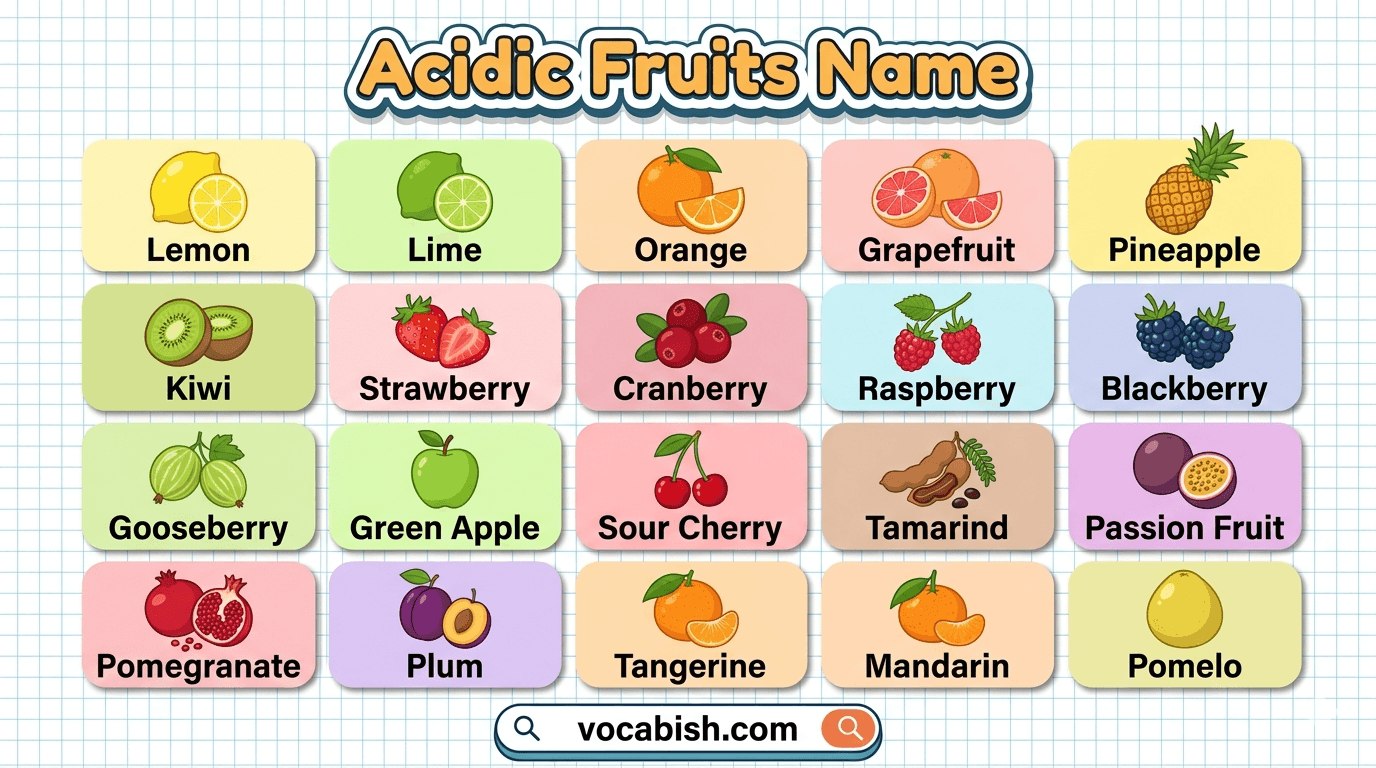

In this blog post, you will learn and identify acidic fruits in English with their names and uses. Acidic fruits are known for their tangy taste, fresh flavor, and high vitamin content. Common examples include lemon, orange, pineapple, and grapefruit. These fruits are often used in drinks, cooking, and healthy meals. By learning these words, you can improve your speaking, reading, writing, and listening skills. You will also be able to talk about food, health, and daily habits with more confidence.
Acidic Fruits Meaning in English
Acidic fruits are fruits that contain natural acids such as citric acid, malic acid, or tartaric acid. These acids give fruits their sour or tangy flavor and help in digestion and preservation.
These fruits are commonly used in:
- Food preparation
- Juice making
- Health diets
- Natural remedies
Common Acidic Fruits in English with Pictures
- Lemon
Very sour fruit rich in vitamin C, improves digestion and immunity. - Orange
Sweet and tangy citrus fruit, supports heart health and hydration. - Grapefruit
Slightly bitter fruit, helps in weight control and metabolism improvement. - Lime
Small green fruit, commonly used in drinks and cooking for fresh flavor. - Pineapple
Tropical fruit with tangy sweetness, supports digestion with natural enzymes. - Strawberry
Mildly acidic berry, rich in antioxidants and improves skin health. - Kiwi
Green fruit with tangy taste, helps digestion and boosts immune system. - Green Apple
Sour apple variety, good for digestion and maintaining gut health. - Cherry (Sour)
Tart cherry, supports sleep and reduces inflammation in the body. - Cranberry
Very sour berry, helps prevent urinary infections and supports immunity. - Tamarind
Very sour pulp fruit, used in cooking and improves digestion naturally. - Passion Fruit
Tangy tropical fruit, rich in fiber and supports healthy digestion.
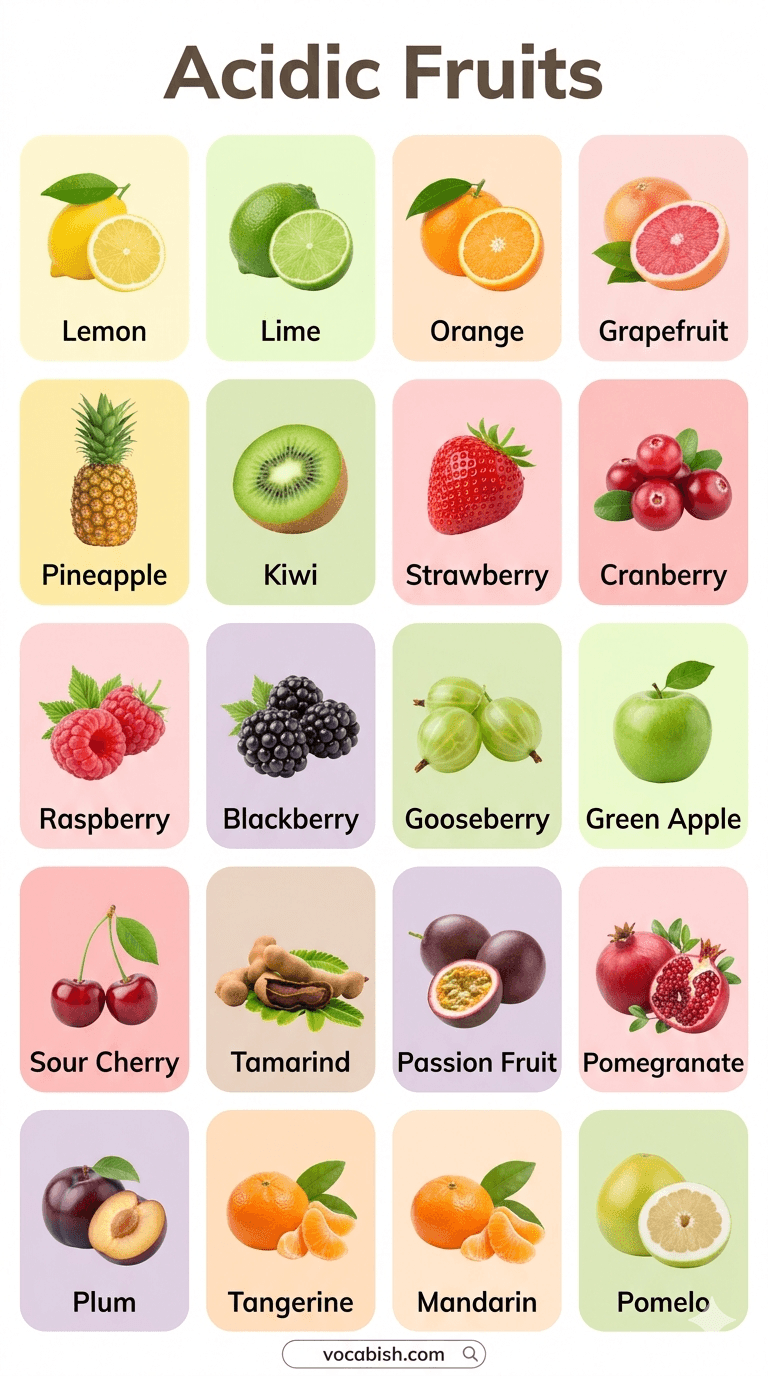
Types of Acidic Fruits
Citrus Fruits
- Lemon
- Lime
- Orange
- Grapefruit
- Tangerine
- Mandarin
- Pomelo
- Bergamot
Tropical Acidic Fruits
- Pineapple
- Passion Fruit
- Tamarind
- Mango (unripe)
- Papaya (slightly acidic)
Berries with Acidic Taste
- Strawberry
- Cranberry
- Raspberry
- Blackberry
- Gooseberry
Other Sour Fruits
- Green Apple
- Plum
- Cherry (sour)
- Pomegranate
- Rhubarb
High Acidic Fruits Name
Fruit Name | Short Description |
|---|---|
Lemon | Very high acid fruit, strong sour taste and rich in vitamin C. |
Lime | Highly acidic fruit, commonly used in drinks and cooking for flavor. |
Grapefruit | Bitter and tangy fruit, high acid content supports digestion. |
Orange (sour varieties) | Citrus fruit with noticeable acidity and refreshing taste. |
Tangerine | Tangy citrus fruit, moderately high acid and easy to peel. |
Mandarin | Sweet-tart citrus fruit with medium to high acidity. |
Pomelo | Large citrus fruit, slightly bitter with high acid content. |
Bergamot | Very sour citrus fruit, often used for flavoring teas and oils. |
Pineapple | Tropical fruit with strong acidity and digestive enzymes. |
Cranberry | Very sour berry, high acid and supports urinary health. |
Tamarind | Extremely sour fruit pulp, widely used in cooking and sauces. |
Tangy fruit with high acid and rich aroma. | |
Green Apple | Sour apple variety, higher acid than sweet apples. |
Sour Cherry | Tart fruit, high acid and used in juices and desserts. |
Gooseberry | Very sour fruit, rich in vitamin C and antioxidants. |
Rhubarb | Strongly acidic plant fruit, often cooked with sugar. |
Unripe Mango | Sour fruit, high acid and used in pickles and dishes. |
Pomegranate | Slightly acidic fruit with tangy seeds and health benefits. |
Raspberry | Tart berry with noticeable acidity and fresh flavor. |
Blackberry | Slightly sour berry with moderate to high acid level. |
Low Acidic Fruits Name
Fruit Name | Short Description |
|---|---|
Banana | Soft and low acid fruit, gentle on stomach and easy to digest. |
Avocado | Creamy fruit with very low acidity, rich in healthy fats. |
Papaya (ripe) | Mild and sweet fruit, supports digestion and gut health. |
Watermelon | Refreshing fruit with high water content and very low acid. |
Cantaloupe | Sweet melon, low acidic and good for hydration and digestion. |
Honeydew Melon | Light and sweet fruit, gentle on stomach and low acid. |
Mango (ripe) | Sweet tropical fruit, low acidity and rich in vitamins. |
Pear | Soft and mild fruit, easy to digest and low acidic nature. |
Apple (sweet) | Less acidic variety, good for digestion and daily snacking. |
Coconut | Low acid fruit, provides hydration and natural electrolytes. |
Fig (ripe) | Naturally sweet fruit with low acidity and high fiber content. |
Sapodilla (Chikoo) | Sweet fruit with low acid, provides energy and nutrients. |
Lychee | Juicy fruit, mild acidity and rich in vitamin C. |
Persimmon | Sweet and soft fruit, low acid and supports digestion. |
Mild taste fruit, low acidic and rich in antioxidants. | |
Guava (ripe) | Sweet fruit, moderate to low acid and rich in fiber. |
Peach (ripe) | Soft fruit, low acidity and good for skin health. |
Plum (ripe sweet) | Mildly acidic but generally gentle and easy to digest. |
Apricot (ripe) | Sweet and soft fruit, low acid and rich in nutrients. |
Health Benefits of Acidic Fruits
- Improve digestion: natural acids help break down food and support gut health.
- Boost immunity: rich in vitamin C, protect body from infections and illness.
- Support skin health: antioxidants help keep skin fresh and reduce aging signs.
- Help weight management: low calories and high fiber help control body weight.
- Clean body naturally: help remove toxins and improve internal body functions.
Nutritional Benefits
- High in vitamin C for immune strength and skin repair
- Contains fiber for better digestion and gut health
- Rich in antioxidants that protect cells from damage
- Provides minerals like potassium for heart and muscle function
- Low in calories, making them ideal for healthy eating
Daily Uses of Acidic Fruits
- Used in juices and drinks for refreshing taste and hydration
- Added to salads for flavor and nutritional value
- Used in cooking sauces, marinades, and desserts
- Consumed raw as healthy snacks during the day
- Used in home remedies for digestion and immunity support
List of Acidic Fruits
Lime | Lemon | Orange |
Grapefruit | Tangerine | Mandarin |
Pomelo | Bergamot | Pineapple |
Passion Fruit | Tamarind | Mango (raw) |
Papaya | Strawberry | Cranberry |
Raspberry | Blackberry | Gooseberry |
Green Apple | Plum | Cherry (sour) |
Pomegranate | Rhubarb | Kiwi |
Apricot | Peach | Nectarine |
Grape | Fig | Blueberry |
Short Summary about Acidic Fruits
Acidic fruits are an important part of a healthy diet because of their rich nutrients, fresh taste, and natural health benefits. Including fruits like lemon, orange, pineapple, and berries in daily meals can improve digestion, strengthen immunity, and support overall wellness.
Related Articles
- Seasonal Fruits Names in English
- List of Wild Fruits Name in English
- Different Types of Berries with Pictures
FAQs about Acidic Fruits
Acidic fruits are fruits that contain natural acids like citric or malic acid. They taste sour or tangy and include lemon, orange, pineapple, and grapefruit.
High acidic fruits include lemon, lime, grapefruit, cranberry, tamarind, and pineapple. These fruits have a strong sour taste and are rich in vitamin C.
Kiwi fruits are moderately acidic and have a tangy flavor. They are rich in vitamin C and fiber, which support digestion and immune health.
Yes, acidic fruits support digestion, boost immunity, and improve skin health. They are rich in vitamin C, antioxidants, and fiber, which help protect the body from diseases.
Mango is slightly acidic when unripe and becomes less acidic when ripe. Ripe mango tastes sweet and is gentle on the stomach in normal amounts.
Dragon fruit is mildly acidic with a soft, sweet taste. It is generally gentle on the stomach and provides antioxidants, fiber, and hydration.
Lemon, pineapple, papaya, and tamarind help digestion. They contain natural enzymes and acids that break down food and improve gut health effectively.
Pineapple is an acidic fruit with a tangy taste. It contains citric acid and enzymes that support digestion but may cause irritation if eaten in excess.
Acidic fruits have a sour taste and high acid content, like lemon and grapefruit. Low acidic fruits are mild and sweet, such as banana, melon, and ripe papaya.
Passion fruit is an acidic fruit with a strong tangy flavor. It is rich in vitamin C, fiber, and antioxidants that support digestion and overall health.