
Children learn English best when they can start their sentences with easy and familiar words. Sentence starters give them a simple way to express ideas in speaking and writing without feeling confused. From Grade 1 to Grade 10, these helpful phrases support learners in building clear sentences, improving confidence, and practicing everyday communication. In this article, kids will explore useful sentence starters for different grades, along with worksheet ideas that make learning more fun and interactive.
Sentence Starters for Kids
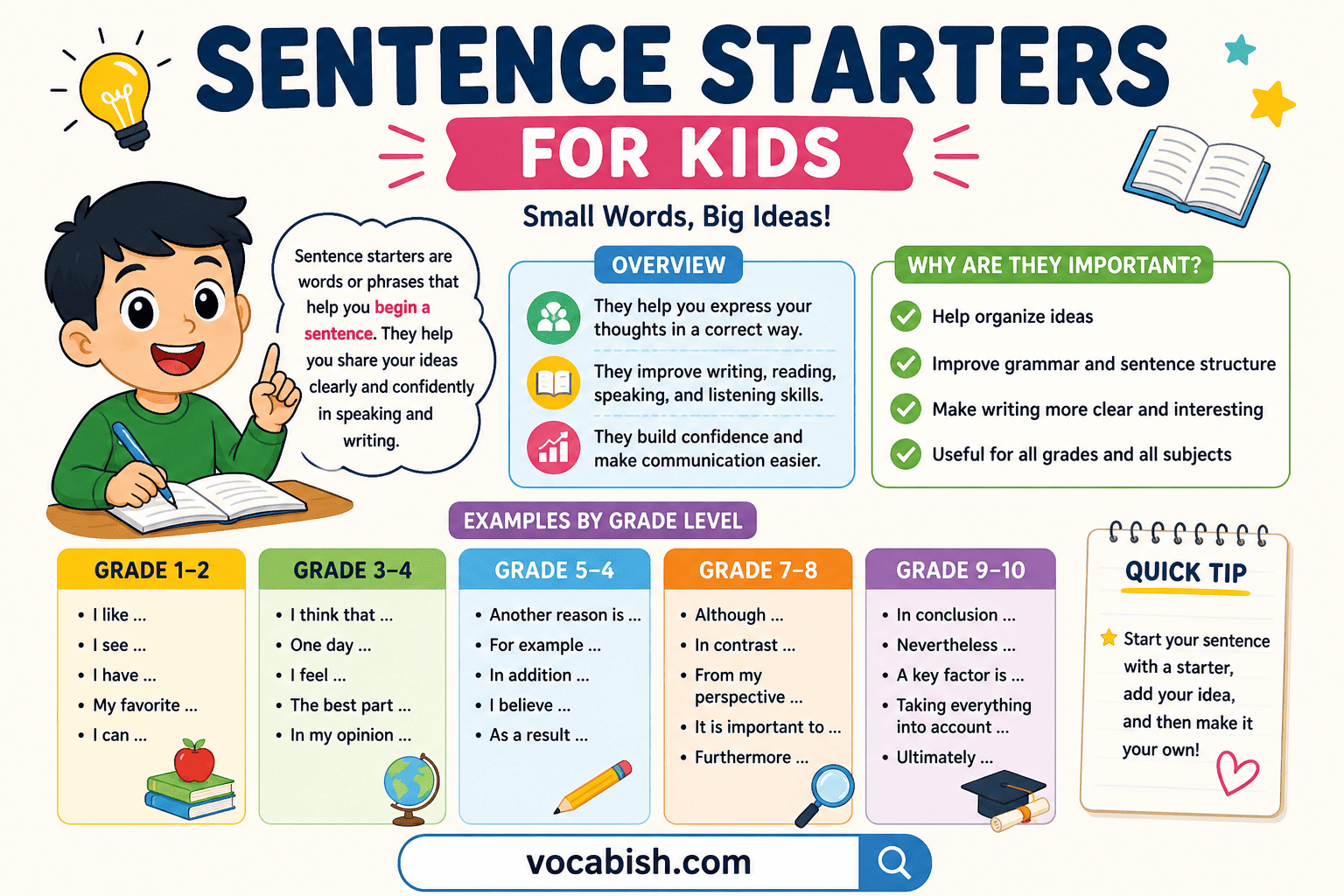
Sentence starters are words or phrases used at the beginning of a sentence to help the writer get started and guide the reader.
Examples:
- I like… → I like to play soccer after school.
- Because… → Because it was raining, we stayed inside.
These starters help children organize their thoughts and write more complete, meaningful sentences.
Types of Sentence Starters
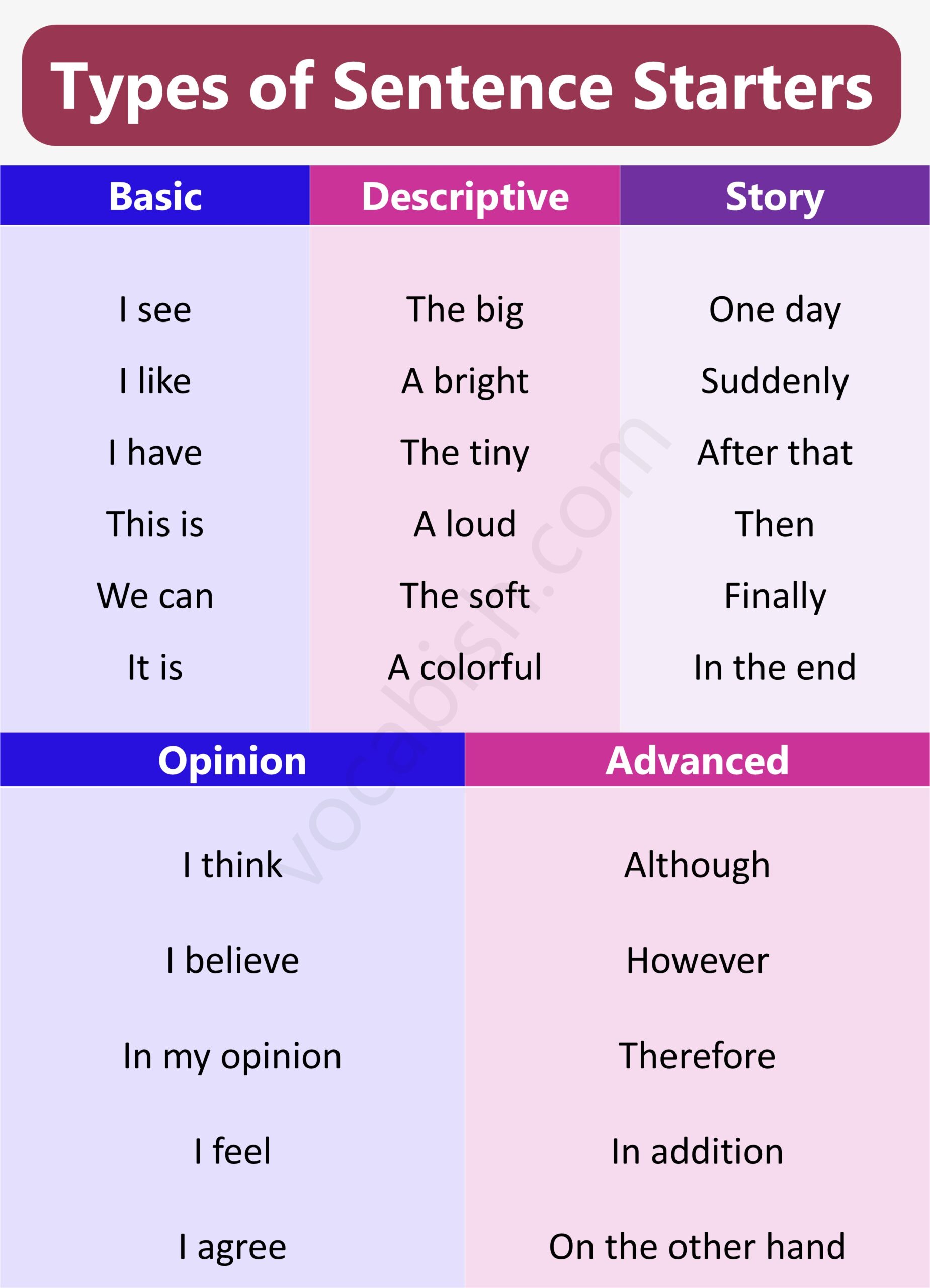
1. Basic Sentence Starters (Grades 1–3)
- I see
- I like
- I have
- This is
- We can
- It is
- Here is
- I want
You May Also Like: Sentence Starters for Kindergarten
2. Descriptive Sentence Starters
- The big
- A bright
- The tiny
- A loud
- The soft
- A colorful
3. Story Sentence Starters
- One day
- Suddenly
- After that
- Then
- Finally
- In the end
4. Opinion Sentence Starters
- I think
- I believe
- In my opinion
- I feel
- I agree
5. Advanced Sentence Starters (Grades 6–10)
- Although
- However
- Therefore
- In addition
- On the other hand
- As a result
100+ Sentence Starter Examples for Kids
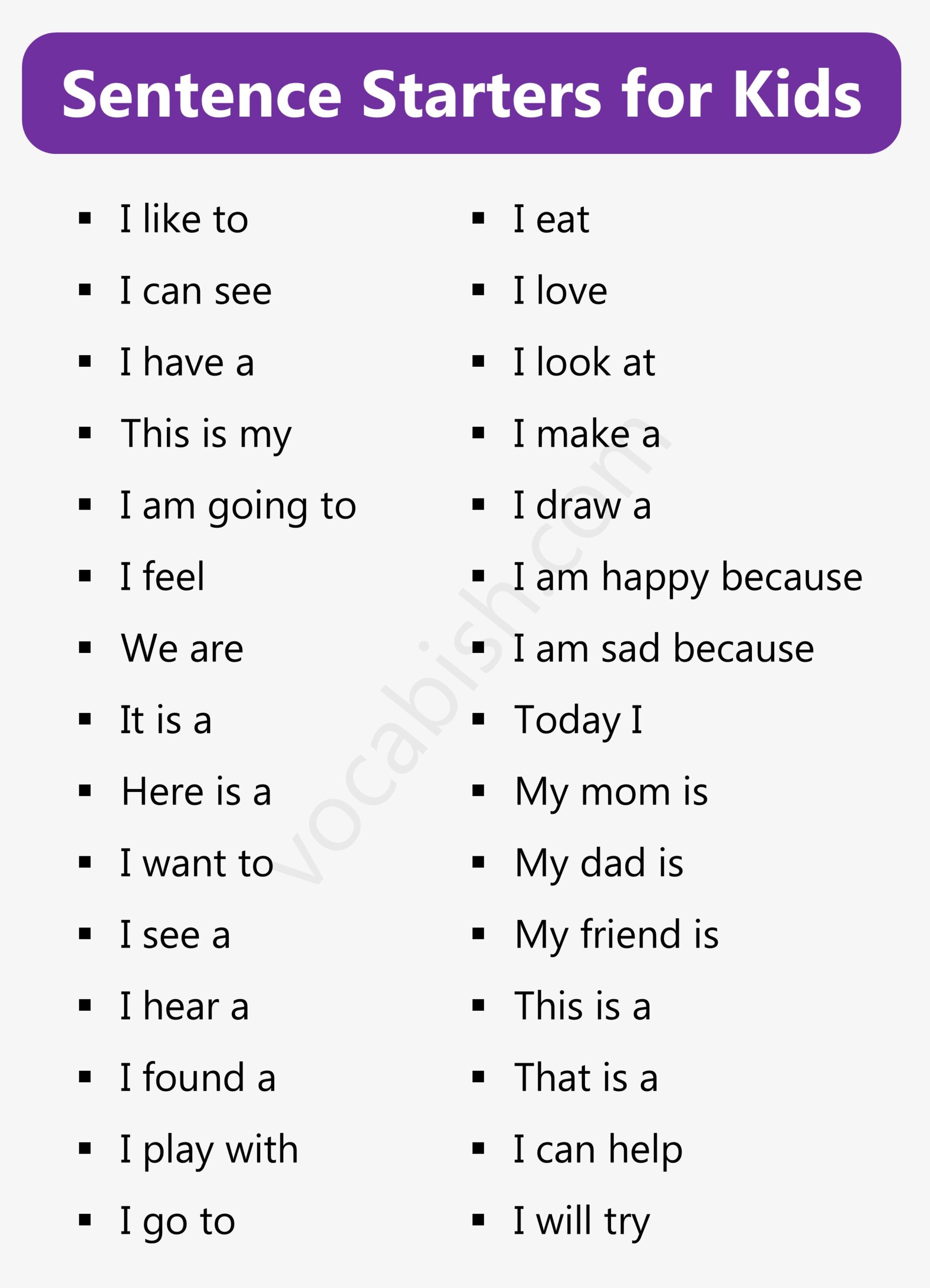
Easy (Grades 1–3)
- I like to play in the park.
- I can see a big tree.
- I have a red ball.
- This is my school bag.
- I am going to school now.
- I feel happy today.
- We are playing together.
- It is a sunny day.
- Here is a pencil for you.
- I want to eat ice cream.
- I see a bird on the tree.
- I hear a dog barking.
- I found a small stone.
- I play with my friends.
- I go to school every day.
- I eat an apple.
- I love my family.
- I look at the sky.
- I make a paper boat.
- I draw a house.
- I am happy because I got a toy.
- I am sad because my toy is broken.
- Today I went to school.
- My mom is very kind.
- My dad is helping me.
- My friend is playing with me.
- This is a red apple.
- That is a tall building.
- I can help my teacher.
- I will try my best.
Intermediate (Grades 4–6)
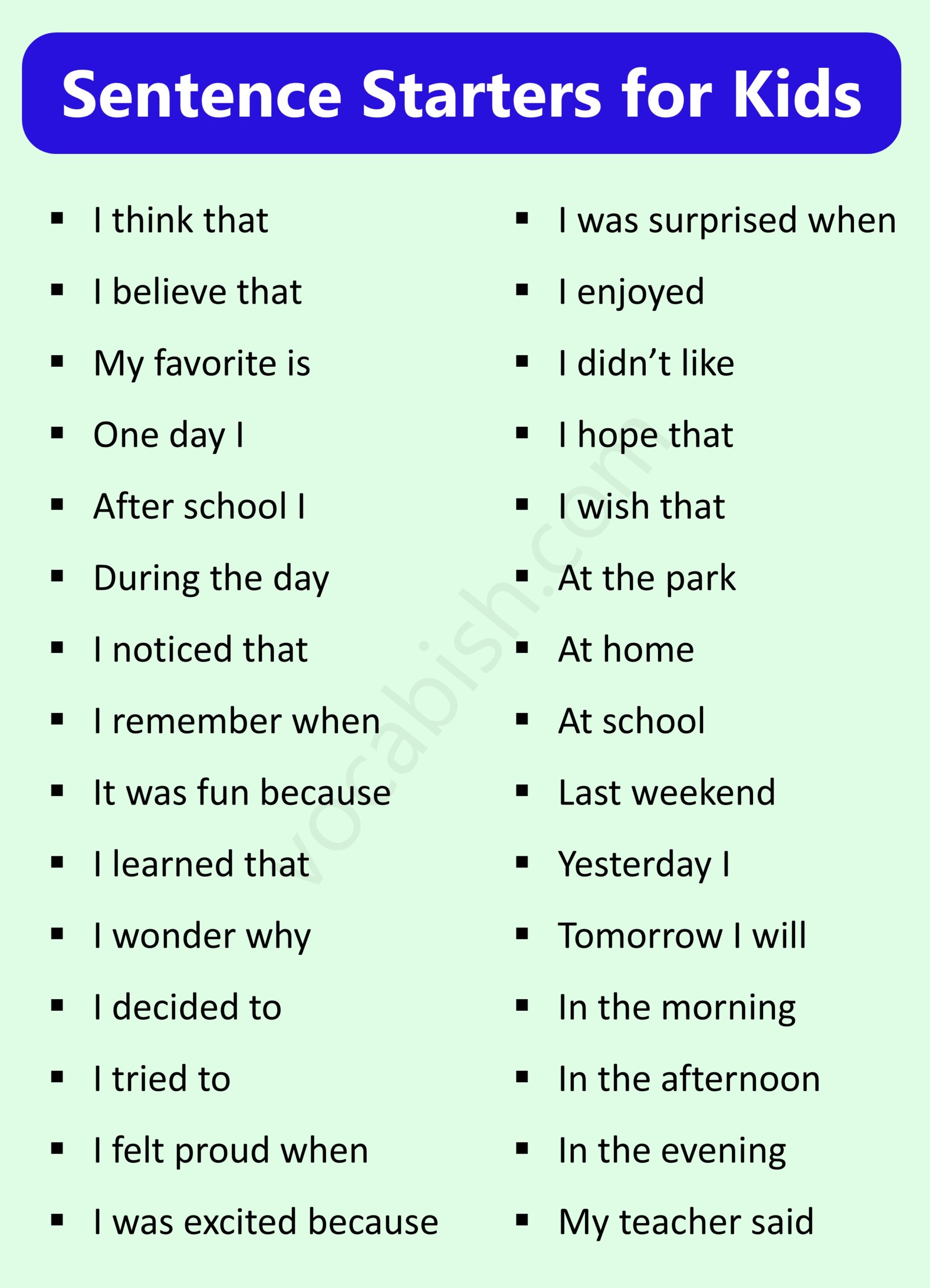
- I think that learning English is fun.
- I believe that practice makes me better.
- My favorite is reading storybooks.
- One day I want to travel to another country.
- After school I do my homework.
- During the day I study and play.
- I noticed that my plant is growing.
- I remember when I went to the zoo.
- It was fun because I played with my friends.
- I learned that plants need water to grow.
- I wonder why the sky changes color.
- I decided to help my classmates.
- I tried to solve the math problem.
- I felt proud when I finished my project.
- I was excited because we had a school trip.
- I was surprised when I saw a rainbow.
- I enjoyed the school picnic.
- I didn’t like the noisy classroom.
- I hope that I get good marks.
- I wish that I had more time to play.
- At the park I played on the swings.
- At home I help my parents.
- At school I learn new things.
- Last weekend I visited my grandparents.
- Yesterday I finished my homework.
- Tomorrow I will go to school early.
- In the morning I brush my teeth.
- In the afternoon I do my homework.
- In the evening I watch TV with my family.
- My teacher said I am improving every day.
Upper (Grades 7–10)
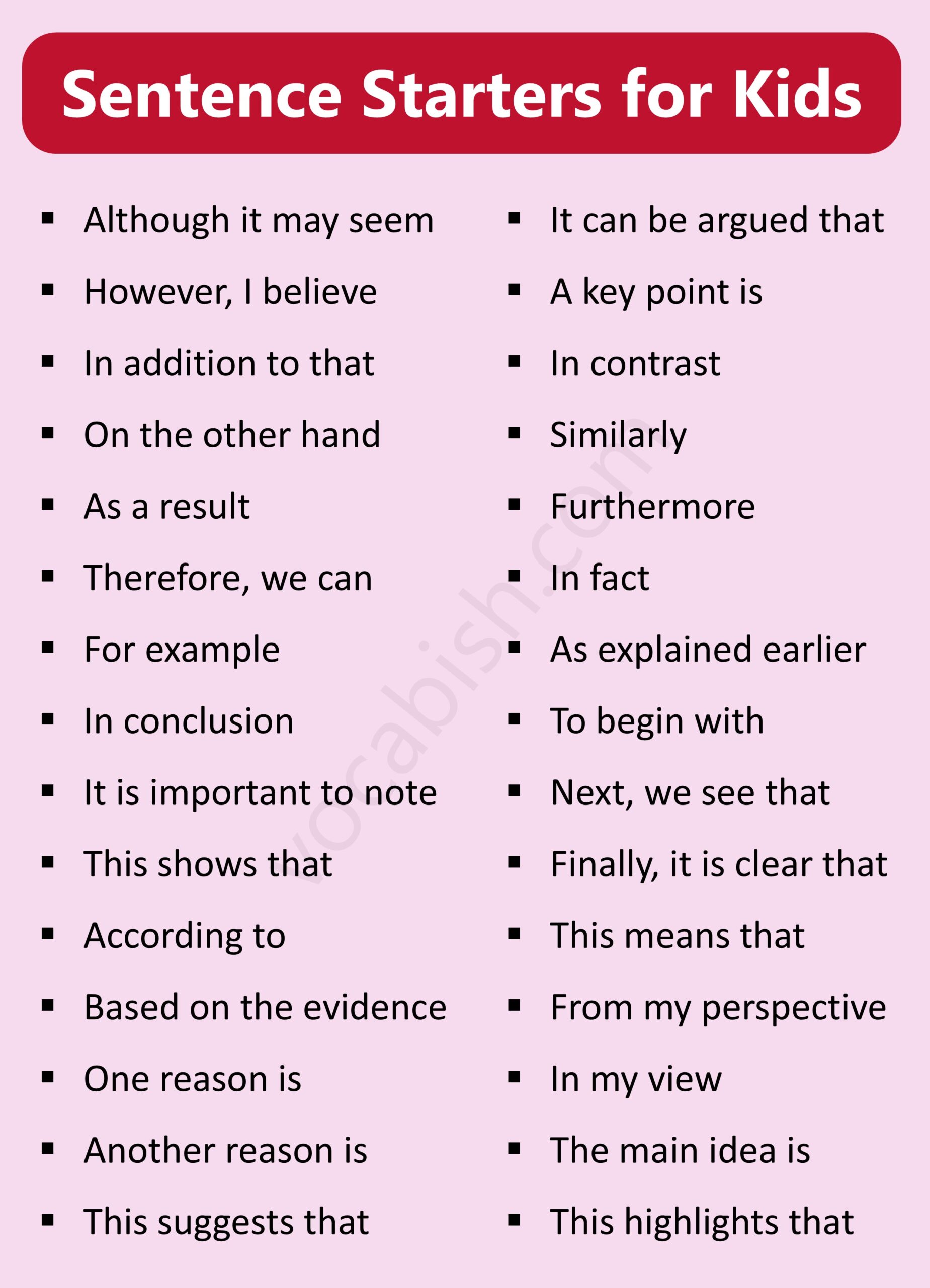
- Although it may seem easy, this topic needs practice.
- However, I believe hard work always leads to success.
- In addition to that we should also review our notes daily.
- On the other hand some students prefer group study.
- As a result the class performed better in the test.
- Therefore, we can conclude that practice is important.
- For example many students improve by reading daily.
- In conclusion learning becomes easier with regular practice.
- It is important to note that consistency matters most.
- This shows that effort leads to better results.
- According to the teacher, we need more practice.
- Based on the evidence students are improving steadily.
- One reason is lack of practice.
- Another reason is poor time management.
- This suggests that more focus is needed.
- It can be argued that technology helps learning.
- A key point is understanding the concept clearly.
- In contrast some students prefer studying alone.
- Similarly both groups showed improvement.
- Furthermore extra practice can help students.
- In fact most students enjoy interactive learning.
- As explained earlier practice improves skills.
- To begin with we should understand the topic.
- Next, we see that students need guidance.
- Finally, it is clear that practice leads to success.
- This means that effort is necessary for progress.
- From my perspective learning should be enjoyable.
- In my view reading daily improves vocabulary.
- The main idea is to practice regularly.
- This highlights that learning takes time and effort.
Advanced and Academic Starters (Grades 9–10+)
- In light of this we need to reconsider our approach.
- It is evident that consistent practice improves performance.
- One could argue that technology has changed learning positively.
- This raises the question of how students can improve faster.
- A significant factor is the amount of daily practice.
- Research shows that active learning improves retention.
- It is widely believed that reading regularly builds vocabulary.
- From this, we can infer that effort leads to progress.
- The evidence suggests that students benefit from revision.
- An important conclusion is that discipline improves results.
- This demonstrates that learning requires consistent effort.
- A deeper analysis reveals gaps in understanding the topic.
- It is worth noting that small habits lead to big improvements.
- In summary practice and focus lead to success.
- Ultimately success depends on consistent effort.
- Given these points we should revise our study methods.
- Taking everything into account the results are positive.
- This supports the idea that practice is essential for growth.
- A closer look shows clear improvement over time.
- The data indicates that students perform better with guidance.
How to Teach Sentence Starters
- Use visual prompts – Show pictures and ask kids to start sentences.
- Sentence matching games – Match starters with endings.
- Daily writing prompts – Give one starter each day.
- Story building activity – Each student adds a sentence.
- Worksheets practice – Fill in blanks using starters.
Sentence Starter Worksheets with Answers
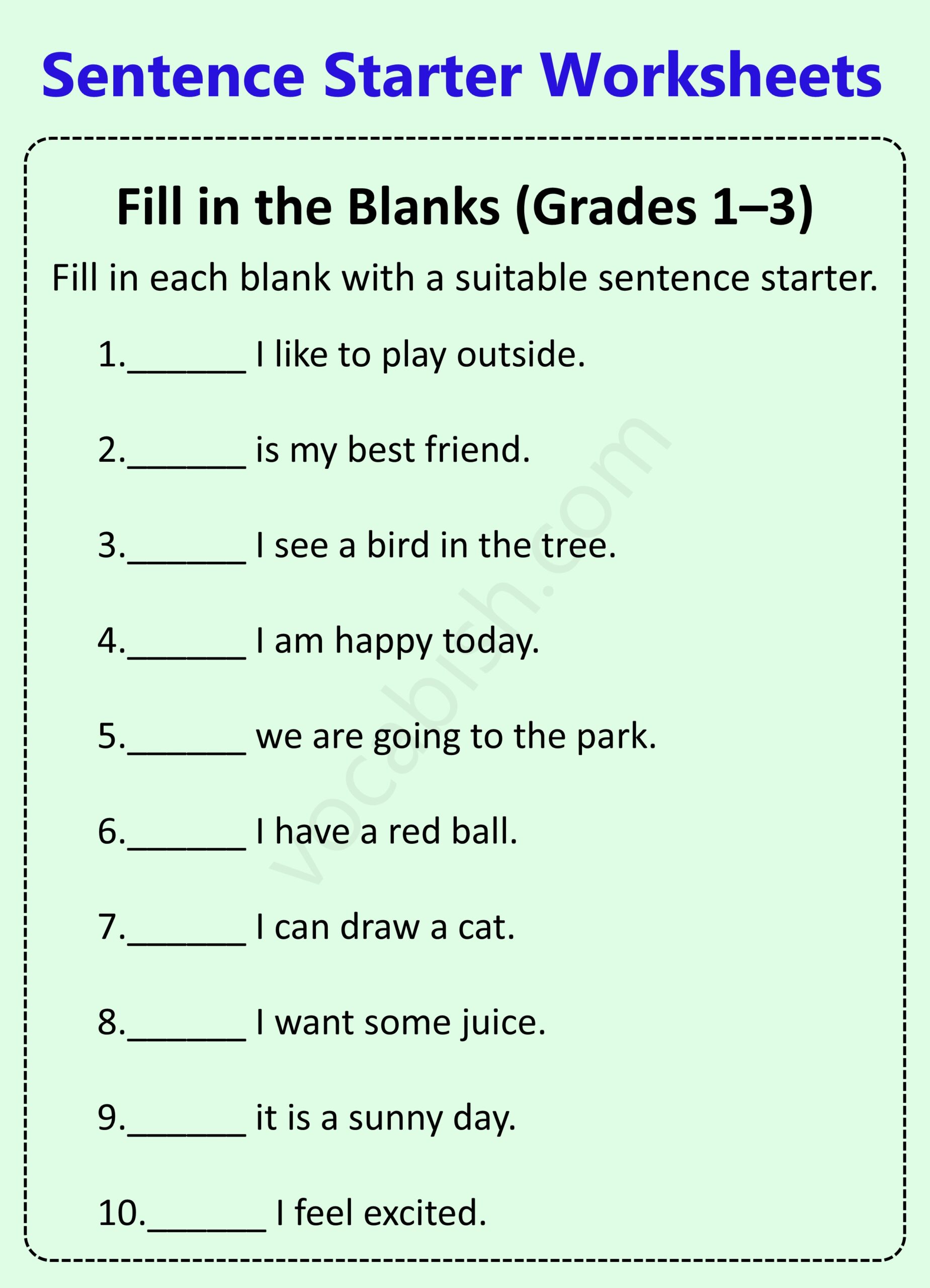
Fill in the Blanks (Grades 1–3)
Fill in each blank with a suitable sentence starter.
- ______ I like to play outside.
- ______ is my best friend.
- ______ I see a bird in the tree.
- ______ I am happy today.
- ______ we are going to the park.
- ______ I have a red ball.
- ______ I can draw a cat.
- ______ I want some juice.
- ______ it is a sunny day.
- ______ I feel excited.
Answers (Sample):
- Today
- He/She
- Here
- Today
- Today
- Here
- I
- I
- Today
- I
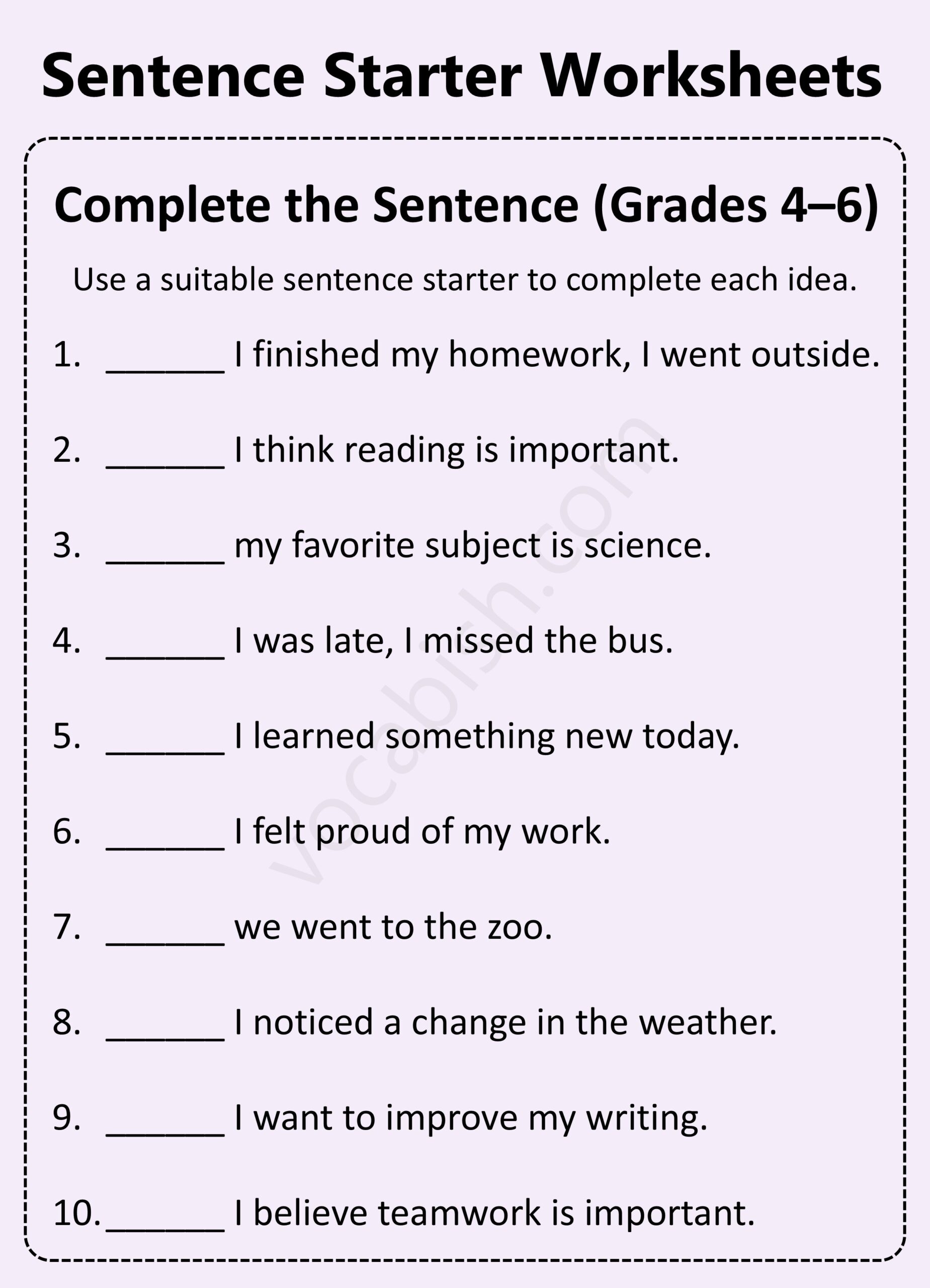
Complete the Sentence (Grades 4–6)
Use a suitable sentence starter to complete each idea.
- ______ I finished my homework, I went outside.
- ______ I think reading is important.
- ______ my favorite subject is science.
- ______ I was late, I missed the bus.
- ______ I learned something new today.
- ______ I felt proud of my work.
- ______ we went to the zoo.
- ______ I noticed a change in the weather.
- ______ I want to improve my writing.
- ______ I believe teamwork is important.
Answers (Sample):
- After
- I think that
- I believe that
- Because
- Today
- I felt proud when
- Yesterday
- I noticed that
- I want to
- I believe that
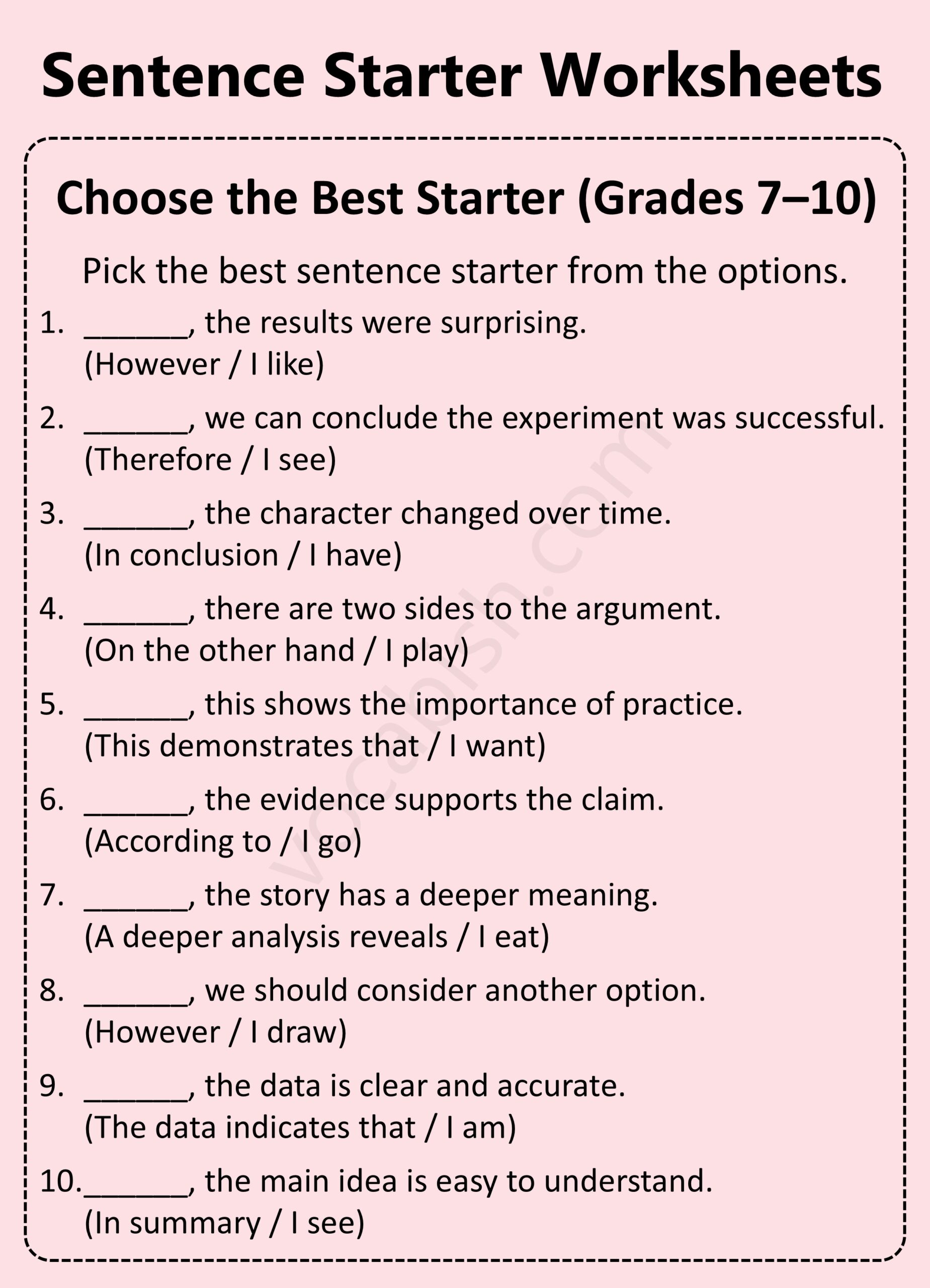
Choose the Best Starter (Grades 7–10)
Pick the best sentence starter from the options.
- ______, the results were surprising. (However / I like)
- ______, we can conclude the experiment was successful. (Therefore / I see)
- ______, the character changed over time. (In conclusion / I have)
- ______, there are two sides to the argument. (On the other hand / I play)
- ______, this shows the importance of practice. (This demonstrates that / I want)
- ______, the evidence supports the claim. (According to / I go)
- ______, the story has a deeper meaning. (A deeper analysis reveals / I eat)
- ______, we should consider another option. (However / I draw)
- ______, the data is clear and accurate. (The data indicates that / I am)
- ______, the main idea is easy to understand. (In summary / I see)
Answers:
- However
- Therefore
- In conclusion
- On the other hand
- This demonstrates that
- According to
- A deeper analysis reveals
- However
- The data indicates that
- In summary
Related: 100+ Sentence Starter Examples with PDF
Sentence Starters for Kids PDF Download
FAQs about Sentence Starters
Sentence starters are beginning words or phrases that help kids start a sentence easily.
We use them to help children speak and write clear sentences without confusion.
Yes, they help kids build confidence and improve their English speaking and writing.
Yes, kids can use them in daily talking to express ideas easily.
Yes, they help students form better and more complete sentences.
Students can start from Grade 1 and continue using them in higher grades.
Kids can practice by using them in daily sentences, worksheets, and classroom activities.
Related Articles: