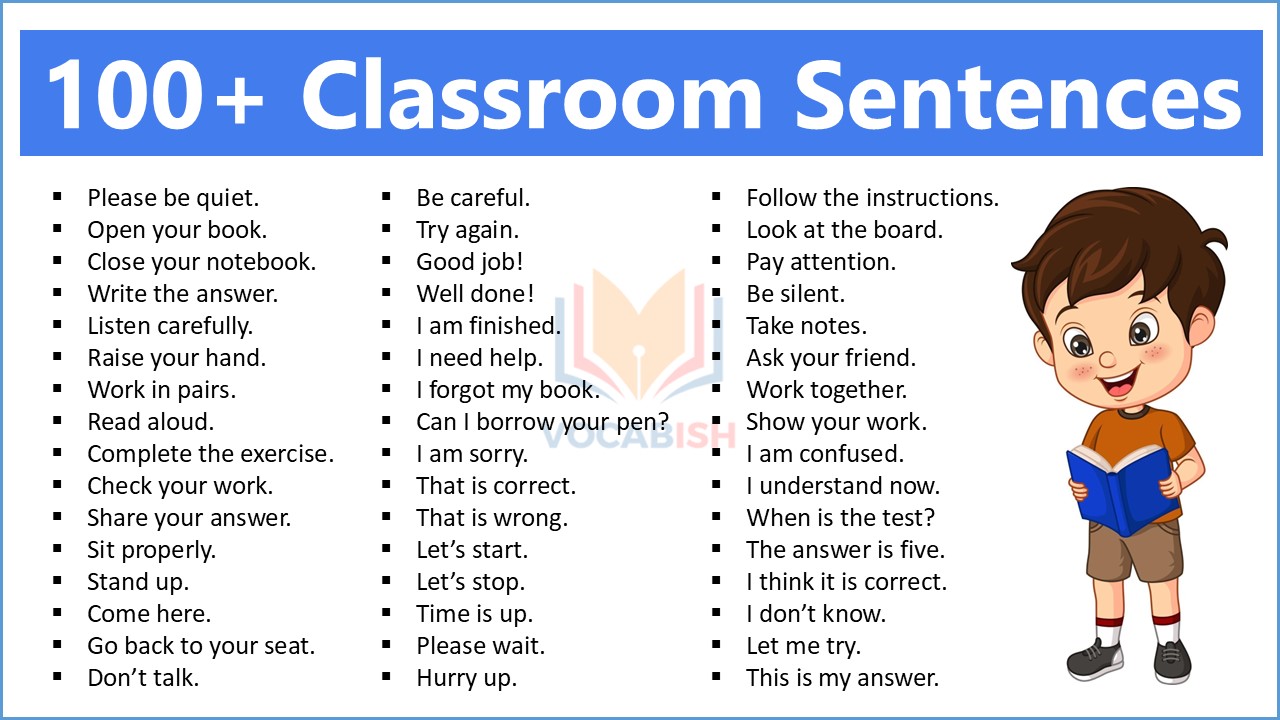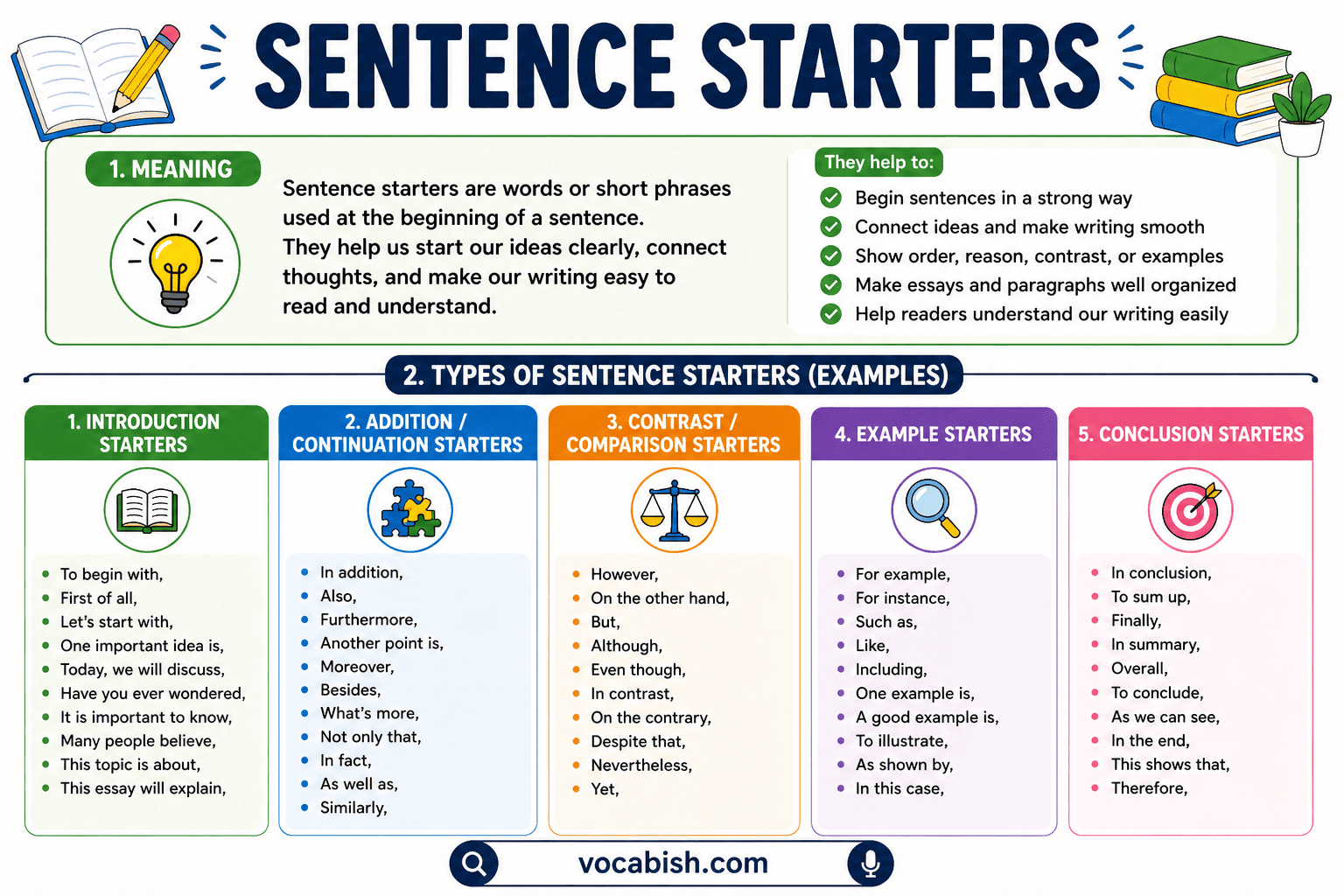

Many learners search for English Sentences because they want to communicate comfortably in everyday situations. Instead of memorizing individual words, learning complete sentences helps you understand how English is naturally used in conversations.
Whether you are meeting someone for the first time, ordering food, asking for directions, or talking about your hobbies, familiar sentence patterns make communication easier and more natural.
This collection covers common situations where English is used every day. Each section contains practical examples that can help improve speaking, listening, reading, and writing skills.
Daily Use English Sentences for Everyday Communication
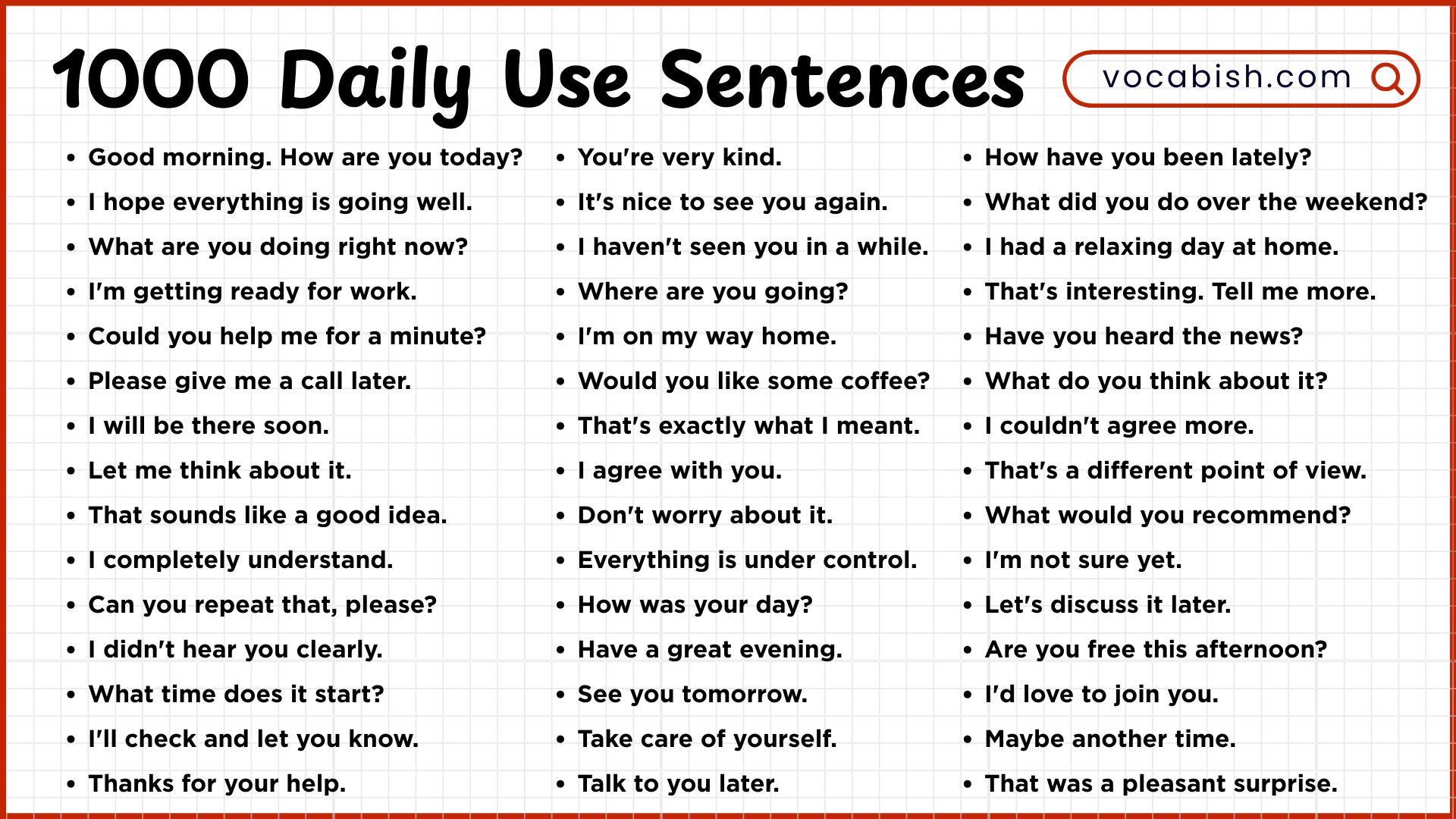
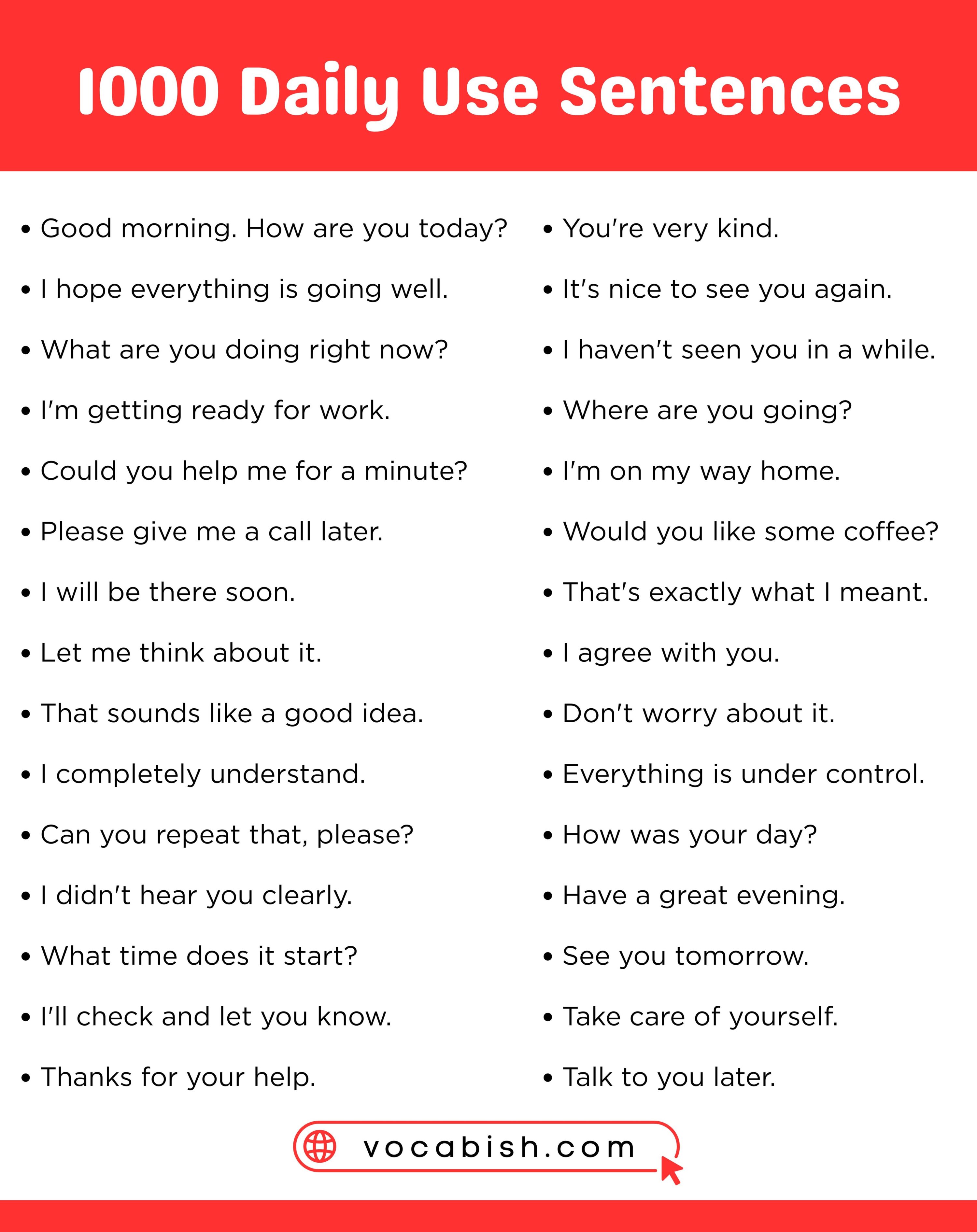
These are common sentences for daily use that appear in everyday conversations. They help you communicate clearly in routine situations.
- Good morning. How are you today?
- I hope everything is going well.
- What are you doing right now?
- I’m getting ready for work.
- Could you help me for a minute?
- Please give me a call later.
- I will be there soon.
- Let me think about it.
- That sounds like a good idea.
- I completely understand.
- Can you repeat that, please?
- I didn’t hear you clearly.
- What time does it start?
- I’ll check and let you know.
- Thanks for your help.
- You’re very kind.
- It’s nice to see you again.
- I haven’t seen you in a while.
- Where are you going?
- I’m on my way home.
- Would you like some coffee?
- That’s exactly what I meant.
- I agree with you.
- Don’t worry about it.
- Everything is under control.
- How was your day?
- Have a great evening.
- See you tomorrow.
- Take care of yourself.
- Talk to you later.
English Conversation Sentences for Speaking Practice
Speaking becomes easier when you recognize common conversation patterns. These English conversation sentences are useful for daily interactions.
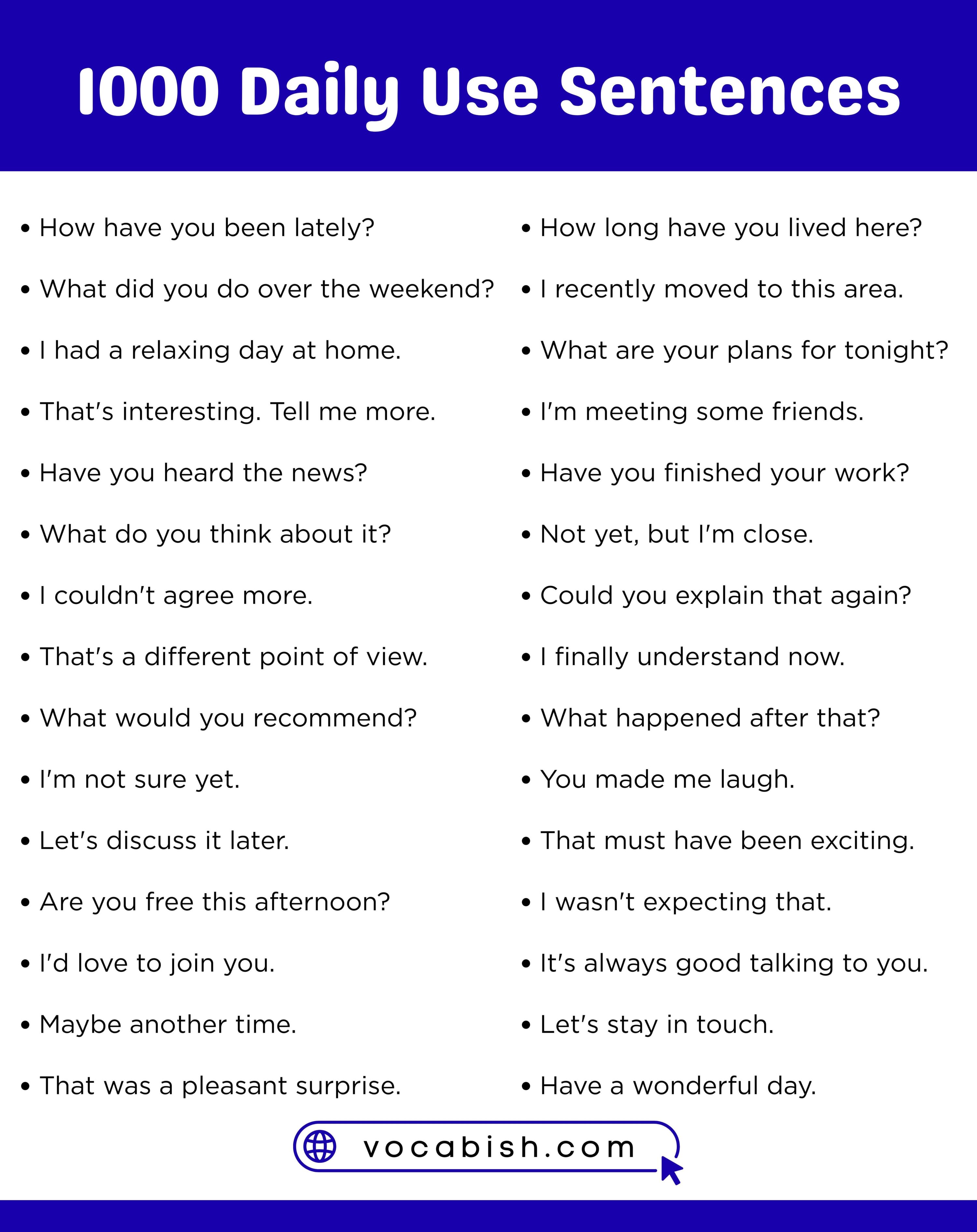
- How have you been lately?
- What did you do over the weekend?
- I had a relaxing day at home.
- That’s interesting. Tell me more.
- Have you heard the news?
- What do you think about it?
- I couldn’t agree more.
- That’s a different point of view.
- What would you recommend?
- I’m not sure yet.
- Let’s discuss it later.
- Are you free this afternoon?
- I’d love to join you.
- Maybe another time.
- That was a pleasant surprise.
- How long have you lived here?
- I recently moved to this area.
- What are your plans for tonight?
- I’m meeting some friends.
- Have you finished your work?
- Not yet, but I’m close.
- Could you explain that again?
- I finally understand now.
- What happened after that?
- You made me laugh.
- That must have been exciting.
- I wasn’t expecting that.
- It’s always good talking to you.
- Let’s stay in touch.
- Have a wonderful day.
Related: Types of Sentences in English Explained
Common Greetings Used in Daily English
Greetings are often the first words exchanged in a conversation. Learning common greeting sentences helps you feel more confident when meeting people in different situations.
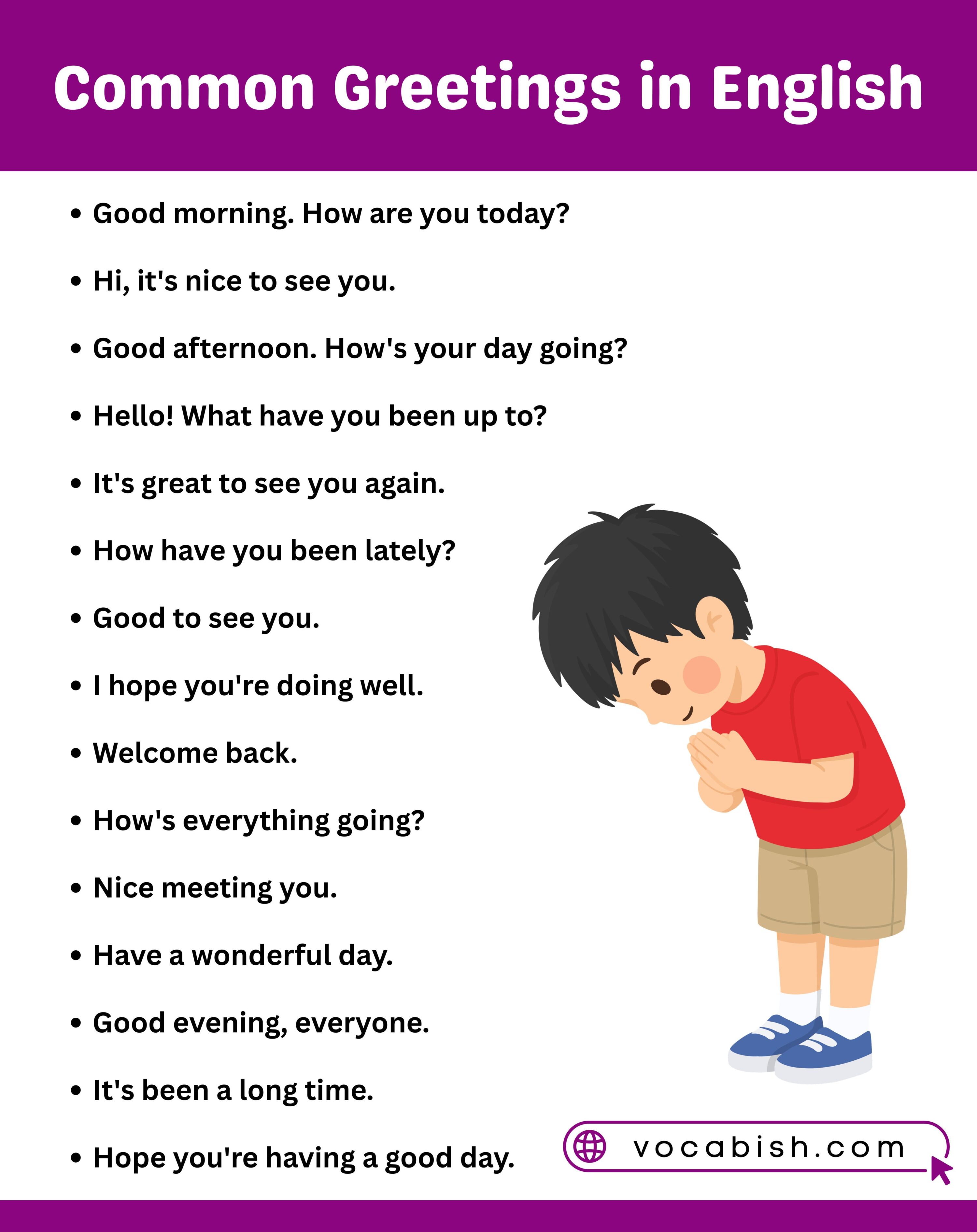
- Good morning. How are you today?
- Hi, it’s nice to see you.
- Good afternoon. How’s your day going?
- Hello! What have you been up to?
- It’s great to see you again.
- How have you been lately?
- Good to see you.
- I hope you’re doing well.
- Welcome back.
- How’s everything going?
- Nice meeting you.
- Have a wonderful day.
- Good evening, everyone.
- It’s been a long time.
- Hope you’re having a good day.
- Glad you could come.
- How are things at work?
- It’s nice to finally meet you.
- Thanks for stopping by.
- Take care and see you soon.
- How’s life treating you?
- I hope your week is going well.
- What a pleasant surprise.
- It’s always good to see you.
- Have a great weekend.
Introducing Yourself in Everyday Conversations
Introducing yourself clearly helps build comfortable conversations. These English sentences are useful when meeting new people at school, work, or social gatherings.
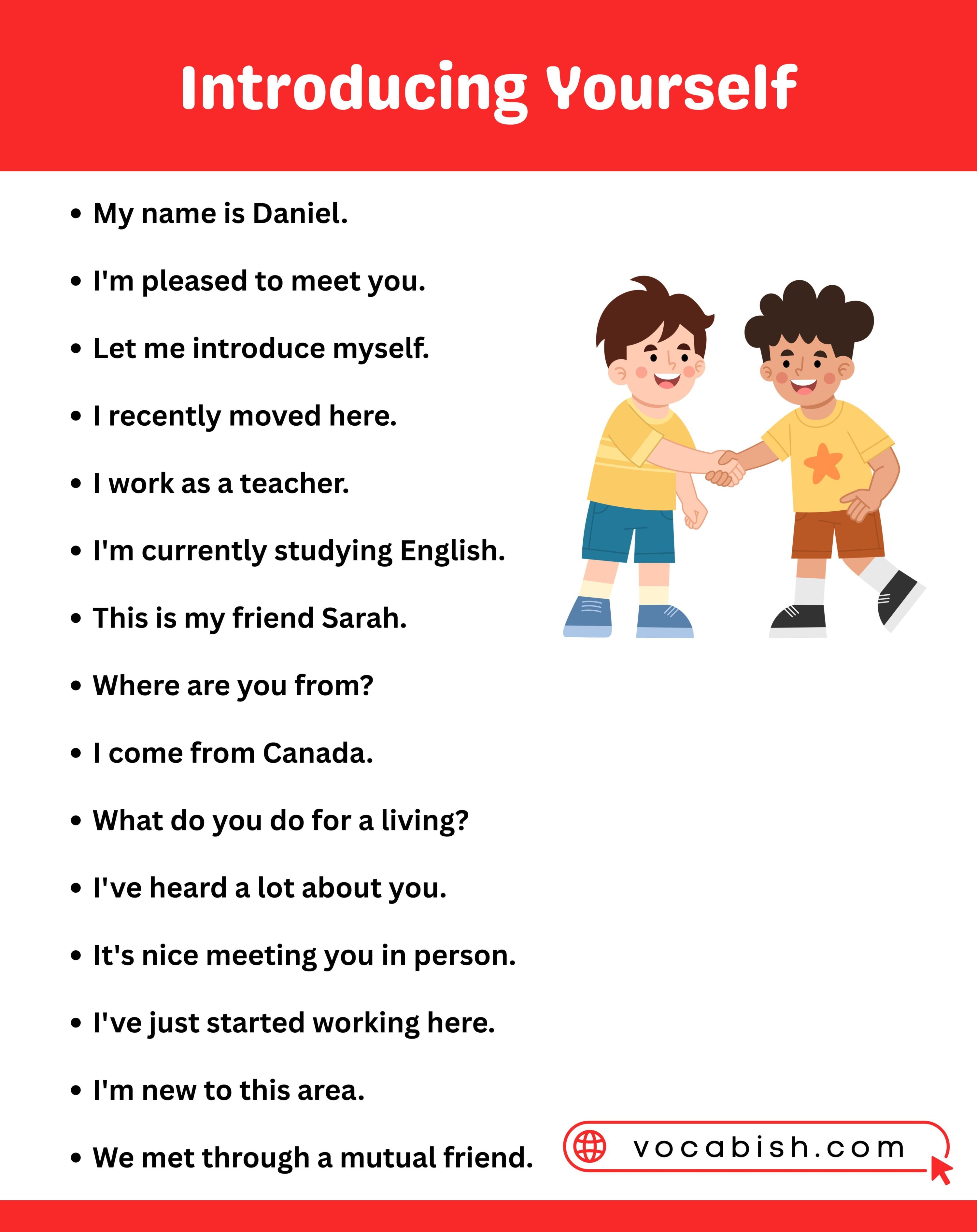
- My name is Daniel.
- I’m pleased to meet you.
- Let me introduce myself.
- I recently moved here.
- I work as a teacher.
- I’m currently studying English.
- This is my friend Sarah.
- Where are you from?
- I come from Canada.
- What do you do for a living?
- I’ve heard a lot about you.
- It’s nice meeting you in person.
- I’ve just started working here.
- I’m new to this area.
- Allow me to introduce my colleague.
- We met through a mutual friend.
- I’ve been living here for two years.
- It’s my first day here.
- I enjoy meeting new people.
- Thank you for introducing us.
- Could you tell me your name again?
- I’ve recently graduated from university.
- I’m looking forward to working with you.
- We seem to have similar interests.
- I’m happy to be part of the team.
Related: How to Introduce Yourself in English
Starting and Continuing Small Talk Naturally
Small talk helps people build friendly connections before discussing other topics. These everyday conversation sentences are commonly used in casual situations.
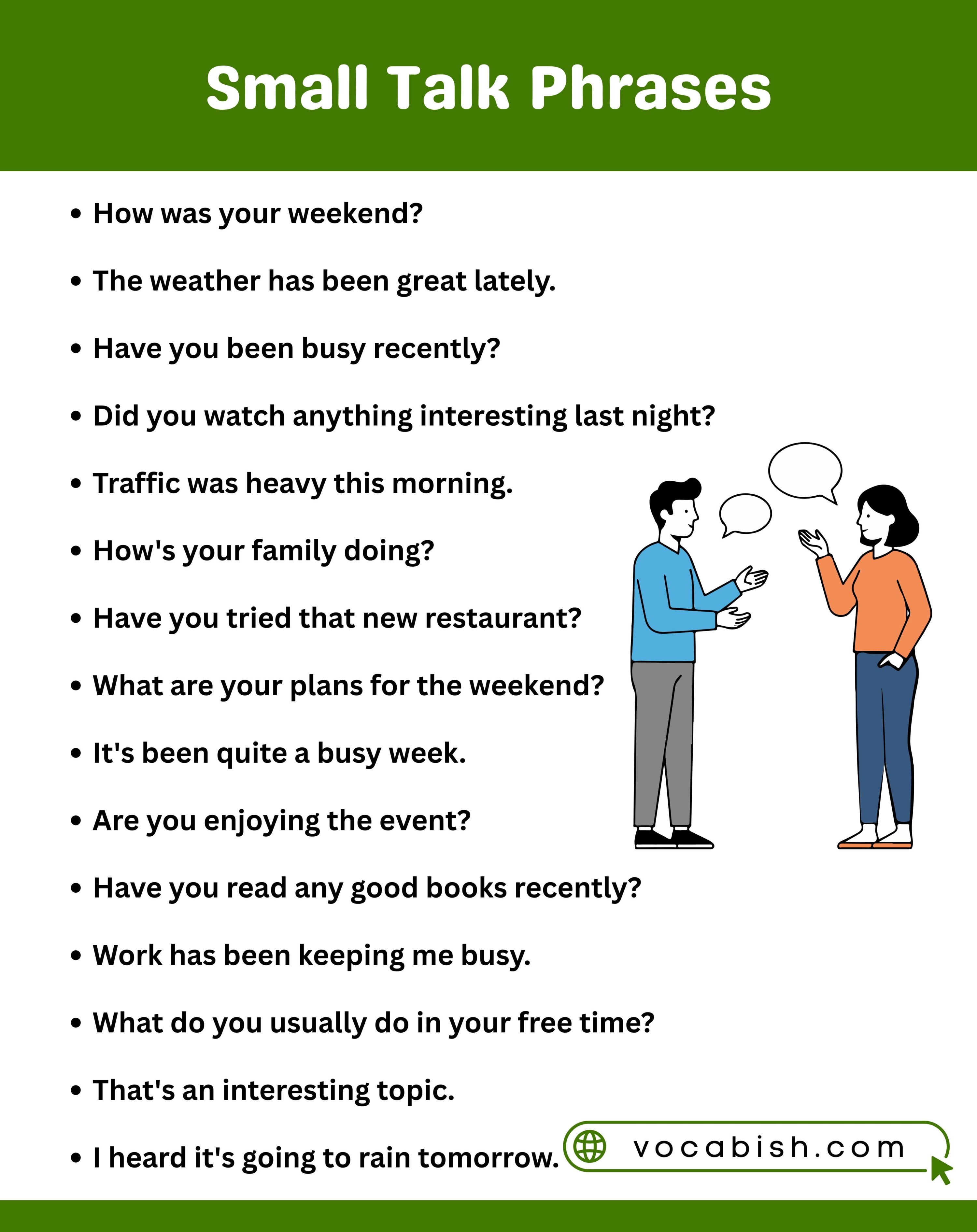
- How was your weekend?
- The weather has been great lately.
- Have you been busy recently?
- Did you watch anything interesting last night?
- Traffic was heavy this morning.
- How’s your family doing?
- Have you tried that new restaurant?
- What are your plans for the weekend?
- It’s been quite a busy week.
- Are you enjoying the event?
- Have you read any good books recently?
- Work has been keeping me busy.
- What do you usually do in your free time?
- That’s an interesting topic.
- Have you traveled anywhere recently?
- I heard it’s going to rain tomorrow.
- This place is really nice.
- What kind of music do you enjoy?
- Time seems to fly these days.
- Have you seen the latest movie?
- It’s nice chatting with you.
- That’s good to hear.
- Sounds like you’ve had a busy month.
- I can’t believe how quickly this year is passing.
- Hopefully, things will slow down soon.
Read More: 100+ Small Talk Phrases in English
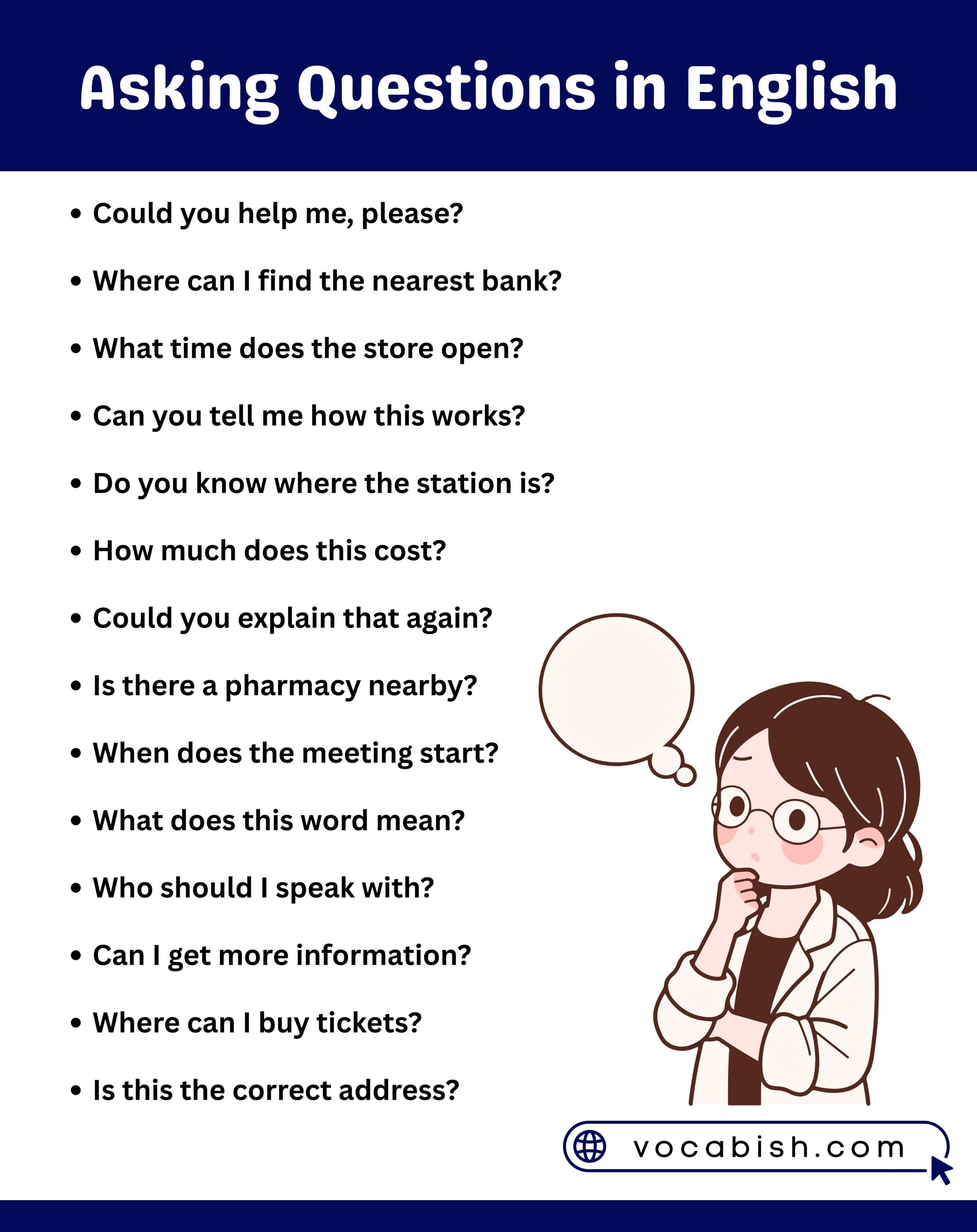
Asking Questions to Get Information
When you need details or assistance, asking questions clearly can make communication much easier. These sentences are commonly used in daily interactions.
- Could you help me, please?
- Where can I find the nearest bank?
- What time does the store open?
- Can you tell me how this works?
- Do you know where the station is?
- How much does this cost?
- Could you explain that again?
- Is there a pharmacy nearby?
- When does the meeting start?
- What does this word mean?
- Who should I speak with?
- Can I get more information?
- Where can I buy tickets?
- Is this the correct address?
- How long will it take?
- What are the requirements?
- Could you point me in the right direction?
- Is there a better option available?
- May I ask a question?
- What happened here?
- Could you provide more details?
- Who is responsible for this?
- Where should I go next?
- Can you recommend a place nearby?
- What would you suggest?
Learn how to ask questions in English.
Giving and Understanding Directions
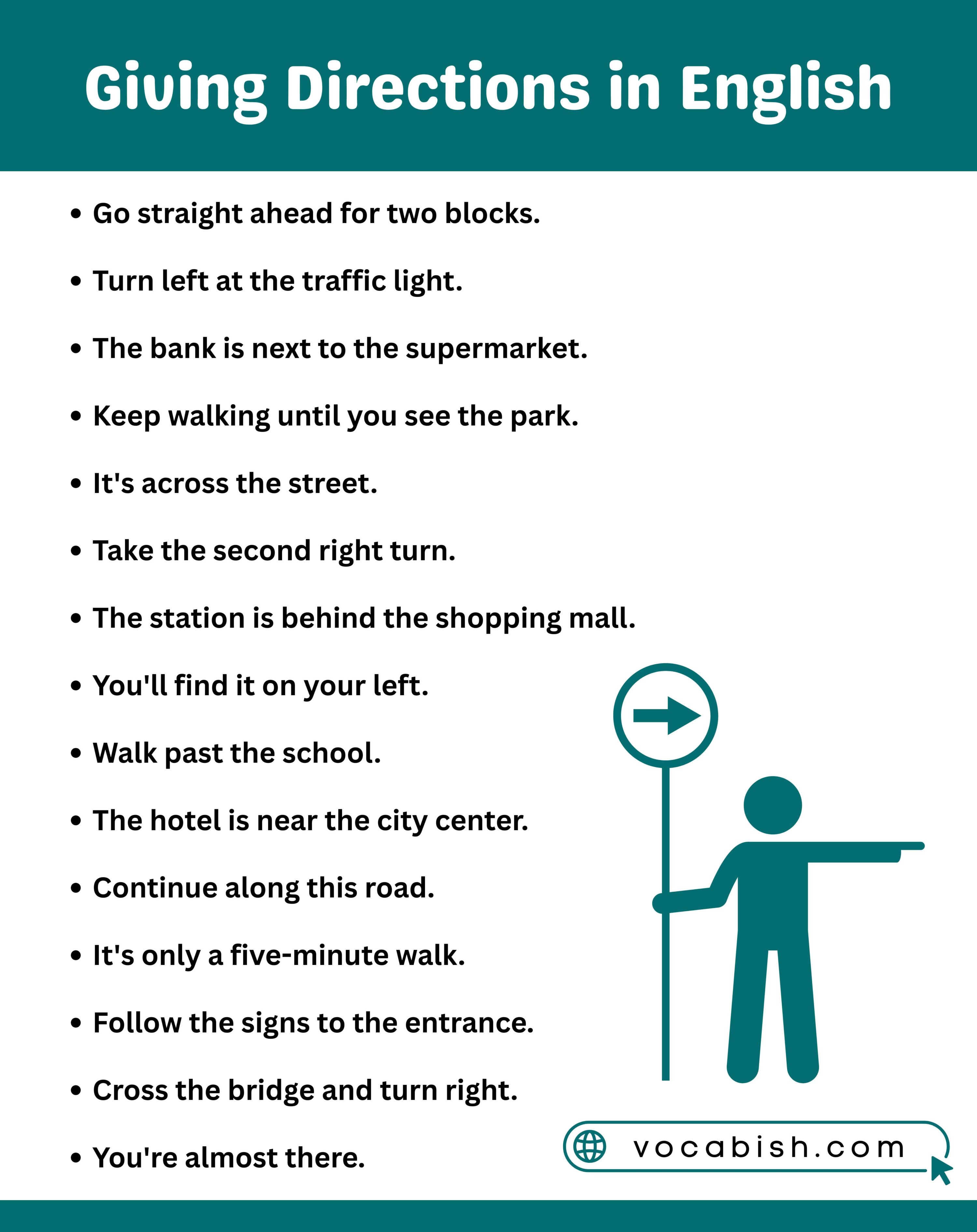
Giving directions is a useful communication skill when helping others find places. These sentences are common in everyday situations.
- Go straight ahead for two blocks.
- Turn left at the traffic light.
- The bank is next to the supermarket.
- Keep walking until you see the park.
- It’s across the street.
- Take the second right turn.
- The station is behind the shopping mall.
- You’ll find it on your left.
- Walk past the school.
- The hotel is near the city center.
- Continue along this road.
- It’s only a five-minute walk.
- Follow the signs to the entrance.
- Cross the bridge and turn right.
- The museum is opposite the library.
- Take the elevator to the third floor.
- You’re almost there.
- It’s not far from here.
- The building has a blue sign.
- You can’t miss it.
- Head toward the main road.
- The bus stop is around the corner.
- Go through the gate.
- Take the next exit.
- The office is at the end of the street.
You May Also Like: Asking and Giving Directions
Useful Sentences for Ordering Food
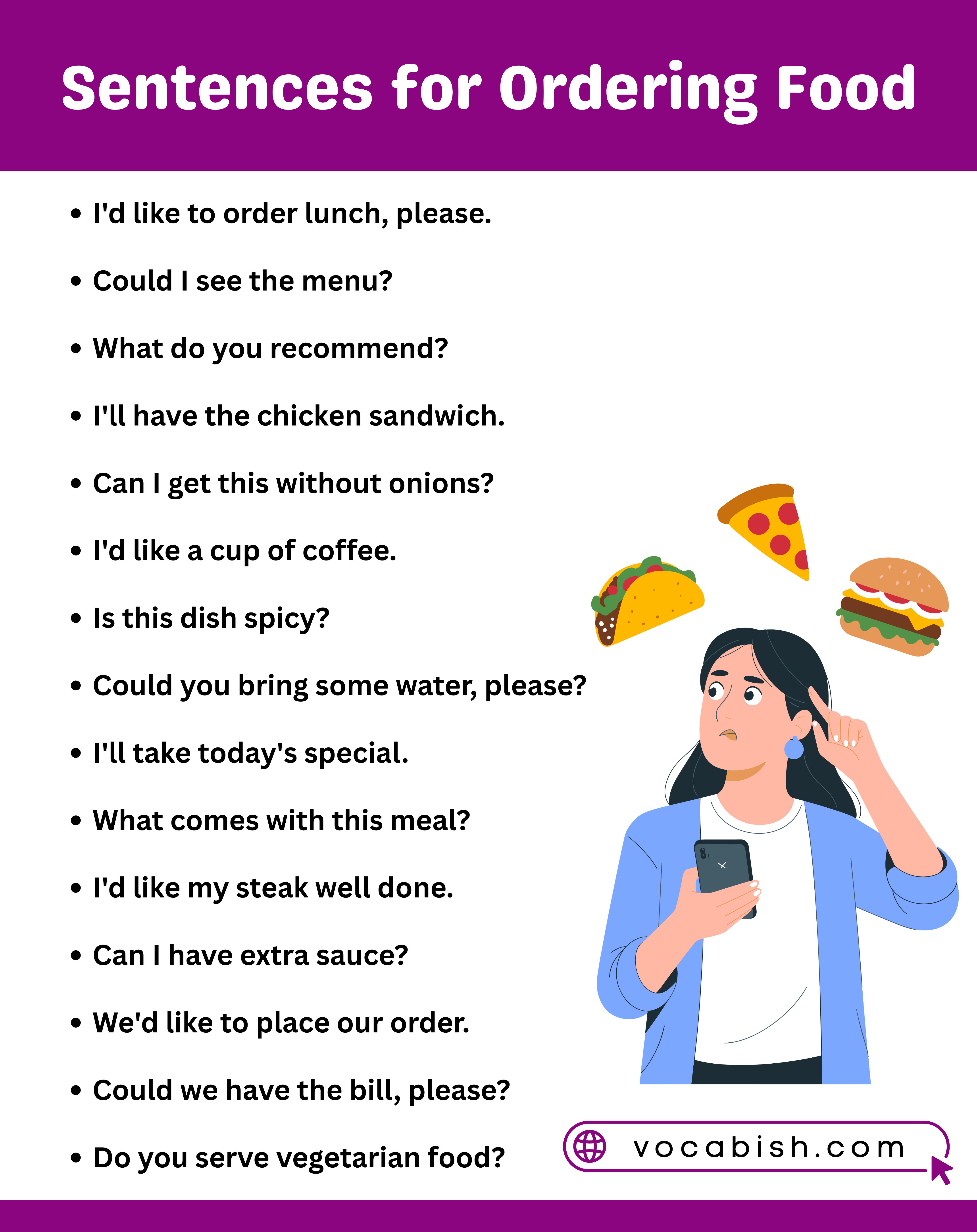
Ordering food is one of the most common situations where English is used. Learning these English sentences can help you feel comfortable in restaurants, cafés, and food courts.
- I’d like to order lunch, please.
- Could I see the menu?
- What do you recommend?
- I’ll have the chicken sandwich.
- Can I get this without onions?
- I’d like a cup of coffee.
- Is this dish spicy?
- Could you bring some water, please?
- I’ll take today’s special.
- What comes with this meal?
- I’d like my steak well done.
- Can I have extra sauce?
- We’d like to place our order.
- Could we have the bill, please?
- Do you serve vegetarian food?
- I’d like something light.
- Is breakfast available all day?
- Could I get another fork?
- Everything tastes great.
- I’d like dessert as well.
- Can I pay by card?
- Could you pack this to go?
- We really enjoyed the meal.
- Thank you for the excellent service.
- I’ll definitely come back again.
Read More: Phrases for Ordering Food
Making Reservations and Booking Appointments
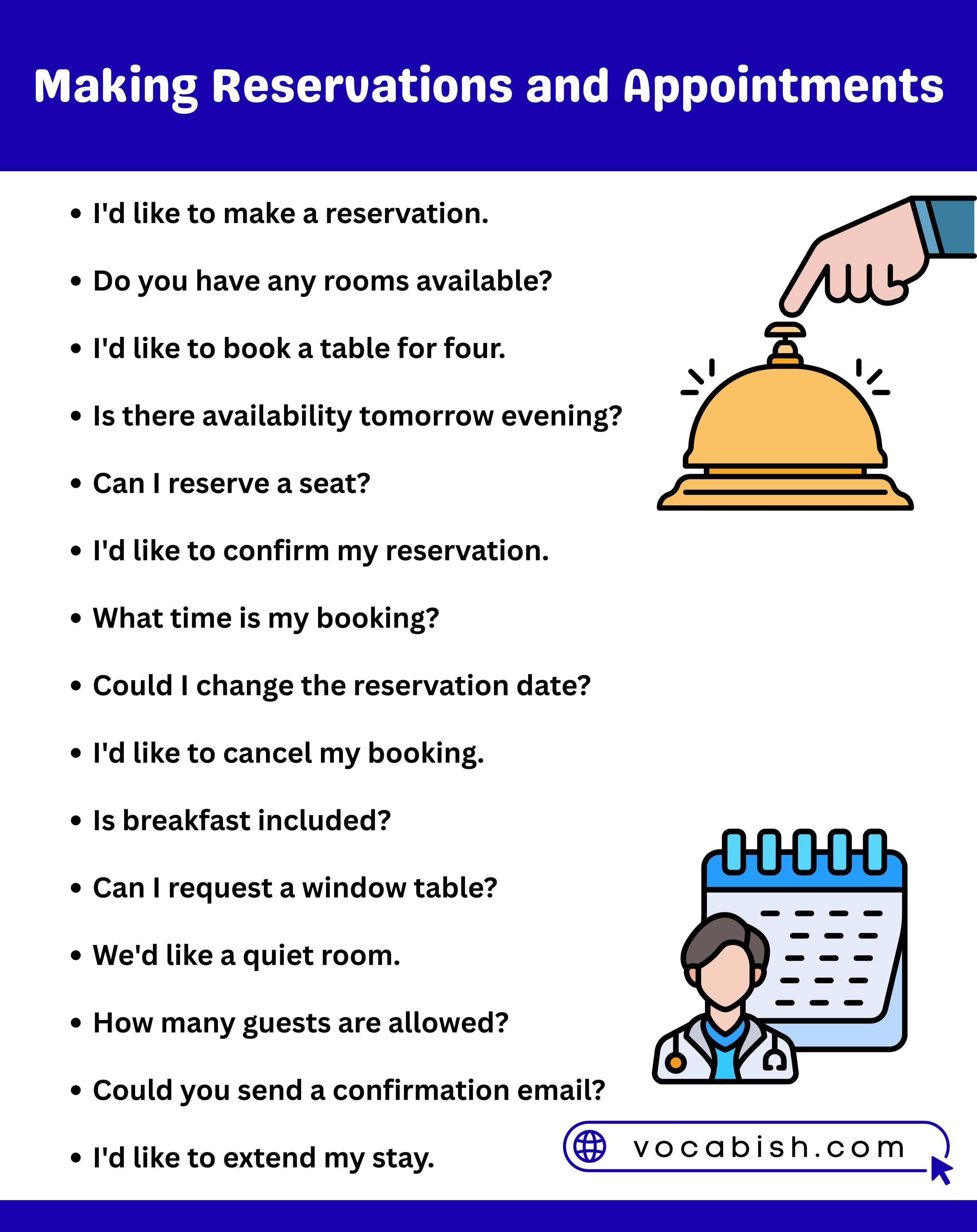
Reservations are common when booking tables, hotel rooms, or appointments. These sentences help learners communicate clearly when arranging plans.
- I’d like to make a reservation.
- Do you have any rooms available?
- I’d like to book a table for four.
- Is there availability tomorrow evening?
- Can I reserve a seat?
- I’d like to confirm my reservation.
- What time is my booking?
- Could I change the reservation date?
- I’d like to cancel my booking.
- Is breakfast included?
- Can I request a window table?
- We’d like a quiet room.
- How many guests are allowed?
- Could you send a confirmation email?
- I’d like to extend my stay.
- Is there a cancellation fee?
- Can I reserve a spot for next week?
- What documents do I need?
- I’d like to schedule an appointment.
- Is there anything available this afternoon?
- Could you check my reservation details?
- We expect to arrive late.
- Can I update my booking information?
- Thank you for your assistance.
- Everything has been arranged perfectly.
Read More: Expressions for Making Appointments
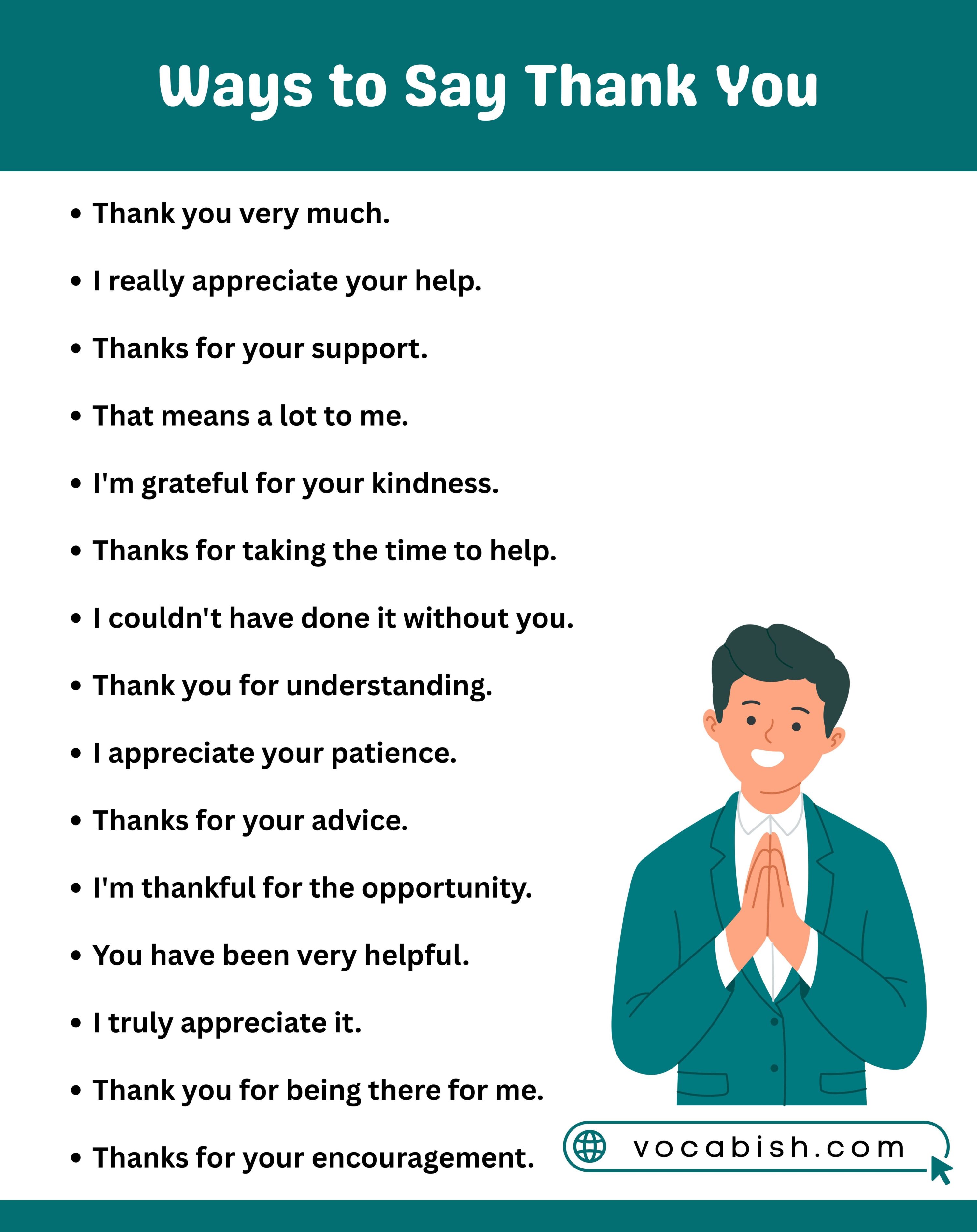
Ways to Say Thank You and Show Appreciation
Showing appreciation helps build positive relationships. These everyday conversation sentences are useful in both personal and professional settings.
- Thank you very much.
- I really appreciate your help.
- Thanks for your support.
- That means a lot to me.
- I’m grateful for your kindness.
- Thanks for taking the time to help.
- I couldn’t have done it without you.
- Thank you for understanding.
- I appreciate your patience.
- Thanks for your advice.
- I’m thankful for the opportunity.
- You have been very helpful.
- I truly appreciate it.
- Thank you for being there for me.
- Thanks for your encouragement.
- I appreciate everything you’ve done.
- Your help made a difference.
- Thank you for your honesty.
- I owe you one.
- That’s very thoughtful of you.
- Thank you for the invitation.
- I appreciate your effort.
- Thanks for listening.
- I can’t thank you enough.
- You’ve been wonderful.
Explore More: Other Ways to Say Thank You
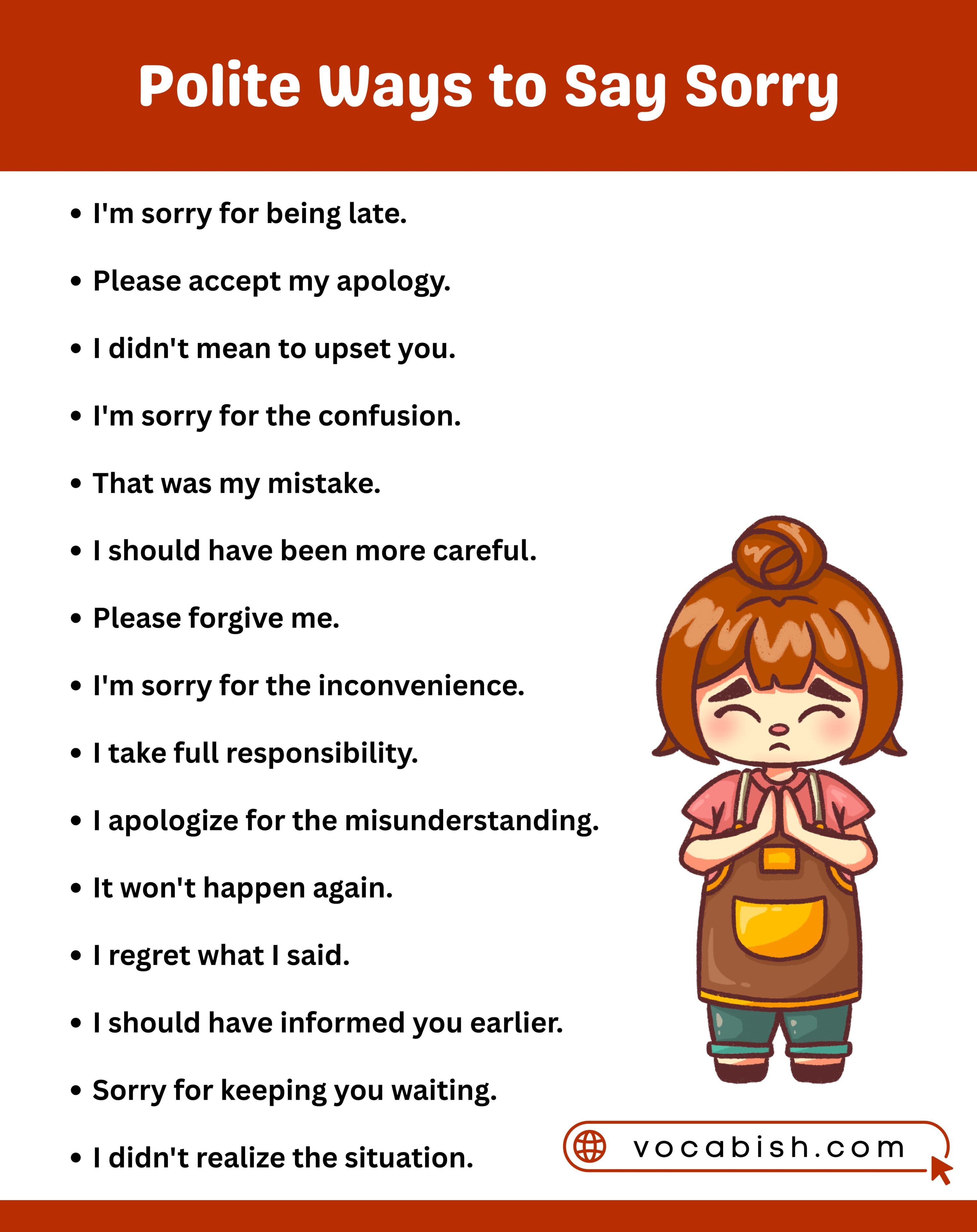
Polite Ways to Say Sorry
Apologies are part of everyday communication. Knowing how to apologize politely can help avoid misunderstandings.
- I’m sorry for being late.
- Please accept my apology.
- I didn’t mean to upset you.
- I’m sorry for the confusion.
- That was my mistake.
- I should have been more careful.
- Please forgive me.
- I’m sorry for the inconvenience.
- I take full responsibility.
- I apologize for the misunderstanding.
- It won’t happen again.
- I regret what I said.
- I should have informed you earlier.
- Sorry for keeping you waiting.
- I didn’t realize the situation.
- I hope you can forgive me.
- I sincerely apologize.
- I made an error.
- I appreciate your patience.
- Thank you for understanding.
- I should have handled it better.
- My actions were not appropriate.
- I’ll try to do better next time.
- I feel bad about what happened.
- Let’s move forward.
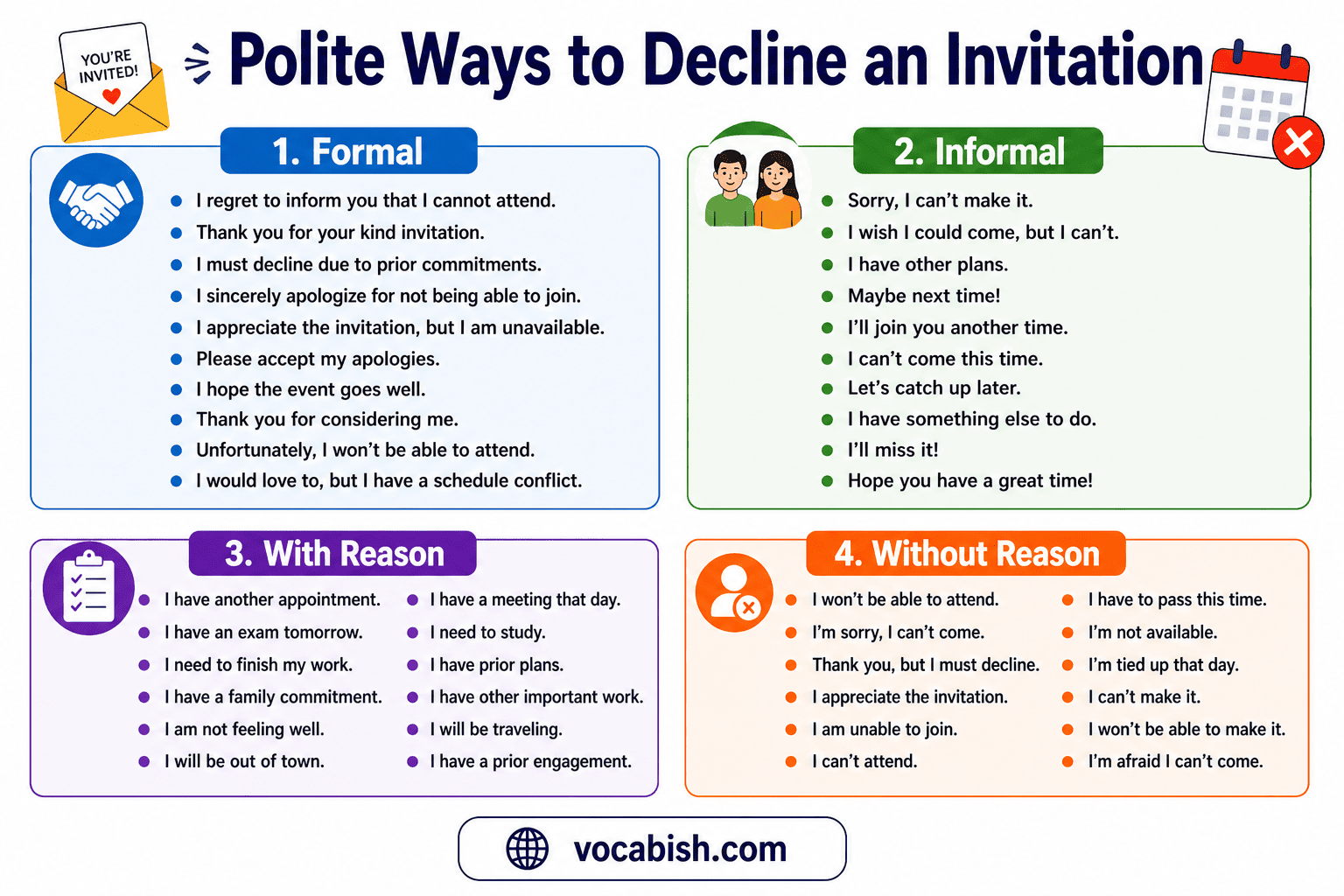
Related: Polite Ways to Decline an Invitation
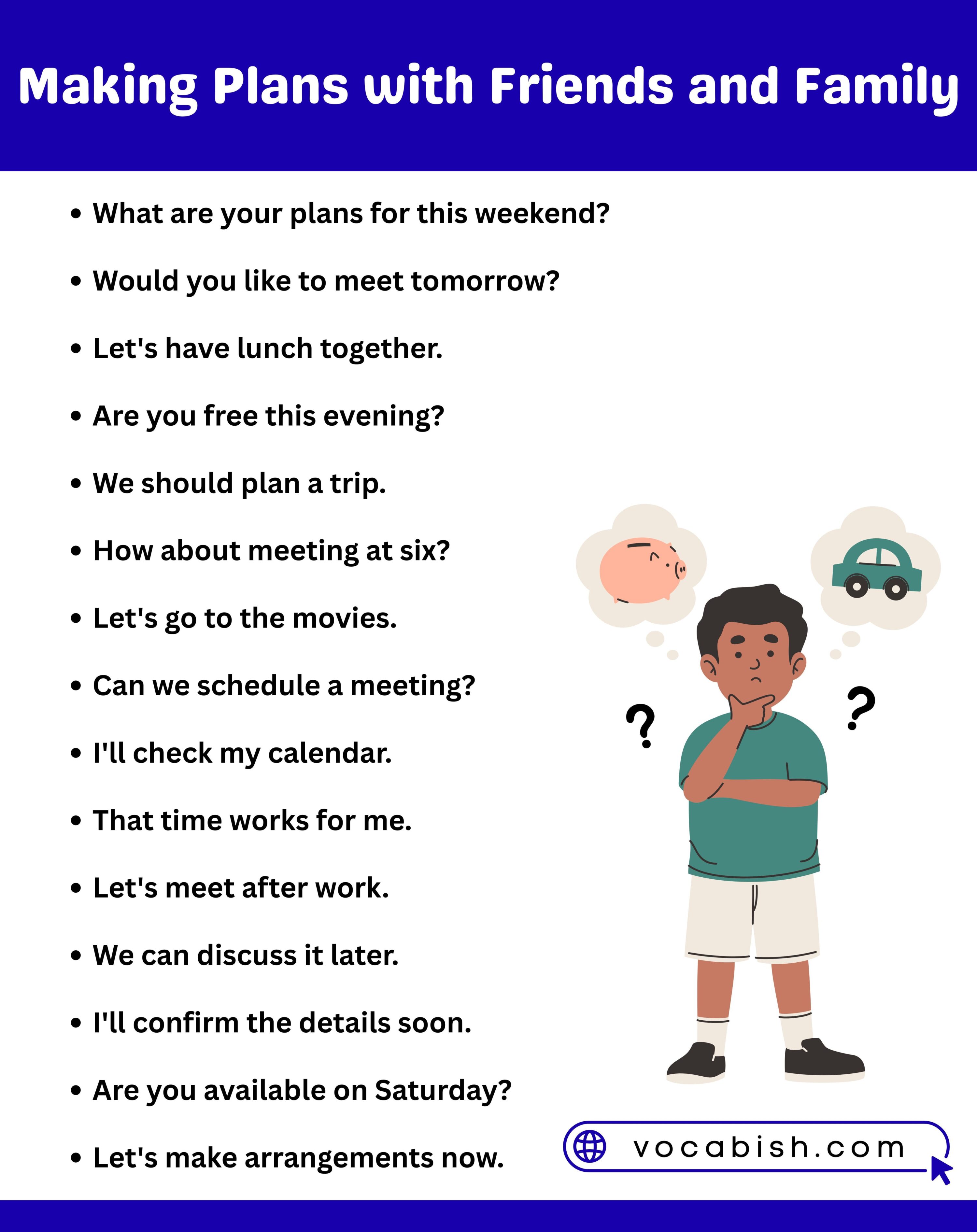
Making Plans with Friends and Family
Making plans is a common part of daily conversations. These English sentences help learners organize activities and arrangements.
- What are your plans for this weekend?
- Would you like to meet tomorrow?
- Let’s have lunch together.
- Are you free this evening?
- We should plan a trip.
- How about meeting at six?
- Let’s go to the movies.
- Can we schedule a meeting?
- I’ll check my calendar.
- That time works for me.
- Let’s meet after work.
- We can discuss it later.
- I’ll confirm the details soon.
- Are you available on Saturday?
- Let’s make arrangements now.
- We should invite more people.
- That sounds like a great idea.
- What time should we leave?
- I’ll let you know tomorrow.
- Let’s plan something fun.
- We can meet at the café.
- I’d love to join you.
- Does next week work for you?
- I’ll make the reservations.
- Looking forward to it.
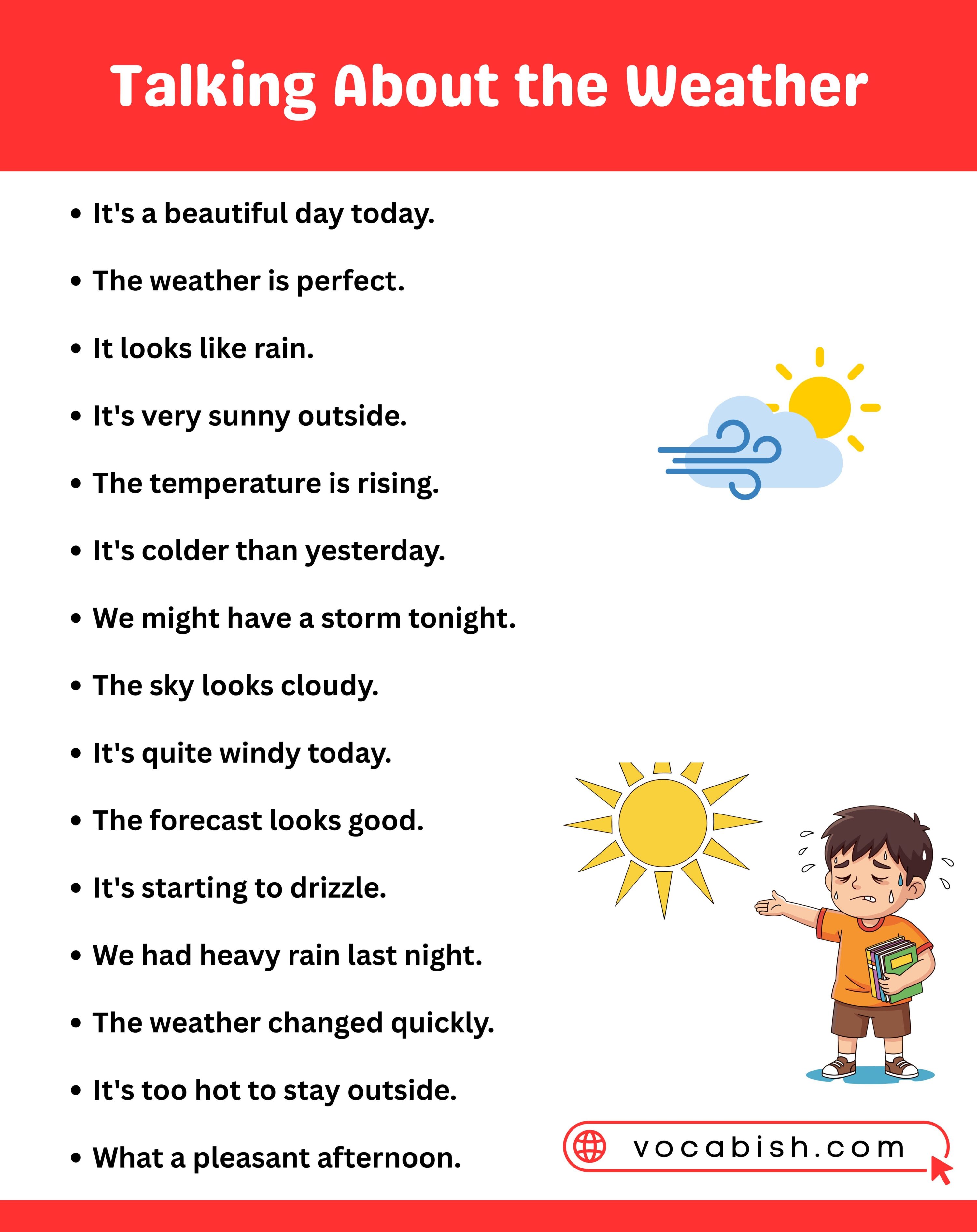
Talking About the Weather in Daily Conversations
Weather is one of the most popular small talk topics. These sentences are commonly used around the world.
- It’s a beautiful day today.
- The weather is perfect.
- It looks like rain.
- It’s very sunny outside.
- The temperature is rising.
- It’s colder than yesterday.
- We might have a storm tonight.
- The sky looks cloudy.
- It’s quite windy today.
- The forecast looks good.
- It’s starting to drizzle.
- We had heavy rain last night.
- The weather changed quickly.
- It’s too hot to stay outside.
- What a pleasant afternoon.
- Winter arrived early this year.
- The morning was chilly.
- It feels humid today.
- The sun is finally out.
- It’s a great day for a walk.
- The weather is unpredictable lately.
- We may get snow tomorrow.
- It’s cooling down now.
- Spring is my favorite season.
- I hope the weather stays nice.
Read More: Weather Vocabulary Words
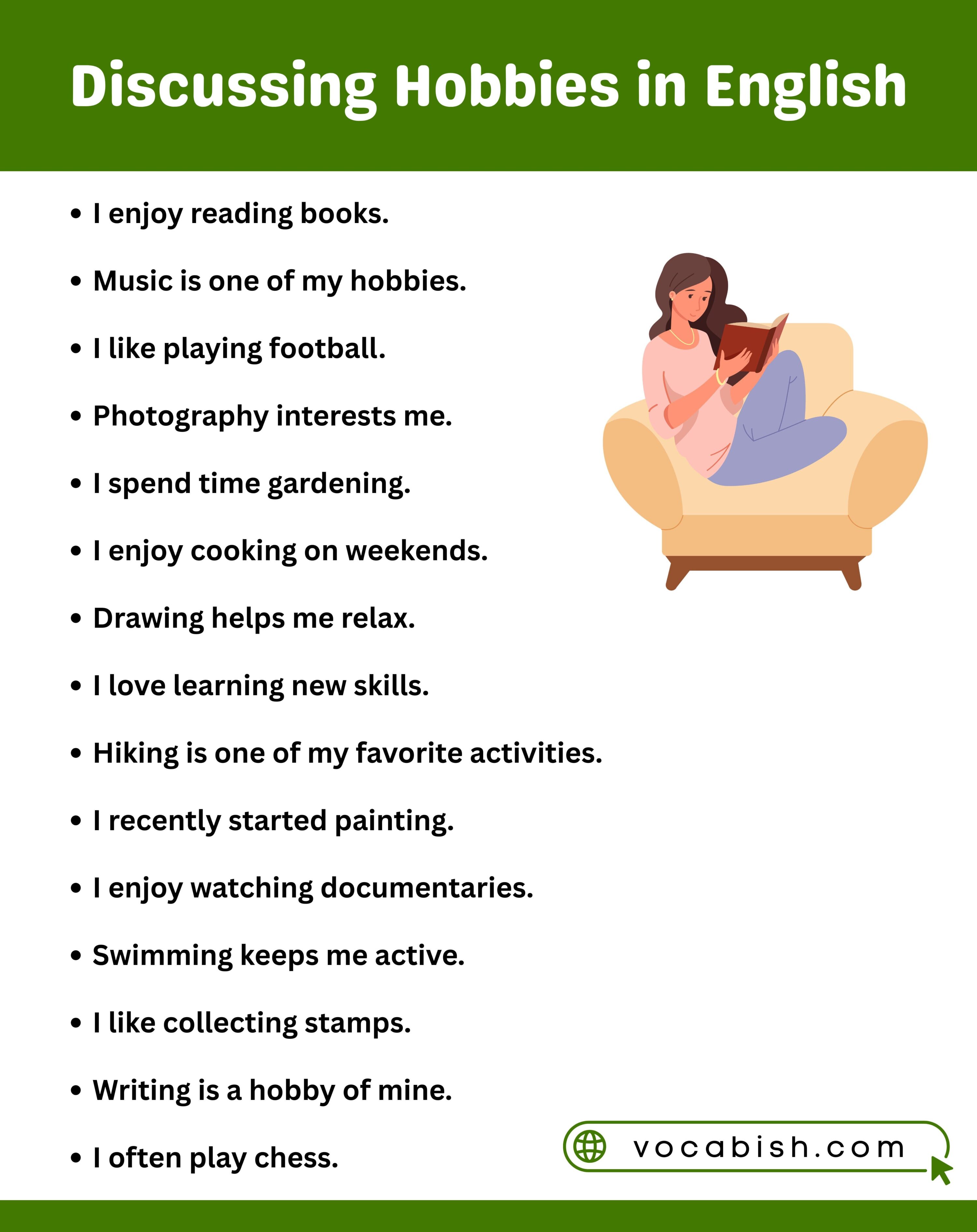
Discussing Hobbies and Free-Time Activities
Hobbies often appear in conversations with friends, classmates, and coworkers. These examples help you talk about your interests naturally.
- I enjoy reading books.
- Music is one of my hobbies.
- I like playing football.
- Photography interests me.
- I spend time gardening.
- I enjoy cooking on weekends.
- Drawing helps me relax.
- I love learning new skills.
- Hiking is one of my favorite activities.
- I recently started painting.
- I enjoy watching documentaries.
- Swimming keeps me active.
- I like collecting stamps.
- Writing is a hobby of mine.
- I often play chess.
- Traveling is something I enjoy.
- I spend my free time reading.
- I enjoy listening to podcasts.
- Playing the guitar is fun.
- I like trying new recipes.
- Movies are one of my interests.
- I enjoy spending time outdoors.
- Exercise is part of my routine.
- I recently joined a book club.
- My hobbies help me unwind.
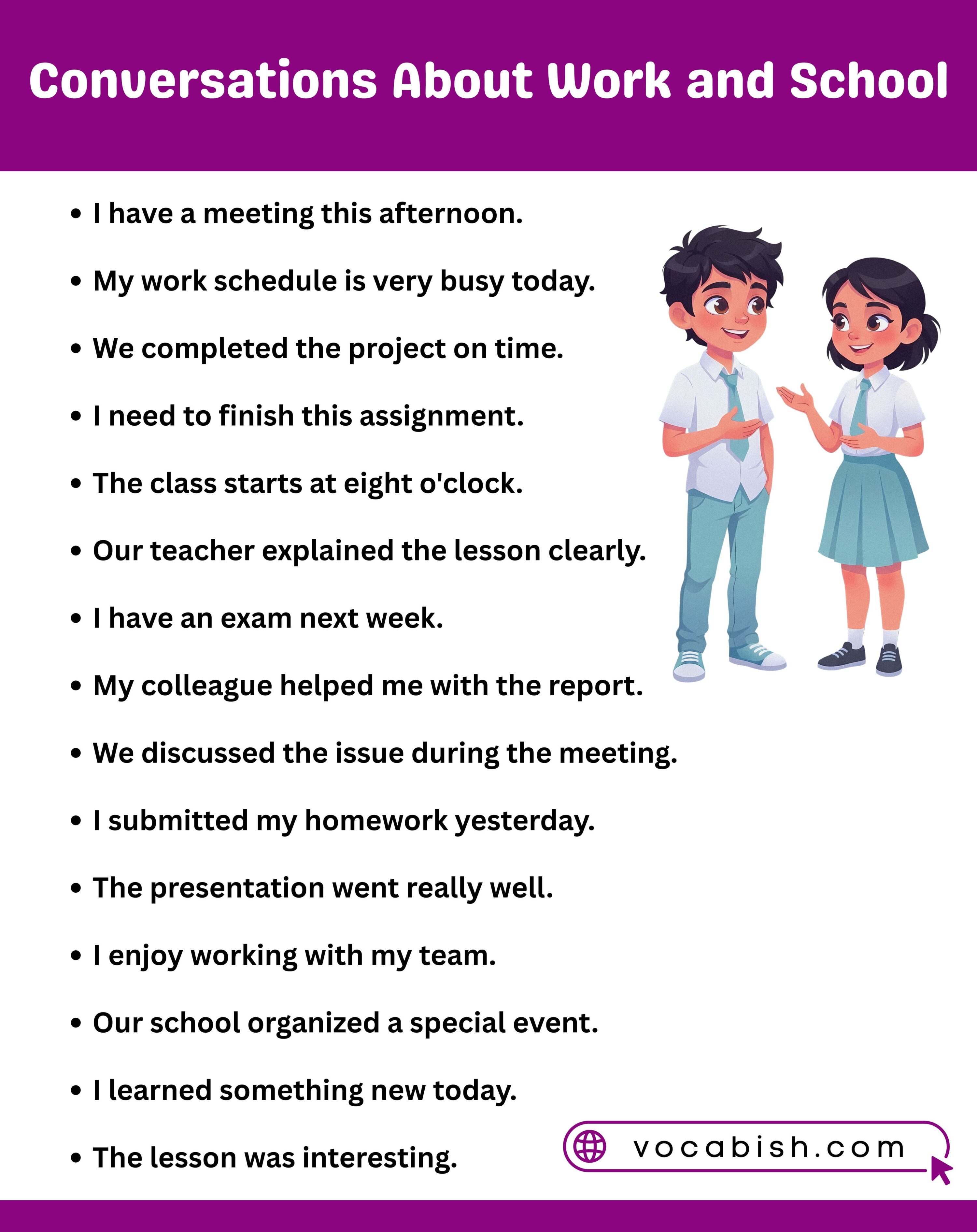
Conversations About Work and School
- I have a meeting this afternoon.
- My work schedule is very busy today.
- We completed the project on time.
- I need to finish this assignment.
- The class starts at eight o’clock.
- Our teacher explained the lesson clearly.
- I have an exam next week.
- My colleague helped me with the report.
- We discussed the issue during the meeting.
- I submitted my homework yesterday.
- The presentation went really well.
- I enjoy working with my team.
- Our school organized a special event.
- I learned something new today.
- The lesson was interesting.
- We are working on a group project.
- I forgot to bring my notebook.
- My manager appreciated my effort.
- I need more time to complete the task.
- The meeting lasted for an hour.
- We have a lot of work today.
- I am preparing for the final exam.
- Everyone participated in the discussion.
- The training session was useful.
- I enjoy learning new things.
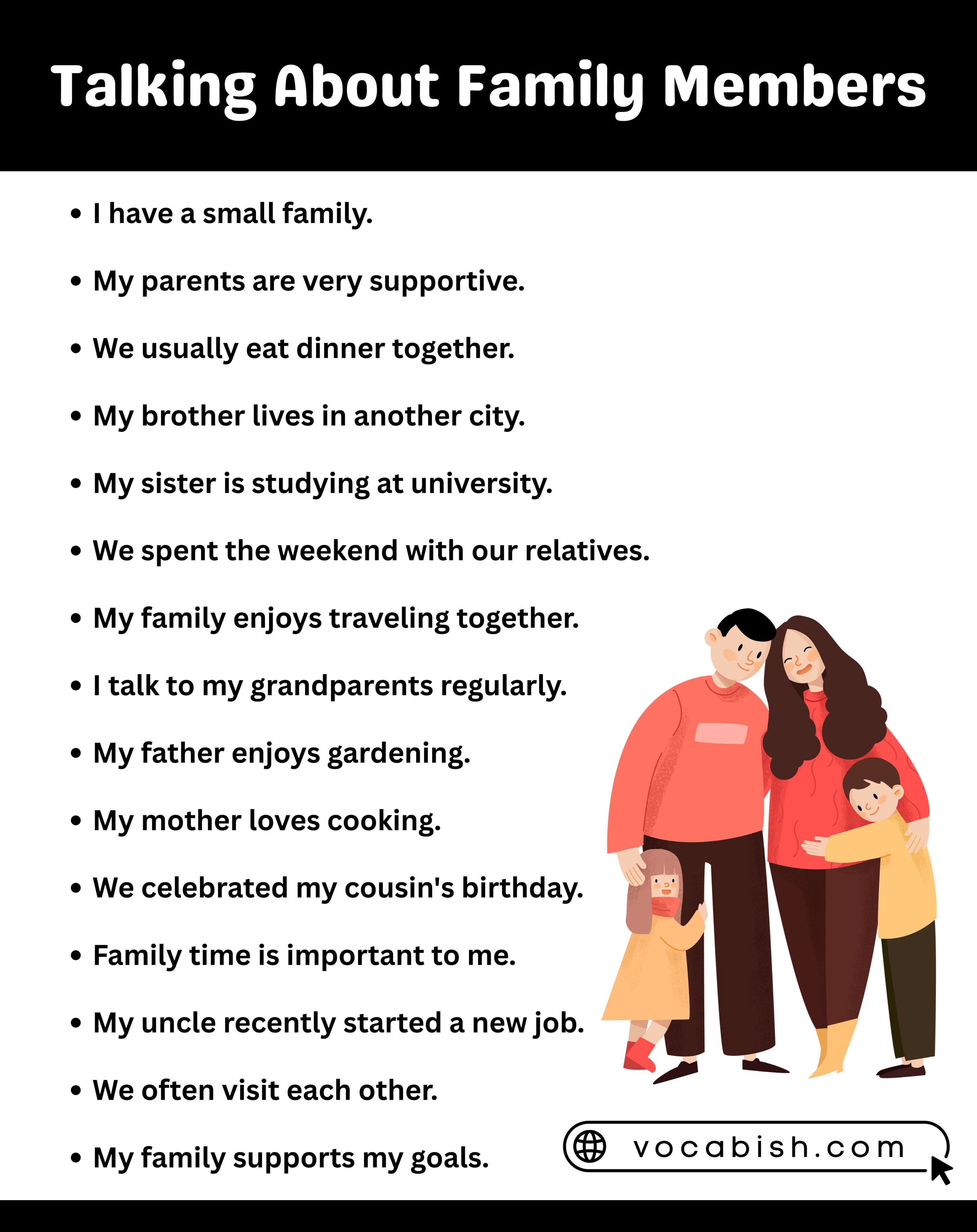
Talking About Family Members and Relationships
Family is one of the most common conversation topics. These sentence examples help you talk naturally about relatives, relationships, and family activities.
- I have a small family.
- My parents are very supportive.
- We usually eat dinner together.
- My brother lives in another city.
- My sister is studying at university.
- We spent the weekend with our relatives.
- My family enjoys traveling together.
- I talk to my grandparents regularly.
- My father enjoys gardening.
- My mother loves cooking.
- We celebrated my cousin’s birthday.
- Family time is important to me.
- My uncle recently started a new job.
- We often visit each other.
- My family supports my goals.
- I have two younger siblings.
- Everyone was happy at the gathering.
- We watched a movie together.
- My family enjoys outdoor activities.
- I learned many things from my parents.
- We had a wonderful family dinner.
- My relatives live nearby.
- I enjoy spending time with my family.
- Our family reunion was memorable.
- We stay connected through video calls.
Related: Family Members Name for Kids
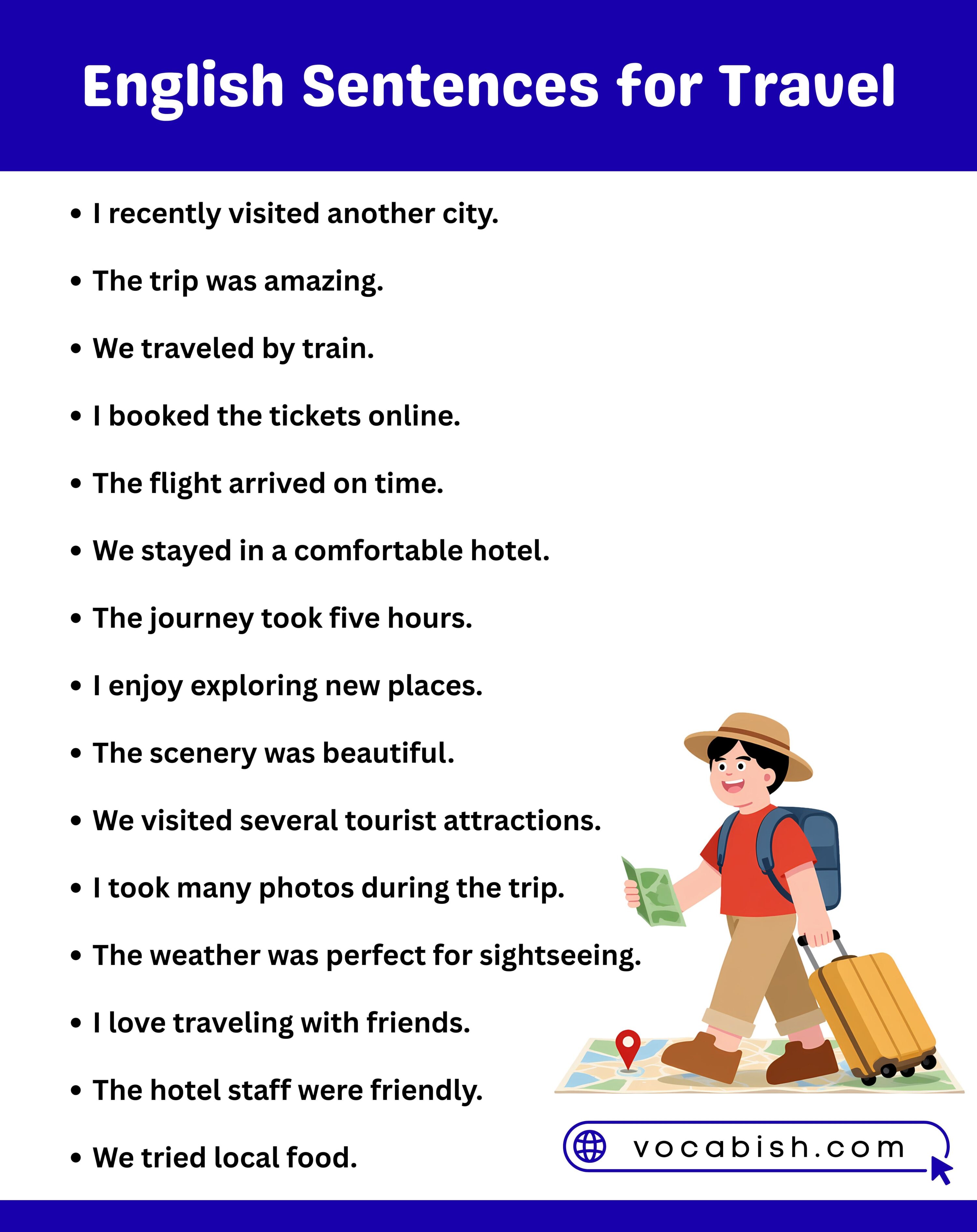
Useful English Sentences for Travel
Travel conversations often happen when discussing vacations, business trips, or future plans. These sentences are useful for many common travel situations.
- I recently visited another city.
- The trip was amazing.
- We traveled by train.
- I booked the tickets online.
- The flight arrived on time.
- We stayed in a comfortable hotel.
- The journey took five hours.
- I enjoy exploring new places.
- The scenery was beautiful.
- We visited several tourist attractions.
- I took many photos during the trip.
- The weather was perfect for sightseeing.
- I love traveling with friends.
- The hotel staff were friendly.
- We tried local food.
- The beaches were stunning.
- I learned about a new culture.
- Our trip was well organized.
- We rented a car for the journey.
- The museum was fascinating.
- I would like to visit again.
- The city was very clean.
- Traveling helps me learn new things.
- I enjoy planning vacations.
- It was one of my best trips.
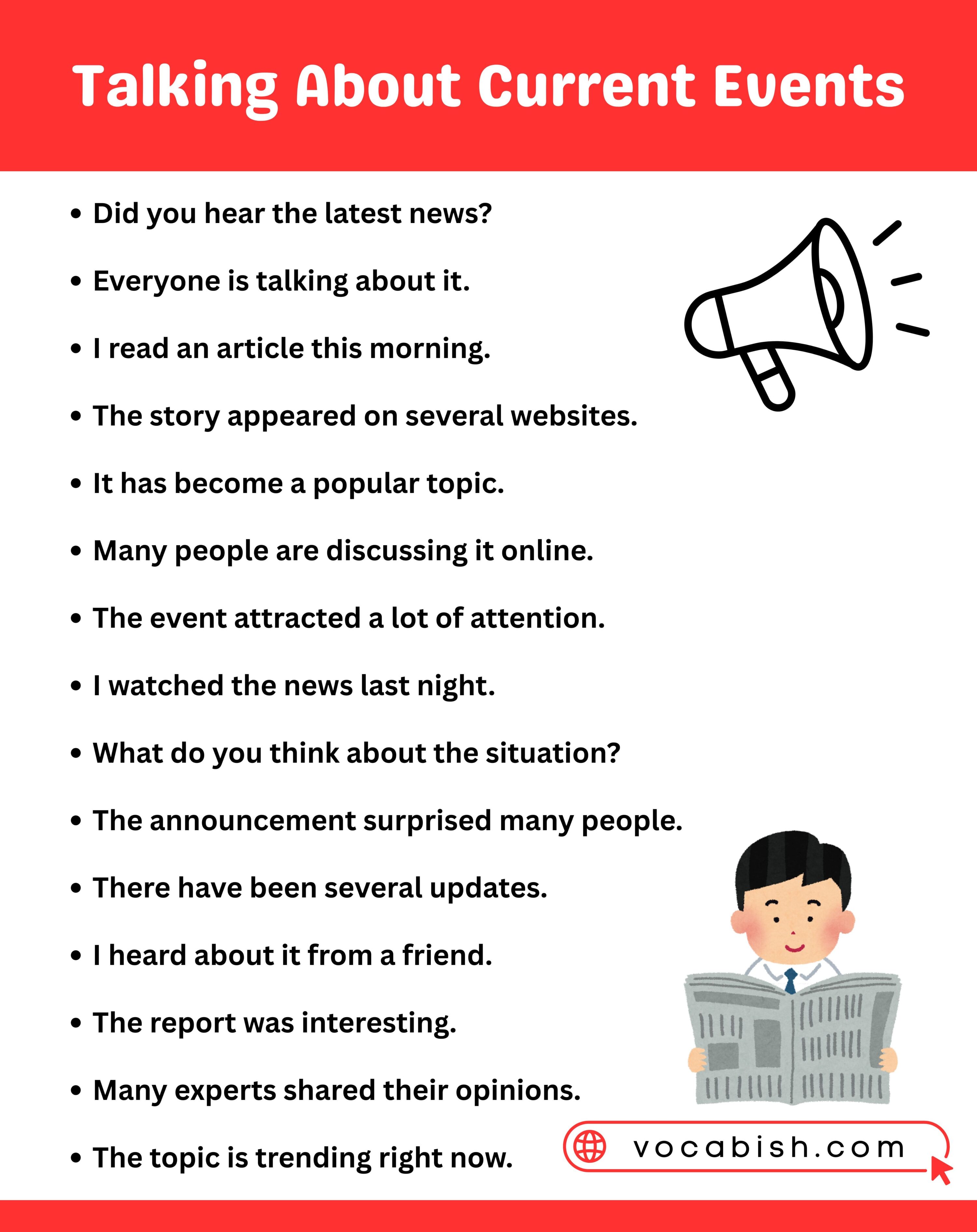
Talking About News and Current Events
Current events often become part of daily conversations. Being able to discuss recent happenings helps you participate more confidently in discussions.
- Did you hear the latest news?
- Everyone is talking about it.
- I read an article this morning.
- The story appeared on several websites.
- It has become a popular topic.
- Many people are discussing it online.
- The event attracted a lot of attention.
- I watched the news last night.
- What do you think about the situation?
- The announcement surprised many people.
- There have been several updates.
- I heard about it from a friend.
- The report was interesting.
- Many experts shared their opinions.
- People have different views on the issue.
- The topic is trending right now.
- The event happened recently.
- It received international coverage.
- The discussion is still ongoing.
- Several changes were announced.
- The news spread quickly.
- It became a major headline.
- The story raised many questions.
- We talked about it at work.
- It has generated a lot of interest.
Speaking About Sports and Fitness
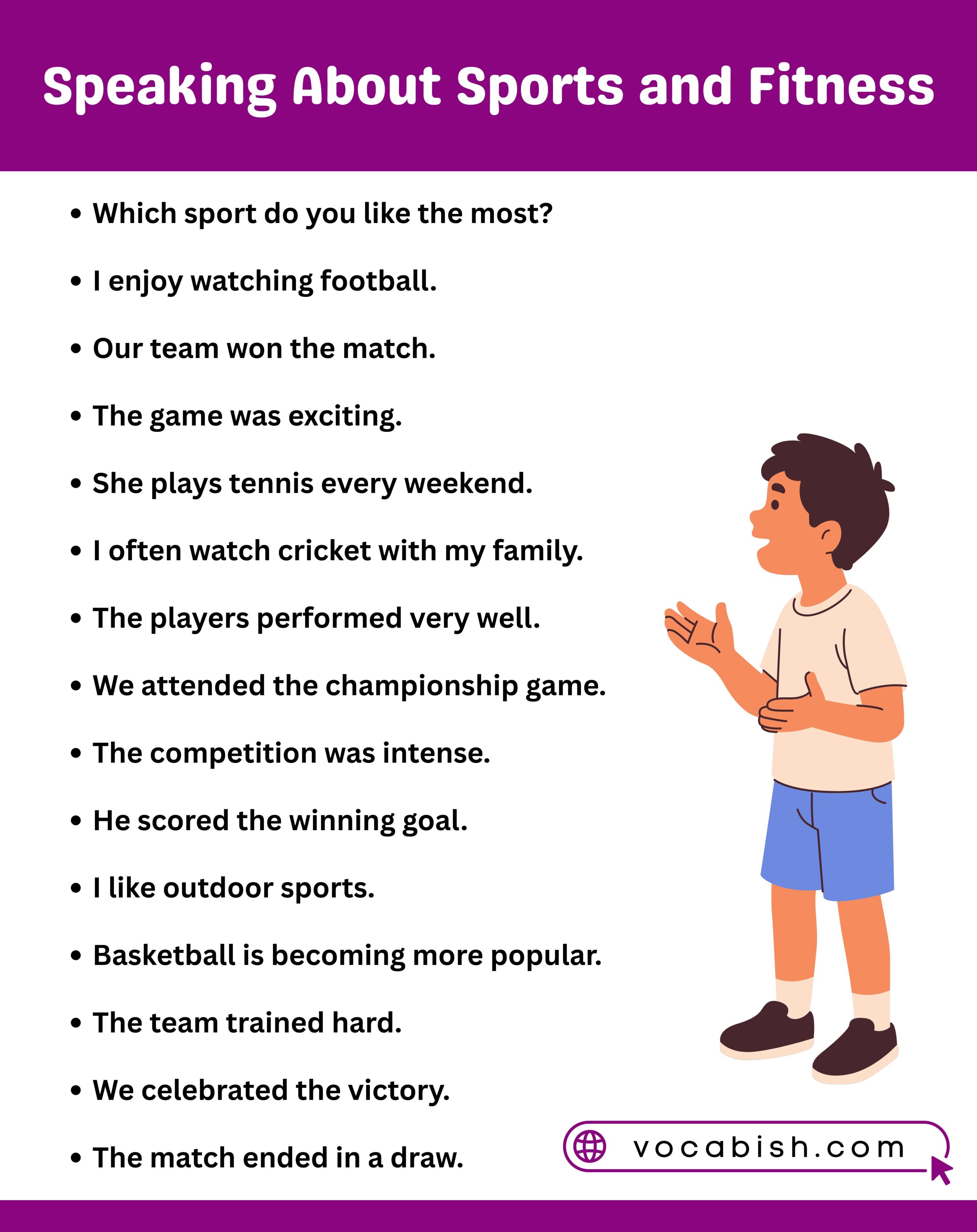
Sports conversations are common among friends, classmates, and coworkers. These English sentences can help you join discussions about games and competitions.
- Which sport do you like the most?
- I enjoy watching football.
- Our team won the match.
- The game was exciting.
- She plays tennis every weekend.
- I often watch cricket with my family.
- The players performed very well.
- We attended the championship game.
- The competition was intense.
- He scored the winning goal.
- I like outdoor sports.
- Basketball is becoming more popular.
- The team trained hard.
- We celebrated the victory.
- The match ended in a draw.
- My favorite athlete inspired me.
- They played exceptionally well.
- The crowd was enthusiastic.
- We watched the game together.
- Sports help people stay active.
- The coach gave useful advice.
- The tournament lasted several days.
- Everyone enjoyed the match.
- I started playing sports at a young age.
- The final game was unforgettable.
How to Make Suggestions Politely
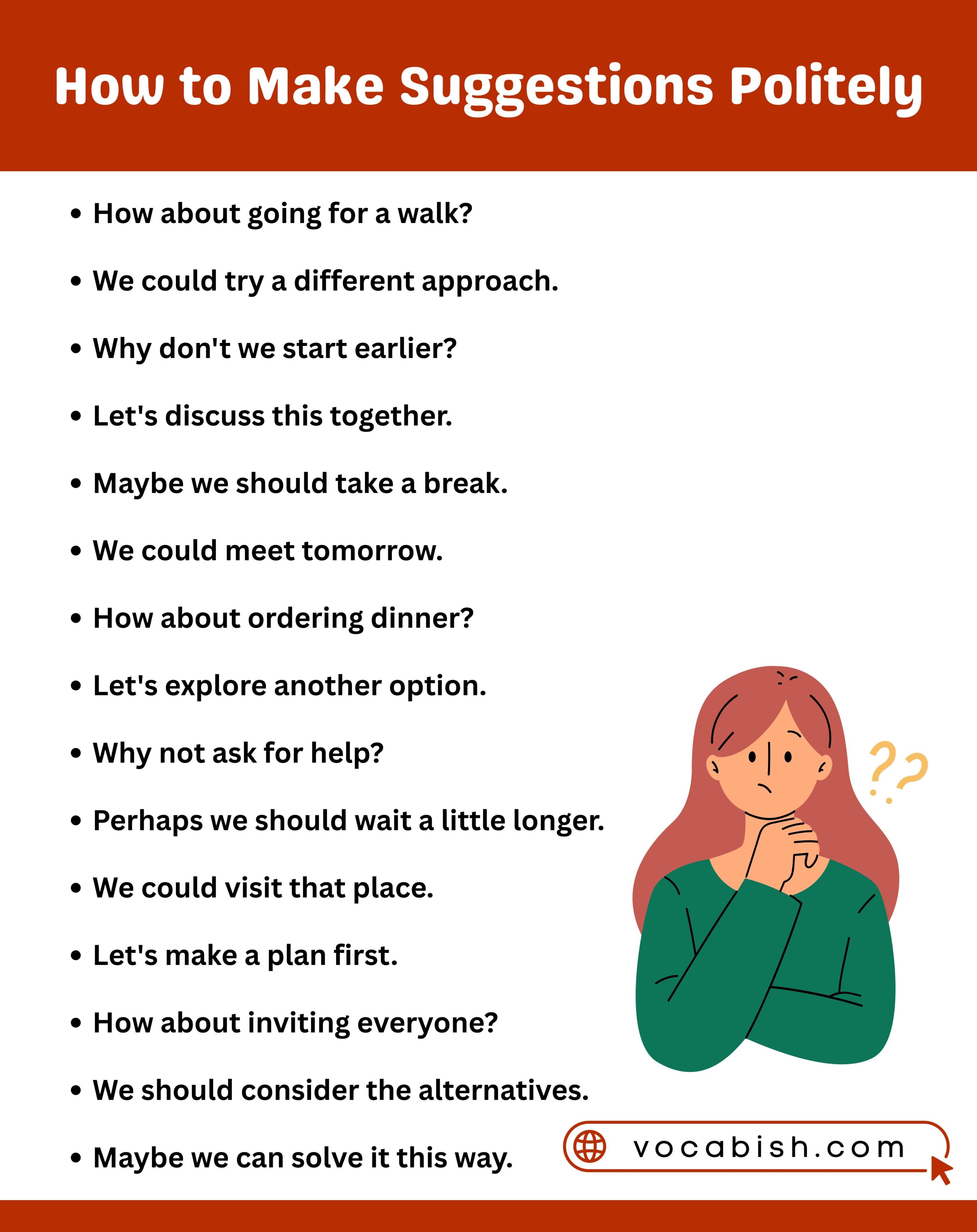
Making suggestions helps people share ideas politely. These sentence patterns are useful in daily conversations, meetings, and social situations.
- How about going for a walk?
- We could try a different approach.
- Why don’t we start earlier?
- Let’s discuss this together.
- Maybe we should take a break.
- We could meet tomorrow.
- How about ordering dinner?
- Let’s explore another option.
- Why not ask for help?
- Perhaps we should wait a little longer.
- We could visit that place.
- Let’s make a plan first.
- How about inviting everyone?
- We should consider the alternatives.
- Maybe we can solve it this way.
- Let’s review the details again.
- Why don’t we work together?
- We could leave a bit earlier.
- How about trying something new?
- Let’s think about it carefully.
- We should discuss this with the team.
- Maybe we need more information.
- How about meeting after work?
- Let’s focus on the main issue.
- We could start right now.
Expressing Your Thoughts and Opinions
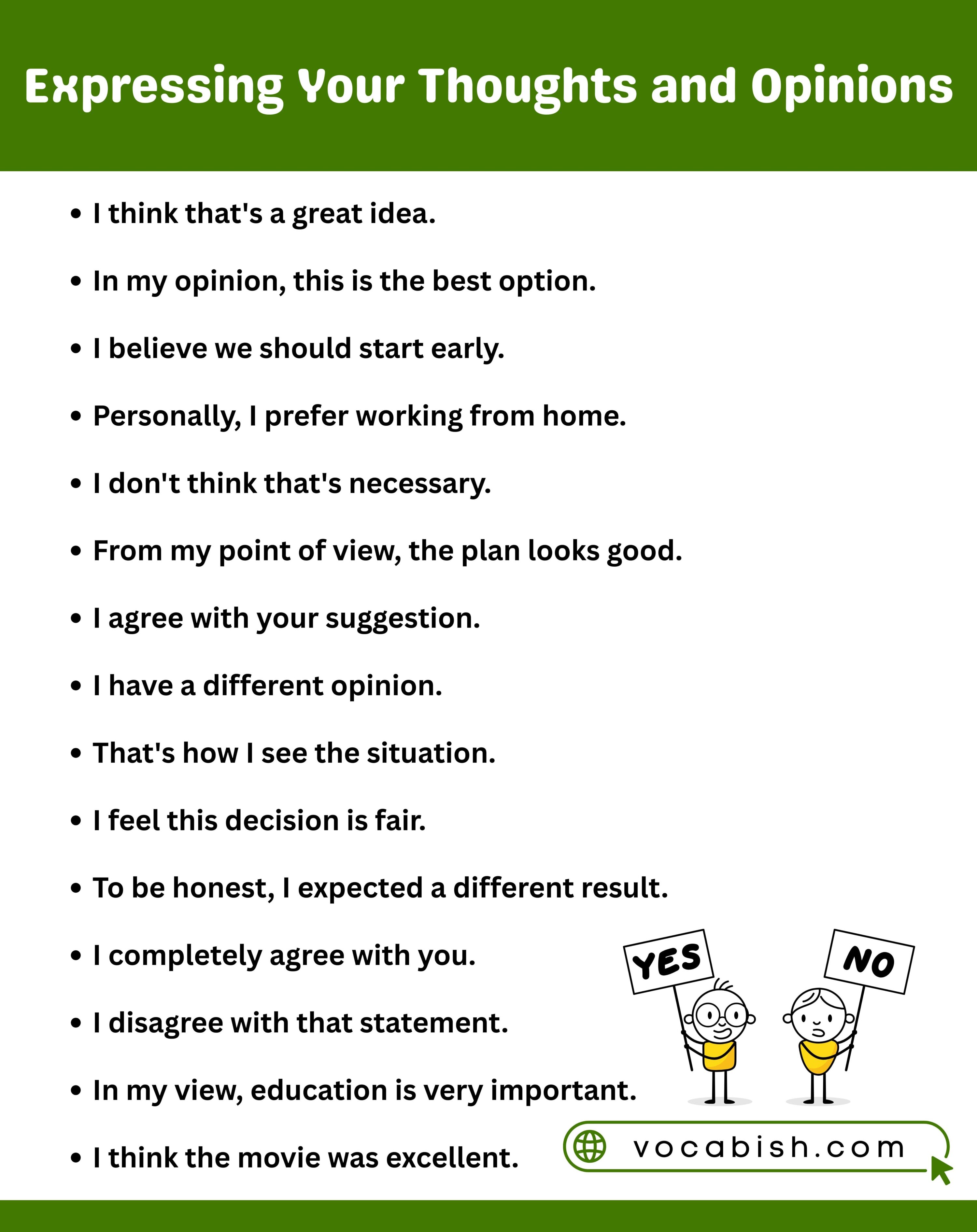
Sharing opinions is an important part of communication. People often express their thoughts when discussing movies, books, current events, work, or everyday situations.
- I think that’s a great idea.
- In my opinion, this is the best option.
- I believe we should start early.
- Personally, I prefer working from home.
- I don’t think that’s necessary.
- From my point of view, the plan looks good.
- I agree with your suggestion.
- I have a different opinion.
- That’s how I see the situation.
- I feel this decision is fair.
- To be honest, I expected a different result.
- I completely agree with you.
- I disagree with that statement.
- In my view, education is very important.
- I think the movie was excellent.
- It seems like a reasonable solution.
- I believe everyone deserves a chance.
- That’s an interesting perspective.
- I feel the same way.
- I don’t share that opinion.
- In my experience, practice makes a big difference.
- I think we need more information.
- That doesn’t sound right to me.
- I strongly support this idea.
- I believe there is a better approach.
Read more about: Asking and Giving Opinions
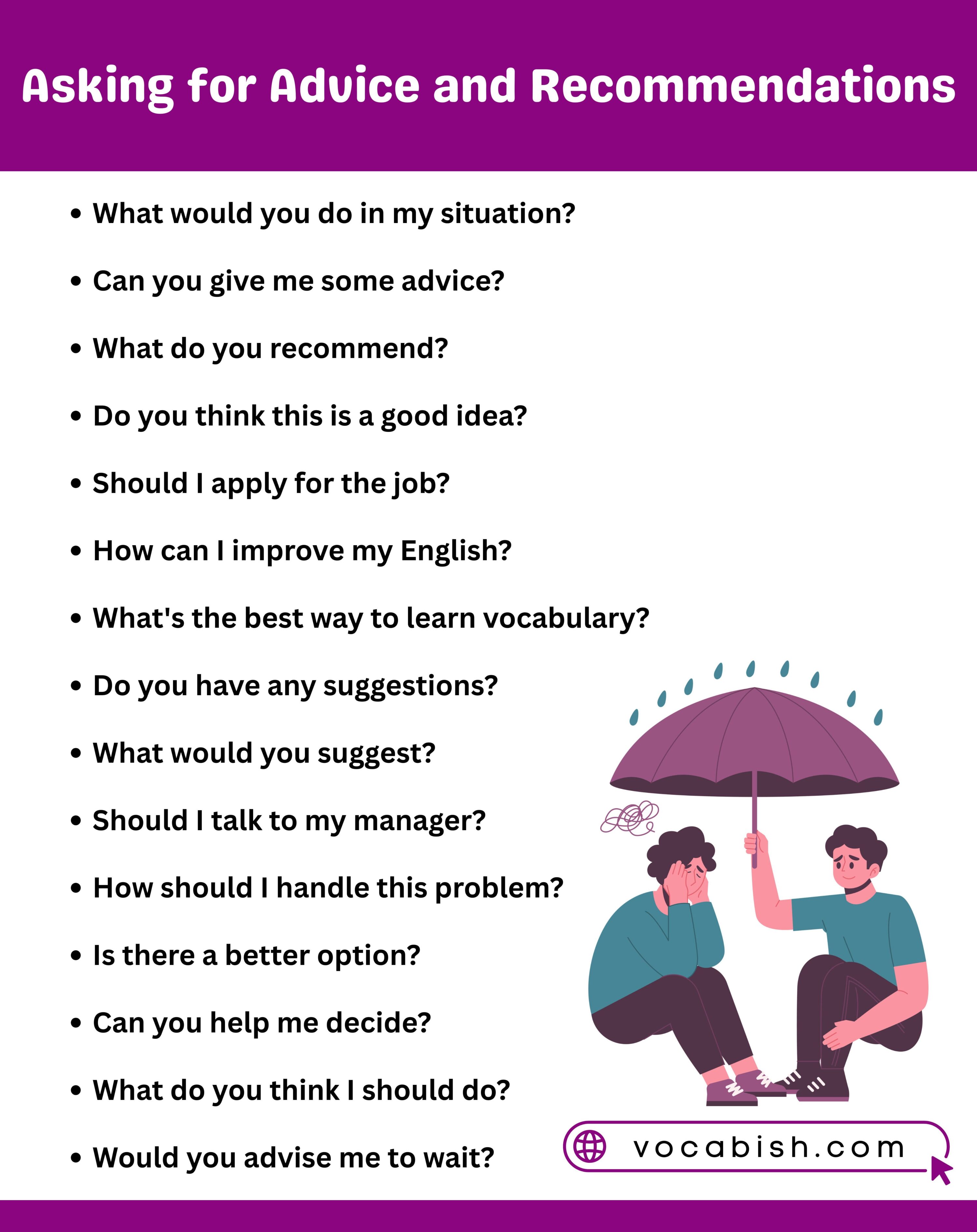
Asking for Advice and Recommendations
People ask for advice when they need guidance or help making decisions. Learning these sentence patterns can make conversations smoother and more natural.
- What would you do in my situation?
- Can you give me some advice?
- What do you recommend?
- Do you think this is a good idea?
- Should I apply for the job?
- How can I improve my English?
- What’s the best way to learn vocabulary?
- Do you have any suggestions?
- What would you suggest?
- Should I talk to my manager?
- How should I handle this problem?
- Is there a better option?
- Can you help me decide?
- What do you think I should do?
- Would you advise me to wait?
- Should I try something different?
- How can I become more confident?
- What is your opinion on this matter?
- Do you think I’m making the right choice?
- Can you share your experience?
- How would you approach this situation?
- Is it worth the effort?
- What steps should I take next?
- Could you point me in the right direction?
- What’s your advice for beginners?
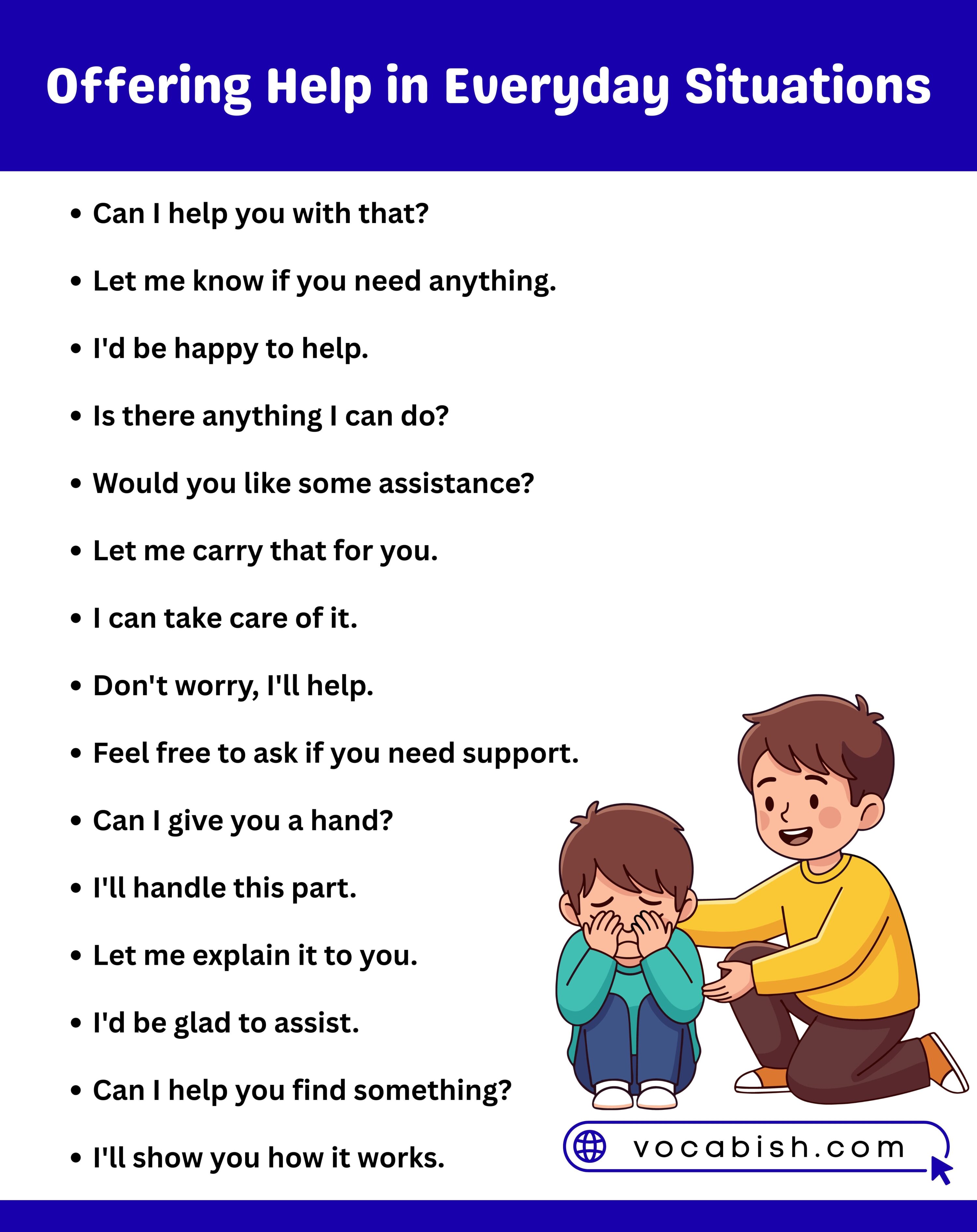
Offering Help in Everyday Situations
Offering help is a polite and friendly way to support others. These everyday conversation sentences are commonly used at home, school, work, and public places.
- Can I help you with that?
- Let me know if you need anything.
- I’d be happy to help.
- Is there anything I can do?
- Would you like some assistance?
- Let me carry that for you.
- I can take care of it.
- Don’t worry, I’ll help.
- Feel free to ask if you need support.
- Can I give you a hand?
- I’ll handle this part.
- Let me explain it to you.
- I’d be glad to assist.
- Can I help you find something?
- I’ll show you how it works.
- Let me know if you have questions.
- I can help solve the problem.
- Would you like me to check it?
- I can help you prepare.
- Let me take a look.
- If you need help, just ask.
- I don’t mind helping.
- We can work on it together.
- Let me know how I can help.
- I’m always happy to support you.
Related: Polite Ways to Ask for Help
Download PDF
FAQs about English Sentences
English Sentences are complete groups of words that express an idea, statement, question, request, or feeling.
Daily practice helps learners recognize common sentence patterns and use English more naturally in conversations.
Read them aloud, write them in a notebook, and use them in real conversations whenever possible.
Yes. The examples use common vocabulary and everyday situations that most learners encounter regularly.
Many learners find that practicing 10 to 20 new sentences daily helps build confidence without feeling overwhelming.
Greetings, introductions, small talk, family, work, school, and daily activities are good starting points.
Yes. They help learners understand sentence structure, vocabulary usage, and natural expression in written English.
You May Also Like:
Conclusion
Learning English sentences through everyday situations helps learners understand how English is actually used in communication. From greetings and introductions to offering help and expressing opinions, each topic builds practical speaking and writing skills.
Regular practice with daily-use sentences and everyday conversation sentences can improve confidence over time. Instead of memorizing isolated words, focus on understanding complete sentences and using them in meaningful contexts. The more often you read, speak, write, and hear these patterns, the more natural English communication becomes.