
Many English learners struggle with tenses because they try to memorize long rules before understanding the structures. The good news is that every tense follows a clear pattern. Once you learn these patterns, making sentences becomes much easier.
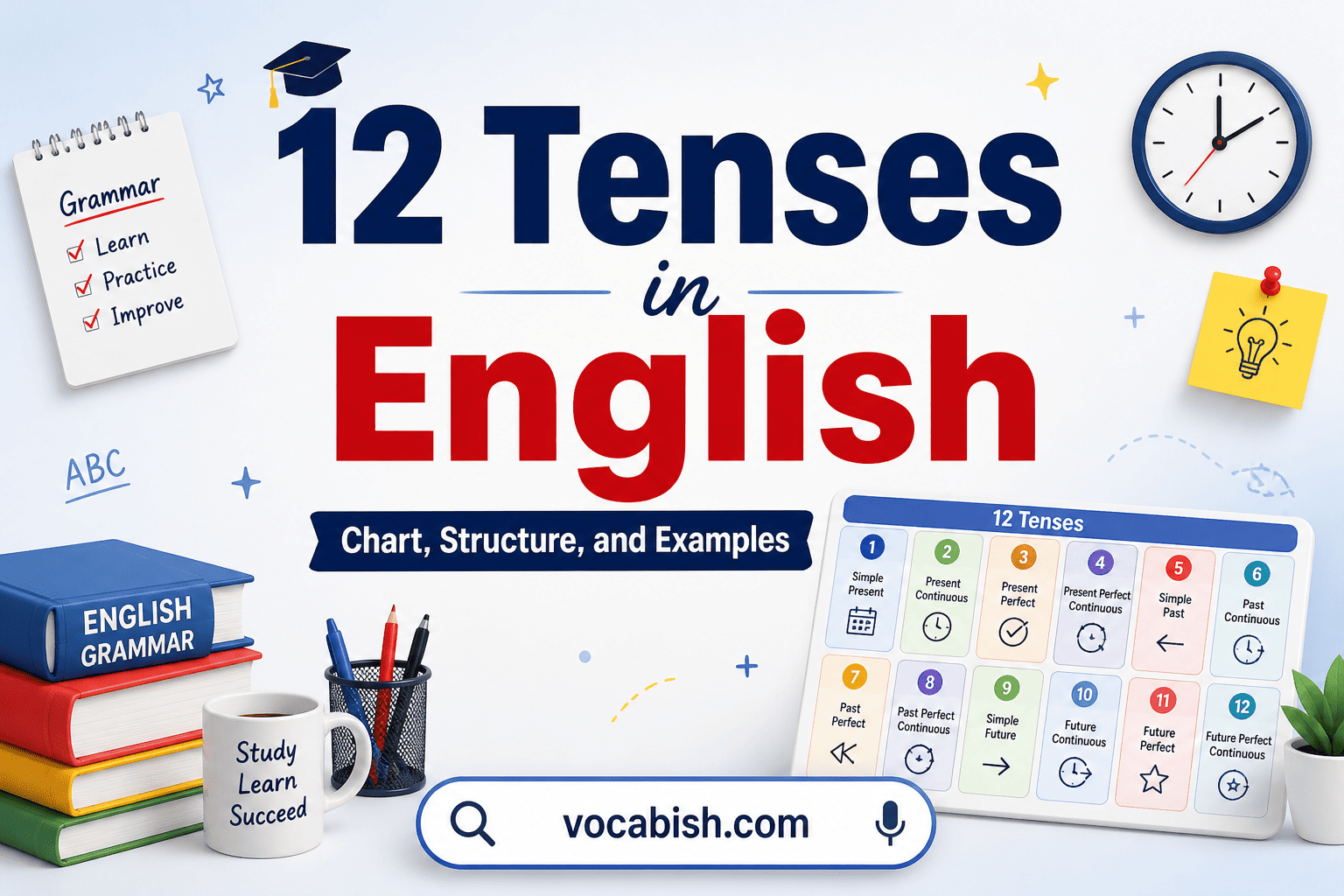
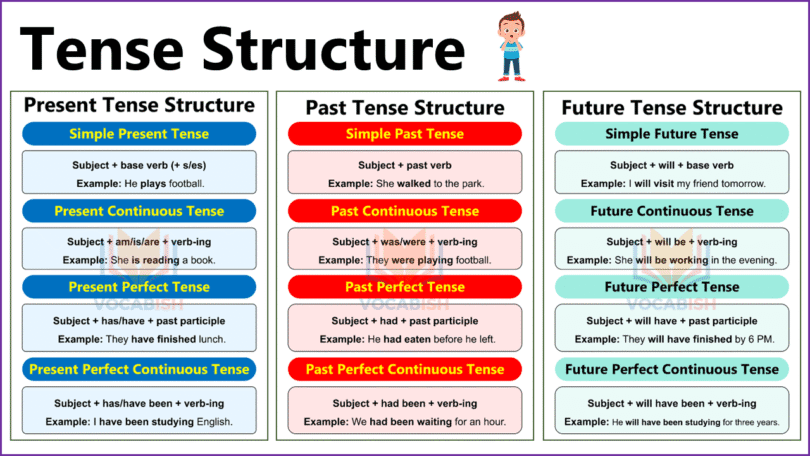
This guide focuses only on the structures of the 12 English tenses.
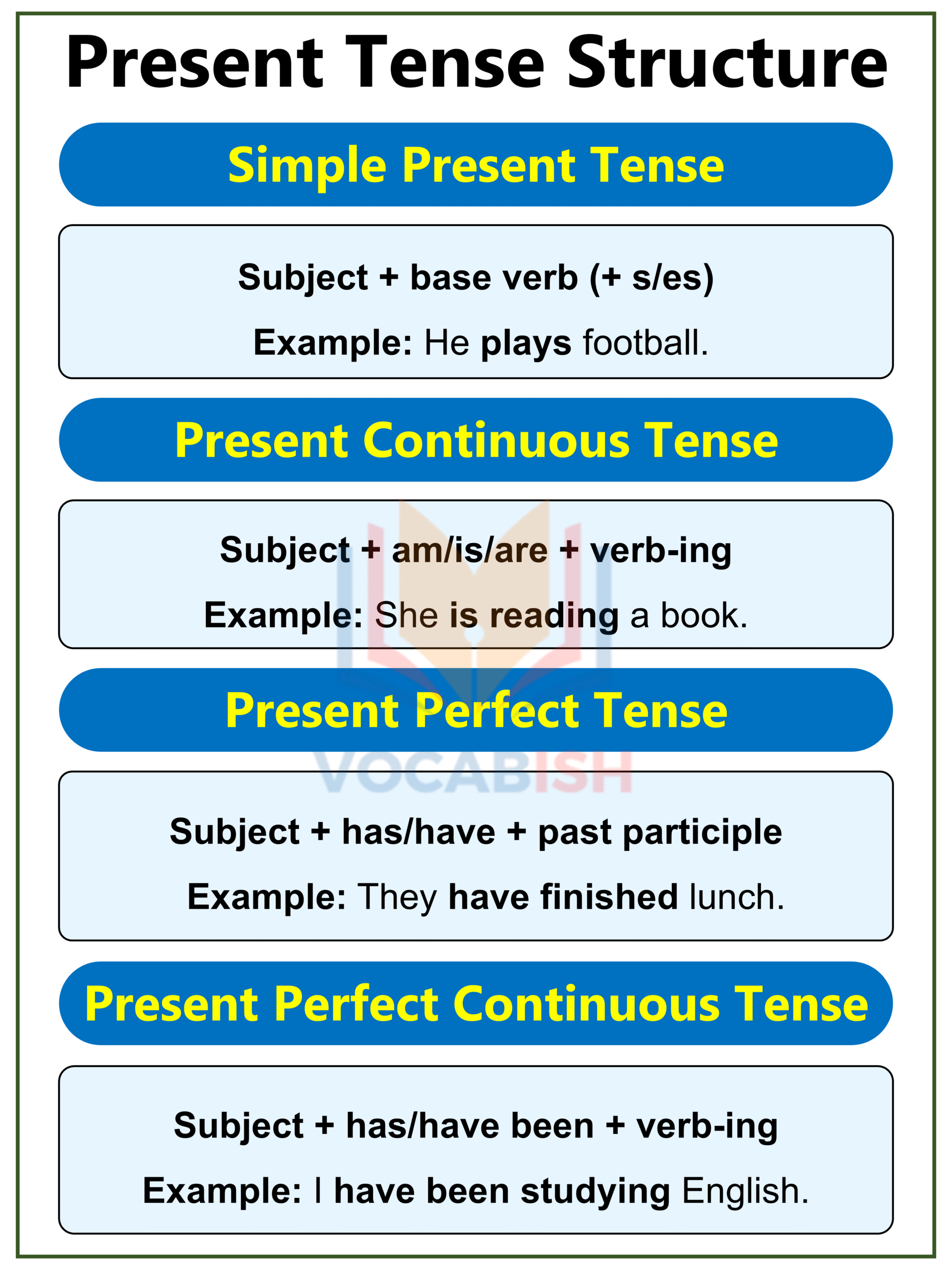
Present Tenses Structures
Simple Present Tense Structure
Affirmative:
Subject + Base Verb (s/es with He, She, It) + Object
Examples:
- I play cricket.
- She plays cricket.
Negative:
Subject + Do/Does + Not + Base Verb + Object
Examples:
- I do not play cricket.
- She does not play cricket.
Interrogative:
Do/Does + Subject + Base Verb + Object?
Examples:
- Do you play cricket?
- Does she play cricket?
Learn how to use the Present Simple Tense for habits, routines, facts, and everyday situations.
Present Continuous Tense Structure
Affirmative:
Subject + Am/Is/Are + Verb-ing + Object
Examples:
- I am reading a book.
- They are watching TV.
Negative:
Subject + Am/Is/Are + Not + Verb-ing + Object
Examples:
- I am not reading a book.
- They are not watching TV.
Interrogative:
Am/Is/Are + Subject + Verb-ing + Object?
Examples:
- Are you reading a book?
- Is he watching TV?
Understand how the Present Continuous Tense describes actions happening right now or around the present time.
Present Perfect Tense Structure
Affirmative:
Subject + Has/Have + Past Participle (V3) + Object
Examples:
- I have completed my work.
- She has completed her work.
Negative:
Subject + Has/Have + Not + Past Participle (V3) + Object
Examples:
- I have not completed my work.
- She has not completed her work.
Interrogative:
Has/Have + Subject + Past Participle (V3) + Object?
Examples:
- Have you completed your work?
- Has she completed her work?
Learn when to use the Present Perfect Tense for completed actions that connect to the present.
Present Perfect Continuous Tense Structure
Affirmative:
Subject + Has/Have Been + Verb-ing + Since/For + Time
Examples:
- I have been studying for two hours.
- She has been studying since morning.
Negative:
Subject + Has/Have Not Been + Verb-ing + Since/For + Time
Examples:
- I have not been studying for two hours.
- She has not been studying since morning.
Interrogative:
Has/Have + Subject + Been + Verb-ing + Since/For + Time?
Examples:
- Have you been studying for two hours?
- Has she been studying since morning?
Understand how the Present Perfect Continuous Tense shows the duration of an action that started in the past and continues into the present.
Past Tenses Structures
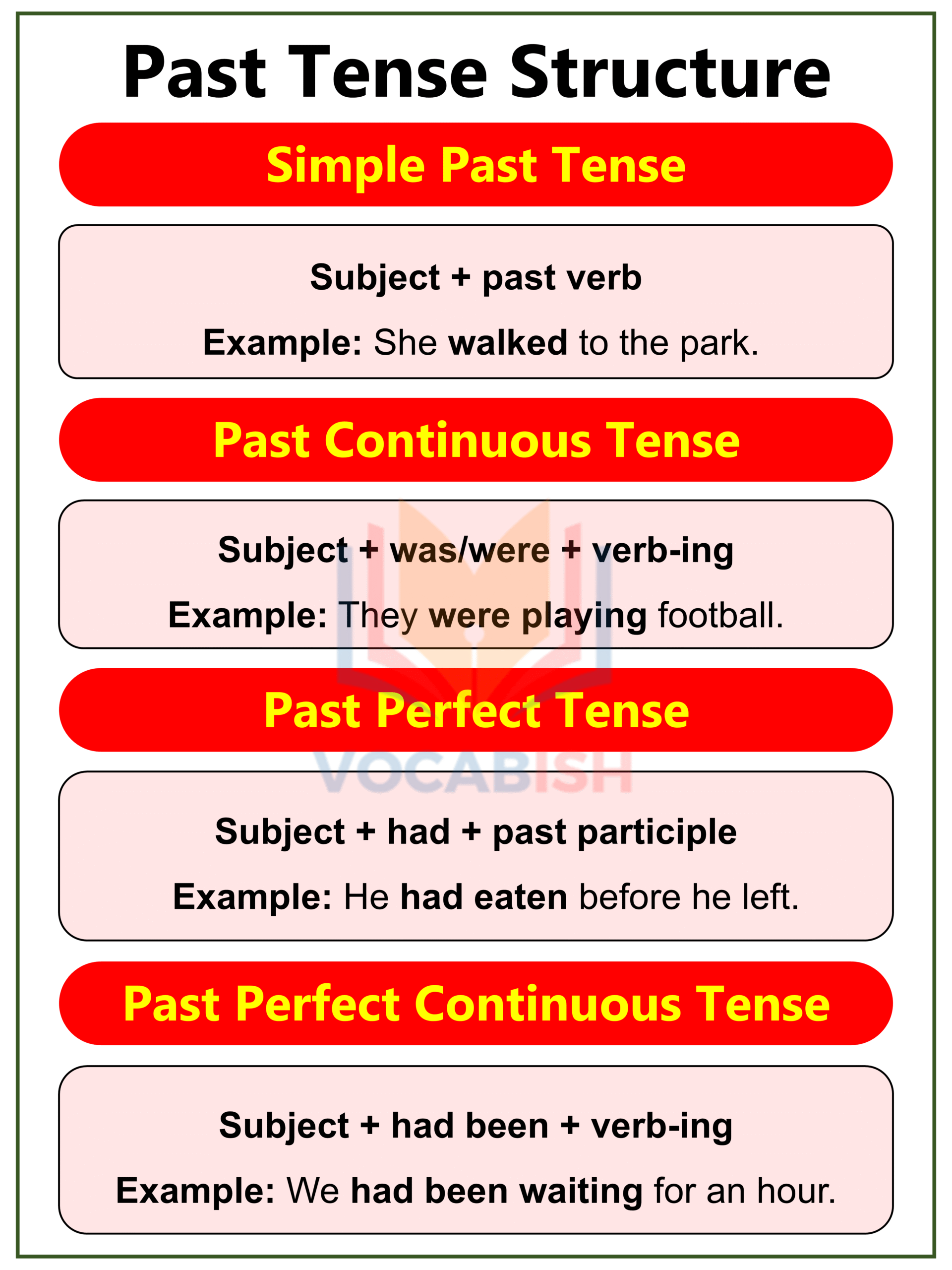
Simple Past Tense Structure
Affirmative:
Subject + Verb (V2) + Object
Examples:
- I played cricket.
- She visited Lahore.
Negative:
Subject + Did Not + Base Verb + Object
Examples:
- I did not play cricket.
- She did not visit Lahore.
Interrogative:
Did + Subject + Base Verb + Object?
Examples:
- Did you play cricket?
- Did she visit Lahore?
Learn how to use the Simple Past Tense to talk about completed actions and events that happened in the past.
Past Continuous Tense Structure
Affirmative:
Subject + Was/Were + Verb-ing + Object
Examples:
- I was reading a book.
- They were playing football.
Negative:
Subject + Was/Were Not + Verb-ing + Object
Examples:
- I was not reading a book.
- They were not playing football.
Interrogative:
Was/Were + Subject + Verb-ing + Object?
Examples:
- Were you reading a book?
- Was he playing football?
Understand how the Past Continuous Tense describes actions that were in progress at a specific time in the past.
Past Perfect Tense Structure
Affirmative:
Subject + Had + Past Participle (V3) + Object
Examples:
- I had finished the work.
- They had left the office.
Negative:
Subject + Had Not + Past Participle (V3) + Object
Examples:
- I had not finished the work.
- They had not left the office.
Interrogative:
Had + Subject + Past Participle (V3) + Object?
Examples:
- Had you finished the work?
- Had they left the office?
Learn how the Past Perfect Tense shows that one action was completed before another action in the past.
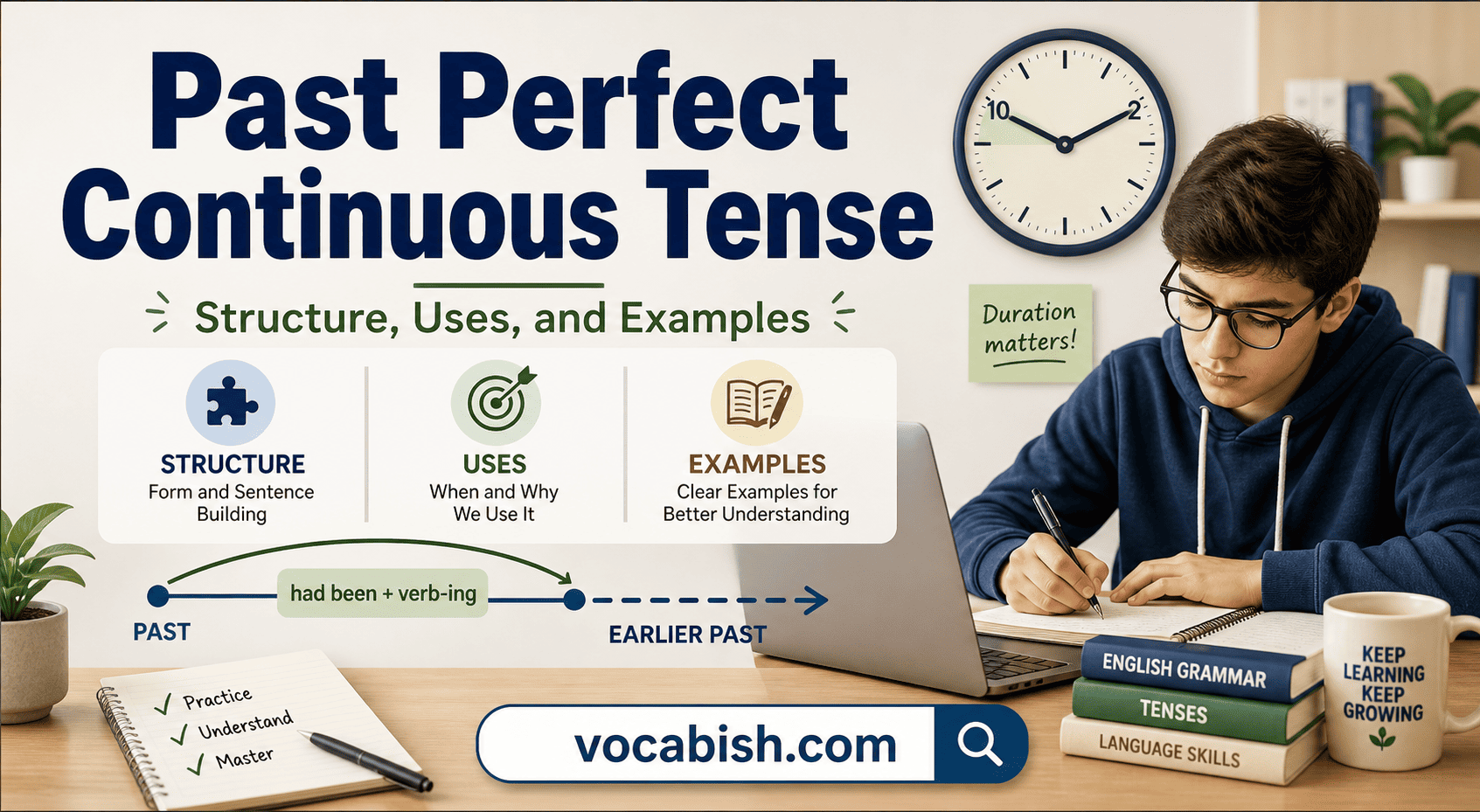
Past Perfect Continuous Tense Structure
Affirmative:
Subject + Had Been + Verb-ing + Since/For + Time
Examples:
- I had been working for three hours.
- She had been waiting since morning.
Negative:
Subject + Had Not Been + Verb-ing + Since/For + Time
Examples:
- I had not been working for three hours.
- She had not been waiting since morning.
Interrogative:
Had + Subject + Been + Verb-ing + Since/For + Time?
Examples:
- Had you been working for three hours?
- Had she been waiting since morning?
Understand how the Past Perfect Continuous Tense emphasizes the duration of an action before a past event occurred.
Future Tenses Structures
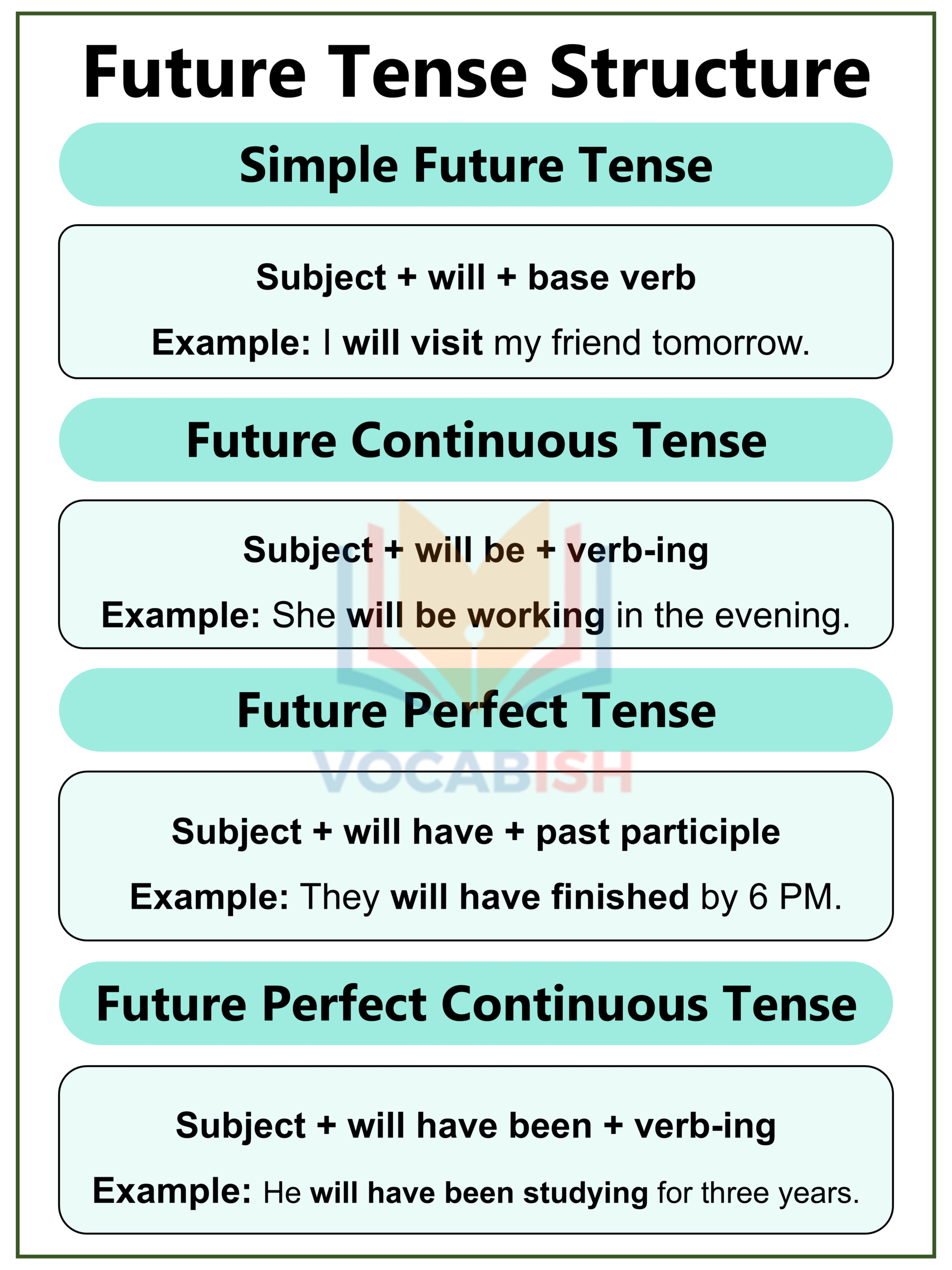
Simple Future Tense Structure
Affirmative:
Subject + Will + Base Verb + Object
Examples:
- I will travel tomorrow.
- They will join us.
Negative:
Subject + Will Not + Base Verb + Object
Examples:
- I will not travel tomorrow.
- They will not join us.
Interrogative:
Will + Subject + Base Verb + Object?
Examples:
- Will you travel tomorrow?
- Will they join us?
Learn how to use the Simple Future Tense for future plans, predictions, promises, and decisions.
Future Continuous Tense Structure
Affirmative:
Subject + Will Be + Verb-ing + Object
Examples:
- I will be studying tonight.
- They will be traveling tomorrow.
Negative:
Subject + Will Not Be + Verb-ing + Object
Examples:
- I will not be studying tonight.
- They will not be traveling tomorrow.
Interrogative:
Will + Subject + Be + Verb-ing + Object?
Examples:
- Will you be studying tonight?
- Will they be traveling tomorrow?
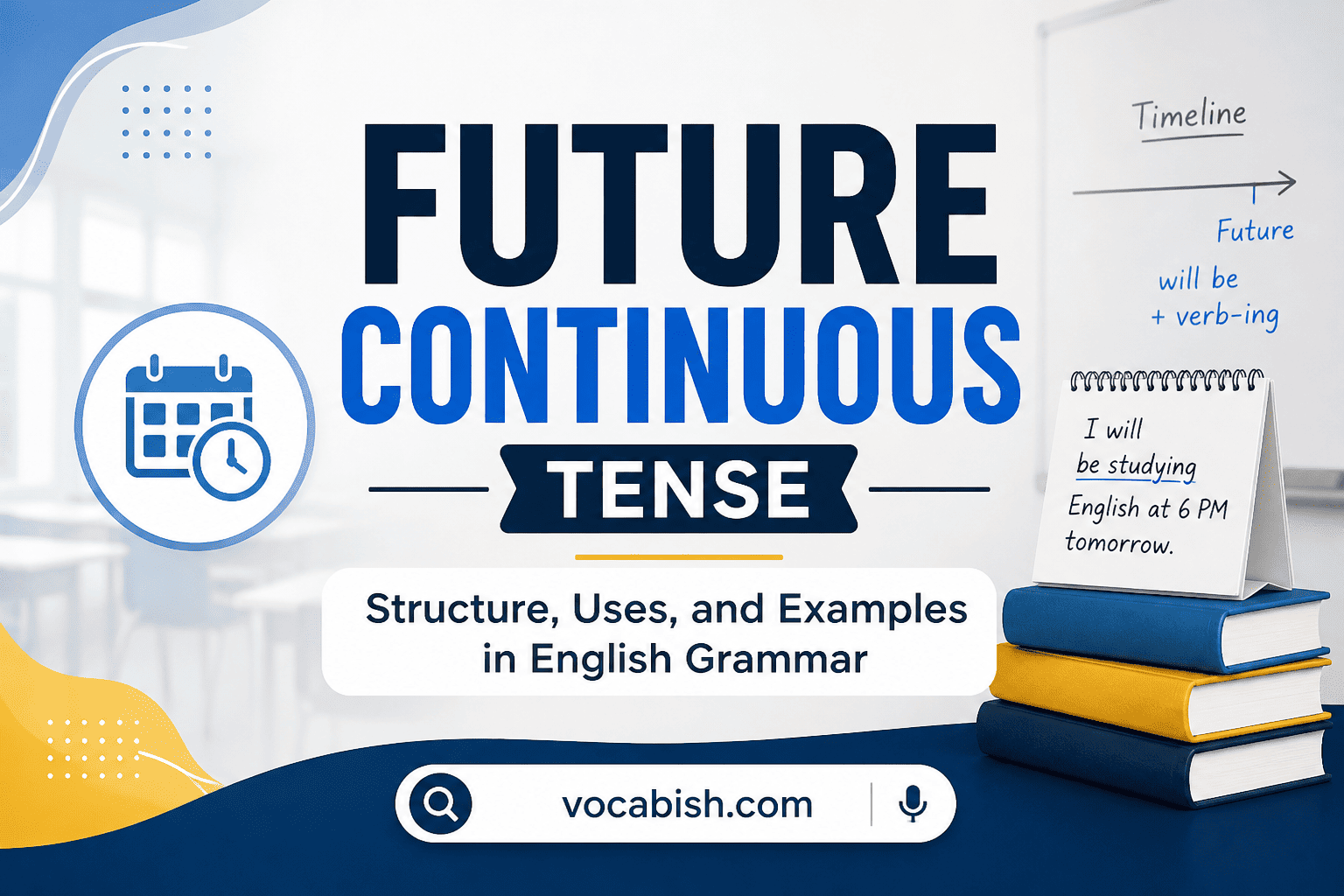
Understand how the Future Continuous Tense describes actions that will be in progress at a particular time in the future.
Future Perfect Tense Structure
Affirmative:
Subject + Will Have + Past Participle (V3) + Object
Examples:
- I will have completed the task.
- She will have arrived by noon.
Negative:
Subject + Will Not Have + Past Participle (V3) + Object
Examples:
- I will not have completed the task.
- She will not have arrived by noon.
Interrogative:
Will + Subject + Have + Past Participle (V3) + Object?
Examples:
- Will you have completed the task?
- Will she have arrived by noon?
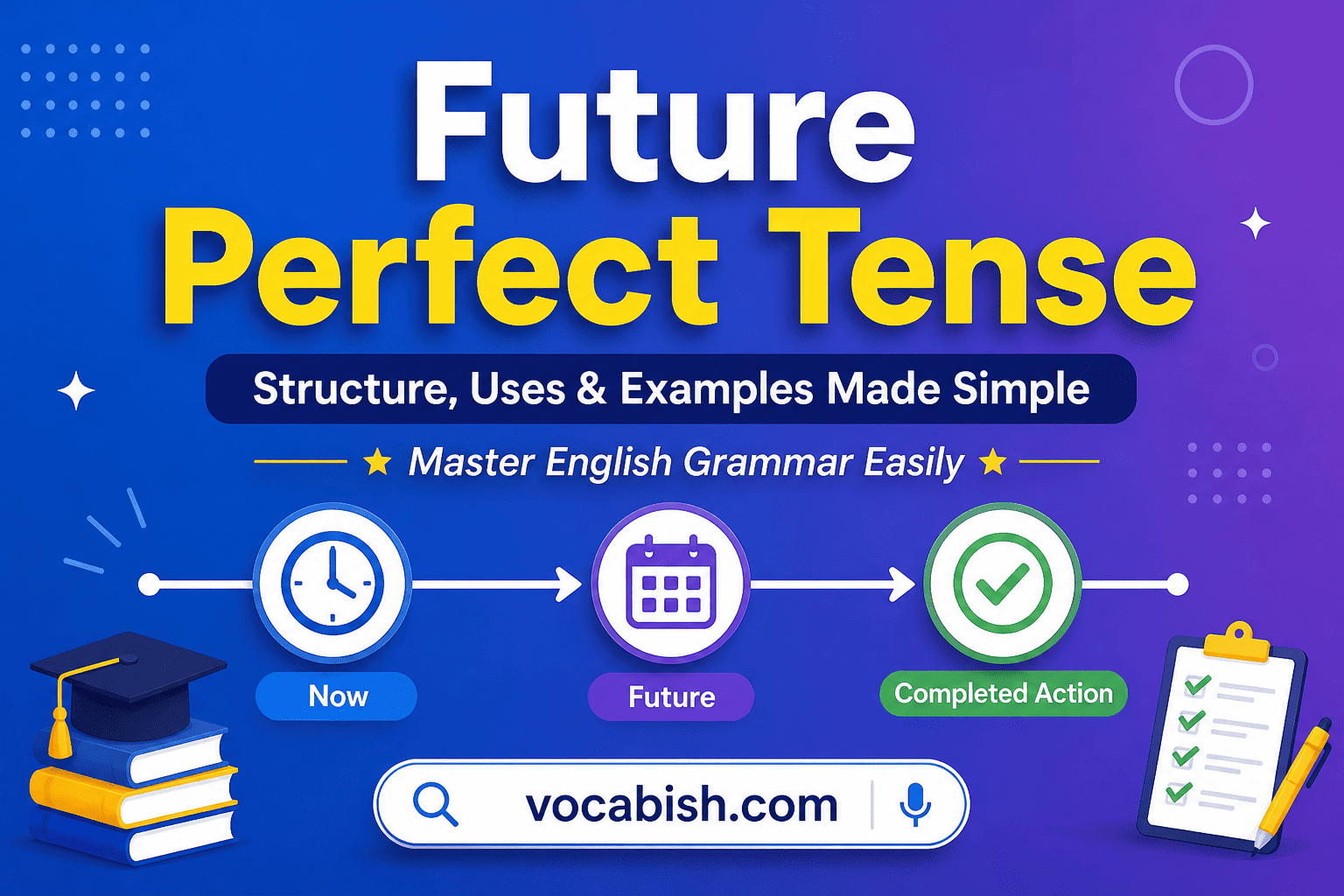
Learn how the Future Perfect Tense shows that an action will be completed before a specific future time.
Future Perfect Continuous Tense Structure
Affirmative:
Subject + Will Have Been + Verb-ing + Since/For + Time
Examples:
- I will have been working for five hours.
- She will have been teaching since morning.
Negative:
Subject + Will Not Have Been + Verb-ing + Since/For + Time
Examples:
- I will not have been working for five hours.
- She will not have been teaching since morning.
Interrogative:
Will + Subject + Have Been + Verb-ing + Since/For + Time?
Examples:
- Will you have been working for five hours?
- Will she have been teaching since morning?
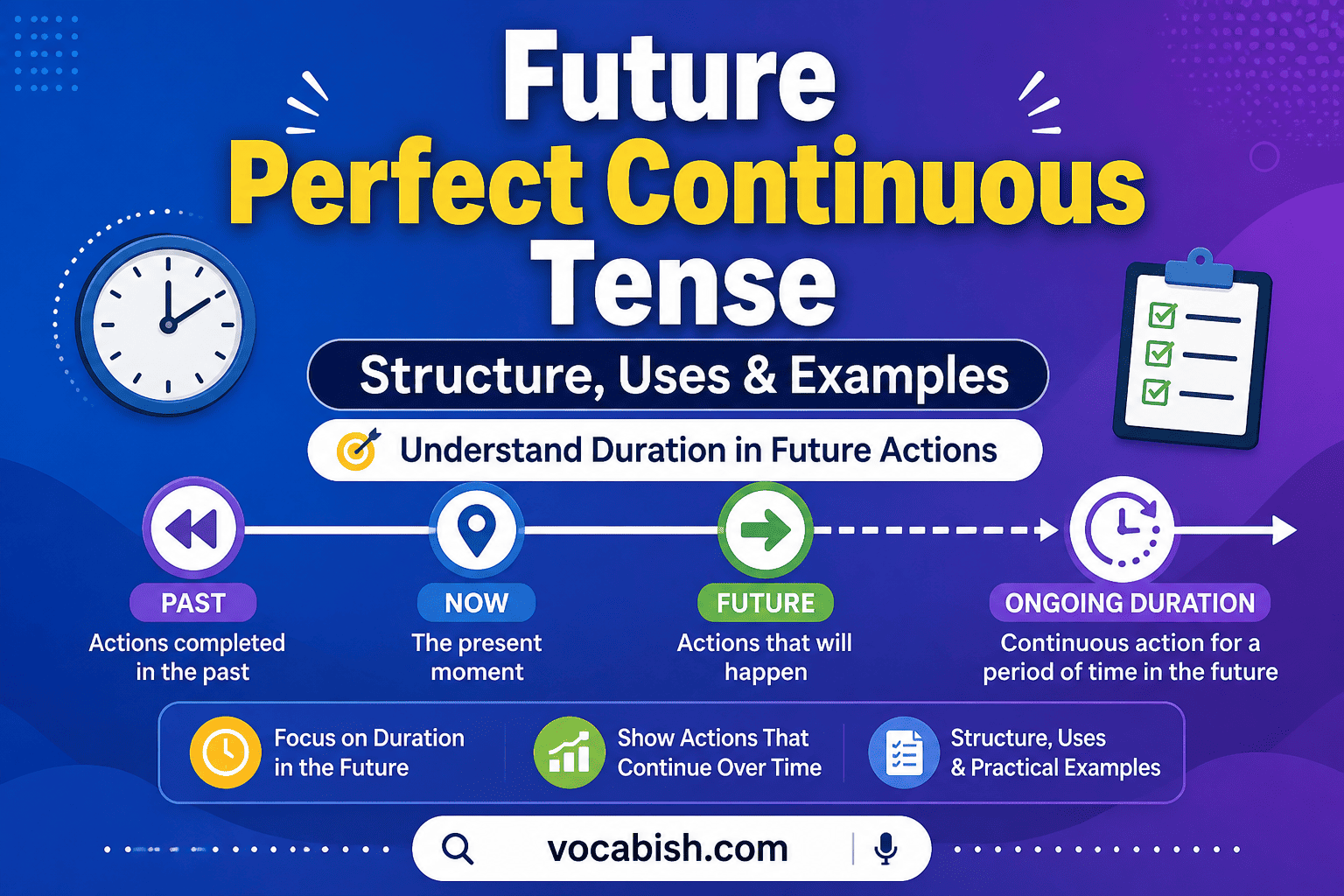
Understand how the Future Perfect Continuous Tense expresses the duration of an action continuing up to a certain point in the future.
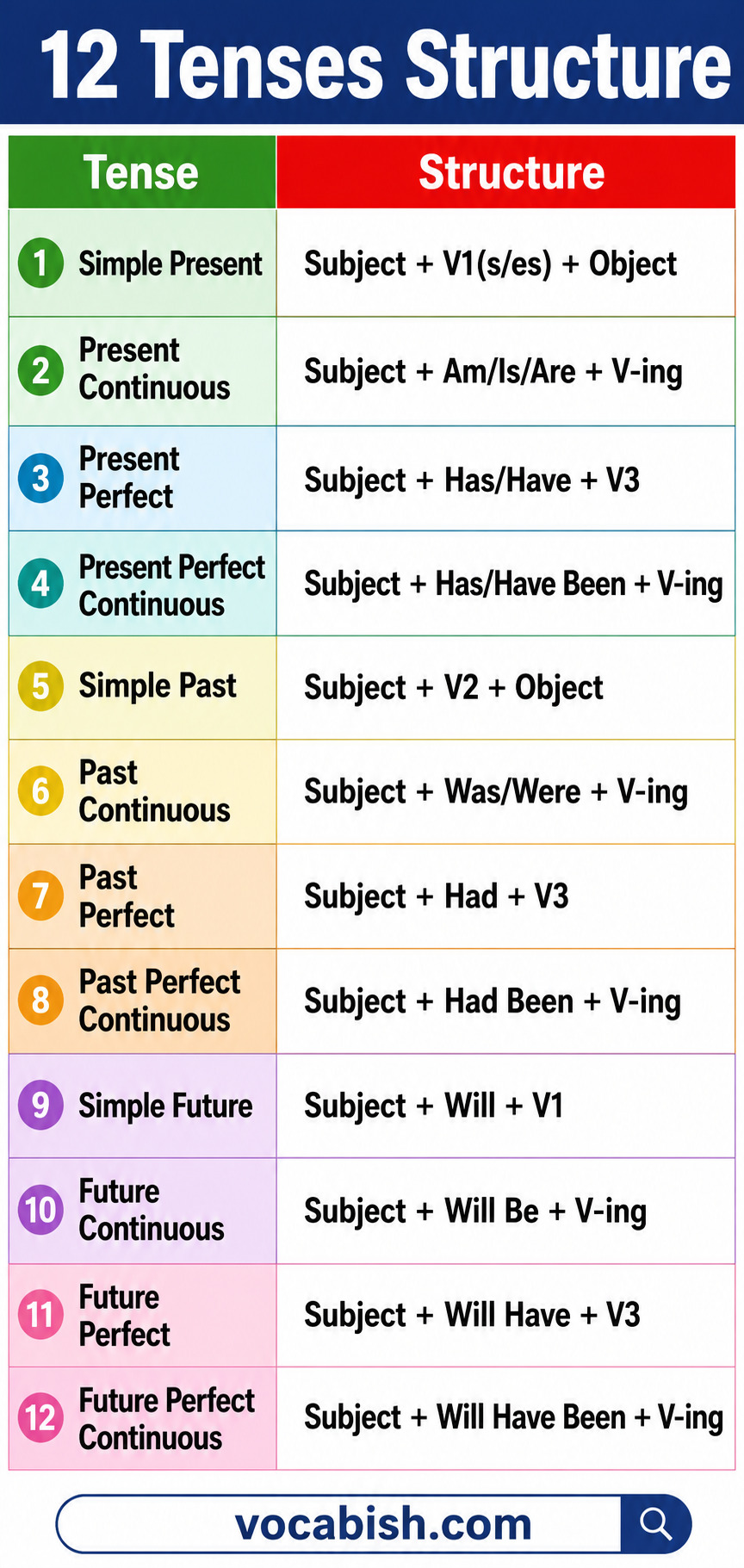
Summary of the 12 Tenses Structures
Tense | Structure |
|---|---|
Simple Present | Subject + V1(s/es) + Object |
Present Continuous | Subject + Am/Is/Are + V-ing |
Present Perfect | Subject + Has/Have + V3 |
Present Perfect Continuous | Subject + Has/Have Been + V-ing |
Simple Past | Subject + V2 + Object |
Past Continuous | Subject + Was/Were + V-ing |
Past Perfect | Subject + Had + V3 |
Past Perfect Continuous | Subject + Had Been + V-ing |
Simple Future | Subject + Will + V1 |
Future Continuous | Subject + Will Be + V-ing |
Future Perfect | Subject + Will Have + V3 |
Future Perfect Continuous | Subject + Will Have Been + V-ing |
Download PDF
Download this free 12 Tenses Structure PDF to learn all present, past, and future tense formulas in one easy-to-read chart for quick revision.
FAQs about Tense Structure
A tense structure is the sentence pattern used to show when an action happens. Learning tense structures helps you build grammatically correct English sentences.
Learning tense structure helps you speak and write clearly, avoid grammar mistakes, and express actions accurately in the present, past, and future.
English has 12 main tense structures, including four present, four past, and four future tenses used in everyday communication.
The easiest way to learn tense structures is to understand each formula, practice simple examples, and use them regularly in sentences.
Beginners should start with the Simple Present Tense Structure because it is commonly used for habits, routines, facts, and daily conversations.
You can remember all 12 tense structures by grouping them into present, past, and future tenses and practicing their formulas consistently.
Yes, each tense structure follows a different formula that uses specific helping verbs and verb forms to express time correctly.
The Simple Present, Present Continuous, Simple Past, and Simple Future Tense Structures are among the most frequently used in everyday English.
Conclusion about Tense Structures
English tenses are built around time + verb structure. Once you understand the patterns—like will + verb or has + past participle—you can form correct sentences easily. Don’t try to learn everything at once. Start with simple present, past, and future and then build up step-by-step. Practice daily, and pay attention to how native speakers use tenses. Over time, the patterns will feel natural.