
Bugs are small insects commonly found in homes, gardens, ponds, and farms. In this guide, you’ll learn different types of bugs with pictures, names, and simple descriptions to identify them more easily.
Many learners know common insect names, but fewer people recognize true bug names. Understanding these words can improve your reading, speaking, and observation skills while helping you identify bugs you may see in everyday life.
What Are Bugs?
Bugs are a specific group of small creatures belonging to the order Hemiptera. They are often called “true bugs” because they share similar body structures and feeding methods.
Most bugs have piercing mouthparts and can be found on plants, near water, or around outdoor environments. Learning their names helps you use more accurate English vocabulary.
Difference Between Bugs and Insects
In everyday English, people often call many insects bugs. However, true bugs belong to a specific insect group called Hemiptera.
However, in science, bugs are only one group within the much larger insect family. This means every bug is an insect, but many insects are not bugs.
Learning the difference helps you understand about bugs and insects clearly.
Here’s a comprehensive guide on 100+ Insects Names with Pictures.
Bugs Commonly Mistaken for True Bugs
Some small creatures are often called bugs in everyday English, but they do not belong to the true bug group. Learning these names can help you identify them more accurately.
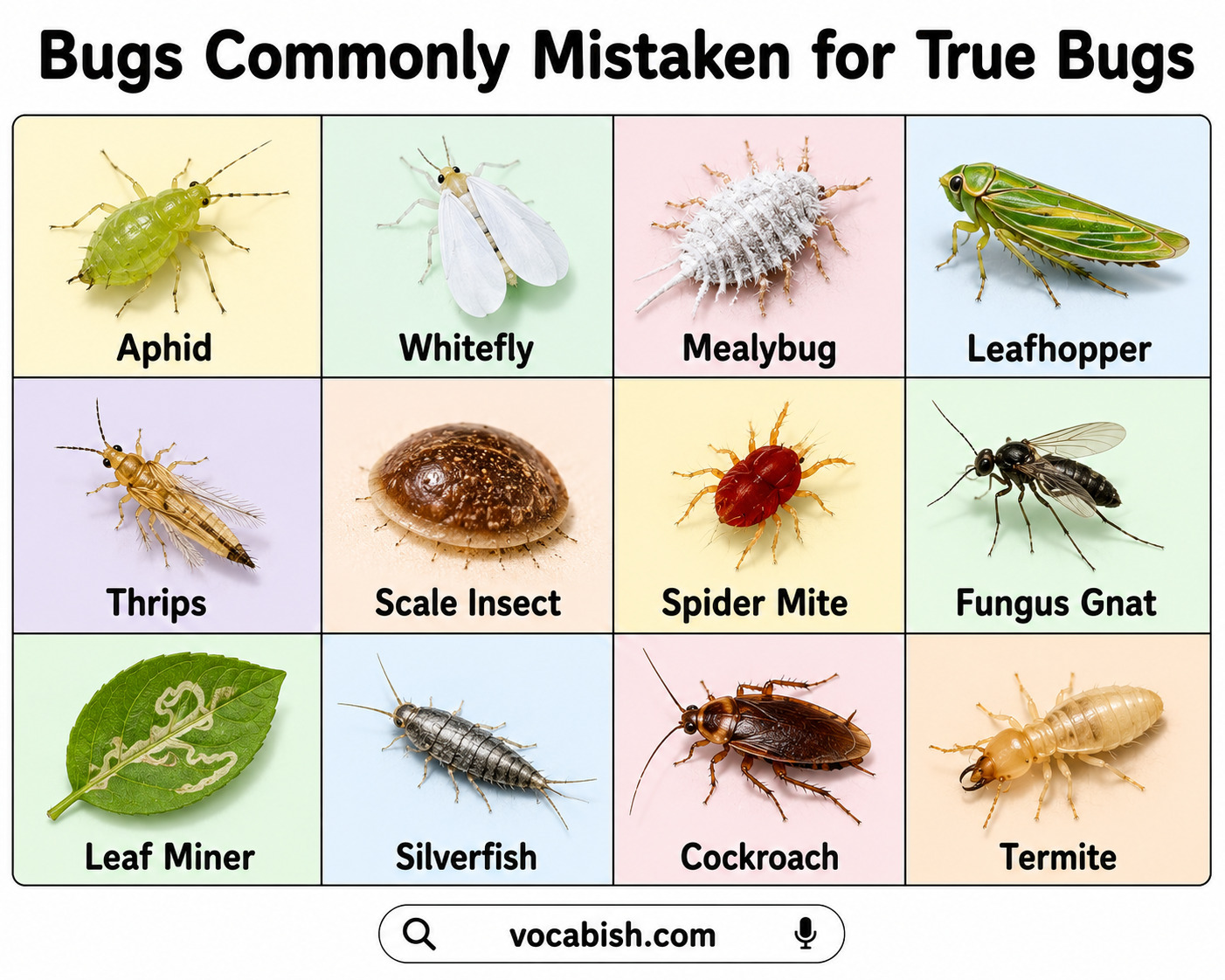
Aphid — Tiny green, black, or yellow insect commonly found on leaves and stems. It feeds on plant sap and often appears in large colonies.
Whitefly — Small white-winged insect usually seen beneath plant leaves. It quickly flies away when disturbed.
Mealybug — Soft-bodied insect covered with a white cotton-like coating. It is commonly found on houseplants and garden plants.
Leafhopper — Small green insect often living on grasses and crops. It can jump quickly from one plant to another.
Thrips — Slender insect commonly found on flowers and leaves. Its tiny size makes it difficult to spot.
Scale Insect — Small insect protected by a hard shell-like covering. It remains attached to stems and branches while feeding.
Spider Mite — Tiny plant pest usually found on the underside of leaves. Fine webbing is often a sign of its presence.
Fungus Gnat — Small dark flying insect commonly seen around indoor potted plants. Its larvae develop in moist soil.
Leaf Miner — Plant pest that creates winding trails inside leaves. The damage becomes visible as pale tunnels.
Silverfish — Wingless silvery insect often found in bathrooms, kitchens, and storage areas. It moves with a fish-like motion.
Cockroach — Flat brown insect commonly living in warm indoor environments. It is known for its fast movement.
Termite — Pale soft-bodied insect usually living in large colonies. Many species feed on wood and plant material.
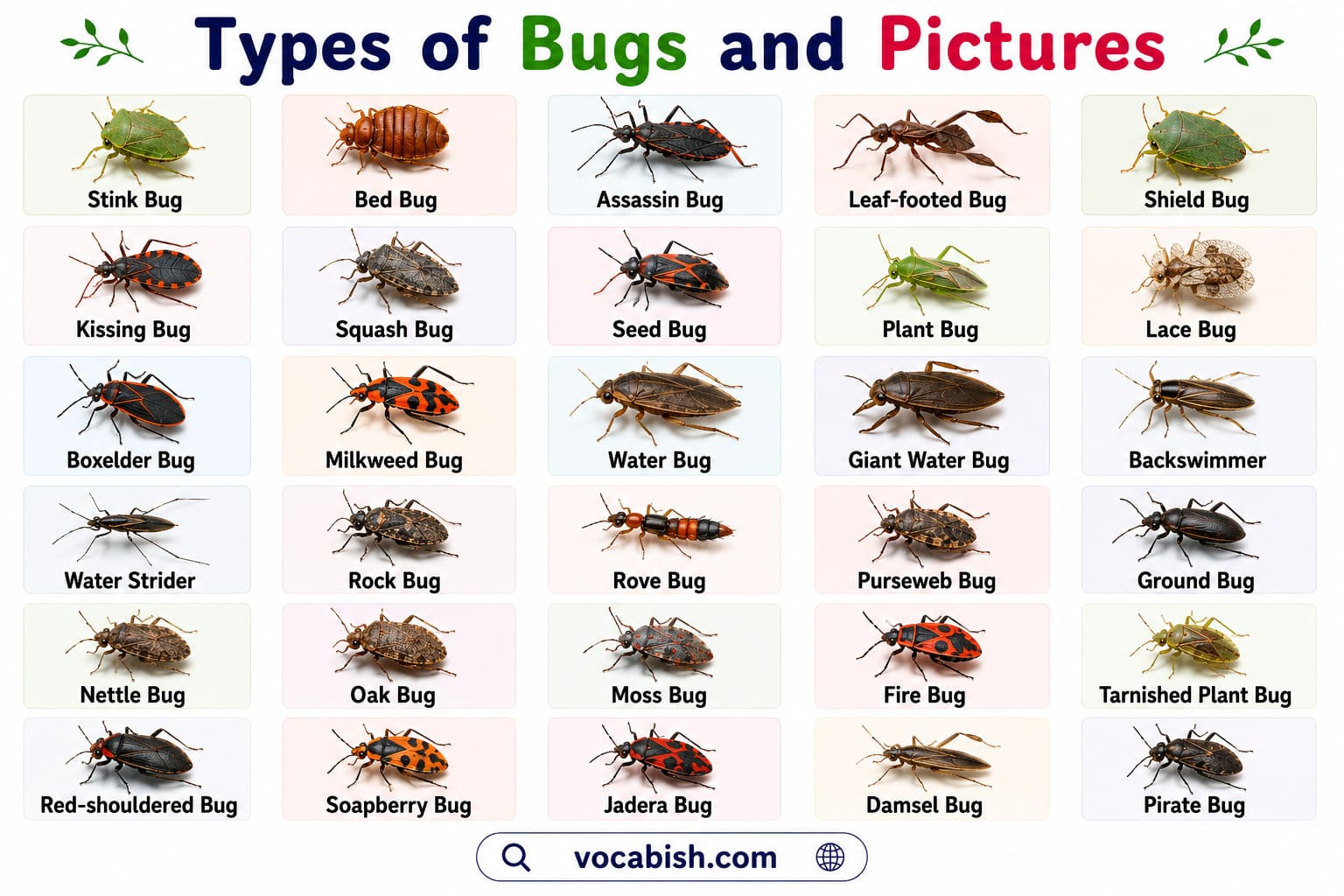
Most Common Types of Bugs with Pictures
Pictures make bug names easier to remember by helping you match each word with its appearance. As you learn these names, try to notice the shapes, colors, and features that make each bug different.
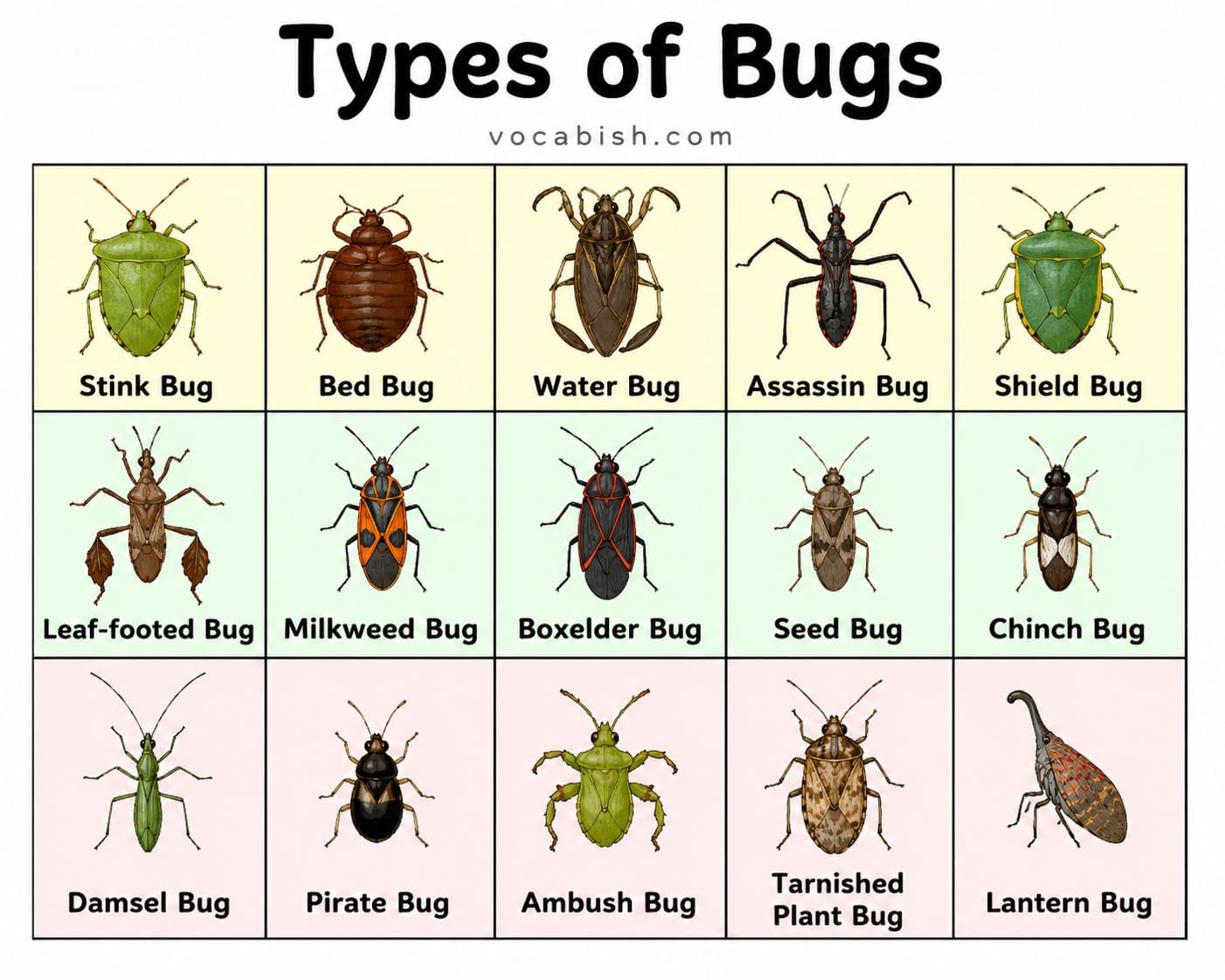
Stink Bug (Pentatomidae)
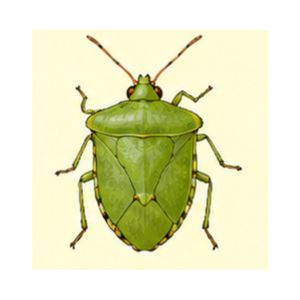
Shield-shaped bug usually seen in green or brown colors on leaves and garden plants. It releases a strong odor when it feels threatened.
Bed Bug (Cimex lectularius)
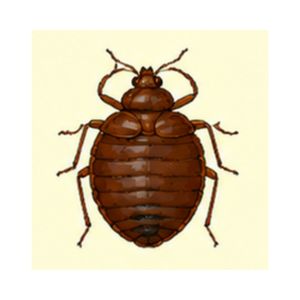
Small reddish-brown bug commonly found in mattresses, bedding, and furniture. It hides during the day and becomes active at night.
Water Bug (Belostomatidae)
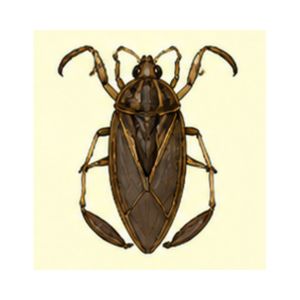
Large aquatic bug living in ponds, lakes, and other freshwater habitats. Its strong legs help it move easily through water.
Assassin Bug (Reduviidae)
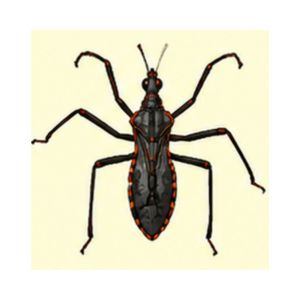
A slender bug with a long curved beak, often found on shrubs and garden vegetation. It uses its beak to capture and feed on other insects.
Shield Bug (Acanthosomatidae)
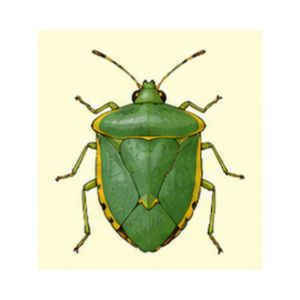
Broad-bodied bugs are often resting on leaves, stems, and flowering plants. Its shield-like shape makes it easy to recognize.
Leaf-footed Bug (Coreidae)
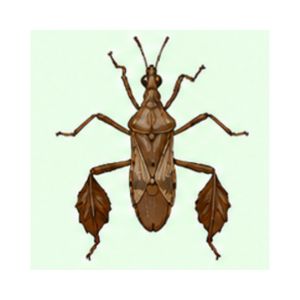
Brown bug with flattened hind legs that resemble small leaves. It is commonly seen on fruit trees and vegetable plants.
Milkweed Bug (Oncopeltus fasciatus)
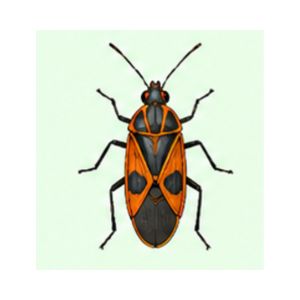
A bright orange-and-black bug frequently found on milkweed plants and seed pods. Large groups often gather in the same area.
Boxelder Bug (Boisea trivittata)
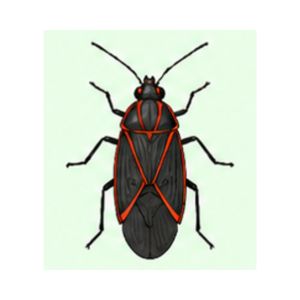
A black bug marked with thin red lines is commonly seen on tree trunks and house walls. It often gathers in sunny locations.
Seed Bug (Lygaeidae)
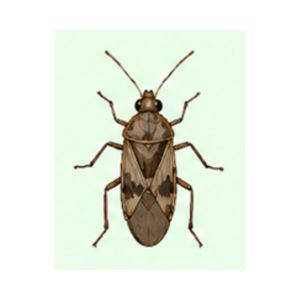
Narrow-bodied bugs are usually found among seeds, grasses, and dried plants. Many species feed on seeds throughout their life cycle.
Chinch Bug (Blissus leucopterus)
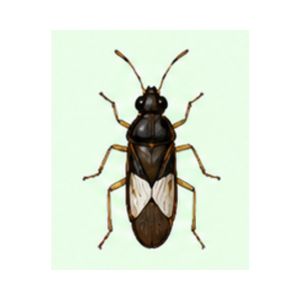
Tiny dark bug commonly living in lawns and grassy areas. Large numbers can sometimes damage patches of grass.
Damsel Bug (Nabidae)
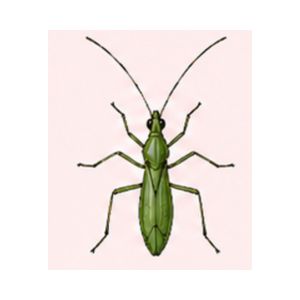
A thin bug with long legs and antennae, often found on low plants and garden foliage. Its slender shape gives it an elegant appearance.
Pirate Bug (Orius insidiosus)
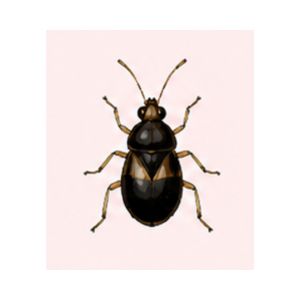
Small black bug commonly spotted on flowers and leaves. Despite its size, it is known for its quick movements.
Ambush Bug (Phymata americana)
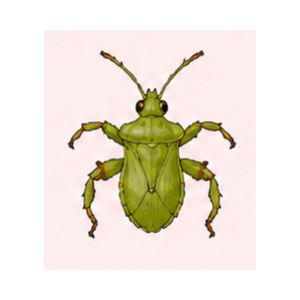
Compact bug often hidden among flowers and colorful blossoms. Its camouflage helps it blend into its surroundings.
Tarnished Plant Bug (Lygus lineolaris)
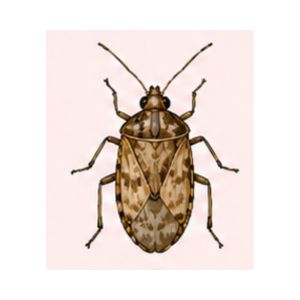
Mottled brown bug frequently found on crops, weeds, and garden plants. Its mixed coloring helps it stay unnoticed.
Lantern Bug (Fulgora laternaria)
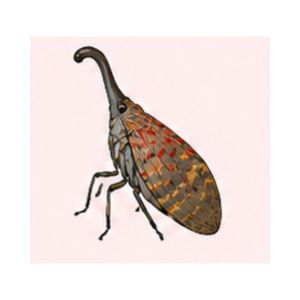
Distinctive bug with an extended snout usually seen on tree trunks and branches. Its unusual head shape makes it one of the easiest bugs to identify.
Garden Bugs You May See Outdoors
Gardens contain many different bug species. These bugs can often be spotted on flowers, leaves, stems, and garden paths.
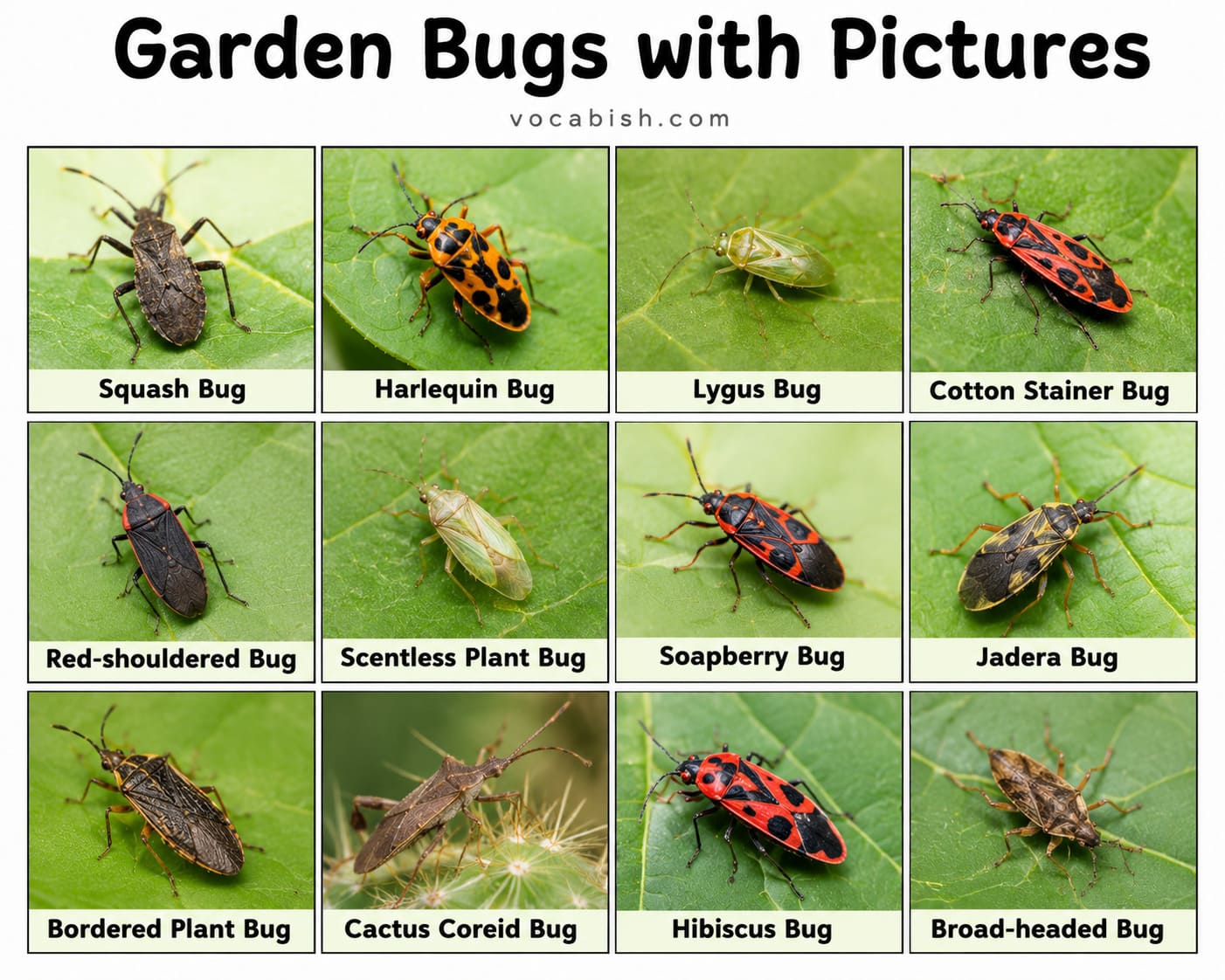
Squash Bug — Dark brown bug commonly found on squash, pumpkin, and cucumber plants. It often gathers on leaves and stems during warm months.
Harlequin Bug — Colorful bug marked with bright orange, red, and black patterns. Its striking appearance makes it easy to spot on garden plants.
Lygus Bug — Small greenish bug usually hiding among leaves, buds, and flowers. Its body color helps it blend into surrounding vegetation.
Cotton Stainer Bug — Bright red bug often seen on flowering shrubs and seed-producing plants. It is recognized by its bold coloration.
Red-shouldered Bug — Dark bug featuring noticeable red markings near its shoulders. It is commonly found around seed-bearing trees and plants.
Scentless Plant Bug — Slender plant bug frequently seen on leaves and stems. Unlike stink bugs, it does not release a strong odor when disturbed.
Soapberry Bug — Black-and-red bug commonly found near soapberry trees and fallen seeds. Large groups often gather where seeds are abundant.
Jadera Bug — Dark-colored bug with reddish markings usually spotted around soapberry trees. It feeds mainly on seeds from these plants.
Bordered Plant Bug — Dark-bodied bug with colorful edges along its wings and body. It is often seen resting on shrubs and garden vegetation.
Cactus Coreid Bug — Long-bodied bug commonly living on cactus plants in dry environments. Its shape helps it move easily across cactus pads.
Hibiscus Bug — Plant bug frequently found on hibiscus flowers and nearby foliage. Its coloring helps it blend among leaves and blooms.
Broad-headed Bug — Distinctive bug recognized by its unusually wide head. It is often spotted on low vegetation and garden plants.
Water Bugs Found Near Lakes and Ponds
Water environments are home to many fascinating bugs. These species spend most of their lives on or near freshwater habitats.
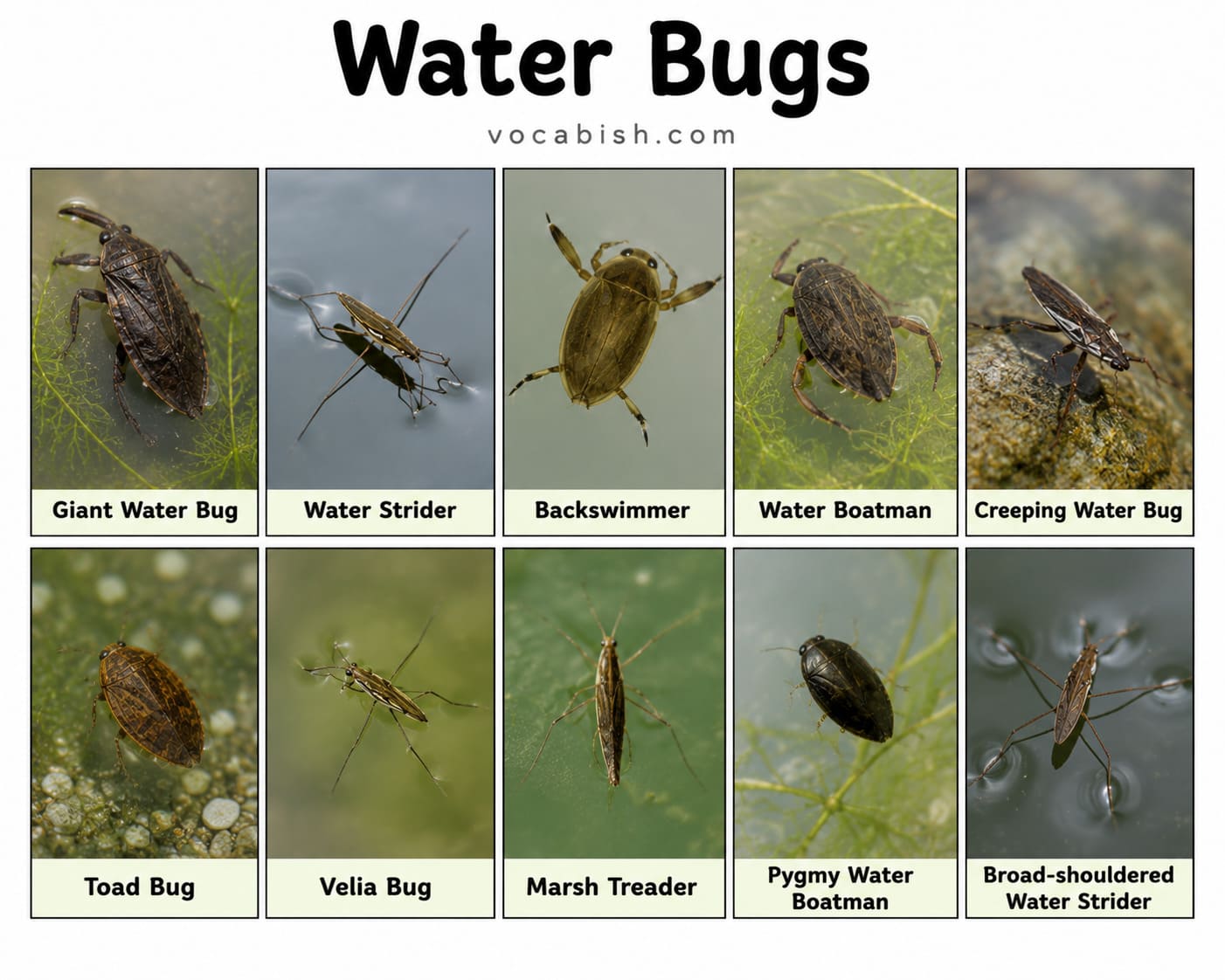
Giant Water Bug — Large brown bug commonly found in ponds, lakes, and slow-moving water. Its powerful front legs help it catch prey underwater.
Water Strider — Long-legged bug often seen skating across ponds and streams. It can move on the water surface without sinking.
Backswimmer — Streamlined aquatic bug that swims upside down beneath the water. Its rowing-like legs help it move quickly.
Water Boatman — Oval-shaped bug commonly living in ponds, lakes, and marshes. It uses its paddle-like legs to glide through water.
Creeping Water Bug — Small aquatic bug usually found among underwater plants and rocks. It prefers crawling rather than swimming.
Toad Bug — Compact bug often living near muddy shores, wetlands, and riverbanks. Its short body helps it move through damp habitats.
Velia Bug — Slender surface-dwelling bug commonly found on calm streams and ponds. It moves rapidly across the water while searching for food.
Marsh Treader — Thin-bodied bug typically seen in marshes and shallow wetlands. Its long legs help it travel across wet vegetation.
Pygmy Water Boatman — Tiny aquatic bug commonly living in shallow ponds and quiet pools. Despite its size, it is an active swimmer.
Broad-shouldered Water Strider — Long-legged bug frequently spotted on streams and freshwater habitats. Its wider body makes it easier to distinguish from other water striders.
Household Bugs Found Around Homes
Some bugs occasionally enter homes or live near buildings, windows, walls, and furniture.
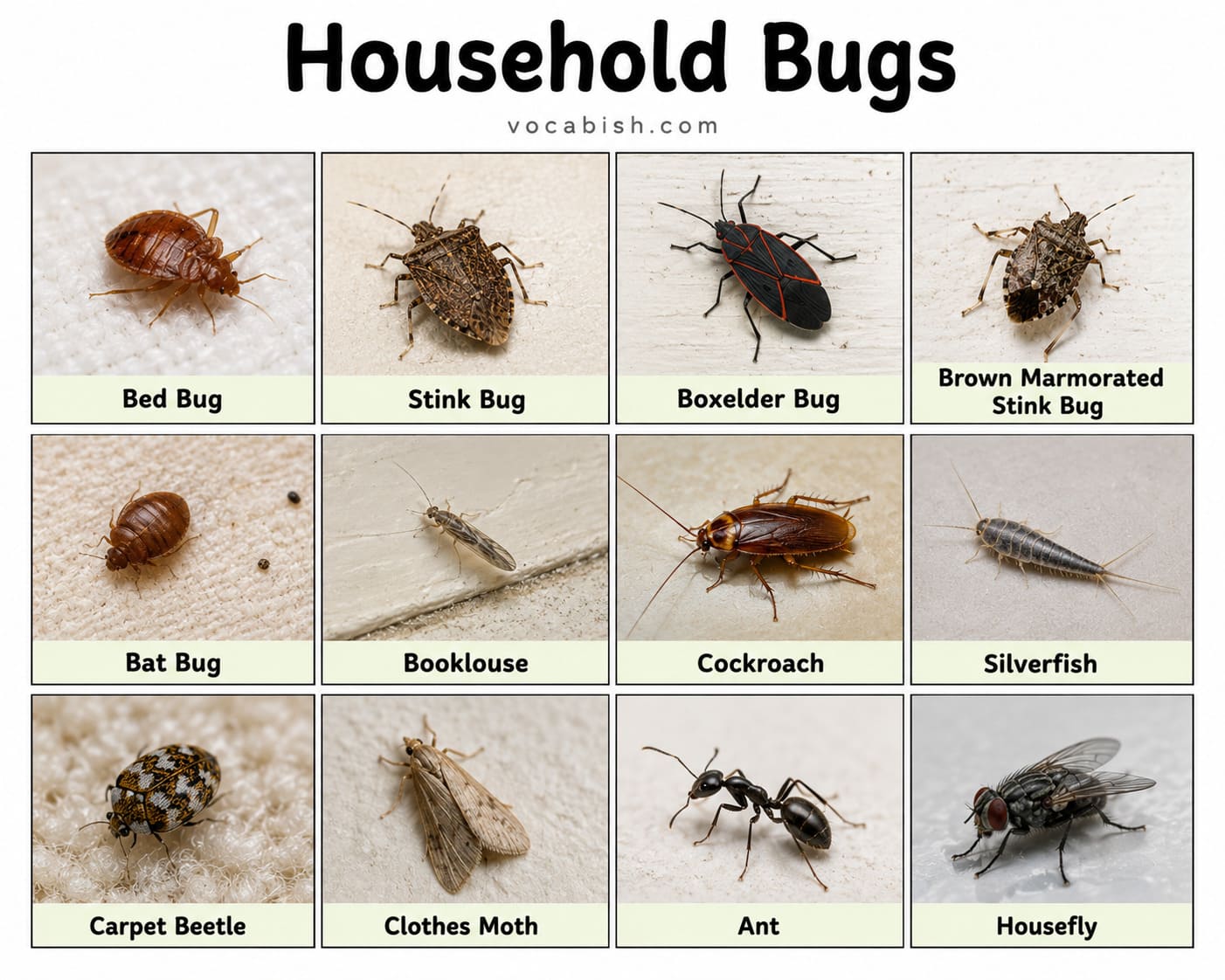
Bed Bug — Small reddish-brown bug commonly hiding in mattresses, bedding, and furniture. It usually comes out during the night.
Bat Bug — Flat brown bug often found near bat roosts in attics and wall spaces. It closely resembles a bed bug in appearance.
Boxelder Bug — Black bug with red markings frequently gathering on sunny walls and windows. Large groups may appear during cooler seasons.
Elm Seed Bug — Small brownish bug often seen around buildings and window frames. It commonly enters homes in search of shelter.
Kissing Bug — Dark-colored bug usually active after sunset in warm regions. Its long beak makes it easy to recognize.
Masked Hunter Bug — Brown bug often covered with dust and debris while hiding indoors. This natural disguise helps it remain unnoticed.
Minute Pirate Bug — Tiny black bug occasionally found near windows, plants, and indoor lights. Its small size makes it difficult to spot.
False Chinch Bug — Grayish bug commonly seen in large numbers around homes and gardens. Groups may gather on walls and sidewalks.
Reduviid Bug — Slender predatory bug with a long pointed beak often found in hidden indoor spaces. It belongs to the same family as assassin bugs.
Sycamore Seed Bug — Small seed-feeding bug frequently entering houses during warm weather. It is often seen near doors, windows, and exterior walls.
Plant Bugs Commonly Found on Crops
Many bugs live on crops and agricultural plants. Learning these names helps you recognize bug vocabulary often used in farming and gardening discussions.
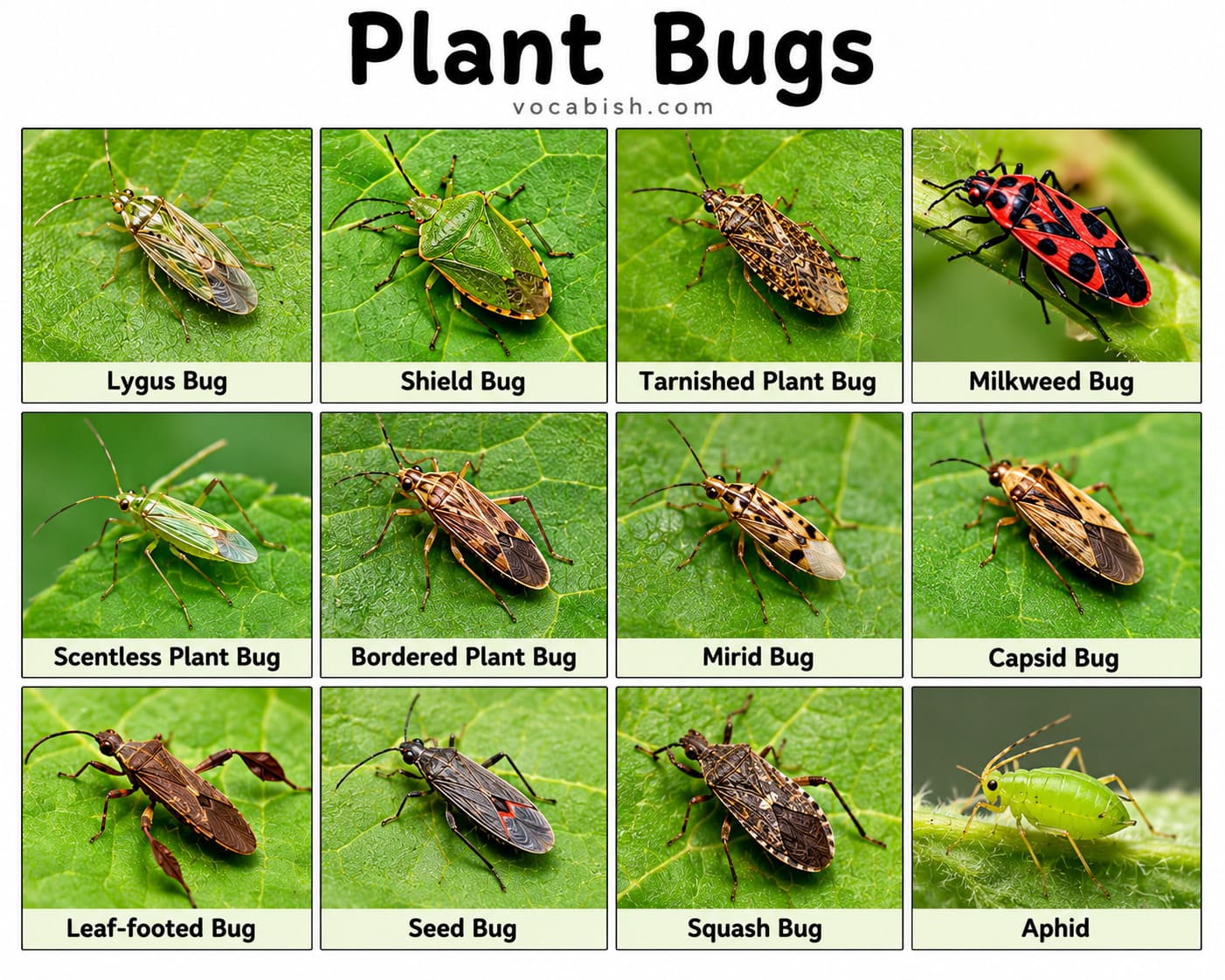
Green Stink Bug — Bright green bug commonly found on vegetables, fruits, and field crops. Its color helps it blend easily with plant leaves.
Brown Marmorated Stink Bug — Mottled brown bug often seen on fruit trees, gardens, and crop fields. It is known for feeding on a wide variety of plants.
Rice Bug — Slender brownish bug commonly found in rice fields and grassy habitats. It feeds directly on developing rice grains.
Cotton Bug — Reddish bug frequently seen on cotton plants and seed pods. Large numbers may gather where cotton crops are grown.
Capsid Bug — Small green or brown bug usually found on leaves, flowers, and young shoots. Its compact size makes it difficult to spot among foliage.
Mirid Bug — Soft-bodied bug commonly living on agricultural crops and garden plants. Many species are recognized by their slender shape.
Rice Ear Bug — Narrow-bodied bug often found on rice plants during the grain-producing stage. It feeds on developing seeds.
Wheat Bug — Brown crop bug commonly associated with wheat fields and cereal crops. It is often seen resting on grain heads.
Groundnut Bug — Seed-feeding bug frequently found around peanut and groundnut plants. It is commonly spotted near pods and stems.
Bean Bug — Dark-colored bug often seen on bean plants and legume crops. It feeds by piercing pods and plant tissues.
Alfalfa Bug — Green bug commonly living in alfalfa fields and grassy farmland. Its coloring helps it remain hidden among vegetation.
Cereal Bug — Grain-feeding bug usually found on cereal crops such as barley, oats, and wheat. It is often noticed during the growing season.
Bugs That Bite Humans
Some bugs can bite when they feel threatened or disturbed. Learning these names helps you identify bugs that may come into contact with people.
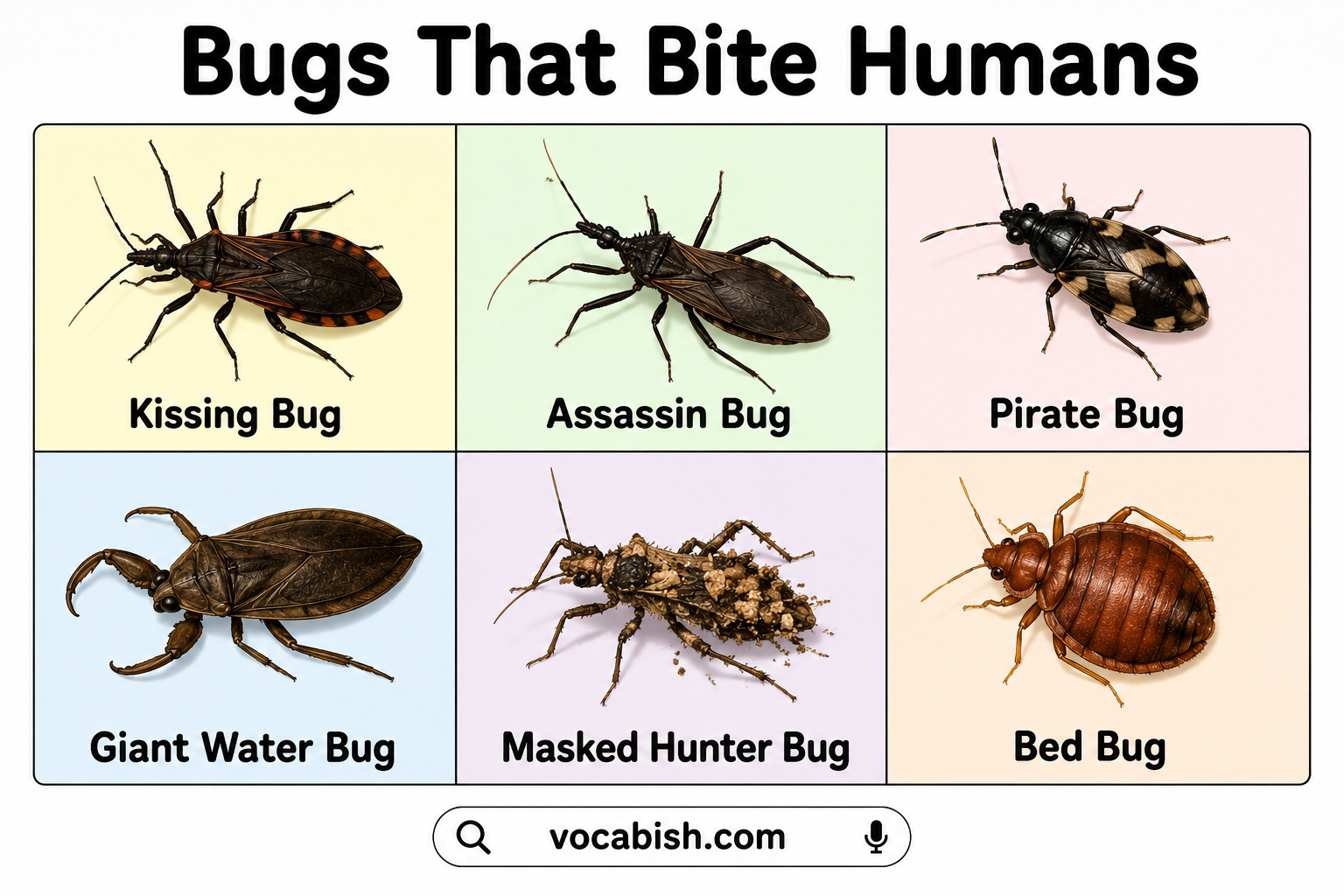
Kissing Bug — Dark-colored bug commonly found in warm outdoor environments and hidden cracks. It is known for biting people while they sleep.
Assassin Bug — Slender bug with a long curved beak often seen on shrubs and garden plants. Some species can deliver a painful bite when handled.
Pirate Bug — Tiny black bug frequently found on flowers and leaves. Despite its small size, it can occasionally bite exposed skin.
Giant Water Bug — Large aquatic bug living in ponds and slow-moving water. Its bite is known to be surprisingly painful.
Masked Hunter Bug — Brown bug often hiding indoors beneath furniture and clutter. It may bite if accidentally touched or trapped.
Bed Bug — Small reddish-brown bug commonly hiding in mattresses and furniture. It feeds on blood, usually during the night.
Helpful Bugs in Gardens
Not all bugs are harmful. Some help control other pests and support a healthy garden environment.
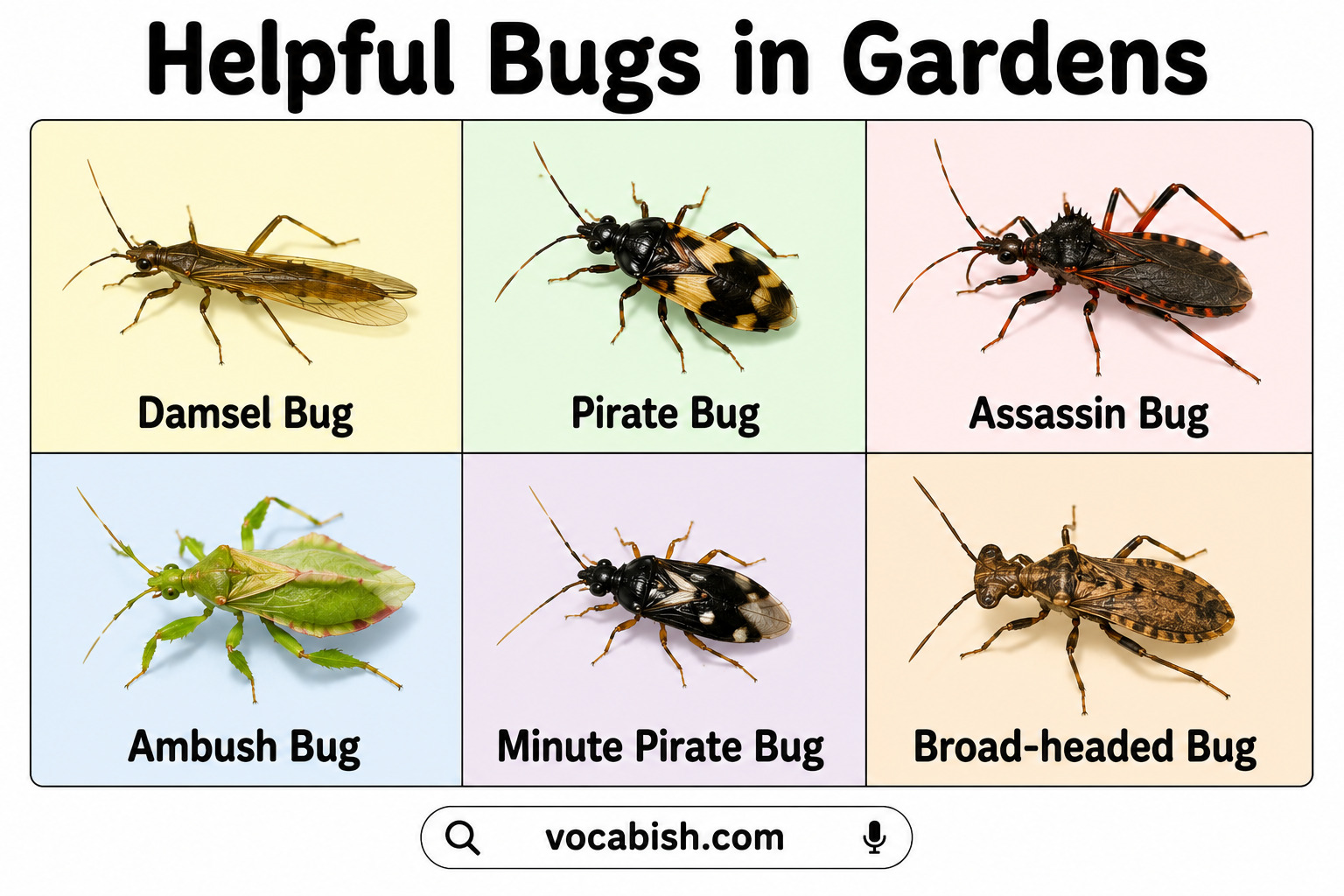
Damsel Bug — Slender bug commonly found among leaves and garden plants. It feeds on smaller insects that may damage vegetation.
Pirate Bug — Tiny dark bug often seen on flowers and crops. It helps reduce populations of plant-feeding pests.
Assassin Bug — Long-legged bug frequently found on shrubs and garden foliage. It hunts a variety of unwanted insects.
Ambush Bug — Compact bug often hidden among flowers and blossoms. It waits patiently for insects to come within reach.
Minute Pirate Bug — Small black bug commonly living on flowers and leaves. Gardeners often value it for natural pest control.
Broad-headed Bug — Distinctive bug with a widened head often found on low-growing plants. It is known for feeding on smaller insects.
Harmful Bugs for Plants
Some bugs feed on leaves, stems, seeds, and developing crops. These species are commonly considered plant pests.
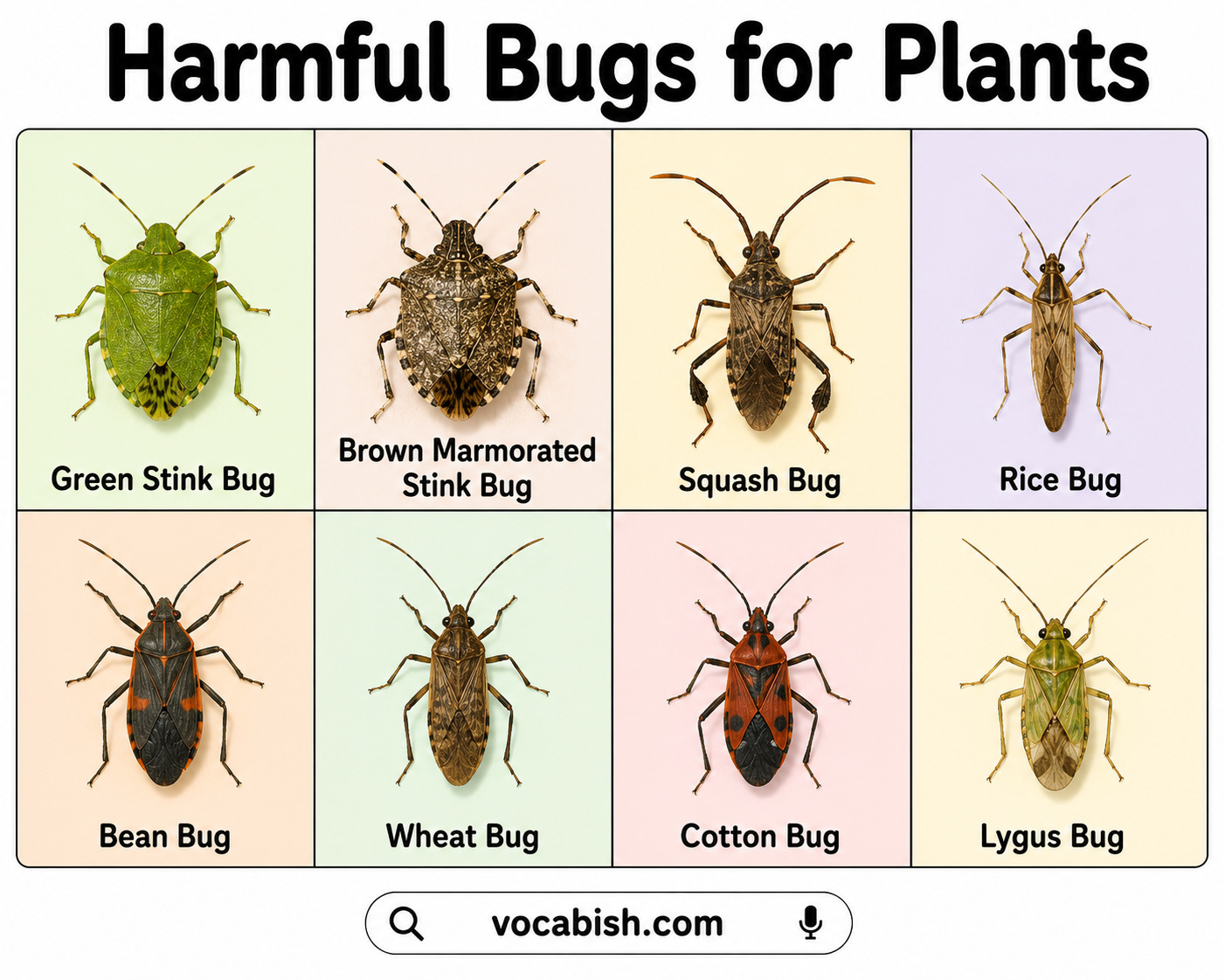
Green Stink Bug — Bright green bug commonly found on vegetables and fruit plants. It feeds by piercing plant tissues.
Brown Marmorated Stink Bug — Mottled brown bug often seen on fruit trees and garden crops. It can damage many types of plants.
Squash Bug — Dark brown bug frequently found on squash, pumpkin, and cucumber plants. Large numbers can weaken plant growth.
Rice Bug — Slender bug commonly living in rice fields and grassy habitats. It feeds directly on developing grains.
Bean Bug — Dark-colored bug often found on bean plants and legumes. It feeds by piercing pods and seeds.
Wheat Bug — Brown crop bug usually seen on wheat and cereal plants. It feeds on grain heads during the growing season.
Cotton Bug — Reddish bug frequently spotted on cotton crops and seed pods. Groups may gather where cotton is cultivated.
Lygus Bug — Small greenish bug often hiding among leaves, flowers, and buds. It feeds on many agricultural and garden plants.
A to Z Bug Names in English
Here’s an alphabetical list of bug names in English:
- A – Assassin Bug
- B – Bed Bug
- C – Chinch Bug
- D – Damsel Bug
- E – Elm Seed Bug
- F – False Chinch Bug
- G – Giant Water Bug
- H – Harlequin Bug
- I – Immature Stink Bug
- J – Jadera Bug
- K – Kissing Bug
- L – Lantern Bug
- M – Milkweed Bug
- N – Nettle Bug
- O – Oak Bug
- P – Pirate Bug
- Q – Quartered Shield Bug
- R – Rice Bug
- S – Stink Bug
- T – Toad Bug
- U – Uhler’s Stink Bug
- V – Velia Bug
- W – Water Strider
- X – Xylastodoris Bug
- Y – Yellow Shield Bug
- Z – Zelus Assassin Bug
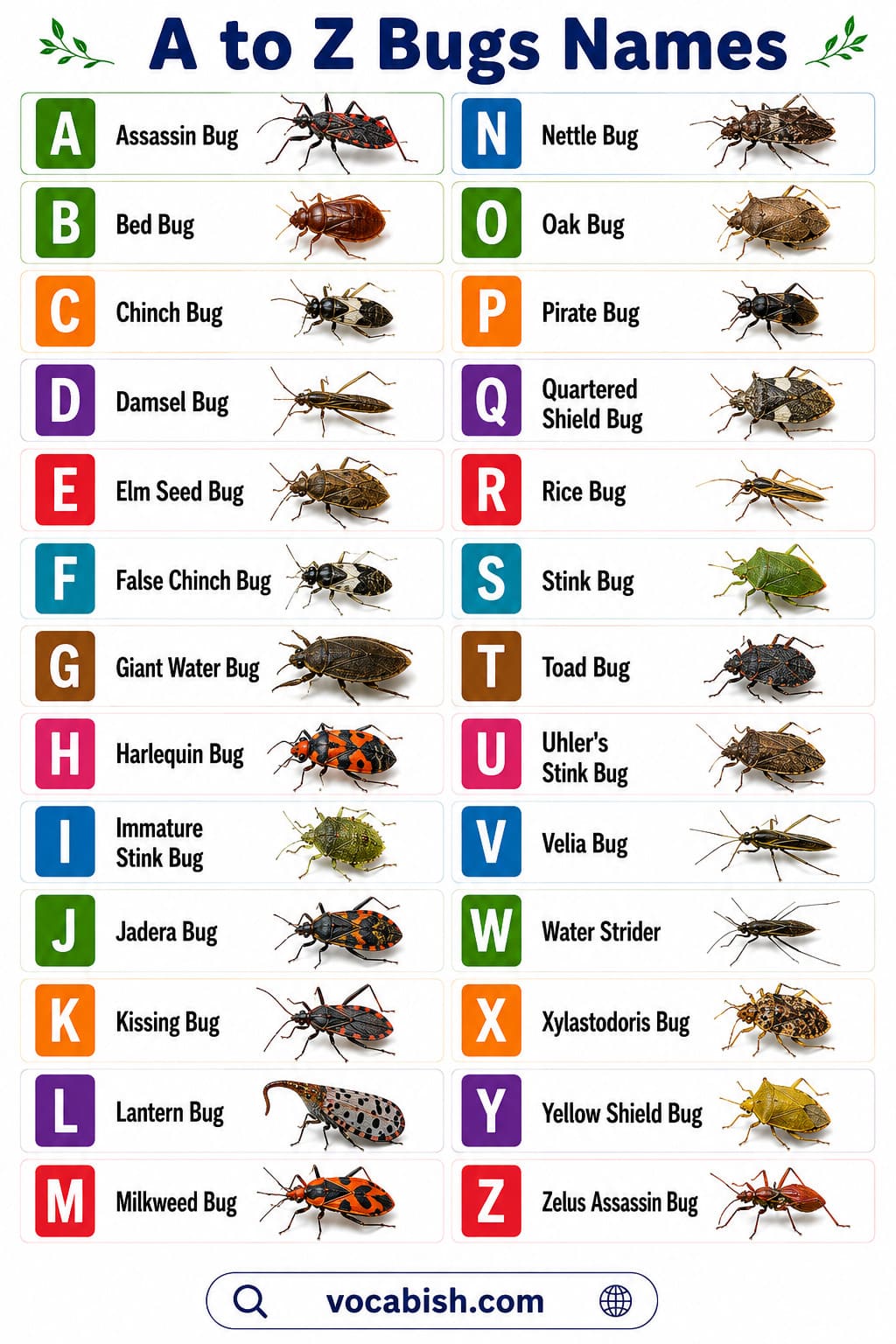
All Types of Bugs Chart
Bugs can be grouped into different categories based on their appearance, habitat, feeding habits, or behavior. The chart below introduces common bug types along with examples, making it easier to learn and recognize bug names in English.
Type of Bug | Examples |
|---|---|
Stink Bugs | Green Stink Bug, Brown Marmorated Stink Bug, Rough Stink Bug |
Shield Bugs | Shield Bug, Yellow Shield Bug, Hawthorn Shield Bug |
Bed Bugs | Bed Bug, Tropical Bed Bug, Bat Bug |
Water Bugs | Giant Water Bug, Water Boatman, Creeping Water Bug |
Water Surface Bugs | Water Strider, Marsh Treader, Velia Bug |
Assassin Bugs | Assassin Bug, Zelus Assassin Bug, Wheel Bug |
Pirate Bugs | Minute Pirate Bug, Flower Pirate Bug |
Damsel Bugs | Damsel Bug, Nabid Bug |
Plant Bugs | Tarnished Plant Bug, Capsid Bug, Mirid Bug |
Leaf-footed Bugs | Leaf-footed Bug, Western Leaf-footed Bug |
Seed Bugs | Seed Bug, Elm Seed Bug, False Chinch Bug |
Chinch Bugs | Chinch Bug, Southern Chinch Bug |
Milkweed Bugs | Milkweed Bug, Large Milkweed Bug, Small Milkweed Bug |
Squash Bugs | Squash Bug, Coreid Squash Bug |
Boxelder Bugs | Boxelder Bug, Red-shouldered Bug |
Lantern Bugs | Lantern Bug, Spotted Lanternfly |
Ambush Bugs | Ambush Bug, Jagged Ambush Bug |
Crop Bugs | Rice Bug, Cotton Bug, Wheat Bug, Bean Bug |
Tree Bugs | Jadera Bug, Sycamore Seed Bug, Soapberry Bug |
Garden Bugs | Harlequin Bug, Bordered Plant Bug, Hibiscus Bug |
Agricultural Bugs | Alfalfa Bug, Cereal Bug, Groundnut Bug |
Predatory Bugs | Assassin Bug, Pirate Bug, Ambush Bug |
Aquatic Bugs | Backswimmer, Water Boatman, Giant Water Bug |
Household Bugs | Bed Bug, Bat Bug, Boxelder Bug, Elm Seed Bug |
Bugs Name Quiz
Practice different types of bugs and test your vocabulary knowledge.
Bug Names Used in Sentences
- A stinkbug rested quietly on the garden leaf.
- We spotted a water strider moving across the pond.
- The bed bug hid inside the mattress seam.
- A leaf-footed bug landed on the tomato plant.
- The giant water bug swam beneath the surface.
- A boxelder bug crawled across the window frame.
- The milkweed bug gathered around seed pods.
- We found a squash bug under a garden leaf.
- A kissing bug appeared near the outdoor light.
- The pirate bug moved quickly across the flower.
Tips to Remember Bug Names
Learning bug vocabulary becomes easier with regular practice and visual learning.
- Study bug pictures to connect names with appearances.
- Group bugs by habitat such as water or gardens.
- Use flashcards for quick vocabulary review.
- Practice writing sentences with new bug names.
- Read nature books that include bug illustrations.
- Review vocabulary regularly to improve memory.
You May Also Like:
- A to Z Animal Names with Images
- Reptile Names in English with Pictures
- Living and Non Living Things Vocabulary
Frequently Asked Questions
Bugs are a group of creatures belonging to the order Hemiptera. They are often called true bugs and share similar body features.
No. Bugs are a specific group within the insect family. All bugs are insects, but not all insects are bugs.
Common bug names include stink bug, bed bug, water bug, shield bug, assassin bug, leaf-footed bug, and milkweed bug.
Learning bug names improves vocabulary and helps learners describe different bugs found in nature, gardens, farms, and homes.
Squash bugs, harlequin bugs, bordered plant bugs, soapberry bugs, and scentless plant bugs are commonly found outdoors.
Water striders, giant water bugs, water boatmen, backswimmers, and marsh treaders are often found near ponds and lakes.
True bugs belong to the order Hemiptera, one of the largest groups of plant-feeding and predatory bugs.
Children can learn faster through pictures, flashcards, short sentences, educational videos, and regular vocabulary practice.
Conclusion
Learning different types of bugs helps you expand your vocabulary and recognize many creatures found in gardens, ponds, farms, and homes. From stink bugs and water striders to assassin bugs and shield bugs, each bug has its own appearance and name.
By studying bug names with pictures and using them in sentences, you can improve both vocabulary and observation skills while becoming more confident in everyday English.