
Not every invitation can be accepted, and knowing how to say “NO” politely is an important communication skill. Whether you’re declining a party invitation, a work event, a dinner gathering, or a casual meet-up, your response should show appreciation while clearly expressing that you cannot attend. Using thoughtful and respectful language helps you avoid misunderstandings and maintain good relationships. In this article, you’ll find 50+ polite ways to decline an invitation in English, along with examples that fit different social and professional situations.
Polite Ways to Decline an Invitation
Polite ways to decline an invitation are kind and respectful sentences used to say no when you cannot attend an event.
Examples:
- “I’m sorry, I can’t attend.”
→ This shows respect and gives a clear answer. - “Thank you for inviting me, but I have another plan.”
→ This shows appreciation and a reason.
These sentences help you stay polite while refusing.
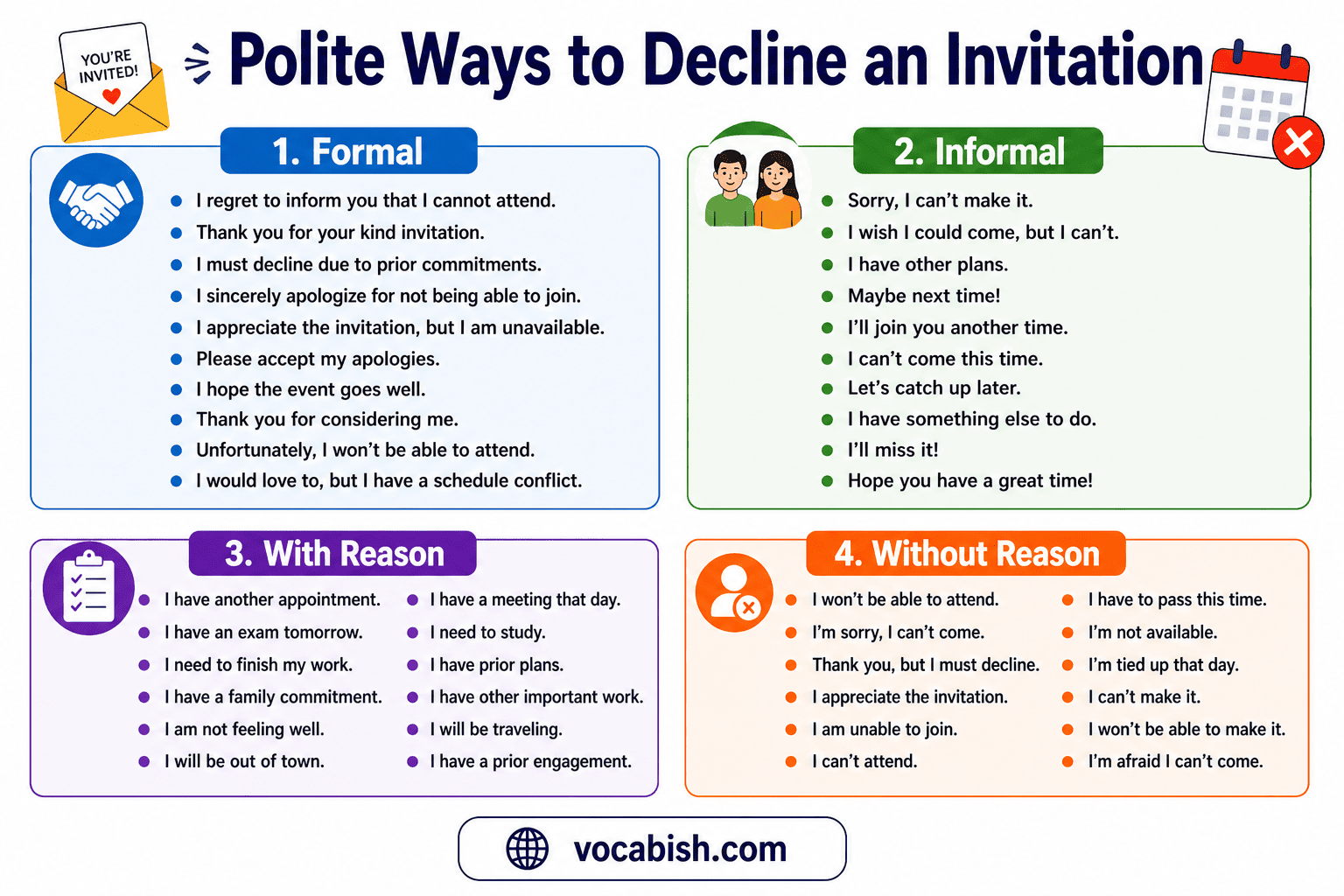
Formal and Informal Ways to Decline an Invitation
Formal Ways:
Used in professional or official situations.
- I regret to inform you that I cannot attend.
- Thank you for your invitation, but I must decline.
- I appreciate the offer, but I am unavailable.
- I sincerely apologize for not being able to join.
- I have a prior commitment.
Informal Ways:
Used with friends or family.
- Sorry, I can’t make it.
- I wish I could come, but I can’t.
- Maybe next time!
- I have other plans.
- I’ll join you another day.
Polite Declines with Reasons
Giving a reason makes your response clearer.
- I have a family commitment.
- I am not feeling well.
- I have an exam tomorrow.
- I need to finish my work.
- I will be out of town.
Polite Declines Without Reasons
Sometimes you don’t need to explain.
- I won’t be able to attend.
- I’m sorry, I can’t come.
- Thank you, but I must decline.
- I appreciate the invitation.
- I am unable to join.
Invitation Declines with Appreciation
Always show gratitude.
- Thank you for inviting me.
- I really appreciate the invitation.
- It means a lot to me.
- I’m glad you thought of me.
- Thanks for considering me.
Basic Polite Sentences for Declining an Invitation
- Thank you for inviting me.
- I’m sorry, I can’t come.
- I appreciate the invitation.
- I won’t be able to attend.
- Maybe next time.
- I have another plan.
- I am busy that day.
- I have an exam.
- I need to work.
- I am not feeling well.
- I wish I could join you.
- Let’s meet another time.
- I’ll catch up with you later.
- Hope you have a great time!
- Enjoy the event!
Polite Ways to Decline an Invitation: Examples
- I can’t make it this time.
- I have something important to do.
- I will miss it.
- I hope it goes well.
- I’m unable to attend.
- I’m tied up that day.
- I have a meeting.
- I need to study.
- I have to travel.
- I’m not available.
- I’m busy right now.
- I’ll pass this time.
- I have other commitments.
- I’m sorry for the inconvenience.
- I’ll join next time.
- Thanks again for inviting me.
- I really appreciate it.
- I cannot attend due to personal reasons.
- I hope to see you soon.
- Let’s plan another day.
- I’ll think of you all.
- I wish you the best.
- Have a great event!
- I hope it’s successful.
- I’m sorry I’ll miss it.
- I appreciate your effort.
- I can’t join, but thanks!
- I have to say no this time.
- I hope you understand.
- Thank you for understanding.
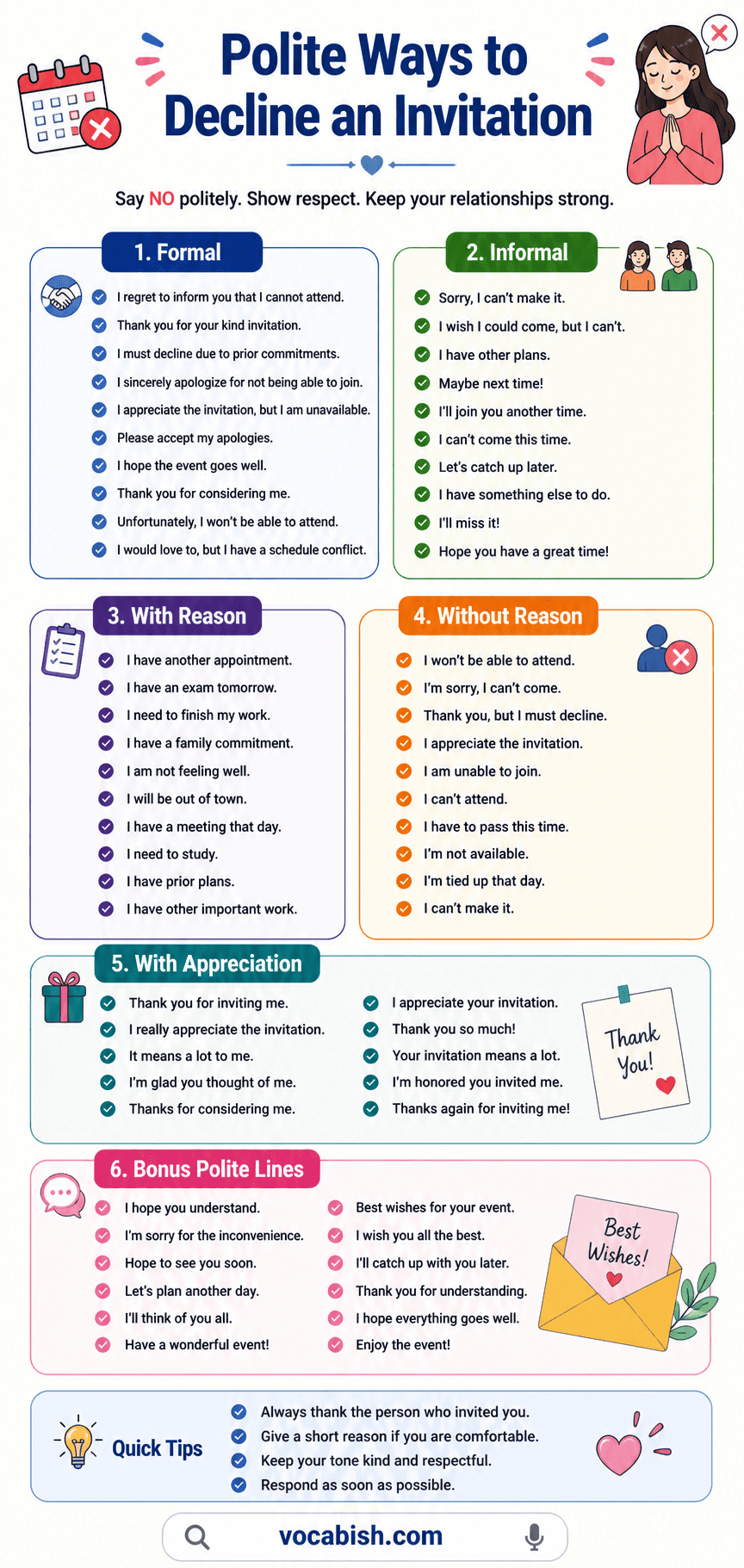
PDF of Polite ways to decline an invitation
Frequently Asked Questions
Polite ways to decline an invitation include thanking the person, expressing regret, and declining respectfully.
Example:
“Thank you for the invitation, but I won’t be able to attend.”
Start by showing appreciation for the invitation, then clearly state that you cannot attend.
Example:
“I appreciate the invitation. Unfortunately, I have other plans that day.”
A polite refusal is brief, respectful, and friendly.
Example:
“Thank you for thinking of me, but I won’t be able to make it.”
Yes. You are not required to explain why you cannot attend. A simple and courteous response is enough.
Example:
“Thank you for the invitation, but I won’t be able to attend.”
Use professional language and thank the person for the invitation.
Example:
“Thank you for your invitation. Unfortunately, I am unable to attend due to prior commitments.”
Common mistakes include responding late, being overly blunt, giving unnecessary details, or ignoring the invitation completely. A timely and respectful reply is usually best.
Students can practice common expressions, read conversation examples, and use polite responses in everyday situations. Learning complete sentences helps them communicate more naturally and confidently.
Related Articles: