
Classroom communication becomes easier when students know the everyday expressions used during lessons, group activities, and interactions with teachers. From asking questions and requesting help to participating in discussions and following instructions, these sentences help learners speak more confidently in an academic setting. This collection of 100+ classroom sentences for students includes useful examples that can be used throughout the school day, making it easier to build speaking skills, improve participation, and develop natural English communication habits in the classroom.
Classroom Sentences
Classroom sentences are short and simple phrases students use during class. These sentences help them communicate with teachers and classmates politely and clearly.
Examples:
- “May I come in?”
→ Used when entering the classroom politely. - “I don’t understand this.”
→ Used when a student needs help.
These sentences build confidence and improve speaking skills.
Introduce Yourself Using Classroom Sentences
Introducing yourself is one of the first skills you need in class. These sentences help you speak clearly.
- My name is Alex.
- I am 10 years old.
- I study in Grade 5.
- I live in Spain.
- My favorite subject is English.
- I like reading books.
- I want to learn English.
- I am happy to be here.
Daily Use Sentences in Classroom for Students
1. Greetings and Polite Expressions
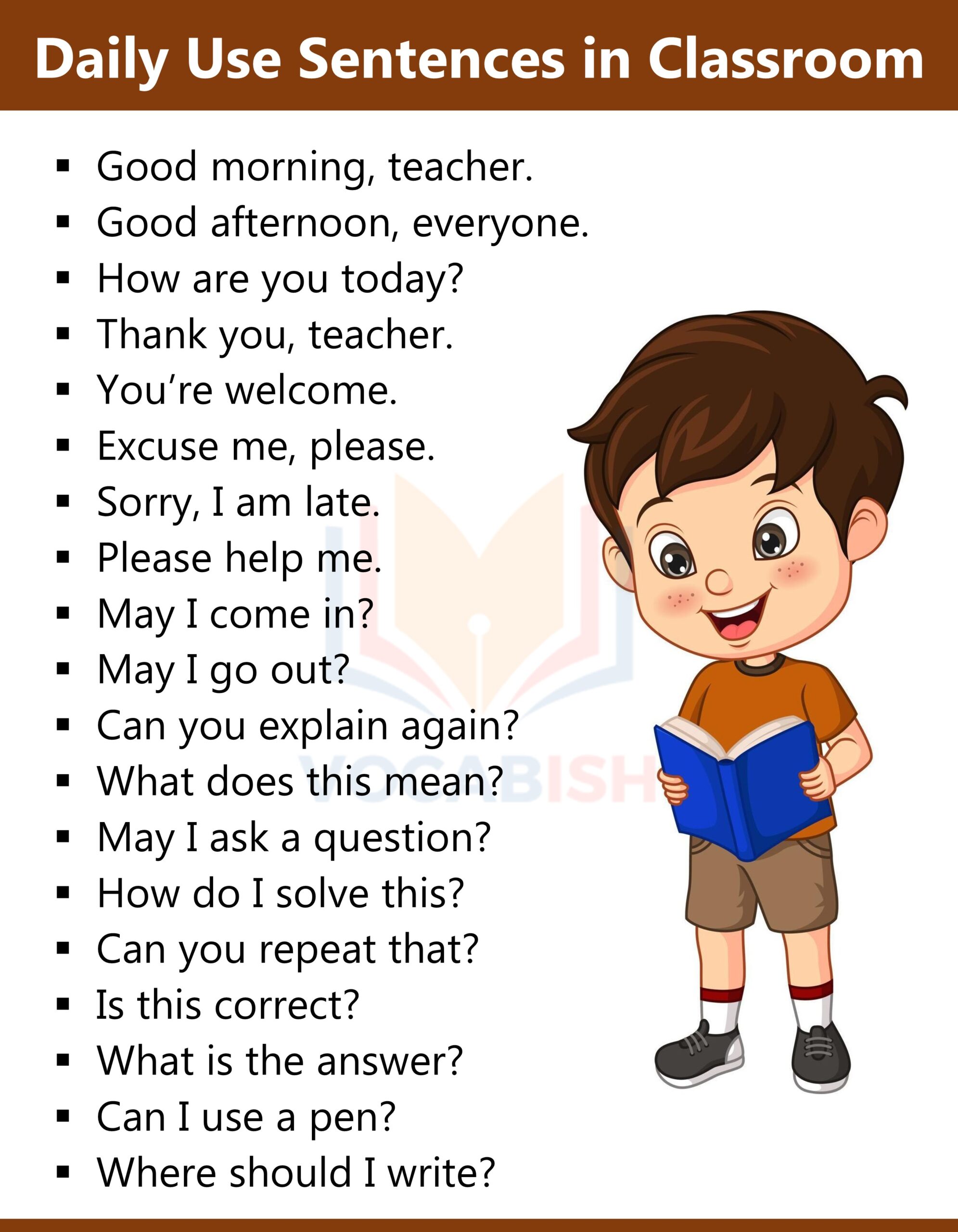
- Good morning, teacher.
- Good afternoon, everyone.
- How are you today?
- Thank you, teacher.
- You’re welcome.
- Excuse me, please.
- Sorry, I am late.
- Please help me.
- May I come in?
- May I go out?
2. Asking Questions
- Can you explain again?
- What does this mean?
- May I ask a question?
- How do I solve this?
- Can you repeat that?
- Is this correct?
- What is the answer?
- Can I use a pen?
- Where should I write?
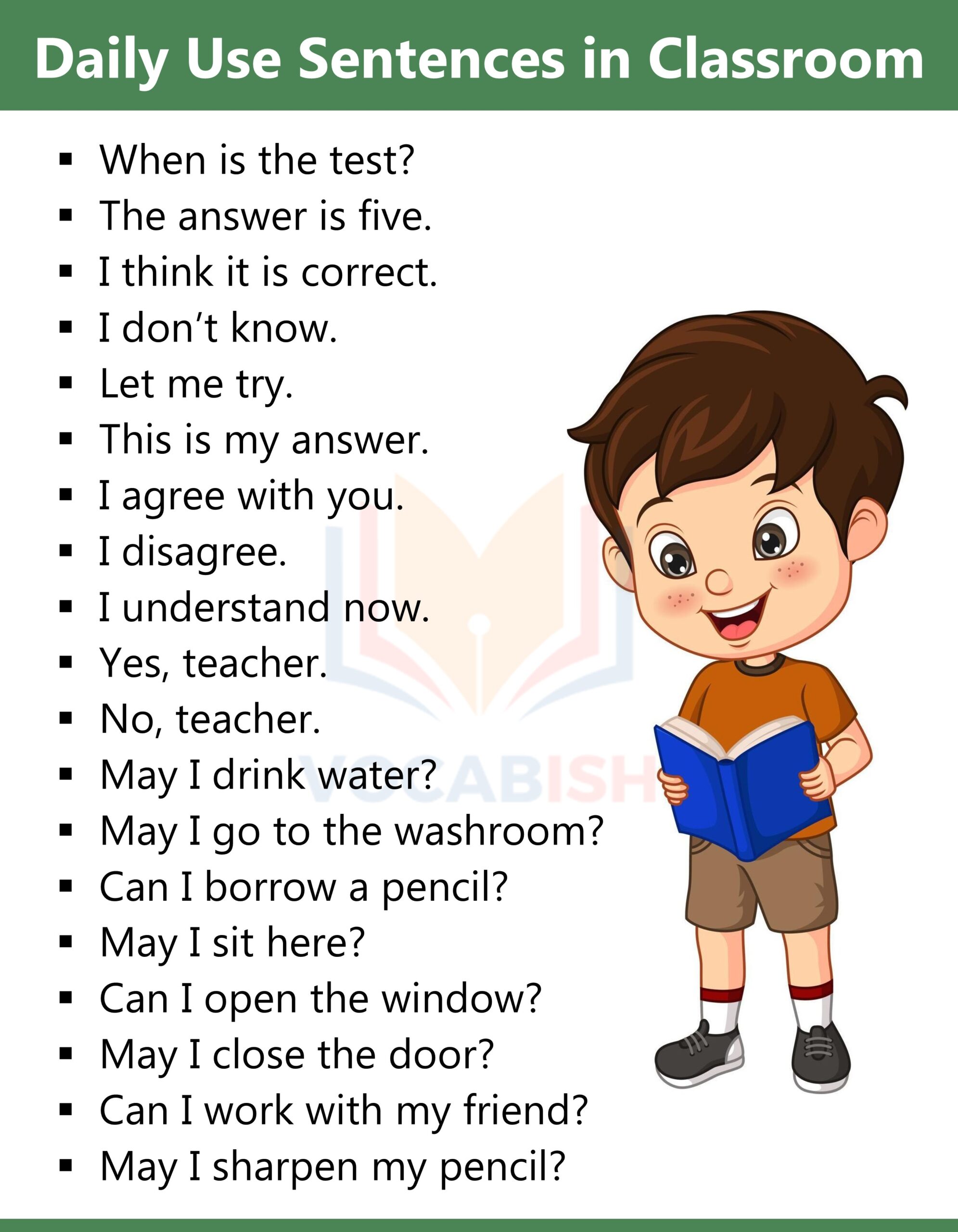
- When is the test?
3. Answering Questions
- The answer is five.
- I think it is correct.
- I don’t know.
- Let me try.
- This is my answer.
- I agree with you.
- I disagree.
- I understand now.
- Yes, teacher.
- No, teacher.
4. Classroom Requests
- May I drink water?
- May I go to the washroom?
- Can I borrow a pencil?
- May I sit here?
- Can I open the window?
- May I close the door?
- Can I work with my friend?
- May I sharpen my pencil?
- Can I take this book?
- May I submit my work?
5. Giving Responses or Opinions
- I like this lesson.
- This is interesting.
- I learned something new.
- I think this is easy.
- This is difficult for me.
- I have an idea.
- Let me explain.
- I want to try.
- I feel happy today.
- This is fun.
Classroom Sentences for Primary Students
- I am happy.
- I am sad.
- I am ready.
- I need help.
- I don’t know.
- This is my book.
- That is your bag.
- I like this.
- I will try.
- Please help me.
100+ Classroom Sentences for Students
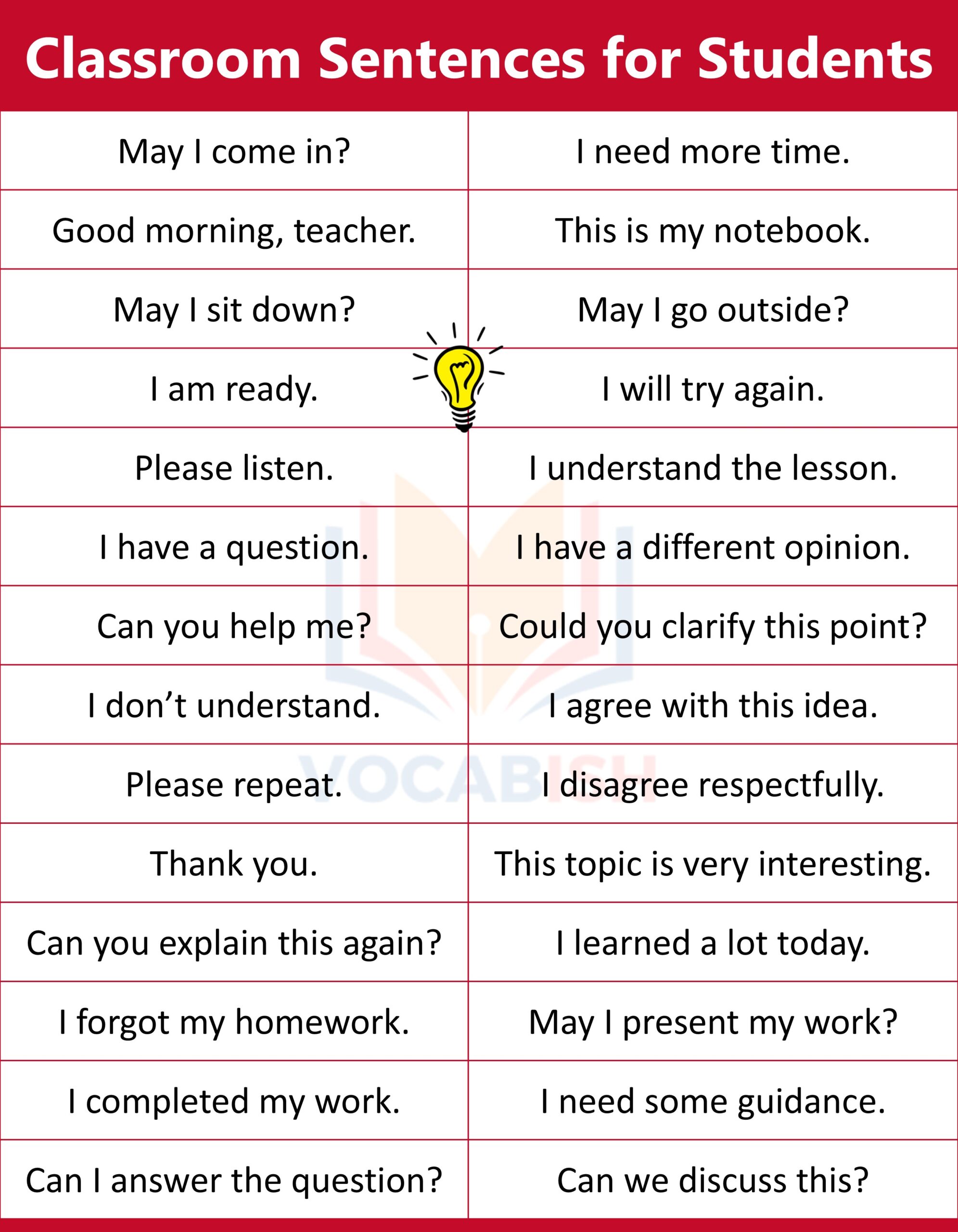
A strong set of classroom phrases that help students speak politely and clearly during lessons. These sentences support asking questions, sharing ideas, and building confidence in everyday classroom communication.
May I come in? | I need more time. |
Good morning, teacher. | This is my notebook. |
May I sit down? | May I go outside? |
I am ready. | I will try again. |
Please listen. | I understand the lesson. |
I have a question. | I would like to share my answer. |
Can you help me? | I have a different opinion. |
I don’t understand. | Could you clarify this point? |
Please repeat. | I agree with this idea. |
Thank you. | I disagree respectfully. |
Can you explain this again? | This topic is very interesting. |
What is the meaning of this word? | I learned a lot today. |
I forgot my homework. | May I present my work? |
I completed my work. | I need some guidance. |
Can I answer the question? | Can we discuss this? |
Easy Classroom Sentences for Students in English
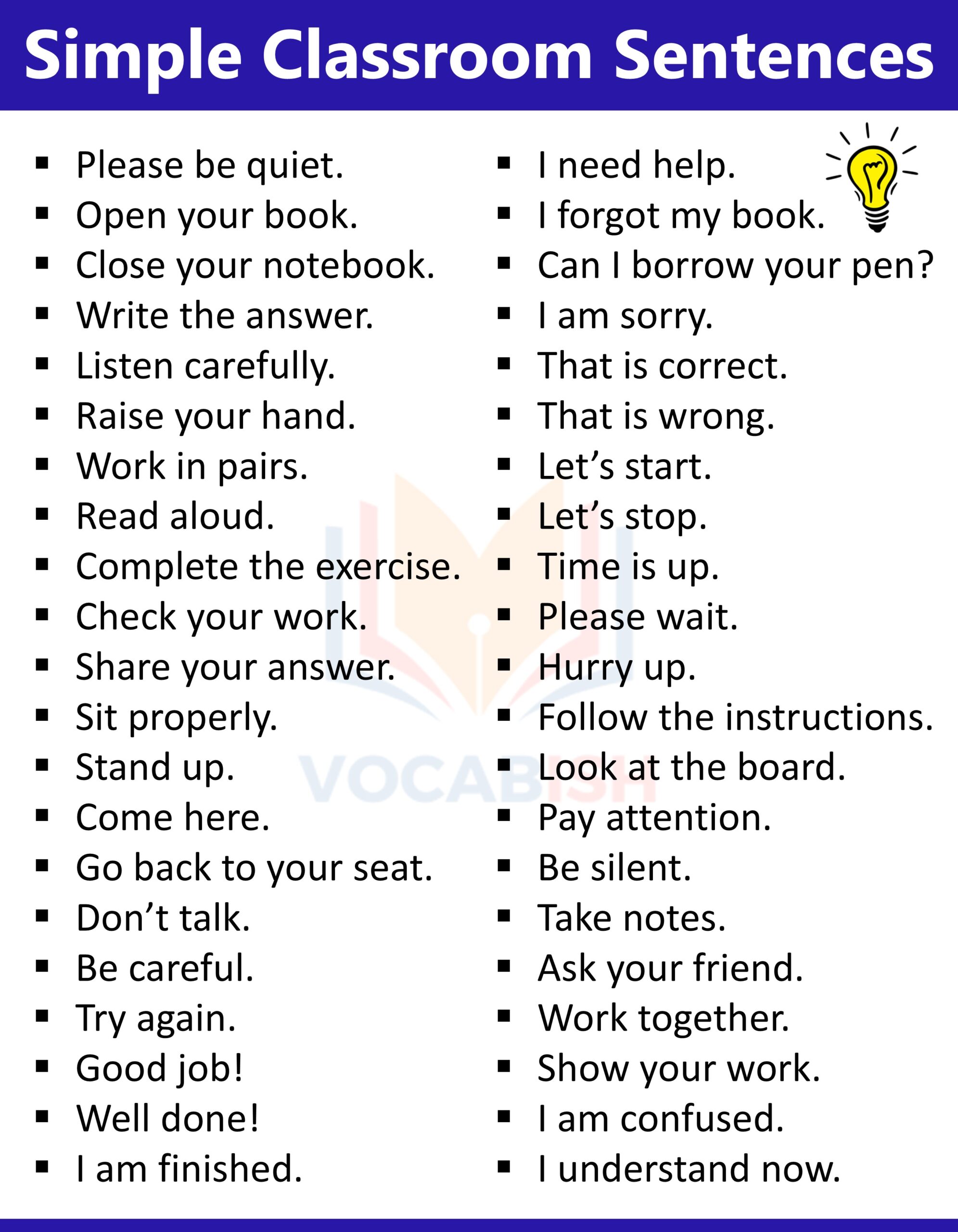
Simple and easy classroom sentences that help students start speaking English with confidence. These phrases are useful for daily class use, making communication clear and comfortable for beginners.
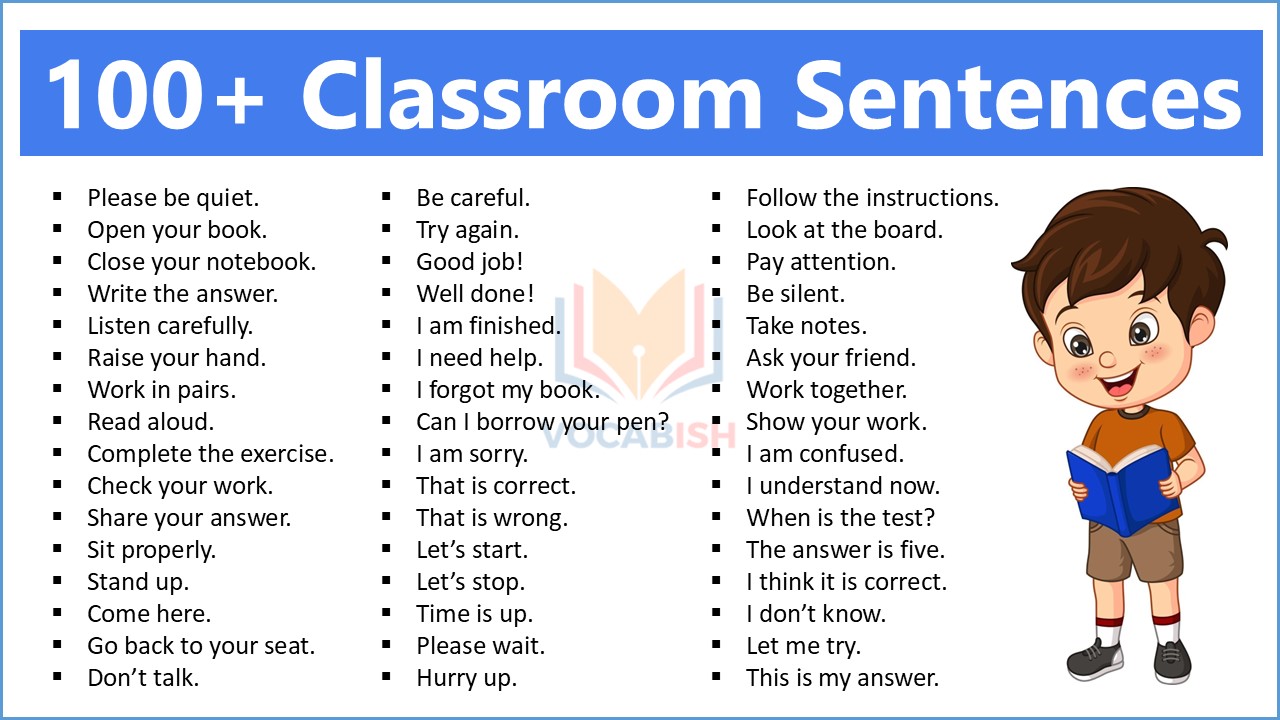
- Please be quiet.
- Open your book.
- Close your notebook.
- Write the answer.
- Listen carefully.
- Raise your hand.
- Work in pairs.
- Read aloud.
- Complete the exercise.
- Check your work.
- Share your answer.
- Sit properly.
- Stand up.
- Come here.
- Go back to your seat.
- Don’t talk.
- Be careful.
- Try again.
- Good job!
- Well done!
- I am finished.
- I need help.
- I forgot my book.
- Can I borrow your pen?
- I am sorry.
- That is correct.
- That is wrong.
- Let’s start.
- Let’s stop.
- Time is up.
- Please wait.
- Hurry up.
- Follow the instructions.
- Look at the board.
- Pay attention.
- Be silent.
- Take notes.
- Ask your friend.
- Work together.
- Show your work.
- I am confused.
- I understand now.
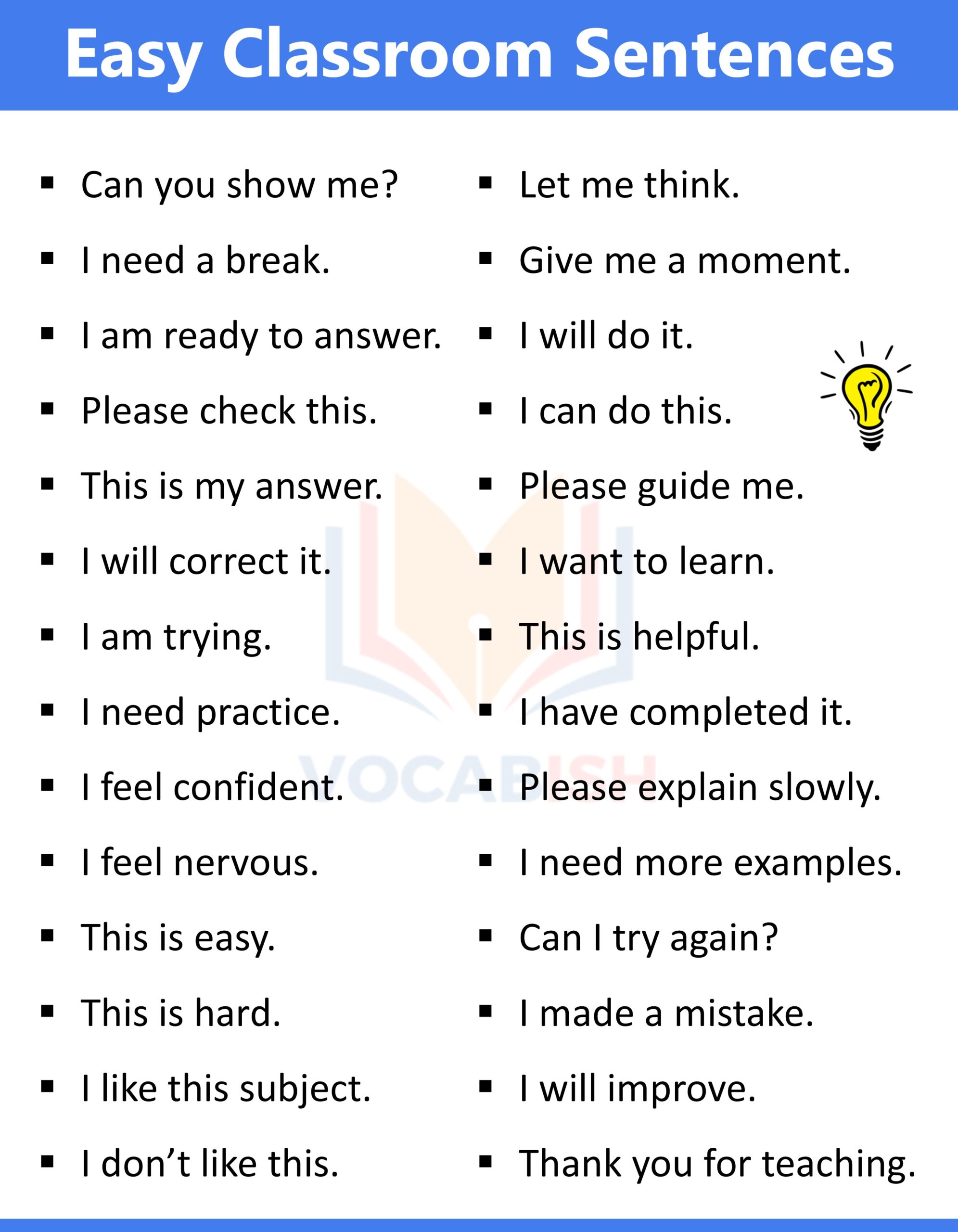
- Can you show me?
- I need a break.
- I am ready to answer.
- Please check this.
- This is my answer.
- I will correct it.
- I am trying.
- I need practice.
- I feel confident.
- I feel nervous.
- This is easy.
- This is hard.
- I like this subject.
- I don’t like this.
- Let me think.
- Give me a moment.
- I will do it.
- I can do this.
- Please guide me.
- I want to learn.
- This is helpful.
- I have completed it.
- Please explain slowly.
- I need more examples.
- Can I try again?
- I made a mistake.
- I will improve.
- Thank you for teaching.
How to Teach Classroom Sentences
Teaching classroom sentences for students can be fun and simple.
1. Use Role Play
Let students act as teacher and student.
2. Practice Daily
Repeat sentences every day.
3. Use Flashcards
Write sentences on cards for easy learning.
4. Encourage Speaking
Ask students to use sentences in real situations.
5. Use Worksheets
Give fill-in-the-blank exercises.
Practice Exercises
Fill in the blanks:
- ______ I come in?
- Can you ______ this again?
- I don’t ______ this.
- May I ______ outside?
- I ______ my homework.
Identify the correct sentence:
- (a) May I come in? (b) I come in?
- (a) Thank you (b) Thanks you
- (a) Can help me? (b) Can you help me?
- (a) I understand (b) I understanded
- (a) Please repeat (b) Repeat please me
Answer Key:
- May
- explain
- understand
- go
- completed
- a
- a
- b
- a
- a
Classroom Sentences PDF
FAQs about Classroom Sentences
Classroom sentences are common expressions that students use during lessons to communicate with teachers and classmates. They help students ask questions, request help, answer questions, and participate in classroom activities.
Students can learn classroom sentences by practicing them regularly, using them during class, reading them aloud, and repeating common expressions in everyday school situations.
Some common classroom sentences include:
May I come in?
Can you help me, please?
I don’t understand.
May I ask a question?
Can you repeat that, please?
I have finished my work.
A good sentence using the word classroom is:
“The students listened carefully in the classroom.”
You can use classroom to talk about a place where students learn.
Example:
“Our classroom is on the second floor.”
Here are 10 simple classroom-related sentences:
I am ready to learn.
Please open your book.
May I come in?
I have a question.
The lesson is interesting.
Please listen carefully.
I finished my homework.
Can you help me?
The classroom is clean.
Thank you, teacher.
A classroom for kids is a learning space where children study, participate in activities, learn new skills, and interact with teachers and classmates in a structured environment.
Related Articles: