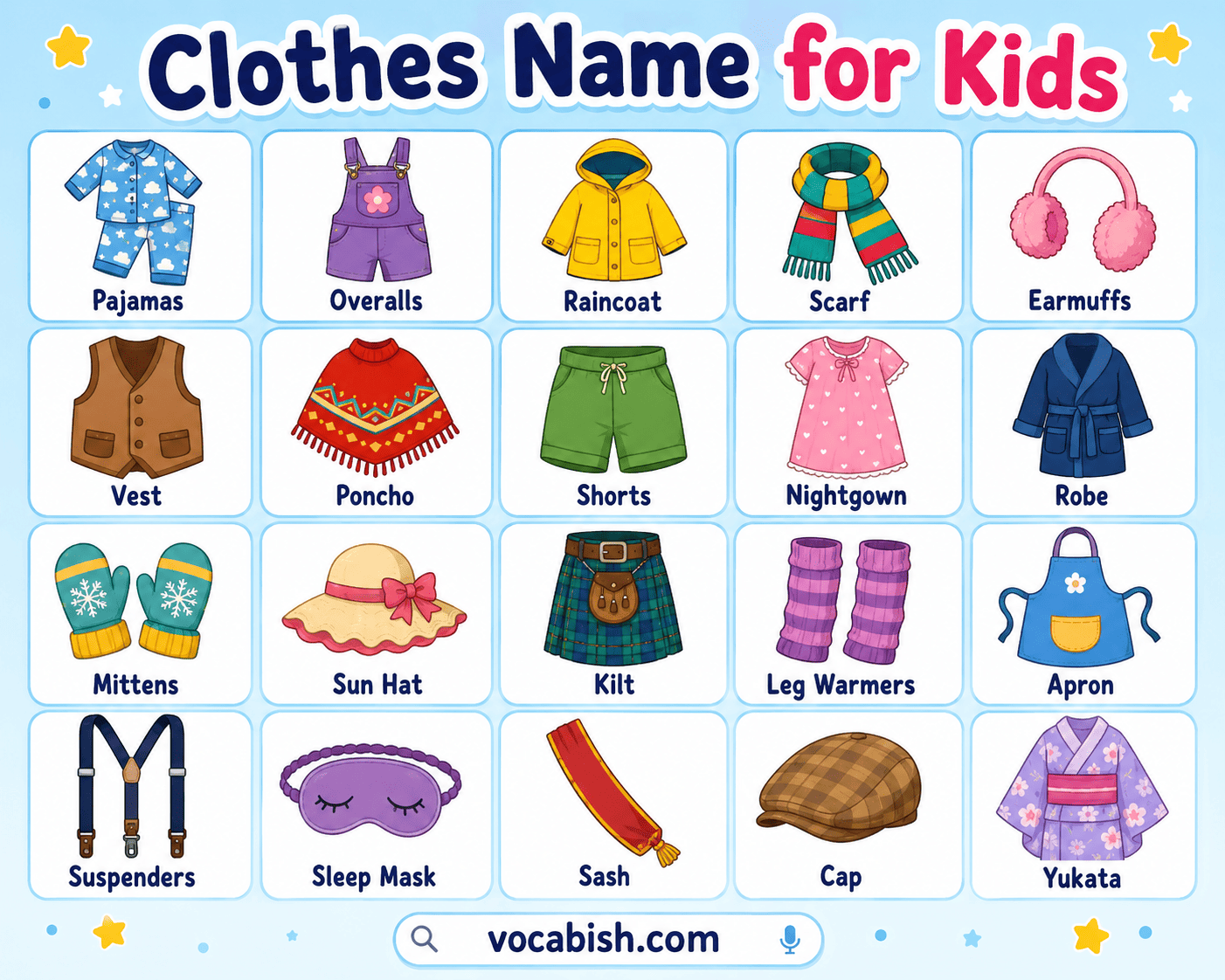

Learning the names of clothes helps children describe what they wear, understand everyday instructions, and build useful English vocabulary. Words such as shirt, jacket, shoes, and pajamas appear regularly in conversations, school lessons, stories, and shopping situations.
This guide introduces common clothes names for kids in clear categories. Each section includes simple meanings, practical examples, and helpful comparisons. Parents and teachers can also use the lists for flashcards, speaking activities, worksheets, and classroom games.
Here’s a complete guide on: 100+ Men’s Clothing Names with Pictures
What Are Clothes?
Clothes are items that people wear on their bodies. They provide comfort, protect us from the weather, and help us dress for different activities and occasions.
A child may wear a T-shirt and shorts on a warm day, a coat and gloves in winter, or a uniform at school.
The words below have related but slightly different meanings:
- Clothes are the things we wear, such as shirts, trousers, and dresses.
- Clothing is a general word for clothes as a group.
- Garment means one individual item of clothing.
- Outfit means a set of clothes worn together.
For example, a shirt is a garment, while a shirt, trousers, and jacket together can form an outfit.
Quick List of Clothes Name for Kids
Here is a quick overview of common children’s clothing vocabulary:
Category | Clothes Examples |
|---|---|
Tops | T-shirt, shirt, blouse, sweater, hoodie |
Bottoms | Trousers, jeans, shorts, skirt, leggings |
One-piece clothes | Dress, romper, jumpsuit, overalls |
Outerwear | Jacket, coat, raincoat, blazer |
Sleepwear | Pajamas, nightdress, robe |
Baby clothes | Onesie, bodysuit, bib, sleepsuit |
Footwear | Shoes, sandals, boots, slippers |
Accessories | Hat, scarf, gloves, belt |
Everyday Clothes Name for Kids
These are some of the most common clothes that children wear at home, school, or while playing.
- T-shirt: A casual top, usually with short sleeves.
Leo is wearing a green T-shirt. - Shirt: A top that often has a collar and buttons.
Mia wore a white shirt to school. - Blouse: A light top often worn with a skirt or trousers.
Her blouse has small flowers on it. - Hoodie: A warm sweatshirt with a hood.
He put on his hoodie before going outside. - Sweater: A warm knitted top worn in cool weather.
This woollen sweater feels soft. - Cardigan: A sweater that opens at the front.
She buttoned her cardigan. - Jeans: Strong trousers made from denim.
My blue jeans have two pockets. - Trousers: Clothing that covers each leg separately from the waist down.
His school trousers are grey. - Shorts: Short trousers that usually end above the knee.
The children wore shorts at the beach. - Skirt: A garment worn from the waist that does not separate around the legs.
Her skirt reaches her knees. - Leggings: Close-fitting, stretchy clothing for the legs.
She wears black leggings for dance class. - Joggers: Soft, comfortable trousers often worn for sports or relaxing.
He changed into joggers after school.
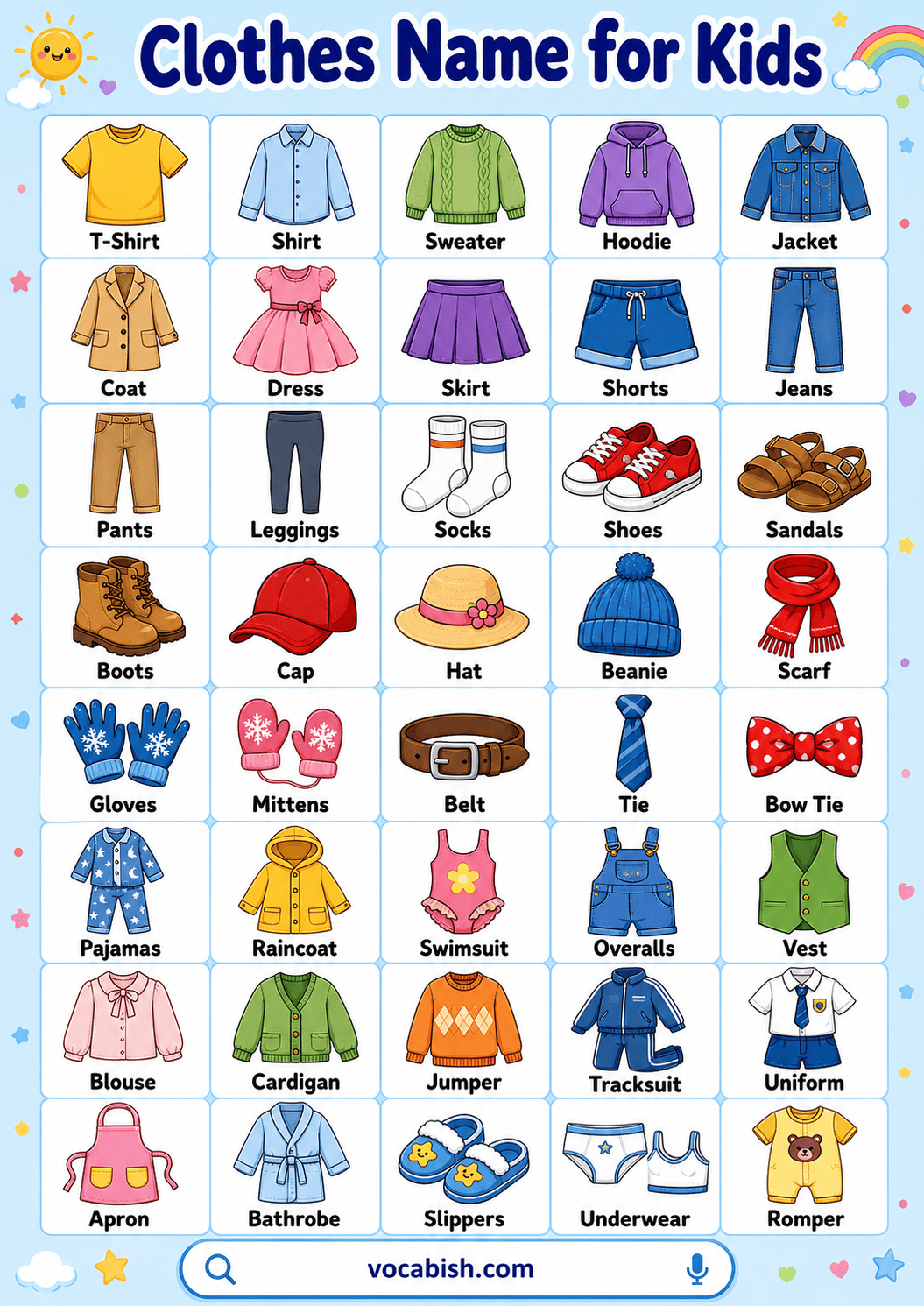
Upper-Body Clothes for Kids with Pictures
Upper-body clothes cover the chest, back, shoulders, and arms.
- Shirt: A top with a collar, sleeves, and usually buttons.
- T-shirt: A simple casual top without front buttons.
- Polo shirt: A casual shirt with a collar and a few buttons near the neck.
- Blouse: A lightweight top that may have buttons, patterns, or decorative details.
- Sweater: A knitted top that provides warmth.
- Sweatshirt: A soft, warm top usually made from thick cotton.
- Hoodie: A sweatshirt with an attached hood.
- Cardigan: A knitted top that opens at the front.
- Vest: A sleeveless garment worn over or under another top.
- Tank top: A lightweight sleeveless top.
Lower-Body Clothes Name with Meanings
Lower-body clothes cover the waist, hips, and legs.
- Trousers: A garment with two separate leg sections.
- Pants: The common American English word for trousers.
- Jeans: Denim trousers that are strong and suitable for everyday wear.
- Shorts: Trousers with short legs.
- Skirt: A garment that hangs from the waist without separate leg sections.
- Leggings: Tight, flexible clothing that covers the legs.
- Joggers: Comfortable trousers with a relaxed fit.
- Tights: Thin, close-fitting clothing that covers the feet and legs.
One-Piece Clothes for Children
One-piece clothes cover both the upper and lower parts of the body in a single garment.
- Dress: A one-piece garment that usually hangs from the shoulders or upper body.
- Jumpsuit: A one-piece outfit with a top and long trouser legs.
- Romper: A one-piece outfit with short legs, often worn by babies and young children.
- Onesie: A comfortable one-piece garment, commonly worn by babies or as sleepwear.
- Overalls: Trousers with a front panel and shoulder straps.
- Dungarees: Another common name for overalls, especially in British English.
- Bodysuit: A close-fitting baby garment that fastens between the legs.
- School uniform: A matching set of clothes required by some schools.
Baby Clothes Names with Pictures
Baby clothing is designed to provide comfort, warmth, and easy movement.
- Bib: A small piece of fabric worn around a baby’s neck to protect clothes from food or milk.
- Onesie: A one-piece baby garment that covers the body.
- Bodysuit: A close-fitting top that fastens between the legs.
- Romper: A one-piece outfit with short sleeves or short legs.
- Sleepsuit: A soft one-piece garment worn by babies while sleeping.
- Baby grow: A British term for a baby sleepsuit or similar one-piece garment.
- Swaddle: A lightweight cloth wrapped around a young baby.
- Diaper cover: A garment worn over a diaper.
- Mittens: Soft hand coverings that keep a baby warm or prevent scratching.
- Booties: Soft shoes or socks made for babies.
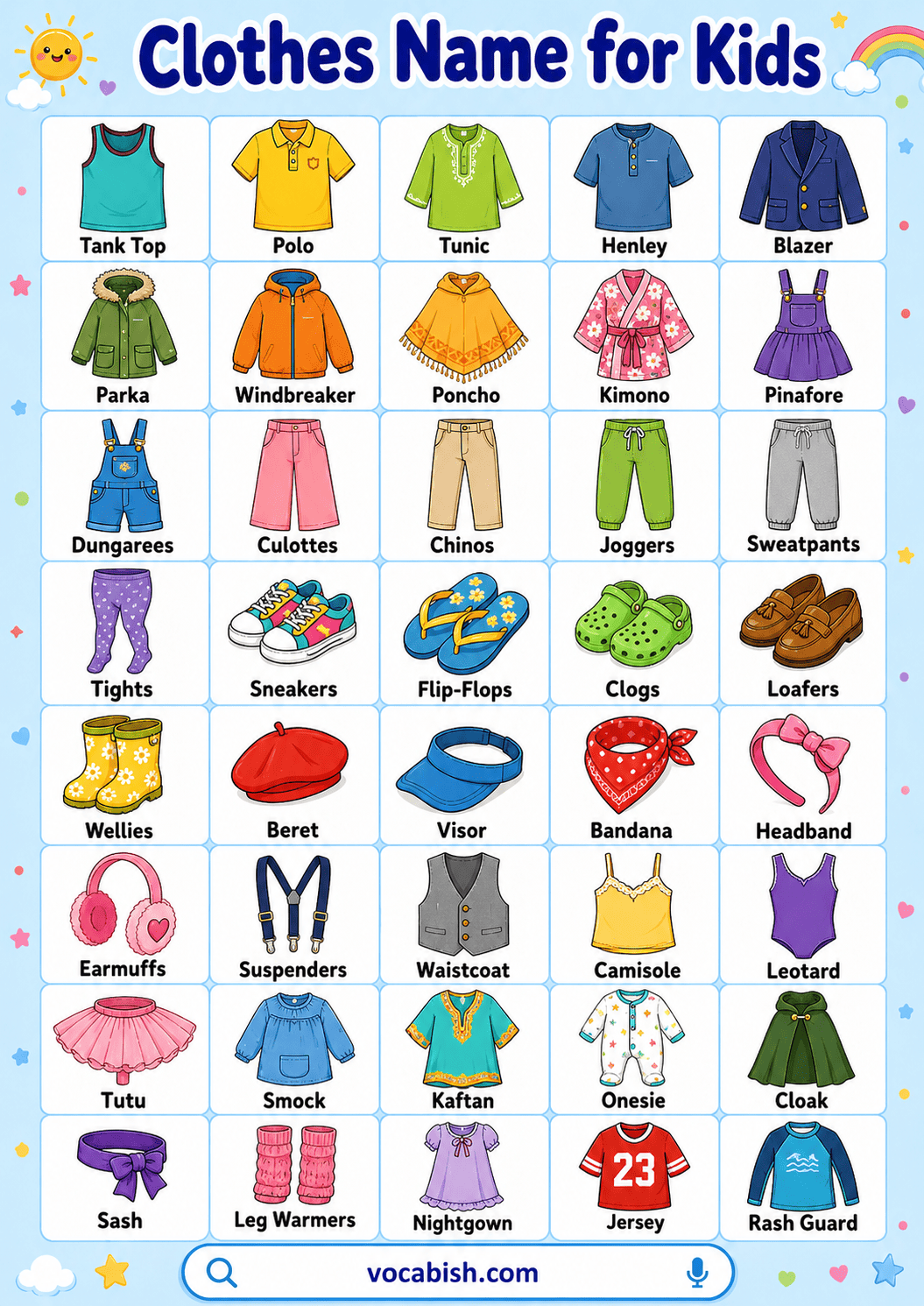
Sleepwear and Clothes Worn at Home
Sleepwear includes comfortable clothes worn in bed or while relaxing at home.
- Pajamas: A matching top and trousers worn for sleeping.
- Pyjamas: The British spelling of pajamas.
- Nightdress: A loose garment worn for sleeping.
- Nightgown: Another name for a nightdress.
- Robe: A loose garment worn over sleepwear.
- Dressing gown: The British term for a robe worn at home.
- Slippers: Soft indoor footwear.
- Onesie: A full-body garment sometimes worn as warm sleepwear.
Kids’ Outerwear Names with Meanings
Outerwear is worn over other clothes for warmth, protection, or a more formal appearance.
- Jacket: A short outer garment worn over a top.
- Coat: A longer and often warmer outer garment.
- Raincoat: A waterproof coat that protects the wearer from rain.
- Puffer jacket: A thick, padded jacket designed for cold weather.
- Windbreaker: A lightweight jacket that protects against wind.
- Blazer: A smart jacket often worn with a school uniform or formal outfit.
- Waistcoat: A sleeveless garment worn over a shirt.
- Snow suit: A thick one-piece or two-piece outfit worn in snowy weather.
- Fleece jacket: A soft, warm jacket made from fleece fabric.
Clothes for Different Seasons
Children wear different clothes depending on the weather. Seasonal clothing keeps them comfortable and protected.
Summer Clothes
Summer clothes are usually light, loose, and breathable.
Common examples include:
- T-shirt
- Shorts
- Sundress
- Tank top
- Light skirt
- Sandals
- Sun hat
- Swimsuit
Winter Clothes
Winter clothes help the body stay warm in cold weather.
Common examples include:
- Sweater
- Coat
- Puffer jacket
- Thermal wear
- Scarf
- Gloves
- Mittens
- Woollen hat
- Thick socks
- Boots
Rainy-Weather Clothes
Rainy-weather clothing helps children remain dry while walking, playing, or travelling outside.
Common examples include:
- Raincoat
- Waterproof jacket
- Hooded coat
- Rain trousers
- Wellington boots
- Rain hat
School and Activity Clothes
Children may need special clothes for school, sports, swimming, or creative activities.
- School uniform: Standard clothing worn by pupils at a school.
- PE kit: Clothes and shoes worn during physical education lessons.
- Tracksuit: A matching sports jacket and trousers.
- Sports jersey: A shirt worn as part of a sports uniform.
- Gym shorts: Lightweight shorts worn for exercise.
- Swimsuit: A one-piece or two-piece garment worn for swimming.
- Swimming trunks: Shorts designed for swimming.
- Leotard: A close-fitting one-piece garment worn for gymnastics or dance.
- Apron: A protective garment worn over clothes during cooking, painting, or crafts.
Party and Special-Occasion Clothes
Children may wear smarter or more decorative clothes for birthdays, weddings, school celebrations, and family events.
- Party dress: A decorative dress worn at a celebration.
- Suit: A formal outfit that usually includes matching trousers and a jacket.
- Blazer: A smart jacket worn with trousers, a skirt, or a dress.
- Waistcoat: A sleeveless formal garment worn over a shirt.
- Dress shirt: A smart shirt worn for formal occasions.
- Bow tie: A small decorative tie shaped like a bow.
- Gown: A long formal dress.
- Traditional outfit: Clothing connected with a particular culture or community.
Traditional Clothes for Kids
Traditional clothes reflect the history, customs, and identity of different communities. Styles may vary by region, family, religion, and occasion.
- Shalwar kameez: A South Asian outfit consisting of a long shirt and loose trousers.
- Kurta: A long, loose shirt worn in parts of South Asia.
- Lehenga: A traditional South Asian outfit that commonly includes a long skirt and matching top.
- Kimono: A traditional Japanese robe with wide sleeves.
- Hanbok: Traditional Korean clothing known for its graceful shape and bright colours.
- Kilt: A knee-length pleated garment associated with Scottish tradition.
- Thobe: A long, loose garment worn in several Arab countries.
- Dashiki: A colourful, loose-fitting garment associated with West African fashion and culture.
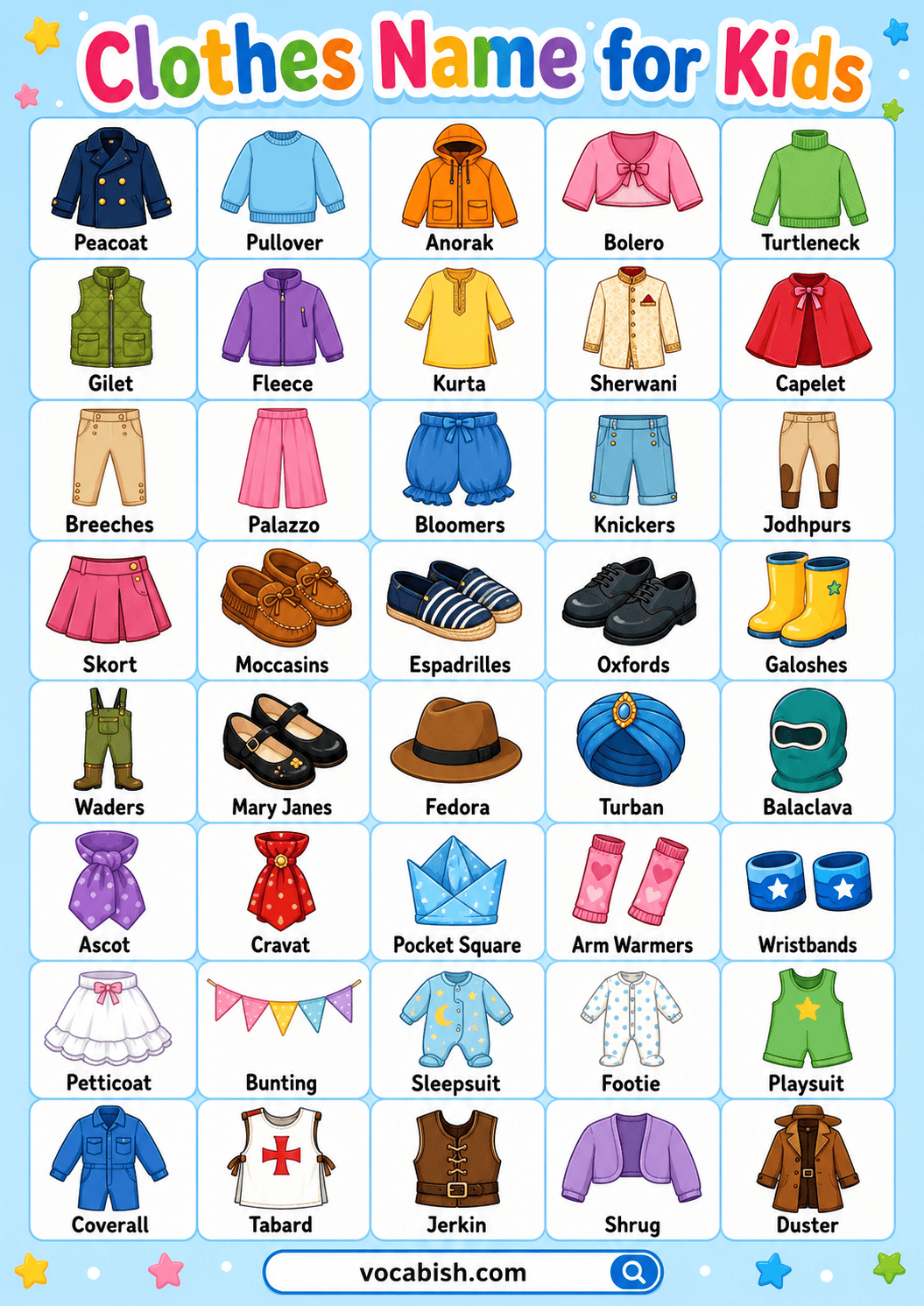
Underclothes and Basic Clothing Items
Underclothes are worn beneath outer clothing for comfort, warmth, support, and hygiene.
- Underwear: Clothing worn next to the skin under other garments.
- Undershirt: A thin shirt worn beneath another top.
- Vest: A sleeveless undergarment or an outer layer, depending on the country.
- Socks: Soft coverings worn on the feet.
- Tights: Thin clothing that covers the feet and legs.
- Thermal underwear: Warm clothing worn under regular clothes in cold weather.
Footwear Names for Kids
Footwear protects the feet and helps children walk safely on different surfaces.
- Shoes: A general word for coverings worn on the feet.
- Sneakers: Comfortable sports-style shoes used for walking, playing, or exercise.
- Trainers: The common British English word for sneakers.
- Sandals: Open shoes worn in warm weather.
- Boots: Footwear that covers the foot and part of the ankle or leg.
- Rain boots: Waterproof boots worn in wet weather.
- Slippers: Soft shoes worn indoors.
- School shoes: Smart, durable shoes worn with a school uniform.
- Flip-flops: Light, open footwear with a strap between the toes.
Clothing Accessories for Children
Accessories are items worn or carried with clothes. They may provide protection, improve comfort, or complete an outfit.
- Hat: A head covering with many possible shapes and styles.
- Cap: A soft hat, usually with a curved front part.
- Scarf: A long piece of fabric worn around the neck.
- Gloves: Hand coverings with a separate section for each finger.
- Mittens: Hand coverings with one section for the thumb and another for the fingers.
- Belt: A strip worn around the waist.
- Tie: A long piece of fabric worn around the neck with a formal shirt.
- Bow tie: A small bow-shaped neck accessory.
- Headband: A band worn around the head or in the hair.
- Backpack: A bag carried on the back with two shoulder straps.
Clothes Names with Simple Example Sentences
These short sentences can help children practise clothing vocabulary in context.
- I am wearing a yellow shirt.
- Her jacket is warm and soft.
- These shoes are new.
- He wears shorts in summer.
- My raincoat keeps me dry.
- She has a red dress.
- Put your socks on, please.
- His school trousers are grey.
- My sweater has blue stripes.
- The baby is wearing a clean bib.
- We wear coats in winter.
- She tied a scarf around her neck.
- His jeans have four pockets.
- Take off your muddy boots.
- I folded my pajamas before breakfast.
Useful Words for Describing Clothes
Children can describe clothes by talking about their size, material, pattern, colour, or condition.
Size
- Big: Larger than usual
- Small: Smaller than usual
- Long: Extending a greater distance from end to end
- Short: Not long
- Loose: Not fitting tightly
- Tight: Fitting closely around the body
Examples:
- This coat is too big for me.
- Her sleeves are long.
- These shoes feel tight.
Material
- Cotton: A soft, breathable material
- Woollen: Made from wool
- Denim: A strong fabric commonly used for jeans
- Leather: A durable material traditionally made from animal hide
- Silk: A smooth, lightweight fabric
Examples:
- I wear cotton shirts in summer.
- His jeans are made from denim.
- She has a woollen scarf.
Pattern and Appearance
- Plain: Having no printed pattern
- Striped: Decorated with lines
- Checked: Decorated with squares
- Spotted: Covered with small round marks
- Colourful: Having several bright colours
Examples:
- He is wearing a striped T-shirt.
- Her checked skirt is blue and white.
- The baby has a colourful romper.
Condition
- New: Recently bought or made
- Old: Used for a long time
- Clean: Free from dirt
- Dirty: Covered with dirt or marks
- Wet: Covered or filled with water
- Dry: Not wet
Examples:
- My socks are clean.
- His trousers became wet in the rain.
- Please put the dirty shirt in the laundry basket.
Common Clothing Verbs Children Should Know
Clothing verbs describe actions connected with getting dressed and caring for clothes.
- Wear: To have clothes on your body.
I wear a uniform to school. - Put on: To place clothing on your body.
Put on your jacket before going outside. - Take off: To remove clothing.
Please take off your wet shoes. - Dress: To put clothes on yourself or another person.
She can dress herself now. - Button: To close a garment using buttons.
Button your shirt before class. - Zip: To open or close a zip.
He zipped his coat. - Tie: To fasten something by making a knot.
She tied her shoelaces. - Fold: To bend clothes neatly for storage.
We folded the clean towels. - Wash: To clean clothes with water and soap.
Dad washed the muddy trousers.
How Parents and Teachers Can Teach Clothes Names
Children usually learn vocabulary more easily when they can see, touch, sort, and use real objects.
Here are some simple teaching ideas:
- Use real clothes: Hold up a shirt, sock, or hat and ask the child to name it.
- Create picture flashcards: Place a clear picture on one side and the clothing word on the other.
- Sort clothes into groups: Ask children to separate summer clothes, winter clothes, footwear, and accessories.
- Play dress-up games: Let children choose an outfit and describe each item.
- Ask daily questions: Use prompts such as “What are you wearing?” or “Which jacket is yours?”
- Match clothes to weather: Show pictures of rain, snow, and sunshine, then ask children to select suitable clothing.
- Use simple sentences: Encourage children to say, “I am wearing blue jeans,” instead of naming only the item.
- Repeat words naturally: Use clothing vocabulary during laundry, shopping, packing, and getting ready for school.
Download Clothes Vocabulary for Kids PDF
Commonly Confused Clothes Names
Some clothing words have similar meanings, but they are not always used in the same way.
Words | Simple Difference |
|---|---|
Shirt and T-shirt | A shirt usually has buttons and a collar. A T-shirt is more casual and usually has no front buttons. |
Sweater and sweatshirt | A sweater is usually knitted. A sweatshirt is commonly made from thick cotton. |
Jacket and coat | A coat is generally longer and warmer than a jacket. |
Trousers and pants | Pants means trousers in American English. Trousers is more common in British English. |
Pajamas and nightdress | Pajamas usually have a top and trousers. A nightdress is one loose garment. |
Romper and onesie | A romper often has short legs. A onesie may describe several types of one-piece clothing. |
Sneakers and trainers | These words usually mean the same thing in American and British English. |
Gloves and mittens | Gloves have separate spaces for the fingers. Mittens keep the fingers together. |
Overalls and dungarees | Both terms can describe trousers with a front panel and shoulder straps. |
Blazer and jacket | A blazer is usually smarter and more structured than a casual jacket. |
Frequently Asked Questions
Common clothes names for kids include T-shirt, shirt, trousers, pants, jeans, shorts, skirt, dress, sweater, jacket, coat, socks, shoes, pajamas, and hat. These basic words cover many items children wear in everyday life.
Clothes refers to the items people wear, such as shirts, trousers, and dresses. Clothing is a general, uncountable word for clothes as a category. We can say “some clothing,” but we do not normally say “a clothing.”
Children commonly wear T-shirts, shorts, light dresses, skirts, tank tops, sandals, and sun hats during summer. Lightweight, breathable fabrics such as cotton can help them remain comfortable in warm weather.
Kids may wear sweaters, coats, thermal clothing, scarves, gloves, woollen hats, thick socks, and boots in winter. The best choice depends on the temperature, wind, rain, and snow conditions.
Footwear is technically a separate category, but it is often taught with clothing vocabulary. Shoes, sandals, boots, slippers, trainers, and rain boots are all useful words for children to learn alongside clothes.
Other terms include children’s clothing, kidswear, children’s wear, children’s apparel, garments for children, and kids’ outfits. Some words sound more formal or commercial than others.
Children can learn clothes names through real objects, pictures, flashcards, sorting activities, songs, dress-up games, and daily conversations. Asking them to describe what they are wearing also helps them use the words in complete sentences.
Conclusion
Learning clothes names gives children practical vocabulary that they can use every day. They can begin with familiar words such as shirt, trousers, dress, and shoes, then move on to seasonal clothes, sleepwear, outerwear, footwear, and accessories.
Organising the words by body area, weather, activity, and purpose makes them easier to remember. Parents and teachers can use this list for speaking practice, classroom lessons, worksheets, picture cards, matching games, and simple writing activities.
Explore More Kids Learning Resources