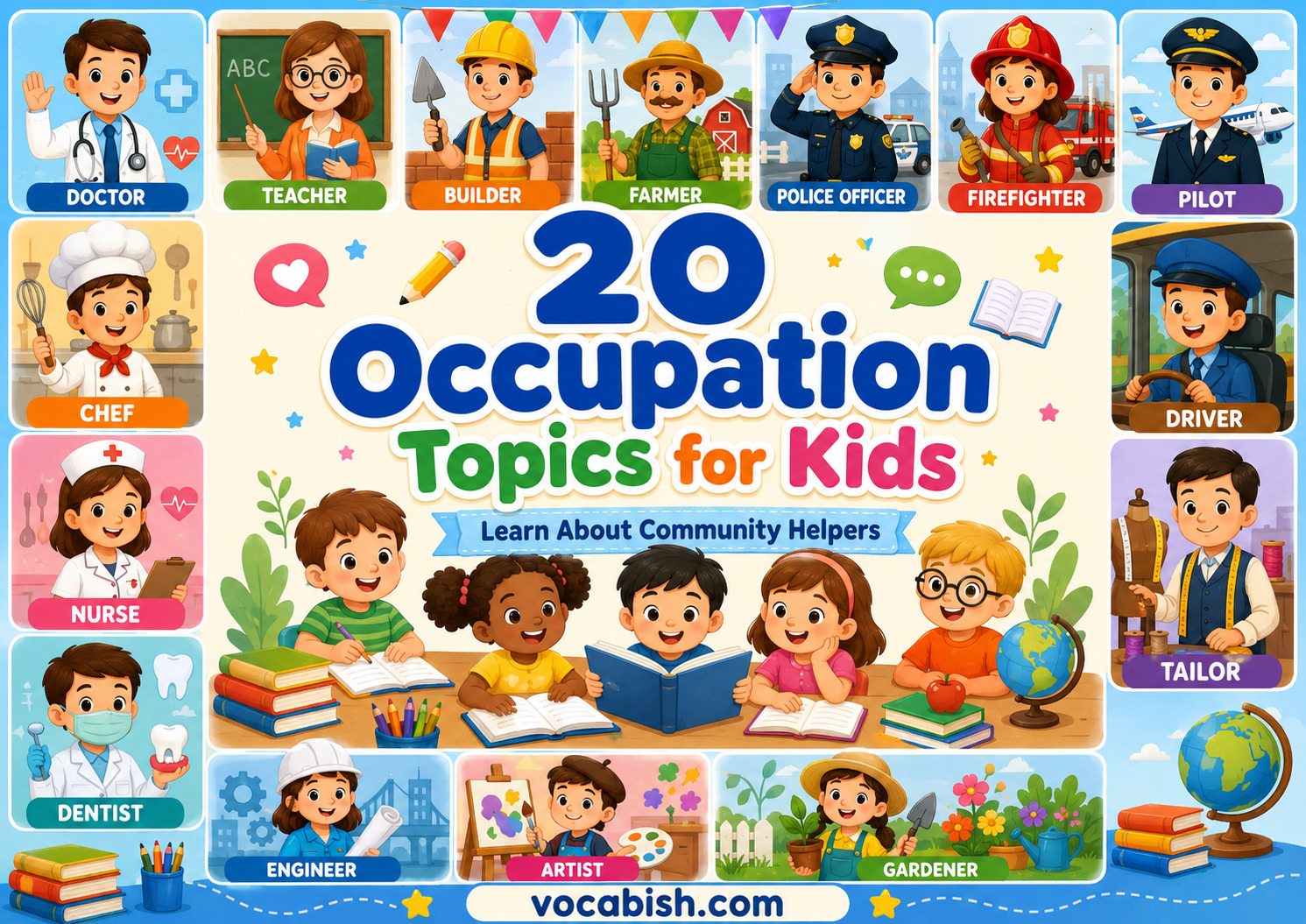

Occupations are the jobs people do every day. Some people teach us, some keep us safe, some grow food, and some help us when we are sick. Learning about occupations helps kids understand the people around them and how everyone has an important role in our community.
When children learn these topics with pictures and simple lines, they can easily remember the name of each worker, what they do, and which tools they use.
To get more kid-related stuff, you may visit our complete category: Kids English Learning
Why Kids Should Learn About Occupations
Kids should learn about occupations because it helps them understand real life in a simple way. They learn that a doctor helps sick people, a farmer grows food, a teacher helps children learn, and a builder makes houses and buildings.
These topics also teach respect. Children begin to understand that every job is useful and every worker helps us in some way. It also improves their vocabulary, speaking skills, reading practice, and paragraph writing.
Occupation Topics for Kids
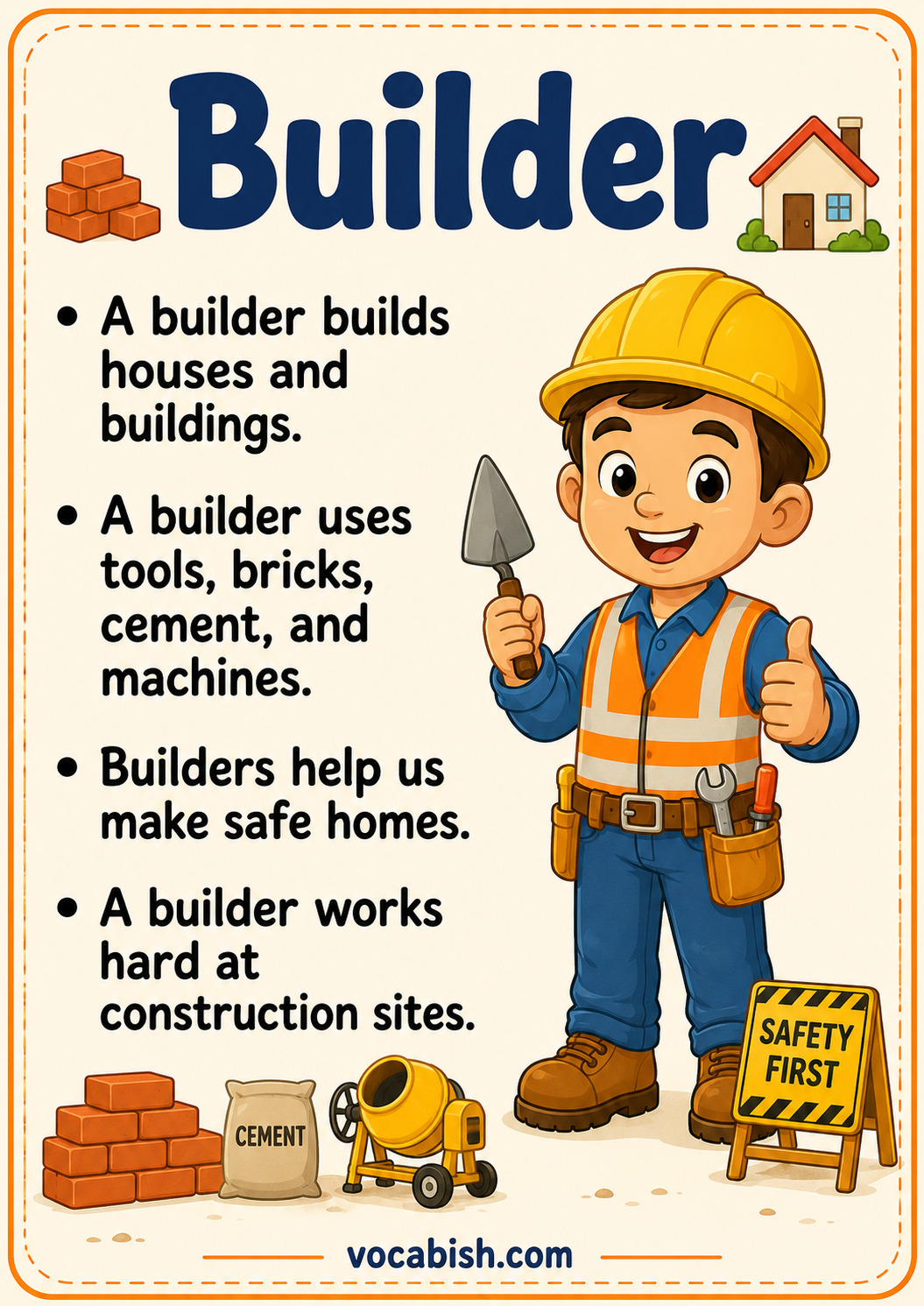
1. Builder
- A builder builds houses and buildings.
- A builder uses tools, bricks, cement, and machines.
- Builders help us make safe homes.
- A builder works hard at construction sites.
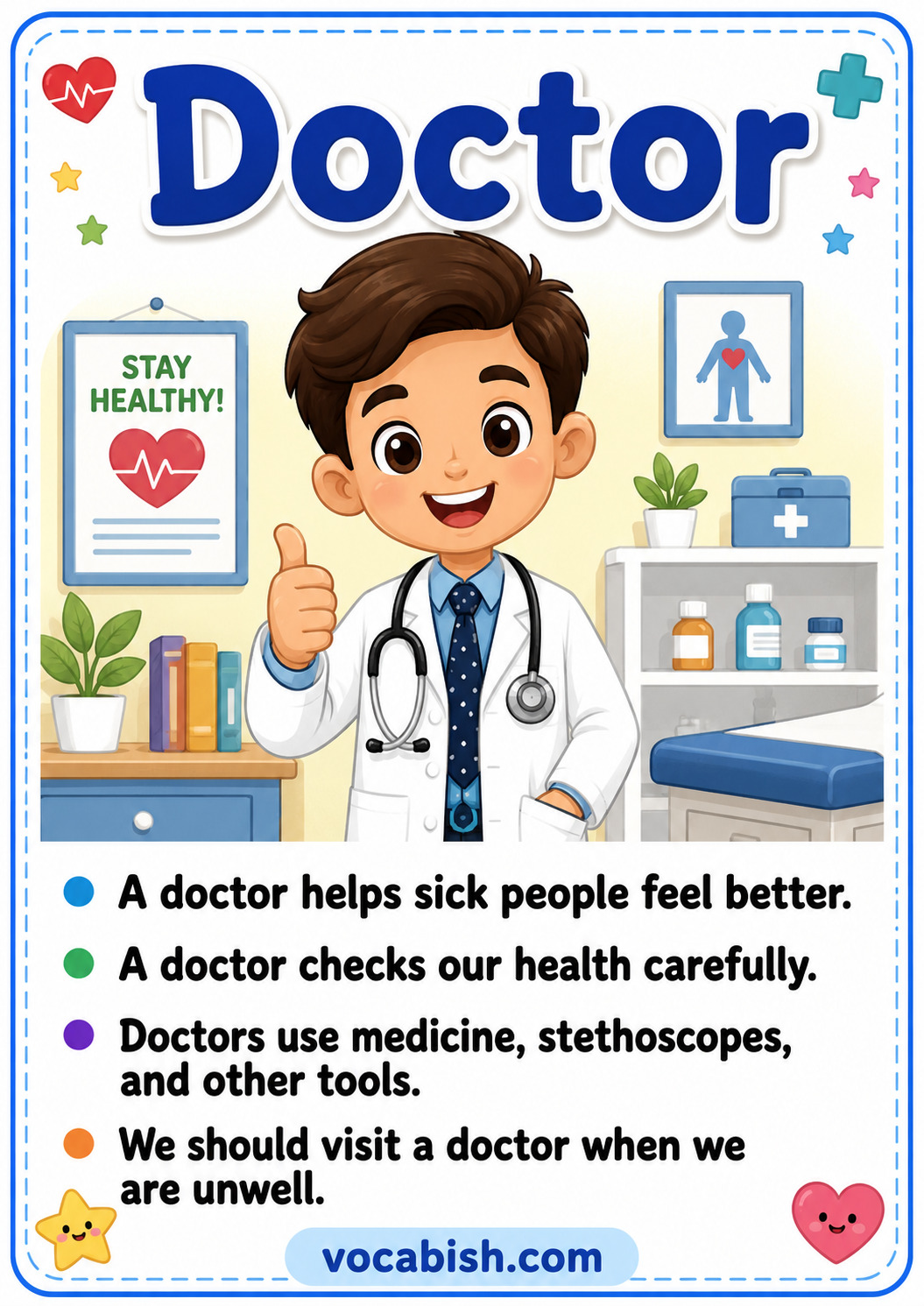
2. Doctor
- A doctor helps sick people feel better.
- A doctor checks our health carefully.
- Doctors use medicine, stethoscopes, and other tools.
- We should visit a doctor when we are unwell.
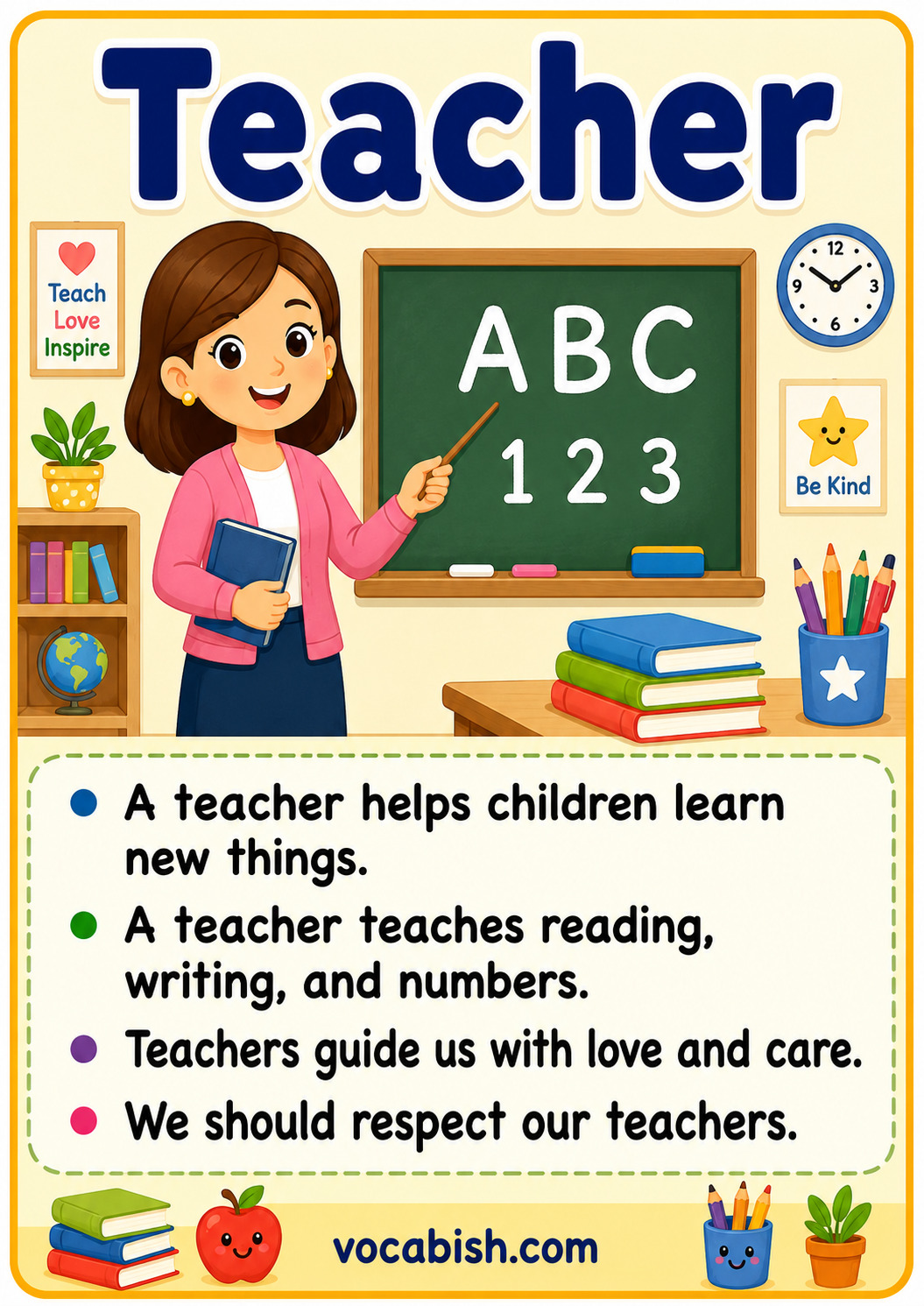
3. Teacher
- A teacher helps children learn new things.
- A teacher teaches reading, writing, and numbers.
- Teachers guide us with love and care.
- We should respect our teachers.
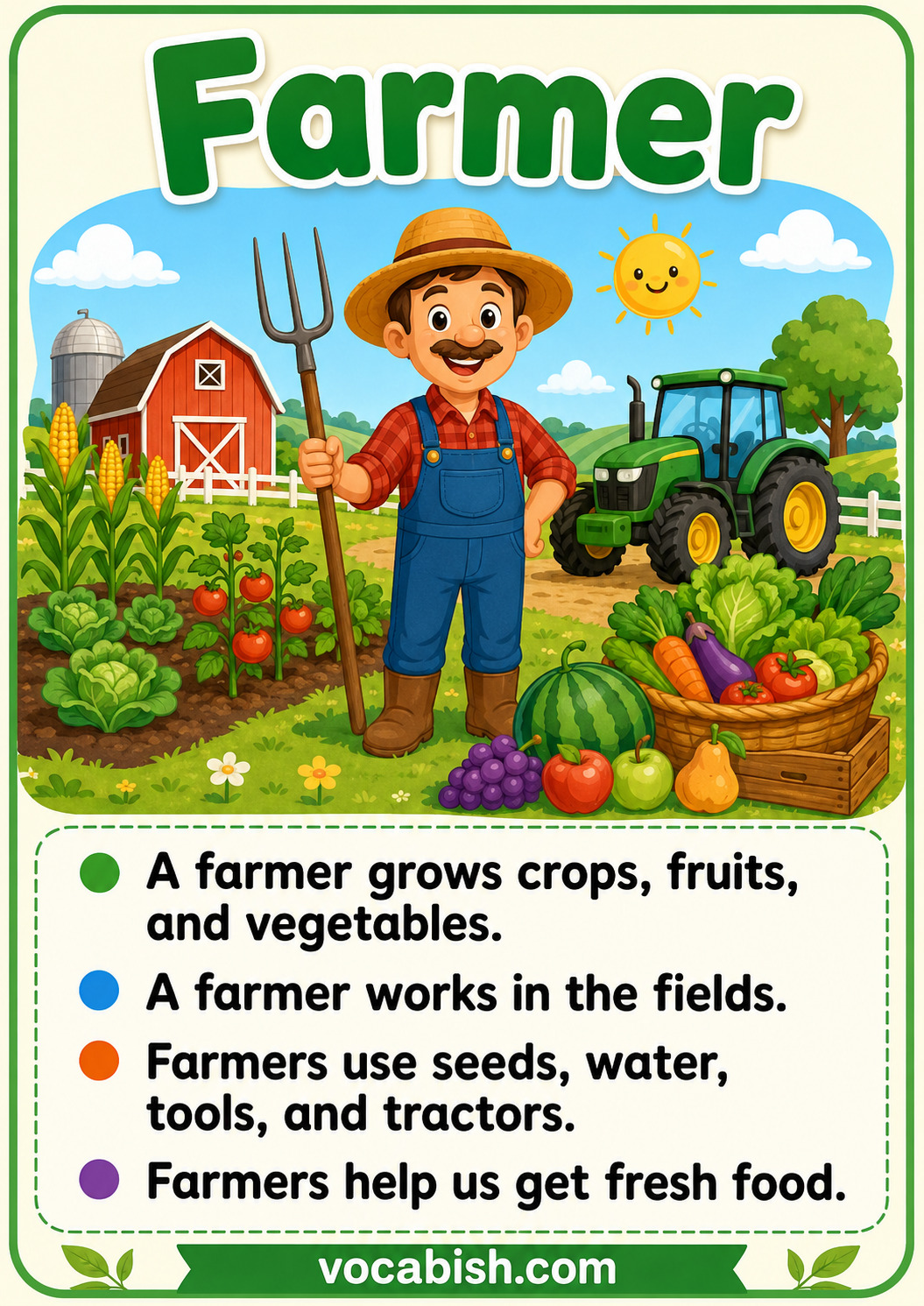
4. Farmer
- A farmer grows crops, fruits, and vegetables.
- A farmer works in the fields.
- Farmers use seeds, water, tools, and tractors.
- Farmers help us get fresh food.
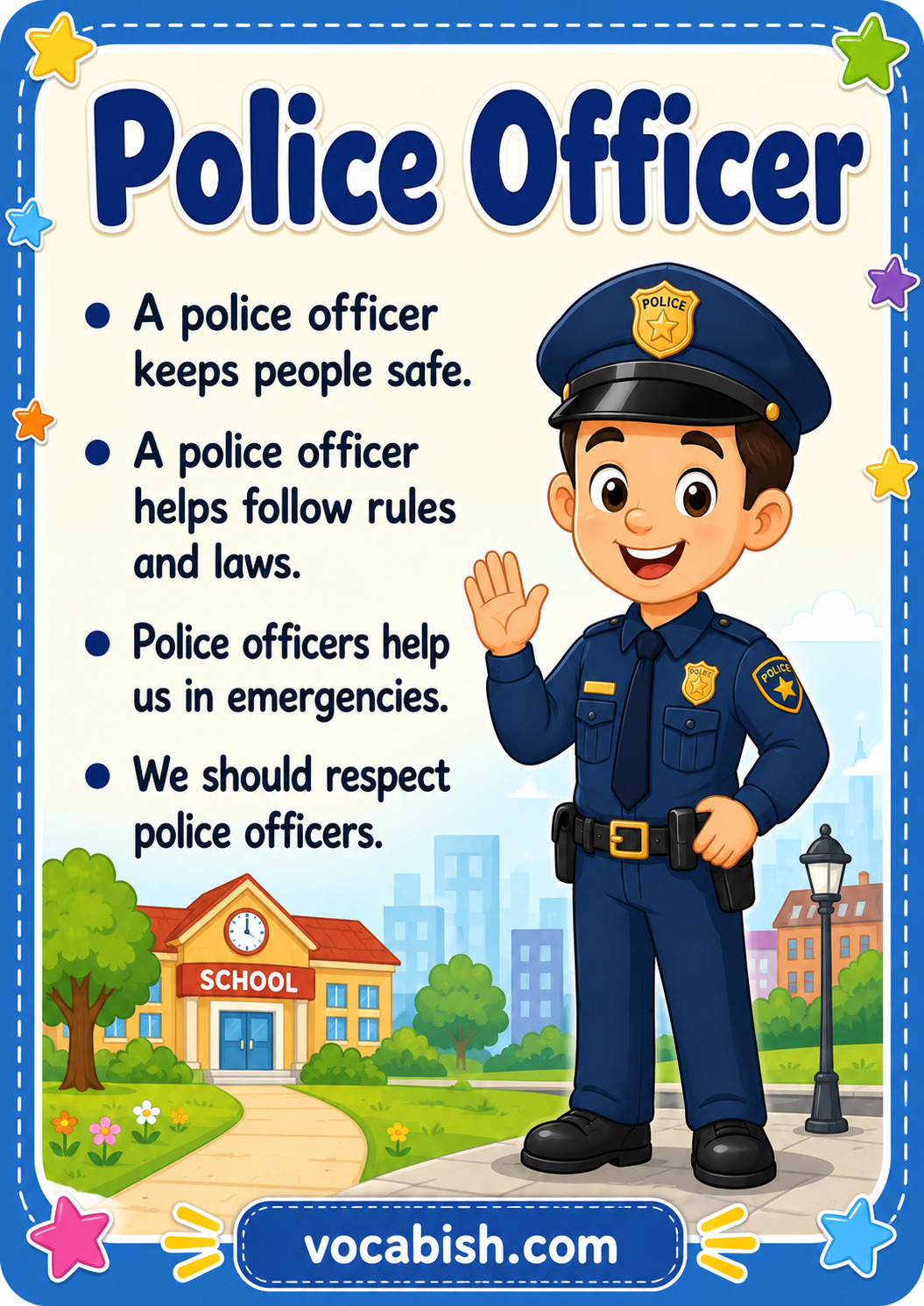
5. Police Officer
- A police officer keeps people safe.
- A police officer helps follow rules and laws.
- Police officers help us in emergencies.
- We should respect police officers.
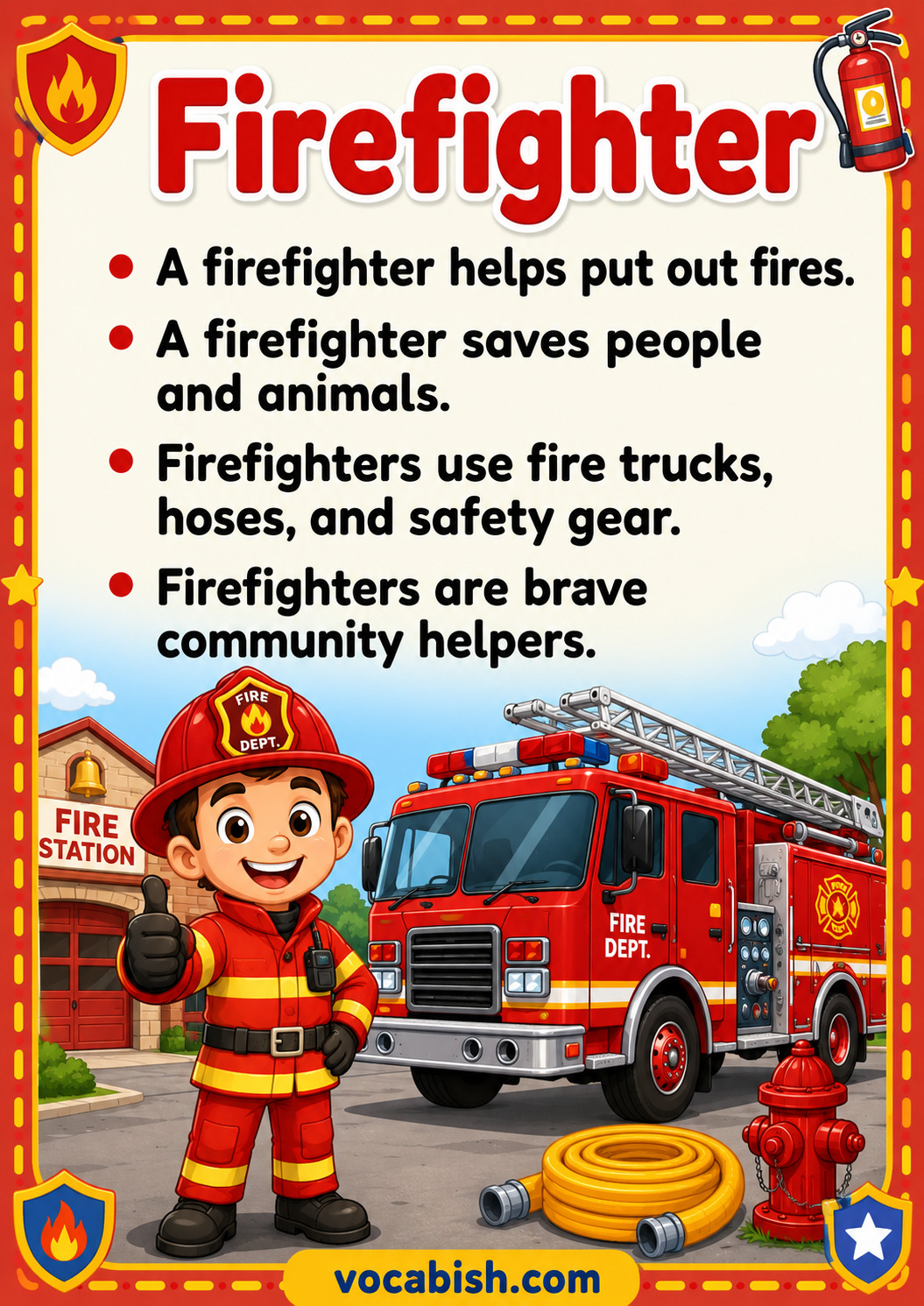
6. Firefighter
- A firefighter helps put out fires.
- A firefighter saves people and animals.
- Firefighters use fire trucks, hoses, and safety gear.
- Firefighters are brave community helpers.
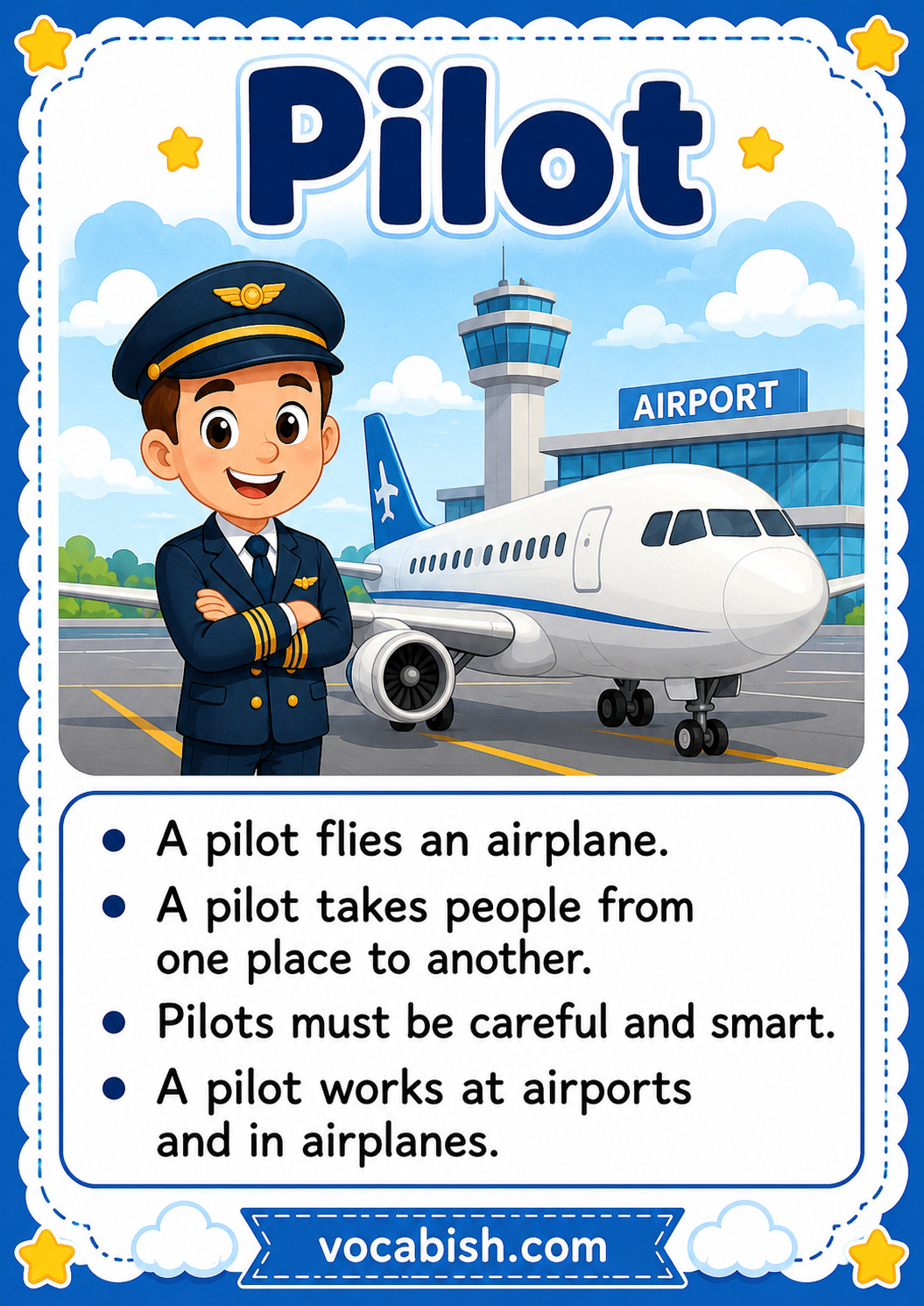
7. Pilot
- A pilot flies an airplane.
- A pilot takes people from one place to another.
- Pilots must be careful and smart.
- A pilot works at airports and in airplanes.
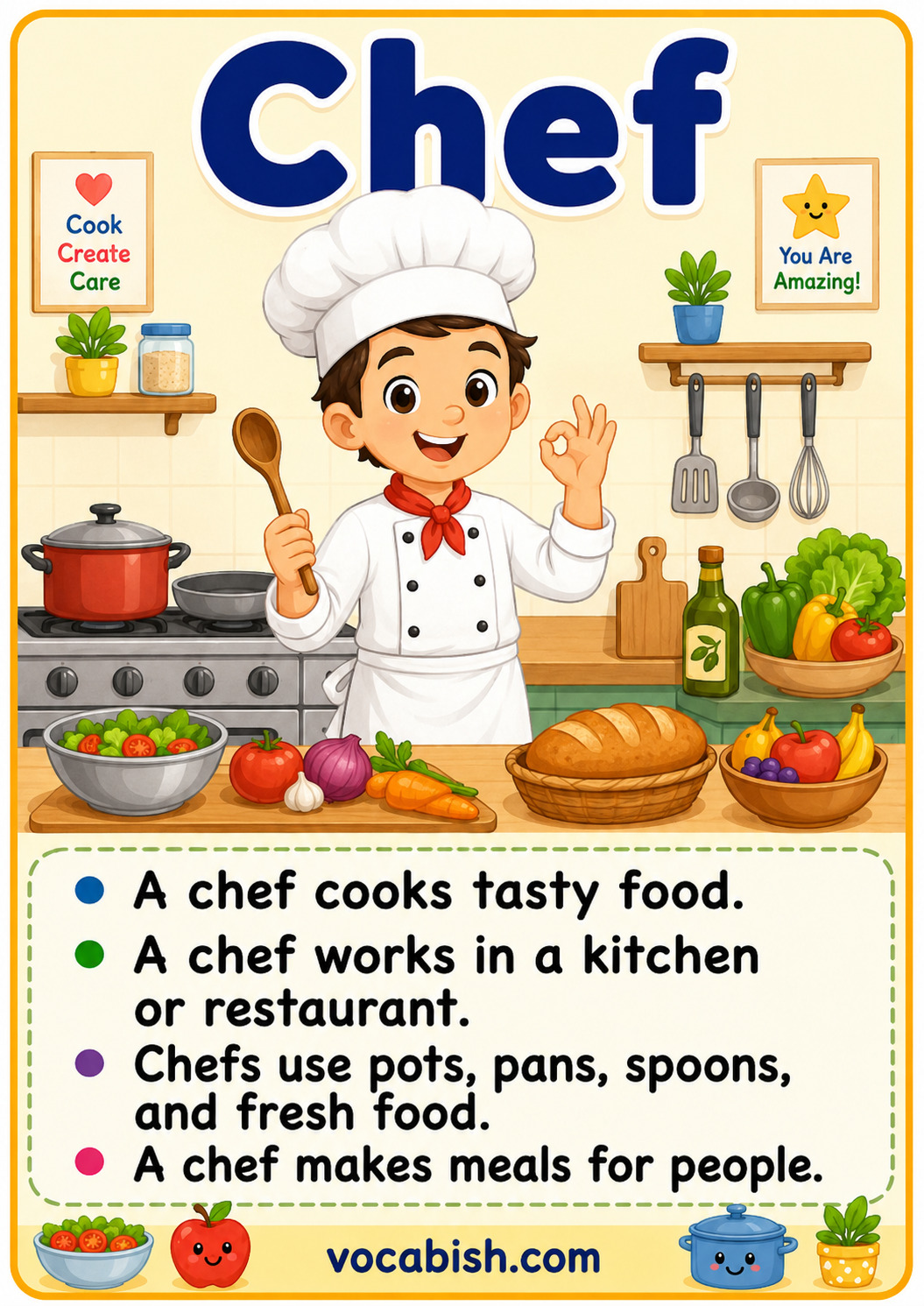
8. Chef
- A chef cooks tasty food.
- A chef works in a kitchen or restaurant.
- Chefs use pots, pans, spoons, and fresh food.
- A chef makes meals for people.
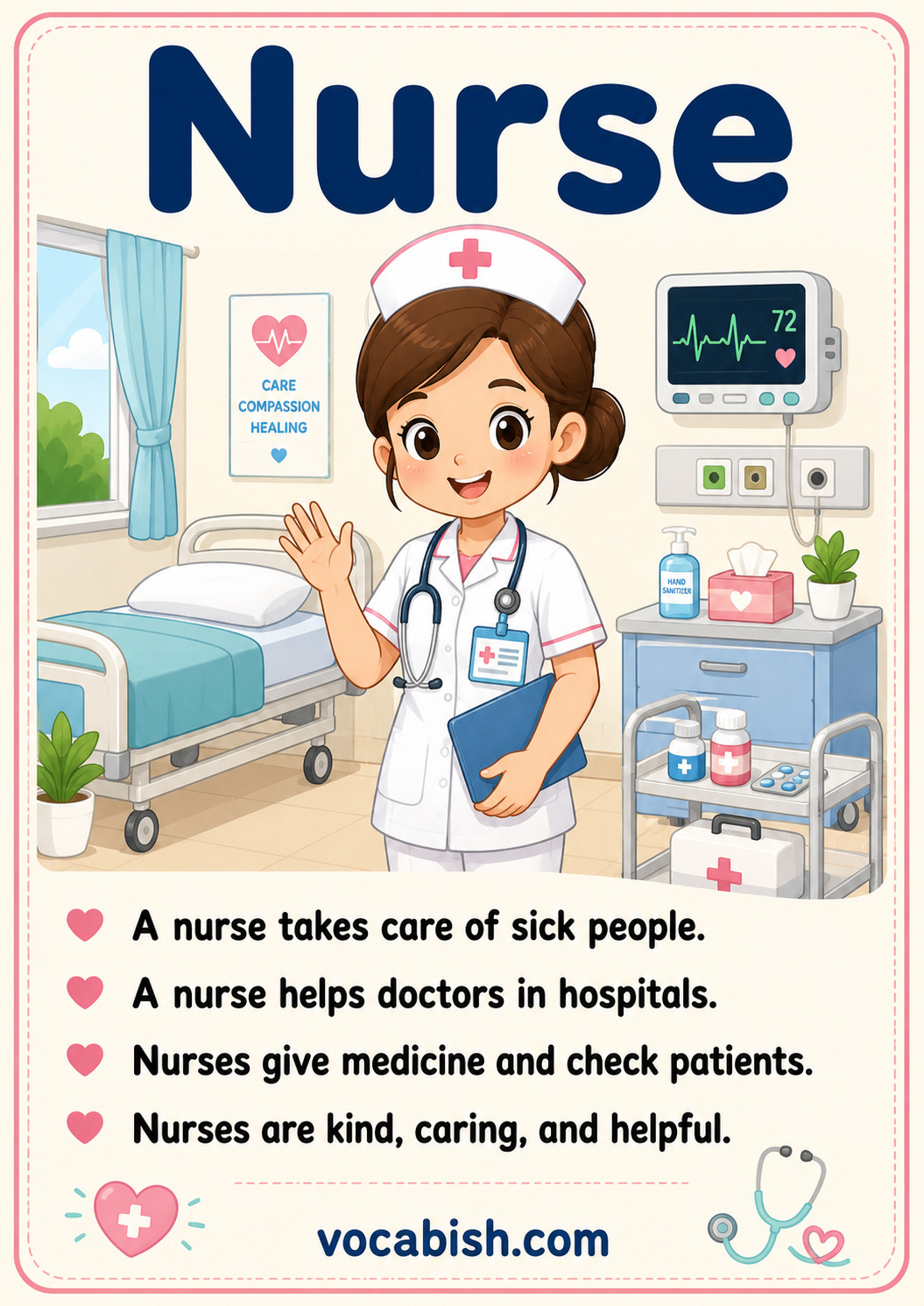
9. Nurse
- A nurse takes care of sick people.
- A nurse helps doctors in hospitals.
- Nurses give medicine and check patients.
- Nurses are kind, caring, and helpful.
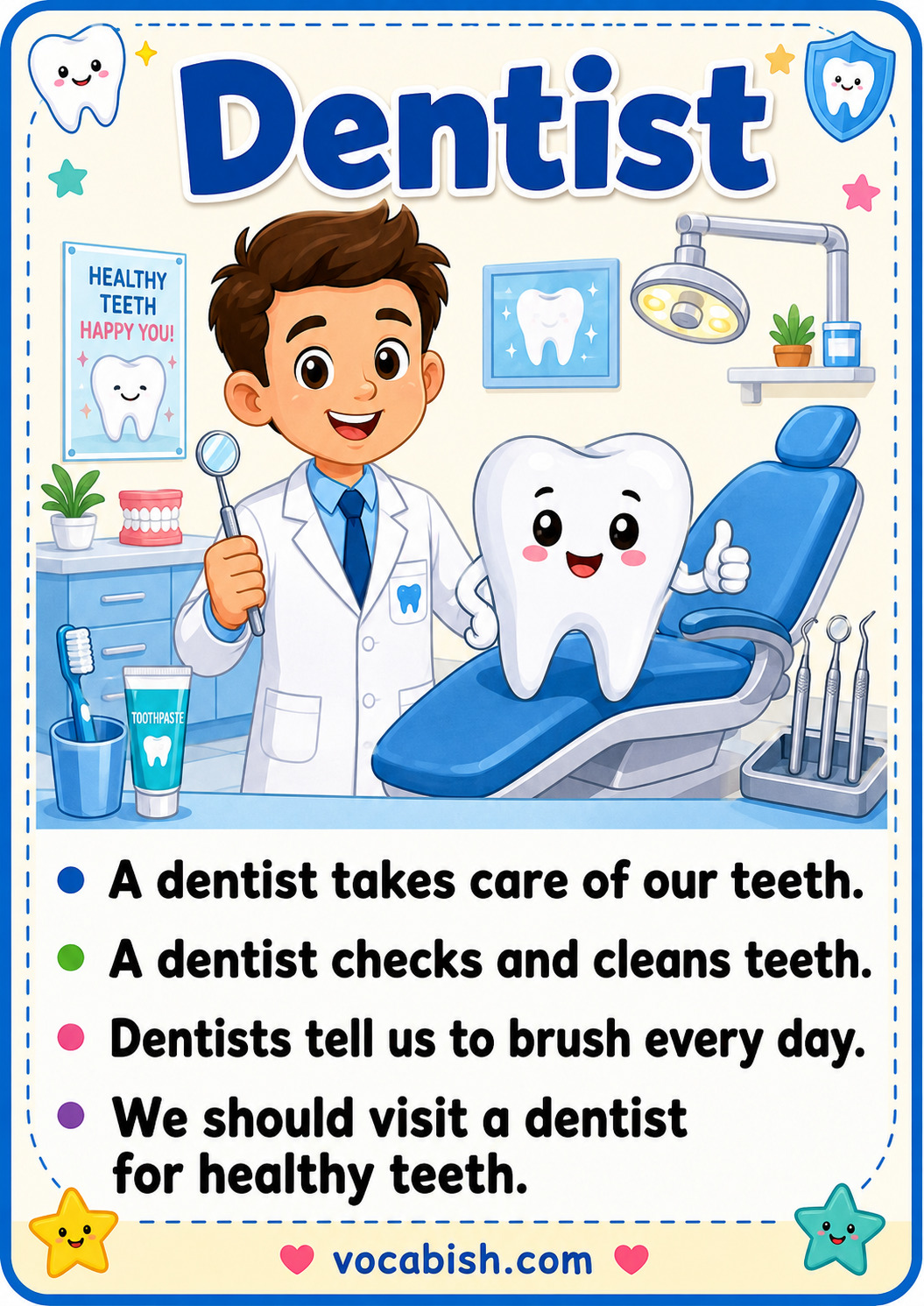
10. Dentist
- A dentist takes care of our teeth.
- A dentist checks and cleans teeth.
- Dentists tell us to brush every day.
- We should visit a dentist for healthy teeth.
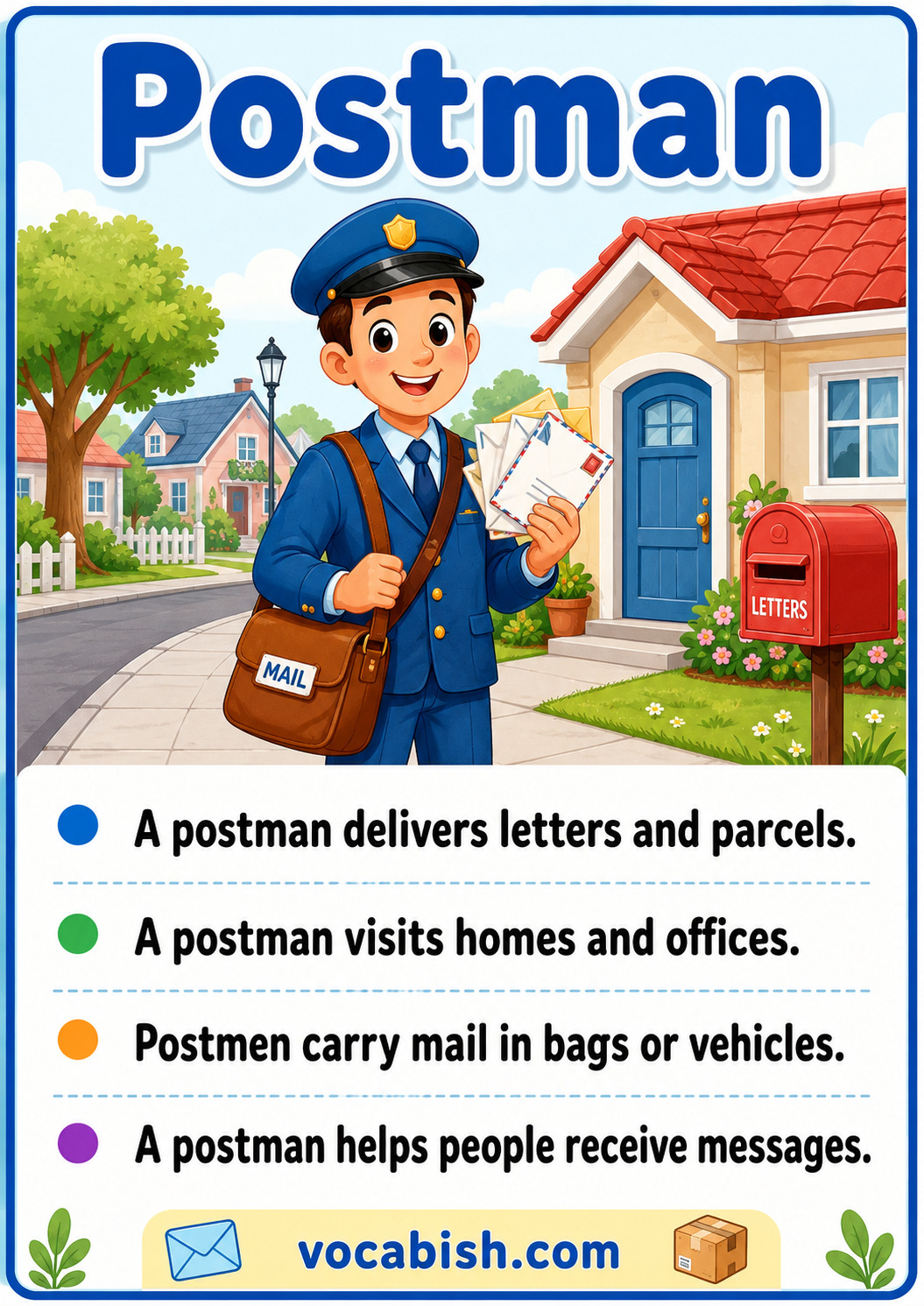
11. Postman
- A postman delivers letters and parcels.
- A postman visits homes and offices.
- Postmen carry mail in bags or vehicles.
- A postman helps people receive messages.
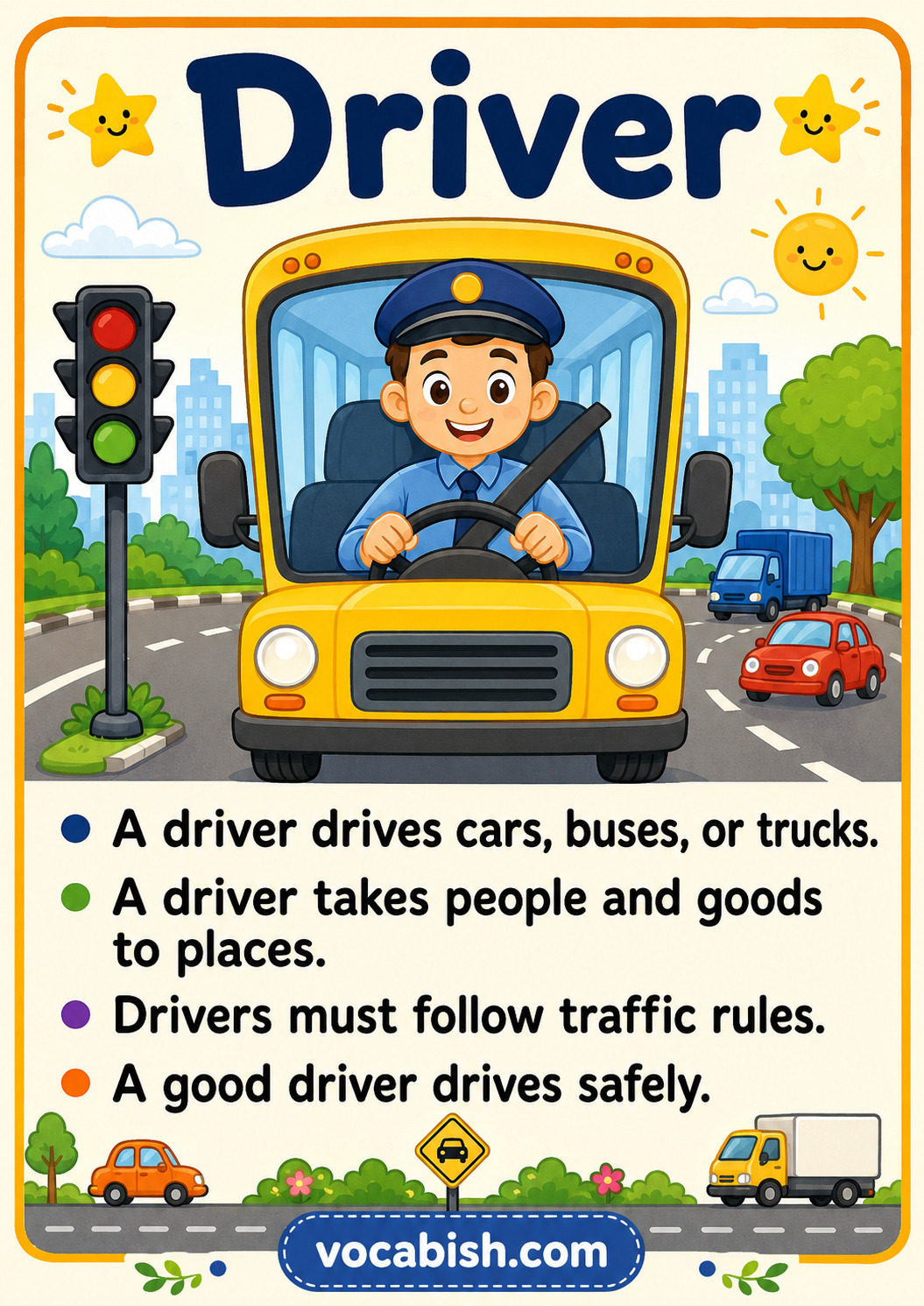
12. Driver
- A driver drives cars, buses, or trucks.
- A driver takes people and goods to places.
- Drivers must follow traffic rules.
- A good driver drives safely.
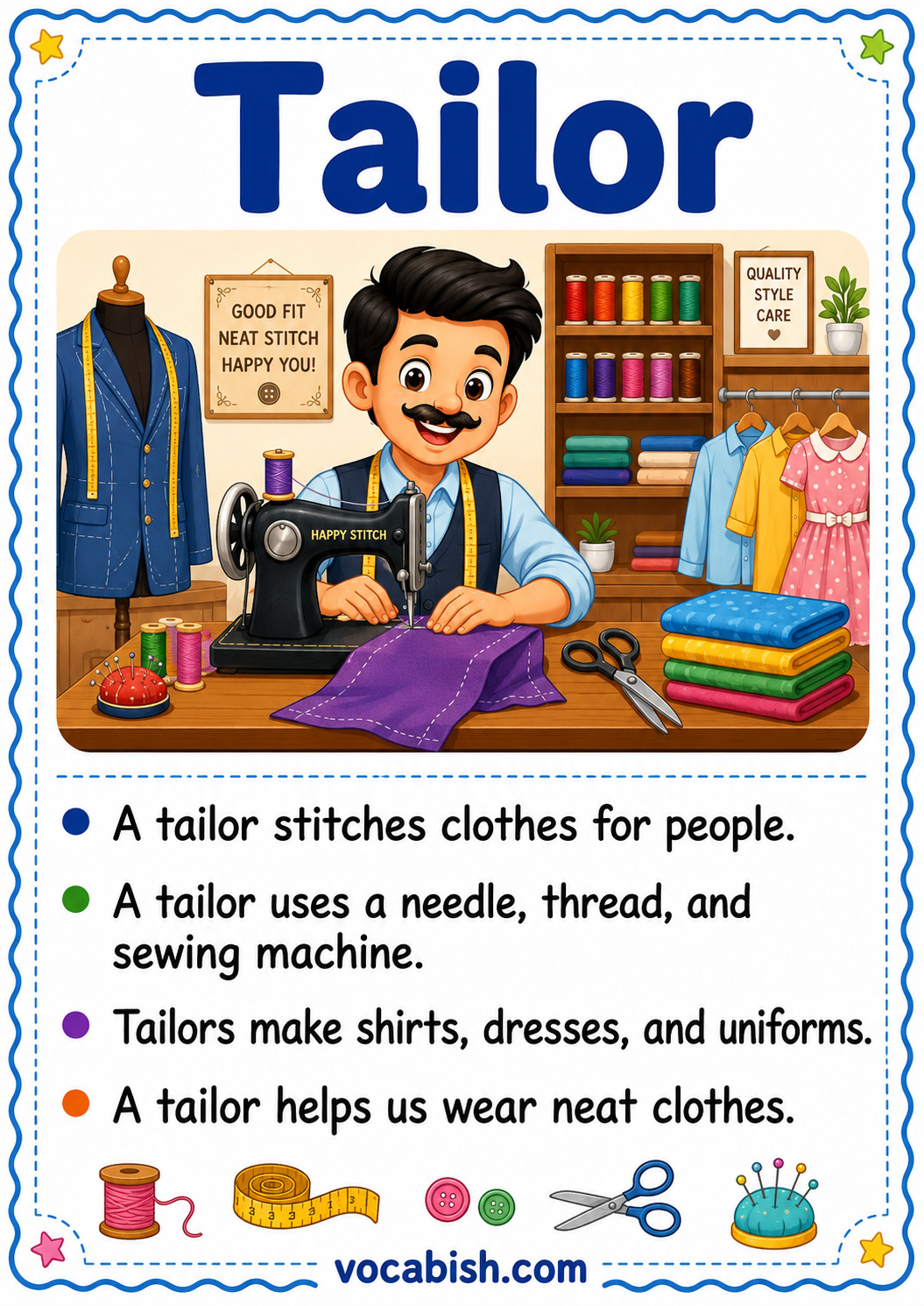
13. Tailor
- A tailor stitches clothes for people.
- A tailor uses a needle, thread, and sewing machine.
- Tailors make shirts, dresses, and uniforms.
- A tailor helps us wear neat clothes.
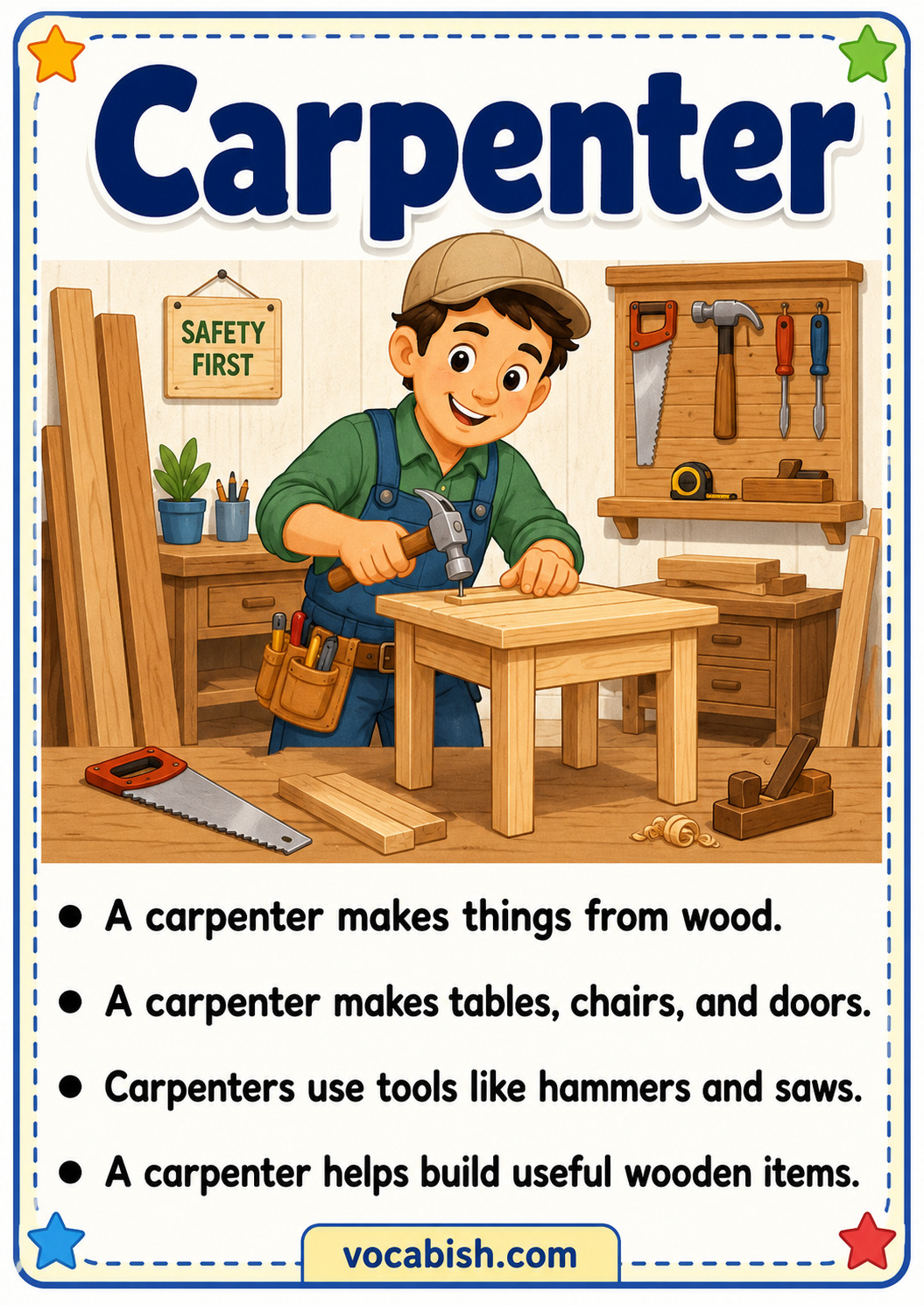
14. Carpenter
- A carpenter makes things from wood.
- A carpenter makes tables, chairs, and doors.
- Carpenters use tools like hammers and saws.
- A carpenter helps build useful wooden items.
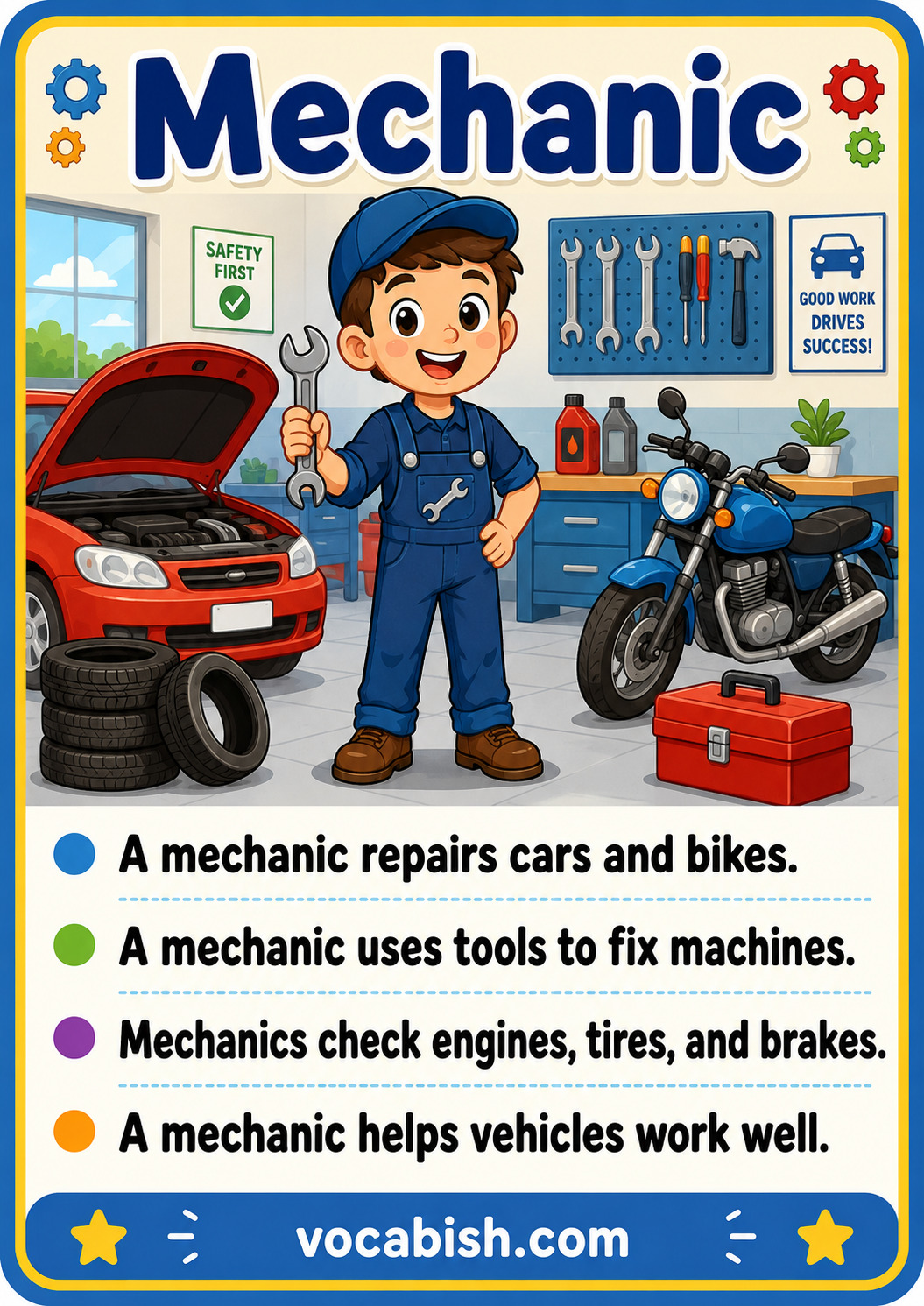
15. Mechanic
- A mechanic repairs cars and bikes.
- A mechanic uses tools to fix machines.
- Mechanics check engines, tires, and brakes.
- A mechanic helps vehicles work well.
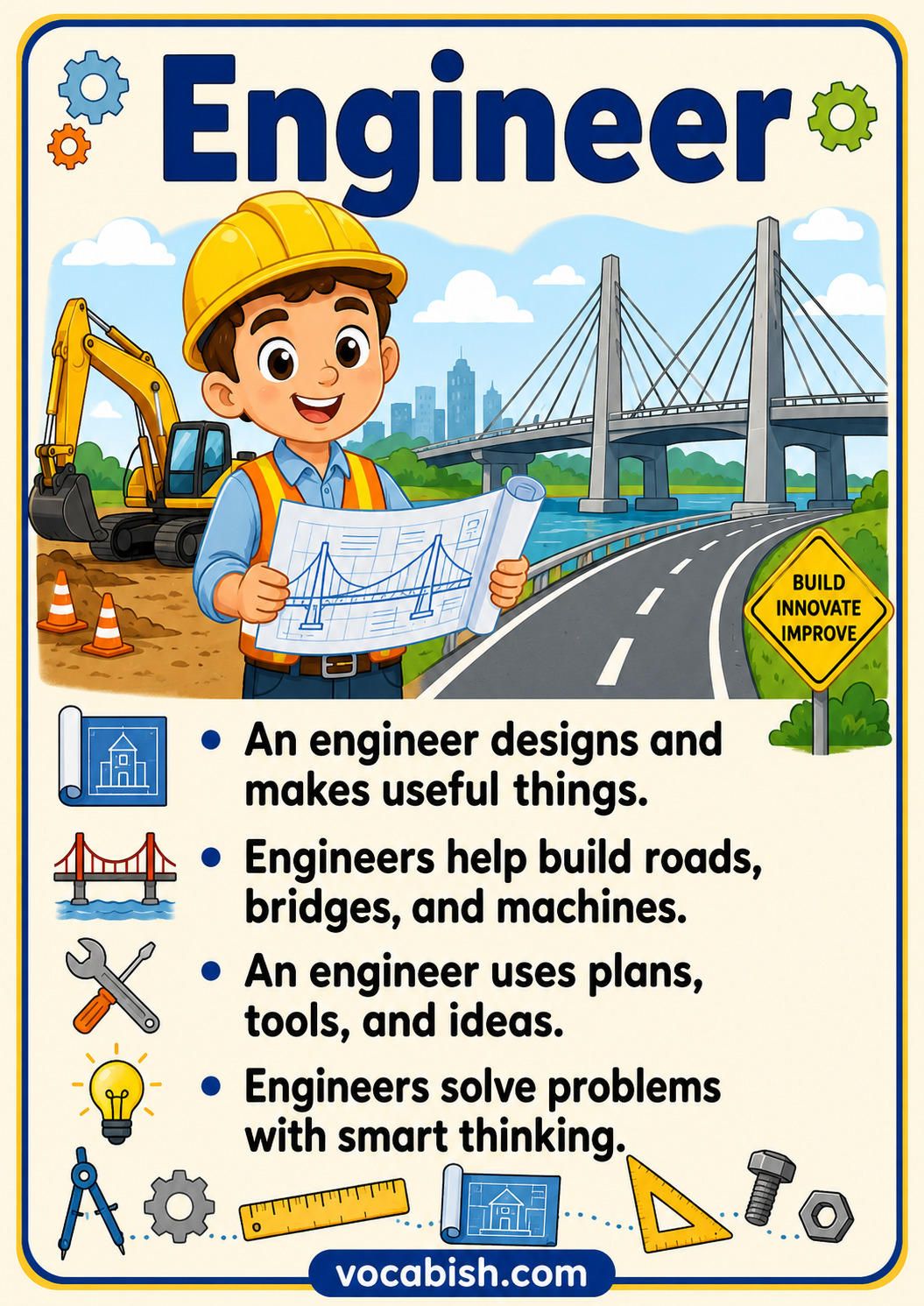
16. Engineer
- An engineer designs and makes useful things.
- Engineers help build roads, bridges, and machines.
- An engineer uses plans, tools, and ideas.
- Engineers solve problems with smart thinking.
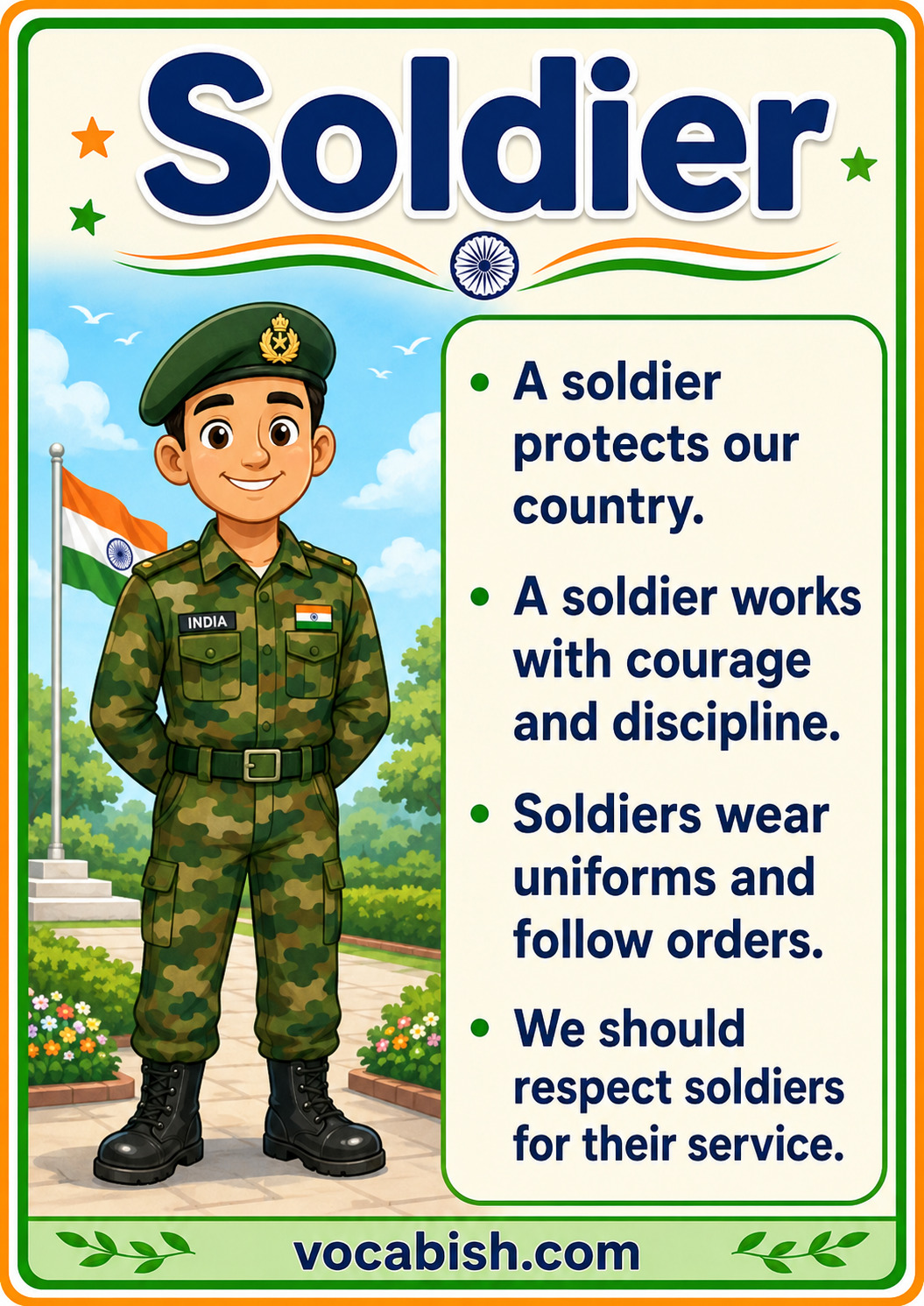
17. Soldier
- A soldier protects our country.
- A soldier works with courage and discipline.
- Soldiers wear uniforms and follow orders.
- We should respect soldiers for their service.
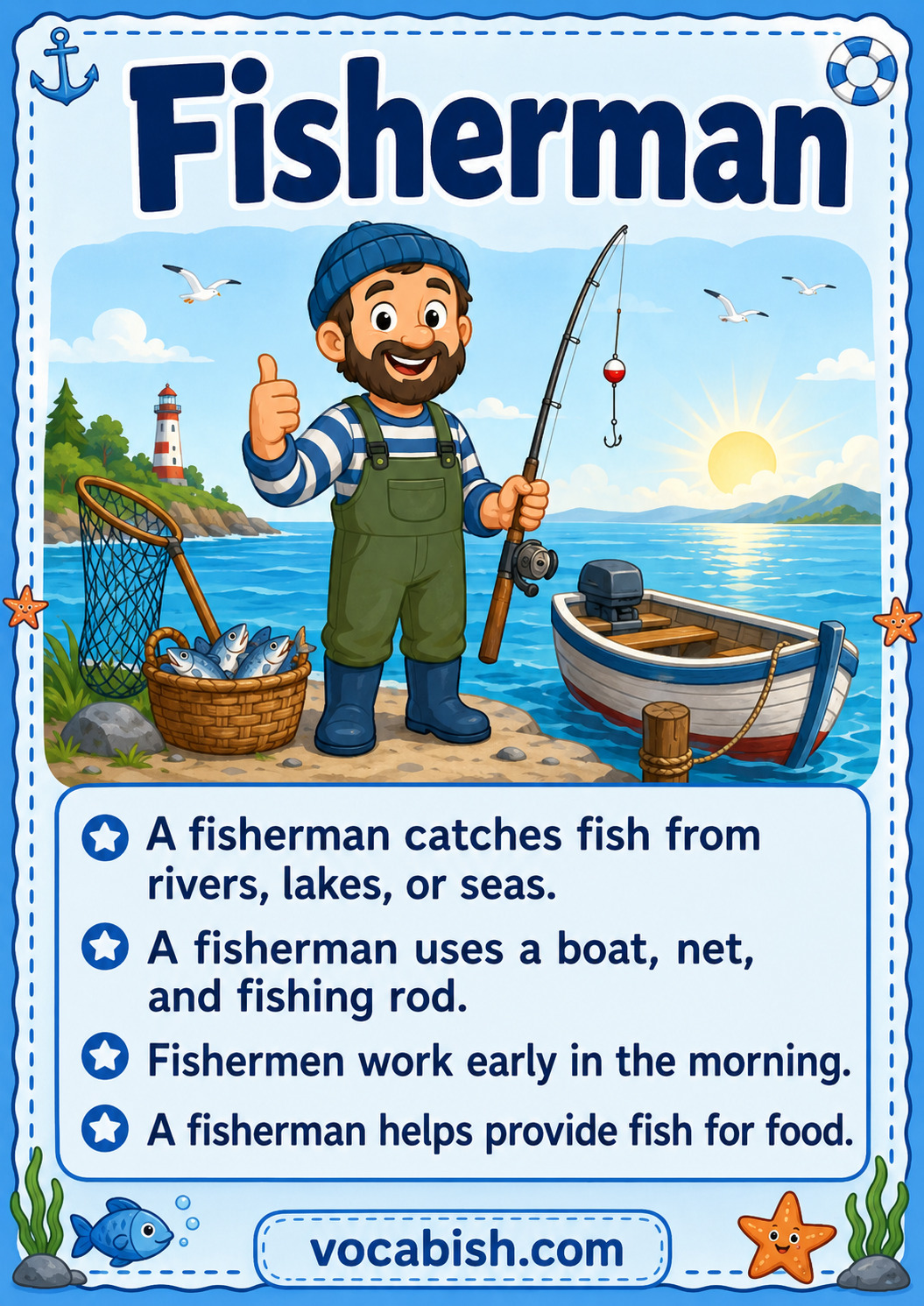
18. Fisherman
- A fisherman catches fish from rivers, lakes, or seas.
- A fisherman uses a boat, net, and fishing rod.
- Fishermen work early in the morning.
- A fisherman helps provide fish for food.
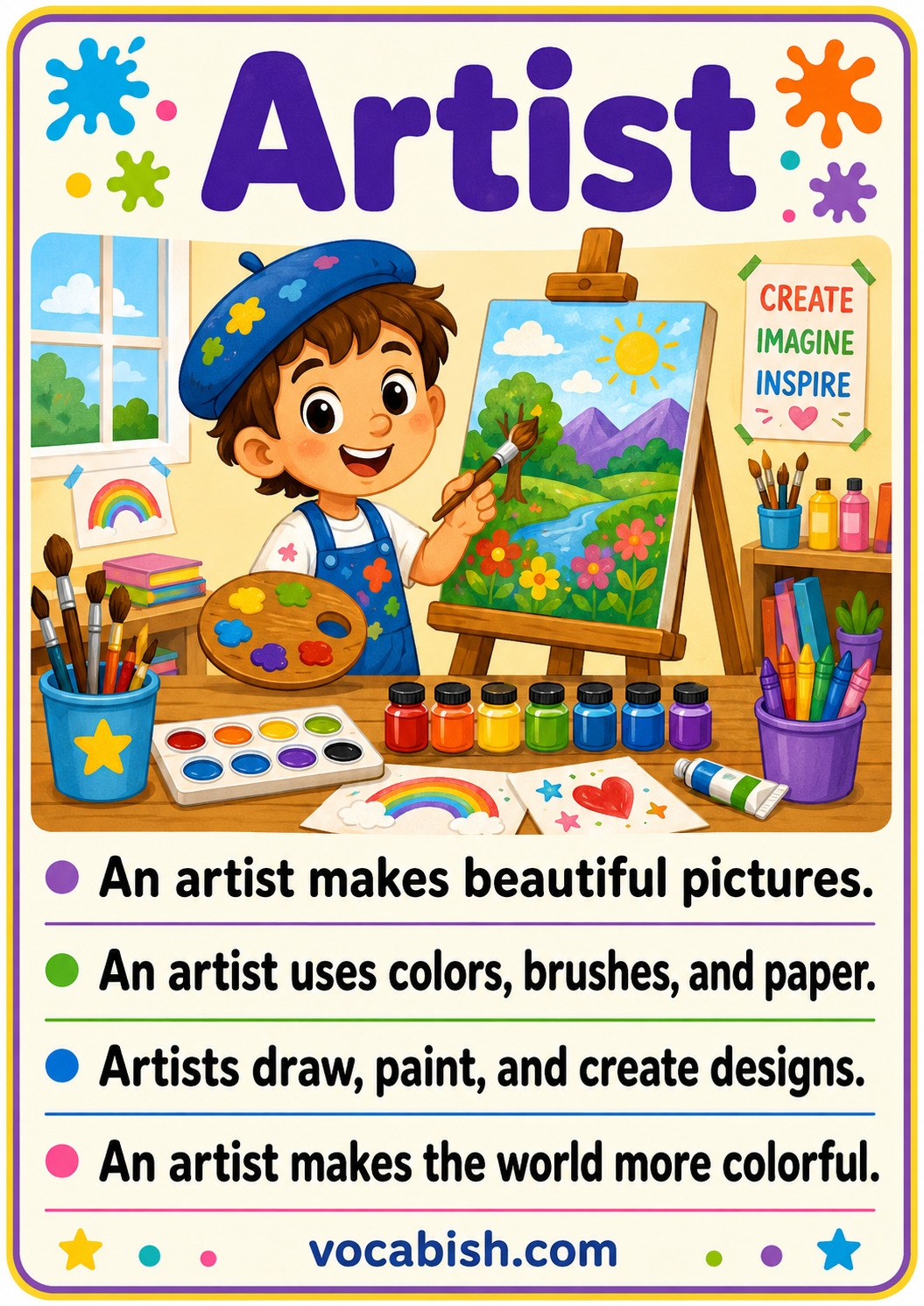
19. Artist
- An artist makes beautiful pictures.
- An artist uses colors, brushes, and paper.
- Artists draw, paint, and create designs.
- An artist makes the world more colorful.
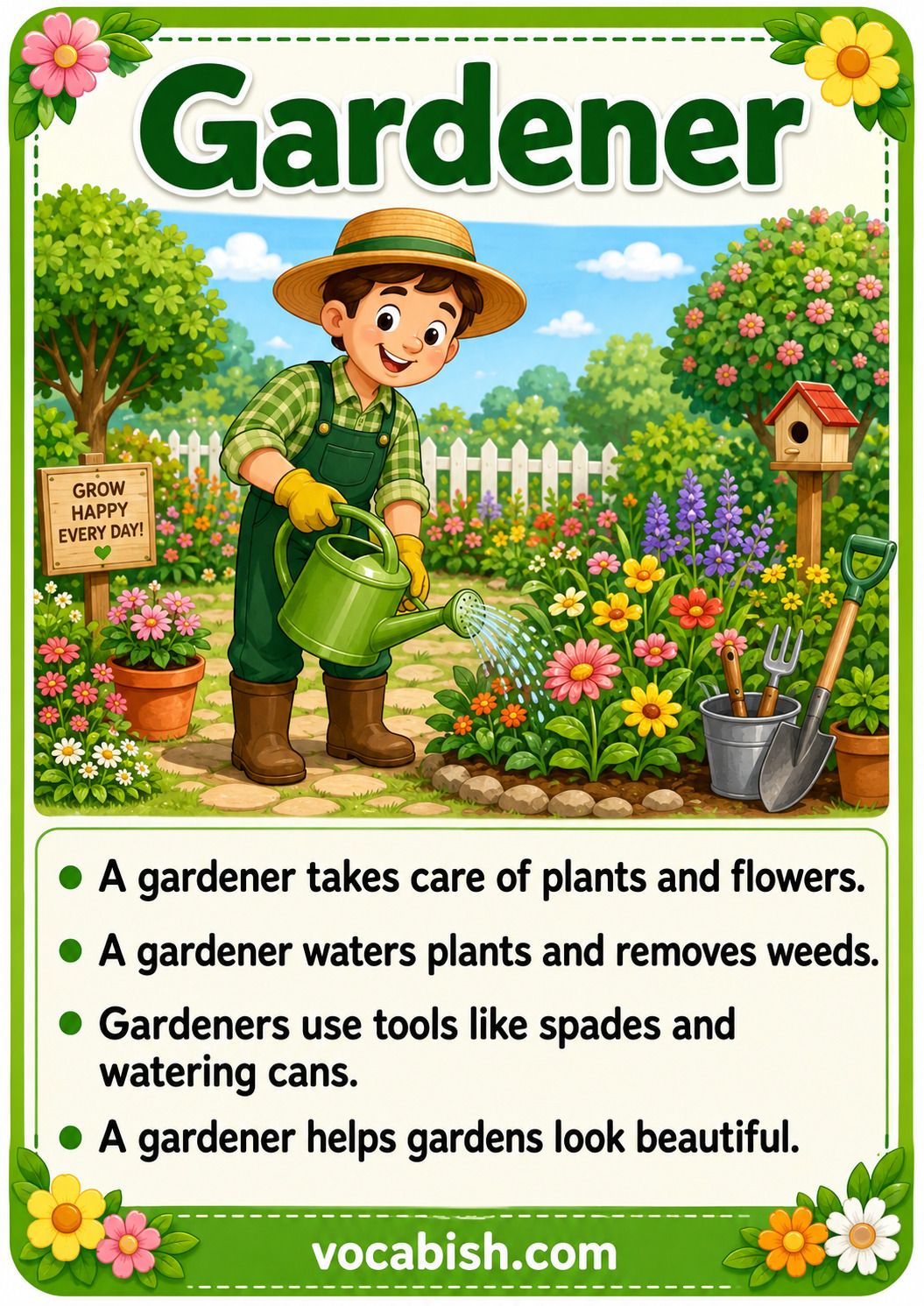
20. Gardener
- A gardener takes care of plants and flowers.
- A gardener waters plants and removes weeds.
- Gardeners use tools like spades and watering cans.
- A gardener helps gardens look beautiful.
How Parents Can Use These Topics at Home
Parents can use these occupation topics as short daily learning practice. Show one picture to the child, read the job name, and then explain the lines slowly.
After reading, ask simple questions like, “What does a doctor do?” or “What tool does a farmer use?” This helps kids think and answer in their own words.
Parents can also ask children to copy the lines in a notebook or write a short paragraph about their favorite occupation.
How Teachers Can Use These in Class
Teachers can use these topics for reading practice, speaking practice, writing lessons, classroom display, homework, or community helper activities.
A teacher can show one occupation card, read the lines with students, and then ask the class to repeat them. After that, students can write 3 to 4 simple sentences about the occupation.
These topics are also useful for group discussion, role-play, picture reading, and vocabulary building.
Easy Classroom Activity Ideas
- Match the occupation with the correct tool.
- Ask students to say 3 lines about one worker.
- Let children draw their favorite occupation.
- Use role-play for doctor, teacher, chef, farmer, or builder.
- Ask kids to write a short paragraph using the given lines.
- Show a picture and let students guess the occupation.
- Make a “Community Helpers” wall chart in the classroom.
Occupation Tools Section for Kids
Occupation | Tools or Things They Use |
|---|---|
Builder | Helmet, bricks, cement, toolkit |
Doctor | Stethoscope, medicine, thermometer |
Teacher | Books, board, chalk, marker |
Farmer | Seeds, tractor, water, tools |
Police Officer | Uniform, badge, whistle |
Firefighter | Fire truck, hose, helmet |
Pilot | Airplane, uniform, control panel |
Chef | Pots, pans, spoon, apron |
Nurse | Medicine, thermometer, bandage |
Dentist | Toothbrush, dental chair, mirror |
Postman | Letters, parcels, mail bag |
Driver | Car, bus, steering wheel |
Tailor | Needle, thread, sewing machine |
Carpenter | Wood, hammer, saw |
Mechanic | Wrench, tools, engine |
Engineer | Plans, helmet, tools |
Soldier | Uniform, boots, cap |
Fisherman | Boat, net, fishing rod |
Artist | Brushes, colors, paper |
Gardener | Watering can, plants, spade |
“My Favorite Occupation” Writing Task
Children can use this easy writing task after learning the occupation topics.
My favorite occupation is ________.
This person helps us by ________.
They use ________.
I like this occupation because ________.
For example:
My favorite occupation is a doctor.
A doctor helps sick people feel better.
A doctor uses a stethoscope and medicine.
I like doctors because they help us stay healthy.
These 20 occupation topics are simple, useful, and easy for kids to understand. Parents and teachers can use them as reading cards, for speaking practice, as classroom posters, or as short paragraph writing topics. Each topic helps children learn about real people who work hard and help our community every day.
Download PDF of These Occupations
FAQs About Occupations for Kids
Start with one job picture, say the worker’s name, explain their work, then ask the child to repeat simple sentences.
Children learn how different people help society, build respect for workers, and understand real jobs they see in daily life.
Use pictures, tools, role-play, and short sentences so kids can connect each occupation with simple real-life examples easily during lessons.
Start with familiar jobs like teacher, doctor, farmer, builder, driver, and chef because children often see them around in daily life.
Teachers can use them during reading time, speaking practice, writing lessons, morning work, homework, or community helper activities with students.
Yes, kids learn to describe a person, their work, tools, and importance using clear sentences in a simple paragraph easily.
Role-play works well because children act like workers, use pretend tools, speak simple lines, and remember the job better quickly.
Parents can show pictures, ask guessing questions, discuss family jobs, and let kids draw their favorite occupation after learning together.
You May Also Like: