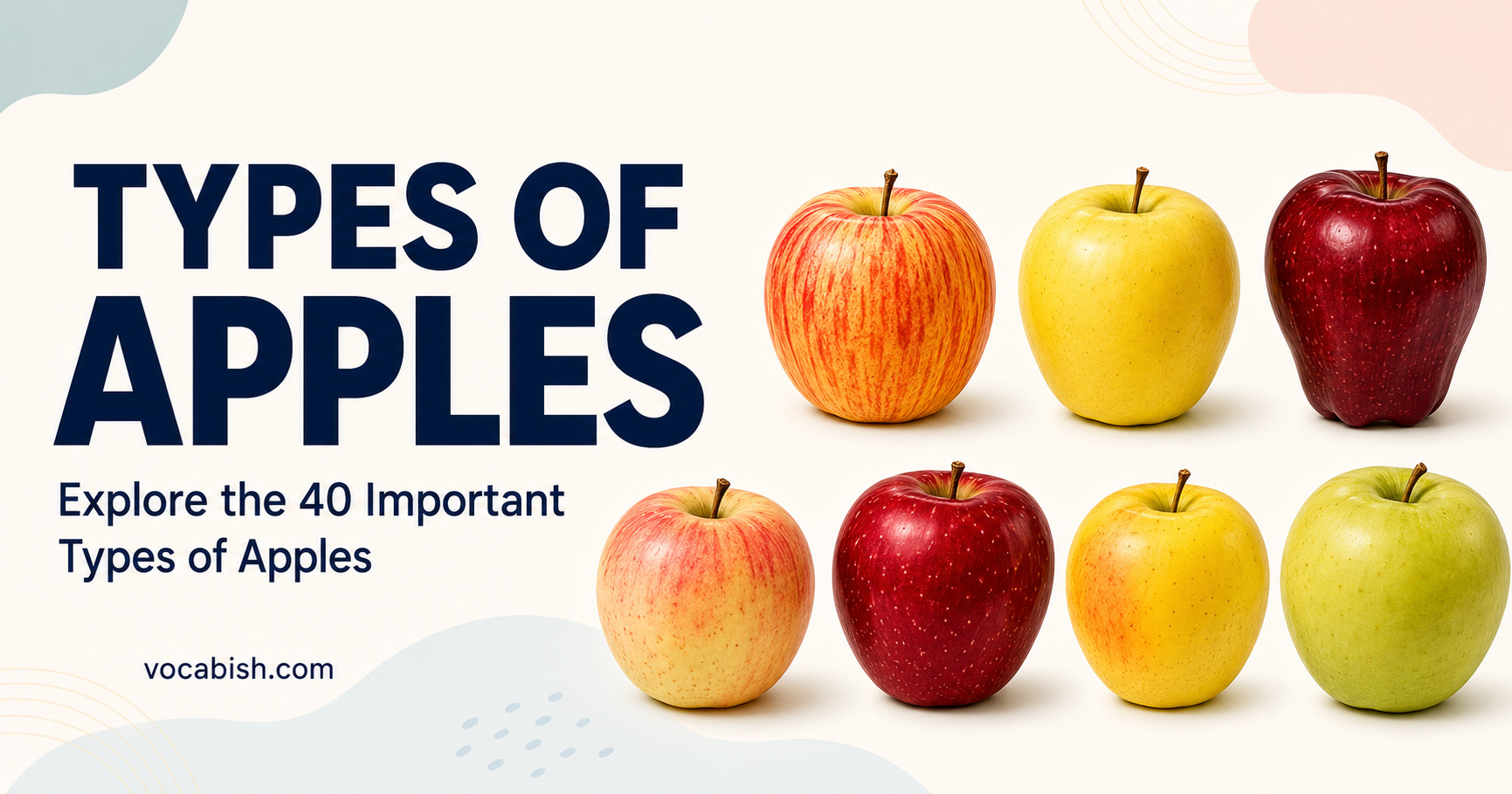

Types of apples are named cultivars of the domesticated apple, commonly classified as Malus domestica. More than 7,500 cultivated varieties have been recorded worldwide, so no practical article can include every apple.
In this blog post, you will learn about 40 important eating, cooking, heritage, russet, and cider apples. These include Gala, Fuji, Honeycrisp, Granny Smith, Bramley’s Seedling, Cox’s Orange Pippin, and Dabinett. The apples are organised by their main flavour, texture, and culinary use, with important overlaps explained.
Definition and Scope
An apple type usually means a named cultivar, such as Gala or Granny Smith, rather than a separate species. “Variety” is commonly used in shops and everyday language, although “cultivar” is the more precise horticultural term for a cultivated plant selection.
There is no single worldwide system dividing every apple into fixed groups. The Royal Horticultural Society commonly distinguishes dessert apples, culinary apples, and dual-purpose cultivars. Cider makers may instead classify fruit as sweet, sharp, bittersweet, or bitter-sharp according to acidity and tannin.
This article covers 40 widely recognised cultivated apples. Wild Malus species, ornamental crabapples, and every regional heritage cultivar are outside its scope.
Complete List of 40 Types of Apples
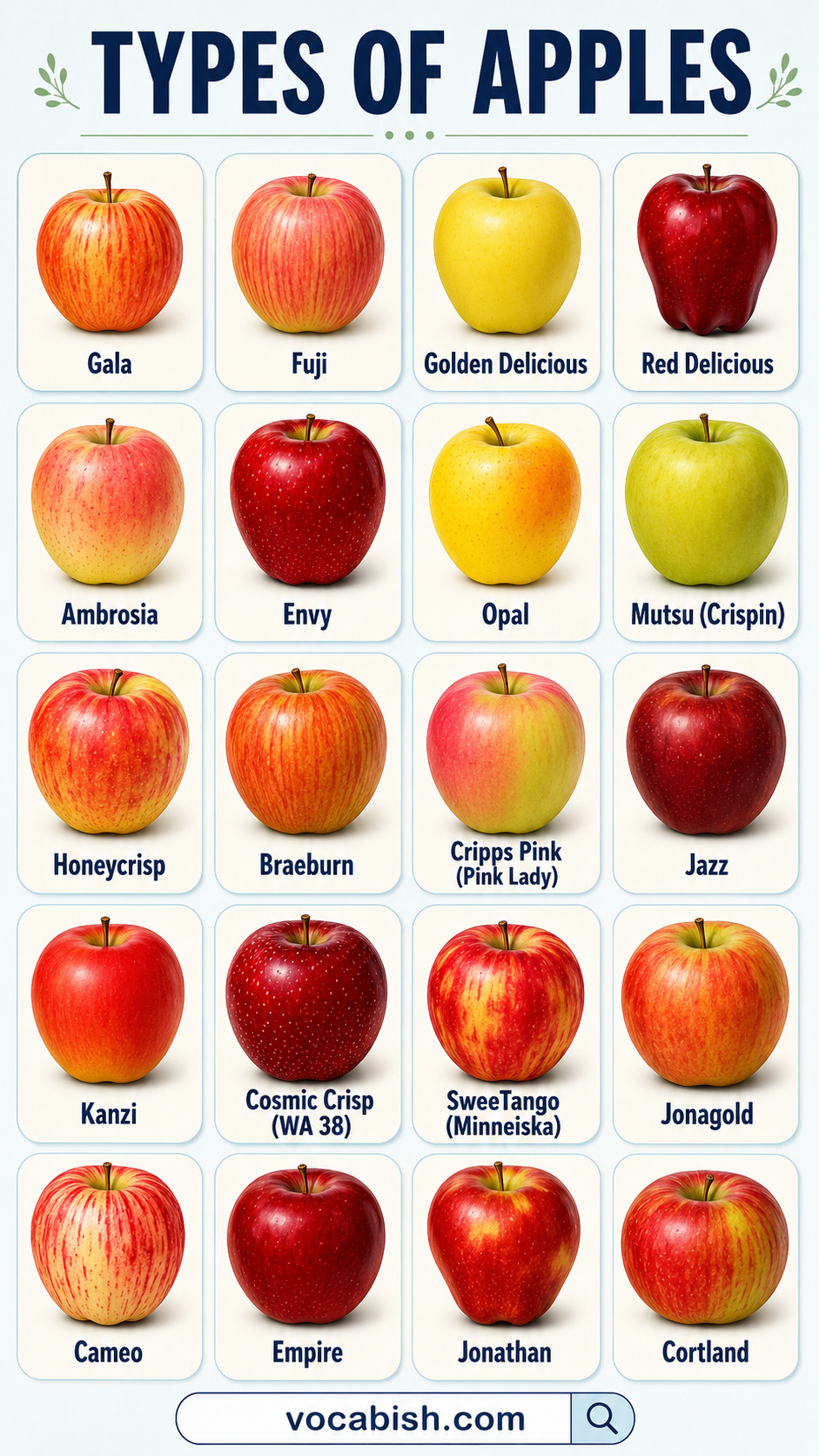
Gala | Fuji | Golden Delicious |
Red Delicious | Ambrosia | Envy |
Opal | Mutsu (Crispin) | Honeycrisp |
Braeburn | Cripps Pink (Pink Lady) | Jazz |
Kanzi | Cosmic Crisp (WA 38) | SweeTango (Minneiska) |
Jonagold | Cameo | Empire |
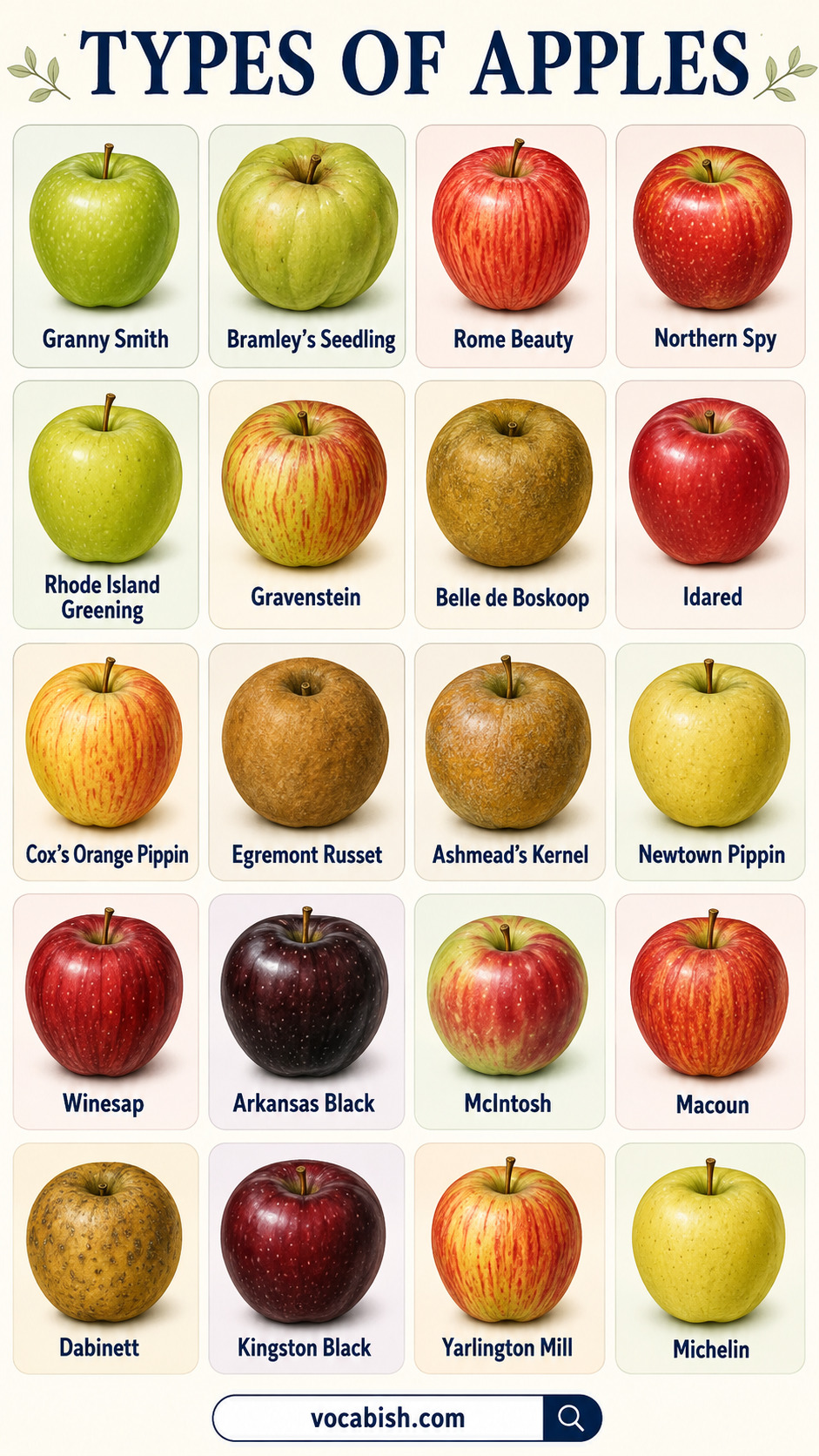
Jonathan | Cortland | Granny Smith |
Bramley’s Seedling | Rome Beauty | Northern Spy |
Rhode Island Greening | Gravenstein | Belle de Boskoop |
Idared | Cox’s Orange Pippin | Egremont Russet |
Ashmead’s Kernel | Newtown Pippin | Winesap |
Arkansas Black | McIntosh | Macoun |
Dabinett | Kingston Black | Yarlington Mill |
Michelin |
Main Apple Categories and Classification
The following five categories provide a practical way to compare apple varieties:
- Sweet and mild dessert apples are mainly chosen for fresh eating.
- Crisp sweet-tart and multipurpose apples balance sugar, acidity, and firmness.
- Tart cooking and baking apples offer acidity or heat-resistant flesh.
- Heritage, russet, and distinctive apples are valued for traditional flavours.
- Traditional cider apples contribute tannin, acidity, sweetness, or body.
These categories are not strict botanical divisions. An apple may suit several purposes, and its flavour can change according to maturity, growing conditions, and storage. The main use given here reflects how each cultivar is commonly recognised.
Types of Apples by Category
Sweet and Mild Dessert Apples
These varieties generally have approachable sweetness and relatively mild acidity. Most are eaten fresh, although several can also be cooked.
- Gala: Sweet, aromatic flesh and thin skin make it excellent for snacking.
- Fuji: Dense, juicy flesh delivers strong sweetness and dependable crispness when fresh.
- Golden Delicious: Tender yellow flesh tastes honeyed and works fresh or cooked.
- Red Delicious: Deep red skin surrounds mildly sweet flesh best enjoyed fresh.
- Ambrosia: Low-acid, honeyed flesh stays crisp and browns relatively slowly after cutting.
- Envy: Very crisp, sweet flesh offers floral notes and slow browning.
- Opal: Yellow skin covers crunchy, sweet-tart flesh that resists browning naturally.
- Mutsu (Crispin): Large green-yellow fruit combines juicy sweetness with firm, versatile flesh.
Gala, Fuji, Golden Delicious, Red Delicious, Ambrosia, Envy, Opal, and Mutsu are recognised commercial or horticultural cultivars, although availability differs between countries.
Crisp Sweet-Tart and Multipurpose Apples
These apples combine sweetness with noticeable acidity. Their firm or crisp flesh allows many of them to work in snacks, salads, sauces, and baked dishes.
- Honeycrisp: Exceptionally crisp, juicy flesh balances pronounced sweetness with refreshing acidity.
- Braeburn: Firm flesh combines spicy sweetness and tartness for eating or baking.
- Cripps Pink (Pink Lady): Firm, crisp flesh tastes sweet-tart and performs well in baking.
- Jazz: Dense, crunchy flesh offers tangy sweetness and excellent fresh-eating quality.
- Kanzi: Crisp, juicy flesh delivers a lively balance of sugar and acidity.
- Cosmic Crisp (WA 38): Firm, juicy flesh tastes sweet-tangy and stores exceptionally well.
- SweeTango (Minneiska): Juicy, crisp flesh blends sweetness, bright acidity, and subtle spice.
- Jonagold: Large fruit combines Jonathan tartness with Golden Delicious sweetness and juiciness.
- Cameo: Crisp, aromatic flesh has balanced sweetness and holds shape when cooked.
- Empire: Small, crisp apples balance sweetness and acidity for versatile everyday use.
- Jonathan: Juicy, tart-sweet flesh provides strong flavour for eating and cooking.
- Cortland: Tender, slightly tart flesh browns slowly, suiting salads and sauces.
Honeycrisp and SweeTango were developed through the University of Minnesota’s apple-breeding programme. Cosmic Crisp is the brand name used for the Washington State University cultivar WA 38.
Tart Cooking and Baking Apples
Cooking apples normally have sufficient acidity to maintain a noticeable flavour after heating. Firm varieties may retain their slices, while softer culinary apples break down into sauce or purée.
- Granny Smith: Firm green flesh stays tart and holds shape during baking.
- Bramley’s Seedling: Large, sharply acidic fruit cooks down into a light, fluffy purée.
- Rome Beauty: Mildly tart, firm flesh develops richer flavour when baked whole.
- Northern Spy: Firm, aromatic flesh balances acidity and sweetness in pies and cider.
- Rhode Island Greening: Green, tart fruit softens evenly, making excellent pies and sauce.
- Gravenstein: Juicy, aromatic flesh brings bright acidity to sauces, pies, and cider.
- Belle de Boskoop: Coarse, firm flesh tastes sharply aromatic and keeps structure when cooked.
- Idared: Firm, tangy flesh stores well and suits pies, sauces, and baking.
Some cooking apples, including Bramley’s Seedling, become less acidic during storage. Other cultivars, such as Granny Smith and Belle de Boskoop, are valued when firmer pieces are required.
Heritage, Russet, and Distinctive Dessert Apples
Heritage apples are older cultivars preserved for their flavour, regional importance, or horticultural value. Russet apples have naturally rough, brownish skin, but not every heritage apple is russeted.
- Cox’s Orange Pippin: Aromatic, richly flavoured flesh combines sweetness, acidity, and subtle spice.
- Egremont Russet: Rough russet skin covers sweet, nutty flesh with firm texture.
- Ashmead’s Kernel: Russeted fruit develops intense sweet-sharp flavour with pear-drop aromatic notes.
- Newtown Pippin: Firm, green-yellow fruit offers complex tartness and improves during storage.
- Winesap: Firm, juicy flesh carries wine-like acidity and a subtly spicy flavour.
- Arkansas Black: Very firm, dark-red fruit mellows from tartness during extended storage.
- McIntosh: Soft, juicy, aromatic flesh tastes tangy and breaks down when cooked.
- Macoun: Crisp, juicy flesh offers berry-like sweetness and pronounced aromatic flavour.
The RHS recognises many traditional cultivars, including Cox’s Orange Pippin, Egremont Russet, Ashmead’s Kernel, Newtown Pippin, and McIntosh. American extension sources also identify Arkansas Black, Winesap, and Newtown Pippin among established older cultivars.
Traditional Cider Apples
Dedicated cider apples are not always pleasant for fresh eating. Tannins can taste bitter or astringent, while high acidity can taste unusually sharp. Cider producers commonly blend varieties to create balanced flavour and structure.
- Dabinett: Bittersweet juice provides tannin, body, and moderate acidity for cider.
- Kingston Black: Bittersharp juice combines notable tannin and acidity for balanced cider.
- Yarlington Mill: Bittersweet fruit contributes soft tannin, sweetness, and rounded cider character.
- Michelin: Productive bittersweet apple supplies mild tannin and dependable blending juice.
Dabinett, Kingston Black, Yarlington Mill, and Michelin are established traditional British cider cultivars. Cider apples may be classified according to their acidity and tannin levels rather than their colour or eating quality.
Important Differences Between Similar Apples
Apples Compared | Main Difference | Typical Use |
|---|---|---|
Gala and Fuji | Gala is lighter and aromatic; Fuji is denser and sweeter | Fresh eating |
Honeycrisp and Cosmic Crisp | Honeycrisp has explosive juiciness; Cosmic Crisp is firmer-storing | Snacks and salads |
Granny Smith and Bramley | Granny Smith holds slices; Bramley usually cooks into purée | Baking and sauces |
Red Delicious and Golden Delicious | They are separate cultivars, not colour versions of one apple | Mostly fresh eating |
Cripps Pink and Pink Lady | Cripps Pink is a cultivar; Pink Lady is a quality-controlled brand | Eating and baking |
Mutsu and Crispin | These are regional names for the same apple cultivar | Eating and cooking |
McIntosh and Macoun | McIntosh is softer; Macoun is generally crisper and sweeter | Fresh eating |
Dessert and cider apples | Dessert fruit prioritises eating quality; cider fruit may prioritise tannin | Snacking versus fermentation |
Pink Lady is a commercial brand applied to qualifying fruit from approved cultivars, including Cripps Pink. Similarly, Cosmic Crisp and SweeTango are brand names associated with WA 38 and Minneiska respectively.
How to Choose the Right Apple
- For fresh eating: Choose crisp dessert apples matching your preferred sweetness level.
- For apple pie: Select firm, acidic fruit that retains flavour during baking.
- For apple sauce: Use softer cultivars or cooking apples that break down evenly.
- For salads: Choose crisp apples with flesh that browns relatively slowly.
- For cider: Combine sweet, sharp, and tannic apples for greater balance.
- For storing: Look for firm late-season varieties known for maintaining texture.
- For growing: Check climate suitability, pollination group, disease resistance, and rootstock.
- For stronger flavour: Explore heritage apples rather than relying only on appearance.
Mixing two or more cultivars often produces a more balanced pie, sauce, or cider than using one apple alone. Gardeners should also consider flowering time because many apple trees require compatible pollination partners.
Summary of Apple Categories
Category | Key Characteristic | Common Examples | Main Purpose |
|---|---|---|---|
Sweet dessert | Mild acidity and noticeable sweetness | Gala, Fuji, Ambrosia | Fresh eating |
Sweet-tart multipurpose | Balanced flavour with versatile texture | Honeycrisp, Braeburn, Jonagold | Eating and cooking |
Cooking and baking | Strong acidity or heat-resistant flesh | Bramley, Granny Smith, Northern Spy | Pies, sauces, baking |
Heritage and russet | Traditional flavours and distinctive appearance | Cox, Egremont Russet, Winesap | Eating, collecting, cooking |
Cider | Useful tannin, acidity, sugar, or body | Dabinett, Kingston Black | Fermented cider |
Frequently Asked Questions
There are more than 7,500 cultivated apple varieties worldwide, although totals differ because collections may count synonyms, sports, lost cultivars, and regional names differently. This article covers 40 important examples rather than attempting to catalogue every recorded cultivar.
The most practical categories are dessert apples, cooking apples, dual-purpose apples, and cider apples. Heritage and russet apples are additional descriptive groups rather than completely separate culinary classes. Individual cultivars may belong to more than one category.
Fuji, Gala, Ambrosia, Golden Delicious, and some modern branded cultivars are commonly recognised for noticeable sweetness. However, perceived sweetness depends on both sugar and acidity, so a low-acid apple may taste sweeter than another apple containing similar sugar.
Granny Smith, Northern Spy, Belle de Boskoop, Idared, and Bramley are useful pie apples. Granny Smith and Belle de Boskoop can retain firmer pieces, while Bramley softens considerably. Combining sweet and tart cultivars usually creates a fuller flavour.
Cripps Pink is the cultivar most closely associated with the Pink Lady brand. However, Pink Lady is a protected commercial identity with specific quality requirements, and approved related cultivars may also qualify in some markets. Therefore, the names are connected but not completely interchangeable.
Dessert apples are selected mainly for pleasant fresh-eating flavour and texture. Cooking apples usually provide stronger acidity, suitable texture, or both after heating. Dual-purpose cultivars perform reasonably well in each role, although results depend on the particular dish.
Key Takeaways
- Apple “types” usually refer to named cultivars of the domesticated apple.
- Thousands of cultivars exist; this article presents 40 important examples.
- Dessert, cooking, dual-purpose, and cider are practical use-based categories.
- Sweetness, acidity, texture, aroma, and heat resistance distinguish cultivars.
- Some familiar names are brands, synonyms, or regional cultivar names.
- Choose apples according to purpose rather than colour or appearance alone.
Conclusion
Understanding the main types of apples makes it easier to choose suitable fruit for snacking, salads, pies, sauces, storage, or cider. Sweet dessert cultivars such as Gala and Fuji differ from sharper cooking apples such as Bramley and Granny Smith, while multipurpose apples balance fresh flavour with useful cooking texture. Heritage and russet cultivars provide more distinctive aromas, and specialist cider apples contribute tannin and acidity.
Although thousands of apple cultivars exist, learning these 40 important names provides a practical foundation. Compare sweetness, sharpness, firmness, aroma, and intended use rather than choosing entirely by skin colour.
You May Also Like