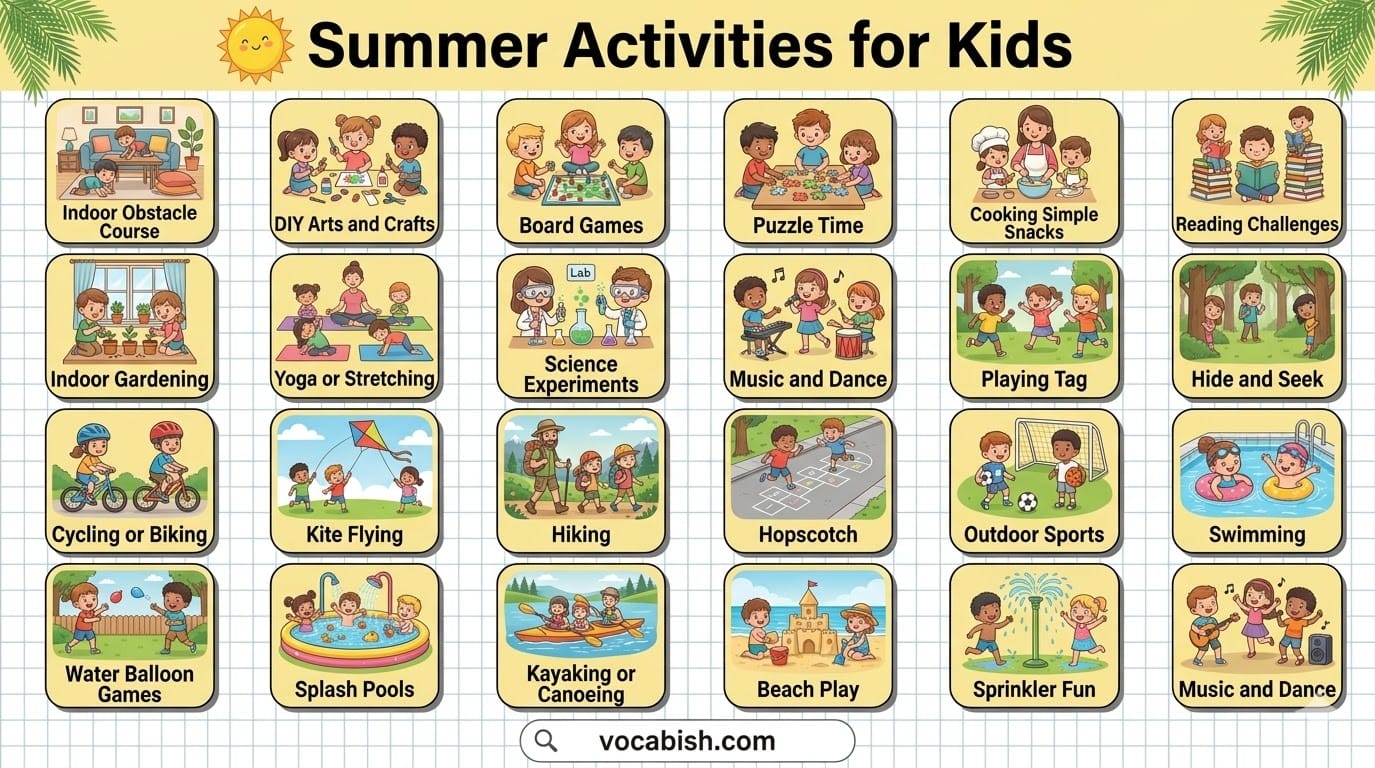

Summer is a time when children have more free time from school. During these months, kids can enjoy many activities that are both entertaining and educational. Summer activities for kids include outdoor play, water fun, arts and crafts, and even reading or science experiments.
In this blog post, readers will learn about different summer activities for kids, discover how these activities help children stay active, and understand useful English words related to play, movement, and learning. Knowing these words allows children to talk about their experiences and improve their communication skills.
Why Summer Activities Are Important
Summer activities help children in many ways:
- Physical Health
Activities like swimming, running, and cycling keep kids fit and build stamina. - Mental Growth
Puzzles, crafts, and reading exercises help children think critically. - Social Skills
Playing in groups teaches teamwork, sharing, and cooperation. - Vocabulary and Language
Describing summer activities introduces words like kayak, sandcastle, sunscreen, and picnic.
When children engage in summer activities, they improve both body and mind, making learning more enjoyable and practical.
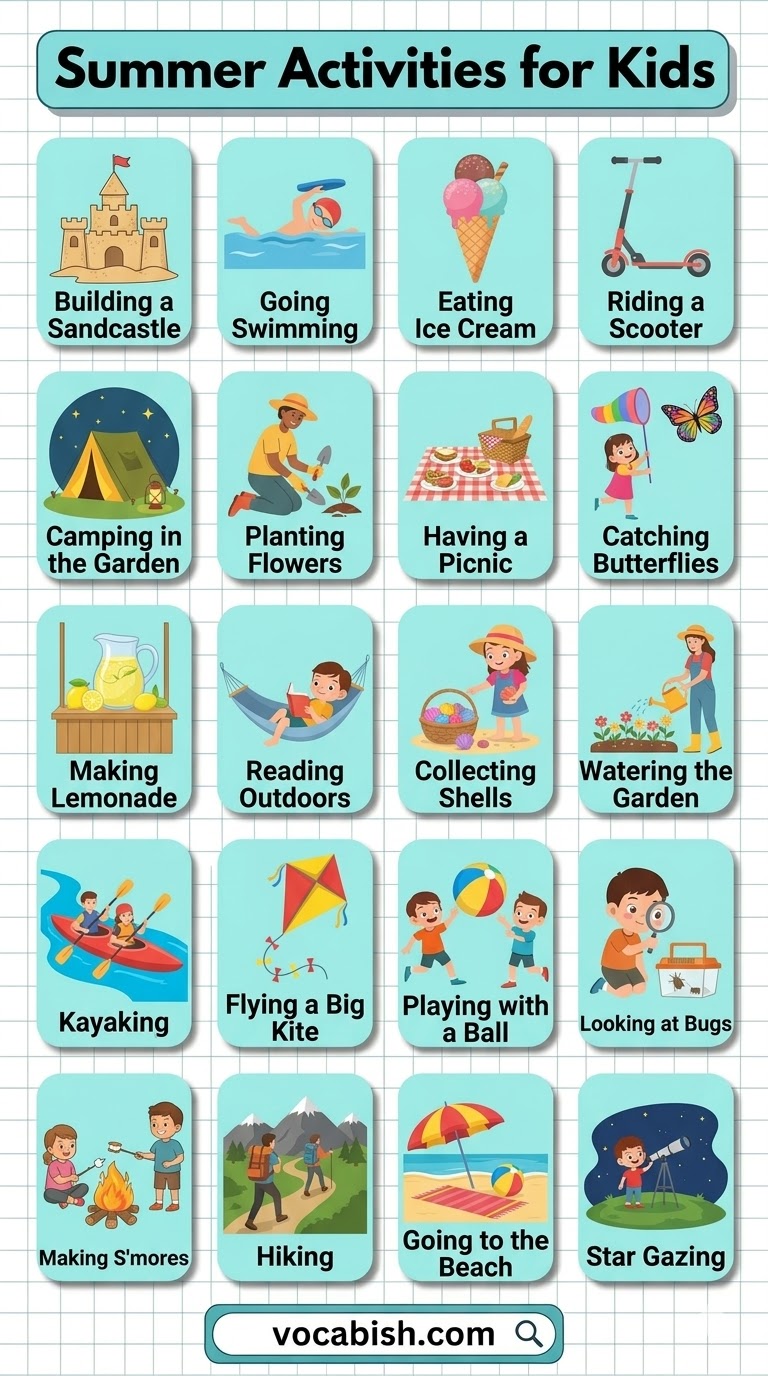
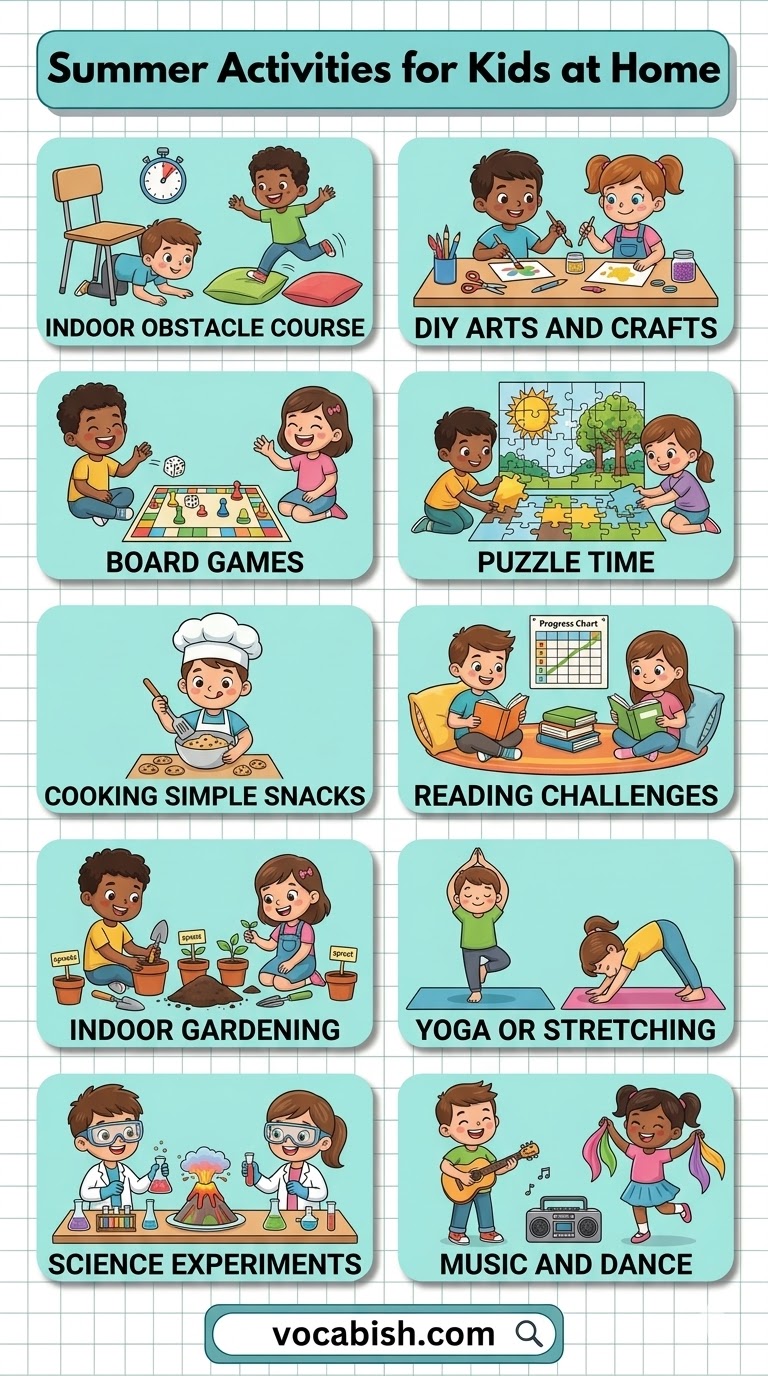
Summer Activities for Kids at Home
Even without going outside, kids can stay active, creative, and learning during summer at home. These activities also teach useful English words related to play, movement, and daily life.
- Indoor Obstacle Course
Use pillows, chairs, and boxes to create a safe course. Words: climb, jump, crawl. - DIY Arts and Crafts
Drawing, painting, and paper projects. Words: scissors, glue, paint, color. - Board Games
Games like Ludo, Snakes and Ladders, or Monopoly. Words: dice, turn, score. - Puzzle Time
Jigsaw puzzles, word puzzles, or memory games. Words: piece, match, pattern. - Cooking Simple Snacks
Making sandwiches, fruit salads, or smoothies. Words: mix, cut, serve. - Reading Challenges
Pick summer-themed books and stories. Words: page, chapter, story, character. - Indoor Gardening
Plant seeds in pots or small containers. Words: soil, water, sunlight, seed. - Yoga or Stretching
Simple exercises and poses. Words: stretch, balance, breathe. - Science Experiments
Simple experiments with household items. Words: mix, reaction, observe. - Music and Dance
Learn songs, play instruments, or dance. Words: rhythm, beat, melody.
Summer Outdoor Activities for Kids
Outdoor summer activities allow kids to enjoy the sun while moving their bodies and practicing coordination. Some popular options include:
- Playing Tag
A running game where one child chases others to tag them. - Hide and Seek
Children hide while one child counts, promoting observation and strategy. - Cycling or Biking
Riding bicycles in parks or bike paths develops balance and endurance. - Kite Flying
Flying kites teaches hand-eye coordination and introduces words like string, wind, and launch. - Hiking
Walking on trails helps children connect with nature and learn words for plants, rocks, and wildlife. - Hopscotch
A number-based jumping game that reinforces counting and balance. - Outdoor Sports
Soccer, basketball, and volleyball help children learn teamwork, coordination, and sports vocabulary.
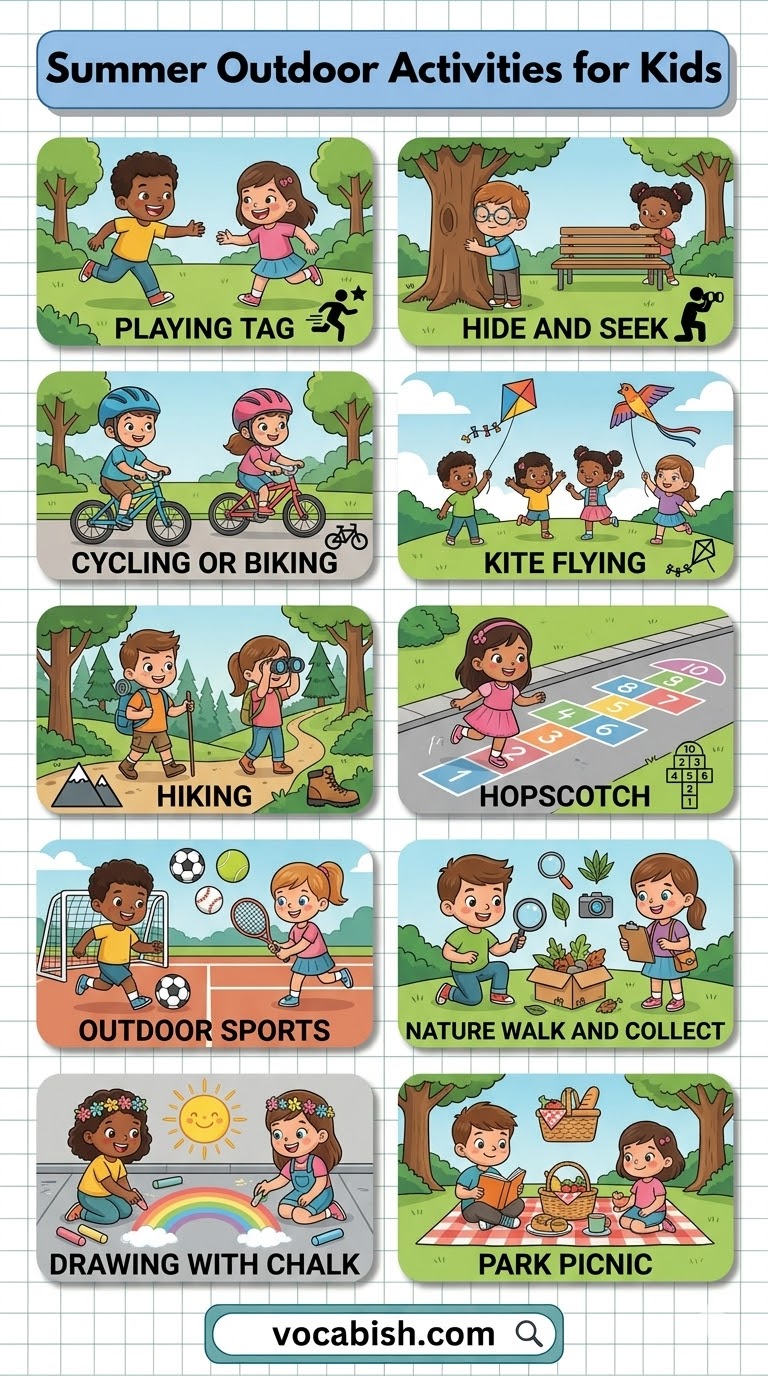
These outdoor activities teach movement words such as run, jump, climb, kick, and throw, which are commonly used in English conversations.
Water-Based Summer Activities
Water activities are ideal for hot summer days and are a perfect way to combine fun and learning. Examples include:
- Swimming
Children practice strokes, floating, and safety in the water. Words like pool, float, and stroke are introduced. - Water Balloon Games
Tossing water balloons teaches aiming and cooperative play. - Splash Pools
Small inflatable pools allow toddlers and preschoolers to play safely in water. - Kayaking or Canoeing
Older kids can paddle in calm rivers or lakes, learning words like paddle, oar, and river. - Beach Play
Building sandcastles, collecting shells, and playing beach volleyball teach vocabulary for sand, shell, bucket, and wave. - Sprinkler Fun
Running through sprinklers helps kids stay cool and introduces words like spray, splash, and running.
Water-based activities also help children describe actions, practice English verbs, and expand vocabulary related to summer fun.
Creative and Learning Summer Activities
Summer is a great time for activities that engage the mind and creativity. Some ideas include:
- Arts and Crafts
Drawing, painting, or making paper crafts teaches color, shape, and material vocabulary. - DIY Projects
Building birdhouses, simple machines, or garden markers introduces terms like hammer, paint, glue, and measure. - Reading Challenges
Summer reading improves comprehension, vocabulary, and storytelling skills. - Science Experiments
Experiments like baking soda volcanoes, water density experiments, or simple magnets teach scientific words. - Music and Dance
Playing instruments or learning summer songs develops rhythm and music vocabulary.
These creative activities combine learning with fun and help children remember new English words through hands-on experiences.
Indoor Summer Activities for Kids
Not all summer activities need to be outside. Indoor activities are useful on hot or rainy days:
- Puzzle Games
Jigsaw puzzles, crosswords, and memory games improve concentration and vocabulary. - Board Games
Games like Scrabble, Ludo, or Monopoly teach counting, strategy, and word usage. - Cooking Simple Recipes
Making sandwiches, fruit salads, or smoothies introduces food vocabulary and measurements. - Storytelling or Writing
Children can write short stories or summer journals, practicing descriptive words. - Yoga or Simple Exercises
Indoor movement games help children stay active and learn body-part vocabulary.
Indoor summer activities also provide opportunities to practice English vocabulary in a structured way while keeping children engaged.
Seasonal and Nature Activities
Summer is a perfect season to explore nature and seasonal themes:
- Gardening
Planting flowers or vegetables introduces words like soil, seeds, water, and sunlight. - Nature Walks
Observing birds, insects, and plants teaches animal and plant names. - Picnics
Children practice words like basket, blanket, sandwich, and juice while organizing a picnic. - Camping in Backyard
Setting up tents teaches vocabulary like tent, flashlight, and campfire. - Scavenger Hunts
Following clues and finding items teaches problem-solving, directional words, and object names.
These activities combine physical play with vocabulary expansion and real-life learning.
Summer Activity List for Kids
Here’s a comprehensive summer activity list for kids that combines indoor, outdoor, and creative learning:
Outdoor Activities:
- Swimming
- Cycling
- Kite Flying
- Tag
- Hide and Seek
- Hopscotch
- Sandcastle Building
- Frisbee Toss
- Jump Rope
- Mini Soccer
Water-Based Activities:
- Water Balloon Toss
- Splash Pool
- Water Gun Games
- Toy Boat Racing
- Sprinkler Running
Creative and Learning Activities:
- Arts and Crafts
- DIY Projects
- Story Writing
- Summer Journals
- Reading Challenges
- Science Experiments
- Music Lessons
- Dance Practice
Indoor Activities:
- Board Games
- Puzzle Solving
- Cooking Simple Snacks
- Indoor Obstacle Course
- Yoga and Stretching
- Educational Apps or Games
Nature and Seasonal Activities:
- Gardening
- Backyard Camping
- Nature Walks
- Picnic in Garden
- Scavenger Hunts
How Summer Activities Improve Learning
Summer activities do more than entertain; they enhance learning in multiple ways:
- Speaking Skills
Children describe what they are doing or share experiences. - Listening Skills
Listening to instructions for games, crafts, or experiments improves understanding. - Reading Skills
Instructions, books, or labels provide context for reading comprehension. - Writing Skills
Journals, story-writing, or planning summer projects improve sentence-building and descriptive skills. - Social Skills
Group activities teach teamwork, communication, and problem-solving.
By participating in summer activities, children learn vocabulary naturally and practice real-life English while enjoying active play.
Conclusion
Summer activities for kids are an essential part of childhood. Outdoor games, water play, creative projects, indoor activities, and nature exploration all provide opportunities to learn new words, practice communication skills, and stay active. By engaging in these activities, children not only enjoy their summer but also build physical, mental, and social skills, improving their overall learning experience.
Encouraging children to try a variety of summer activities ensures that they stay healthy, curious, and confident in using English vocabulary in real-life situations.
FAQs
Summer activities for kids are fun and educational tasks children can do during summer, including outdoor play, water games, arts, crafts, reading, and indoor exercises.
At home, kids can do arts and crafts, indoor obstacle courses, puzzle games, cooking snacks, yoga, reading challenges, and DIY science experiments.
Outdoor activities include swimming, cycling, kite flying, tag, hopscotch, Frisbee, sandcastle building, mini soccer, and backyard scavenger hunts.
Water-based activities include water balloon toss, splash pools, water guns, toy boat races, and sprinklers. These keep children active and cool while learning action words.
Creative activities include arts and crafts, story writing, summer journals, DIY projects, music lessons, and dance practice. These improve imagination, concentration, and vocabulary.
Indoor activities include board games, puzzle solving, indoor obstacle courses, cooking simple snacks, yoga, and educational games for learning and movement.
Related Articles: