
Learning the names of Types of Shoes for Kids helps you understand how to describe everyday objects in English. In this blog post, you will learn important vocabulary such as sneakers, sandals, boots, and school shoes. These words are used in real life when talking about what children wear for school, sports, and daily activities. When you learn this vocabulary, you improve your speaking, reading, writing, and listening skills. You also gain the ability to describe things more accurately and understand conversations better. Each word will help you build confidence and use English in practical situations, so you can communicate more clearly and naturally.
What Are Shoes for Kids?
Shoes are an important part of daily life. Kids wear different types of shoes for school, sports, and play. Learning shoe vocabulary helps English learners describe what they wear and understand conversations in daily life.
For example, you can say:
- My sandals are comfortable in summer.
- Wear your running shoes for PE class.
Why Learning Shoe Vocabulary Is Important
Learning these words helps you:
- Speak about daily items correctly
- Understand shopping and instructions
- Improve reading and listening skills
- Build strong everyday vocabulary
Common Types of Shoes for Kids
These are the most common shoes children wear regularly.
1. Sneakers
Sneakers are comfortable shoes for walking and playing.
They are very popular for school and daily use.
2. Sandals
Sandals are open shoes worn in warm weather.
They let air reach your feet.
3. School Shoes
School shoes are formal shoes worn with uniforms.
They look neat and simple.
4. Slippers
Slippers are soft shoes worn at home.
They are easy to put on and take off.
5. Boots
Boots are strong shoes that cover the ankle or more.
They protect feet in cold or wet weather.
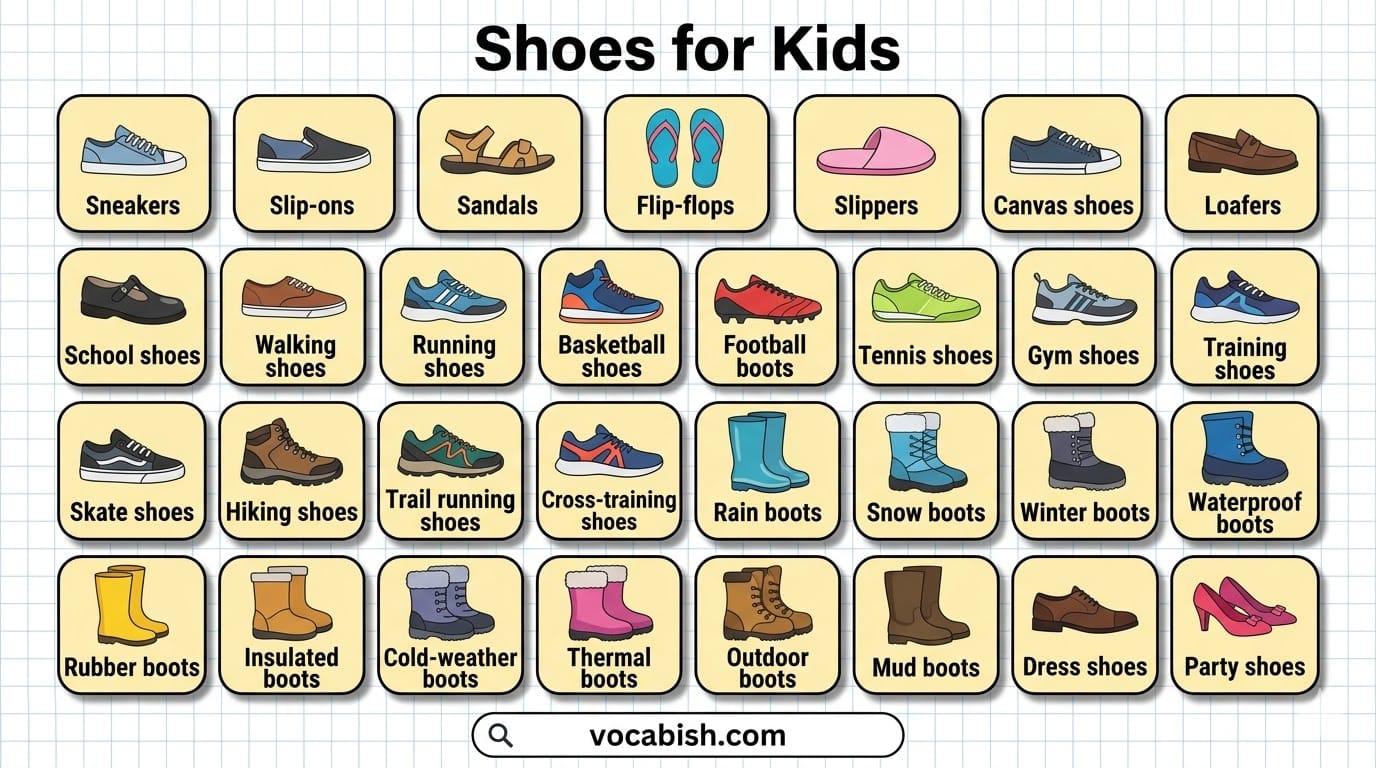
Basic Everyday Shoes for Kids
These are common shoes used in daily life.
- Sneakers
- Slip-ons
- Sandals
- Flip-flops
- Slippers
- Canvas shoes
- Loafers
- School shoes
- Casual shoes
- Walking shoes
Sports and Activity Shoes for Kids
These shoes are designed for movement and sports.
- Running shoes
- Basketball shoes
- Football boots (soccer cleats)
- Tennis shoes
- Gym shoes
- Training shoes
- Skate shoes
- Hiking shoes
- Trail running shoes
- Cross-training shoes
Seasonal and Weather Shoes for Kids
These shoes protect feet in different weather conditions.
- Rain boots
- Snow boots
- Winter boots
- Waterproof boots
- Rubber boots
- Insulated boots
- Cold-weather boots
- Thermal boots
- Outdoor boots
- Mud boots
Formal and Special Occasion Shoes for Kids
These shoes are worn for events and special days.
- Dress shoes
- Party shoes
- Formal shoes
- Leather shoes
- Oxford shoes
- Derby shoes
- Patent shoes
- Dress sandals
- School uniform shoes
- Formal loafers
Comfort and Casual Shoes for Kids
These shoes focus on comfort and easy use.
- Easy shoes
- Soft shoes
- Lightweight shoes
- Stretch shoes
- Memory foam shoes
- Comfortable sneakers
- Slip-resistant shoes
- Flexible shoes
- Cushioned shoes
- Breathable shoes
List of 40+ Shoe Names for Kids
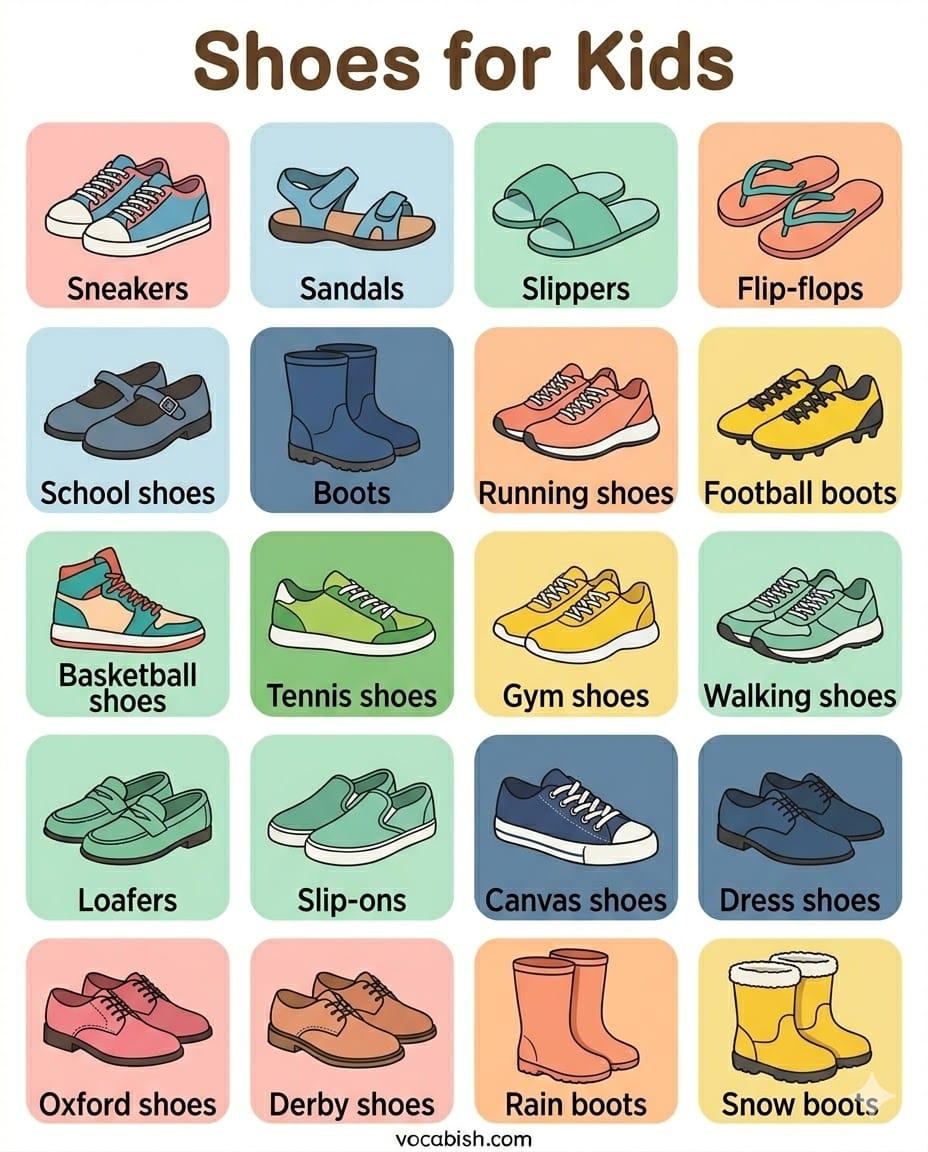
Here is a list of shoe names for kids with meanings:
- Sneakers – Comfortable shoes for daily wear
- Sandals – Open shoes for warm weather
- Slippers – Indoor soft shoes
- Flip-flops – Light sandals with a toe strap
- School shoes – Formal shoes for school uniforms
- Boots – Shoes that cover the ankle or more
- Running shoes – Shoes made for running
- Football boots – Shoes for playing football
- Basketball shoes – Shoes for basketball games
- Tennis shoes – Shoes for tennis sports
- Gym shoes – Shoes for exercise
- Walking shoes – Shoes for walking long distances
- Loafers – Easy formal shoes without laces
- Slip-ons – Shoes without laces
- Canvas shoes – Lightweight fabric shoes
- Dress shoes – Formal shoes for events
- Oxford shoes – Classic formal lace-up shoes
- Derby shoes – Formal shoes with open lacing
- Rain boots – Waterproof boots for rain
- Snow boots – Warm boots for snow
- Hiking boots – Strong boots for hiking
- Trail shoes – Shoes for rough outdoor paths
- Skate shoes – Shoes for skateboarding
- Training shoes – Shoes for fitness training
- Cross-training shoes – Multi-purpose sports shoes
- Casual shoes – Everyday relaxed shoes
- Formal loafers – Stylish easy formal shoes
- Rubber boots – Waterproof boots made of rubber
- Winter boots – Warm shoes for cold weather
- Outdoor boots – Shoes for outdoor activities
- Party shoes – Stylish shoes for celebrations
- Leather shoes – Shoes made of leather material
- Slip-resistant shoes – Shoes that prevent slipping
- Cushioned shoes – Shoes with soft padding
- Breathable shoes – Shoes that allow air flow
- Lightweight shoes – Very light shoes
- Flexible shoes – Shoes that bend easily
- Stretch shoes – Shoes that adjust to feet
- Easy shoes – Simple shoes to wear
- Comfortable sneakers – Very soft and easy sneakers
How to Use These Words in Sentences
Here are simple examples:
- “I wear sneakers when I go to school.”
- “She wears sandals in summer.”
- “He puts on boots when it rains.”
- “We use running shoes for sports.”
- “My school shoes are black.”
These sentences show how the words are used in daily life.
Quick Review and Learning Tips
To learn shoe vocabulary faster:
- Group words by purpose (sports, daily use, weather)
- Use each word in a simple sentence
- Practice speaking aloud
- Match shoes with pictures
- Review words regularly
Learning vocabulary step by step helps you remember and use English more confidently.
FAQs
Main types include sneakers, sandals, boots, slippers, school shoes, and sports shoes. Each type serves a different purpose such as daily wear, sports, or weather protection.
Sneakers are important because they are comfortable and supportive. Kids wear them for school, play, and walking. They protect feet and help children move safely and easily.
School shoes are formal shoes worn with uniforms. They look neat, are usually black or brown, and provide proper support for daily walking and long hours at school.
In summer, kids wear sandals or flip-flops. These shoes are open and allow air to keep feet cool. They are light, easy to wear, and comfortable in hot weather.
Boots protect children’s feet in cold, rainy, or snowy weather. They keep feet warm and dry and are strong enough for outdoor activities like walking in wet or rough areas.
Sports shoes include running shoes, football boots, and basketball shoes. They support movement, reduce injury, and help kids run, jump, and play safely during physical activities.
Choose shoes that fit well, feel comfortable, and suit the activity. Good shoes should have soft support, proper size, and strong material to protect growing feet.
Comfortable shoes include sneakers, slip-ons, and cushioned shoes. These are designed with soft material and flexible soles to keep children’s feet relaxed during daily activities.
Related Articles:
Conclusion
Learning 40+ shoe names helps you become confident in English. These words are practical and useful in everyday life. With regular practice, you will remember them easily and use them naturally.