
Learning the names of toys in English is fun and helpful for kids. Toys are part of daily life, so knowing their names helps learners speak clearly, read confidently, and understand conversations. Using pictures with words improves memory and makes learning faster. This article will teach 20 common toy names in a simple, easy way. You will also see how to use these words in real life, so learning becomes practical and enjoyable.
20 Toys Names in English
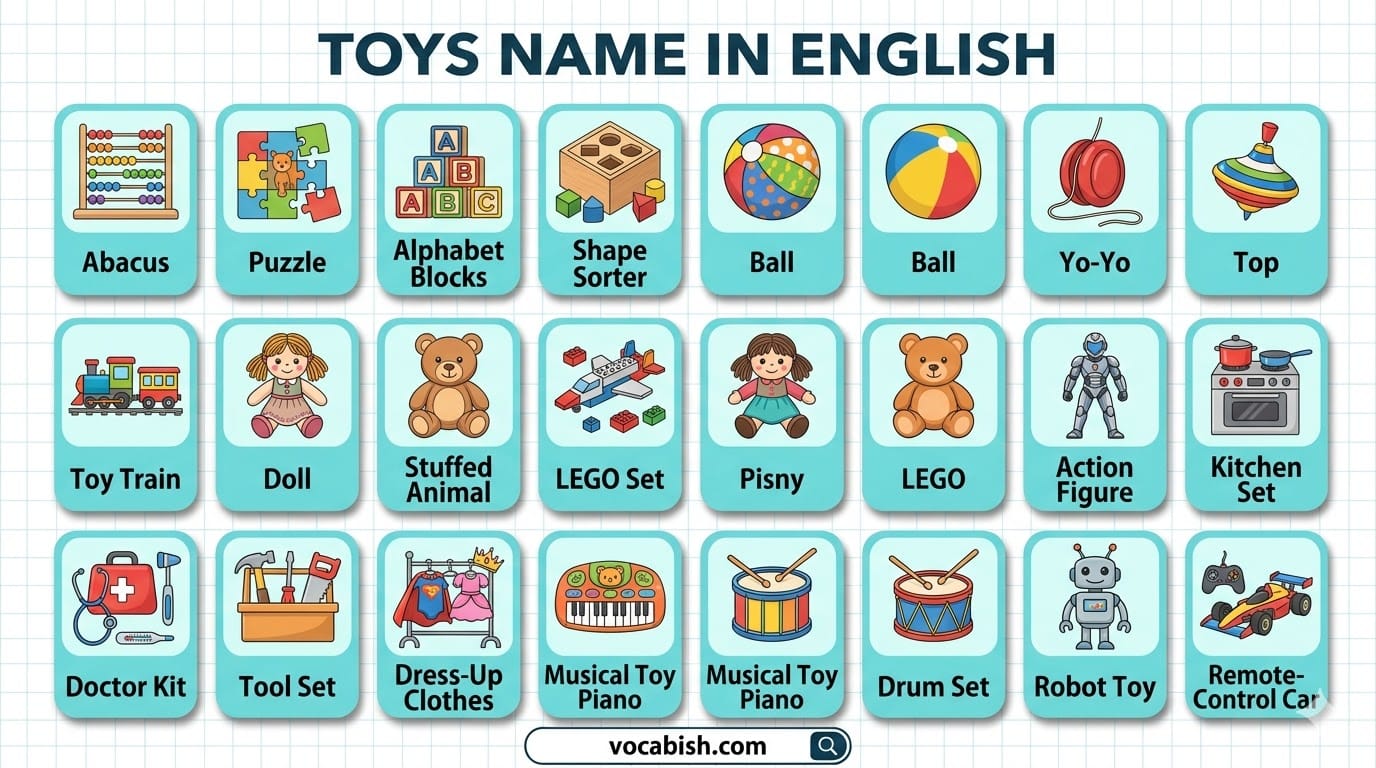
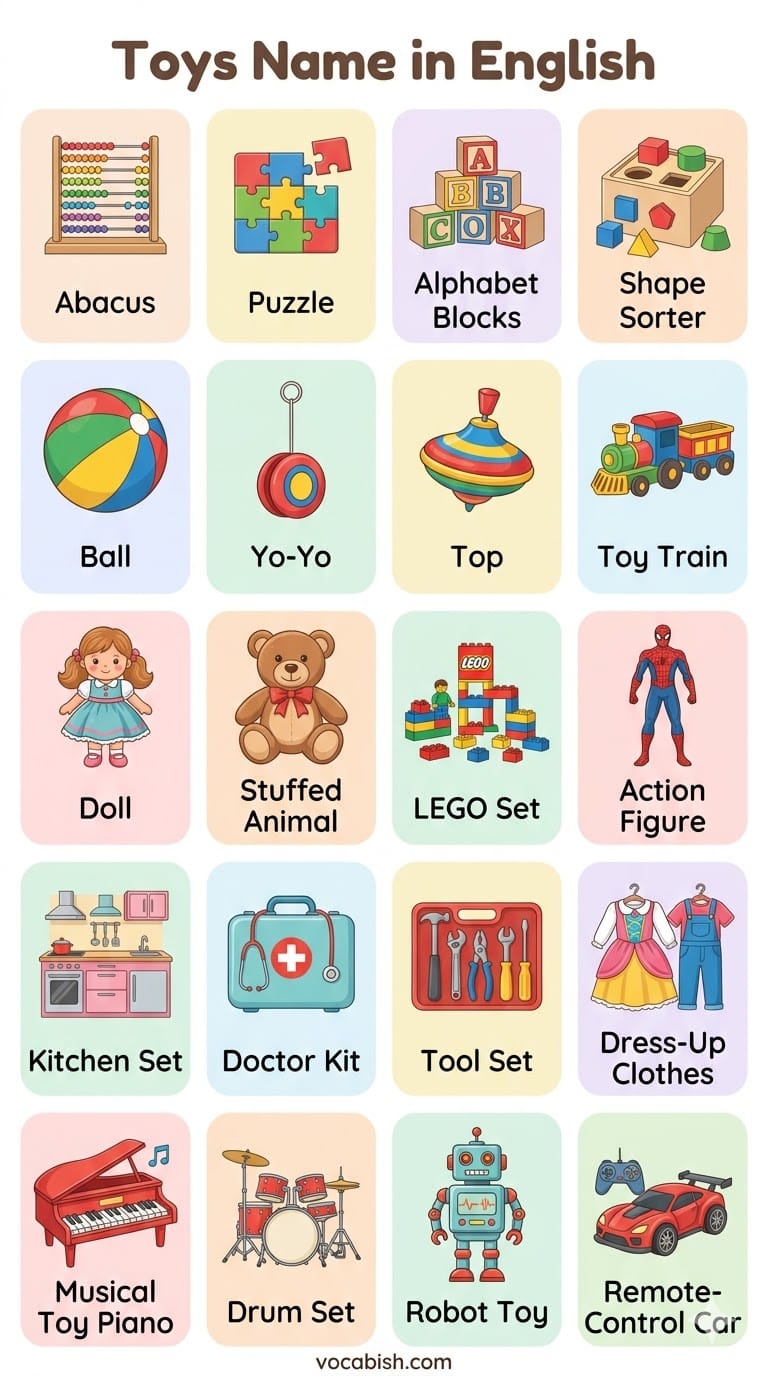
Here is a simple and organized list of the top 20 toys names that every child should know:
- Educational Toys: Abacus, Puzzle, Alphabet Blocks, Shape Sorter
- Classic Toys: Ball, Yo-Yo, Top, Toy Train
- Imaginative Play Toys: Doll, Stuffed Animal, LEGO Set, Action Figure
- Role-Playing Toys: Kitchen Set, Doctor Kit, Tool Set, Dress-Up Clothes
- Musical and Interactive Toys: Musical Toy Piano, Drum Set, Robot Toy, Remote-Control Car
Educational Toys
Educational toys help children learn new skills while having fun.
- Abacus
Helps with counting and basic math. Example: “I use the abacus to learn numbers.” - Puzzle
Pieces fit together to form a picture. Example: “She finished a 50-piece puzzle.” - Alphabet Blocks
Blocks with letters for spelling practice. Example: “He made the word ‘CAT’ with alphabet blocks.” - Shape Sorter
Shapes fit into matching holes to learn geometry. Example: “The baby plays with a shape sorter.”
Classic Toys
Classic toys are timeless and teach creativity, hand-eye coordination, and play skills.
- Ball
Used for throwing, catching, or kicking. Example: “He throws the ball to his friend.” - Yo-Yo
Spins up and down on a string. Example: “She can do tricks with her yo-yo.” - Top
A spinning toy that moves on a flat surface. Example: “The top spins very fast.” - Toy Train
Small trains that run on tracks. Example: “He pushed the toy train along the track.”
Imaginative Play Toys
These toys allow kids to use their imagination and invent stories.
- Doll
A toy representing a person for pretend play. Example: “She feeds her doll with a bottle.” - Stuffed Animal
Soft toys shaped like animals for cuddling. Example: “He hugs his stuffed bear.” - LEGO Set
Interlocking bricks to build anything you imagine. Example: “They built a castle with LEGO bricks.” - Action Figure
Small figurines of heroes or characters. Example: “He collects superhero action figures.”
Role-Playing Toys
Role-playing toys help children practice real-life scenarios and develop social skills.
- Kitchen Set
Mini kitchen tools for pretend cooking. Example: “She cooks with her toy kitchen set.” - Doctor Kit
Toy medical tools for playing doctor. Example: “He checks his toys with a doctor kit.” - Tool Set
Toy hammers, screwdrivers, and wrenches. Example: “He fixes things with his toy tool set.” - Dress-Up Clothes
Costumes for pretend play. Example: “She wears a princess dress-up outfit.”
Musical and Interactive Toys
These toys encourage creativity, music skills, and movement.
- Musical Toy Piano
Plays songs and notes. Example: “He plays music with the toy piano.” - Drum Set
Lets kids create rhythms. Example: “She beats the drum with excitement.” - Robot Toy
Moves, talks, or dances. Example: “The robot toy walks across the floor.” - Remote-Control Car
A car controlled with a remote. Example: “He drives the remote-control car fast.”
Fun Facts About Toys for Kids
- The oldest known toy is a 4000-year-old doll from Egypt.
- Playing with puzzles and blocks improves problem-solving skills.
- Musical toys can boost memory and focus.
- Role-playing toys help children understand jobs and social roles.
FAQs of Toys Names
Popular toys for kids include dolls, action figures, LEGO sets, puzzles, balls, and musical toys. They help learning, imagination, and play skills.
Abacus, puzzles, alphabet blocks, and shape sorters are excellent educational toys. They improve counting, problem-solving, spelling, and critical thinking skills.
Classic toys like balls, yo-yos, tops, and toy trains teach coordination, motor skills, and creative play. They are timeless and easy to enjoy.
Role-playing toys such as kitchen sets, doctor kits, and dress-up clothes teach social skills, creativity, and understanding of real-life situations.
Musical toy pianos, drum sets, robot toys, and remote-control cars develop rhythm, listening, coordination, and interactive play skills.
Yes, toys for kids make vocabulary fun and practical. They improve speaking, listening, reading, and writing skills naturally through play and daily conversations.
Related Articles:
Conclusion
Learning the top 20 toys names in English helps children speak naturally, understand instructions, and enjoy playtime. Using pictures and real-life examples makes learning fun and effective. Start small, practice daily, and soon your child will confidently use these words in everyday English.