
In this blog post, we will learn about bad habits for kids and understand what they mean in everyday life. These are actions like lying, skipping homework, or not listening, which can affect a child’s health, learning, and behavior. Learning this vocabulary is important because it helps you understand, speak, read, and write English more confidently. You can use these words to talk about daily routines, school behavior, and health in a natural way. When you learn these terms, you also improve your listening skills because you can easily recognize them when someone speaks. This topic helps you build strong English vocabulary and express ideas about behavior with accuracy. By the end of this article, you will be able to identify, describe, and use these words correctly in real-life situations.
What Are Bad Habits?
Bad habits are actions that people do again and again, but these actions are not good for health, learning, or behavior.
For example, biting nails or lying are bad habits.
Learning this vocabulary helps you:
- Understand behavior words
- Speak clearly about actions
- Improve reading and writing skills
- Describe real-life situations in English
Why Learning This Vocabulary Is Important
Bad habits vocabulary helps learners:
- Talk about daily behavior
- Understand instructions and advice
- Build strong English communication skills
- Improve vocabulary for school and exams
These words are useful in both speaking and writing.
Common Bad Habits for Kids
Here are important bad habits with meanings:
- Biting nails – Putting fingers in the mouth and biting nails
- Lying – Not telling the truth
- Interrupting – Talking while someone else is speaking
- Procrastinating – Delaying work or homework
- Throwing tantrums – Crying or shouting when angry
- Eating junk food – Eating unhealthy food like chips and soda
- Skipping homework – Not doing assigned school work
- Watching too much TV – Spending too much time on screens
- Not listening – Ignoring what someone says
- Speaking loudly – Talking in a very loud voice
- Being rude – Speaking or acting in an impolite way
- Picky eating – Refusing to eat certain foods
- Cheating – Breaking rules to get an advantage
- Littering – Throwing garbage on the ground
- Arguing often – Always fighting with others
- Not sharing – Refusing to share things with others
- Late sleeping – Sleeping very late at night
- Ignoring rules – Not following instructions or rules
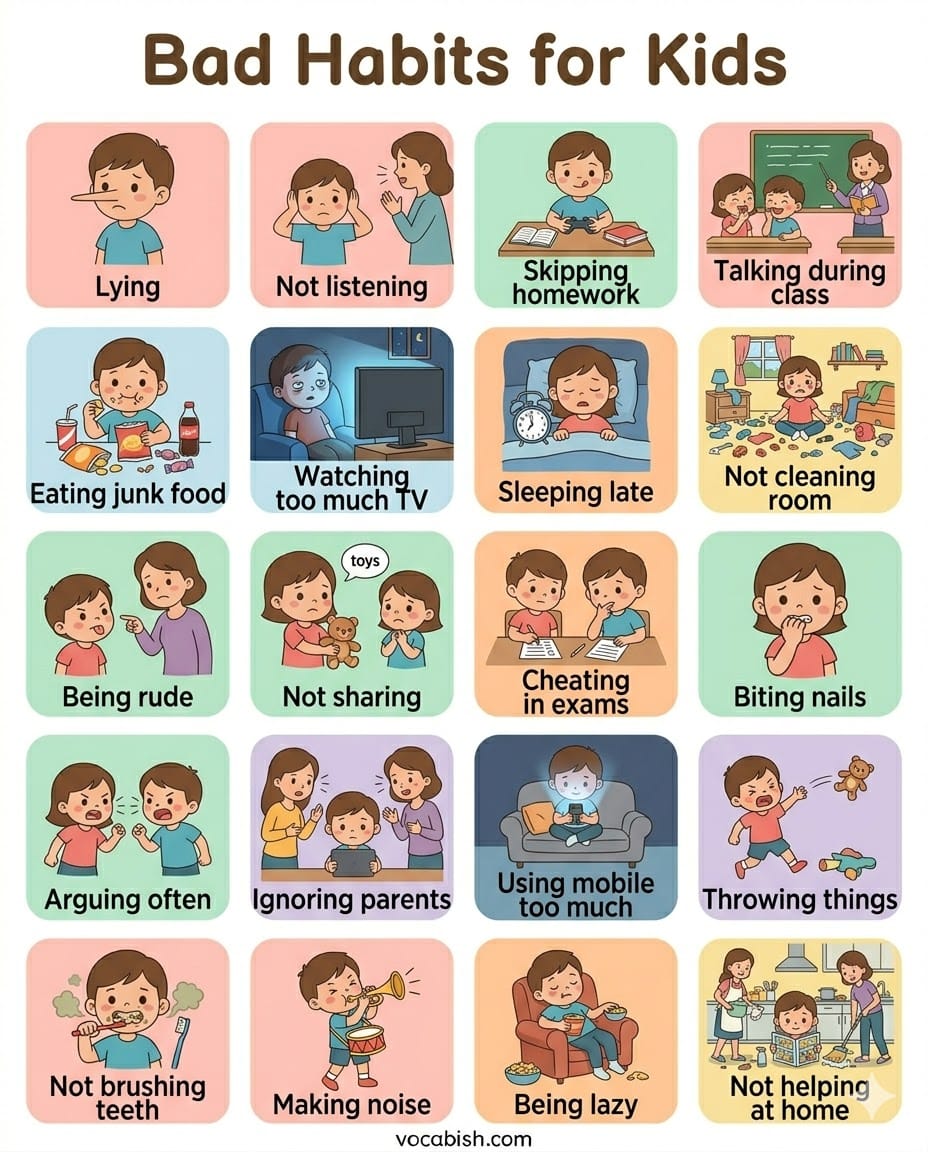
Bad Habits for Kids at Home
These habits happen at home and affect daily life:
- Not cleaning room – Leaving the room messy
- Watching too much TV – Spending long hours on TV
- Sleeping late – Going to bed very late
- Ignoring parents – Not listening to parents
- Biting nails – Putting nails in the mouth and biting
- Playing too much on mobile – Using phones for long time
- Not helping at home – Refusing to do small tasks
- Throwing things – Carelessly throwing objects
- Lying – Not telling the truth
- Making noise – Creating unnecessary loud sounds
Bad Habits for Kids in School
These habits affect learning and behavior in class:
- Talking during class – Speaking while the teacher teaches
- Skipping homework – Not doing homework
- Cheating in exams – Breaking rules in tests
- Not listening – Ignoring the teacher
- Arriving late – Coming to school after time
- Interrupting – Cutting others while they speak
- Not doing classwork – Avoiding school tasks
- Disrespecting teachers – Being rude to teachers
- Copying answers – Writing someone else’s work
- Daydreaming – Not focusing in class
Bad Health Habits for Kids
These habits affect physical and mental health:
- Not exercising – Avoiding physical activity
- Staying inactive – Sitting all day without movement
- Sleeping too little – Not getting enough rest
- Sleeping too much – Sleeping more than needed
- Not drinking water – Ignoring hydration
- Poor hygiene – Not washing hands or bathing properly
- Using screens too much – Too much phone or computer use
- Not brushing teeth – Ignoring dental care
- Skipping breakfast – Not eating morning meal
- Stress eating – Eating due to stress or emotions
Bad Eating Habits for Kids
These habits affect nutrition and growth:
- Eating junk food – Eating chips, burgers, and soda
- Skipping meals – Not eating at proper times
- Overeating – Eating too much food
- Eating too fast – Not chewing properly
- Not eating vegetables – Avoiding healthy food
- Eating too much sugar – Too many sweets and candies
- Drinking soda daily – Consuming fizzy drinks regularly
- Late-night eating – Eating just before sleeping
- Picky eating – Refusing certain foods
- Snacking all day – Eating snacks again and again
Bad Habits vs Good Habits for Kids
Bad Habits for Kids | Good Habits for Kids |
|---|---|
Not cleaning room | Keeping room clean |
Watching too much TV | Limiting screen time |
Skipping homework | Doing homework on time |
Eating junk food | Eating healthy food |
Sleeping late | Sleeping early |
Not listening to parents | Listening to parents |
Talking in class | Paying attention in class |
Cheating in exams | Studying honestly |
Lying | Telling the truth |
Not brushing teeth | Brushing teeth daily |
Being rude | Being polite and respectful |
Not sharing | Sharing with others |
Ignoring rules | Following rules |
Not helping at home | Helping at home |
Being lazy | Being active and responsible |
Using mobile too much | Using mobile in limits |
Throwing things | Keeping things in place |
Arguing often | Speaking calmly and kindly |
Not washing hands | Washing hands regularly |
Staying inactive | Doing exercise daily |
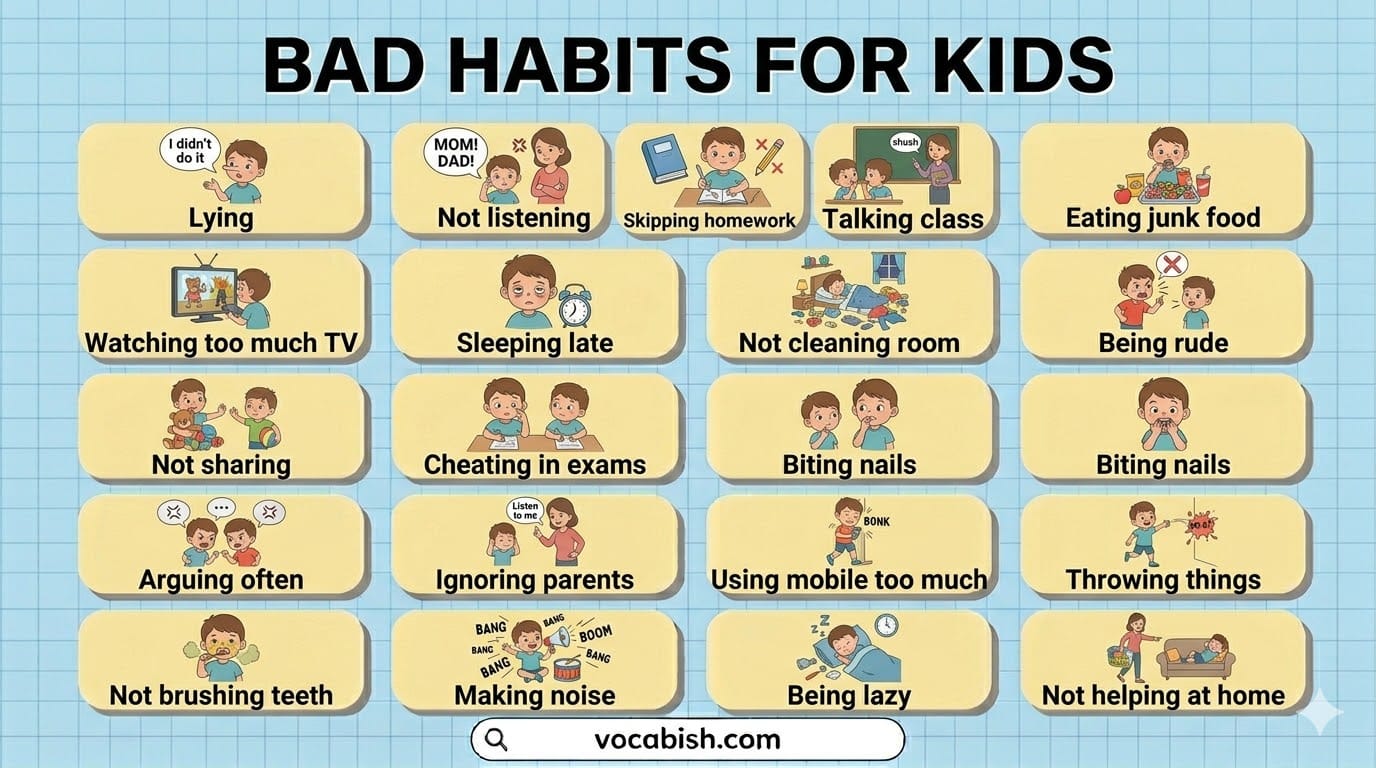
List of Bad Habits for Kids
- Lying
- Not listening
- Skipping homework
- Talking during class
- Eating junk food
- Watching too much TV
- Sleeping late
- Not cleaning room
- Being rude
- Not sharing
- Cheating in exams
- Biting nails
- Arguing often
- Ignoring parents
- Using mobile too much
- Throwing things
- Not brushing teeth
- Making noise
- Being lazy
- Not helping at home
How to Use These Words in Sentences
Using vocabulary correctly is very important. Here are examples:
- “Lying is a bad habit.”
- “He should stop biting his nails.”
- “Interrupting others is not polite.”
- “Eating junk food every day is unhealthy.”
- “She needs to stop watching too much TV.”
These sentences help you use the words naturally in real life.
Tips to Build Good Habits
Instead of bad habits, students should build good habits:
- Wake up early
- Do homework on time
- Listen to teachers
- Speak politely
- Eat healthy food
- Keep your room clean
- Help others
Good habits improve your life and your English skills.
Related Articles:
FAQs about Bad Habits for Kids
Bad habits for kids are repeated actions that are not good for health, learning, or behavior. Examples include lying, skipping homework, and eating too much junk food.
Common bad habits at home include not cleaning the room, watching too much TV, sleeping late, ignoring parents, and using mobile devices for long hours.
Bad habits in school include talking during class, skipping homework, cheating in exams, arriving late, and not listening to the teacher. These habits affect learning and discipline.
Bad health habits include not exercising, eating junk food, sleeping too little, drinking less water, and poor hygiene. These habits can affect growth and overall health.
Bad eating habits include overeating, skipping meals, eating too much sugar, choosing junk food, and not eating vegetables. These habits can lead to poor nutrition and weak health.
Kids can stop bad habits by practicing good routines, following rules, listening to parents and teachers, and replacing bad habits with positive actions like reading, exercising, and studying regularly.
Conclusion
Learning about bad habits for kids helps you improve your English vocabulary and understand behavior better. When you learn these words, you can speak clearly, write better, and understand real-life situations easily.