
In this blog post, you will learn the names of musical instruments for kids and understand how to use these words in daily life. Musical instrument vocabulary includes words like piano, drum, guitar, and flute. These are common words that children often hear in school and at home. When you understand these names, you can talk about music, describe sounds, and share your interests with others. It also helps you read stories, write sentences, and follow instructions more easily. By the end, you will master important instrument names and feel more confident using English in real situations.
What Are Musical Instruments?
Musical instruments are objects we use to create music. Some instruments we hit, some we blow into, and some we play with our hands or fingers. For example, a drum makes sound when you hit it, while a flute makes sound when you blow air.
Why Learn Musical Instrument Names?
Learning these words is helpful because:
- Kids can talk about music and hobbies
- They understand songs and stories better
- They build strong everyday vocabulary
- They gain confidence in English speaking
List of Musical Instruments for Kids
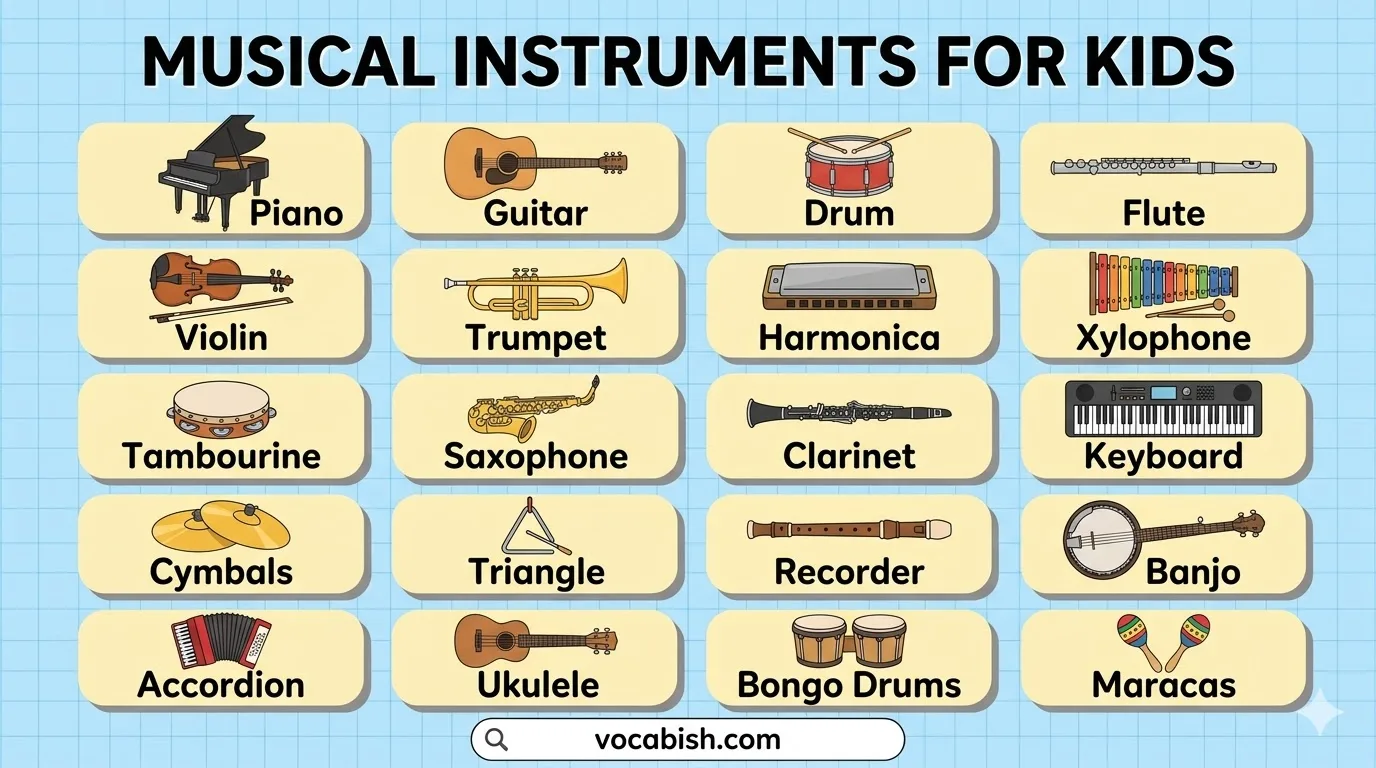
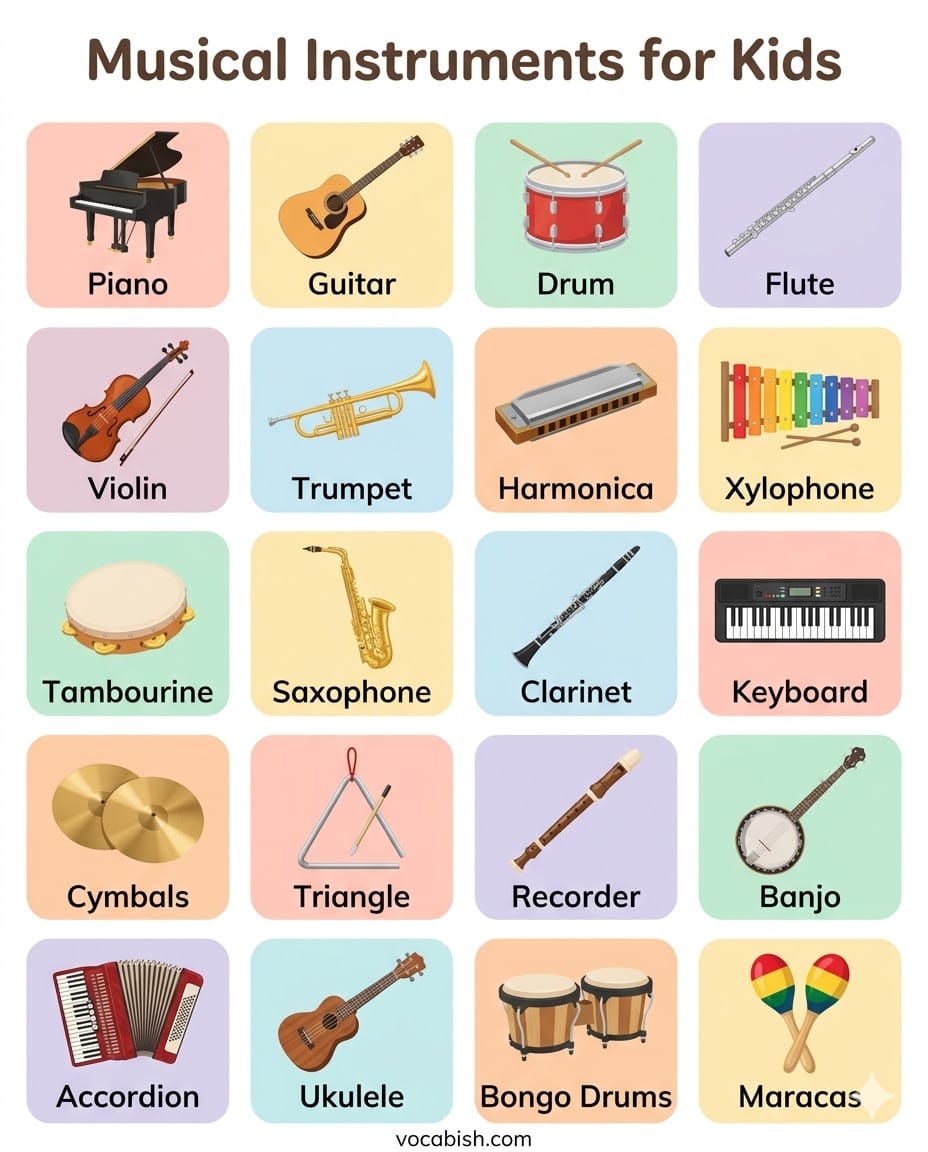
Here are 20 important musical instruments with simple meanings and uses:
- Piano – A large instrument with keys; you press keys to make music
- Guitar – A string instrument; you strum or pluck the strings
- Drum – A round instrument; you hit it with sticks or hands
- Flute – A long pipe; you blow air to create soft sounds
- Violin – A small string instrument; you play it with a bow
- Trumpet – A metal instrument; you blow air to make loud sounds
- Harmonica – A small instrument; you blow and draw air with your mouth
- Xylophone – A set of wooden bars; you hit them with sticks
- Tambourine – A small drum with metal jingles; you shake or tap it
- Saxophone – A curved metal instrument; you blow air to play it
- Clarinet – A straight wind instrument; you blow air through it
- Keyboard – An electronic piano; you press keys to make sounds
- Cymbals – Two metal plates; you crash them together
- Triangle – A small metal shape; you hit it to make a ringing sound
- Recorder – A simple flute-like instrument for beginners
- Banjo – A string instrument with a round body; you pluck strings
- Accordion – A box instrument; you push and pull it to play music
- Ukulele – A small guitar; easy for kids to play
- Bongo Drums – Two small drums; you play them with hands
- Maracas – Shaking instruments filled with beads or seeds
Common Musical Instruments in Daily Life
Some instruments are more common for kids:
- Piano and keyboard in schools
- Guitar in music classes
- Drum in bands
- Recorder for beginners
- Tambourine in fun activities
These are easy to learn and widely used by children.
Types of Musical Instruments
We can group instruments into simple types:
1. String Instruments
- Guitar
- Violin
- Ukulele
- Banjo
How they work: You pluck or bow the strings
2. Wind Instruments
- Flute
- Trumpet
- Recorder
- Saxophone
How they work: You blow air into them
3. Percussion Instruments
- Drum
- Tambourine
- Cymbals
- Triangle
How they work: You hit or shake them
4. Keyboard Instruments
- Piano
- Keyboard
How they work: You press keys
How Kids Use These Words in Real Life
Children can use these words in daily sentences:
- I play the guitar after school.
- She likes the sound of the piano.
- He is learning the flute in class.
- We use drums in music lessons.
These simple sentences help kids practice speaking clearly.
Quick Learning Tips for Kids
- Learn 2–3 new instrument names every day
- Say the words out loud
- Watch videos of instruments being played
- Practice with real or toy instruments
- Use the words in short sentences
Related Articles:
FAQs
Musical instruments for kids are simple tools that produce sound, like drums, piano, or flute. They help children learn rhythm, improve listening skills, and build basic English vocabulary.
Common musical instruments for kids include piano, guitar, drum, flute, recorder, and tambourine. These are easy to learn, widely used in schools, and perfect for beginners.
The easiest musical instruments for kids are recorder, keyboard, and ukulele. They are simple to play, require basic skills, and help children quickly understand sound and rhythm.
Musical instruments help kids learn English by teaching new words, actions, and sounds. Children practice speaking, listening, and reading while talking about music and playing activities.
The main types of musical instruments for kids are string, wind, percussion, and keyboard. Each type teaches different actions like plucking, blowing, hitting, or pressing keys.
Percussion instruments make sound when you hit or shake them, like drums. Wind instruments produce sound when you blow air into them, like flute or trumpet.
Conclusion
Musical instrument names are fun and useful for kids. They help children talk about music, hobbies, and school activities. By learning these simple words, kids improve their English step by step. Keep practicing, and learning will become easy and enjoyable.