
Confused by words like ivory, caramel, or olive when describing people? Skin color names are common in English books, conversations, beauty products, and character descriptions. Learning these skin tone names can help you understand and use natural English more confidently. In this article, you’ll discover common shades and a helpful skin color chart to make them easier to recognize and remember.
What Are Skin Color Names?
Skin color names are words used to describe the natural shades of human skin. These names help people talk about appearance, beauty products, art, photography, and fashion.
Since skin exists on a wide spectrum, there is no single way to describe every shade. Different industries and cultures may use different terms, but many names are commonly understood worldwide.
For example:
- Fair – Very light skin with pink undertones
- Tan – Medium skin with golden warmth
- Olive – Medium skin with greenish or yellow undertones
- Deep Brown – Dark skin with rich, warm tones
Why Learning Skin Tone Names Is Useful
Knowing skin tone vocabulary can improve both English skills and everyday communication.
People often use these words when discussing:
- Physical appearance
- Character descriptions in stories
- Makeup and cosmetics
- Fashion choices
- Photography
- Art and illustration
- Medical and skincare topics
List of Basic Skin Tone Names
The table below shows common skin tone categories and examples.
Skin Tone Category | Common Skin Color Names |
|---|---|
Very Light | Porcelain, Ivory, Fair |
Light | Beige, Light Beige, Cream |
Light-Medium | Sand, Honey, Warm Beige |
Medium | Tan, Golden, Caramel |
Medium-Dark | Bronze, Mocha, Chestnut |
Dark | Cocoa, Espresso, Mahogany |
Very Dark | Ebony, Deep Cocoa, Onyx |
Common Skin Color Names
Many skin tone names come from colors found in nature, food, wood, or minerals. Here is a list of the most common skin color names with meanings:
Skin Color Name | Description |
|---|---|
Porcelain | Very pale skin with cool undertones |
Ivory | Light skin with a soft cream appearance |
Fair | Light skin that may burn easily in sunlight |
Beige | Soft light-brown shade |
Sand | Light-medium golden shade |
Honey | Warm golden-brown skin tone |
Tan | Sun-kissed medium skin color |
Golden | Medium skin with warm yellow undertones |
Caramel | Rich golden-brown shade |
Bronze | Medium-dark warm brown tone |
Chestnut | Deep brown shade with warm undertones |
Mocha | Dark brown color similar to coffee |
Cocoa | Rich chocolate-brown tone |
Mahogany | Deep reddish-brown shade |
Espresso | Very dark brown skin tone |
Ebony | Deep dark skin color |
Onyx | Extremely dark skin with rich depth |
Types of Skin Colors with Examples
Skin colors come in many types. Learning these helps you describe people accurately and respectfully. Here are the main types:
1. Fair Skin Tones
Very light skin, often with pink or rosy undertones.
Skin Color Name | Color Shade Description |
|---|---|
Fair | Very light skin with pink or rosy undertones |
Ivory | Creamy white skin, smooth and soft |
Porcelain | Extremely pale, almost like porcelain |
Peach | Light pinkish skin, soft and warm |
Snow | Very pale skin with a cool, almost white tone |
Alabaster | Smooth, very light skin with slight warmth |
Example: “She has fair skin and blue eyes.”
2. Light Skin Tones
Light skin tones cover a wide range of shades, from very pale to light beige.
Common examples include:
Skin Color Name | Color Shade Description |
|---|---|
Light | Slightly darker than fair, still pale |
Beige | Soft pale brown, neutral tone |
Almond | Light brown with gentle undertones |
Cream | Soft, light skin with a warm glow |
Buff | Pale skin with a slightly yellowish tone |
Example: “His light skin looks healthy in the sun.”
3. Medium Skin Tones
Medium skin tones often contain warm golden or olive undertones and are found in many regions around the world.
Popular names include:
Skin Color Name | Color Shade Description |
|---|---|
Medium | Balanced skin tone, neither light nor dark |
Tan | Light brown skin, often from sun exposure |
Caramel | Golden brown, warm and soft |
Wheat | Natural brown with slight yellow undertone |
Honey | Warm, light golden brown |
Example: “They have medium skin that tans easily.”
4. Olive Skin Tones
Skin with green or yellow undertones, often smooth and warm.
Skin Color Name | Color Shade Description |
|---|---|
Olive | Skin with green or yellow undertones |
Warm Beige | Soft beige with a warm undertone |
Golden | Light brown with a golden glow |
Mocha | Medium brown with subtle green/yellow undertones |
Honey Bronze | Rich golden brown, warm and smooth |
Example: “Olive skin looks great with bright colors.”
5. Dark Skin Tones
Dark skin tones include many rich and beautiful shades with varying undertones.
Common names include:
Skin Color Name | Color Shade Description |
|---|---|
Dark Brown | Deep brown, rich and smooth |
Cocoa | Medium-dark brown, warm tone |
Espresso | Very dark brown, almost black |
Black | Deepest skin tone, very dark and rich |
Chestnut | Reddish brown, dark and warm |
Mahogany | Dark brown with reddish undertones |
Example: “He has dark skin that shines under the sun.”
Different Types of Human Skin Color
Human skin color is affected by melanin, a natural pigment in the body. For general descriptions, people often group skin into broad categories:
Category | Description |
|---|---|
Very Light | Pale skin with low melanin levels |
Light | Fair skin with light pigmentation |
Medium | Balanced skin shade between light and dark |
Olive | Medium skin with green or golden undertones |
Tan | Medium to darker sun-exposed skin |
Dark | Rich brown skin tones |
Very Dark | Deep brown to nearly black skin tones |
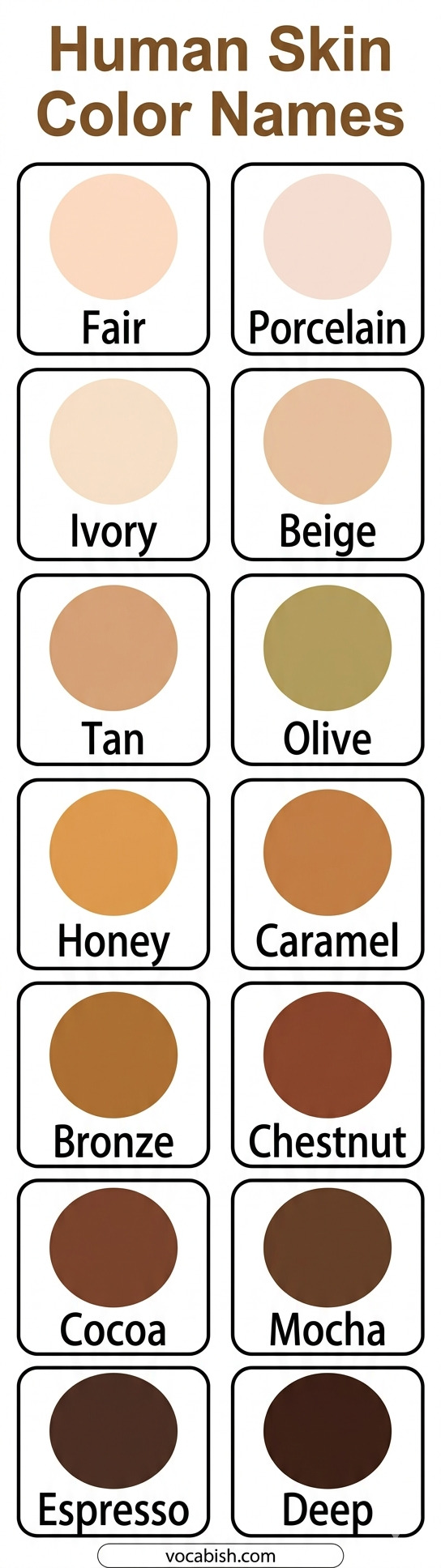
Skin Colors HEX Codes Chart
A visual chart helps you quickly identify skin shades and their names:
Skin Color Name | Description | HEX Code | Color |
|---|---|---|---|
Fair | Very light, pink undertones | #FFECE6 | |
Porcelain | Extremely pale | #FBE8EB | |
Ivory | Light with yellow undertones | #FFF1E0 | |
Beige | Light-medium neutral | #F5E0C3 | |
Tan | Medium golden | #D2A679 | |
Olive | Medium with green/yellow | #C6A664 | |
Honey | Light brown, warm | #B58C6E | |
Caramel | Medium-dark golden | #A8754F | |
Bronze | Medium-dark warm | #8C5E3C | |
Chestnut | Dark brown, reddish | #7B4F36 | |
Cocoa | Deep warm brown | #6D3F2F | |
Mocha | Dark brown, reddish/golden | #5C3224 | |
Espresso | Very dark brown | #432A1F | |
Deep | Dark, rich tone | #321E15 |
Skin Color Names in Art and Design
Artists often use skin tone names when mixing colors or creating portraits.
Common artistic skin color terms include:
- Peach
- Beige
- Sand
- Honey
- Caramel
- Chestnut
- Cocoa
- Mahogany
Artists usually combine multiple shades to create natural-looking skin rather than using a single color.
Quick Tip
Natural skin often contains the following:
- Warm tones
- Cool tones
- Highlights
- Shadows
This creates a more realistic appearance in artwork.
Skin Tone Names Used in Beauty and Fashion
Beauty brands frequently organize products according to skin tone categories.
Examples include:
Product Category | Common Labels |
|---|---|
Foundation | Fair, Light, Medium, Tan, Deep |
Concealer | Ivory, Beige, Honey, Cocoa |
Powder | Light, Medium, Dark |
Fashion Styling | Cool, Warm, Neutral undertones |
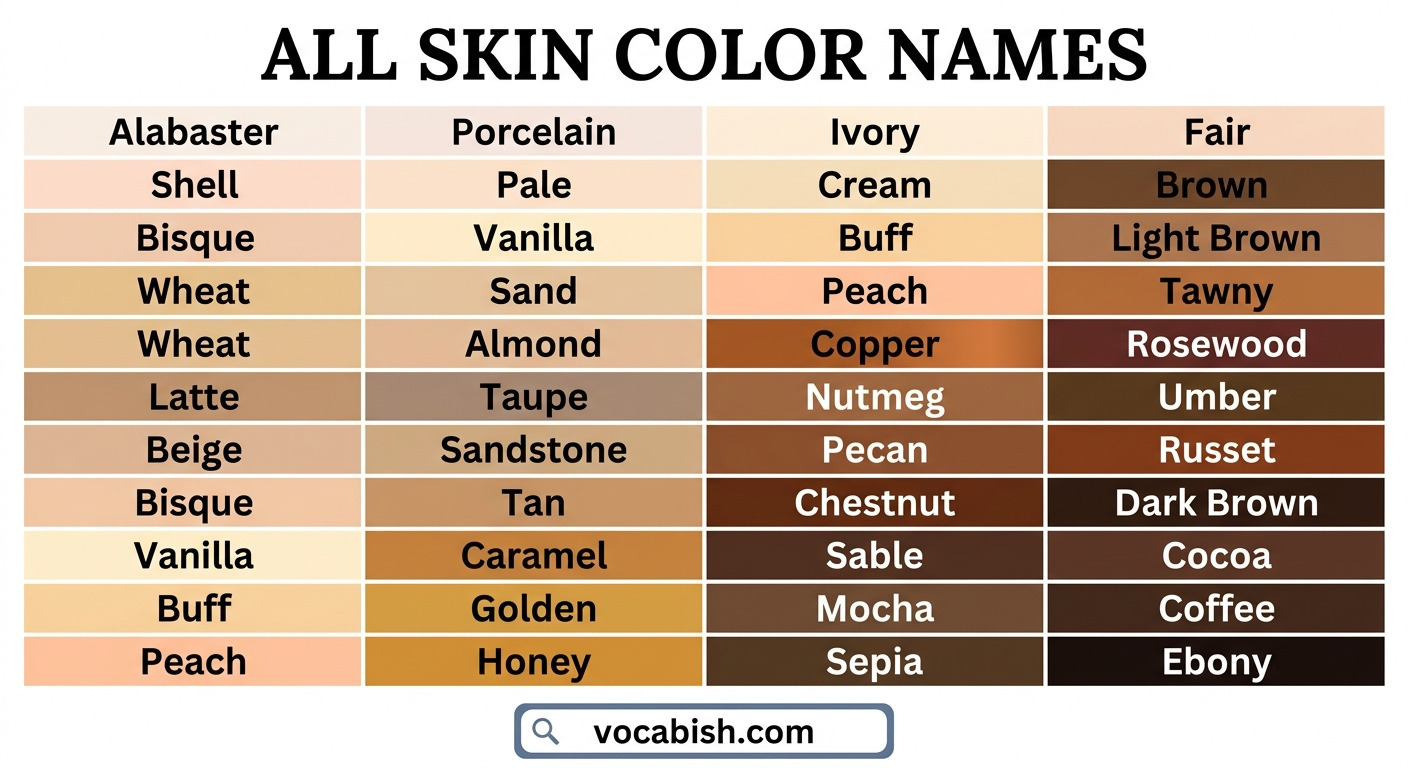
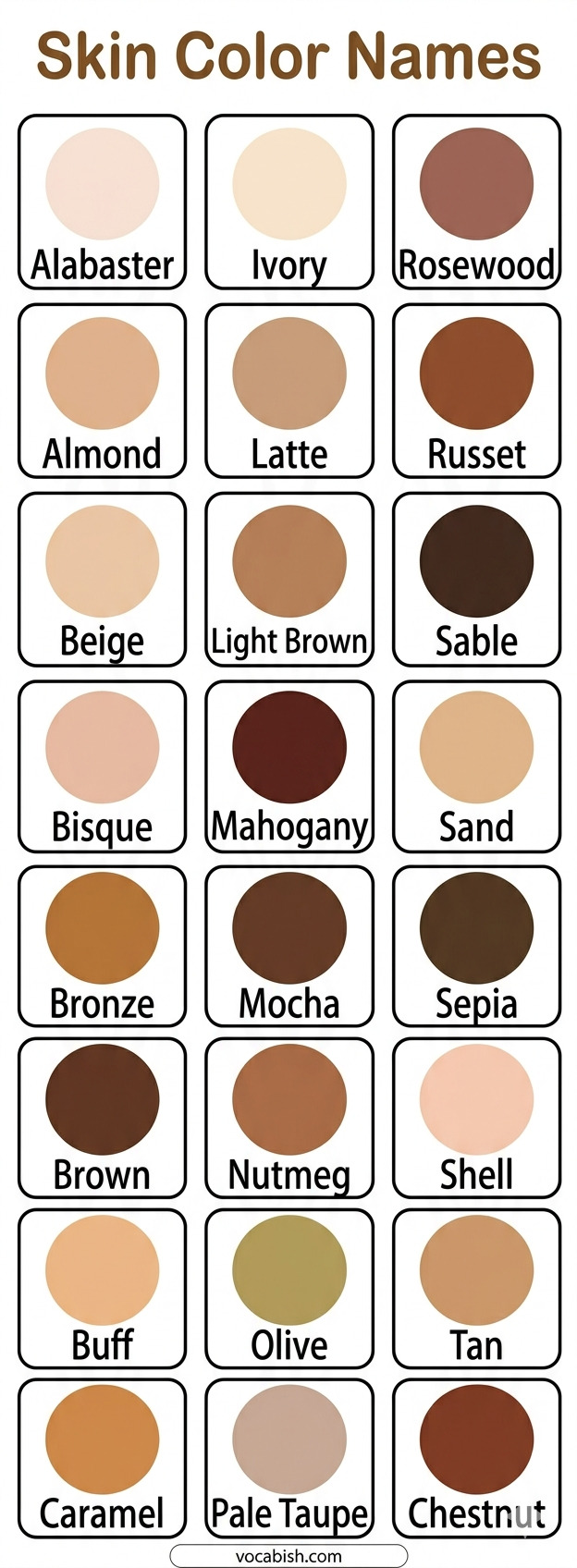
List of all Skin Colors Names
Alabaster | Ivory | Rosewood |
Almond | Latte | Russet |
Beige | Light Brown | Sable |
Bisque | Mahogany | Sand |
Bronze | Mocha | Sepia |
Brown | Nutmeg | Shell |
Buff | Olive | Tan |
Caramel | Pale | Taupe |
Chestnut | Peach | Tawny |
Cinnamon | Pecan | Umber |
Cocoa | Porcelain | Walnut |
Coffee | Praline | Wheat |
Copper | Sandstone | Ebony |
Cream | Toffee | Fair |
Dark Brown | Vanilla | Golden |
Honey |
Tips for Describing Skin Color Respectfully
When talking about appearance, respectful language matters.
Here are some helpful practices:
- Use neutral and descriptive terms.
- Avoid stereotypes.
- Focus on accurate descriptions.
- Use commonly accepted skin tone names.
- Respect how people describe themselves.
Better Examples:
- She has a warm caramel skin tone.
- He has a deep cocoa complexion.
- The character has olive skin and dark hair.
These descriptions sound natural and respectful in modern English.
You May Also Like:
FAQs
Skin color names are words used to describe different shades of human skin, such as fair, beige, honey, caramel, cocoa, and ebony.
There is no fixed number. Human skin exists on a broad spectrum with many shades, undertones, and variations.
Skin color refers to the visible shade, while skin tone may also include undertones such as warm, cool, or neutral.
Popular light skin tone names include porcelain, ivory, fair, cream, and light beige.
Common dark skin tone names include cocoa, mocha, mahogany, espresso, ebony, and onyx.
Brands use skin tone names to help customers find products that closely match their natural complexion and undertones.
Olive skin is usually a medium skin tone with green, golden, or slightly neutral undertones that tan easily.
Conclusion
Learning Skin Color Names helps English learners describe people, understand beauty and fashion terms, and build stronger vocabulary. From light skin tones like porcelain and ivory to deeper shades such as cocoa and ebony, the wide range of different skin tones reflects the diversity of human appearance. Using accurate and respectful skin tone names makes communication clearer and more natural in everyday English.