
A family tree is a picture or chart that shows how people in a family are connected. It helps children understand relationships between parents, grandparents, siblings, and other relatives.
Learning a family tree also helps students learn family vocabulary in English. Words such as mother, father, brother, and grandmother are common in daily conversations, school lessons, and stories.
When children draw their own family tree, they practice reading, writing, and speaking about their relatives. In this blog post, you will learn family member names and complete a family tree worksheet for practice.
What Is a Family Tree?
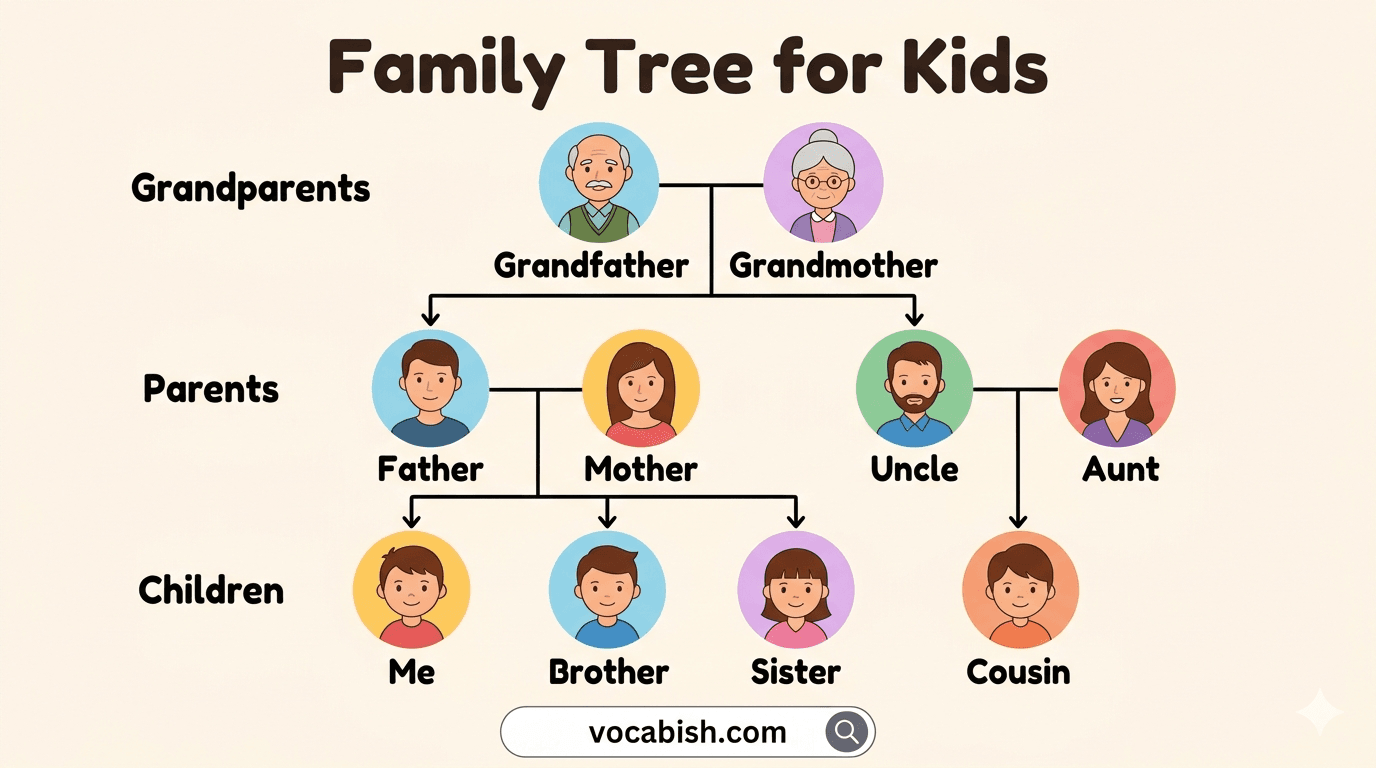
A family tree is a chart that shows the members of a family across generations.
It is called a tree because it often looks like the branches of a tree. The oldest family members appear at the top, and younger generations appear below them.
A simple family tree usually includes:
- Grandparents
- Parents
- Children
Some trees also include uncles, aunts, and cousins.
Why Kids Should Learn Family Trees
Learning about family trees helps children:
- Understand family relationships
- Learn common English vocabulary
- Describe their family in conversation
- Improve reading and writing skills
- Complete school assignments
Family vocabulary is part of everyday English, so learning it early builds strong language skills.
Basic Structure of a Family Tree
A family tree usually has different generations.
First Generation
Great-grandparents or grandparents.
Second Generation
Parents, uncles, and aunts.
Third Generation
Children, brothers, sisters, and cousins.
This structure helps children see how families grow over time.
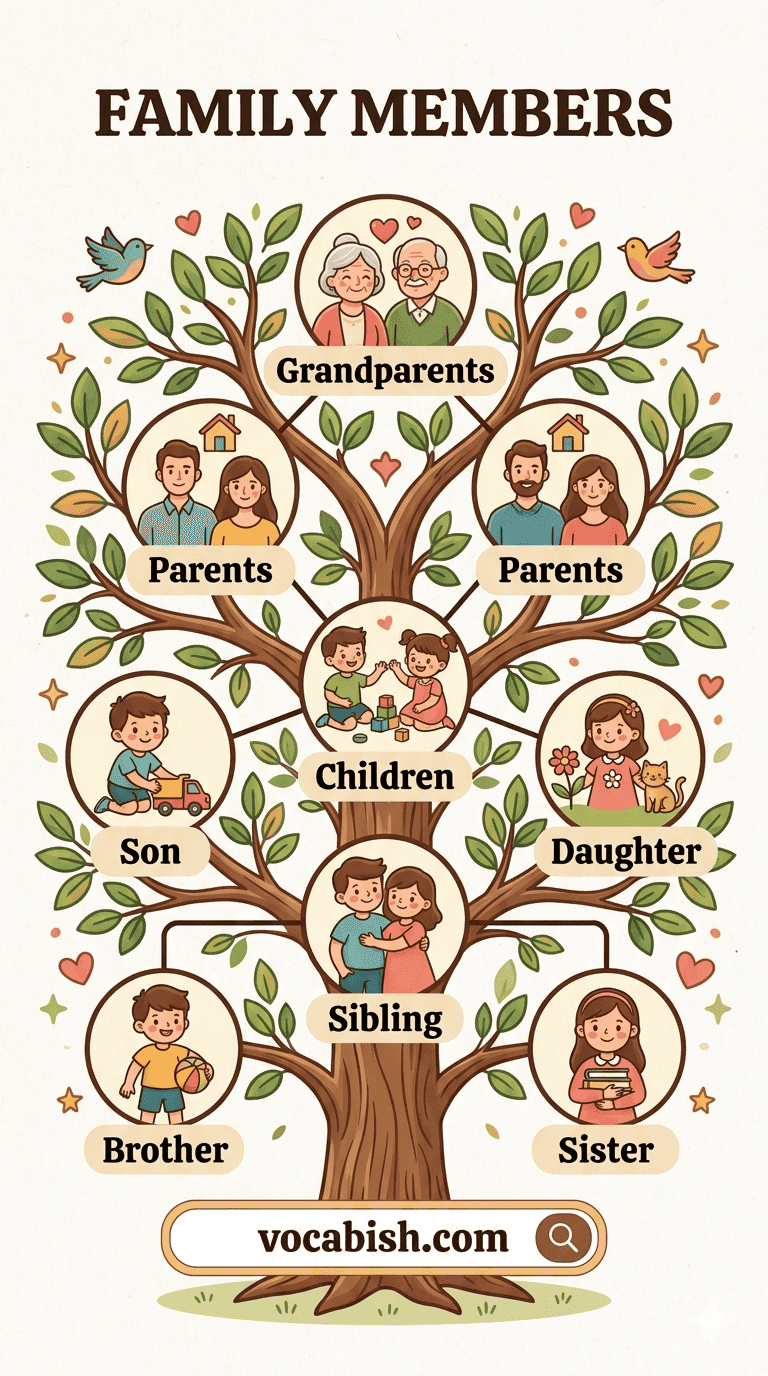
Immediate Family Members
Immediate family members are the closest people in a family.
- Father – the male parent
- Mother – the female parent
- Parents – mother and father together
- Brother – a male sibling
- Sister – a female sibling
- Son – a male child
- Daughter – a female child
Example sentences:
- My father works in a hospital.
- My mother helps me with homework.
- My brother plays football.
- My sister likes reading books.
Extended Family Members
Extended family members are relatives outside the immediate family.
- Grandfather – father of your parent
- Grandmother – mother of your parent
- Uncle – brother of your parent
- Aunt – sister of your parent
- Cousin – child of your uncle or aunt
- Nephew – son of your brother or sister
- Niece – daughter of your brother or sister
Example sentences:
- My grandmother tells bedtime stories.
- My uncle visits us during holidays.
- My cousin studies in my school.
Family Tree Example for Kids
Here is a simple example of a family tree.
Generation | Family Members |
|---|---|
First Generation | Grandfather – Grandmother |
Second Generation | Father – Mother – Uncle – Aunt |
Third Generation | Me – Brother – Sister – Cousins |
This chart helps children see how each person connects in the family.
Family Tree Vocabulary List
Here are common family tree words children should learn:
- Father
- Mother
- Parents
- Brother
- Sister
- Son
- Daughter
- Grandfather
- Grandmother
- Grandparents
- Uncle
- Aunt
- Cousin
- Nephew
- Niece
These words often appear in school lessons and everyday conversation.
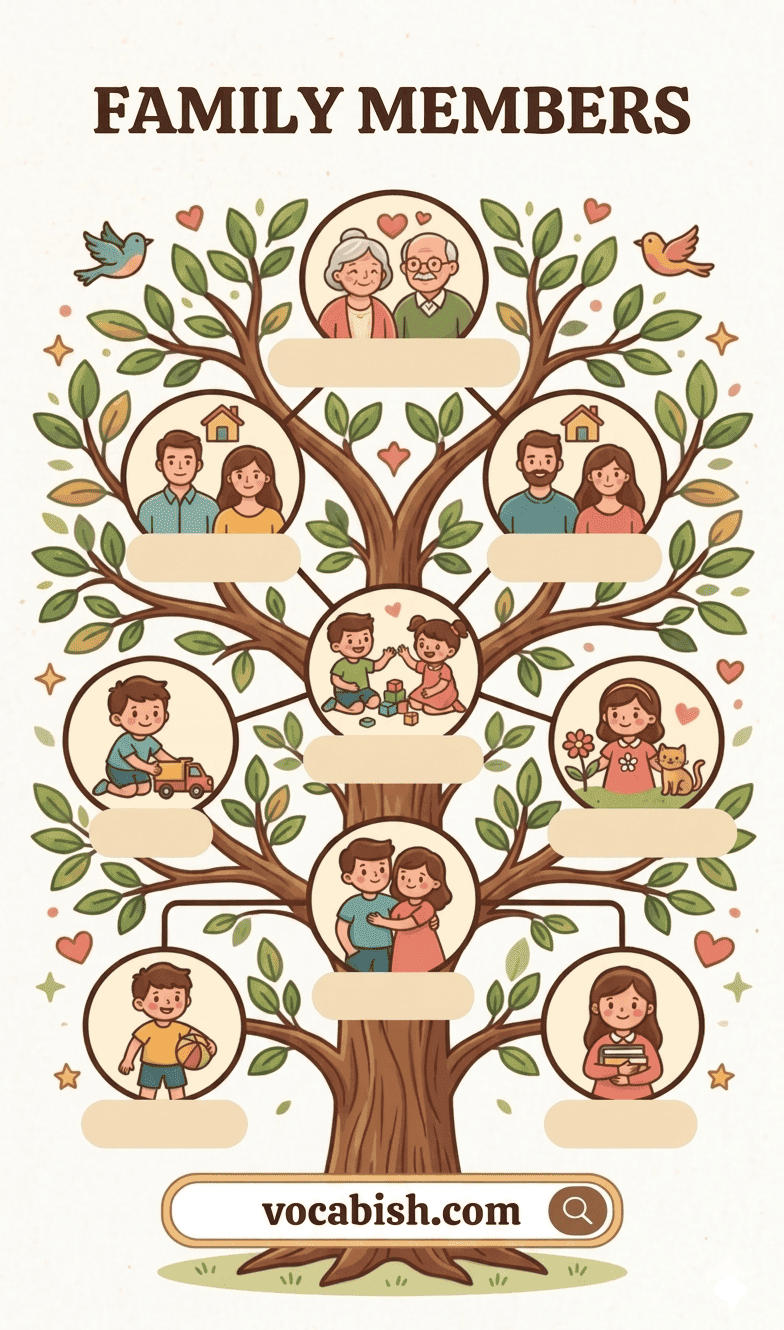
Family Tree Worksheet for Kids
Students can complete this worksheet to practice family vocabulary.
Part 1: Fill in the Blanks
- My father’s father is my __________.
- My mother’s sister is my __________.
- My uncle’s child is my __________.
- My brother’s son is my __________.
- My parent’s daughter is my __________.
Part 2: Draw Your Family Tree
Draw a small family tree and write the names of your family members.
Example structure:
         Grandfather   Grandmother
                    │
        Father    ─────   Mother
                    │
            Me ─ Brother ─ Sister
Students can add more relatives if they want.
Practice Questions
- What do we call the brother of your mother?
- What is the child of your aunt called?
- What do we call your father’s mother?
- What word means the son of your sister?
- What is another word for brother or sister?
Answer Key
- Uncle
- Cousin
- Grandmother
- Nephew
- Sibling
Download PDF of Family Tree
Conclusion
A family tree for kids is a helpful way to learn family vocabulary and understand relationships in a family. By learning words like mother, father, grandmother, and cousin, children can talk about their relatives and describe their family clearly.
Practicing with a family tree worksheet also improves reading, writing, and speaking skills. When children draw their own family tree, they remember family vocabulary more easily and use it with confidence.