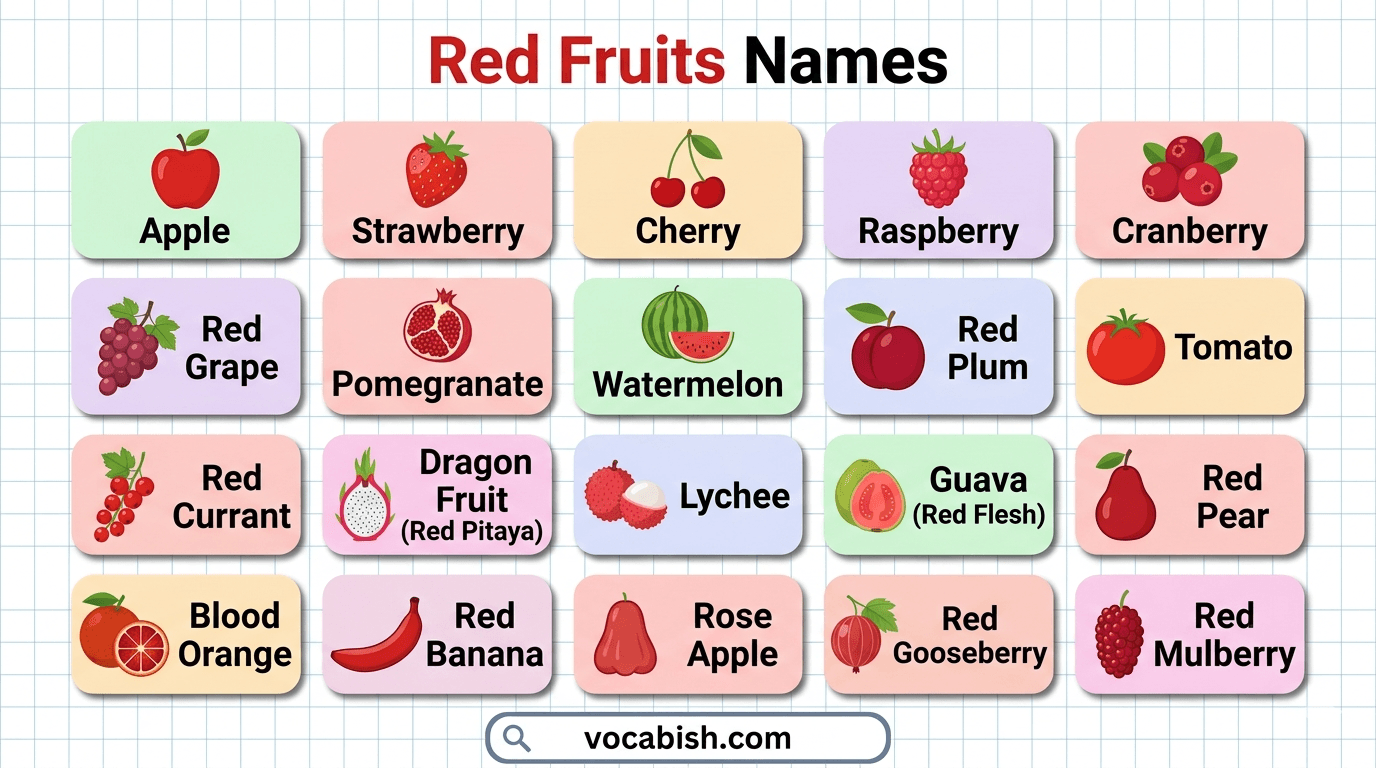

Learning vocabulary related to Types of Red Fruits Name with Their Pictures helps English learners understand how everyday food items are named and used in real life communication. These words appear in daily conversations, shopping, cooking, and health topics, making them important for building strong language skills. By learning names like apples, strawberries, cherries, and pomegranates, learners can recognize these fruits in both spoken and written English with more confidence. It also helps improve speaking skills when describing food, reading skills when understanding texts about nutrition, and writing skills when using correct vocabulary in sentences.
What are Red Fruits?
Red fruits are edible fruits that naturally grow with red-colored skin or flesh. They get their color from natural plant pigments called anthocyanins and lycopene. These fruits are widely eaten because they are sweet, juicy, and rich in vitamins and antioxidants. They can be eaten raw, cooked, or blended into drinks and meals.
Common Red Fruits Name in English with Pictures
Here are the most common red fruits with information and pictures:
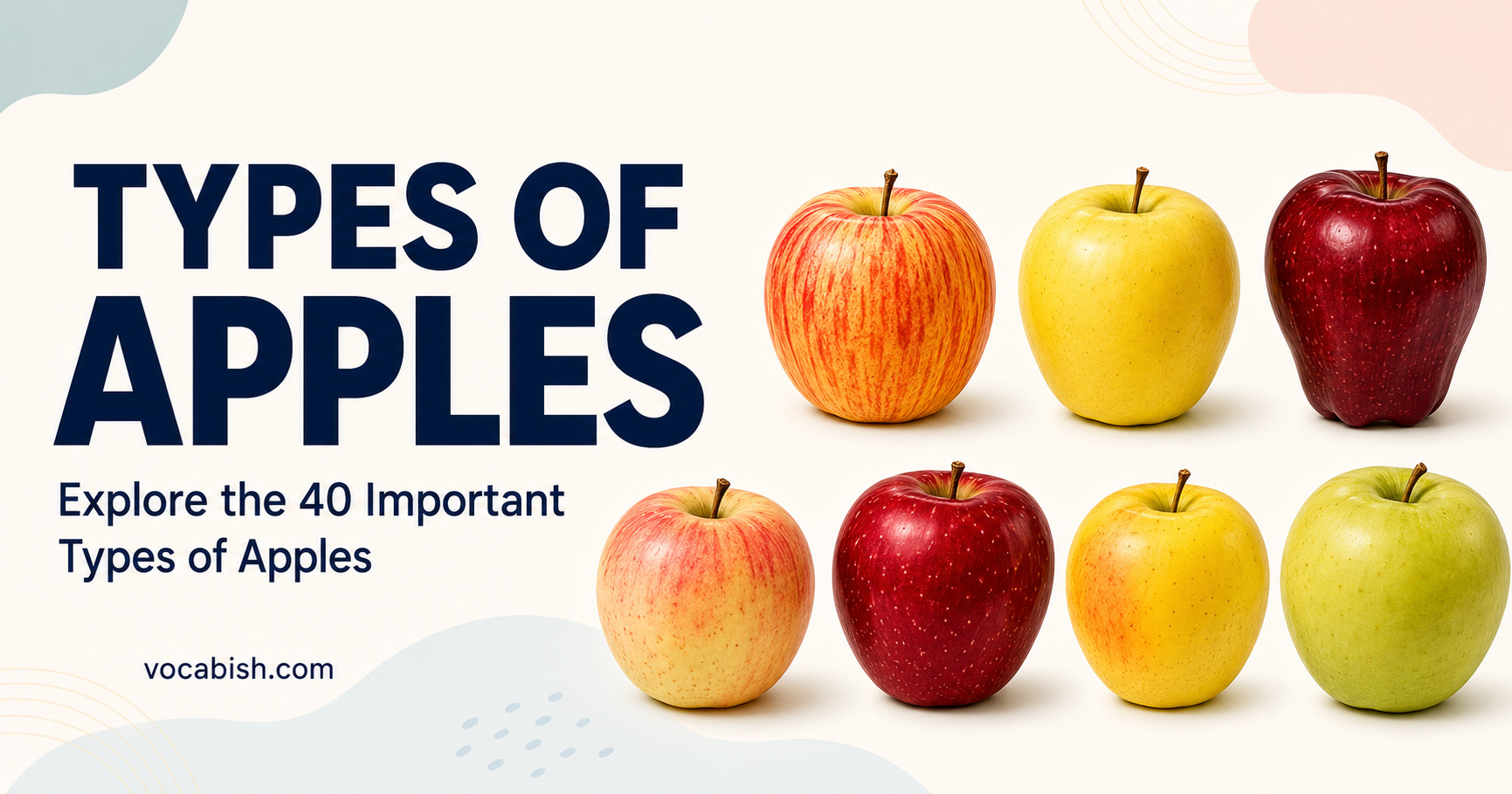
- Apple: Crisp sweet fruit commonly eaten raw or baked in desserts.
- Strawberry: Soft red berry widely used in cakes, smoothies, and snacks.
- Cherry: Small round fruit with sweet juice and refreshing taste.
- Raspberry: Tiny berry with soft texture and slightly sour flavor.
- Cranberry: Sour red fruit often used in juices and holiday sauces.
- Pomegranate: Fruit filled with juicy red seeds packed inside hard shell.
- Watermelon: Large fruit with refreshing red flesh and high water content.
- Red Grapes: Sweet fruits eaten fresh or dried into raisins.
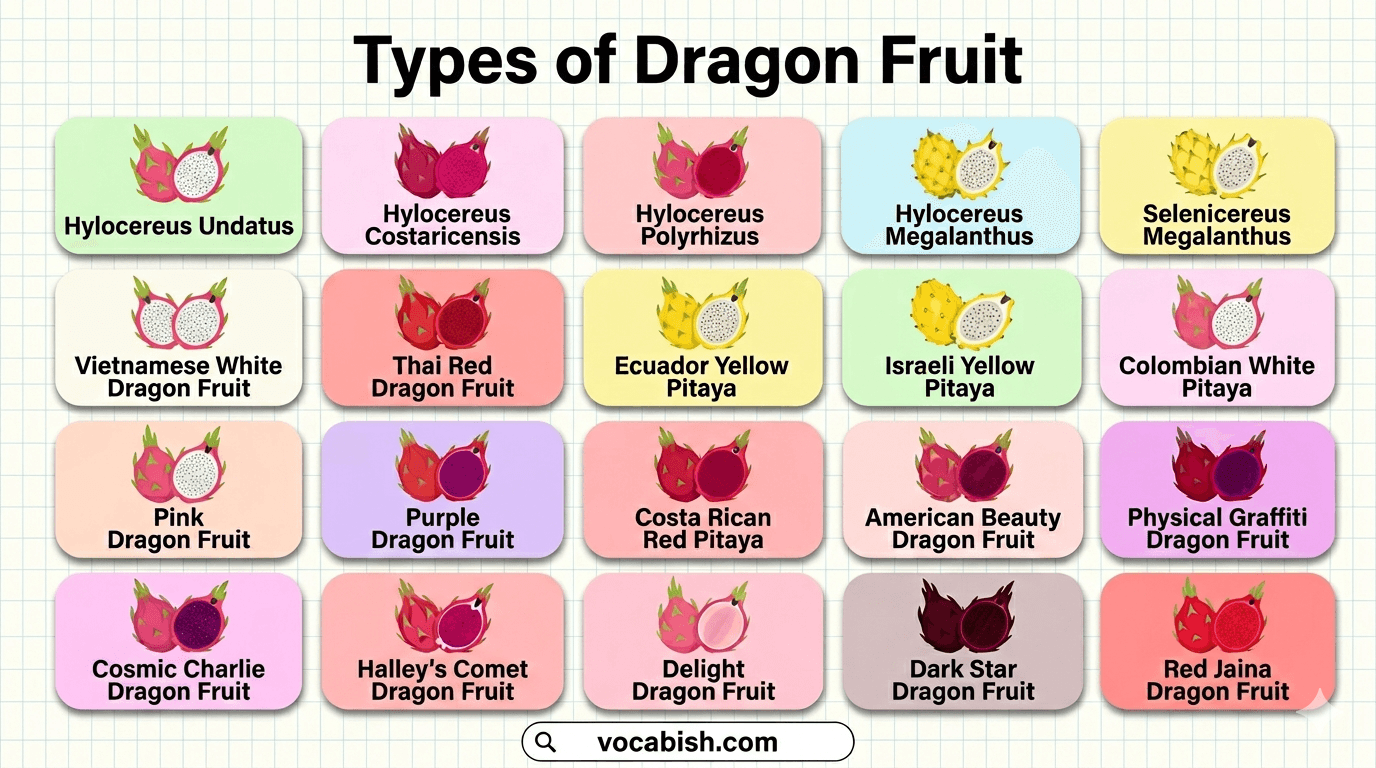
- Dragon Fruit: Exotic fruit with red skin and mild sweet flesh.
- Red Plum: Juicy fruit with smooth skin and rich sweet taste.
- Red Currant: Small berries often used in jams and baking recipes.
- Guava: Tropical fruit rich in vitamin C and sweet aroma.
- Lychee: Small fruit with red skin and juicy sweet interior.
- Rose Apple: Crunchy fruit with light sweetness and watery texture.
- Tomato: Common fruit used widely in cooking and salads.
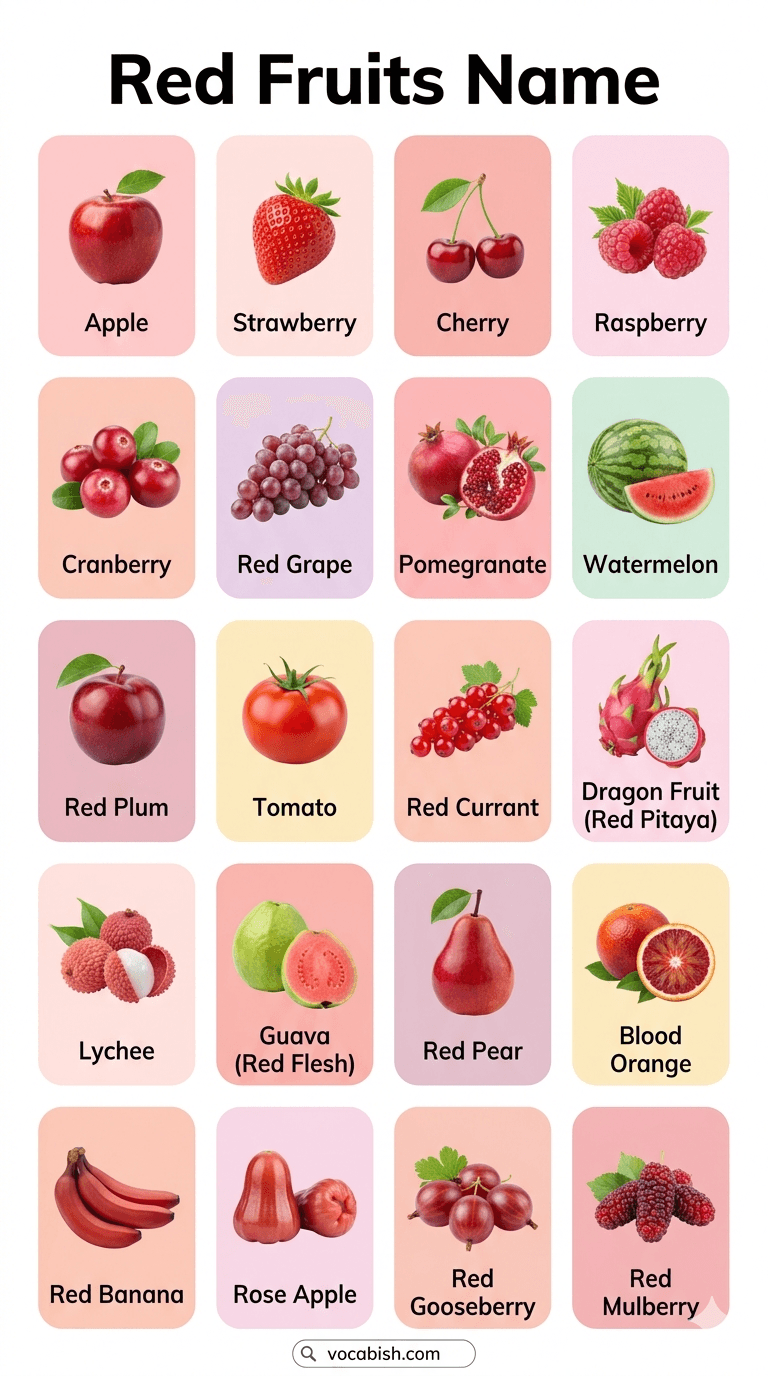
Types of Red Fruits
Red fruits fall into different categories. Each type has unique taste and texture.
1. Small Red Fruits (Berries)
Berries are small and juicy. They often grow on bushes.
- Strawberry
- Raspberry
- Cranberry
- Red Currant
These fruits are sweet or slightly sour. Moreover, they are rich in antioxidants.
2. Large Red Fruits
Some red fruits are bigger and heavier.
- Watermelon
- Apple
- Pomegranate
These fruits contain more water. Therefore, they keep the body hydrated.
3. Soft Red Fruits
Soft fruits are easy to eat. They have smooth flesh.
- Cherry
- Plum
- Strawberry
These fruits are often used in desserts. In addition, they taste sweet and fresh.
4. Sour Red Fruits
Some red fruits have a tangy taste.
- Cranberry
- Red Currant
These fruits are used in juices and sauces. However, people rarely eat them raw.
Health Benefits of Red Fruits
Red Fruit Name | Benefits |
|---|---|
Strawberry | Rich in vitamin C, supports immunity and skin health |
Apple | Improves digestion and helps maintain heart health |
Cherry | Reduces inflammation and supports better sleep quality |
Raspberry | High fiber content supports digestion and gut health |
Cranberry | Helps prevent urinary tract infections naturally |
Red Currant | Rich in antioxidants and supports immune system strength |
Pomegranate | Improves blood flow and supports heart health |
Watermelon | Keeps body hydrated and supports cooling in hot weather |
Red Grapes | Provide antioxidants that support brain and heart health |
Red Plum | Supports digestion and provides natural energy boost |
Dragon Fruit | Rich in fiber and supports healthy gut function |
Lychee | Boosts immunity and provides quick natural energy |
Guava (Red Flesh) | Very high in vitamin C and supports strong immunity |
Rose Apple | Supports hydration and improves digestion naturally |
Tomato | Supports heart health and contains strong antioxidants |
Nutritional Benefits of Red Fruits
Red fruits are not only tasty but also highly nutritious. They provide many health advantages when eaten regularly.
- Rich in Vitamin C, helps strengthen the immune system naturally
- Contain antioxidants, protect body cells from damage and aging effects
- Provide dietary fiber, support healthy digestion and improve gut function
- Include natural sugars, give quick energy without processed sweeteners
- Support heart health, help maintain healthy blood circulation and pressure levels
- Contain hydration elements, especially watermelon and grapes for body hydration
Red Fruits in Daily Diet
Red fruits can easily be added to everyday meals in simple ways.
- Eat strawberries, apples, or grapes as fresh breakfast options
- Add pomegranate and berries into yogurt or cereal bowls
- Use tomatoes in salads, sauces, soups, and cooked dishes
- Drink fresh juices made from watermelon, orange, or guava
- Include dried cranberries or raisins in snacks and baking recipes
- Use fruit mixes in desserts, smoothies, and healthy snacks
Red Fruits Names List
Apple | Strawberry | Cherry |
Raspberry | Cranberry | Red Currant |
Pomegranate | Watermelon | Red Grape |
Red Plum | Dragon Fruit (Red Pitaya) | Lychee |
Guava (Red Flesh) | Tomato | Rose Apple |
Blood Orange | Red Banana | Red Pear |
Red Passion Fruit | Indian Jujube (Red Ber) | Red Mulberry |
Red Gooseberry | Acerola Cherry | Barbados Cherry |
Salak (Red Snake Fruit) | Red Star Apple | Red Kiwi |
Red Sapote | Surinam Cherry | Muntingia (Jamaican Cherry) |
Hawthorn Berry | Rowan Berry | Red Huckleberry |
Red Elderberry | Lingonberry | Gooseberry (Red Variety) |
Conclusion
Different Types of Red Fruits include a wide variety of berries, tree fruits, and tropical fruits. Each fruit has its own taste, texture, and nutritional value. Learning their names and uses helps improve vocabulary and supports better understanding of healthy food choices in daily life.
Related Articles:
FAQs about Red Fruits
Red fruits are fruits that naturally have red skin or red flesh. They include apples, strawberries, cherries, and pomegranates, and are rich in vitamins and antioxidants.
Red fruits are important because they provide vitamins, fiber, and antioxidants. These nutrients support immunity, improve digestion, and help protect the body from daily health problems.
Common red fruits include strawberries, apples, cherries, raspberries, cranberries, red grapes, watermelon, and pomegranates. They are widely available in markets and consumed daily worldwide.
Yes, many red fruits support weight loss because they are low in calories and high in fiber. They help control hunger and improve digestion naturally.
Yes, red pepper is botanically a fruit because it develops from the flower of the plant and contains seeds. However, it is commonly used as a vegetable in cooking.
Red fruits contain vitamin C, fiber, potassium, and antioxidants. These nutrients support energy, digestion, skin health, and overall body protection from diseases.
Yes, red fruits like apples, grapes, and cherries support heart health. They help reduce bad cholesterol and improve blood circulation due to their antioxidant content.
Strawberries, guava, and pomegranates are excellent for immunity. They contain high vitamin C and antioxidants that help the body fight infections and stay healthy.