
In this blog post, you will learn the names, types, and uses of dragon fruit in English. Dragon fruit vocabulary includes words for colors, shapes, and varieties like red flesh, white flesh, and yellow skin. Learning these words helps you understand food topics in daily life and school. It also improves your speaking when you describe fruits, your reading when you see food labels, your writing in short sentences, and your listening when others talk about fruits. When you understand these names, you can talk with more confidence and use the right words in real situations. Keep reading to explore the different types of dragon fruit and how to use their names correctly.
What are Dragon Fruits?
Dragon fruit is a tropical fruit from cactus plants. It grows mainly in warm regions. The fruit has a bright outer skin, soft inner flesh, and tiny edible seeds. It tastes mild, slightly sweet, and refreshing.
It is used in food, drinks, desserts, and even skincare. People enjoy it because it is healthy, light, and easy to eat.
Common Types of Dragon Fruit in English with Pictures
Here are some common and important types of dragon fruit with descriptions:
- White Flesh Dragon Fruit: pink skin, white inside, mild sweet taste, widely available globally
- Red Flesh Dragon Fruit: deep red inside, stronger flavor, rich color, popular for juices
- Yellow Dragon Fruit: yellow skin, white flesh, very sweet taste, smaller size fruit
- Hylocereus Undatus: most common type, white flesh, pink skin, widely grown worldwide
- Hylocereus Costaricensis: red flesh variety, higher sweetness, often used in smoothies
- Hylocereus Megalanthus: yellow skin variety, very sweet flavor, smaller fruit with spikes
- Pink Dragon Fruit: pink skin and flesh, soft texture, mild sweet taste, easy to eat
- Purple Dragon Fruit: deep purple flesh, strong antioxidants, used in desserts and drinks
- Israeli Yellow Pitaya: bright yellow skin, sweet taste, popular in specialty fruit markets
- Vietnamese White Dragon Fruit: common export variety, light taste, widely consumed fresh
- Thai Red Dragon Fruit: rich color flesh, stronger sweetness, often used in fruit salads
- Ecuador Yellow Pitaya: small size fruit, intense sweetness, soft seeds, easy digestion
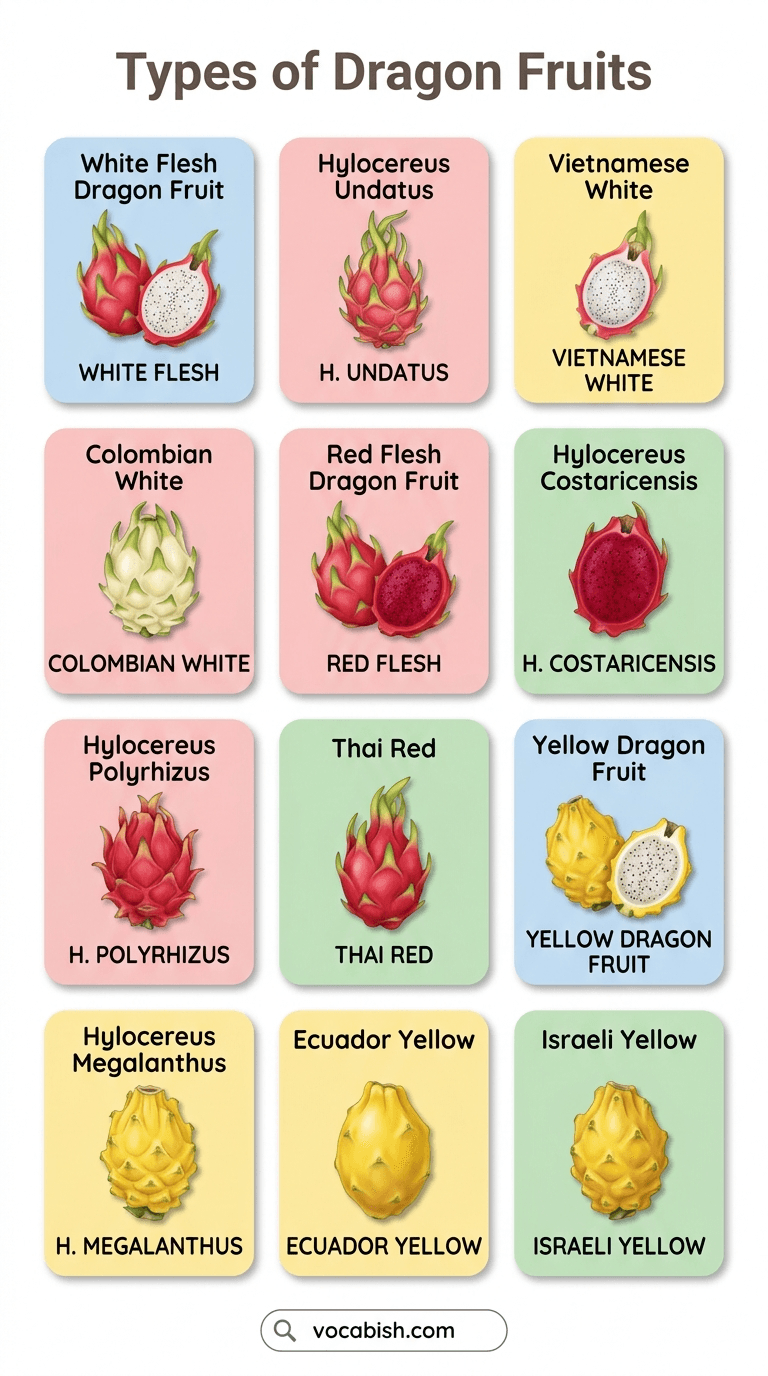
Main Types of Dragon Fruits
White Flesh Dragon Fruit
This type has pink skin and white flesh. It is the most common variety.
- Hylocereus Undatus
- Vietnamese White
- Colombian White
Taste: mild and slightly sweet
Use: fresh eating, salads, juices
Red Flesh Dragon Fruit
This type has dark pink or red flesh with stronger flavor.
- Hylocereus Costaricensis
- Hylocereus Polyrhizus
- Thai Red
Taste: sweeter and richer
Use: smoothies, desserts, juices
Yellow Dragon Fruit
This type has yellow skin and white flesh. It is very sweet.
- Hylocereus Megalanthus
- Ecuador Yellow
- Israeli Yellow
Taste: very sweet and juicy
Use: fresh eating, fruit bowls
All Types of Dragon Fruit Names
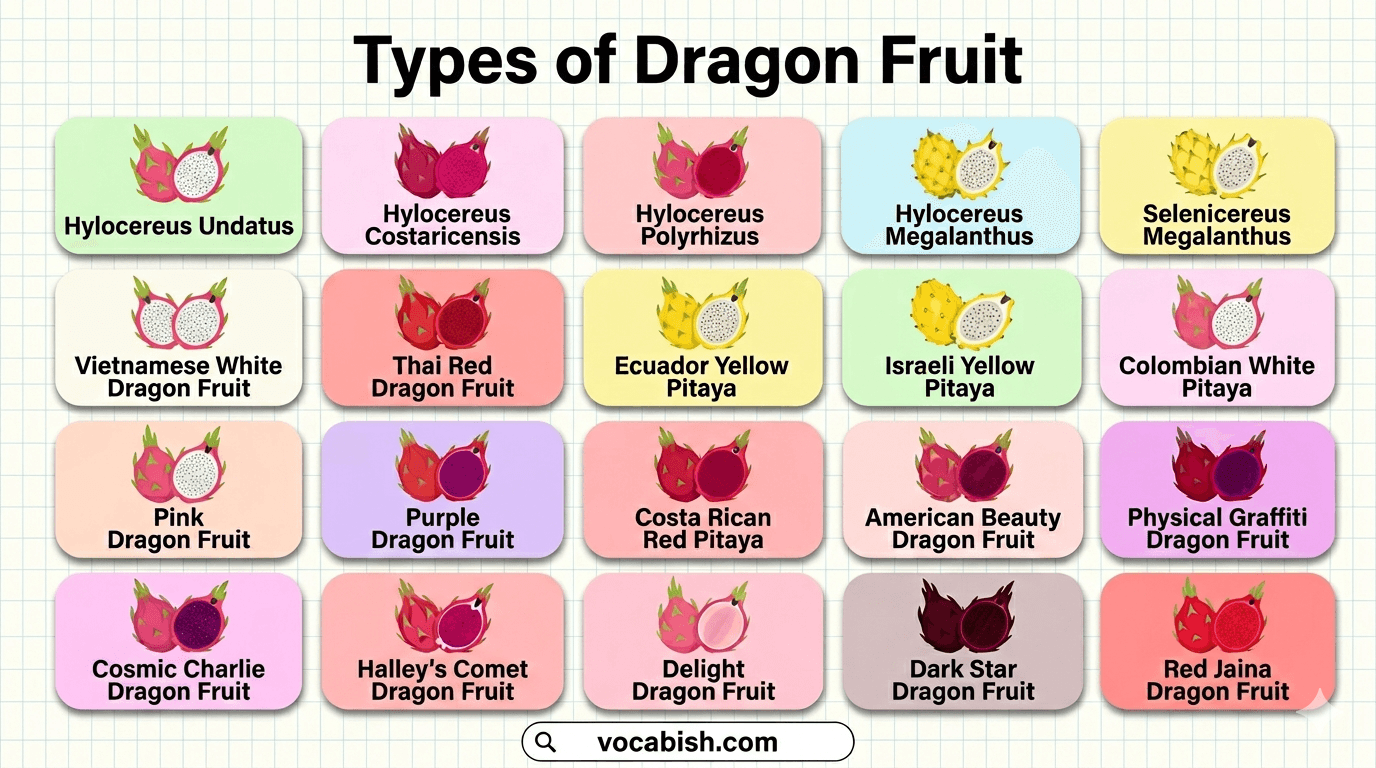
Here are well-known dragon fruit types and names:
- Hylocereus Undatus
- Hylocereus Costaricensis
- Hylocereus Polyrhizus
- Hylocereus Megalanthus
- Selenicereus Megalanthus
- Vietnamese White Dragon Fruit
- Thai Red Dragon Fruit
- Ecuador Yellow Pitaya
- Israeli Yellow Pitaya
- Colombian White Pitaya
- Pink Dragon Fruit
- Purple Dragon Fruit
- Costa Rican Red Pitaya
- American Beauty Dragon Fruit
- Physical Graffiti Dragon Fruit
- Cosmic Charlie Dragon Fruit
- Halley’s Comet Dragon Fruit
- Delight Dragon Fruit
- Dark Star Dragon Fruit
- Red Jaina Dragon Fruit
- Yellow Jaina Dragon Fruit
Health Benefits of Dragon Fruit
- Supports digestion: contains fiber that helps smooth digestion and gut health
- Boosts immunity: rich in vitamin C that helps body fight infections
- Improves heart health: helps lower bad cholesterol and supports blood circulation
- Hydrates body: high water content keeps body fresh and active daily
- Supports skin health: antioxidants help reduce skin damage and aging signs
- Helps weight control: low calories and high fiber keep stomach full longer
Nutritional Benefits of Dragon Fruit
Dragon fruit is rich in important nutrients:
- Vitamin C
- Fiber
- Iron
- Magnesium
- Antioxidants
- Calcium
It is a low-calorie and nutrient-rich fruit, perfect for daily diet.
Daily Uses of Dragon Fruit
- Fresh eating: cut and eat directly for quick healthy snack
- Fruit salads: mix with other fruits for colorful and nutritious meals
- Smoothies: blend with milk or juice for refreshing drinks
- Desserts: use in ice cream, cakes, and puddings for natural sweetness
- Juices: make fresh juice for hydration and energy boost
- Skincare: used in natural face masks for glowing and soft skin
Different Types of Dragon Fruits
Hylocereus Undatus | Hylocereus Costaricensis | Hylocereus Polyrhizus |
Hylocereus Megalanthus | Selenicereus Megalanthus | Vietnamese White |
Thai Red | Ecuador Yellow | Israeli Yellow |
Colombian White | Pink Dragon Fruit | Purple Dragon Fruit |
Costa Rican Red | American Beauty | Physical Graffiti |
Cosmic Charlie | Halley’s Comet | Delight |
Dark Star | Red Jaina | Yellow Jaina |
Related Articles:
FAQs about Types of Dragon Fruit
The main types of dragon fruit are white flesh, red flesh, and yellow skin varieties. They differ in color, sweetness, and texture, but all are edible and nutritious.
There are three main types and many named varieties of dragon fruit. These include Hylocereus undatus, Hylocereus costaricensis, and yellow pitaya, grown in different regions.
Red dragon fruit has darker flesh and a sweeter taste, while white dragon fruit has lighter flesh and a milder flavor. Both contain small edible seeds and similar nutrients.
Yellow dragon fruit is usually the sweetest type. It has yellow skin, white flesh, and a strong natural sugar taste compared to red and white varieties.
Common names include pitaya, red dragon fruit, white dragon fruit, and yellow dragon fruit. Scientific names like Hylocereus undatus are also used in learning and identification.
Different types of dragon fruit are grown in tropical and warm regions. Countries like Vietnam, Thailand, and Ecuador produce popular varieties for global markets.