
Some English nouns do not follow the usual singular and plural pattern. Words such as advice, information, and furniture are normally singular, while scissors, trousers, and police are usually plural. Learning which nouns are...
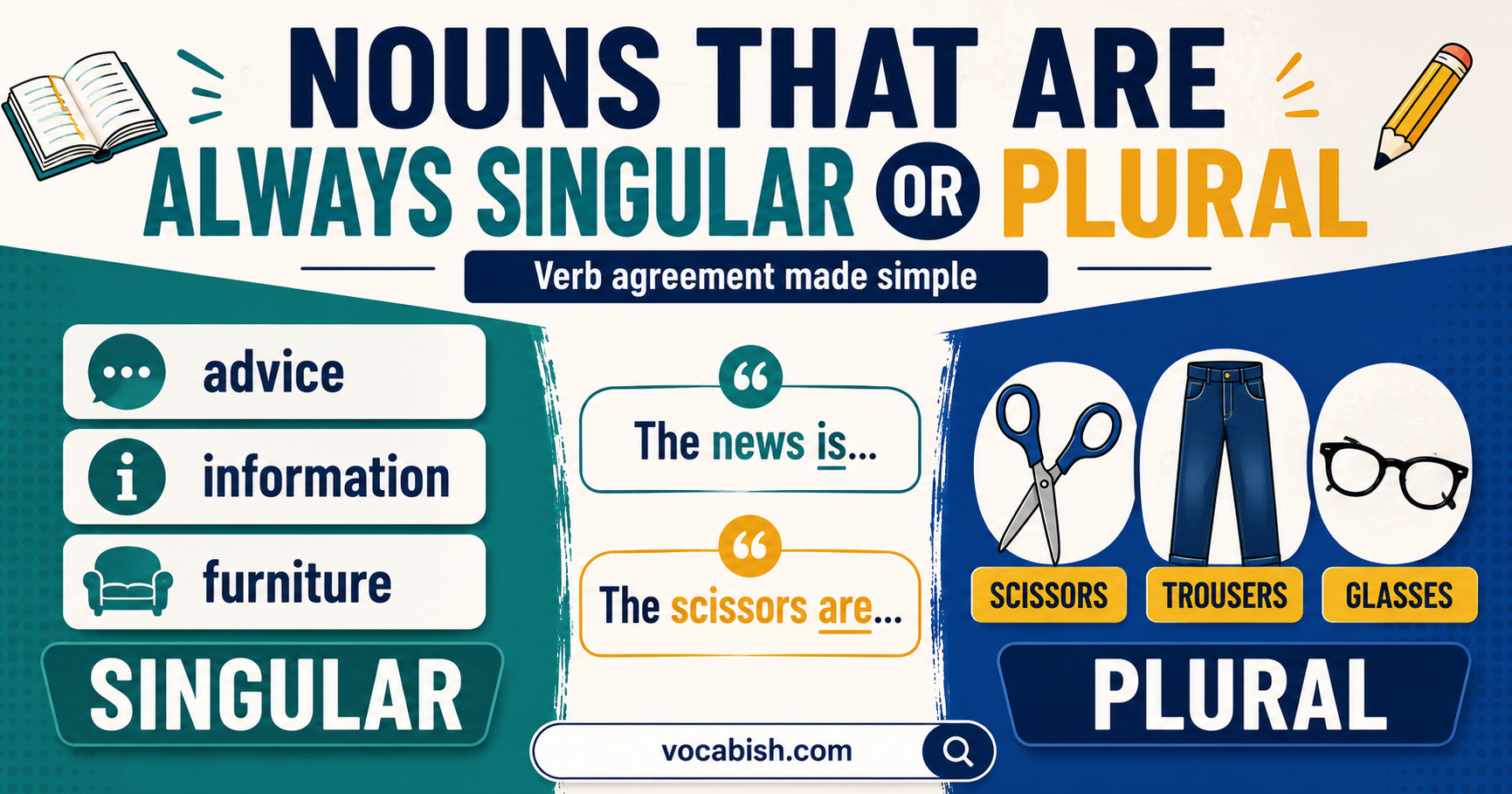
Some English nouns do not follow the usual singular and plural pattern. Words such as advice, information, and furniture are normally singular, while scissors, trousers, and police are usually plural. Learning which nouns are...
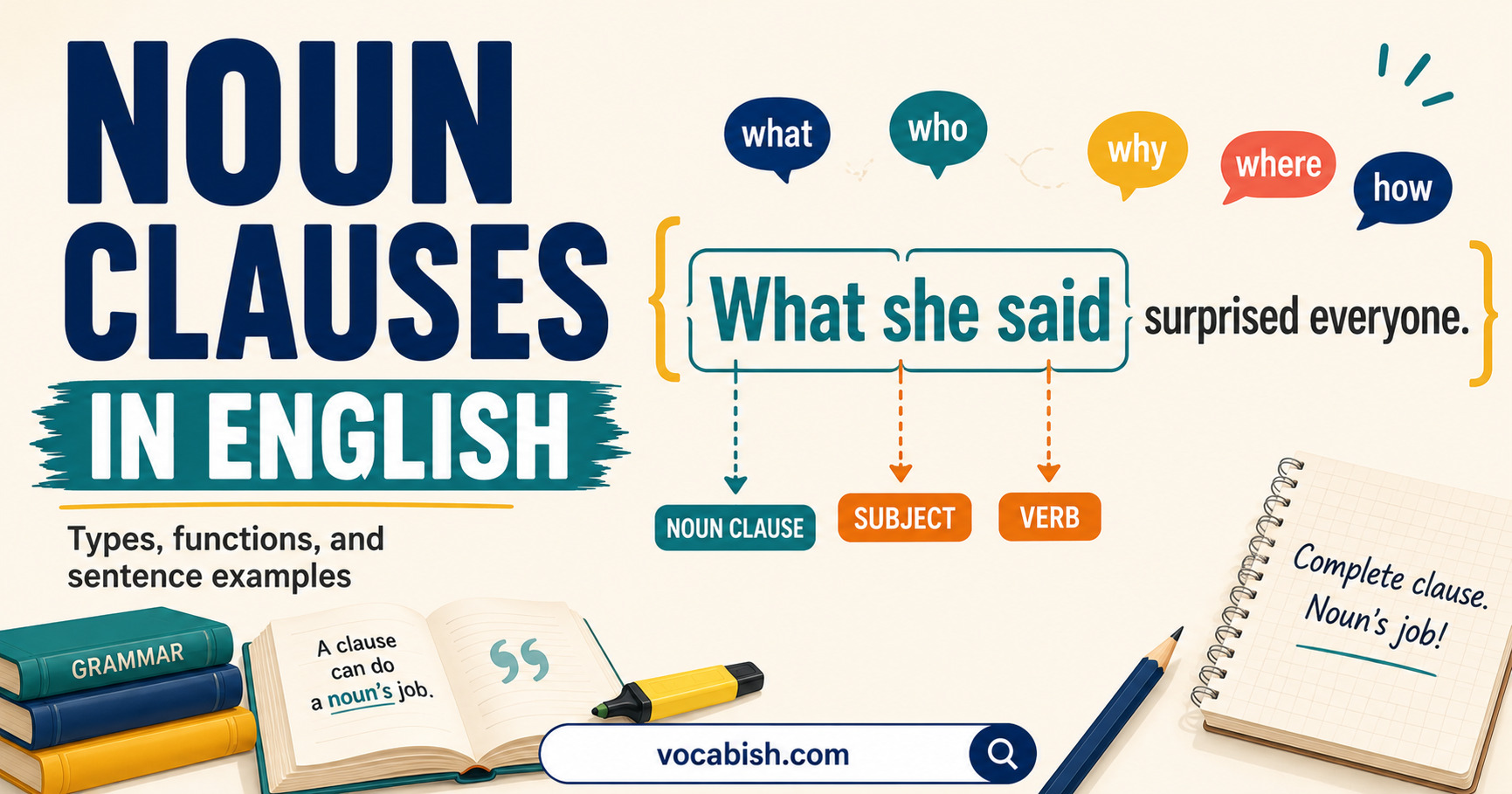
A noun clause is a group of words that contains a subject and a verb but works as a noun within a larger sentence. It can name an idea, fact, question, person, place, or situation. Noun clauses commonly function as subjects...
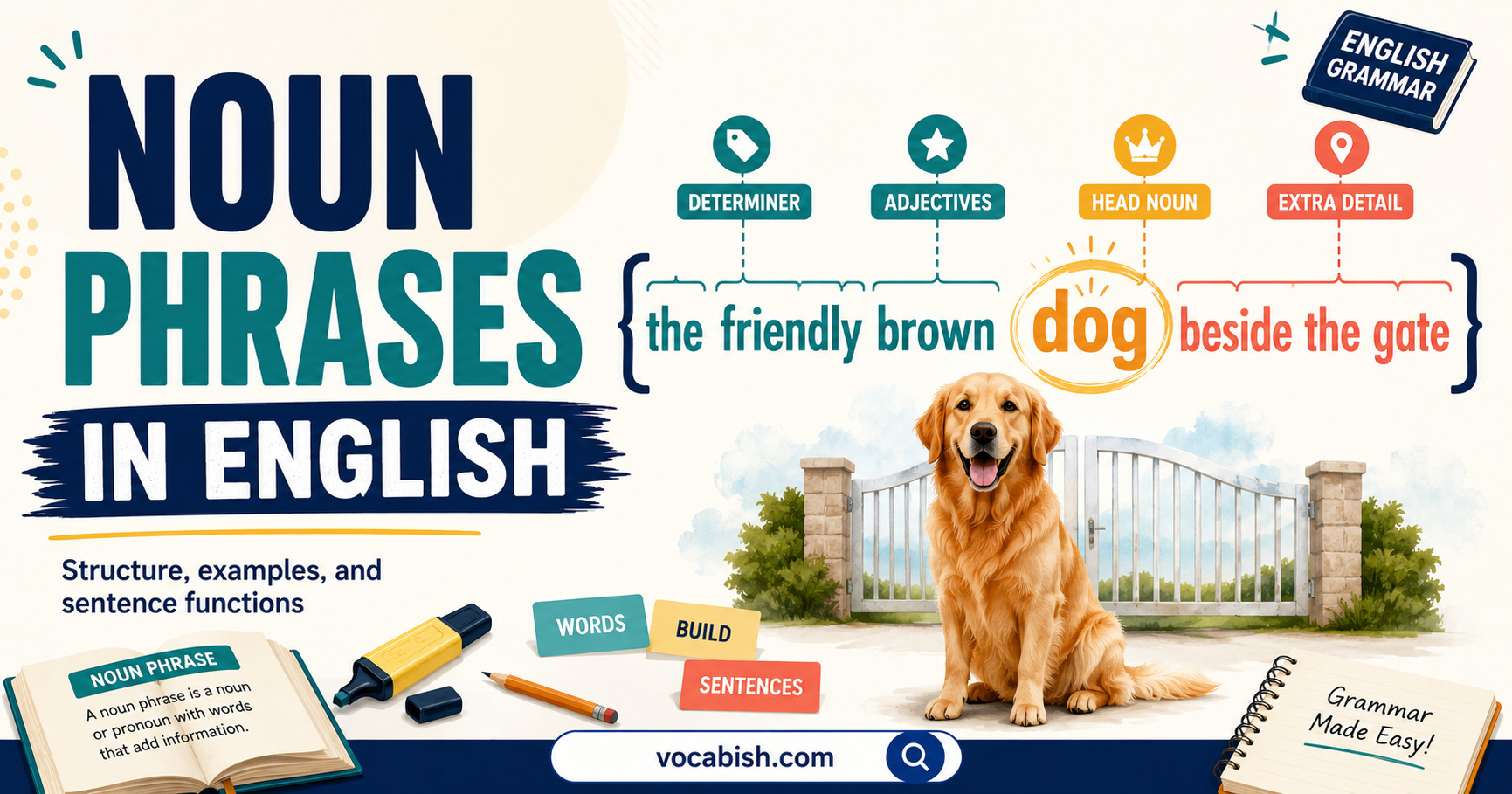
A sentence often needs more than a single noun to identify a person, place, object, or idea clearly. Instead of saying dog, we might say the friendly dog beside the gate. This complete group of words is a noun phrase. Noun...
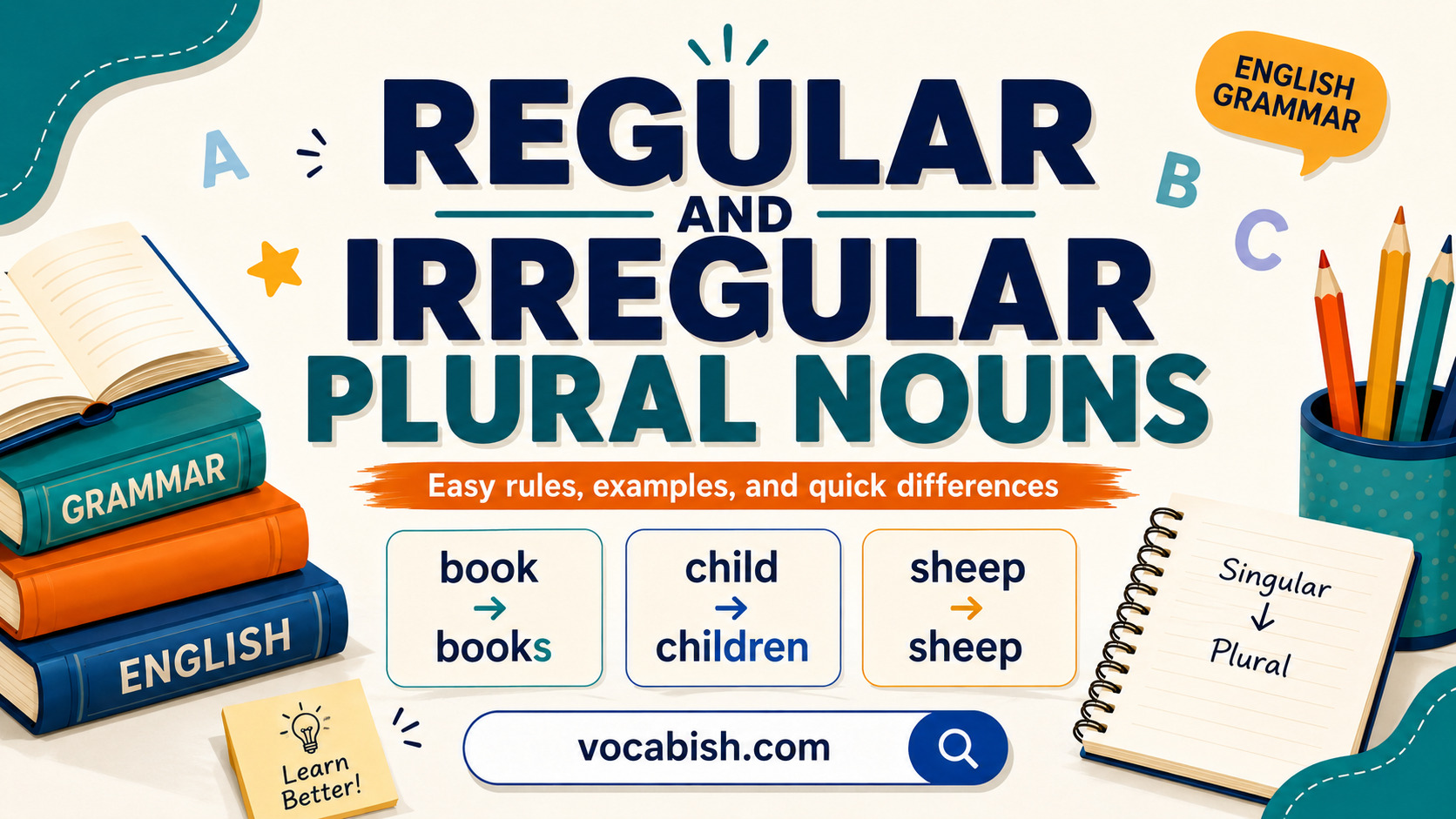
English plurals are usually easy to form: add -s or -es to a singular noun. However, some nouns follow different spelling patterns, change completely, or stay the same. Regular plural: book → books Irregular plural: child →...
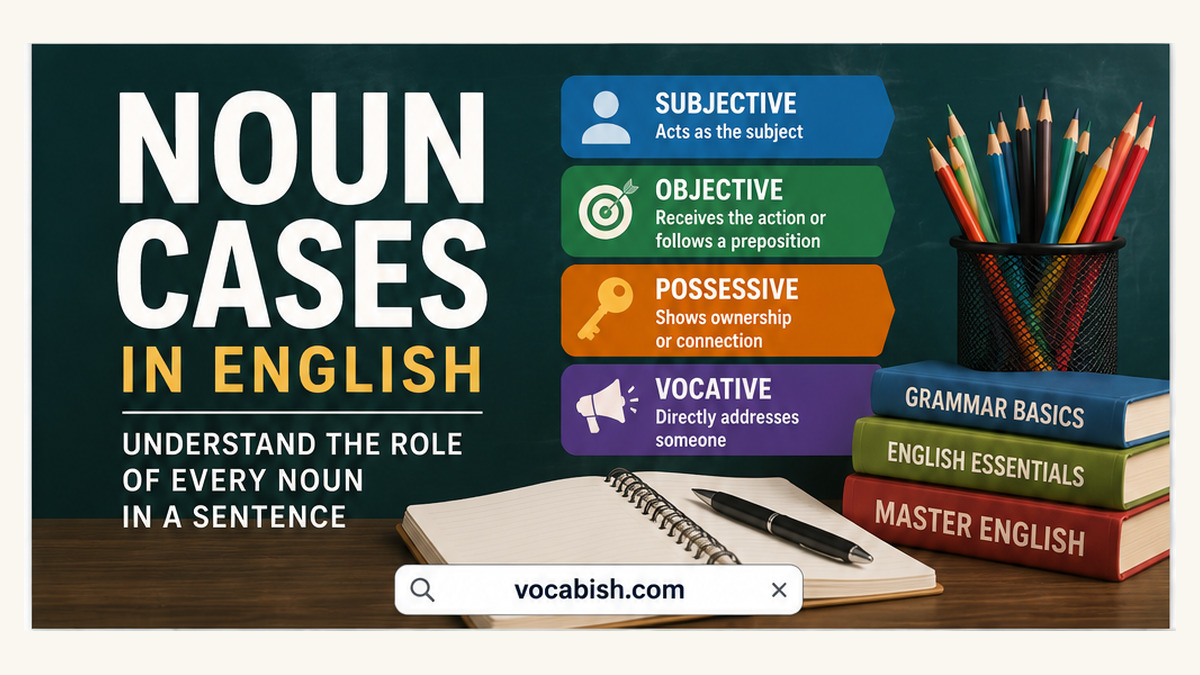
Nouns can perform different jobs in a sentence. A noun may act as the subject, receive an action, show ownership, or directly address someone. These grammatical roles are called noun cases in English. Unlike some languages...
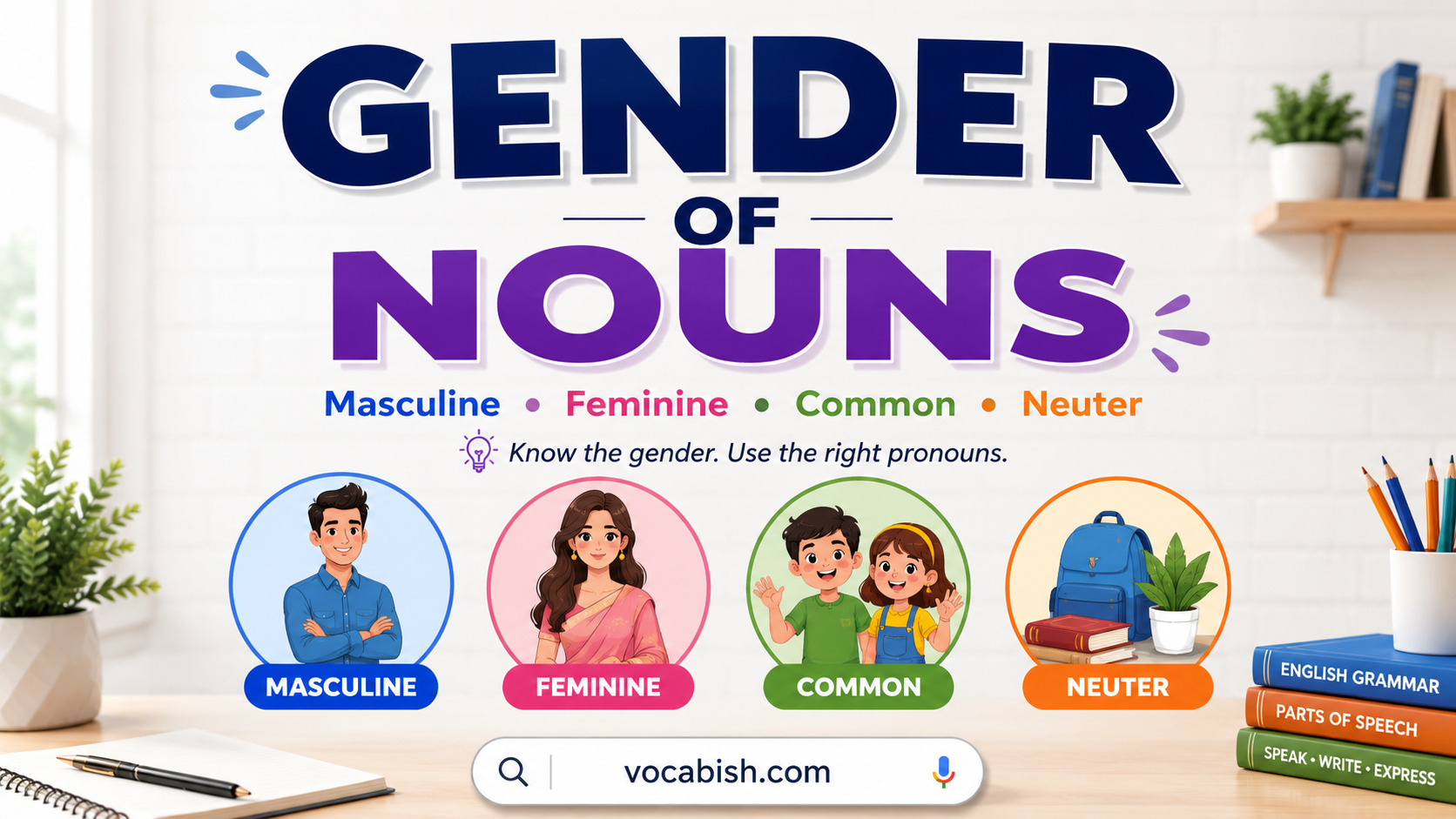
The word gender often makes learners think about men and women. In English grammar, however, the gender of nouns also includes nouns that can refer to any person and nouns that name objects, places, or ideas. English does not...
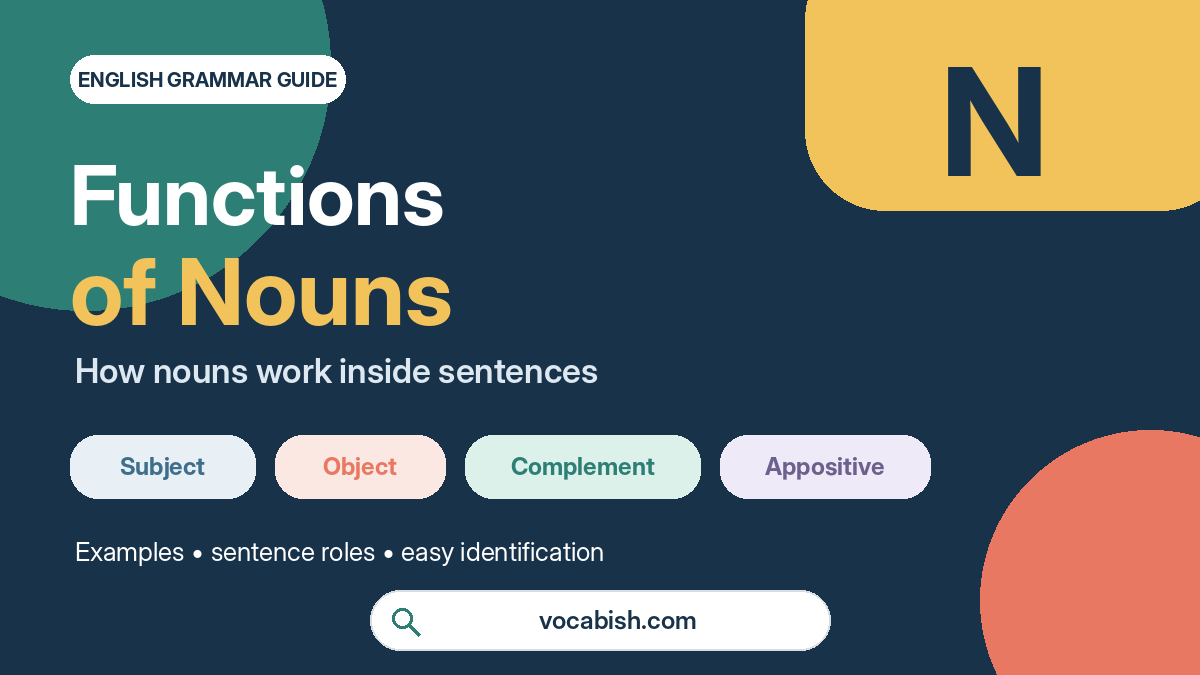
A noun does more than name a person, place, object, or idea. Inside a sentence, it performs a specific job. It may tell us who acts, who receives something, what someone becomes, or what follows a preposition. These sentence jobs...
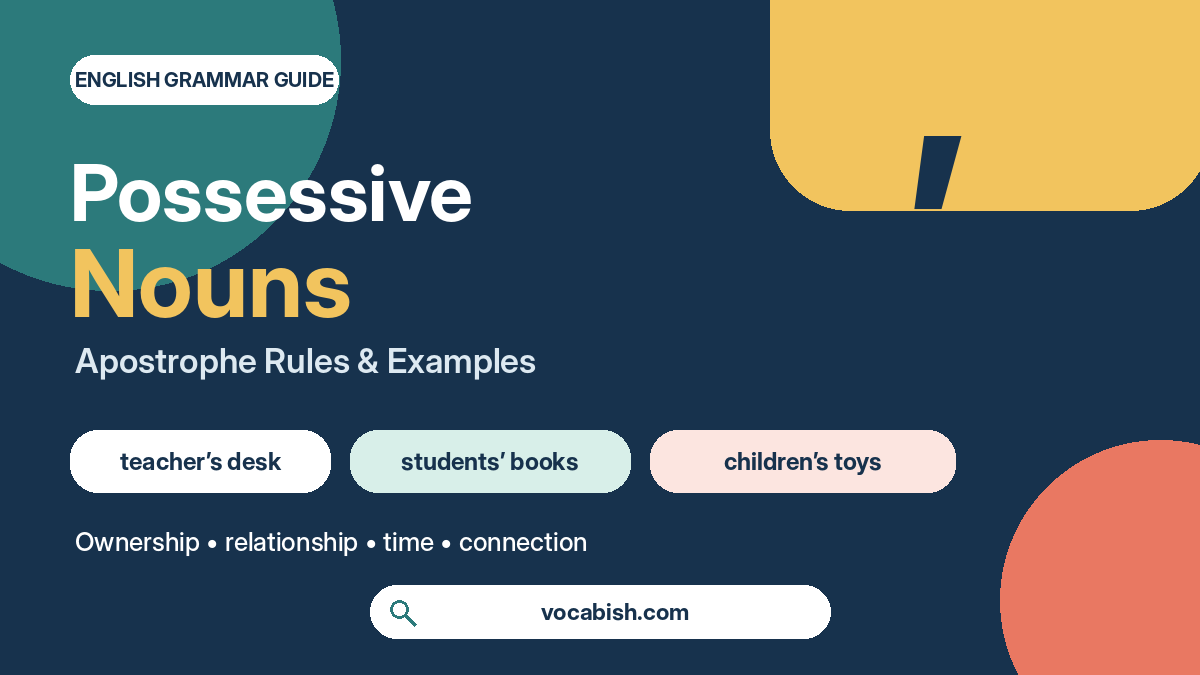
Possessive nouns show that a person, animal, place, or thing owns something or has a close connection with it. In writing, we usually form them by adding an apostrophe, either with or without s. the teacher’s desk — the desk...
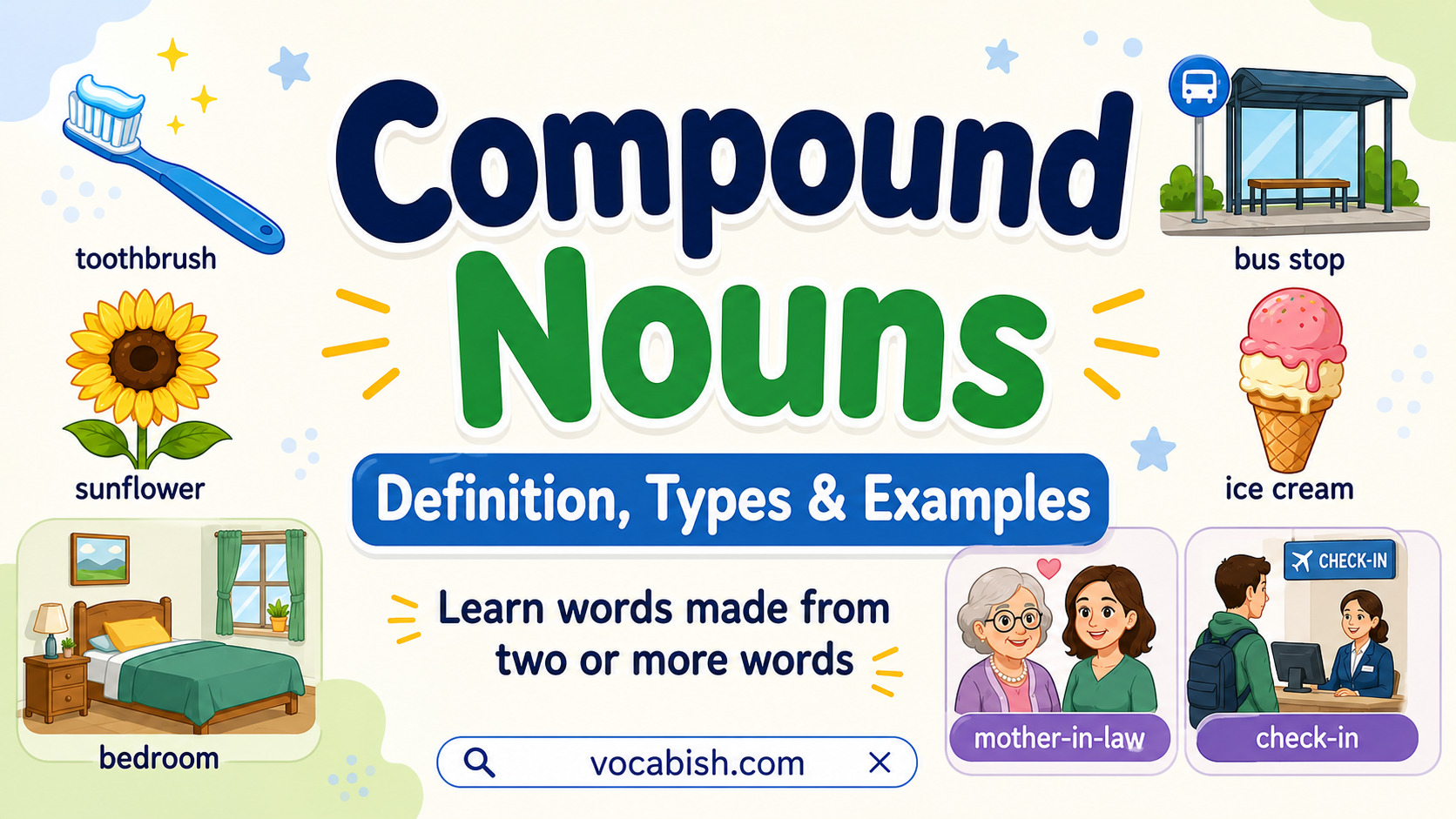
English often joins two or more words to name one person, place, object, activity, or idea. For example, bed and room become bedroom, while bus and stop form bus stop. These combinations are called compound nouns. Some are...

Gold, cotton, water, wood, and plastic are all names of materials. They do not usually name separate objects. Instead, they name the substances from which objects are made. These words are called material nouns. Learning how they...