Category - Confusing Words
The Confusing Words category helps you understand English words that look similar, sound alike, or are often used incorrectly. Learning the difference between these words can improve your grammar, vocabulary, and communication skills.
In this category, you’ll explore commonly confused word pairs such as their vs there, your vs you’re, affect vs effect, and many others. Each lesson includes clear explanations, comparisons, and practical examples.
These resources help you choose the right word in different situations and avoid common mistakes in speaking and writing. You’ll also learn simple tips to remember confusing words more easily.
Potent vs Potential | When to Use Potent and Potential
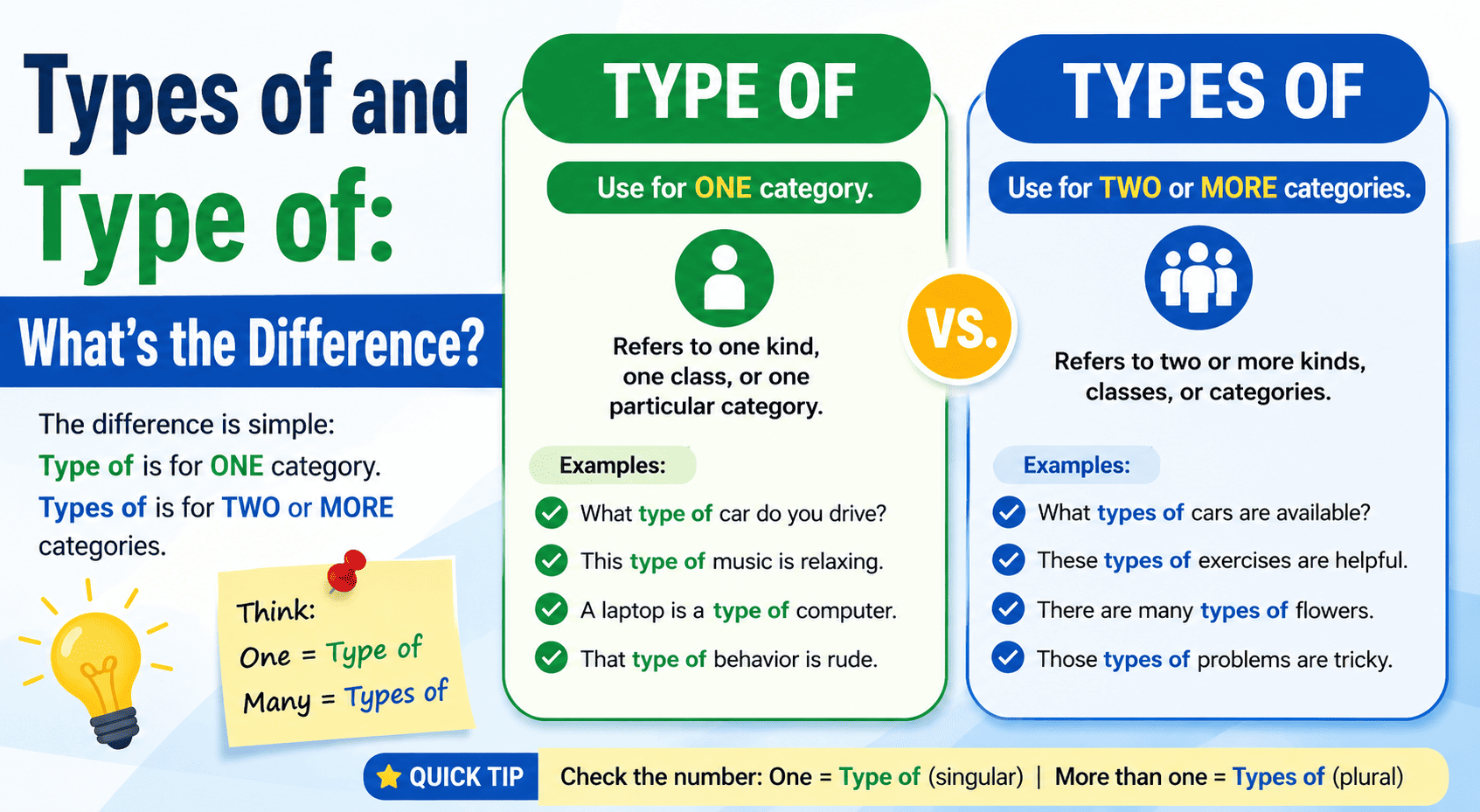
Types of and Type of: What’s the Difference?
Credible vs Creditable: Learn How and When to Use these Words
Definite vs Definitive: What’s the Difference?
Moral vs Morale: What’s the Difference?
Ill vs Sick: What Is the Real Difference? When to Use Each?
Waver vs Waiver | When to Use Waver and Waiver
Already vs All Ready: Learn the Difference with Meanings