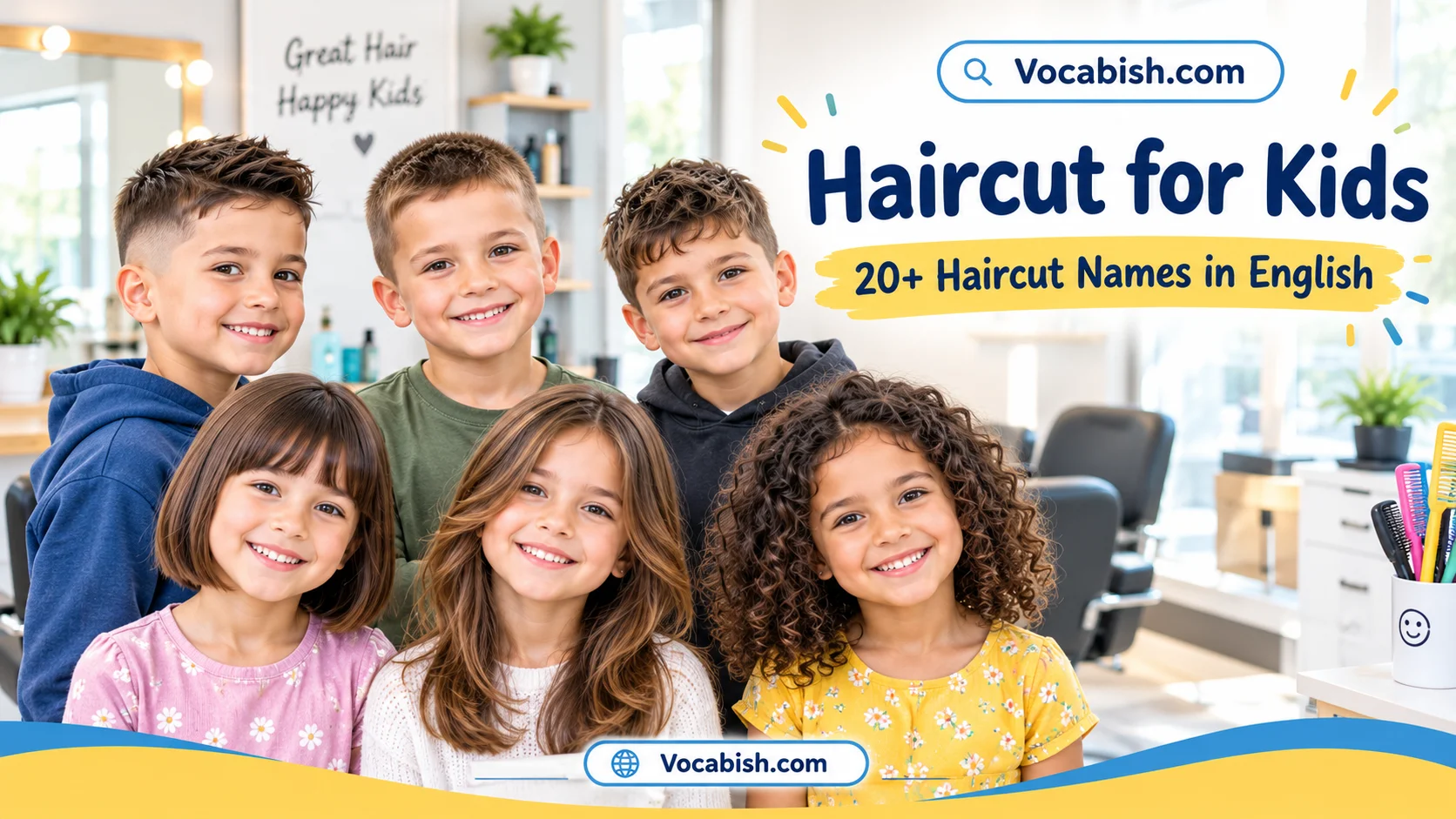

A haircut for kids can be more than just a shorter hairstyle. A neat fade, cute bob, curly cut, or classic trim can help children feel comfortable and confident.
For children ages 1 to 10, the best haircut depends on hair type, face shape, length, age, and how much daily styling parents want to do.
What Is a Haircut for Kids?
A kids’ haircut is a hairstyle cut for a child’s age, hair texture, comfort, and appearance. Children between 1 and 10 can wear many styles, from very short cuts to shoulder-length hairstyles.
Parents can choose a style based on:
- Hair length
- Hair thickness
- Straight, wavy, or curly texture
- Face shape
- Child’s age
- School rules
- Personal preference
- How much maintenance the hairstyle needs
For young children, comfort and easy care usually matter more than complicated styling.
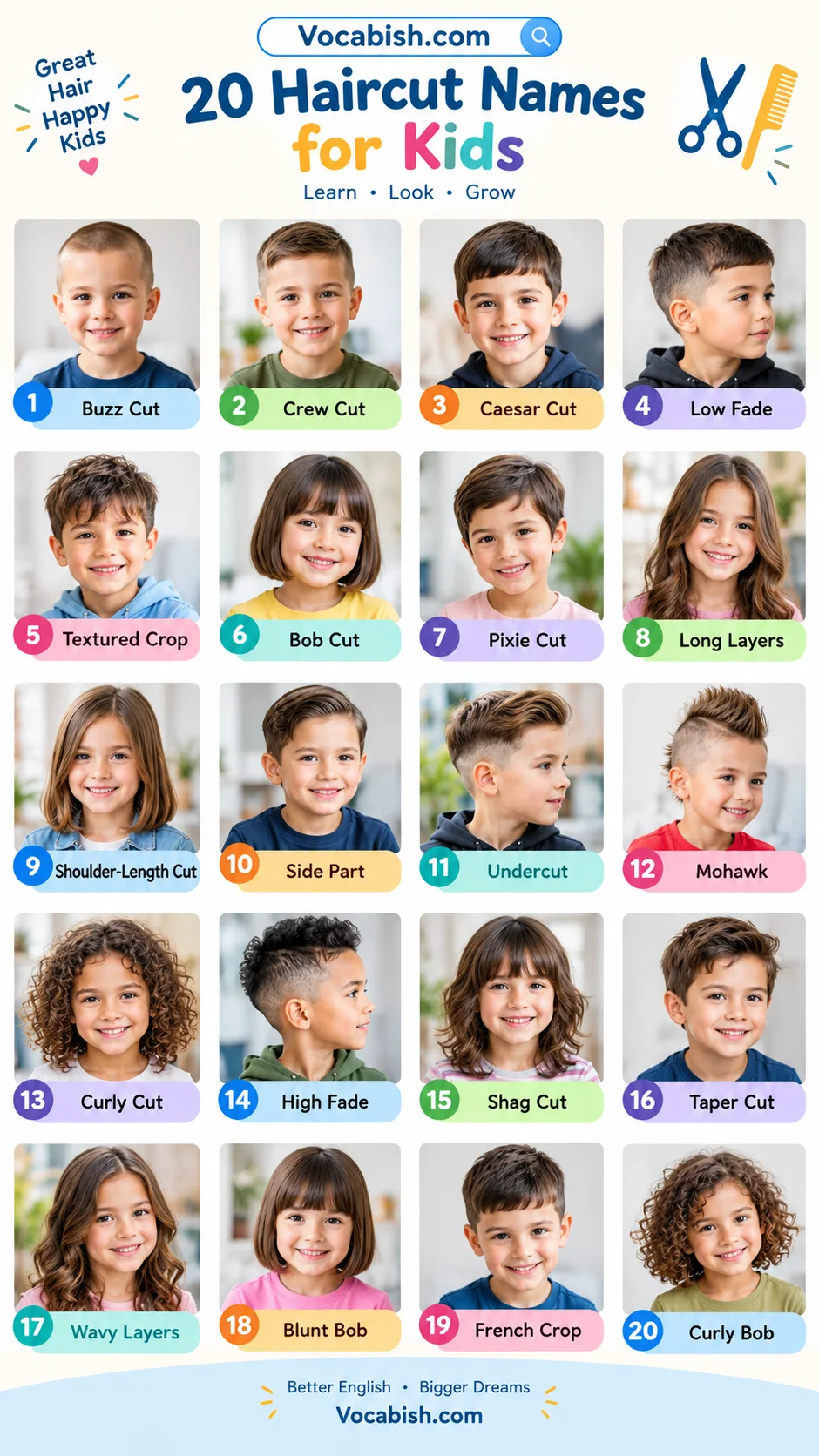
Names of Haircuts for Kids
Learning haircut names in English makes it easier for children and parents to describe a preferred style at a salon or barbershop.
Here are common names suitable for children ages 1 to 10:
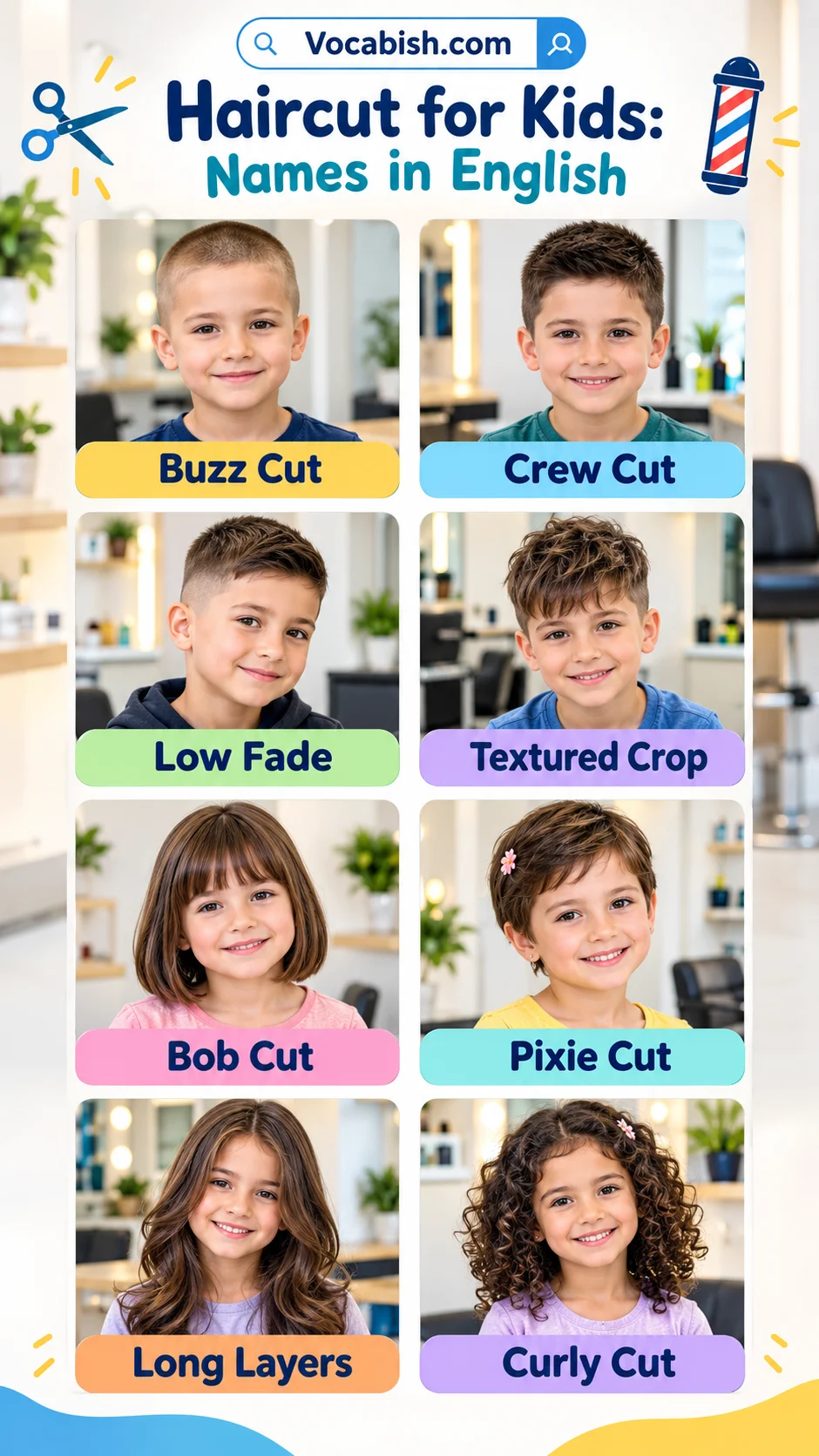
- Buzz Cut — Hair is cut very short with clippers.
- Crew Cut — A short style with slightly more length on top.
- Classic Short Cut — A neat, evenly trimmed short hairstyle.
- Caesar Cut — Short hair with a small straight fringe at the front.
- Textured Crop — Short hair with a slightly messy, textured top.
- French Crop — A short haircut with a defined fringe.
- Ivy League Cut — A neat, slightly longer version of a crew cut.
- Side-Part Haircut — Hair is divided neatly to one side.
- Comb-Over — Longer hair on top is combed toward one side.
- Undercut — The sides and back are much shorter than the top.
- Low Fade — The fade begins low near the ears.
- Mid Fade — The fade starts around the middle of the sides.
- High Fade — The short section begins higher on the sides.
- Taper Cut — Hair gradually becomes shorter around the sides and neckline.
- Temple Fade — The fade is focused around the temples.
- Mohawk — The sides are short while a strip of longer hair remains on top.
- Faux Hawk — A softer, less dramatic version of a mohawk.
- Mullet — The front and sides are shorter while the back stays longer.
- Shag Cut — A layered haircut with a relaxed, textured appearance.
- Layered Cut — Hair is cut at different lengths to create layers.
- Bob Cut — Hair is usually cut around the chin or jaw.
- Blunt Bob — A bob with a straight, even bottom edge.
- Long Bob — A longer bob that may reach the shoulders.
- Pixie Cut — A very short feminine-style haircut.
- Pageboy Cut — A rounded haircut with a smooth fringe.
- Shoulder-Length Cut — Hair reaches approximately the shoulders.
- Curly Crop — Short hair designed to keep natural curls visible.
- Curly Bob — A bob-shaped haircut for curly hair.
- Wavy Layers — Layers that allow natural waves to move freely.
- Long Layers — Long hair cut into different lengths for movement.
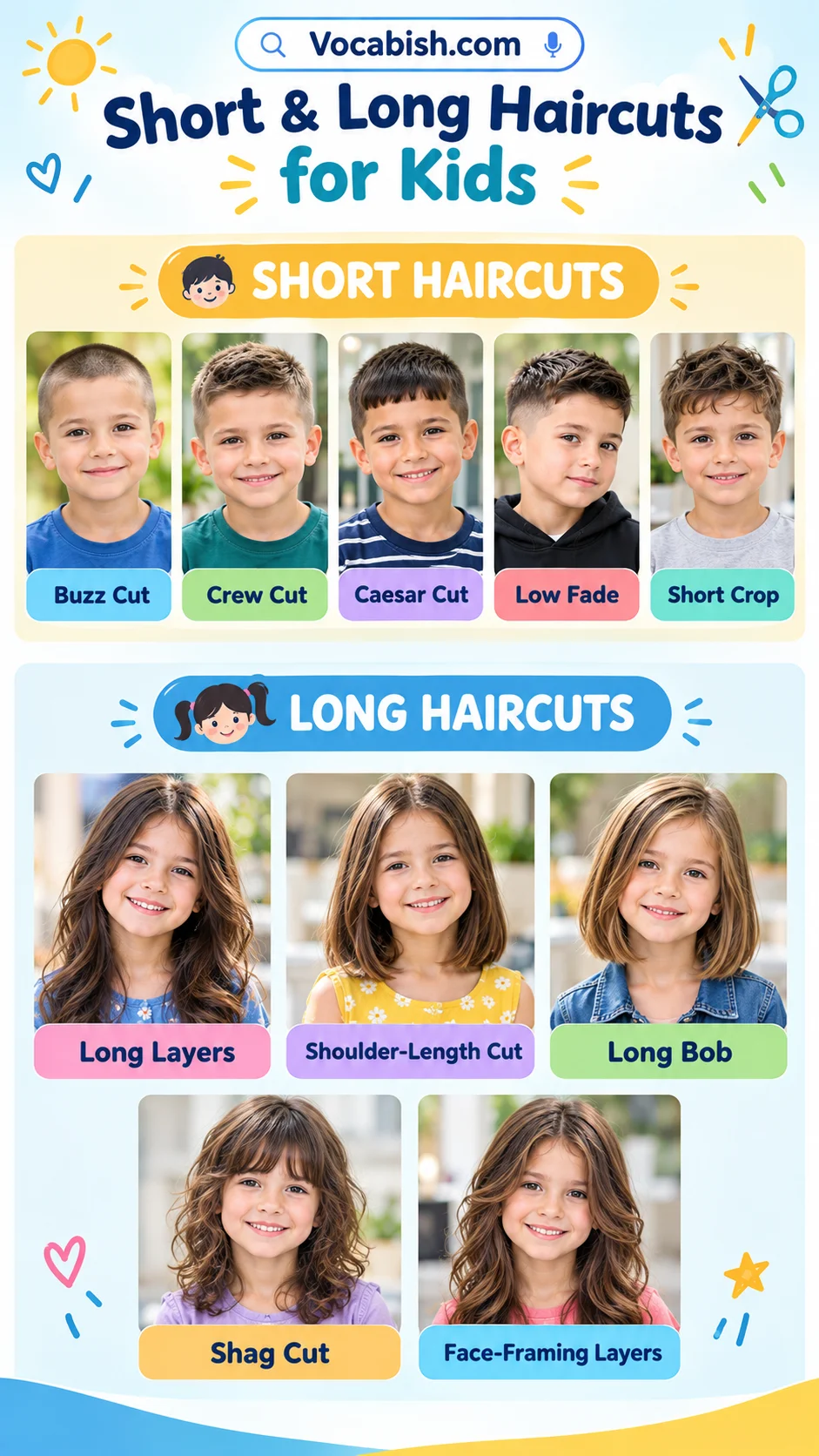
Short Haircut for Kids
Short haircuts are popular because they are easy to wash, dry, comb, and maintain.
They can work especially well for active children who do not want to spend much time fixing their hair.
Popular short styles include:
- Buzz cut
- Crew cut
- Caesar cut
- French crop
- Textured crop
- Taper cut
- Low fade
- Mid fade
- High fade
- Short side part
- Short curly crop
- Short layered cut
- Pixie cut
- Short bob
- Blunt bob
Best for: children who prefer neat, low-maintenance hairstyles.
Long Haircut for Kids
Long hairstyles give children more styling choices. Parents can use ponytails, braids, clips, headbands, or simple loose styles.
Popular long haircut names include:
- Long layered cut
- Shoulder-length cut
- Long bob
- Shag cut
- Long curly layers
- Long wavy layers
- U-shaped cut
- V-shaped cut
- Face-framing layers
- Long blunt cut
- Long side-part cut
- Long fringe haircut
For younger children, keeping the ends neat can make long hair easier to manage.
Fade Haircut for Kids
A fade haircut gradually changes from shorter hair near the lower sides to longer hair higher up.
Fades are especially common in boys’ hairstyles, but the basic cutting technique can be adapted to different children’s styles.
Common fade names include:
- Low Fade — The fade begins close to the ears and neckline.
- Mid Fade — The fade starts around the middle of the sides.
- High Fade — The fade reaches higher toward the top of the head.
- Skin Fade — The lowest section is cut extremely close to the skin.
- Temple Fade — The fading focuses around the temples.
- Drop Fade — The fade curves downward behind the ear.
- Taper Fade — A gradual shortening appears around the sideburns and neckline.
For younger children, a low fade or taper can provide a neat appearance without making the haircut look too extreme.
Curly Haircut for Kids
Curly hair needs a haircut that respects the child’s natural curl pattern. Cutting too much length can change how curls sit after washing.
Good options include:
- Curly crop
- Curly bob
- Curly layers
- Shoulder-length curls
- Long curly layers
- Curly taper
- Curly fade
- Short rounded curly cut
- Curly shag
- Face-framing curly layers
Parents should tell the barber or stylist whether the child’s curls are loose, medium, or tightly curled.
Haircut for Kids Boys
Boys ages 1 to 10 can wear many practical hairstyles. The best choice often depends on how active the child is and how much hair care the family prefers.
Popular haircut for kids boys styles include:
- Buzz cut
- Crew cut
- Caesar cut
- French crop
- Textured crop
- Classic taper
- Low fade
- Mid fade
- High fade
- Temple fade
- Side-part haircut
- Comb-over
- Ivy League
- Undercut
- Faux hawk
- Mohawk
- Short curly crop
- Curly fade
- Short messy cut
- Layered medium cut
- Shag cut
- Mullet
For school, a classic taper, crew cut, short crop, or side part can provide a tidy appearance.
Haircut for Kids: Girls
Girls ages 1 to 10 can choose from short, medium, and long hairstyles. Hair accessories can also change the appearance without changing the haircut.
Popular haircut for kids girls styles include:
- Pixie cut
- Bob cut
- Blunt bob
- Long bob
- Pageboy cut
- Shoulder-length cut
- Long layered cut
- Face-framing layers
- Long blunt cut
- Wavy layers
- Curly bob
- Curly layers
- Shag cut
- Long side-part cut
- U-shaped long cut
- V-shaped long cut
A bob can be practical for younger children, while longer layered hair gives older children more styling options.
Haircut for Kids for Silky Hair
Silky hair is usually smooth and soft, so some styles may fall naturally into place.
Suitable options include:
- Blunt bob
- Long bob
- Classic straight cut
- Side-part haircut
- Long layers
- Face-framing layers
- Shoulder-length cut
- Pixie cut
- Crew cut
- Classic taper
- Side-swept haircut
For very fine, silky hair, a blunt cut can make the ends look fuller.
Haircut for Kids with Straight Hair
Straight hair can work well with both structured and layered hairstyles.
Popular choices include:
- Bob cut
- Blunt bob
- Pixie cut
- Pageboy cut
- Crew cut
- Caesar cut
- French crop
- Side part
- Comb-over
- Taper cut
- Fade
- Long layers
- Shoulder-length cut
- Face-framing layers
- Shag cut
Straight hair often shows the exact shape of a haircut clearly, so clean lines and balanced proportions can make a noticeable difference.
Haircut for Kids with Face Shapes
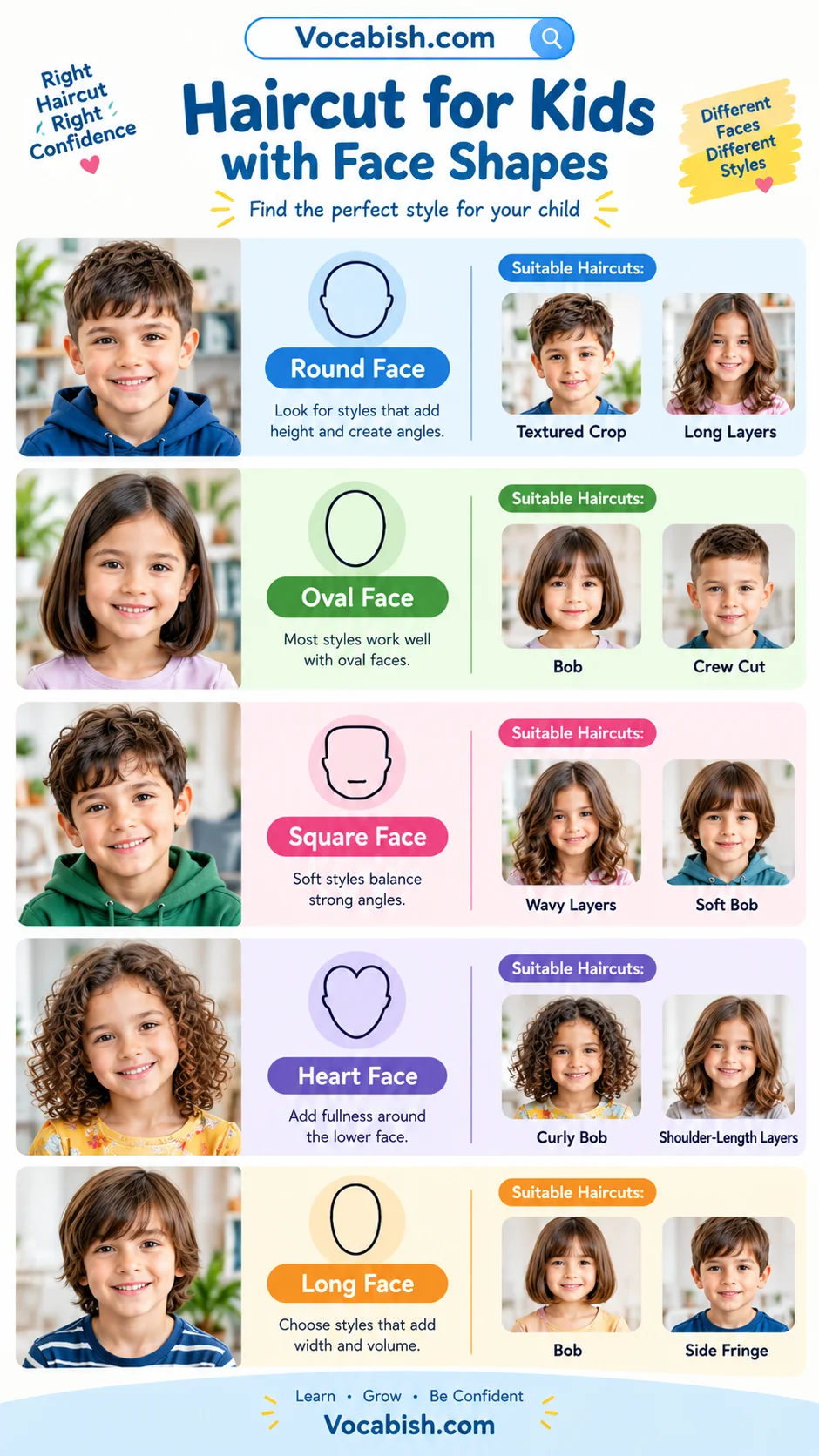
Face shape can help parents choose a flattering haircut, but children do not need to follow strict beauty rules. Comfort and personal preference come first.
Round Face
A slightly longer top or layered style can add visual height.
Good choices include:
- Textured crop
- Side part
- Long layers
- Face-framing layers
- Long bob
Oval Face
Many hairstyles can work well with an oval face.
Try:
- Bob
- Pixie
- Crew cut
- Side part
- Layers
- Curly cut
- Shoulder-length hair
Square Face
Soft layers can balance strong facial angles.
Possible choices include:
- Wavy layers
- Curly layers
- Textured crop
- Side-swept style
- Soft bob
Heart-Shaped Face
Styles that add some fullness around the lower face can create a balanced appearance.
Options include:
- Chin-length bob
- Curly bob
- Shoulder-length layers
- Side-swept fringe
- Long layered hair
Long Face
Styles with some width or volume around the sides can work nicely.
Consider:
- Bob
- Curly cut
- Wavy layers
- Side fringe
- Shoulder-length hairstyle
Haircuts for Kids by Age
A child’s age can influence the most practical haircut. Younger children often need easy styles, while older children may have stronger preferences.
Haircut for 1-Year-Old
For a one-year-old, keep the haircut comfortable and easy to maintain.
- Baby trim
- Short classic cut
- Soft bob
- Short curly cut
- Simple shoulder-length trim
Haircut for 2-Year-Old
Toddlers often benefit from uncomplicated styles.
- Short crop
- Classic taper
- Bob
- Blunt bob
- Curly crop
- Short layered cut
Haircut for 3-Year-Old
At this age, parents can explore slightly more defined styles.
- Crew cut
- Short bob
- Low taper
- Curly bob
- Pageboy cut
- Shoulder-length cut
Haircut for 4-Year-Old
Children can begin choosing between several recognizable haircut styles.
- French crop
- Side part
- Low fade
- Bob
- Long layers
- Curly layers
Haircut for 5-Year-Old
A five-year-old can wear playful but practical styles.
- Textured crop
- Crew cut
- Taper
- Long bob
- Layered cut
- Shag cut
Haircut for 6-Year-Old
School-friendly styles become particularly useful.
- Side part
- Low fade
- Short crop
- Bob
- Shoulder-length cut
- Long layers
Haircut for 7-Year-Old
Children may start having stronger opinions about their appearance.
- Mid fade
- Taper cut
- Side part
- Curly fade
- Long bob
- Layered hairstyle
Haircut for 8-Year-Old
Eight-year-olds can try more personalized styles while keeping school requirements in mind.
- Textured crop
- Low fade
- Curly crop
- Shag
- Long layers
- Face-framing layers
Haircut for 9-Year-Old
Older children may prefer styles that reflect their personality.
- French crop
- Crew cut
- Side part
- Fade
- Shoulder-length layers
- Curly layers
- Long bob
Haircut for 10-Year-Old
At ten, children can explore a wider range of age-appropriate styles.
- Taper fade
- Low fade
- Textured crop
- Side part
- Shag
- Long layers
- Curly bob
- Shoulder-length cut
How to Choose the Right Haircut for Kids
The most attractive haircut is not always the best practical choice. Think about the child’s daily routine before choosing a style.
Consider these points:
- Age: Younger children usually need easier styles.
- Hair texture: Straight, wavy, and curly hair behave differently.
- Hair thickness: Thick hair may benefit from layers or shorter sides.
- Face shape: Use it as a helpful guide, not a strict rule.
- School: Check whether the school has hairstyle requirements.
- Activity: Active children may prefer shorter or easier-to-tie hair.
- Maintenance: Consider how often the haircut needs trimming.
- Comfort: Avoid styles that constantly fall into the child’s eyes.
- Child’s choice: Let children have a say when possible.
What to Tell the Barber or Hairstylist
Instead of saying only “I want a nice haircut,” give specific details.
You can say:
- “Please keep the sides short and leave some length on top.”
- “I’d like a low fade with a longer top.”
- “Please keep the curls natural.”
- “Keep the hair around the ears neat.”
- “Please don’t cut the length too short.”
- “I want a shoulder-length layered haircut.”
- “Keep the fringe above the eyes.”
- “Please make the haircut easy to manage for school.”
Common Haircut Name Confusions
Some haircut names sound similar, but they describe different techniques.
- Fade vs. Taper: A fade usually creates a more noticeable gradual transition, while a taper often focuses on the sideburns and neckline.
- Bob vs. Lob: A bob is generally shorter, while a lob means a longer bob.
- Mohawk vs. Faux Hawk: A mohawk is more dramatic; a faux hawk gives a softer version of the same idea.
- Layers vs. Blunt Cut: Layers use different lengths, while a blunt cut has a more even edge.
- Curly Cut vs. Curly Style: A curly cut describes the haircut shape; a curly style describes how the hair is arranged.
Useful English Sentences About Kids’ Haircuts
These sentences can help you in practicing haircut vocabulary.
- “My son needs a short haircut.”
- “My daughter wants a bob haircut.”
- “Please give him a low fade.”
- “She wants to keep her hair long.”
- “Her hair is naturally curly.”
- “His hair is straight and silky.”
- “Please trim the ends.”
- “Can you cut the sides shorter?”
- “Please leave the top longer.”
- “I want a shoulder-length haircut.”
- “Can you make the haircut easy to manage?”
- “Please keep the fringe above her eyes.”
- “He wants a side-part haircut.”
- “She wants long layers.”
- “Please keep her natural curls.”
- “The haircut should be suitable for school.”
- “How often should this haircut be trimmed?”
- “Which haircut works well with curly hair?”
- “Which style would suit this face shape?”
- “Please do not cut too much length.”
Haircut Vocabulary Everyone Should Know About
Knowing these words makes conversations at a barbershop or salon easier.
- Trim — To cut a small amount of hair.
- Fringe — Hair that falls across the forehead.
- Bangs — Another common word for fringe, especially in American English.
- Layers — Hair cut at different lengths.
- Fade — Hair that gradually becomes shorter.
- Taper — Hair that gradually becomes shorter toward an edge.
- Clippers — An electric tool used to cut hair.
- Scissors — A cutting tool used for trimming and shaping hair.
- Curls — Hair that forms rounded or spiral shapes.
- Waves — Hair that forms gentle curves.
- Straight hair — Hair without noticeable curls or waves.
- Texture — The natural feel and pattern of hair.
- Length — How short or long the hair is.
- Sideburns — Hair growing near the ears and sides of the face.
- Neckline — The lower edge of hair at the back of the neck.
FAQs About Haircuts for Kids
The best haircut depends on the child’s age, hair type, face shape, activity level, school requirements, and personal preference.
Short cuts such as a crew cut, classic crop, bob, or taper are generally easy to wash, dry, comb, and maintain.
Popular choices include the crew cut, taper, low fade, textured crop, side part, curly crop, and classic short haircut.
Long layers, shoulder-length layers, face-framing layers, and long blunt cuts are practical choices for girls with longer hair.
Curly crops, curly bobs, curly layers, curly fades, and shoulder-length curly cuts can work well with natural curls.
Yes. A low fade or taper can be suitable for children when the child is comfortable and the style meets family and school preferences.
Straight hair can suit bobs, blunt cuts, side parts, crops, tapers, fades, pixie cuts, and layered hairstyles.
The timing depends on the hairstyle and how quickly the child’s hair grows. Short styles usually need trimming more often than long styles.
Conclusion
Choosing a haircut for kids is easier when you know the hairstyle names and understand how they work with different hair types and lengths. From buzz cuts and fades to bobs, layers, curls, and long hairstyles, children ages 1 to 10 have many age-appropriate options.
The right choice should balance comfort, hair texture, maintenance, school needs, face shape, and the child’s own preference.
Explore More Related Articles