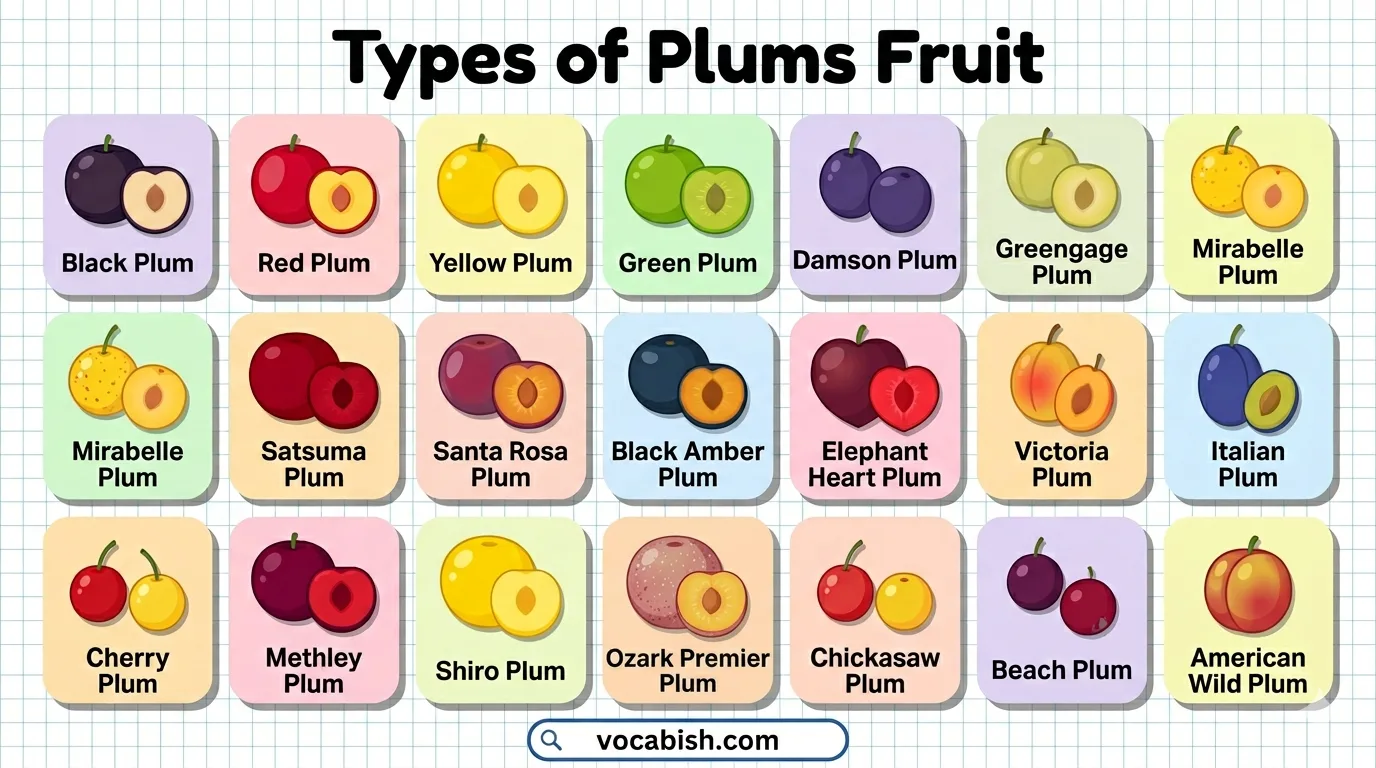
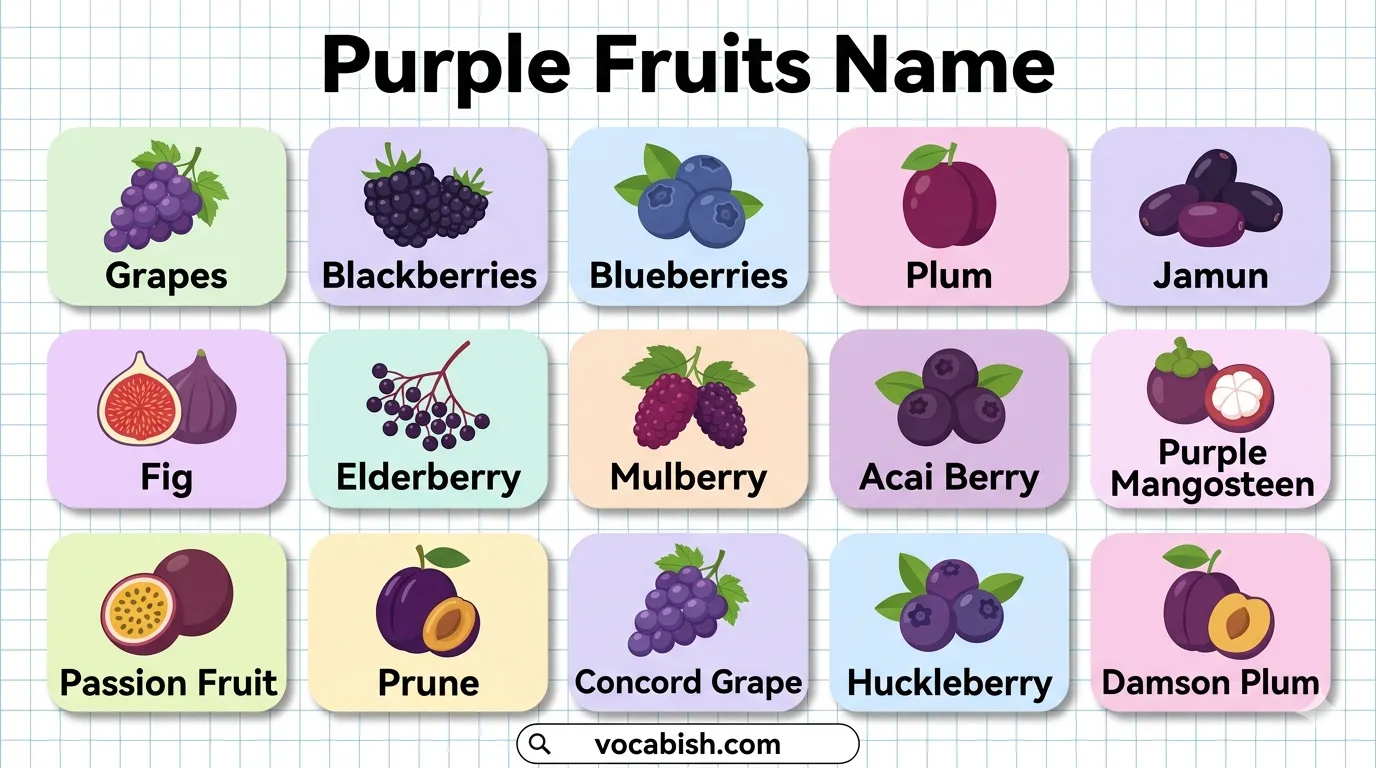

In this blog post, you will learn the names of purple fruits in English with pictures and examples. Fruit vocabulary is part of everyday English. People use these words when they talk about food, shopping, cooking, or healthy eating. When you understand the names of purple fruits like grapes, plums, or figs, you can talk about them with more confidence. Learning these words also helps you improve your vocabulary, which makes speaking, reading, writing, and listening easier. As you read, you will see each fruit name, understand its meaning, and see how it is used in a sentence. By the end, you will know more fruit words and feel more confident using them in English conversations.
What Are Purple Fruits?
Purple fruits are fruits that naturally have purple skin, purple flesh, or deep violet color when ripe. The color comes from natural plant compounds called anthocyanins, which also give many fruits their strong antioxidant properties.
These fruits are popular because they offer rich flavor, healthy nutrients, and beautiful appearance in meals and desserts.
In everyday English, purple fruits may appear in different contexts:
- Food vocabulary: People learn fruit names like grapes, plums, and figs.
- Cooking and recipes: Purple fruits are used in jams, pies, smoothies, and desserts.
- Health discussions: Doctors and nutrition experts recommend purple fruits for vitamins and antioxidants.
Example sentences:
- Blueberries and blackberries are common fruits in many desserts.
- I bought fresh purple grapes from the market today.
- My grandmother makes plum jam every summer.
Why Learn Purple Fruits Names?
Learning purple fruit vocabulary helps you:
- Use correct words in writing and reading
- Improve daily English speaking
- Understand food-related conversations
- Build strong vocabulary for exams
Common Purple Fruits with Their Information
Below are some of the most common purple fruits that people often see in markets and kitchens.
- Grapes
Small round purple fruits growing in clusters, widely used for juice and wine. - Plum
Smooth-skinned purple fruit with juicy flesh and a hard seed inside. - Blackberry
Soft dark-purple berry made of tiny juicy segments with sweet-tart flavor. - Blueberry
Small round berry with deep purple-blue color and mild sweet taste. - Fig
Soft purple fruit with tiny seeds inside and naturally honey-like sweetness. - Purple Passion Fruit
Tropical fruit with purple shell and aromatic pulp full of seeds. - Acai Berry
Small deep-purple berry known for strong antioxidants and smoothie bowls. - Elderberry
Tiny dark-purple berries commonly used for syrups, jams, and herbal drinks. - Concord Grape
Popular dark-purple grape variety used in juice, jelly, and desserts. - Damson Plum
Small dark-purple plum variety with sour flavor, perfect for jams. - Mulberry
Long-shaped purple berries growing on trees, sweet and slightly tart. - Blackcurrant
Small shiny purple berries with strong flavor used in drinks and desserts. - Purple Mangosteen
Tropical fruit with thick purple shell and sweet white segments. - Jamun (Java Plum)
Oval purple fruit with tangy taste, popular in tropical regions. - Purple Star Apple
Tropical fruit with purple skin and soft sweet white pulp.
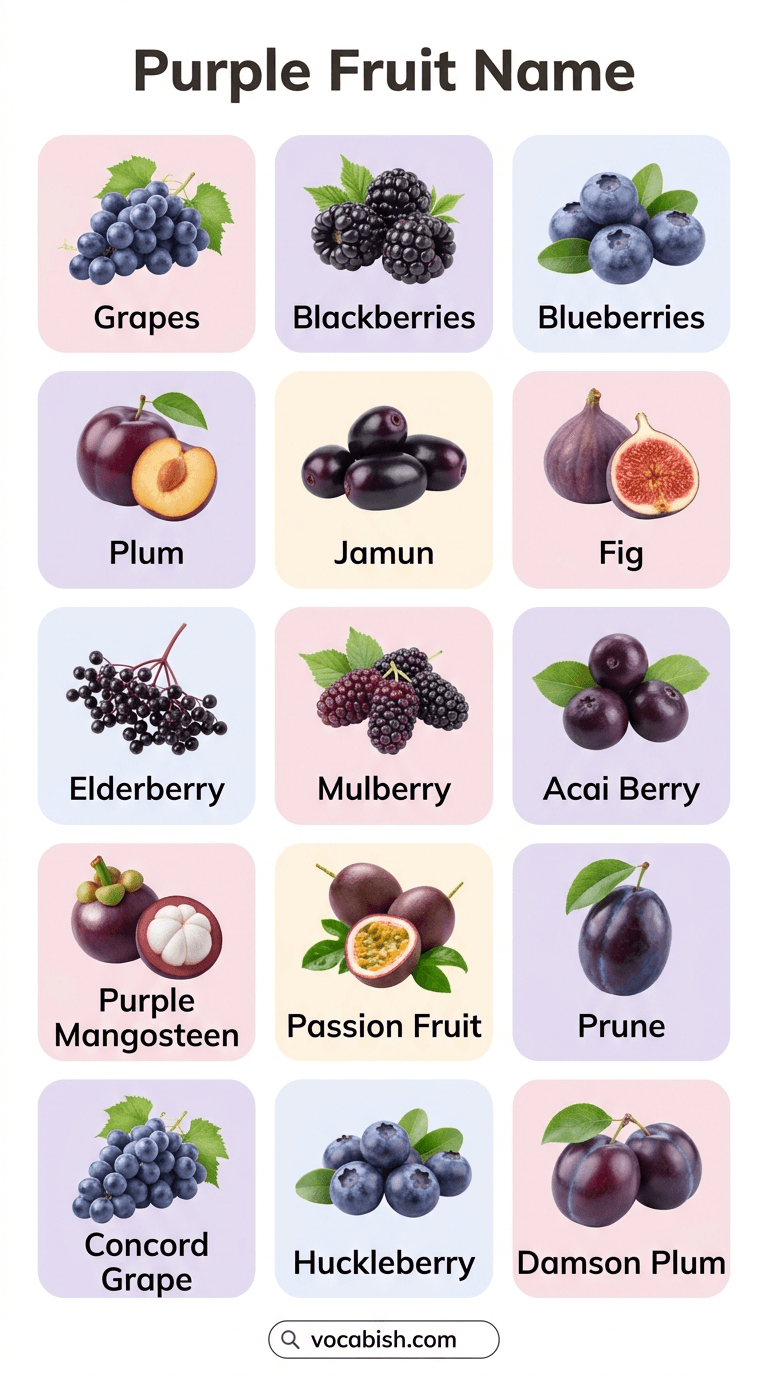
List of Purple Fruits Names with Images
Here is a useful list of purple fruits names in English:
- Grapes
- Blackberries
- Blueberries
- Plum
- Jamun (Black Plum)
- Fig
- Elderberry
- Mulberry
- Acai Berry
- Purple Mangosteen
- Passion Fruit (purple type)
- Prune (dried plum)
- Concord Grape
- Huckleberry
- Damson Plum
Types of Purple Fruits with Their Uses
Popular Berry-Type Purple Fruits
Berry fruits are some of the most well-known purple fruits around the world.
- Blackberry
Dark purple clustered berry commonly used in pies, jams, and fruit salads. - Blueberry
Small sweet berry often eaten fresh or added to cakes and muffins. - Acai Berry
Nutrient-rich berry widely used in smoothies, bowls, and healthy snacks. - Elderberry
Medicinal berry used in syrups, teas, and traditional herbal drinks. - Blackcurrant
Strong flavored berry used in juices, jams, and dessert sauces. - Mulberry
Tree-grown berry that looks like a long blackberry and tastes sweet.
Stone Purple Fruits
Stone fruits have a hard seed inside the fruit.
- Plum
Juicy fruit with purple skin and yellow or red flesh. - Damson Plum
Smaller plum with stronger flavor often used for cooking. - Java Plum (Jamun)
Oval purple fruit with tangy flavor and purple juice.
Tropical and Exotic Purple Fruits
Many tropical regions produce unique purple fruits with unusual flavors.
- Purple Mangosteen
Round fruit with thick purple rind and soft sweet segments inside. - Purple Passion Fruit
Aromatic fruit filled with juicy pulp and crunchy seeds. - Star Apple
Purple tropical fruit with creamy flesh and star-shaped center when cut.
Rare and Unusual Purple Fruits
Some purple fruits are less common but still interesting to learn.
- Bilberry
Wild berry similar to blueberry but darker with stronger flavor. - Huckleberry
Small dark berry growing in forests with sweet and slightly sour taste. - Purple Tomato
Special tomato variety with deep purple skin and mild sweet flavor. - Purple Dragon Fruit
Exotic cactus fruit with bright purple flesh and tiny edible seeds.
Nutritional Value of Purple Fruits
Purple fruits are rich in important nutrients:
Purple Fruit | Key Nutrients | Short Nutritional Benefit |
|---|---|---|
Grapes | Vitamin C, Vitamin K, antioxidants | Supports heart health and provides natural energy |
Blueberries | Vitamin C, fiber, antioxidants | Helps brain function and supports immune system |
Blackberries | Vitamin C, Vitamin K, fiber | Good for digestion and bone health |
Plums | Vitamin A, Vitamin C, potassium | Supports skin health and hydration |
Figs | Fiber, calcium, iron | Helps digestion and supports bone strength |
Acai Berries | Antioxidants, healthy fats, fiber | Protects body cells and supports energy |
Elderberries | Vitamin C, antioxidants | Helps strengthen the immune system |
Blackcurrants | Vitamin C, anthocyanins | Supports eye health and immunity |
Mulberries | Iron, Vitamin C, fiber | Supports blood health and digestion |
Jamun (Java Plum) | Antioxidants, iron, Vitamin C | Helps control blood sugar levels |
Purple Passion Fruit | Vitamin A, Vitamin C, fiber | Supports skin health and digestion |
Mangosteen | Antioxidants, Vitamin C | Helps protect cells and supports immunity |
Health Benefits of Purple Fruits
Purple fruits are known for many important health benefits.
- Rich antioxidants
Help protect body cells from damage. - Heart support
Nutrients may help maintain healthy blood circulation. - Immune strength
Vitamins help the body fight common illnesses. - Brain support
Some compounds support memory and brain health.
Because of these benefits, nutrition experts often recommend eating different colorful fruits, especially purple ones.
Purple Fruits Used in Cooking and Drinks
Purple fruits are widely used in different food and drink recipes.
- Grapes
Used for fresh snacks, juice, wine, and fruit salads. - Plums
Often made into jams, sauces, and sweet baked desserts. - Blackberries
Popular ingredient in pies, cakes, and berry sauces. - Blueberries
Common in pancakes, muffins, yogurt, and breakfast cereals. - Blackcurrants
Used in juices, syrups, and traditional fruit drinks. - Elderberries
Frequently prepared as herbal syrups, teas, and natural remedies.
Useful Sentences for Daily Life
- I eat grapes every day.
- Plums are very sweet and juicy.
- She drinks blueberry juice.
- Blackberries are healthy fruits.
- We bought fresh figs from the market.
Related Articles:
FAQs about Purple Fruits
Purple fruits are fruits with dark purple or bluish color. They include grapes, plum, berries, and figs, which are rich in nutrients.
The most common purple fruits include grapes, plum, blackberry, blueberry, and jamun. These fruits are widely eaten and easily found in many countries.
Yes, purple fruits are very healthy. They contain vitamins, fiber, and antioxidants that improve immunity and support overall body health.
Grapes and plums are among the sweetest purple fruits. They are commonly eaten fresh or used in juices and desserts.
Blueberries and grapes are best for immunity. They contain vitamin C and antioxidants that help the body fight infections and stay strong and active.
Yes, purple fruits are good for skin. Their antioxidants help reduce aging signs, improve skin glow, and protect skin cells from damage.
Purple fruits improve brain health, heart health, and digestion. They also boost immunity and provide natural energy for daily body activities.
Conclusion
Purple fruits are not only beautiful but also full of flavor and nutrients. Fruits like grapes, plums, blackberries, blueberries, figs, and acai berries are popular choices in many kitchens. Learning the names of purple fruits helps build stronger vocabulary while exploring healthy foods used around the world. By adding these fruits to meals, snacks, and drinks, people can enjoy both delicious taste and natural health benefits every day.